
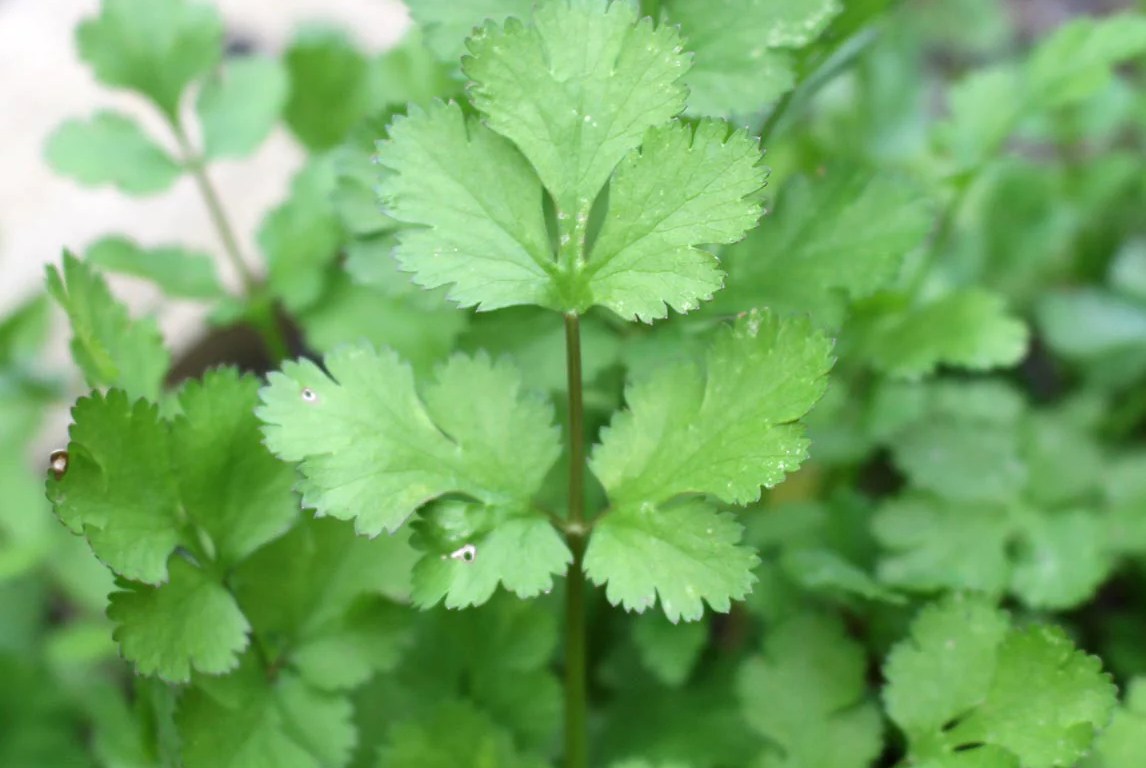
* relating to the origin and historical development of words and their meanings.

I love words. I love to read and when I come across a new word I like to study its origin and how it may have evolved over the years. I am left in a constant state of curiosity at how words migrate from one language and one culture into others and how they are adapted and repurposed (or not) by these migrations. I also like to tease my friend Nicki (1) who is an avowed cilantro hater and who is not afraid to state this publicly.
You’re wrong by the way Nic but, because I love you, here you go.



One word that has piqued my interest is that of “cilantro”. In Australia it’s not really a word. We refer to the leafy greens of the coriander plant as “coriander”. The same word (coriander) is also used to describe the ripe seed of the plant which is dried, powdered, and used as a culinary spice. Cilantro was something Americans used (along with inches, feet and yards – you people got a problem with the metric system or what?)
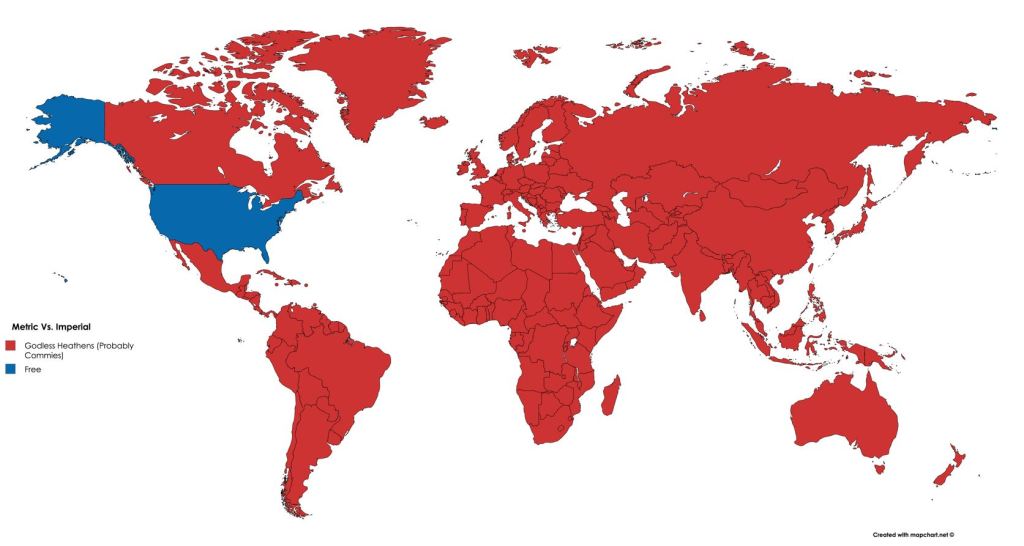
Countries in RED use the Metric System. Countries in BLUE appear to have an attitude problem.



Let’s get back to the task at hand shall we.

We’ll start off with the Oxford language dictionary
cilantro /sɪˈlantrəʊ/
Origin : 1920s: from Spanish, from Latin coliandrum ‘coriander’.
Noun (definitions for all the following highlighted words will appear at the bottom of the Post)
cilantro (usually uncountable, plural cilantros)
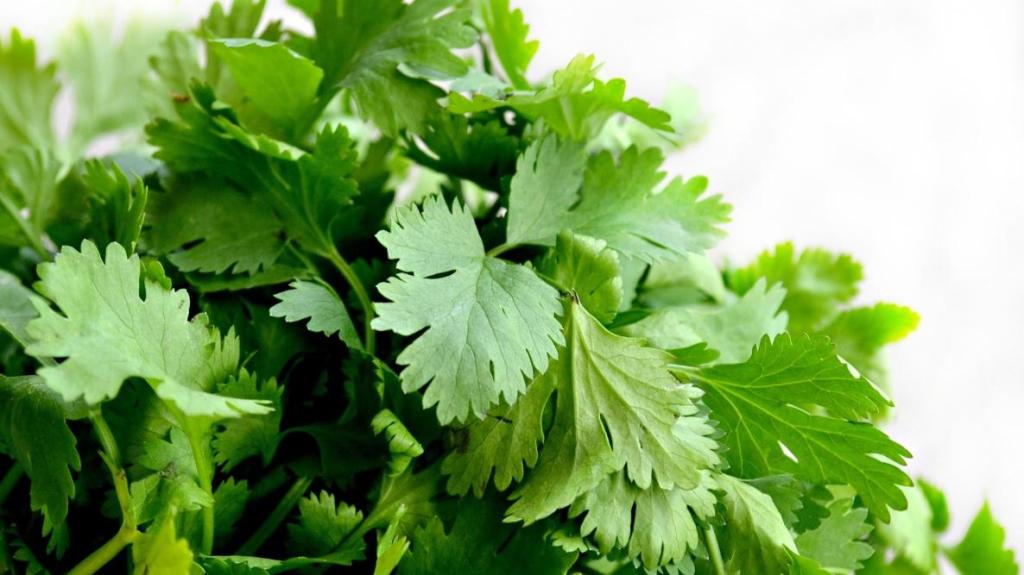
- (US) The stems and leaves of the coriander plant, Coriandrum sativum, used as a seasoning and garnish in cooking.
Spanish
Alternative forms
From earlier culantro, from Latin coriandrum (compare French coriandre, Italian coriandolo, Portuguese coentro) from Ancient Greek κορίαννον (koríannon, “coriander”), κορίανδρον (koríandron).
English
cilantro
From Spanish cilantro, from Late Latin coliandrum, from Latin coriandrum (“coriander”). Doublet of coriander.
coriander
In Australia, coriander is also the preferred word for the plant, following the European standard. In the United States and South and Central America, cilantro is the word used for the leaves, while coriander generally refers to the seeds
The Merriam Webster dictionary states it thusly…..
cilantro
ci·lan·tro si-ˈlän-(ˌ)trō
: leaves of coriander used as a flavoring or garnish
also : CORIANDER
Spanish, coriander, from Medieval Latin celiandrum, alteration of Latin coriandrum — more at CORIANDER
coriander
co·ri·an·der ˈkȯr-ē-ˌan-dər
: an Old World annual herb (Coriandrum sativum) of the carrot family with aromatic fruits
Middle English coriandre, from Anglo-French, from Latin coriandrum, from Greek koriandron, koriannon
Uchibayashi (2001) notes in his work that….
The etymology of coriander starts with the Greek koriannon, a combination of koris (a stinking bug) and annon (a fragrant anise). In Latin, it was spelled coriandrum, and by way of Old French it came into English as coriander in the 14th century. It had been known as a foodstuff in the 10th century, but it disappeared in the next century perhaps because of its disagreeable smell. It was reintroduced by the Portuguese in the 18th century as Koendoro (ko-en-do-ro) in Japanese, from the Portuguese word coentro.
coentro
noun
[ masculine ] /kʊ’entɾʊ/
planta usada como condimento
temperar o peixe com coentro : to season the fish with coriander
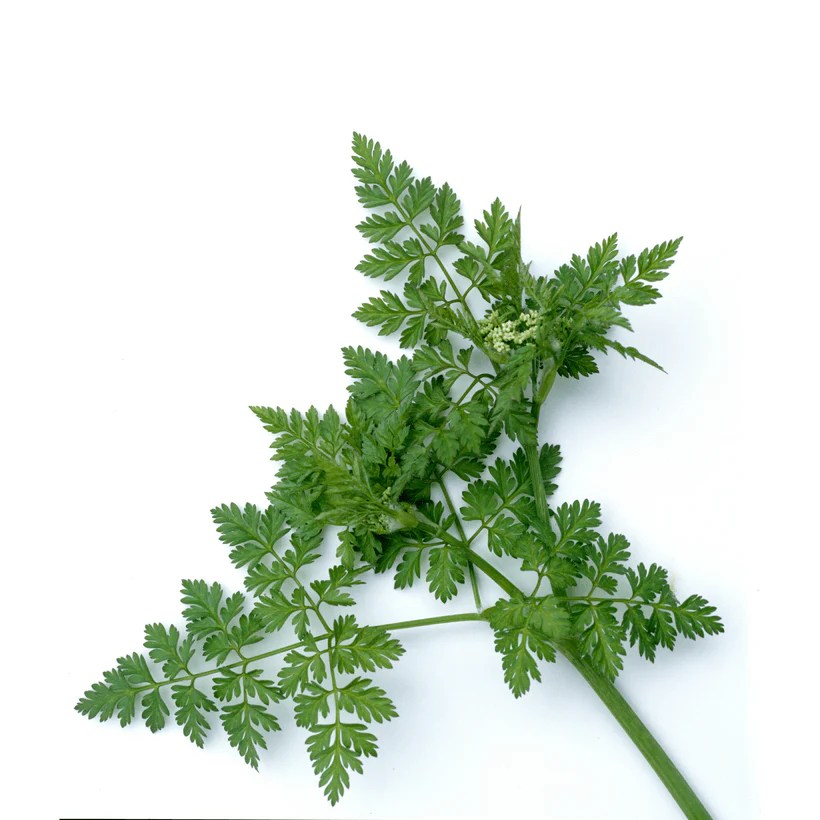
Now, from a distance “fragrant anise” might appear to be coriander….
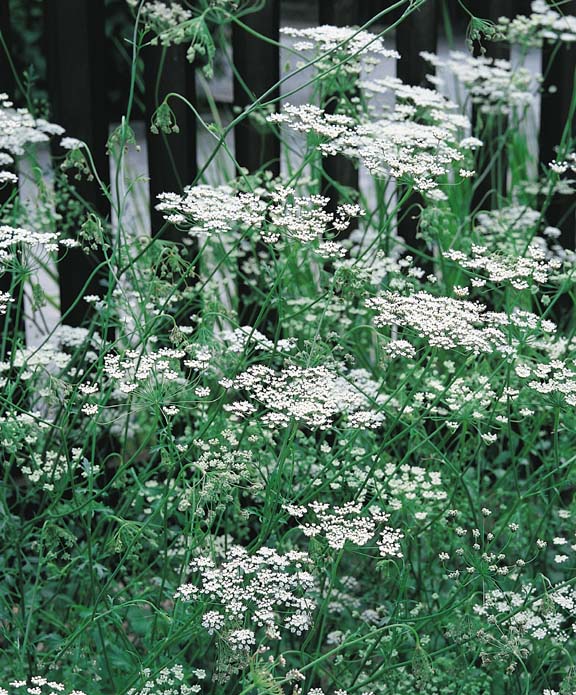
…..but upon closer examination you’ll find that both the leaves and the seeds of both plants are very different.
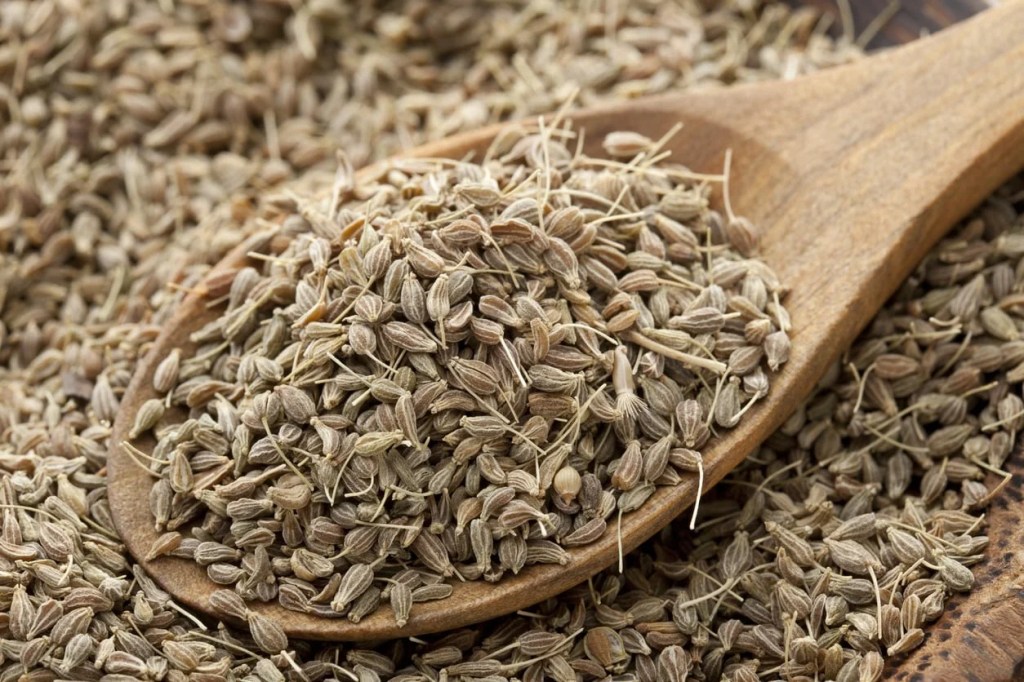
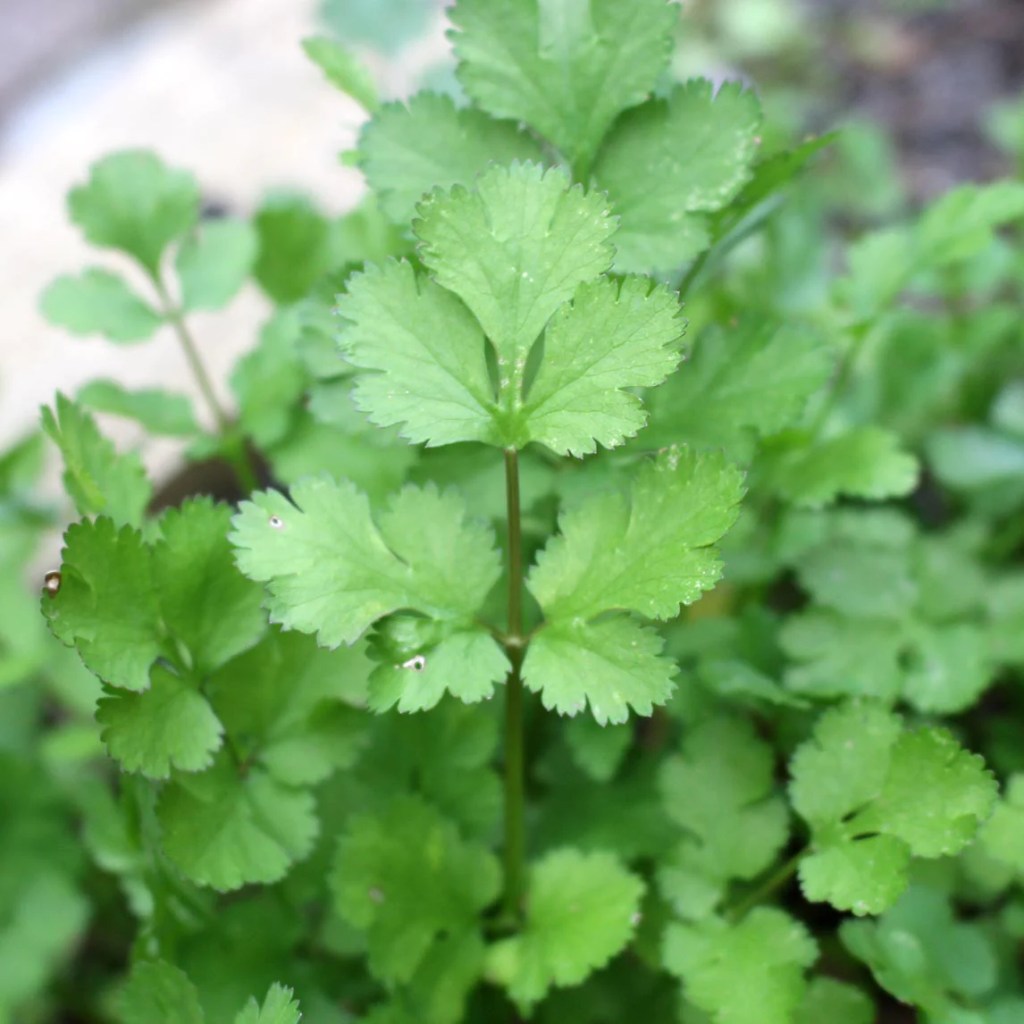
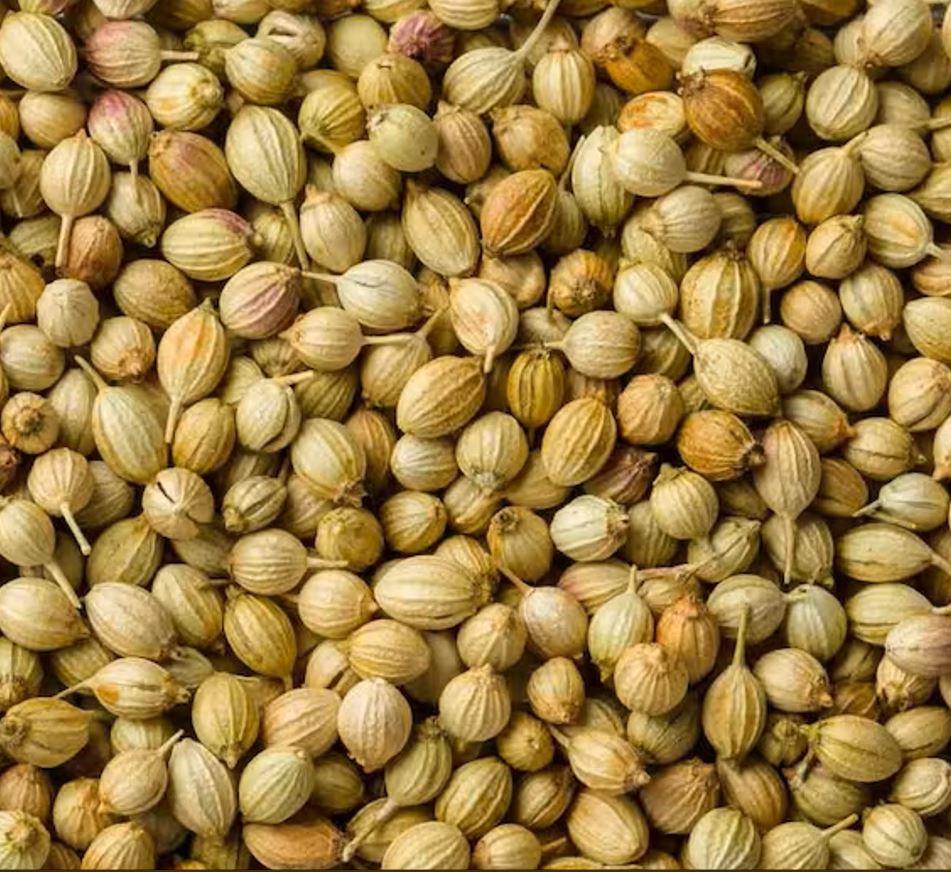
The Etymology Nerd expands a little…
The word coriander was spelled coriandre in Middle French, and that, through Old French, comes from Latin coriandrum, which had the same meaning. That in turn derives from Ancient Greek koriannon, which some think is related to another word, koris, which meant “bedbug” and might be connected because the fruit of the plant smells bad when not ripe. It could also be non-Indo-European, and etymologists aren’t really sure. Although coriander may refer to the entire herb, in the United States it generally is associated with the dried seeds, while cilantro encompasses the plants and stems. That word was borrowed in 1907 from Spanish culantro, which traces to coriandrum, which should look familiar. Usage of both the words cilantro and coriander shot up since the 1960s and peaked around the turn of the century.
The “fruit of the plant smells bad when not ripe” ??? Pfft. The Etymology Nerd is a cilantro hater it appears. Although…..we can’t blame them really as there has already been several references to “bedbugs” and according to Cramer pest Control….bed bugs give off a musty odor produced by pheromones. This smell is often compared to the smell of mildew, wet laundry, or damp basement. As the infestation grows, the pheromone smell will worsen as it mixes with dead bugs and fecal matter, creating an intense “rusty” odor”.
OK. So the bedbug stinks. Cilantro does not smell like wet laundry (although those with the OR6A2 gene do say that it “tastes like soap”)
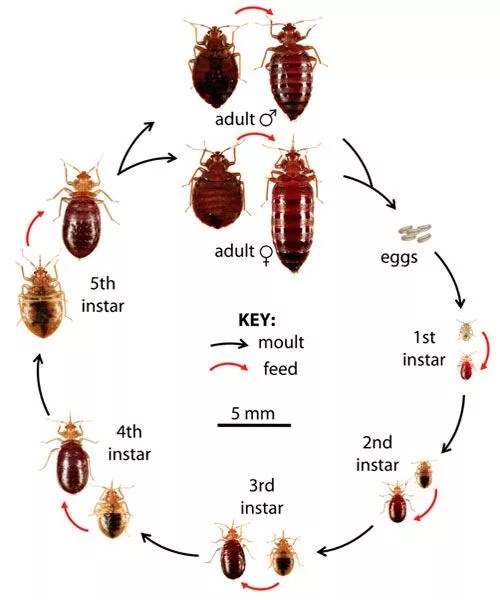
EN also mentions that it is the “unripe fruit” of the plant that smells bad when crushed. Now, this “unripe fruit”, or seed is not typically used either culinarily or medicinally and, from personal experience, is also not as strongly scented as the fresh leaves but it does bring to mind another plant where the seeds are quite strongly scented. Bifora. Another Cilantro Substitute?
Sesquiotica goes into a great more detail….“The origin of these two words is Greek κορίαννον koriannon, which became Latin coriandrum. But then, just as one part of a plant becomes a leaf and another a seed, the word became two words – because of dissimilation: since there’s another /r/ later in the word, the first /r/ became (for some speakers) /l/. So we got a variant word, coliandrum. And that changed a bit more when taken into Spanish: the /um/ into /o/, which is the standard development from Latin into Spanish and Italian, and the /d/ into /t/, the /o/ into /u/, and the /i/ dropped – probably for ease of articulation. Thus culantro. And that further changed, through processes unclear to me, into cilantro.
So you have on the one hand coriander, with a hard /k/ at the start and hollow /ɔ/ and /ri/ rolling in the middle, and a /dr/ on the end (because French converted drum into dre and we got it from them and changed it a little), and on the other hand cilantro, with soft /s/ and narrow /ɪ/ (or narrower /i/ in Spanish) and liquid /l/ and final /tro/. The /æn/ at the heart stays the same. So cilantro is soft at the start like a leaf, but crisper and rolling at the end, while coriander is harder at the start and then rolls all through like a seed on the tongue. And cilantro gives us resonances of silly and cilia and supercilious and slant and Elantra and entropy and el centro. It’s a more Spanish sound.”
Spanish hey? Mexican-Spanish?

Click on image to expand
Now another thing I note is that “culantro” pops up on more than one occasion. Culantro is an entirely different herb but is well known for having a flavour profile very similar to cilantro. I go into more detail on culantro here…Culantro : A Cilantro Mimic
To jog your memory.



World Crops says of culantro….
Culantro (Eryngium foetidum) is a culinary and medicinal leafy green/herb commonly used throughout the West Indies ands everal countries in Latin America and Asia. Culantro is native to continental tropical America and the West Indies and has a similar aroma and flavor to cilantro (Coriandrum sativum). It is thought that cilantro, which has its center of origin in the Mediterranean region and was introduced to the Americas by European colonists, was so widely accepted and common in many Latino dishes because of its similar flavor and taste to culantro. In fact, cilantro is more commonly found throughout Latin Amercia that culantro. Interestingly is that sofrito, a staple in several Latino countries, has both culantro and cilantro as traditional ingredients. In some countries in Latin America, cilantro (Coriandrum sativum) is called culantro (Eryngium foetidum) and culantro is called cilantro. In some cases, culantro is called cilantro de hoja ancha (wide-leaf cilantro in Spanish), to distinguish it from cilantro (Coriandrum sativum).
English can be a painful language. I was born into it and it still gets me. many terms have been bought up in the defining of the word cilantro and for my own reference sake I often insert meanings into my Posts (particularly if it’s the first time I’ve come across a word). These definitions are a selection of the terms that are highlighted (in green BOLD) that came up earlier in the Post.
Meanings of various terms
- adjective – A word like big or childish that usually serves to modify a noun.
- cognate – Descended from the same source lexeme of an ancestor language.
- conjugation – The inflection of verbs. See also declension.
- declension – The inflection of nouns and words like them, or used together with them (i.e. nominals). See also conjugation.
- doublet – One of two (or more) words in a language that have the same etymological root (as in etymon, not root morphemes like Proto-Indo-European roots) but have come to the modern language through different routes. Doublets can come about e.g., as loanwords from two different but related languages, as loanwords acquired from the same language at two different stages, as one loanword from a related language plus its native cognate, or as derivatives formed at two different stages in the history of a language. Example: lever and levator are doublets (more at Category:English doublets).
• lever (plural levers)
(mechanics) A rigid piece which is capable of turning about one point, or axis (the fulcrum), and in which are two or more other points where forces are applied; — used for transmitting and modifying force and motion.
Specifically, a bar of metal, wood or other rigid substance, used to exert a pressure, or sustain a weight, at one point of its length, by receiving a force or power at a second, and turning at a third on a fixed point called a fulcrum. It is usually named as the first of the six mechanical powers, and is of three kinds, according as either the fulcrum F, the weight W, or the power P, respectively, is situated between the other two, as in the figures.
• levator (plural levatores or levators)
(agent noun) One who, or something which, lifts something else, as:
Any of several muscles whose contraction causes the raising of a part of the body.
A surgical instrument (tool) for lifting things, such as bone fragments or tissue flaps.
- lexeme – The abstract “word” underlying a set of inflections; for example, gives and given belong to the same lexeme, which is usually identified by its lemma form give. See also: (1) Wikipedia’s article on lexemes, (2) Wiktionary:Languages with more than one grammatical gender, (3) conjugation and (4) declension.
- inflection – The change in form of a word to represent various grammatical categories, such as tense (e.g. past tense, present tense, future tense) or number (e.g. singular, plural). For example, the verb run may be inflected to produce runs, ran, and running. In highly inflected languages, such as Latin, there will be many more forms. Two major types of inflection are conjugation (inflection of verbs) and declension (inflection of nouns, adjectives, and pronouns).
- noun (plural nouns)
1. (grammar, narrow sense) A word that functions as the name of a specific object or set of objects, such as person, animal, place, word, thing, phenomenon, substance, quality, or idea; one of the basic parts of speech in many languages, including English.
- pronoun – A part of speech that acts as a substitute for a noun or noun phrase and refers to a topic of the discussion. Pronouns can refer to a participant in the discussion and can be used instead of a person’s name, such as with the pronouns I and you. Other pronouns, such as he, she, and it, can be used to refer to other people or objects that have already been mentioned without repeating their names.
- proper noun – A kind of noun that usually refers to a specific, unique thing, such as Earth and the Alps, though one language’s proper noun may translate to another language using a common (not proper) noun. In English, proper nouns are usually capitalized, as are common nouns and adjectives derived from proper nouns. The same word may have both common-noun and proper-noun senses (such as German, which is both a proper noun denoting a certain language, and a common noun denoting a person from Germany), and most proper nouns can sometimes be used as common nouns – e.g. John is a proper noun that is a first name, but can be used a common noun with plural Johns meaning “people named John”.
- uncountable, uncountable noun, mass noun – A noun that cannot be used freely with numbers or the indefinite article, and which therefore usually takes no plural form. For example, the English noun information is a mass noun, and at least in its principal senses is uncountable in most varieties of English. For those senses, we cannot say that we have *one information, nor that we have *many information (or *many informations). Many mass noun senses often have corresponding plural count senses that denote types of the mass sense, instances of the mass sense, or portions (servings) of the mass sense. For example, the main sense of butter is the uncountable sense, so the plural form butters is seldom used, although it occasionally is used to mean “types of butter” (many herb butters contain garlic) or “[packets of] butter”. Compare also other implicit references to a container and the portion/serving that it contains (get me a water, order two sodas, have a few beers). Many languages do not distinguish between countable and uncountable nouns. Antonym: countable, or count noun.
- verb – A word that indicates an action, occurrence or state of being. The inflection of verbs is commonly called conjugation.
- verbal noun – A noun formed from a verb.
References
- Uchibayashi M. [The coriander story]. Yakushigaku Zasshi. 2001;36(1):56-7. Japanese. PMID: 11776997.
Websites
- https://cramerpestcontrol.com/blog/7-signs-of-a-bed-bug-infestation-and-what-to-do-about-it
- coentro – https://dictionary.cambridge.org/dictionary/portuguese-english/coentro
- Oxford Language Dictionary – https://languages.oup.com/google-dictionary-en/
- Sesquiotica – https://sesquiotic.com/2014/02/24/cilantro/
- https://worldcrops.org/crops/culantro
- https://www.etymologynerd.com/blog/bedbug-cilantro
- https://www.merriam-webster.com/dictionary/coriander
 Masa Americana