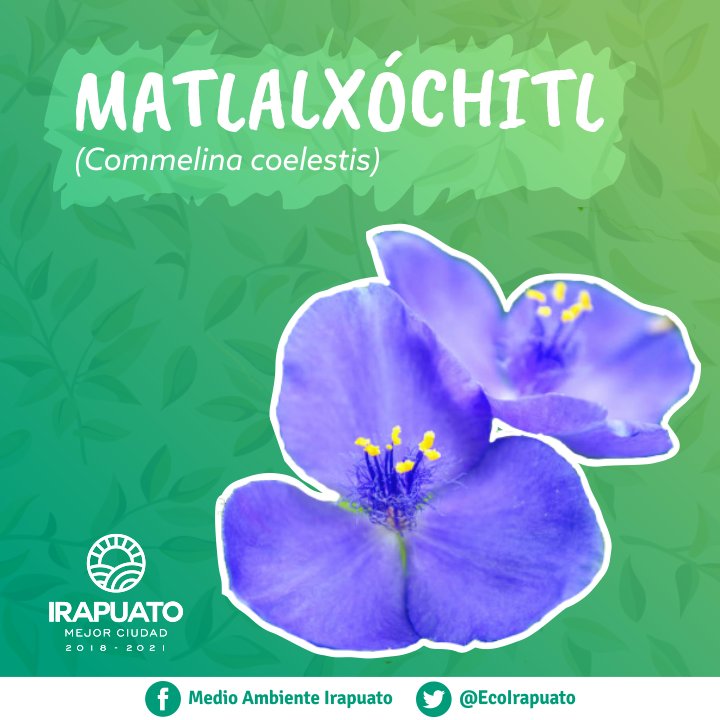
Flores Medicinales : Matlalxochitl

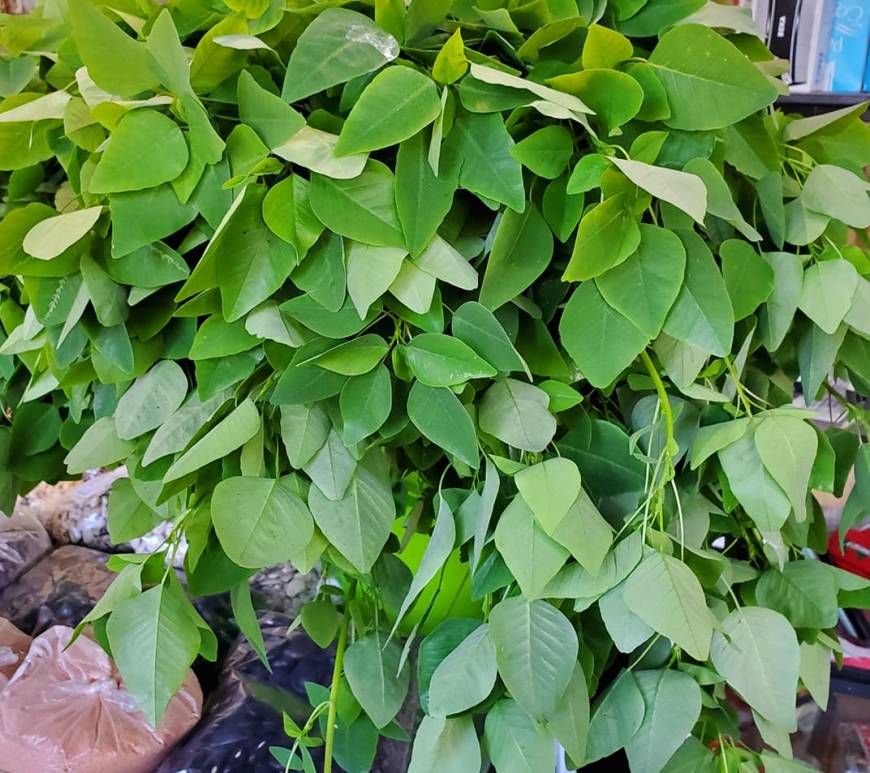
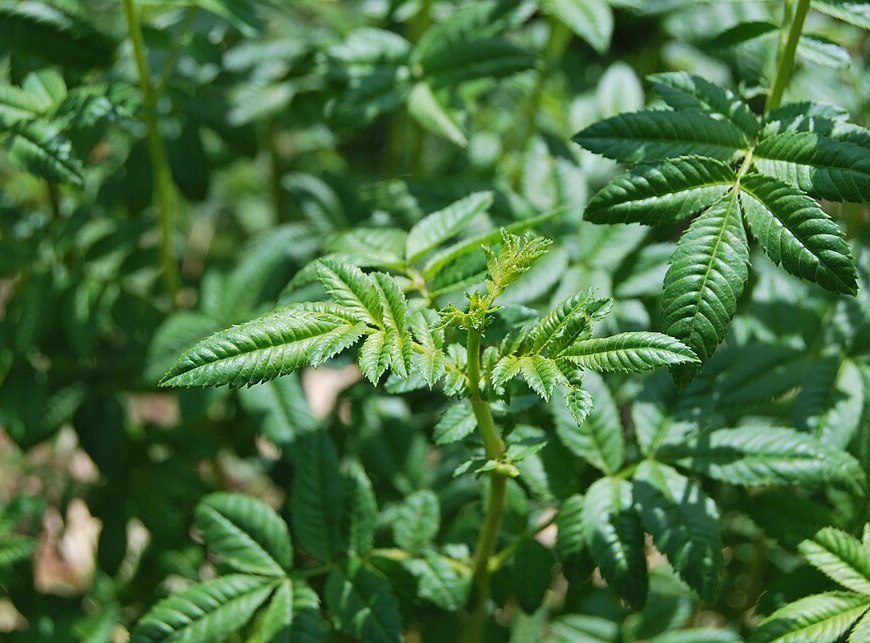
Botanical synonyms and subspecies Also called : barquito, cacamatlalin (Bye and Linares, 2013), caña de pollo, cañita, cielo azul, clavelillo, coapatli (Espejo-Serna et al 2009) (Martínez, 1979), Guia-huixi (Zapoteco) (Dupe y García, Élodie 2010), hierba del pollo, Kachaxiu (Maya), matlalli (Roquero, 2006), matlalitzic, metlalitzic, pata de gallo, quesadillas (Espinoza y Sarukhán, 1997), rosillas, texcocana (Espejo-Serna et al 2009), yerba del pollo, Yoyolxóchitl (Náhuatl) (Dupe y … Continue reading Flores Medicinales : Matlalxochitl

Quelite : Metezurras

This Post is purely for informational purposes only. I have no personal experience using this herb either culinarily or medicinally and as much of the information on this species can be contradictory I recommend caution be demonstrated. A caution like this also demonstrates somewhat the loss of knowledge with regards to plants of this nature. The wild, weedy plants are often overlooked and replaced with … Continue reading Quelite : Metezurras

Flor de Izote

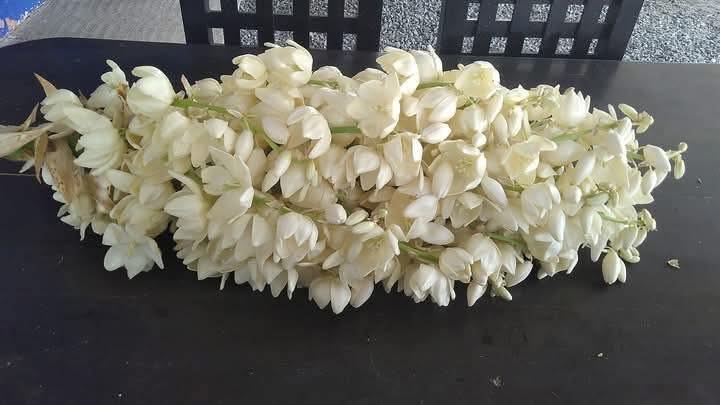
Flor de izote is the name for the edible flowers of the Yucca plant. Also called : Flor de Itabo, Lamaparas de Dios, Daguillo, Yucca flower, Cuaresmeña, Chocha, Palm flower, Pito flower, and Guayas. Izote derives from the Nahuatl word izotl (iczotl) which is the name for a species of yuca (Yuca aloifolia)  According to the Nahuatl dictionary….. iczotl. Principal English Translation: a type of … Continue reading Flor de Izote

Trans-Pecos Poreleaf

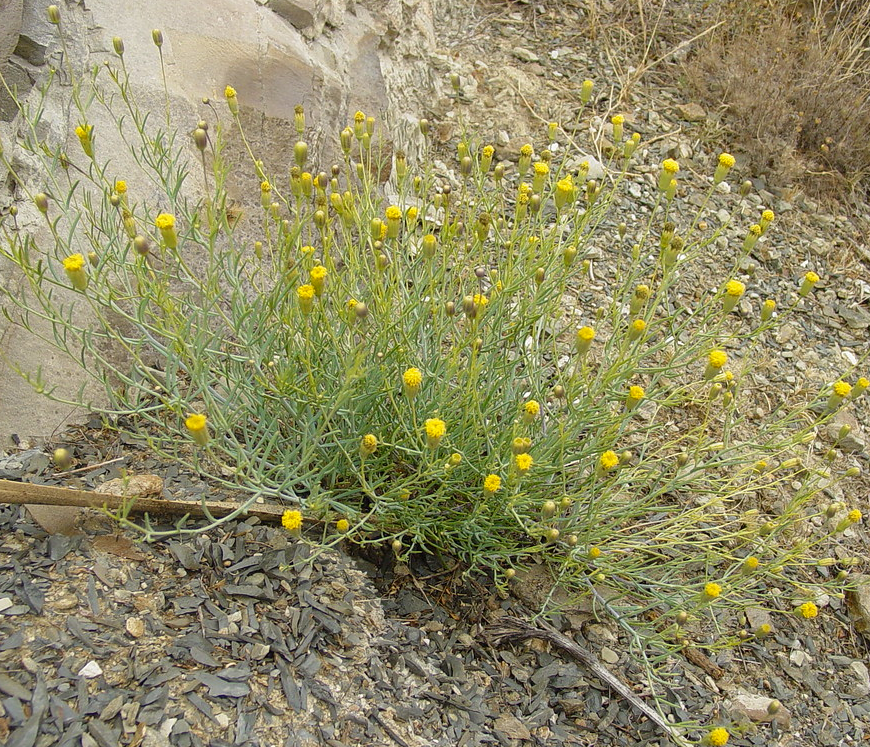
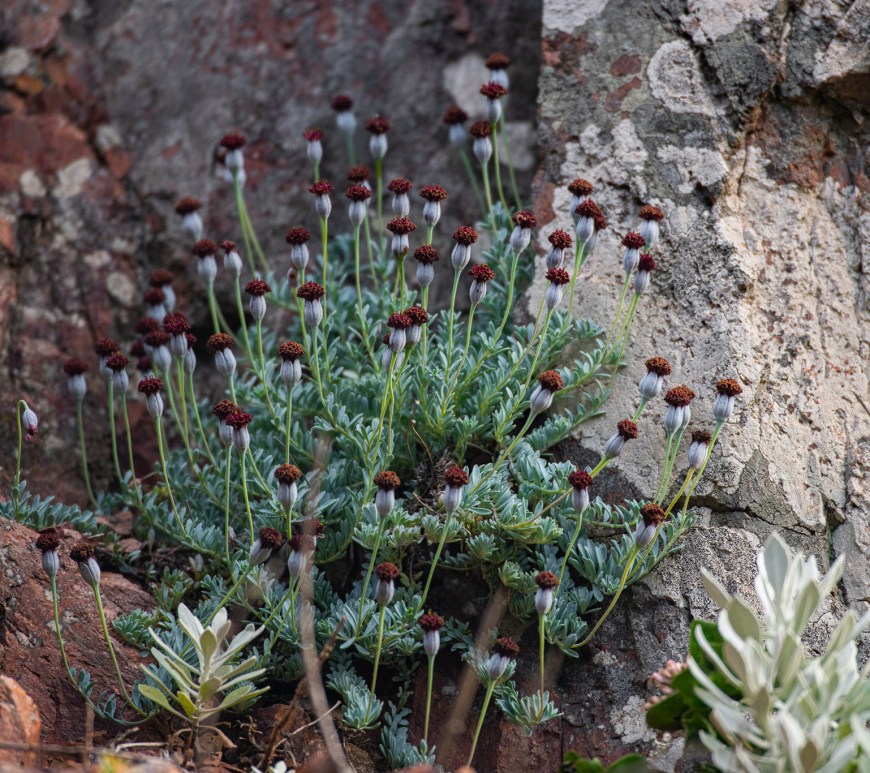
Quelite : Porophyllum scoparium delves into this herb from a Mexican point of view (1). Here we look at it from the other side of the Rio Bravo (the Rio Grande if you’re standing on its northern banks). Also called : West Texas poreleaf, The plant of the week is Trans-Pecos Poreleaf (Porophyllum scoparium), one of the many members of Asteraceae. It grows in sandy … Continue reading Trans-Pecos Poreleaf

Papalo Adjacent. The Bajacalias.

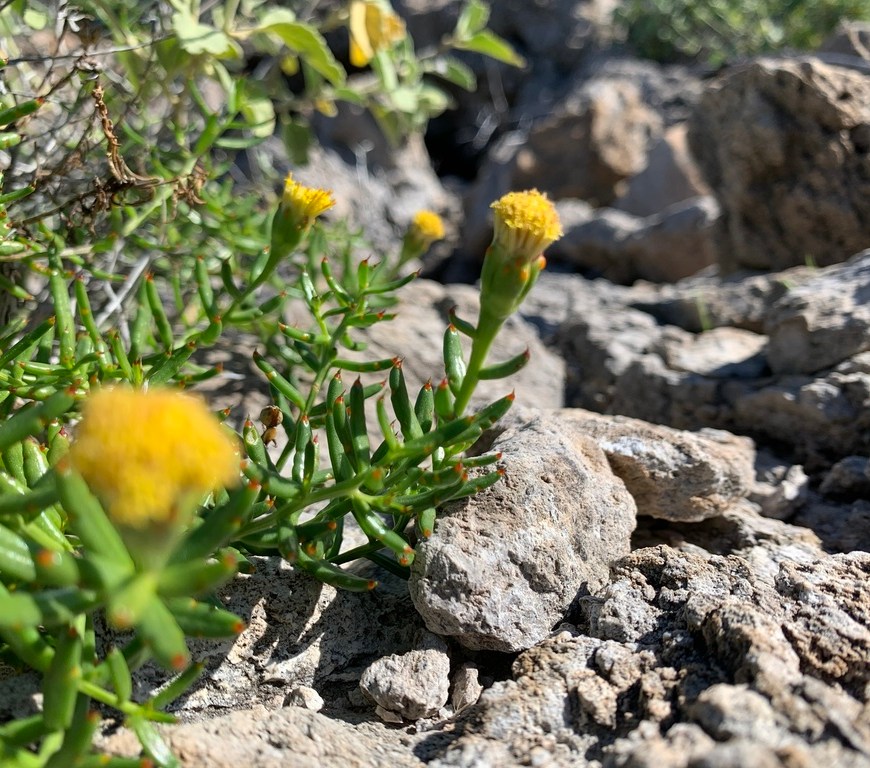
Bajacalia Bajacalia is a genus of three species of perennial flowering plants in the family Asteraceae (1), native primarily to the Baja California peninsula in northwestern Mexico. The genus name derives from “Baja California,” reflecting the restricted range of its species in that region.(Loockerman et al 2003) Geographic distribution of Bajacalia : Gulf coast of Baja California Sur, Isla Ángel de la Guarda, and three … Continue reading Papalo Adjacent. The Bajacalias.

Porophyllum maritimum

Porophyllum maritimum. Heterotypic Synonyms (1) : Porophyllum porfyreum (Rose & Standl 1916) Porophyllum porfyreum Not a great specimen to be honest. (well it was collected in 1911) Also called : Odoro (1), Hierba del venado, Seaside purslane Also known as the Seaside Poreleaf (1), it belongs to the poreleaf genus, which includes, among others, the aromatic, culinary, and medicinal P. ruderale. Porophyllum linifolim Porophyllum maritimum … Continue reading Porophyllum maritimum

Papalo and its Southern Cousins

Even though I consider Papalo (1) to be a quintessentially Mexican herb I feel I must note that the Mother of this Family (2) originates from lands further south than the Basin of Mexico and is even commonly known as “Bolivian coriander”. I have briefly written on Papalo in Peru, a land sharing a border with Bolivia, (3) which I would like to expand upon … Continue reading Papalo and its Southern Cousins

Chincho. A Peruvian Quelite

After the Porophyllum species my next favourite group of wild herbs is the Tagetes family. My favourite child would be Pericón (Tagetes lucida which is a very Mexican herb (1) but snapping close on its heels would be its southern, more Bolivian primo Huacatay (Tagetes minuta) (2). For more information on some of the perhaps more obscure members of the family also read…. Quelite : … Continue reading Chincho. A Peruvian Quelite

Xochipilli and the Bone Flower

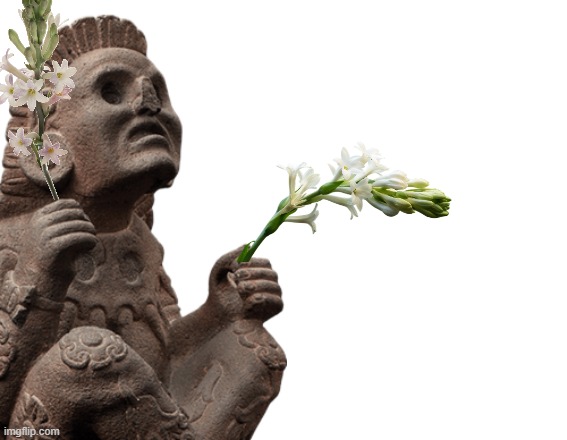
*DISCLAIMER* Any products shown in this Post are for information purposes only. I was researching herbs specific to Tlaloc when a seemingly throwaway line in an article by Ortiz de Montellano (1980) (1) noting that “Certain plants were associated with particular gods: examples include omixochitl (Polianthus tuberosa) with Xochipilli, and cuetlaxochitl (Euphoria pulcherrima) with Xochiquetzal” caught my interest (the section highlighted in BOLD immediately drew … Continue reading Xochipilli and the Bone Flower