

*FOMEX : The Friends of Mexico
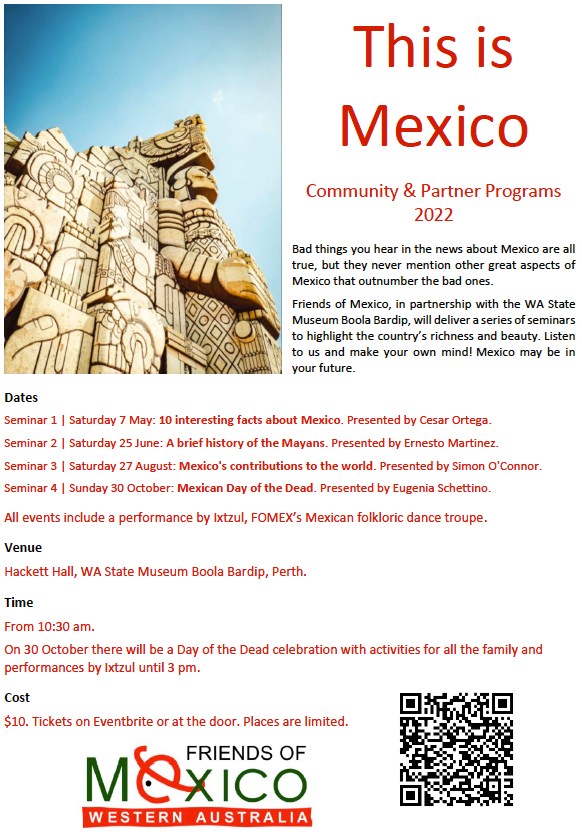
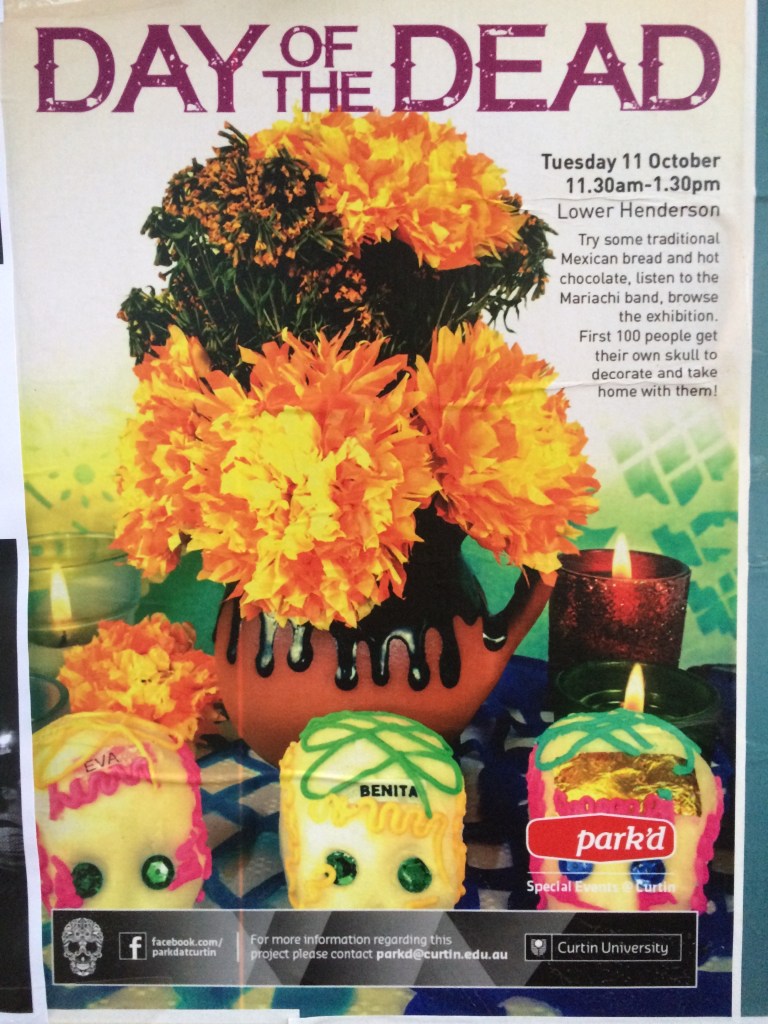
Dia de Muertos is approaching and I have been tasked with baking some pan de muerto for the celebrations about to be put on by the Friends of México Society. FOMEX has again been asked by the West Australian Museum as part of their Boola Bardip (1) program
- “Many Stories” in the Whadjuk Nyungar language of the indigenous peoples of the Swan River (Derbarl Yerrigan) region in Perth Western Australia
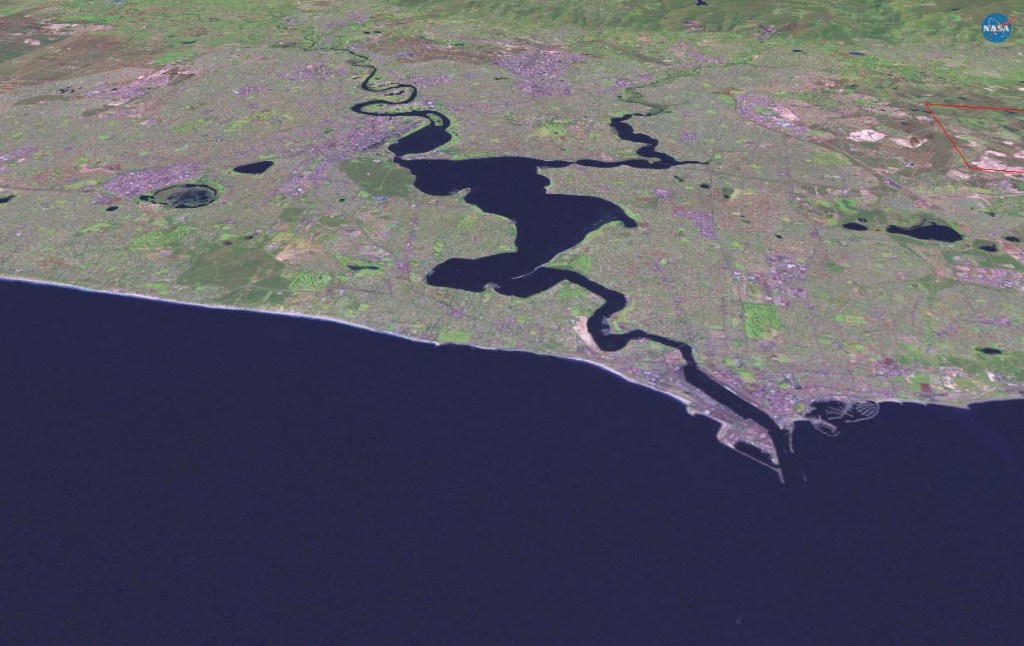
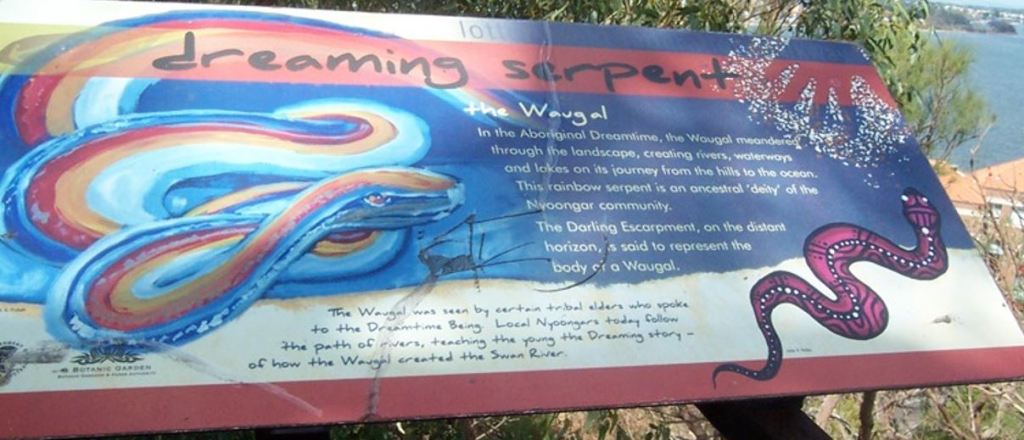
This river, the Derbal Yerrigan, was created by the mythical rainbow serpent known as the Waugal (kinda sounds like woggle) as it meandered through the landscape on its way to the ocean.
I like the fact that the land I was bought up on also has a legend of a creator serpent. It only differs from Quetzalcoatl by lacking feathers.


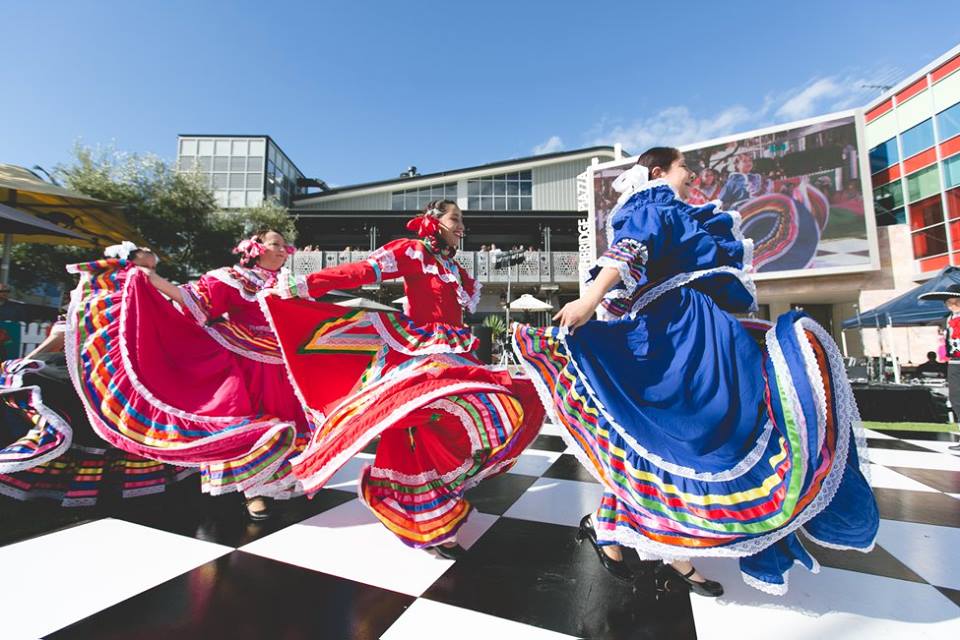
The Friends of México has been invited to the WA Museum in the past (and they’ve asked us to return in the future) to speak on the culture of Mexico and present traditional folkloric dances of México via the dance troupe Ixtzul (they’ll come up again later)
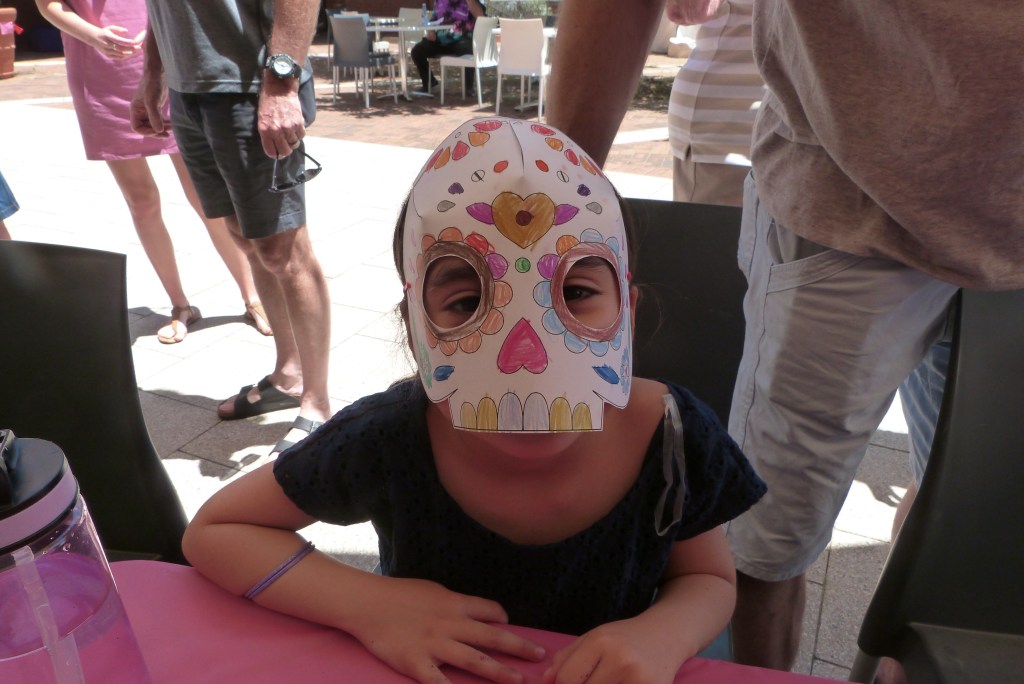
I was first introduced to FOMEX through a pinata making class that I attended with my then 8 year old daughter.

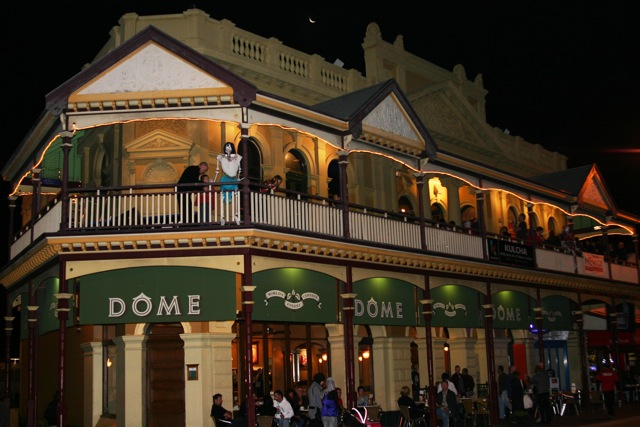
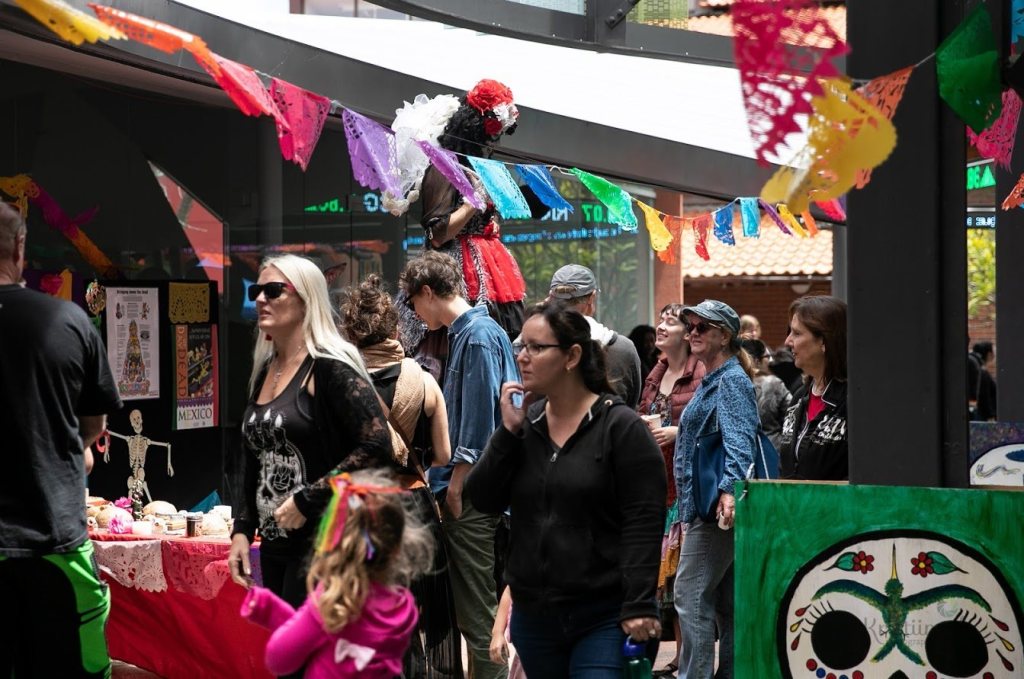
The next night we were invited to attend the Dia de Muertos celebrations at the Multicultural Arts studios of Kulcha in Fremantle Western Australia.
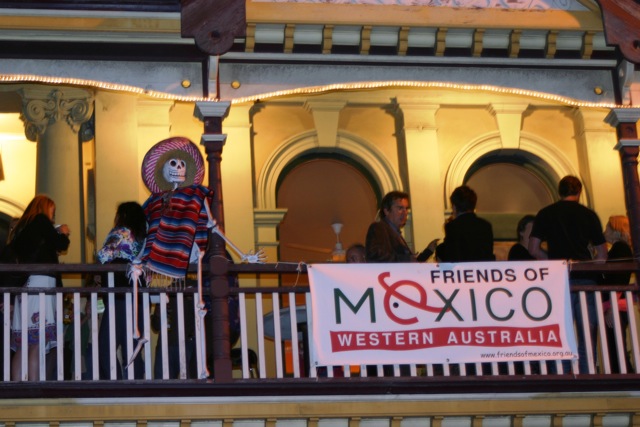
This was my first time attending these celebrations and it was my first introduction to the mythology of the ofrenda.


Kulcha is an arts centre and plenty of art was on display (I even picked up a nice piece myself)

This event and the friendliness of its Mexican contingent drew me into joining FOMEX and I have been with them ever since.
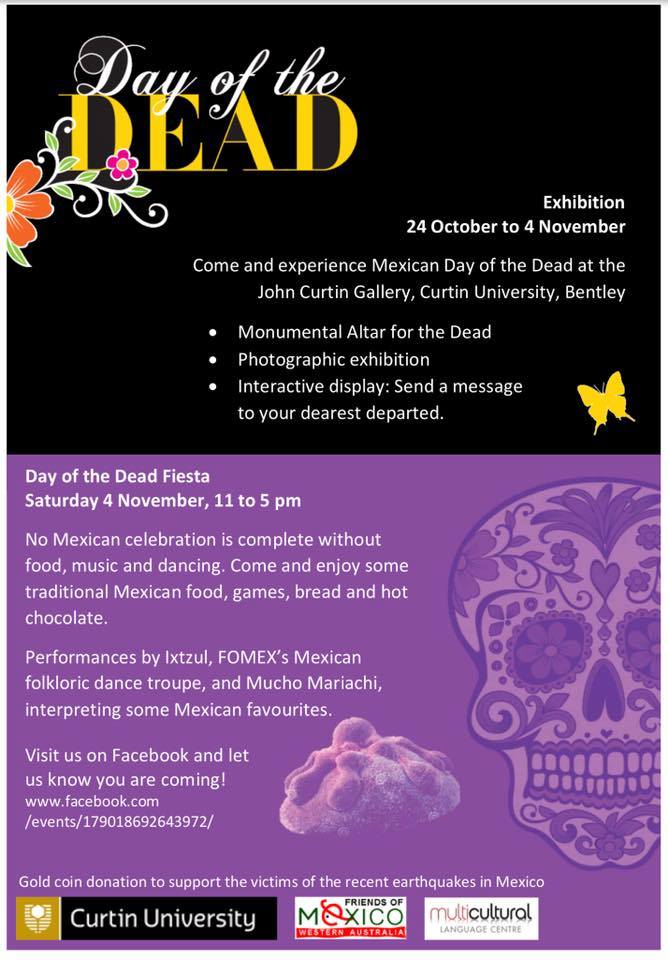
This year FOMEX is putting on two events in Perth.
The first is at the Museum…..
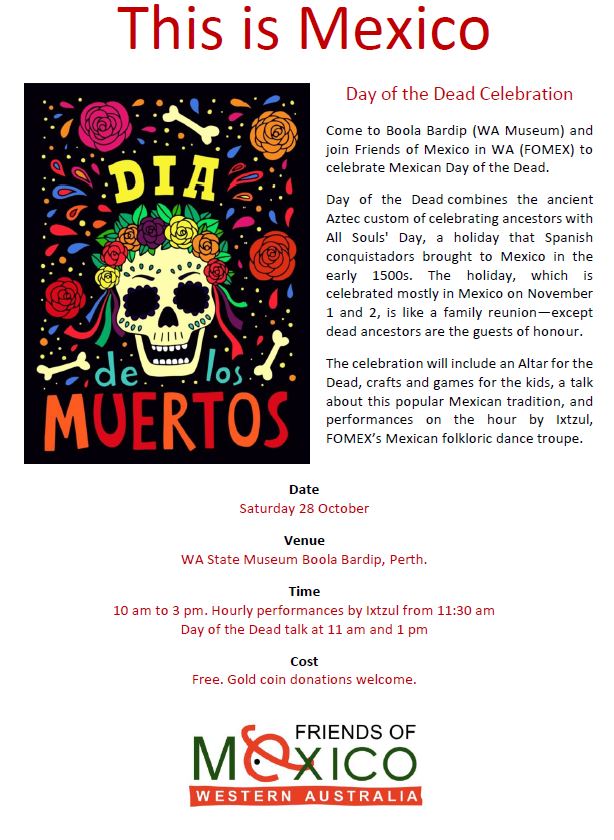
…and the second is to be held at the Hillview Intercultural Community Centre. I am most looking forward to this event as there will be pan de muerto and hot chocolate. We are unfortunately not able to offer pan y chocolat at the Museum due to rules on supplying food.

These are but the latest events to be held by FOMEX. Come, take my hand, as we take a short stroll through a small part of Dia de Muertos and FOMEX in Perth. W.A.
2012
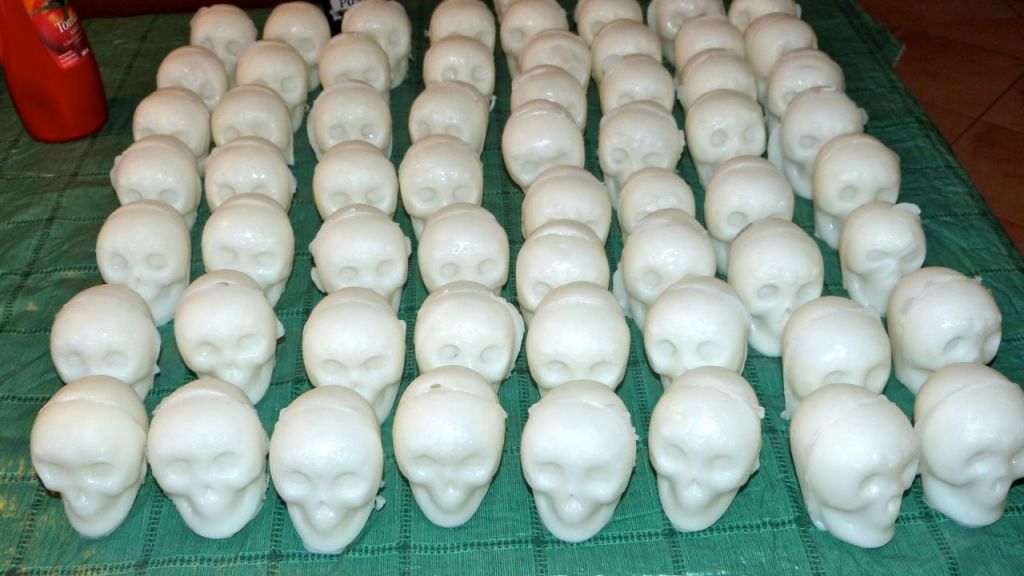
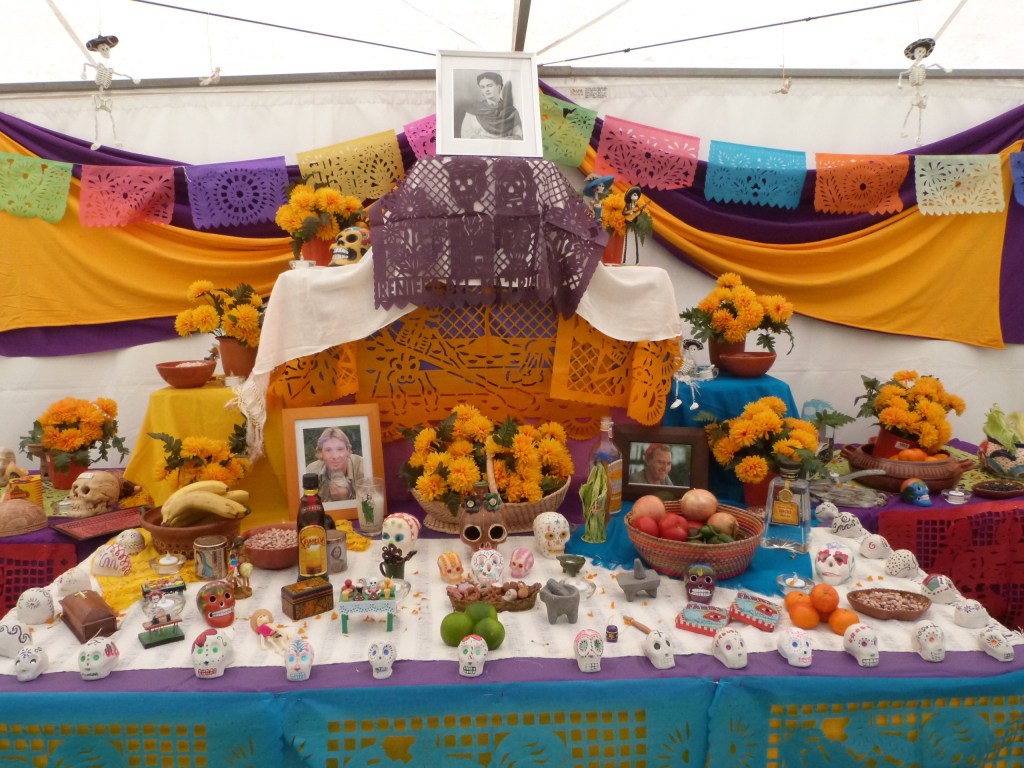
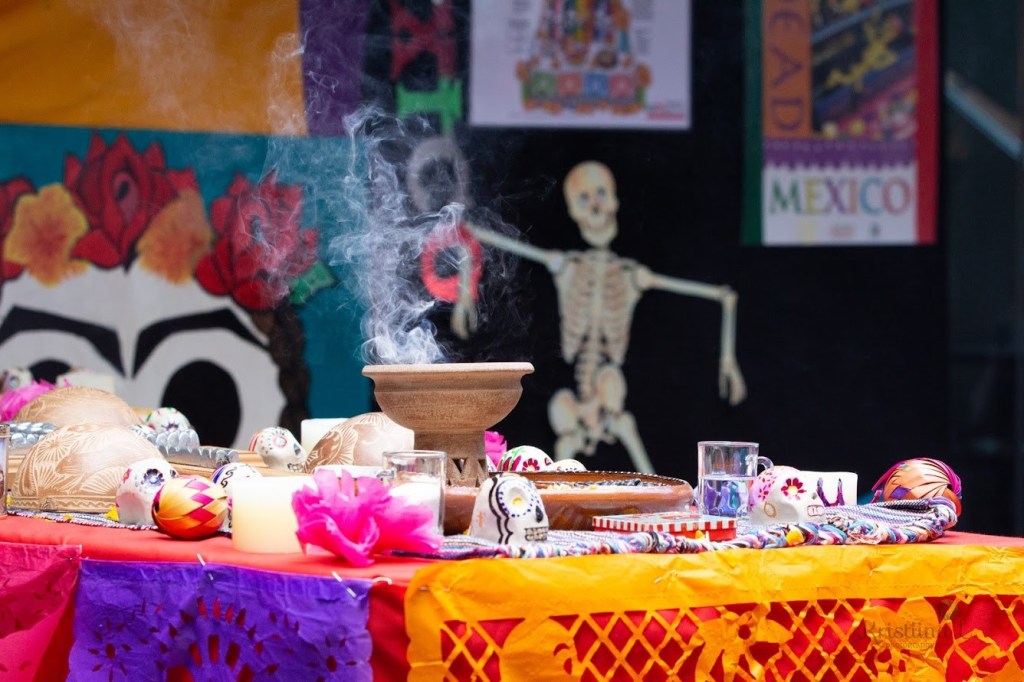
A big part of Dia de Muertos is the creation of an ofrenda or altar. Ofrendas are set up with images of those who have passed and are loaded up with “offerings” or items familiar and beloved by the deceased. This will include favourite foods and drinks as well as items such as toys if it is a child being remembered. This practice existed long before the arrival of the Spanish in Mexico so the altars contain elements specific to Mesoamerican culture.


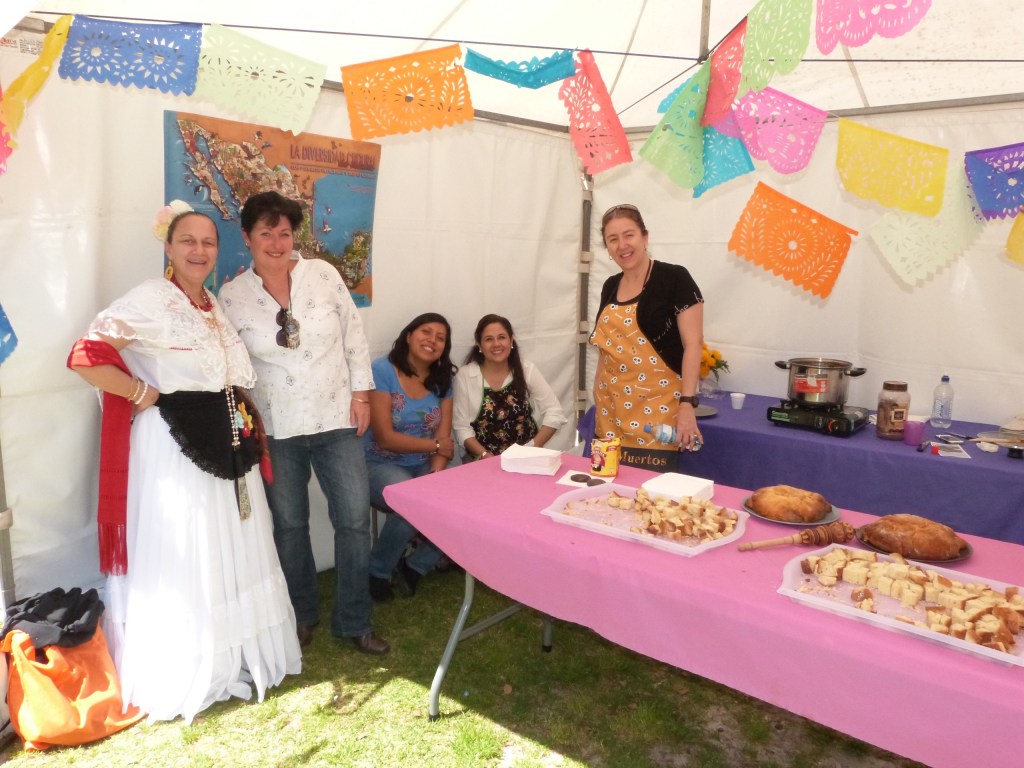
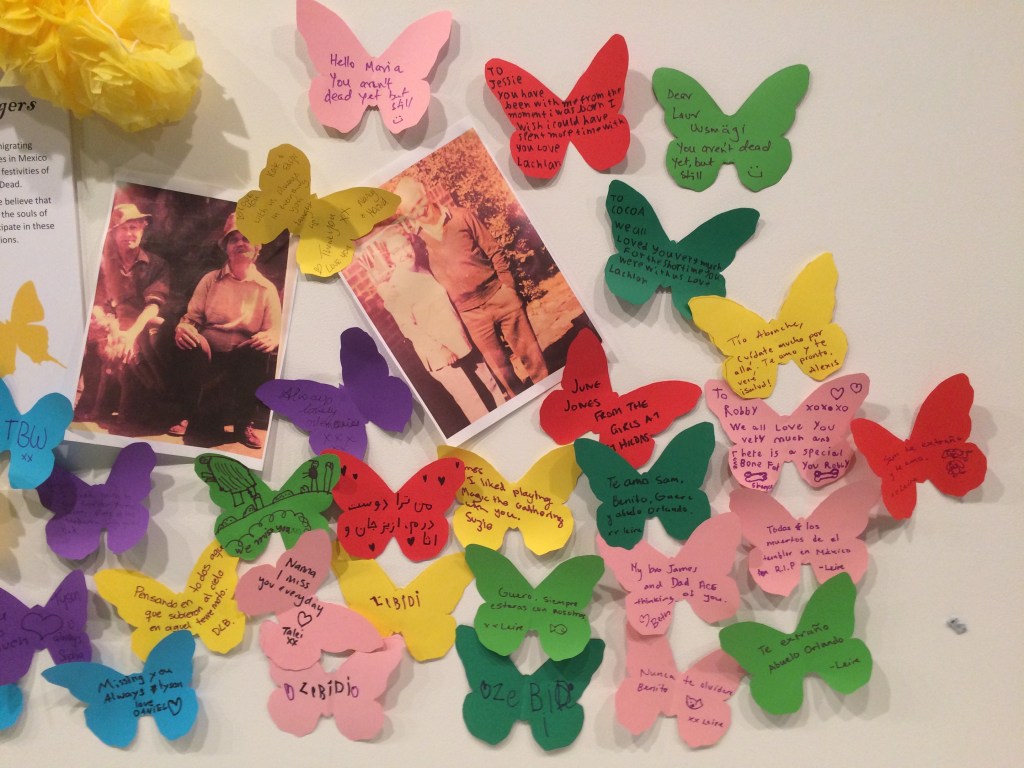
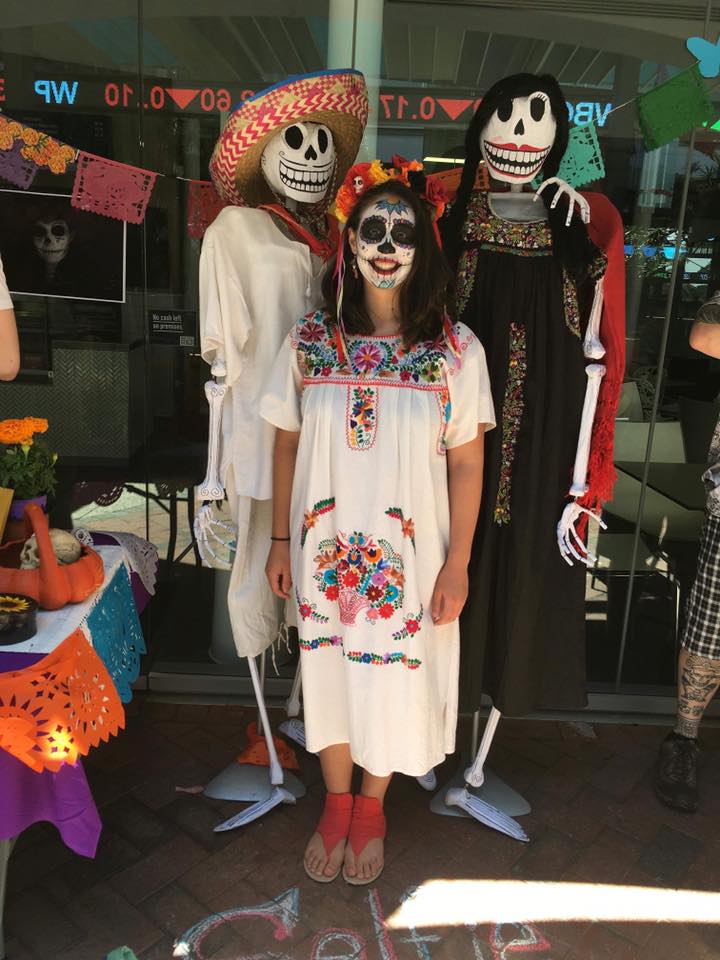
Every year FOMEX families set up an ofrenda and deliver talks explaining the significance of the altars and the celebratory nature of the event. Dia de Muertos is not a sad event but the celebration of beloved memories.




2013
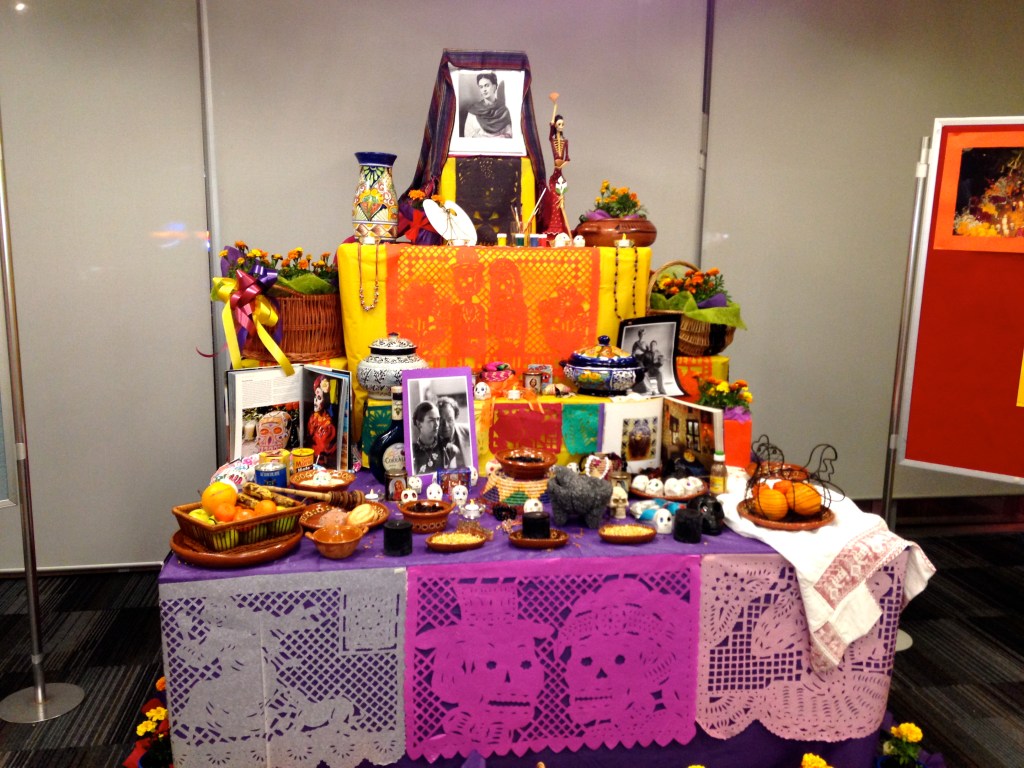

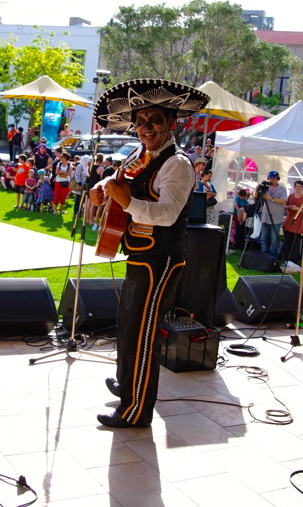

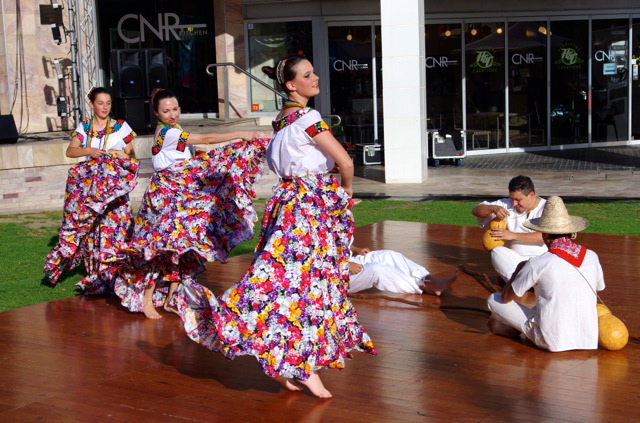
The Carnival Macabre was a week long festival of the cultural celebrations of death as they appear in various cultures. Held in Northbridge in Perth Western Australia this event has been attended by FOMEX on several occasions. FOMEX in Perth has also been blessed by the presence of Ernesto, a teacher of folkloric Mexican dancing (and a gun on the culture of the Maya), and his troupe known as Ixtzul performs a wide range of region specific dances which highlight the richness and diversity of Mexico.
2014


2015


2016

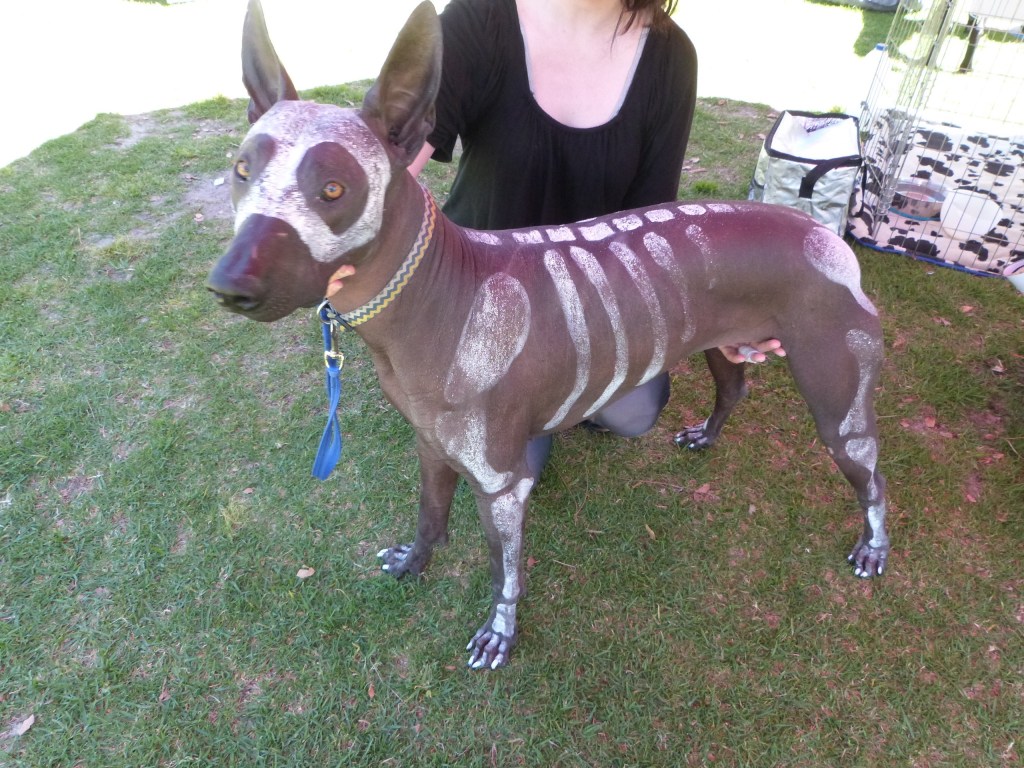
Long regarded as guardians and protectors, the Xoloitzcuintli (a hairless dog from Mesoamerica) was believed to safeguard the home from evil spirits as well as intruders. In ancient times these dogs were often sacrificed and then buried with their owners to act as guide to the soul on its journey to the underworld. The faithful guardians task was to guide the soul of his or her master through the nine levels of “Hell” to reach Mictlan or heaven, by helping him cross the Apanohuacalhuia river that was a major obstacle in getting to Mictlan.
Mictlan was only reached after four years of wandering, accompanied by this dog that had been cremated with the deceased. The first level of Mictlan (the house of Xóloth) was called Apanoayan (where one crosses the river), this place was also known as Itzcuintlan (the Place of Dogs) because of the many dogs that roamed the near shore. A dog that recognised its former owner would carry him across the river on its back.
The dog had to swim across the river with the soul of the person on their back. A red dog was preferred because black ones were too “dirty,” and lighter coloured dogs were too “pure,” nonetheless the dog would get dirty with the contact from the water meanwhile, crossing the river with the soul of his or her master on the back. In some accounts, the dogs on the shore act differently according to their colour, yellow dogs would carry the soul of the deceased across the river, while white dogs refuse because they have just washed themselves and black dogs refuse because either they have just swum the river or because they are dirty.

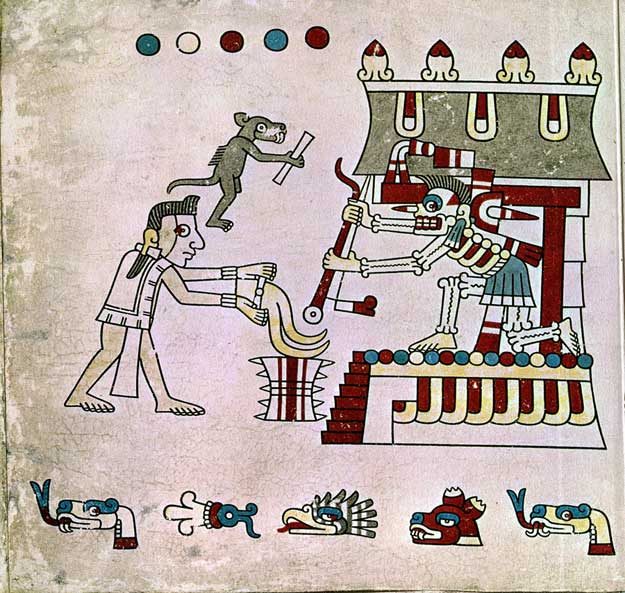
After arriving in Mictlan, they met Mictlantecuhtli, (the Lord of the underworld). Mictlantecuhtli would then ask of the dog if they wanted to stay in heaven or return to earth. In order to return to earth however they had to cross the river one more time. In crossing the river (back to Earth) this time they got cleansed. They would return with white marks on their legs, chests, tail, (and sometimes face) due to being splashed by the water of the river. Back on earth, everybody knew that a Xoloitzcuintle with these birth marks had returned to earth from the underworld

2017




2018


2019





……….
COVID
……….
2022

Bread and chocolate


Another important element of this celebration is the pan de muerto or the “bread of the dead”. This bread is an example of the mestizaje, or cultural intermixing that is México. The bread is of course a result of Spanish influence as it contains ingredients such as wheat flour, butter, anise seed, and oranges which were all introduced via the Colombian Exchange (1). The bread (and the celebration) have a much older history though. The Dia de Muertos were celebrated by prehispanic Mesoamericans but instead of pan de muerto the people partook of a “bread” called tzoalli which was made from the seeds of the amaranth plant (2). The Spanish did not like the use of tzoalli because it too closely mirrored the use of the eucharist in the Catholic ceremony of Holy Communion
- The Columbian Exchange is a term coined by Alfred Crosby Jr. in 1972 that is traditionally defined as the transfer of plants, animals, and diseases between the Old World of Europe and Africa and the New World of the Americas. The exchange began in the aftermath of Christopher Columbus’ voyages in 1492, later accelerating with the European colonization of the Americas.
- Amaranth and the Tzoalli Heresy

(which MUST be made from wheat flour)

In the Catholic religion bread and wine are transubstantiated into the body and blood of Christ which are then consumed by the adherents in a ritual involving the communion with God and the remembrance of the sacrifice of his son Jesus through his crucifixion by the Romans. In Mesoamerican ritual, tzoalli was made to represent a specific deity (sometimes even mountains) and at the end of the ceremony the effigies were broken up and eaten by the participants. The Aztecs may not have understood Christianity but they certainly understood sacrificial rites and theophagy (1).
- theophagy = “god eating”
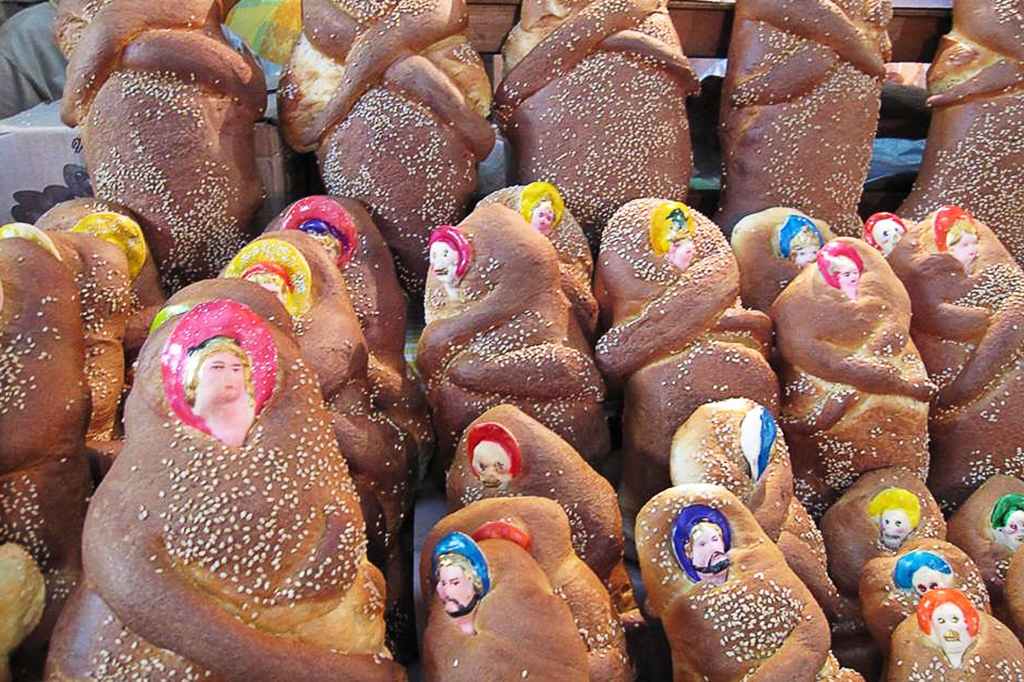
Traditions continue and evolve. Oaxacan pan de muerto has blended the old and the new into something reminiscent of both but nothing like either.
and for those interested….
Pan de muerto
SERVINGS : 12 small rolls or 2 large breads.
INGREDIENTS
- 5 – 5 1/2 cups 650 – 690g) All Purpose flour
- 2 Tablespoons active-dry yeast (2 packages active-dry yeast)
- 100 grams sugar (½ cup)
- 1 teaspoon salt
- 115 grams butter (at room temperature) (1 stick = ½ cup = approx 115g)
- 4 large eggs room temperature
- 2 Oranges (zested and juiced)
- 60 ml. warm water about 110 degrees F (40C – about “blood temperature”)
- (OPTIONAL) 1 teaspoon orange blossom water or orange essence
- (OPTIONAL) 1 teaspoon anise seeds
- 1 large egg lightly beaten to brush the bread (and stick the bones on)
Glaze
- ¼ cup orange juice
- ¼ cup sugar
Sugar to decorate the bread at the end.
INSTRUCTIONS
- In a saucepan over medium heat, warm butter, milk, and water; until butter has melted. Do not let boil.
- In a large mixing bowl, combine ½ cup of flour, yeast, salt, anise seed, and sugar. Slowly beat in the warm milk, orange extract, and orange zest until well mixed. Add eggs, one at a time, mixing through. Slowly add in another 1 cup of flour. Continue adding additional flour until the dough is soft but not sticky.
- Turn the dough out onto a lightly-floured board and knead for at least 10 minutes or until smooth and elastic. If the dough is dry add some water and if it’s too wet add some flour. Form the dough into a large ball and cut into four even pieces.
- Lightly oil the interior of a large bowl (so the dough won’t stick to the bowl); transfer dough to bowl and cover with plastic wrap. Let stand in a warm place until it doubles in size, about 45 minutes to 1 hour. (maybe longer if its cold outside)
- Transfer the dough from the bowl onto working surface, Cut ¼ of the dough and set aside for making the bones later on. Cut the remaining dough in half (for 2 larger breads) or into smaller balls (12) to make smaller buns.
- Take one portion of the dough and roll into the appropriate sized ball or loaf
- Now take the remaining dough we reserved for our bones onto the work surface, dusting with flour if needed, and knead until the flour is integrated perfectly
- We take small portions of dough and roll in small logs putting a little pressure with the fingers to form the bones.

9. Once your bones are already formed (we need 2 for each bread). Brush each roll forming a cross on top of each bun with a mix made out of the remaining beaten egg with 1 Tablespoon of water, once we marked the cross with the brush we place the bones
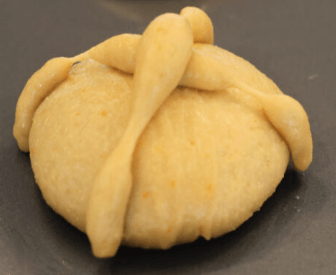
10. And finally, with the leftover dough form small balls, varnish the center of the buns where the bones come together and put the ball there. Cover with plastic wrap and let rise in a warm place until dough has doubled in size (up to 1 ½ to 2 hours)
11. Preheat oven to 350 degrees. (175-180C) (160C if using fan forced oven)
12. Add a pinch of salt to our mix of egg and water and brush the buns before placing in the oven.
13. Transfer buns to oven and bake until golden brown,
- 15 to 17 minutes, approximately, if making the small buns.
- If you are making the larger version the baking time will change a little. Bake at 350F (175-180C) for 30 to 45 minutes, or until it sounds hollow when tapped on the bottom. (when the bottom of the bread is golden it indicates that they are ready).
14. While the bread is baking make the glaze by boiling the sugar and orange juice together until slightly syrupy. Set it aside
15. Remove the loaf from the oven, transfer to a wire rack and and allow it to cool slightly. Brush with the still warm glaze. Sprinkle with sugar.
References
Oaxacan pan de muerto – https://www.texasmonthly.com/food/tex-mexplainer-pan-de-muerto-is-a-cross-cultural-taste-of-history/
Tzoalli – https://mxcity.mx/2023/09/ritual-del-tzoalli-antecesor-prehispanico-del-pan-de-muerto/
 Masa Americana