
I have posted on the herb chipilin previously and noted both its culinary and medicinal uses. Check this out at Quelite : Chipilin : Crotalaria longirostrata

I want to expand upon my original Post with some cultural background on the herb and a legend on the creation of the plant. Many plants have creation myths, usually involving death, violence and/or a tragic love story, and this plant is no different. I am familiar with many Western herbs and their creation myths (such as Minthe/Menthe (Mint) who was a consort of Hades and was killed due to the jealousy of his wife Persephone) and will at some stage in the future dedicate a Post to some of these legends. There are also the stories of Mayahuel and her love affair with Quetzalcoatl which led to the creation of the maguey plant (1) or the story of the murder of Copil, the son of Huitzilopochtli and Malinalxochitl, due to his treachery and the myth of the nopal plant springing from the rocky ground upon which his cardiectomised (2) heart was flung (3) (4).
- Mayahuel and the Cenzton Totochtin.
- I’m not even sure this is a real word. A cardiectomy is the surgical removal of the heart (which the Mexica were kinda big on doing) so I’m gonna run with “cardiectomised”
- Huitzilopochtli, Tenochtitlan and the Opuntia Cactus
- No tacos para ti : Prehispania Mania
So today let me spin you the tale of………..
LA LEYENDA CHIPILINEZCA. THE CHIPILINEZCA LEGEND
I have taken several versions of this legend from various sites and all are essentially the same. I’ve included some of the version as told on the Blog “Un Mundo de Tamal” as they use some colourful colloquial language which made me giggle a little. I love the etymology of words and am always interested in how language (and slang in particular) evolves.
Mayan legend has it that Chac, the God of rain, was “in love with” (1) (‘hizo agua la canoa”) Ixchel, goddess of the moon and daughter of Tláloc. But she did not reciprocate his love; she made him so “fuchi” (2) that he threw a tantrum and out of his spite for not having the love of the Goddess he covered the sky with frightful black clouds so that no one could see her beauty and she would be left to wallow in her loneliness. According to tradition, the sky was covered in clouds and it rained without pause for three years. Everything overflowed and flooded, the crops were spoiled, leaving the people without food. Tlaloc was very worried, people and animals were dying. One night, Ix Chel, seeing her father Tlaloc so “dejected” (3)(“arrastrando la cobija”), decided to look for a solution that – although sad for her – was her only way out and that was to marry Chac and to convince him with her beauty to remove the veil of clouds from the sky so that the rain would stop. But what Chac thought was his triumph was actually a trap set by Ix Chel. Chac thought that this Goddess had really fallen for him and prepared the bodorrio (4). But much to his surprise, he remained “dressed and in an uproar” (5) (“vestido y alborotado”). On their wedding night, at the precise moment when Chac swept away the clouds, she escaped in the form of small green leaves that fell like rain over the land. These leaves offered a food source which the people were sorely in need of due to the damages caused by the last three years of floods. The Mayan ancestors called them “Chepil-Ix”, which means “leaves of the moon” (hojas de luna) and this is how what we know today as chipilín (6) was born .
- (hizo agua la canoa) – it means literally “my canoe is letting in water”, but it seems to that it is used colloquially to mean “I’m longing for it”, “I’m drooling at the thought of it – ” in English something more like “I’m dying to see you to have sex with you” (often a reference to homosexuality – although it can reference a lady who is anxiously awaiting her man)
- fuchi – an informal expression used to convey disgust or repulsion. It is often used to express a sense of (disgust) distaste or aversion towards something unpleasant or offensive
- “arrastrando la cobija” – literally “dragging his blanket”
- Boda = wedding : bodorrio – (a colloquial term) meaning variously : styleless wedding : (pejorative) poor wedding. Mexico) (= fiesta) rowdy party : despectivo (derogatory) , coloquial (boda: celebración impropia) : bad wedding party : expensive and tasteless wedding
- “vestido y alborotado” – another colloquialism meaning to be “stood up” – a phrase that can be used in a few different ways, but generally means to have been left waiting or neglected by someone who was supposed to meet with you (or in this case to be “left standing alone at the altar)
- chipilín is said (Rodriguez Campos etal 1998) to be a Náhuatl word meaning “food with which the sick will gain strength” although I have not been able to find this word in any of my dictionaries. Another word, this time from the Tzotzil language (a Mayan people from Chiapas) is “Tsi-ipilli” which means “herb of strength” (Hierba de la fuerza). There are more references to this word, not many though, but they are all the same, word for word.



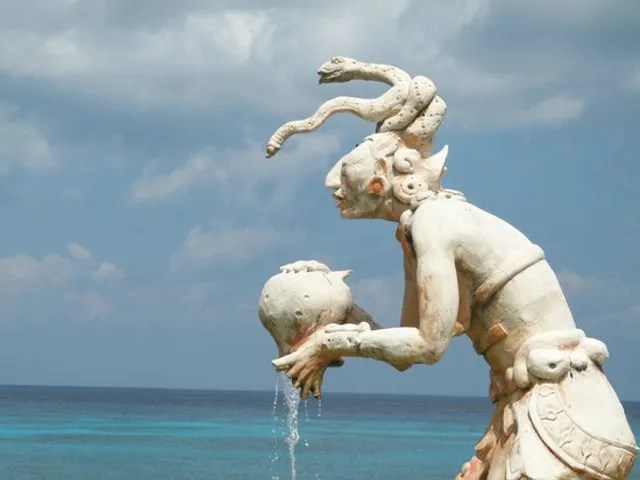
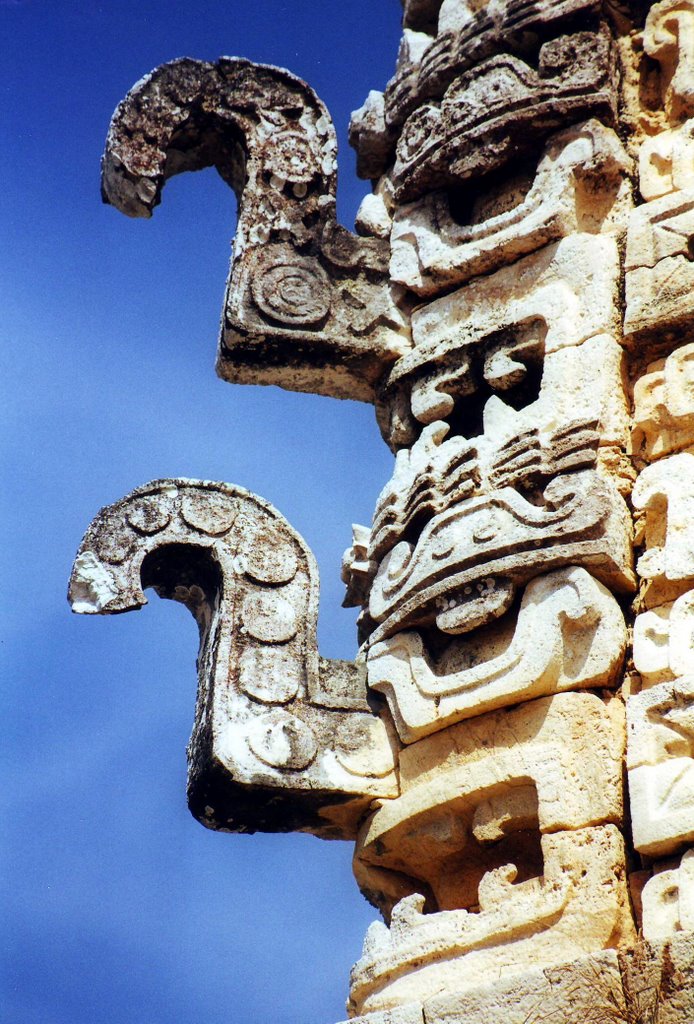
Chac (also Chaac)

Not what you’d call a “looker”


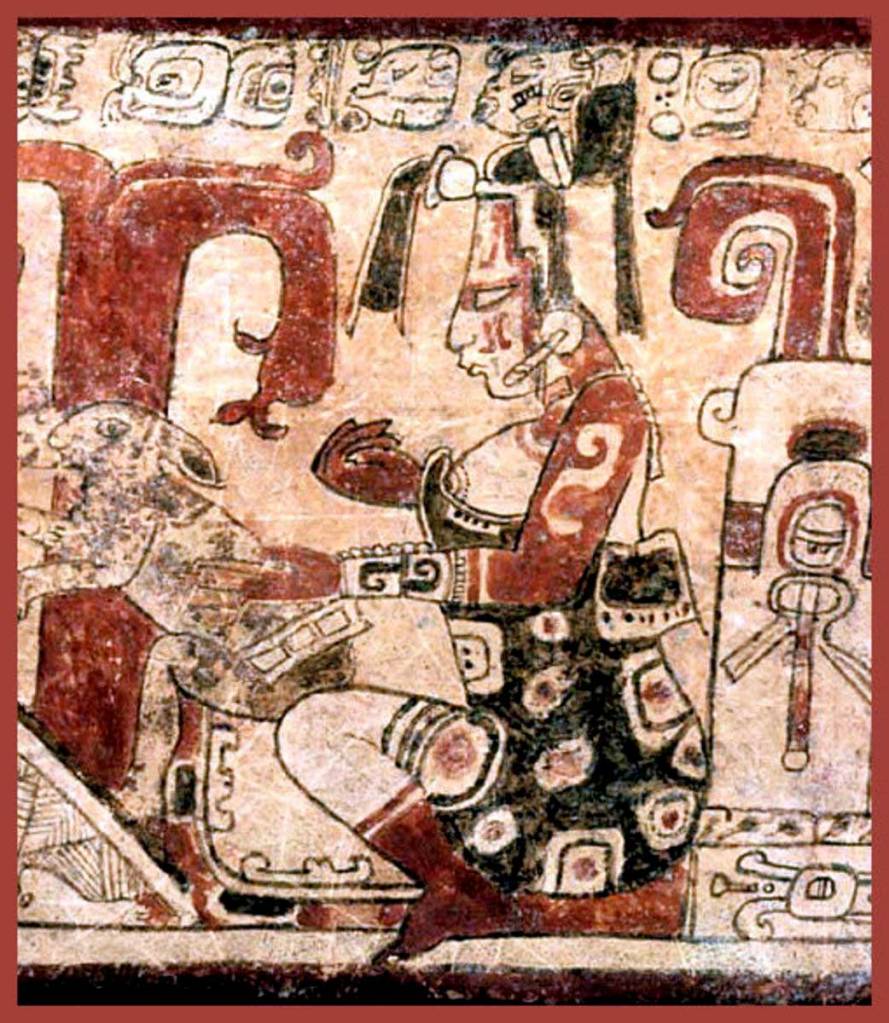
Ixchel

Ix Chel is said to be the Goddess of fertility, childbirth and medicine. She has also been connected with rain (due to her upturned water jug in the image above)(Taube 1992) and war (due to her aspect as a Jaguar Goddess) (Miller etal 2004). She has also been linked with the moon via the symbol of the crescent moon but this connection with the moon is potentially spurious however as various authors have noted that there is no direct ethnographic evidence to show this (Thompson 1970)(Arden 2006). She does have aspects of a young woman and an aged midwife and this does somewhat coincide with the maiden/mother/crone aspect of femininity and the waxing/full/waning aspects of the moons cycles.


The “Isla Mujeres” (Island of women) was so named by the Spanish conquistador Hernández de Córdoba “on account of the idols representing the Goddesses of the country which he found there, such as Ixchel, Ix Chekel Yax, Ixhunie, Ixhunieta. They were clothed from the waist down and had their breasts covered, as is the custom of Indian women” It has been said that Maya women seeking to ensure a fruitful marriage would travel to the sanctuary of Ix Chel on the island to seek an oracle and a prediction on their pregnancy.
She is also often depicted (usually as a beautiful young maiden) with a rabbit which is a symbol of fertility and abundance in many different cultures. The rabbit also plays a fairly large role in the mythology of the Mexica and their stories of the moon and, where wester mythology sees a “man” in the moon the Mexicans see a rabbit. The rabbit in these myths also play a fairly large role with another young goddess called Mayahuel, drunkenness and the drink called pulque.
Mayahuel and the Cenzton Totochtin.
Pulque Curado : Sangre de Conejo (Rabbits Blood)

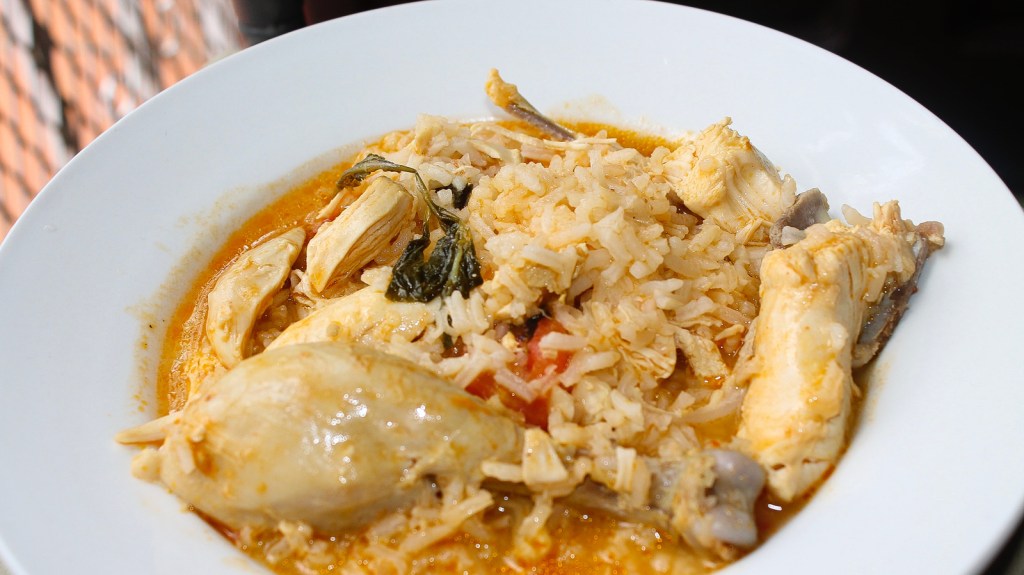
What follows is a Salvadoran recipe for Arroz aguado con Chipilín adapted from a recipe on the Blog Gastronomía Salvadoreña (Salvadoran Gastronomy) by Kevin Gómez (see References for a link to Kevins Blog).
Arroz aguado con Chipilín. (Watery rice with Chipilín)
The recipe is called an “aguado” which typically denotes a watery or soupy dish (see explanations below the recipe). Kev’s recipe seemed to have been tailored to someone with a certain amount of culinary knowledge and ability so various things (such as amount of water used) and possibly preparation steps didn’t make it into his preparation explanation. perhaps the dish is so simple and commonly cooked that these steps didn’t warrant explanations as they are commonly known. I have tried to remedy this for the less than expert cook.
Ingredients (for 4 people)
- 200g onion (sliced thinly or finely chopped)
- 20g garlic (finely diced)
- 130g green chili (finely chopped)
- 1 chicken (preferably in pieces)
- 300g Chipilín leaves
- 360g plain white rice
- 820g potatoes (cut into 1cm cubes)
- 200g carrot (cut into 1cm cubes or 1cm thick rounds)
- 1 teaspoon ground Annatto
- 1 teaspoon ground cumin
- salt and pepper to taste
- 100g chopped cilantro
Method
- Place the chicken, cover with water and bring to a boil. You’ll want to use a couple of litres of water. Your finished dish will be more or less soupy depending on the amount you use here so use your judgement/preference for the amount of water used depending on how “liquid” you want your finished sopa to be. Once the water boils add the carrot and potato, turn the heat down to a simmer and cook for 12-15 minutes. Drain off the cooking water and save it. Set aside the chicken and vegetables until later.
- Use the water you cooked your chicken in to cook the rice. Hopefully you’ve got about 4 – 6 cups.
- In a separate pot place the chipilin, onion, garlic and chile. Cover, just barely, with water and cook at a low simmer for 12-15 minutes.
- add the cooked chicken and vegetables to the chipilin mix.
- add the cooked rice and its water to the chicken/chipilin mix
- add the spices and simmer for a few minutes more so the flavours amalgamate. Season with salt and pepper.
- turn off the heat, add the chopped cilantro and stir through. Serve immediately
Here are Kevin’s instructions for comparison
Hervir a fuego lento el chipilín, cebolla, chile, ajo.
Incorporar los vegetales al arroz.
Proceder con calentamiento de los ingredientes, incorporar la zanahoria hervida y la papa.
Mezclar ingredientes para adherencia de sabor.
Mientras se calienta, preparar el pollo y luego incorporarlo a la mezcla.
Luego de calentar agregar especias para mejorar el sabor.
Which (more or less) translate as
- Boil the chipilín, onion, chili, garlic over low heat.
- Add the vegetables to the rice.
- Proceed with heating the ingredients, add the boiled carrot and potato.
- Mix ingredients for flavor adherence.
- While it is heating, prepare the chicken and then add it to the mixture.
- After heating, add spices to improve the flavour.
AGUADO (another culinary term to add to your repertoire)
la Real Academia Española notes of the word (as coming from Colombia/Guatemala)
Dicho (1) de una cosa: Blanda (2) y sin consistencia. (soft and without consistency)
adjective : a word naming an attribute of a noun (a word that refers to a thing), such as sweet, red, or technical.
- watery
Collins Dictionary puts it this way
Latin American Spanish
Adjective (= diluido “diluted”)
- of sopa (soup) : thin/watery
- of leche (milk) or vino (wine] : watered down
- Dicho – a “saying”
- The word “bland” can also mean (of food or drink) unseasoned, mild-tasting, or insipid (lacking flavour; weak or tasteless)
Now if you Google “Arroz aguado” for images you’ll get quite a variation of images. Here are a few to give you some idea of the dish.
A popular dish in Nicaruaga


Here is a vegetarian variation on the recipe from Tuxtla Gutiérrez in Chiapas
Sopa de chipilin con bolitas

Ingredients
- 500g. fresh tender corn (on the cob)
- 2 bunches Chipilín leaves
- 100 gr. Onion
- 150 gr. Tomato
- 2 lt. Water
- Salt to taste
For the bolitas: (See NOTES)
- 500 gr. Nixtamalized corn dough – if you do not have access to fresh masa the bolitas can be made from rehydrated masa harina (masa “flour”). See **NOTES** below.
- 400 gr. Queso fresco
- 100 gr. Lard
Preparation
1.- Shell the corn and remove the chipilín leaves, wash and drain.
2.- Finely chop onion and tomato; reserve.
3.- For the bolitas : place the masa in a container, add salt and 1/3 of the chipilín leaves. Mix and form balls of approximately 20 gr. filling them with cheese and set aside.
4.- Fry the onion and tomato, add water and corn kernels and let it come to a boil.
5.- When the corn is already cooked, add the remaining chipilín leaves and the bolitas to the broth, adjust the seasoning and simmer until they begin to float. Do not boil the broth too rapidly once the bolitas are added as they may fall apart.
**NOTES**
- These “bolitas” are small dumplings (a variety of which are called chochoyotes). They can be made from fresh masas (as is the case here) or from rehydrated masa harina.
- Here’s a recipe for a variety containing hoja santa (which can be omitted of course – it will add an anise flavour to your bolitas). Instead of the hoja santa in the recipe below you could use some chopped chipilin leaves (as in the recipe above) or chopped chilantro leaves (or any soft herb you want really – try mint or lemon verbena – possibilities are endless).
- Refrigerate your dumplings for 30 minutes or so before adding them to the cooking soup. This will help them form disintegrating.
- Add your bolitas towards the end of the cooking process and do not boil them rapidly as they will disintegrate.
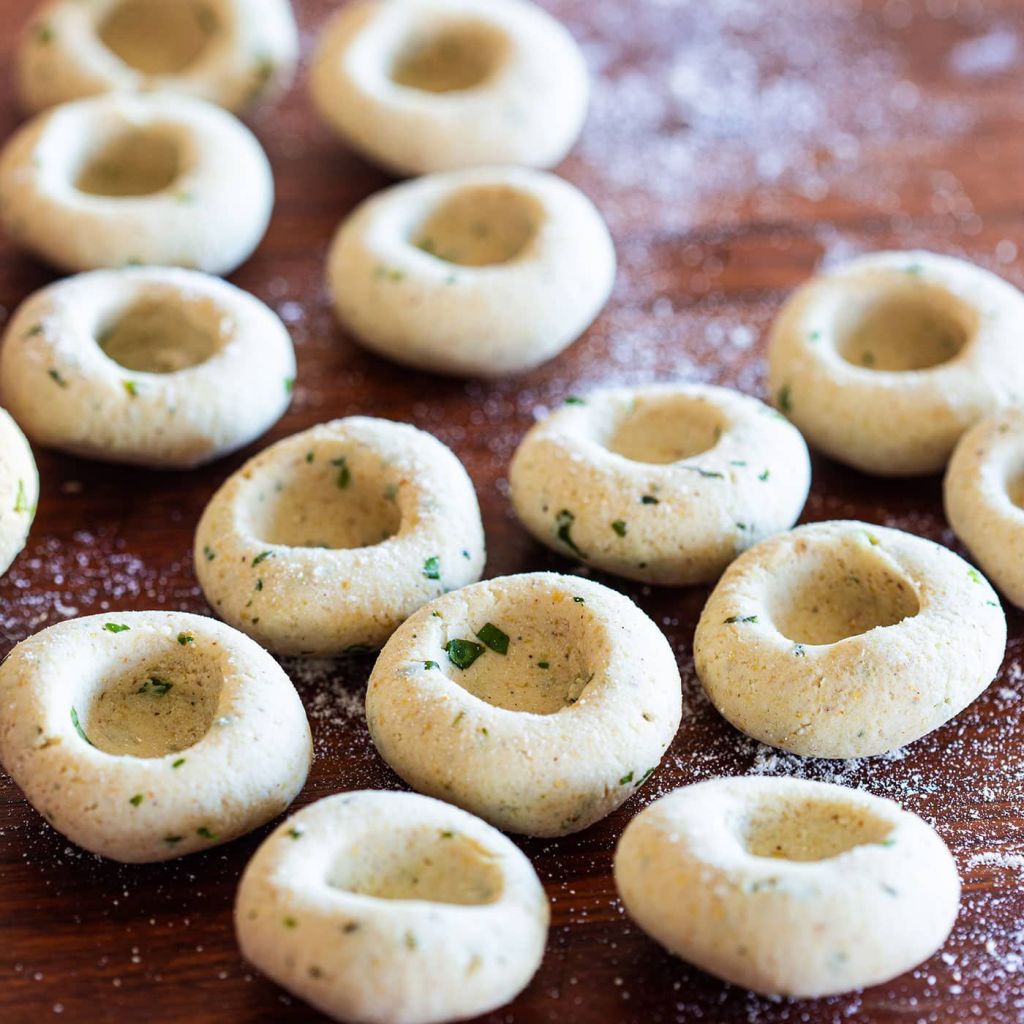
- Chochoyotes are also different in that they have a ‘dent” in them rather than being a nice rounded little ball shaped dumpling
Chocoyotes/Bolitas/Masa dumplings
Ingredients
- 2 cups masa harina
- 2 tsp chicken bouillon
- 1 tbs olive oil (or manteca)
- 2-3 hoja santa leaves crumbled
- 1 1/4 cups water
Method
- In a large bowl, combine the masa harina, chicken bouillon and olive oil.
- Next add the crumbled hoja santa leaves and mix well.
- Slowly add the water to the dough while mixing with your hand. Form the dough into a ball.
- Divide the dough into 20-25 dumplings. Use your thumb to poke a small hole into the top of each dumpling.
- Add the dumplings to a pot of simmering soup. Cover and cook for 20 minutes.
- The dumplings are ready when they float to the surface.
References
- Ardren, Traci (2006) Mending the Past: Ix Chel and Invention of a Modern Pop Goddess. Antiquity 80
- Miller, Mary, and Simon Martin, Courtly Art of the Ancient Maya. Fine Arts Museum of San Francisco. Thames and Hudson 2004
- Miranda-Granados, Johana, Cesar Chacón, Nancy Ruiz-Lau, María Elena Vargas-Díaz, L. Gerardo Zepeda, Peggy Alvarez-Gutiérrez, Rocio Meza-Gordillo, and Selene Lagunas-Rivera. 2018. “Alternative Use of Extracts of Chipilín Leaves (Crotalaria longirostrata Hook. & Arn) as Antimicrobial” Sustainability 10, no. 3: 883. https://doi.org/10.3390/su10030883
- Rodriguez Campos, Fátima; Ramos Torres, Jose; Vargas Reyna, Leonel;María Olguín Castillo, Clara; Ayala Guerrero, Fructuoso;Adriano Anaua, Ma. de Lourdes &Salvador Figueroa, Miguel (1998) Efecto del extracto acuoso del chipilín (Crolalaria longirostrala Hook & Arnot) en el sueño de la rata : Effect of the aqueous extract of chipilín ( Crolalaria longirostrala Hook & Arnot) on the sleep of the rat. Scientific Tasks in Chiapas, Vol. 1 No.2, 1998.
- Taube, Karl, (1992) The Major Gods of Ancient Yucatán. Washington: Dumbarton Oaks.
- Thompson, J.E.S. (1970) Maya History and Religion. Norman: University of Oklahoma Press
- Tozzer, Alfred, (1941) Landa’s Relación de las Cosas de Yucatán, a Translation.
- Vail, Gabrielle & Looper, Matthew. (2015). World Renewal Rituals among the Postclassic Yucatec Maya and Contemporary Ch’orti’ Maya. Estudios de Cultura Maya. 45. 121-140. 10.1016/S0185-2574(15)30004-6.
Images
- Chaac sculpture at the Maya Sculpture Museum, Honduras. – By Luis Alfredo Romero – Own work, CC BY-SA 4.0, https://commons.wikimedia.org/w/index.php?curid=79593479
- Chac Masks at Uxmal – https://tarnmoor.com/wp-content/uploads/2018/01/picuxmalchacmasks.jpg
- Chaak (L), Chaak with K’awil headdress (R); adapted from 33c and 34c of Dresden Codex – https://www.mexicolore.co.uk/maya/teachers/resource-comparison-of-aztec-central-mexican-and-maya-deities-1
- Chaak – The birth of Rains – Dresden Codex – https://www.researchgate.net/figure/The-birth-of-the-rains-personified-by-Chaak-on-Dresden-Codex-31b-35b-After-Foerstemann_fig5_276428418/download?_tp=eyJjb250ZXh0Ijp7ImZpcnN0UGFnZSI6Il9kaXJlY3QiLCJwYWdlIjoiX2RpcmVjdCJ9fQ
- Chipilin (Chelsea Massachusetts) Photo by Frank Mangan – https://worldcrops.org/crops/chipilin
- Chochoyotes – https://www.maricruzavalos.com/chochoyones/
- Earthenware effigy urn (an incense burner) of Chaac, 12th-14th century – By Leonard G. – Own work, Public Domain, https://commons.wikimedia.org/w/index.php?curid=3108417
- Ixchel con conejo – https://www.spanishacademyantiguena.com/blog/2021/07/10/ixchel-mayan-goddess/
- Ixchel Glyph – https://yucatanmagazine.com/an-introduction-to-the-major-gods-of-the-maya-pantheon/
Websites
- https://dictionary.cambridge.org/dictionary/spanish-english/bodorrio#google_vignette
- https://elblogdekevingomez.wordpress.com/2013/07/12/conociendo-la-gastronomia-salvadorena-arroz-aguado-con-chipilin/ (recipe)
- https://guiachiapas.wordpress.com/ (legend)
- https://tureng.com/en/spanish-english/bodorrio
- https://unmundodetamal.wordpress.com/2017/07/21/dame-un-tamal-de-chipilin/ (legend)
- https://www.collinsdictionary.com/dictionary/spanish-english/aguado
- https://www.collinsdictionary.com/us/dictionary/spanish-english/bodorrio#:~:text=masculine%20noun,)%20(%3D%20fiesta)%20rowdy%20party
- https://www.quora.com/What-other-Latin-American-countries-say-Fuchi-than-Mexico#:~:text=In%20Spanish%2C%20%22fuchi%22%20is,to%20express%20disgust%20or%20distaste.
- https://www.wordreference.com/es
 Masa Americana
