

A recent article in the Medscape medical journal has entered my feed and I don’t know whether to laugh or cry. It did bring up some relevant and thought provoking points (although none that, as a health professional, I was unaware of) but its source material was something I never thought I’d see in such a journal.
Although these days I should not be surprised.

The article was a commentary by a Canadian doctor and focussed on the growing trend on using drugs to treat obesity and as an aid to weight loss in general.
In 2021 an estimated 8.2 million prescriptions for Ozempic were written in the U.S. alone. Almost 2 million people in the U.S. were taking semaglutide medications in 2021 – more than three times as many as in 2019. (The number of prescriptions exceeds the number of patients because prescription refills and renewals are counted separately.)
Ozempic sales rose another 58% in 2023 netting record profits for drugmaker Novo Nordisk accounting for 52% of Novo Nordisk’s $23.6 billion of total revenue through 2023’s first nine months
According to GlobalDatas The State of the Biopharmaceutical Industry 2024 Edition (Mid-Year Update). “Anti-obesity drugs will be the most impactful trend of 2024” and anticipates that by 2033, the GLP-1 RA market will reach sales of $125.3bn, and notes that 90% of these sales will be from obesity drugs.
Let’s look at what Yoni had to say…..
Should South Park: The End of Obesity Be Required Viewing in Medical School?
Yoni Freedhoff, MD

Yes, there’s still much to find offensive, but South Park: The End of Obesity, in just 51 minutes, does more to explain some of obesity’s realities, its pharmacotherapy, and weight bias than the mainstream media has done perhaps ever.
The mini-movie follows the plight of Eric Cartman, the fictional South Parkian child with severe obesity.
South Park got everything right. The movie starts in a medical center where discussions with Cartman, his mother, and his doctor make it clear that obesity isn’t something that Cartman chose and is perhaps the most distressing aspect of his life.
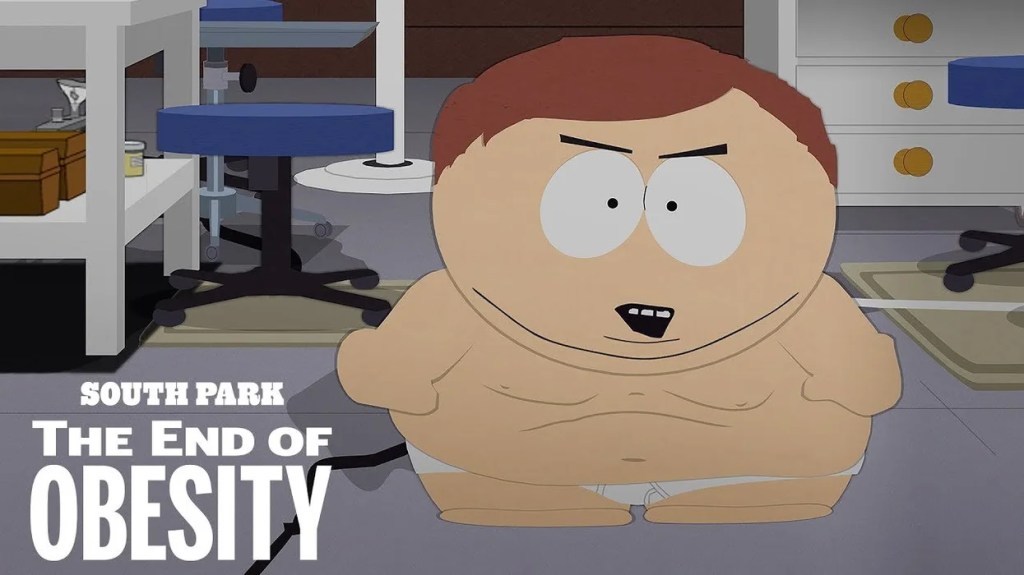
This certainly echoes study findings which report that quality-of-life scores in children with severe obesity are lower than those of children with newly diagnosed on-treatment cancers. As to how obesity erodes a child’s quality of life, no doubt part of its impact stems from obesity being a top source of schoolyard bullying, which is reflected by Cartman as he imagines his life without it.


Cartman’s mother explains that of course they’ve tried diet and exercise, but that intentional behavior change alone hasn’t been sufficient to sustainably move the scale’s needle — a truth for the vast majority of people with obesity.
But here, unlike in many actual doctors’ offices, Cartman’s doctor doesn’t spend time doubting or cajoling; instead, he does his job — which is to inform his patient, without judgment, about a pharmaceutical option that has been proven to be beneficial. He accurately describes these medications as ushering in “a whole new era of medicine, a miracle really” that can “help people lose vast amounts of weight.”
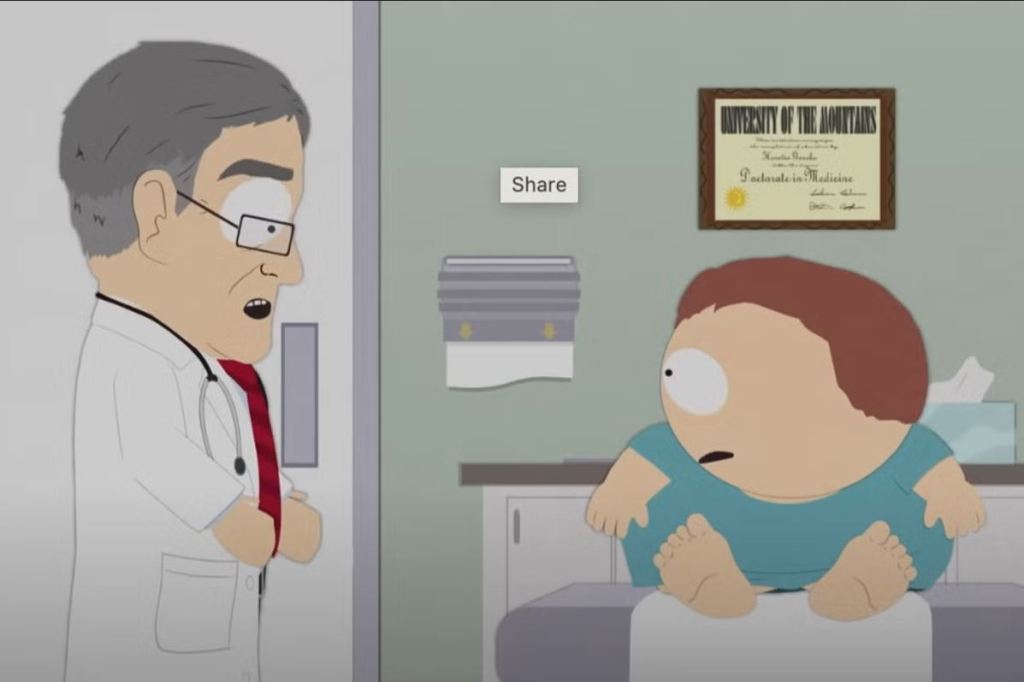
The kicker, though, comes next. The doctor explains that insurance companies only cover the medications for patients with diabetes, “so if you can’t afford them, you’re just kind of out of luck.” This is changing somewhat now, at least here in Canada, where two of our main private insurers have changed their base coverages to make antiobesity medications something employers need to opt out of rather than opt into, but certainly they’re not covered by US Medicare for weight management, nor by our version of the same here in Canada.
But even for those who have coverage, there are hoops to jump through, which is highlighted by the incredible efforts made by Cartman and his friends to get his insurance plan to cover the medications.
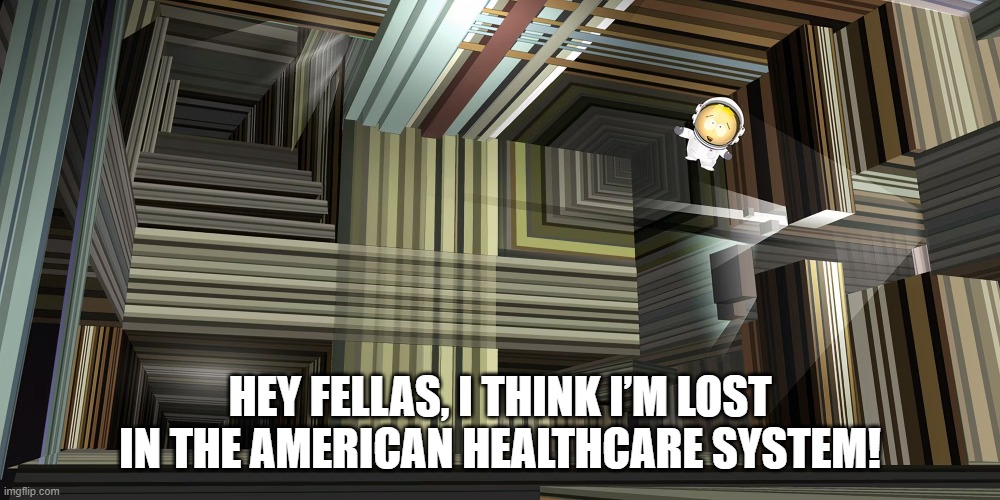
As one of the most consistently hilarious characters throughout South Park, Butters has a hilarious line at the end of South Park: The End of Obesity’s first musical number. Cartman, Stan, Kyle, Kenny, and Butters are all trying to get Cartman a prescription for Ozempic but run into the various obstacles and red tape of the American healthcare system. The sequence satirizes how difficult and confusing it can be to simply get a prescription in the United States since the doctors, insurance companies, and pharmaceutical companies all work hand in hand. Eventually, Butters gets so lost in all the paperwork that he ends up lost in another dimension, floating in space outside of linear time in reference to the iconic scene from Christopher Nolan’s Interstellar.

Matthew McConaughey’s character Cooper in the Tesseract
Thwarted at every turn, despite the undeniable benefits of these medications to health and quality of life, they are forced to turn to compounding — a phenomenon certainly pervasive here in North America whereby compounding pharmacies claim to be able to provide glucagon-like peptide-1 (GLP-1) analogs with comparable efficacy at a fraction of the price, but without the same rigor of proof of purity or efficacy.
Also covered by South Park is that the GLP-1 analog supply is impacted by use by people who don’t meet approved medical criteria and are using the medications for aesthetic purposes. This speaks to the incredible societal pressure to be thin and to the comfort of some physicians to inappropriately prescribe these medications.

This is covered by the subplot of South Park’s weed farmer, Randy, who in turn delivers an important insight into how it feels to use a GLP-1 analog: “I think there’s something wrong with these drugs…I feel satisfied. With any drugs I want to do more and more, but with these drugs I feel like I want things less. With these drugs you don’t really crave anything.”
The sentiment is echoed by Cartman, who exclaims, “I think I’m full. I’ve never known that feeling before in my life, but I’m full.”

It’s remarkable that South Park, a show built on serving up politically incorrect offense, covers obesity and its treatment with more accuracy, nuance, and compassion than does society as a whole. The show notes that obesity is a biological condition (it is), that when it comes to health (in America) “you have to have some f-ing willpower.” But where they explicitly mean having willpower in terms of filing and pursing insurance claims (you do), explains that drug companies are making antiobesity medications more expensive in America than anywhere else in the world (they are), and finally delivers this quote, which, while missing the biological basis of behaviour and hunger with respect to obesity, certainly sums up why blame has no place in the discourse:
“We have sugar companies, pharmaceutical companies, and insurance companies all just trying to figure out how to make money off our health. It isn’t fair to put the blame on anyone for their weight.”
No, it’s not.
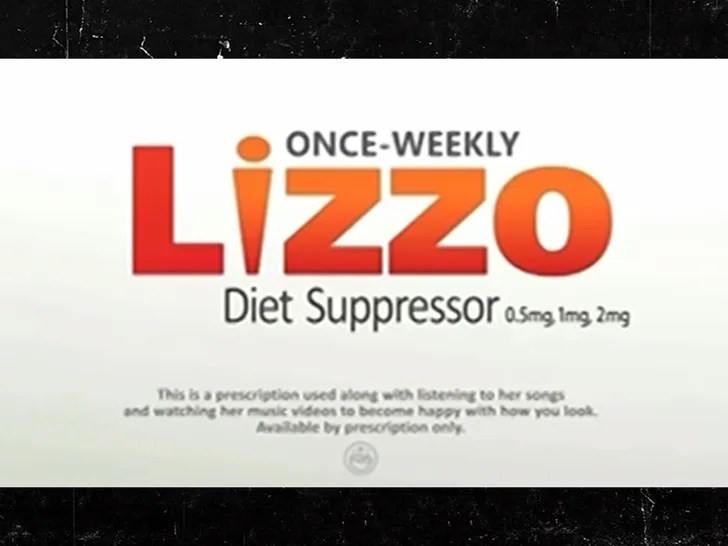
It turns out that many of the most famous cereal mascots, including Tony the Tiger of Frosted Flakes and even Captain Crunch himself, are not happy about the rise in popularity of Ozempic and the new miracle obesity drug “Lizzo”.
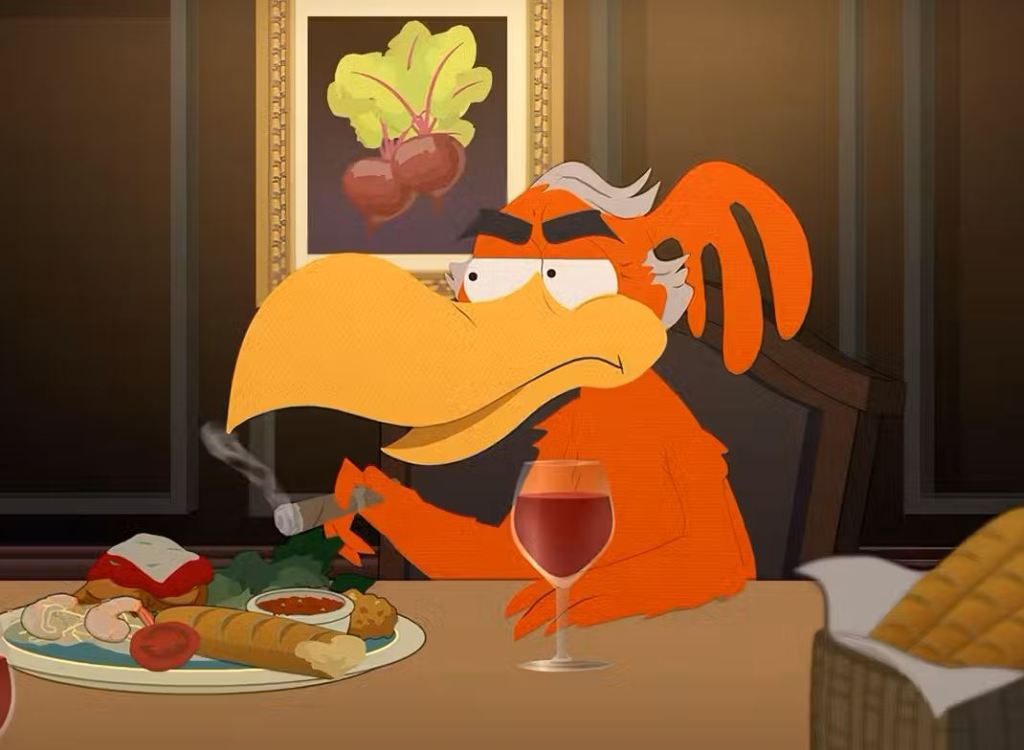



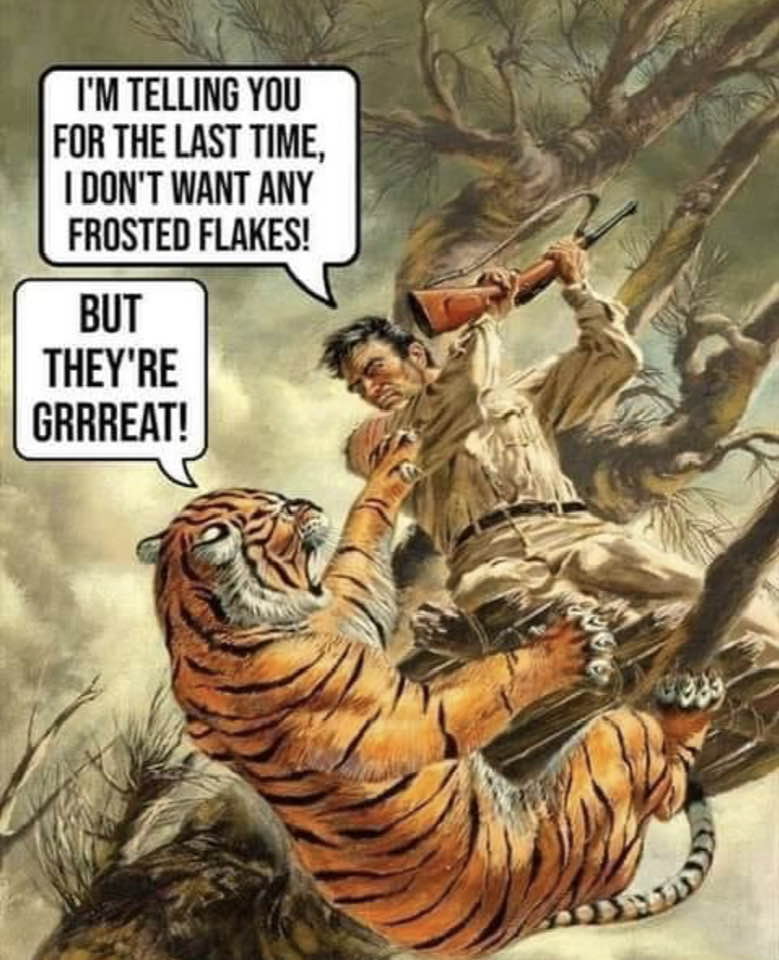
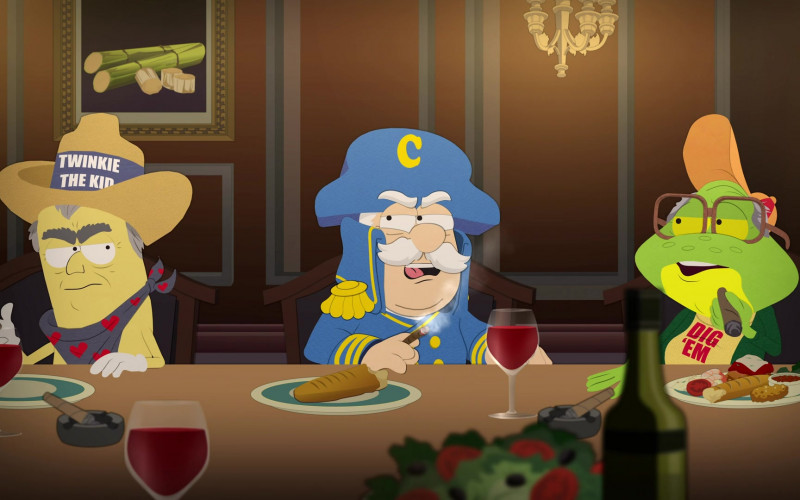
According to Yoni “This movie should be required viewing in medical schools”.
Not everyone was as impressed as Yoni (1) though.
- This name does concern me and makes me wonder if this is even a real person. Yoni is a Sanskrit: word typically meant to be taken as an abstract representation of the Hindu goddess Shakti. More specifically though it tends to refer to the “womb”, the “source”, and the female organs of generation. It also connotes the female sexual organs such as “vagina”, “vulva”, and “uterus”. Maybe it’s a “Canadian thing”.
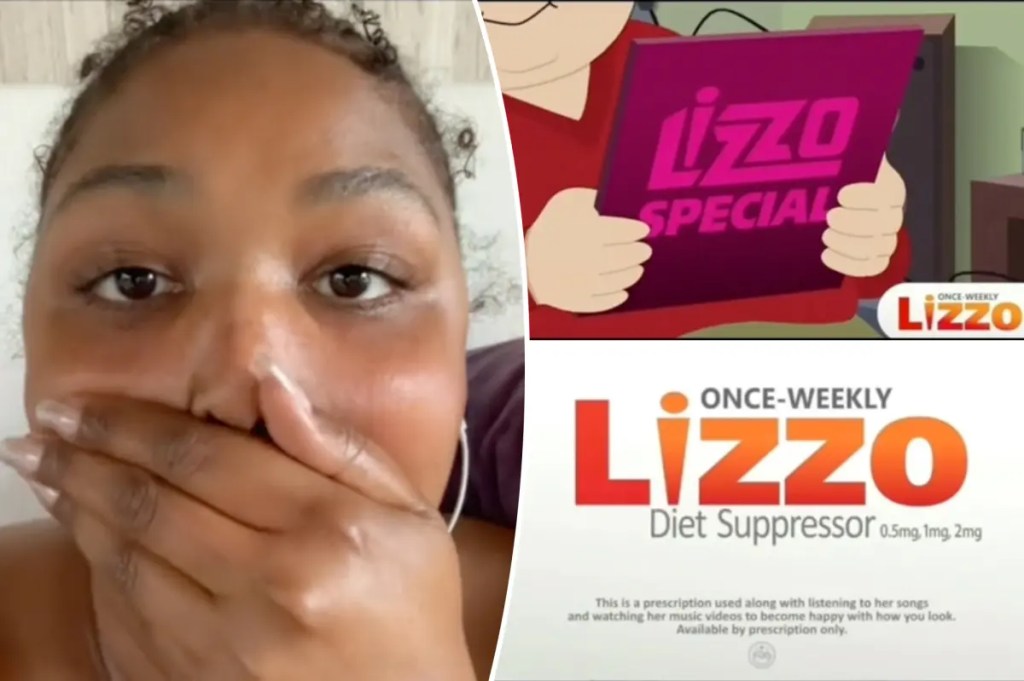
Early on in The End of Obesity, Cartman’s doctor prescribed him “Lizzo” instead of Ozempic or its alternatives upon learning he couldn’t afford those drugs. South Park’s doctors stated that Lizzo’s music was pro-body positivity which, according to the special, was for people too poor to afford semaglutides.

The classically trained flautist has described herself in interviews as fat and says she wants to normalize and destigmatize larger bodies although in in 2022, she said she’d gotten tired of people constantly talking about her body size. “I know I’m fat. It doesn’t bother me. I like being fat, and I’m beautiful and I’m healthy. So can we move on?” Often touted as a spokesperson on body positivity she has said that the body positivity movement has become “commercialized” and “appropriated” in recent years and used mainly by slim, white women. As a result, those for whom the movement was actually intended no longer benefit from it, according to her.
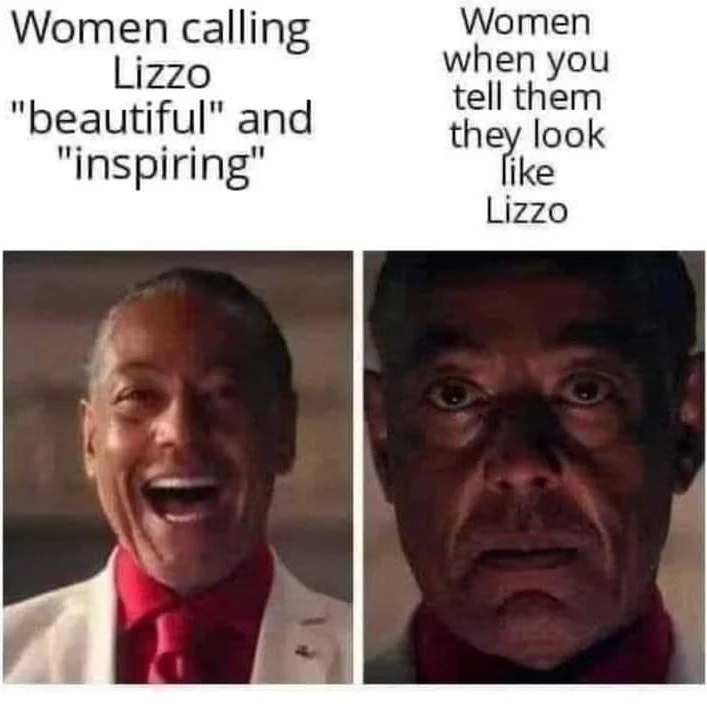
She is not without controversy in this regard. In 2023 allegations of assault, inappropriate sexual behaviour, workplace misconduct, disability discrimination, and religious harassment were levelled at her and in a 44 page lawsuit she was sued by 3 former backup dancers, accusing her and her team of (amongst other things) fat shaming, sexual harassment, and — in one case — false imprisonment. She has of course denied these allegations although in February of 2024 an LA judge denied Lizzo’s request to have the lawsuit dismissed, despite dismissing certain accusations and in April of 2024 “Pop star Lizzo shocked fans by announcing that she is quitting music, months after denying allegations of sexual harassment and bullying from former members of her dance troupe.”
We shall see how this drama unfolds……
In South Park however….
Lizzo’s (the drug – not the singer) work was so bad that numerous patients returned to the doctor suffering from diarrhoea of the ears, a grotesque way for South Park to mock the musician’s work. This allowed the doctor to then prescribe them semaglutides, meaning the pharmaceutical companies were paid to solve an issue that they created in the first place. Thus, The End of Obesity’s “Lizzo” subplot was a canny dissection of pharmaceutical industry malpractice, albeit one that was tied up in childish insults aimed at the singer’s music. In this storyline, The End of Obesity argued that pharmaceutical companies contributed to the current healthcare crisis.
Like most of the show’s specials, The End of Obesity did have something to say beneath its flip, ironic veneer. Ultimately, the show argued that the odds of medicine ever becoming affordable and accessible in America were so low that mocking people’s health conditions was pointlessly cruel. The labyrinthine horrors of navigating the American healthcare system were presented as an impossibility, while the rampant misuse of diabetes drugs was treated as an inevitability in such an image-conscious culture.
Matthew still might have something to say on this.

Obesity is a serious health problem.
Being overweight or obese increases the risk of:
- high blood pressure
- high cholesterol
- heart disease and heart attacks
- stroke
- type 2 diabetes
- some cancers including breast, colorectal, oesophageal, kidney, gallbladder, uterine, pancreatic, and liver cancer.
- chronic kidney disease (even in those without diabetes)
- gall bladder disease
- joint problems, such as osteoarthritis, gout, and joint pain
- sleep problems including snoring, insomnia, obstructive sleep apnoea, and hypoxia (an absence of enough oxygen in the tissues to sustain bodily functions)
- sexual health problems through an an imbalance of sexual hormone levels, leading to reduced sexual desire, arousal, and orgasm as well as erectile dysfunction in men
- having a difficult pregnancy and labour.
- reduced life expectancy (by as much as 14 years or more)
Body positivity is commendable as there is no place in society for bullying regardless of its source and body shaming is one aspect of it that affects men and women equally (although women are more likely to be shamed for how they dress or their sexual activity than men are but that is another issue). Obesity however is a serious health condition and “normalising” it is not O.K. (nor is punishing people for it). Another disturbing aspect that I have seen arising are the demands of, in particular, hyper obese people that society cater specifically to their needs through the sense of entitlement that arises from the fact that bigotry towards minority groups is now not accepted (although in first world countries such as the USA with more than 2 in 5 adults – 42.4% – being obese, you could argue that they are not in the minority – this is a frightening statistic in itself)
Is this what we are becoming?

References
“Anti-obesity drug development: Industry trends in 2024,” in Gubra.dk, May 30, 2024, https://www.gubra.dk/anti-obesity-drug-development-treatment-industry-trends-in-2024/.
Websites
- https://healthydebate.ca/2017/02/topic/yoni/
- https://screenrant.com/south-park-the-end-of-obesity-best-quotes/
- https://screenrant.com/south-park-the-end-of-obesity-movie-ending-explained/
- https://www.medscape.com/viewarticle/should-south-park-end-obesity-be-required-viewing-medical-2024a1000by5?ecd=WNL_trdalrt_pos1_ous_240703_etid6642245&uac=253652MN&impID=6642245
- https://www.pewresearch.org/short-reads/2024/03/21/as-obesity-rates-rise-in-the-us-and-worldwide-new-weight-loss-drugs-surge-in-popularity/#:~:text=Demand%20for%20weight%2Dloss%20drugs&text=That%20year%2C%20an%20estimated%208.2,as%20many%20as%20in%202019.
- https://www.pharmaceutical-technology.com/news/anti-obesity-drugs-will-be-2024s-defining-trend/#:~:text=GlobalData’s%20latest%20update%20notes%20the,and%20cell%20and%20gene%20therapies.&text=GlobalData%20estimates%20that%2090%25%20of,from%20obesity%20drugs%20by%202033.
- https://www.forbes.com/sites/dereksaul/2023/11/02/ozempic-sales-up-58-as-drugmaker-novo-nordisk-nets-record-profits/
- https://www.niddk.nih.gov/health-information/health-statistics/overweight-obesity#:~:text=the%20above%20table-,Nearly%201%20in%203%20adults%20(30.7%25)%20are%20overweight.,9.2%25)%20have%20severe%20obesity.
Authors Disclosures – Yoni Freedhoff, MD : Associate Professor, Department of Family Medicine, University of Ottawa; Medical Director, Bariatric Medical Institute, Ottawa, Ontario, Canada
Disclosure: Yoni Freedhoff, MD, has disclosed the following relevant financial relationships: Serve(d) as a director, officer, partner, employee, advisor, consultant, or trustee for: Bariatric Medical Institute; Constant Health Received research grant from: Novo Nordisk Publicly shared opinions via: Weighty Matters; social media
 Masa Americana