
As a naturopathic practitioner one thing I find that is never taken into consideration when addressing a persons health is that of religion/spirituality and the part God plays in a persons well-being. It is not particularly relevant through which method of practice in which you access these realms, whether it be a particular religion attached to a deity or through a practice such as meditation or self introspection through physical methodologies such as Tai chi or Chi Kung (Qigong). What is relevant is the accessing of these higher planes (1) with the intent of effecting healing or well-being.
- A general reference to levels above the physical including realms of pure consciousness, enlightenment, and divine connection, believed to be the source of all creation (and universal truth).
Meditation
Different types of meditation have been shown to result in psychological and biological changes that are actually or potentially associated with improved health. Meditation has been found (amongst other things) to produce a clinically significant reduction in resting as well as ambulatory blood pressure, to reduce heart rate, to alter levels of melatonin and serotonin, to boost the immune response, to reduce stress and promote positive mood states, to reduce anxiety and pain and enhance self-esteem and to have a favourable influence on overall and spiritual quality of life in late-stage disease. One study also noted that spiritual meditation has been found to be superior to secular (1) meditation and relaxation in terms of decrease in anxiety and improvement in positive mood, spiritual health, spiritual experiences and tolerance to pain (Andrade & Radhakrishnan 2009)
- not connected with religious or spiritual matters.
Prayer
One study notes that prayer, supported by varying degrees of faith, can be associated with all the benefits that have been relegated to the placebo response (1) (Hughes 1997) and then goes on to say that this response includes “Clinically significant treatment gains” being observed in numerous disorders, including anxiety, depression, schizophrenia, obsessive-compulsive disorder, tardive dyskinesia (2), ischemic heart disease (3), cardiac failure, Parkinson’s disease (4) and even cancer, “among a host of other conditions”. (Andrade & Radhakrishnan 2009). Intercessionary prayer (5) has also been linked to higher rates of fertility and pregnancy (Cha & Wirth 2001). The placebo effect is primarily denigrated (quite unfairly I believe) by allopathic (6) medical practitioners who seem unable to understand that healing, regardless of its source, is a medicinally valid therapy. In the late 18th century, the word placebo was used in a medicinal context to describe a “commonplace method or medicine”, a definition which was expanded upon in 1811 to “any medicine adapted more to please than to benefit the patient”. Although this definition contained a derogatory implication, (Shapiro 1968) it did not necessarily imply that the remedy had no effect.(Kaptchuk 1998)
- The placebo effect is when a person’s physical or mental health appears to improve after taking a placebo or ‘dummy’ treatment which is designed to have no therapeutic value.
- Tardive dyskinesia is a medication-induced iatrogenic disorder (disease, a harmful complication, or other ill effect caused by any medical activity, including diagnosis, intervention, error, or negligence) that occurs as a result of the use of dopamine-receptor-blocking medications such as antipsychotics and metoclopramide (medication used for stomach and oesophageal problems – commonly used to treat and prevent nausea and vomiting, and to treat migraine headaches). Tardive dyskinesia is a movement disorder that results in involuntary repetitive body movements and persists despite discontinuation or change of the medications. Vasan & Padhy 2023)
- heart problems caused by narrowed heart arteries. When arteries are narrowed, less blood and oxygen reach the heart muscle. This is also called coronary artery disease and coronary heart disease
- Parkinson’s disease is a progressive movement disorder of the nervous system. It causes nerve cells (neurons) in parts of the brain to weaken, become damaged, and die, leading to symptoms that include problems with movement, tremor, stiffness, and impaired balance.
- Intercession or intercessory prayer is the act of praying to a deity on behalf of others, or asking a saint in heaven to pray on behalf of oneself or for others.
- A system in which medical doctors and other health care professionals (such as nurses, pharmacists, and therapists) treat symptoms and diseases using drugs, radiation, or surgery. Also called biomedicine, conventional medicine, mainstream medicine, orthodox medicine, and Western medicine.
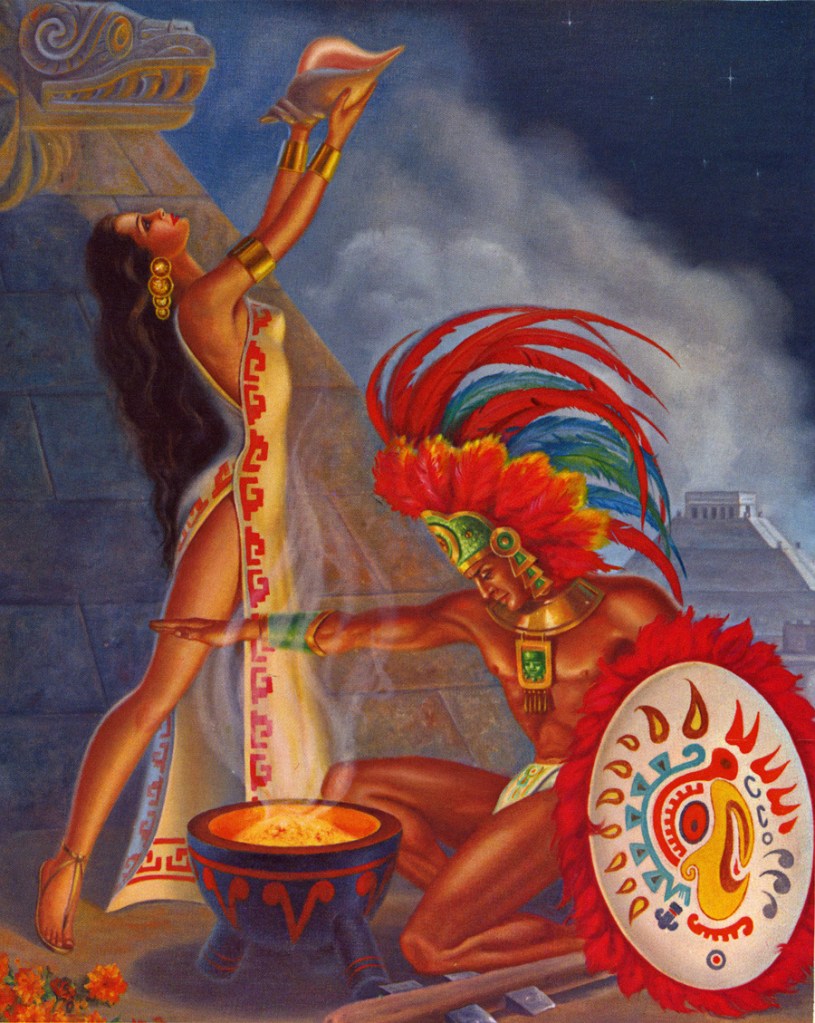
More on Armando at the end of the Post.
Andrade & Radhakrishnan (2009) then go on to essentially denigrate the power of prayer by noting that it all happens basically by accident (or as a result of the human mind?). “Prayer may be associated with improvements that result from spontaneous remission (1), regression to the mean (2), nonspecific psychosocial support, the Hawthorne effect (3) and the Rosenthal effect (4)”. Another paper though (Narayanasamy 2015) found that by studying this phenomena that there was room for positive transformation in the researcher (if they acted ethically). So it appears that prayer may even be transformative to the observer even if they are not a believer (regardless of whether it happens as a result of the mind or an external force).
- Spontaneous remission, also called spontaneous healing or spontaneous regression, is an unexpected improvement or cure from a disease that usually progresses (in the presence of therapy which is considered inadequate to exert significant influence on the disease)
- Regression to the mean (finding of the average of a sample data) refers to the tendency of results that are extreme by chance on first measurement – i.e. extremely higher or lower than average (or spontaneous healing generated by prayer) – to move closer to the average when measured a second time (i.e you weren’t healed by prayer but that it was simply an outlying event of “luck”).
- The Hawthorne effect is a type of human behaviour reactivity in which individuals modify an aspect of their behaviour in response to their awareness of being observed
- The Rosenthal or Pygmalion effect is a psychological phenomenon in which high expectations lead to improved performance in a given area and low expectations lead to worse performance, both effects leading to self-fulfilling prophecy.

Little mother bless my path. A tribute to #Tonantzin #Cihuacóatl who had her temple in #Tepeyac before the arrival of you know who… (Drawing by roque_chimalco_)
Latin America (for want of a better term) is primarily Catholic (religiously speaking). This religion was foisted upon the people by the Spanish and was used by the Spanish as justification for the systemic dismantling of the cultures of the Americas. The indigenous people of the Americas were heathens that “needed” the salvation of the Christian God and it was a civic duty of the Spaniards to deliver them this salvation (by force if necessary). This of course is complete bullshit. It was nothing more than a justification the Spanish used so they could take what they wanted.
The Spaniards did this through the delivery of a speech (which was delivered in Latin so the people they were delivering it to had absolutely no idea what they were being told) (1) called the Requerimiento (Requirement) of 1510 which asserted the religious authority of the Roman Catholic pope over the entire earth, and the political authority of Spain over the Americas (except Brazil) (2) and was the demand that native Americans accept Spanish rule, turn themselves into obedient vassals of the Spanish monarchy and allow missionaries to instruct them in the Catholic faith (or risk subjugation, enslavement, and death).
- sometimes this speech was not even delivered to the people themselves as it could even be delivered by the reader from shipboard to an empty beach
- from a 1493 papal bull (an official papal letter or document. The name is derived from the lead seal (bulla) traditionally affixed to such documents) that divided the western hemisphere between Spain and Portugal.
The Requerimiento went a little something like this….
(this is actually kind of long and I really only put it here for my own interests sake. If you want to skip it then just scroll down to Wayne and continue from there)
On behalf of the King, Don Fernando, and of Doña Juana I, his daughter, Queen of Castille and León, subduers of the barbarous nations, we their servants notify and make known to you, as best we can, that the Lord our God, Living and Eternal, created the Heaven and the Earth, and one man and one woman, of whom you and we, all the men of the world at the time, were and are descendants, and all those who came after and before us. But, on account of the multitude which has sprung from this man and woman in the five thousand or even more years since the world was created, it was necessary that some men should go one way and some another, and that they should be divided into many kingdoms and provinces, for in one alone they could not be sustained.
Of all these nations God our Lord gave charge to one man, called St. Peter, that he should be Lord and Superior of all the men in the world, that all should obey him, and that he should be the head of the whole Human Race, wherever men should live, and under whatever law, sect, or belief they should be; and he gave him the world for his kingdom and jurisdiction.
And he commanded him to place his seat in Rome, as the spot most fitting to rule the world from; but also he permitted him to have his seat in any other part of the world, and to judge and govern all Christians, Moors, Jews, Gentiles, and all other Sects. This man was called Pope, as if to say, Admirable Great Father and Governor of men. The men who lived in that time obeyed that St. Peter, and took him for Lord, King, and Superior of the universe; so also they have regarded the others who after him have been elected to the pontificate, and so has it been continued even till now, and will continue till the end of the world.
One of these Pontiffs, who succeeded that St. Peter as Lord of the world, in the dignity and seat which I have before mentioned, made donation of these isles and Tierra-firme to the aforesaid King and Queen and to their successors, our lords, with all that there are in these territories, as is contained in certain writings which passed upon the subject as aforesaid, which you can see if you wish.
So their Highnesses are kings and lords of these islands and the land of Tierra-firme by virtue of this donation: and some islands, and indeed almost all those to whom this has been notified, have received and served their Highnesses, as lords and kings, in the way that subjects ought to do, with good will, without any resistance, immediately, without delay, when they were informed of the aforesaid facts. And also they received and obeyed the priests whom their Highnesses sent to preach to them and to teach them our Holy Faith; and all these, of their own free will, without any reward or condition, have become Christians, and are so, and their Highnesses have joyfully and benignantly received them, and also have commanded them to be treated as their subjects and vassals; and you too are held and obliged to do the same. Wherefore, as best we can, we ask and require you that you consider what we have said to you, that you take the time that shall be necessary to understand and deliberate upon it, and that you acknowledge the Church as the Ruler and Superior of the whole world, and the high priest called Pope, and in his name the King and Queen Doña Juana our lords, in his place, as superiors and lords and kings of these islands and this Tierra-firme by virtue of the said donation, and that you consent and give place that these religious fathers should declare and preach to you the aforesaid.
If you do so, you will do well, and that which you are obliged to do to their Highnesses, and we in their name shall receive you in all love and charity, and shall leave you, your wives, and your children, and your lands, free without servitude, that you may do with them and with yourselves freely that which you like and think best, and they shall not compel you to turn Christians, unless you yourselves, when informed of the truth, should wish to be converted to our Holy Catholic Faith, as almost all the inhabitants of the rest of the islands have done. And, besides this, their Highnesses will award you many privileges and exemptions and will grant you many benefits.
But, if you do not do this, and maliciously make delay in it, I certify to you that, with the help of God, we shall powerfully enter into your country, and shall make war against you in all ways and manners that we can, and shall subject you to the yoke and obedience of the Church and of their Highnesses; we shall take you and your wives and your children, and shall make slaves of them, and as such shall sell and dispose of them as their Highnesses may command; and we shall take away your goods, and shall do you all the mischief and damage that we can, as to vassals who do not obey, and refuse to receive their lord, and resist and contradict him; and we protest that the deaths and losses which shall accrue from this are your fault, and not that of their Highnesses, or ours, nor of these cavaliers who come with us. And that we have said this to you and made this Requisition, we request the notary here present to give us his testimony in writing, and we ask the rest who are present that they should be witnesses of this Requisition

What it boils down to is…“Look, we’re taking it. get with the program or die”
The Spanish then destroyed the places of worship of the indigenous peoples and built their own houses of worship in the same locations and from the very bones of the temples that previously stood there.
This however is not historically unusual or out of place. According to Broda (2019) “When the Mexica occupied the territories of other ethnic groups and their corresponding centres of power, they symbolically took possession of the territories and built on top of the old places of worship and transformed them into their own sanctuaries, reinterpreting their meaning and tutelary devotion“.
The chronicled early history of the Mexica people and their migration and search for a permanent settlement on the island of Tenochtitlan/Tlatelolco is a period shrouded in myth and motivated by the retrospective justification of later political conditions. This is reflected in the instalment of Acamapichtli as the first Huey Tlatoani of the Mexica which gave the up until then barbarian interlopers to the Valley a legitimate political presence and the later intermarriage with Culhuacan and book burnings of Itzcoatl (the 4th Tlatoani) so that the Mexica history could be rewritten so as to give them a Toltec historical lineage.
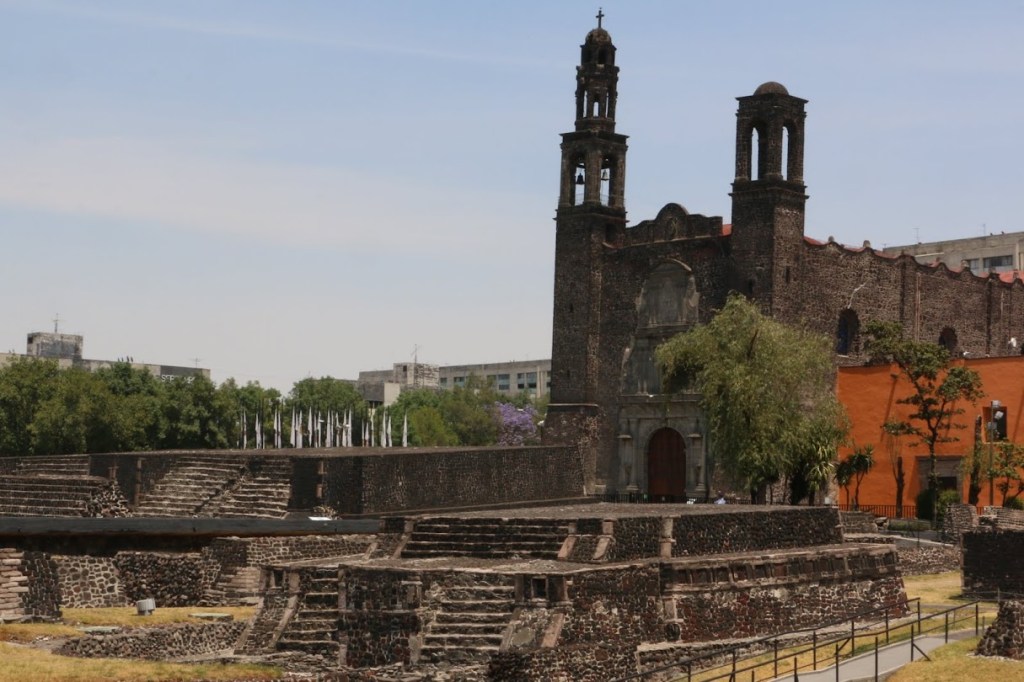
The Plaza of Three Cultures
A Spanish church at Tlatelolco built atop and from the stones of a previous Aztec holy place

Aztec, Spanish and Modern architecture stand side by side……..
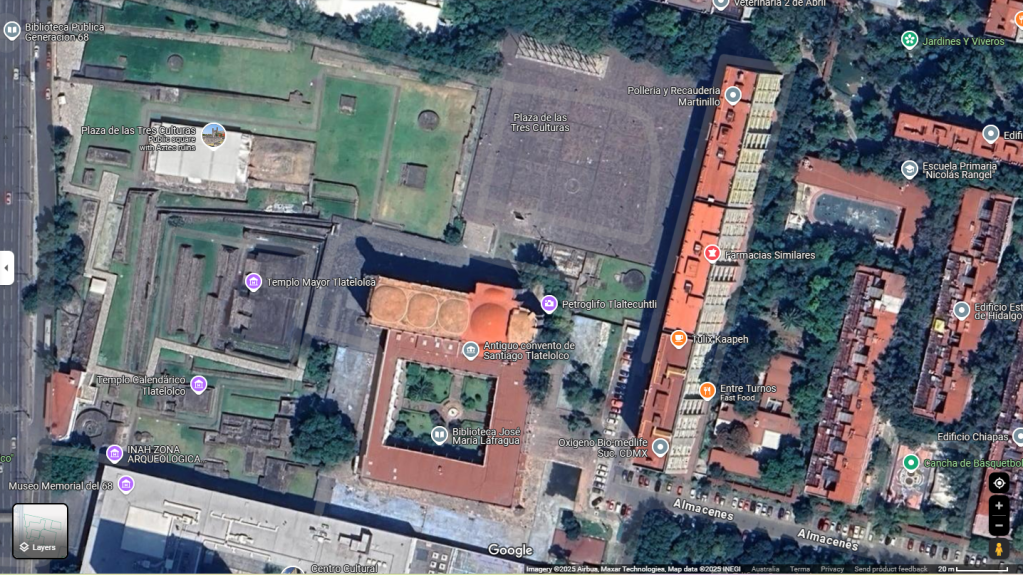
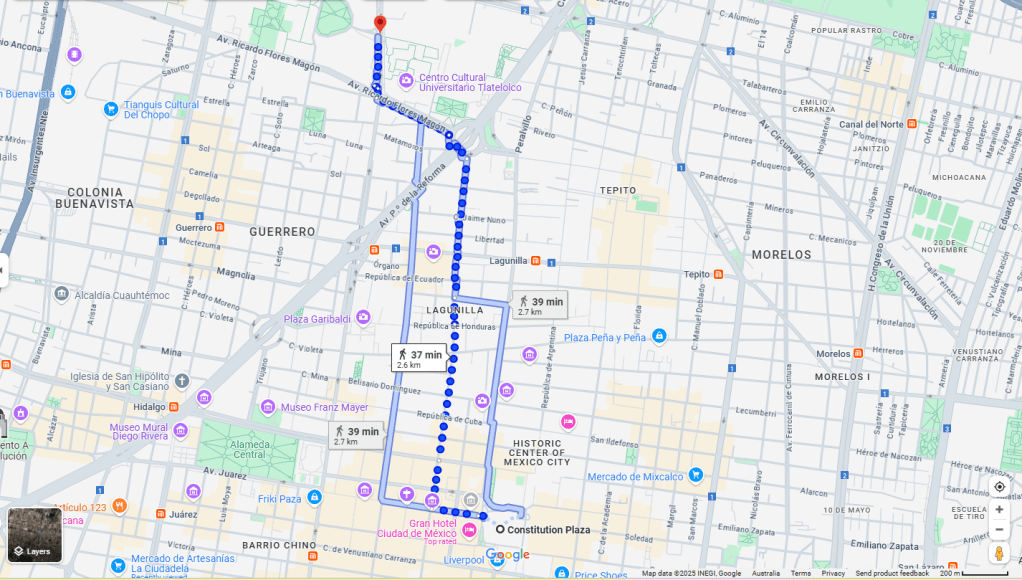
…….and it’s only a medium sized walk from the Zocalo.
The veneration of the old Gods never really disappeared though and now, without the fear of the Inquisition, they are now beginning to be honoured openly.
I guess we could also say that the veneration never really went anywhere though. This can be evidenced by the celebration of Dia de Muertos and the construction of ofrendas (or “altars”) in a great many homes at this time. These altars are constructed with deep prehispanic symbolism and are even constructed in a pyramid shape denoting different levels of existence as they were understood by the prehispanic mesoamericans.
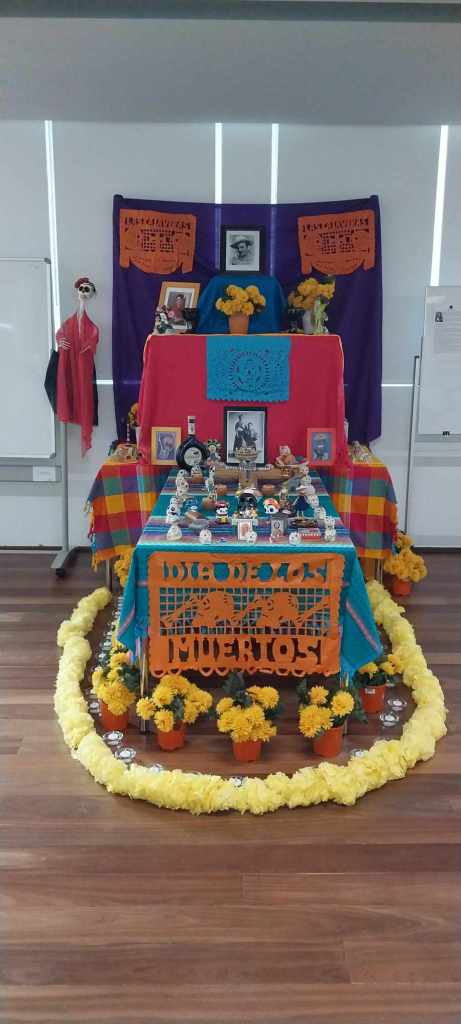
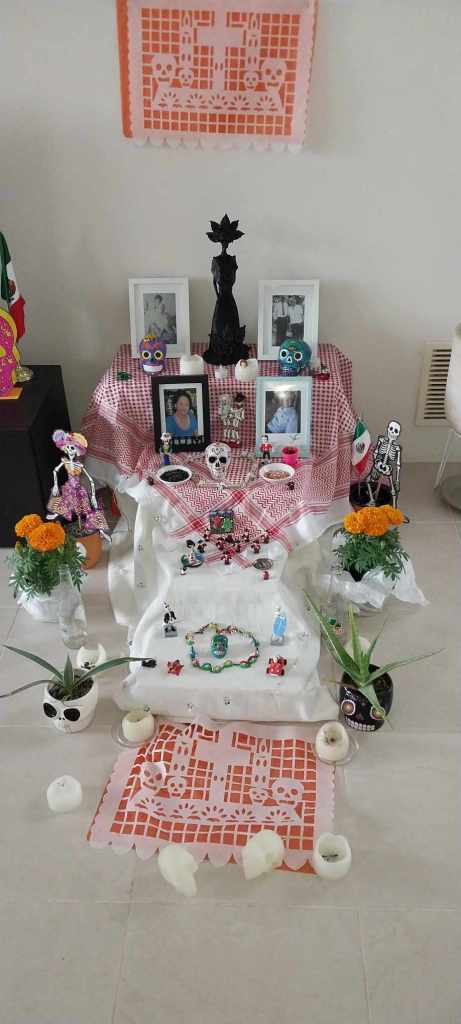
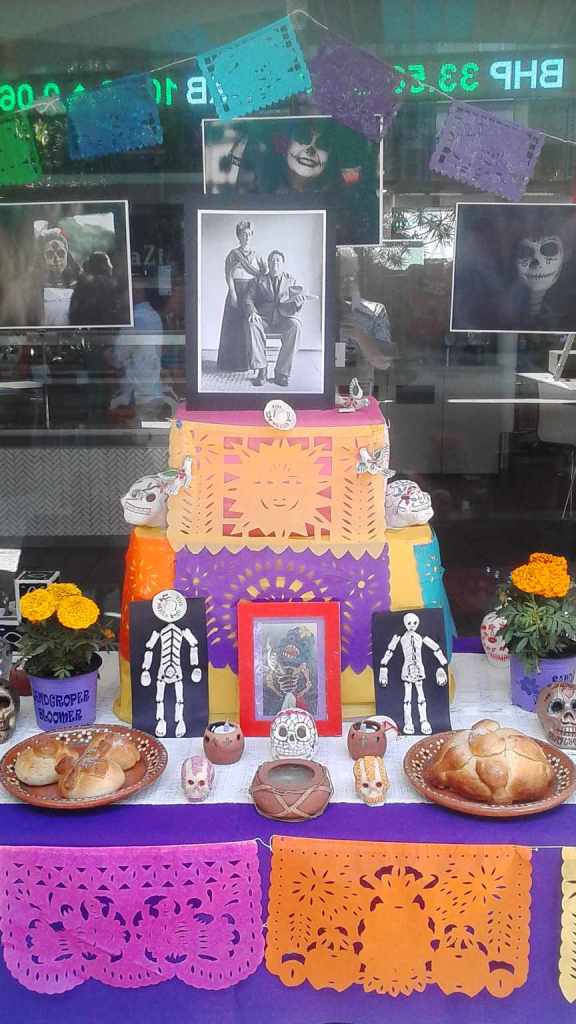
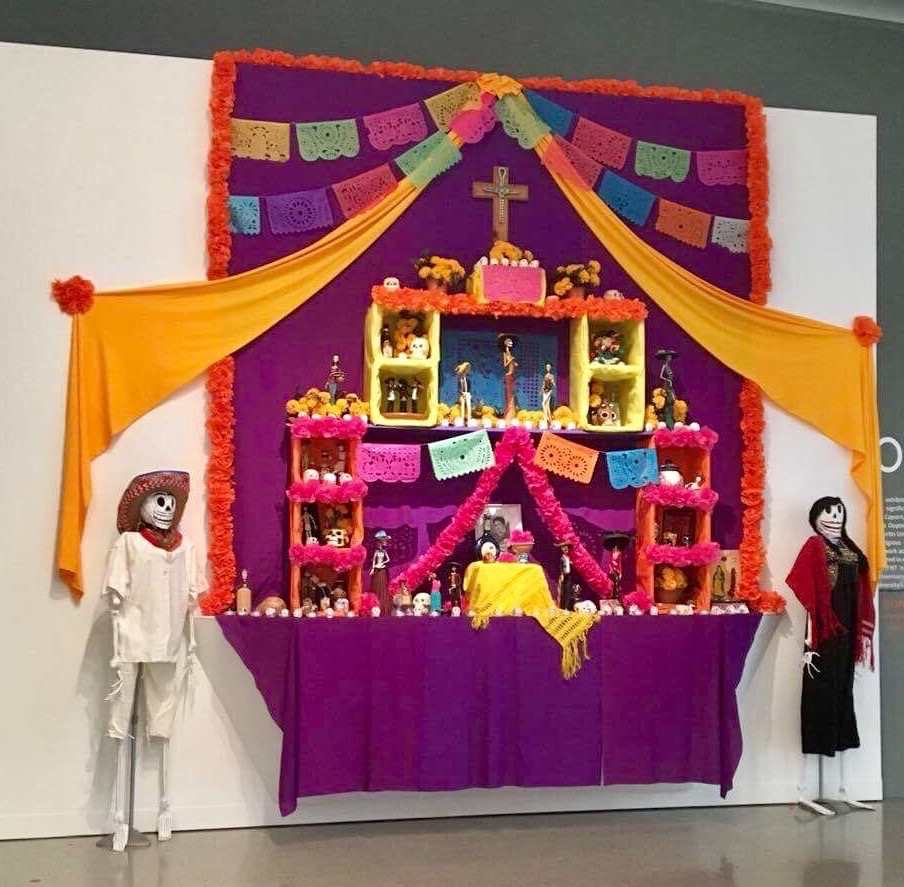
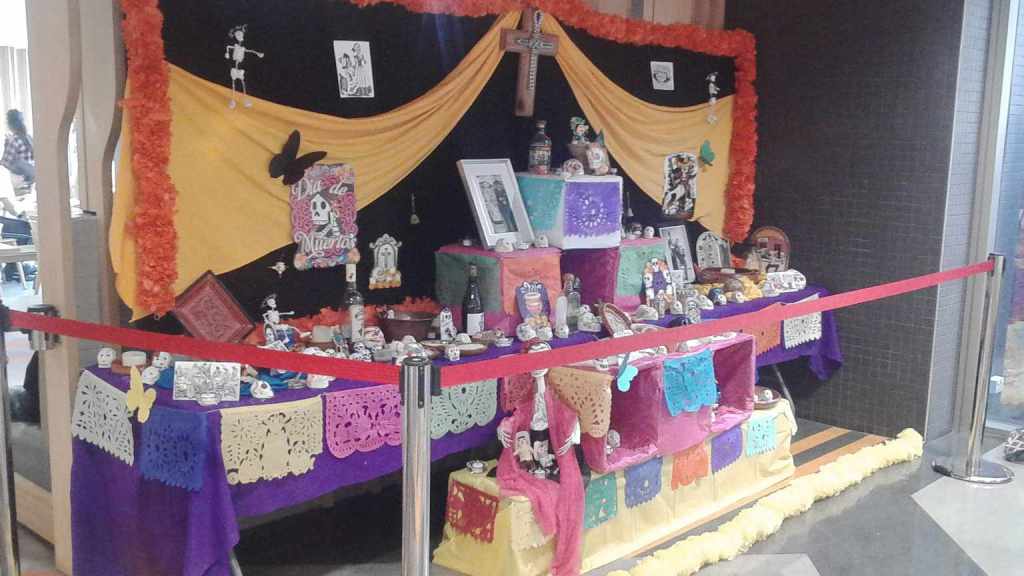
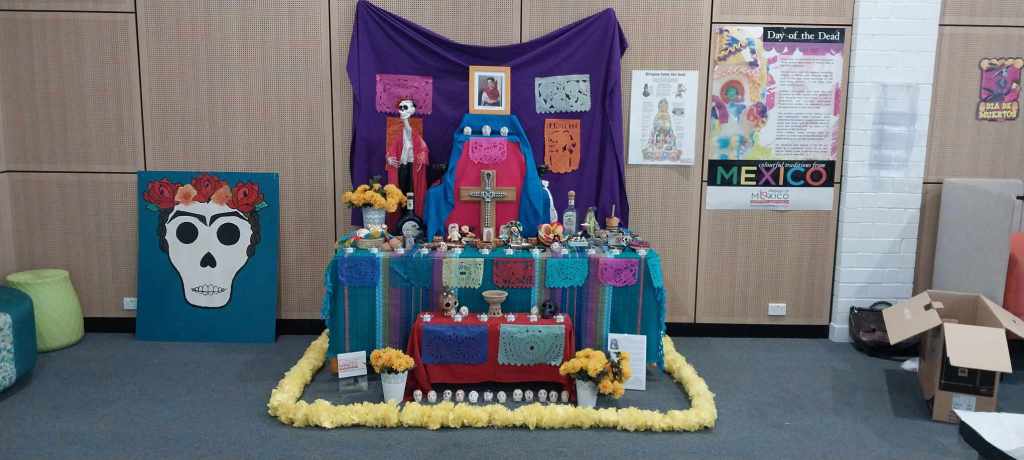
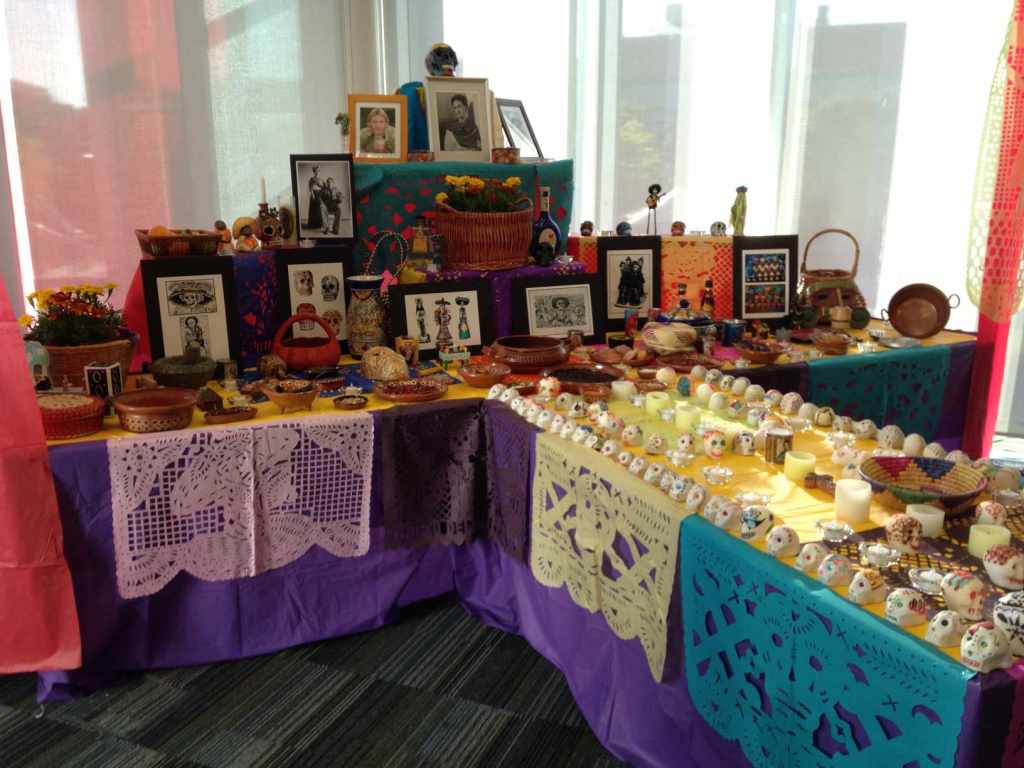
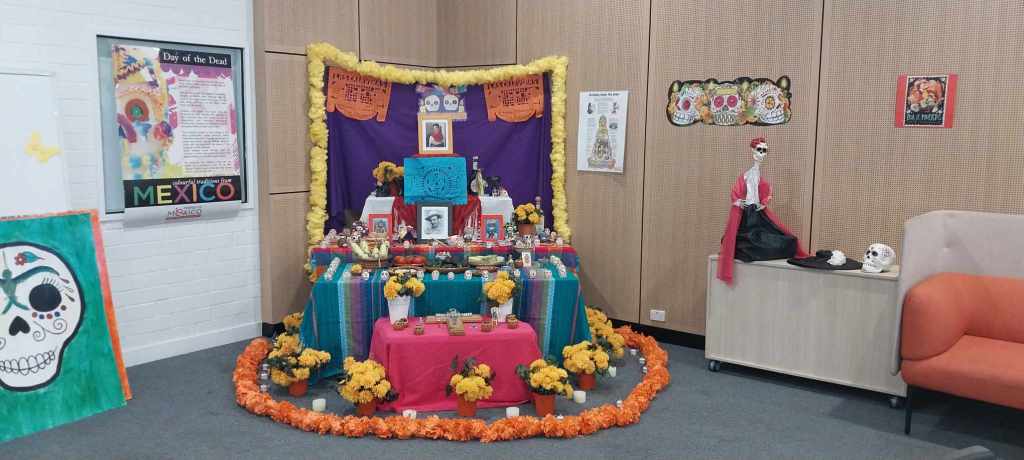
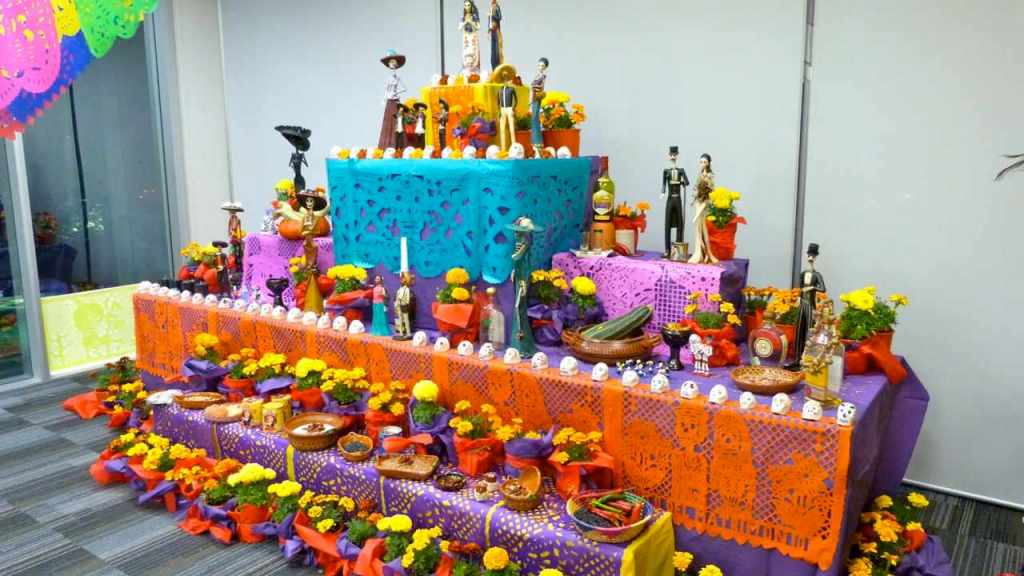
Dia de muertos, the construction of ofrendas and the remembrance of the dead is also a healing practice that has been studied in reference to depression, anxiety and post traumatic stress disorders. (Gutiérrez etal 2020) (Gutiérrez 2015) (Hidalgo etal 2020) (Mitima-Verloop 2019) (Gerson etal 2003) (amongst others) I’m not going to go into any great detail on this here though, except to say that the practice is a healing one.
The hearkening back to an older time and modern adoration of these pathways represents a form of healing of the cities, the people and the cultures of the Americas.
Mexican Deities Return to the Citys Streets
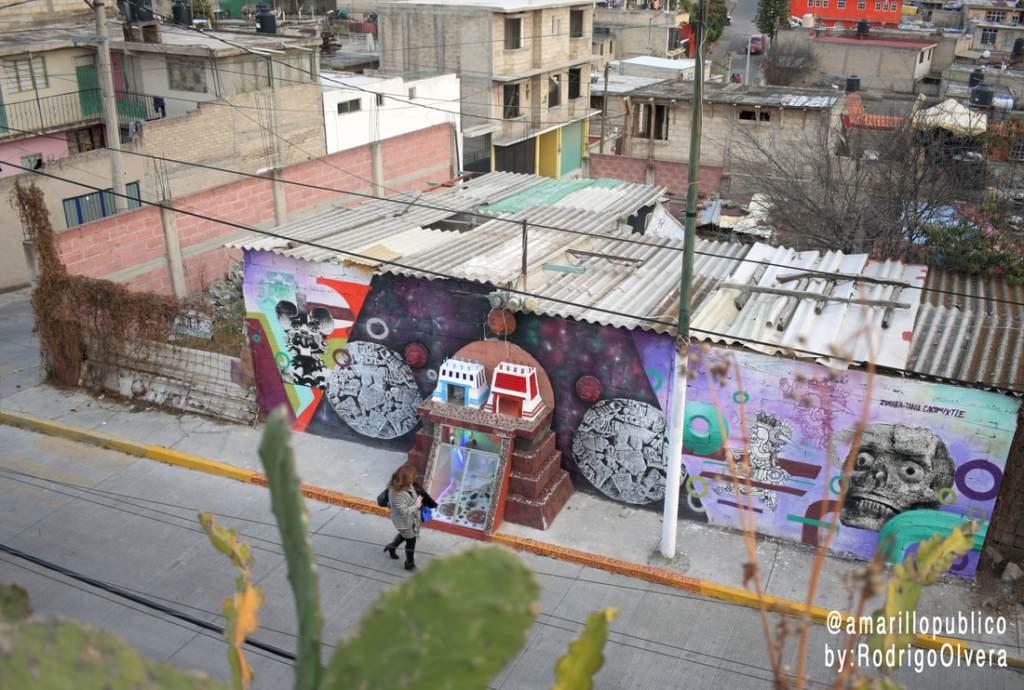
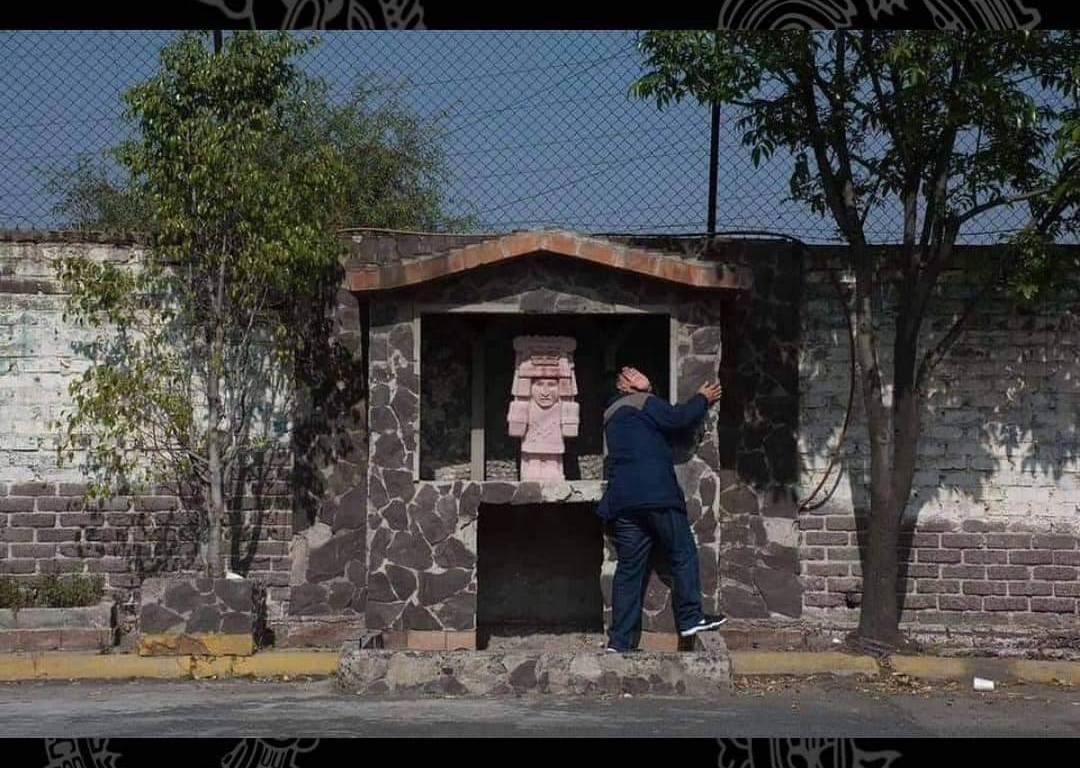
On January 15 2022, the inauguration of the first urban altar (1) dedicated to Mexica deities took place in the Emiliano Zapata neighbourhood, within the municipality of Atizapán de Zaragoza in the State of Mexico. Creator of the project (2) Amarillo Público says that “this urban intervention seeks to be a space for meeting, coexistence and exchange between the community, to keep the memory alive about our ancestors”. The project resumes the popular custom of building small niches of worship and protection in the streets with images of Saints or the Virgin of Guadalupe. This time however the images are Mexican deities that have the purpose of being a small museum of identity and a window to relive the past, to “live with our roots on a more daily basis”.
- or teocalli : Nahuatl “god – house” from teōtl (“God”) + calli (“a house; building”)
- Servicio Urbano de Arte Público created by visual artist Rodrigo Olvera
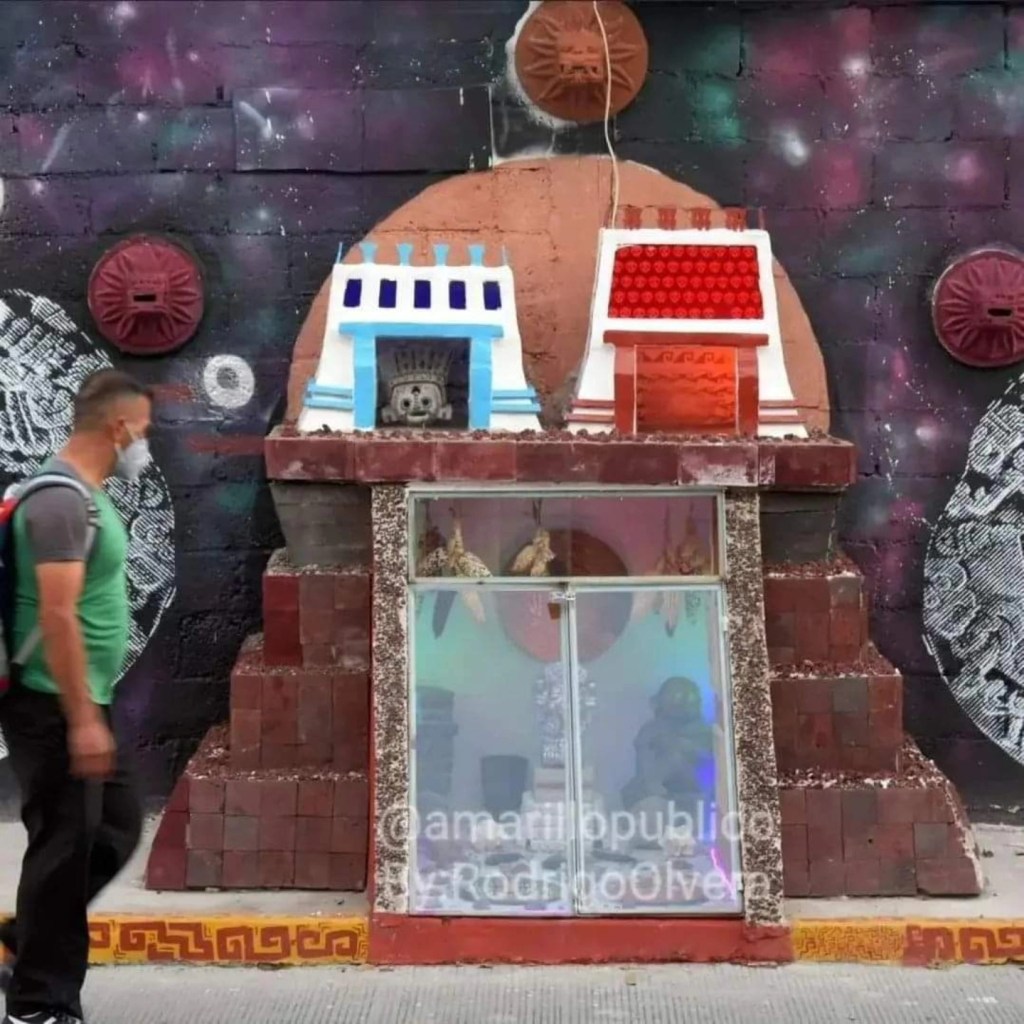
Inside this urban teocalli there are vessels and sahumadores (incense burners), clay plates with corn and cocoa, in the centre of the altar is the Coatlicue (the mother of all gods) ringed by tecpatl (1) and flanked by Tláloc/ Chalchiuhtlicue (deity of rain) and Xochipili (deity of flowers and beauty).
- lance shaped, double edged obsidian or flint knives. The tecpatl is symbolic of a calendrical Day Sign and was also the knife used to remove the hearts of those sacrificed
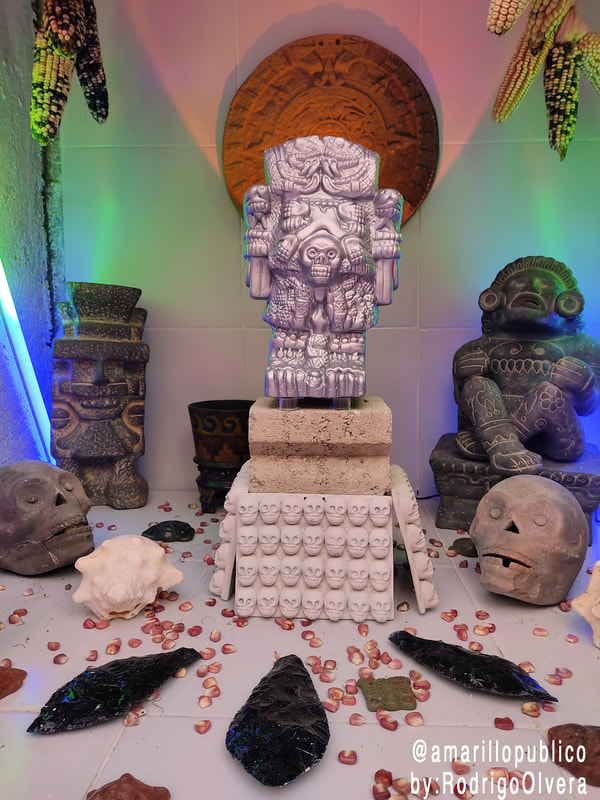
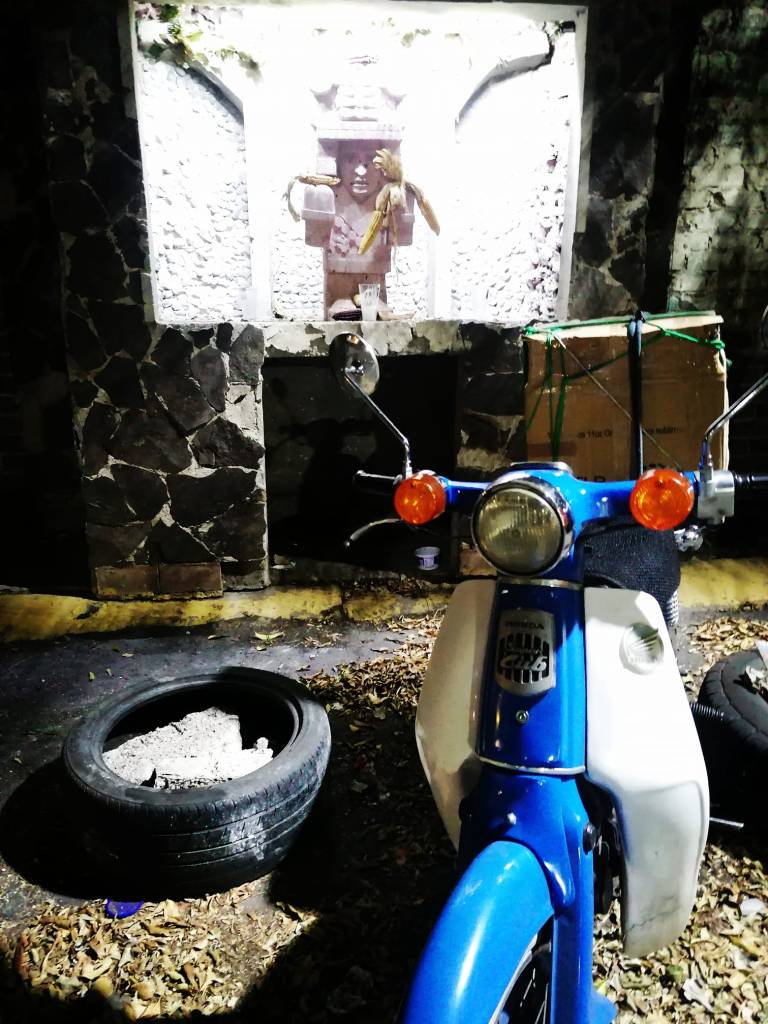
Image by Ismael GC. Facebook
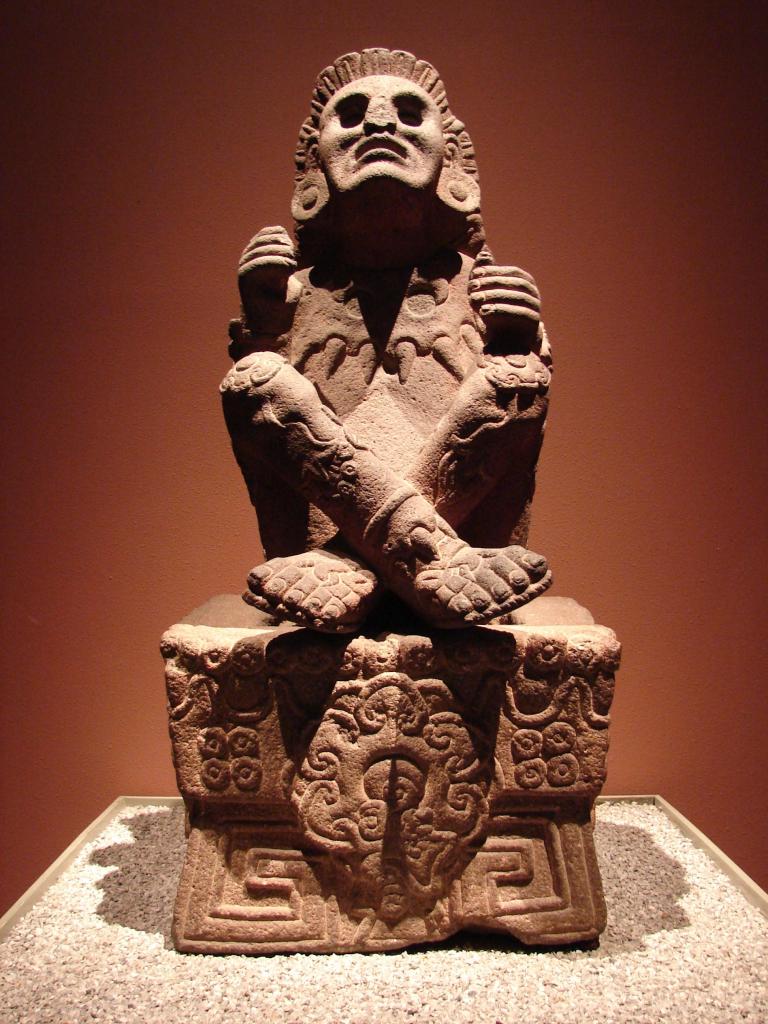
Tonantzin is an interesting figure and demonstrates in some part the colonisation of mesoamerican “deities”. It has been posited that the “beings” often referred to as “Gods” (1) were not in fact Gods as they were understood by the Catholic friars or those as existed in the Roman and Greek mythologies but that they were states of consciousness/being or forces of nature that were venerated (2). Tonanztin is one such example of this. “She” embodies the nurturing mother goddess, the maternal facet and life sustaining abundance of the mother and the enveloping wisdom of the grandmother. This is implied in her name which is derived from NĀN-TLI mother (3) and -tzin a reverential suffix implying pity or tenderness. Tonantzin is referred to by different names in Nahuatl, such as Chicōmexōchitl, signifying “Seven Flower,” and Chālchiuhcihuātl, translating to “Emerald/Jade Woman.” These names mirror her diverse aspects and roles within Aztec culture.
- Huitzilopochtli, Quetzalcoatl, Tlaloc, Cihuacoatl, Coatlicue, Xochipilli………the list is extensive
- i.e. Huitzilopochtli was not the “God of War” but the essence of combat; bravery, valour and the fog of the blood rage of battle.
- This can be used in the extended sense of ‘protector.’ A tree planted to shade crops is called NĀN-TLI,
I have investigated this in previous Posts (1)(2)(3)
- Aztec Gods or States of Consciousness?
- Xochipilli : A Force of Nature
- Aztec Gods or States of Consciousness? Another Observation.
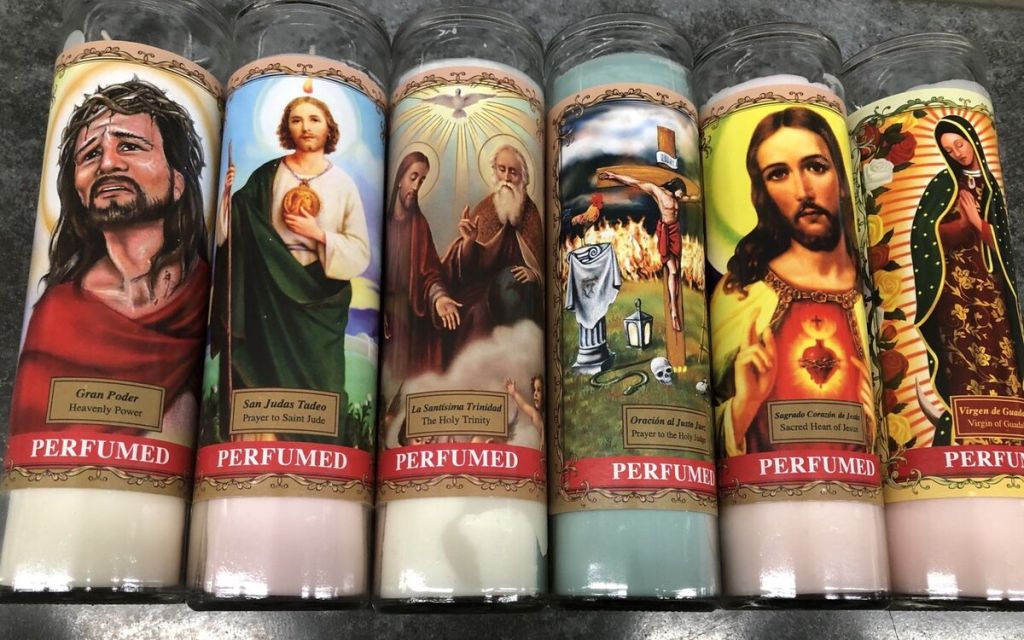
Tonantzin has been subsumed into the Catholic faith through being syncretised with the Catholic mother of Jesus the Virgin Mary to created the Nuestra Señora de Guadalupe or the beloved Virgen de Guadalupe. The legend of the Virgen was born atop the hill of Tepeyac through her appearances to the Nahua peasant Juan Diego and his entreaties to Bishop Juan de Zumárraga to build a shrine in her honour upon the hill. The very same hill that already supported a shrine of worship to the revered mother Tonantzin. This figure (the Virgen de Guadalupe) has done more than any other to cement Catholicism within the Americas.
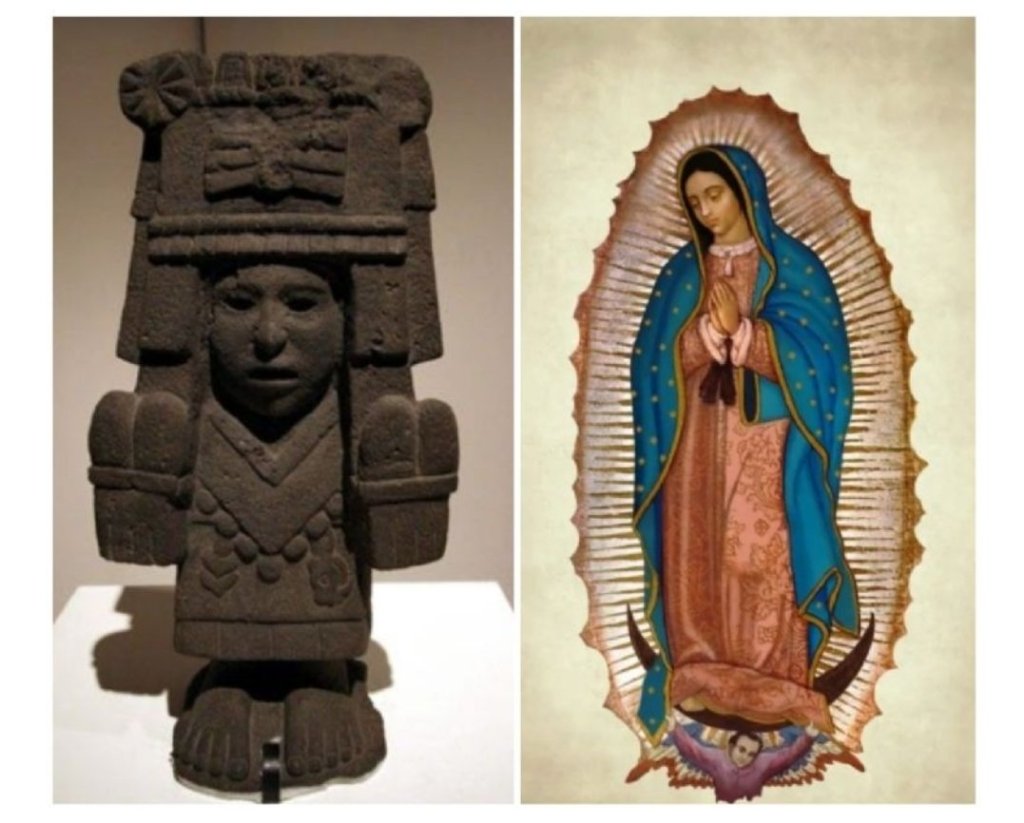
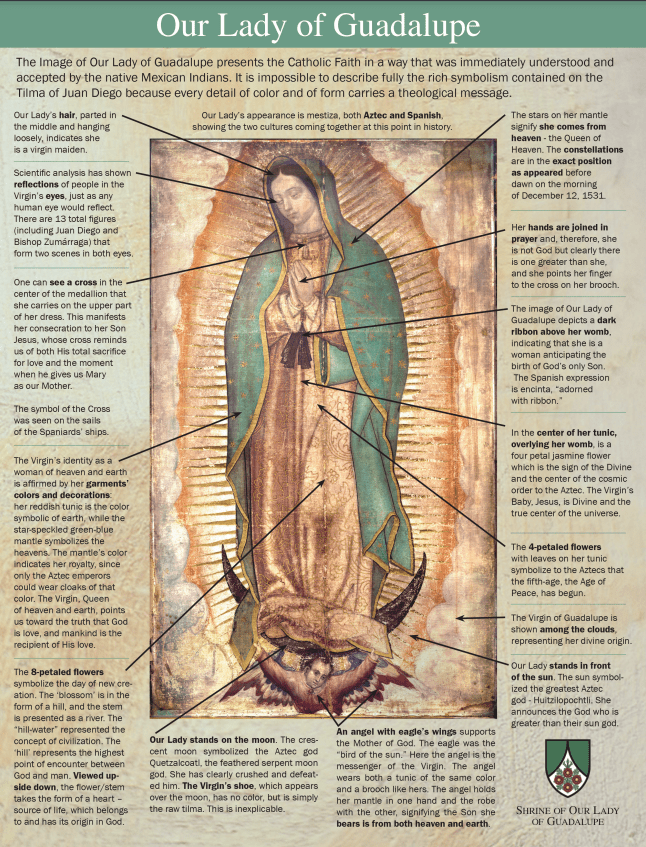
!Huey Tonantzin!
Te alabamos y cantamos en tu día!
Oh gran señora de la creación, de la vida,
Tu espíritu vive en cada uno de nosotros,
En cada átomo escondes tu vida,
El espíritu surge de tu esencia,
El viento, el agua, el fuego,
De tu vientre,
Te damos gracias por darnos vida!
Ipalnemohuani
Gran señora, conserva la espiritualidad en tu tierra,
Déjanos disfrutar de tus flores, de tu perfume, para adorarte aquí en este mundo,
Hasta que tengamos que regresar a casa.
!Huey Tonantzin!
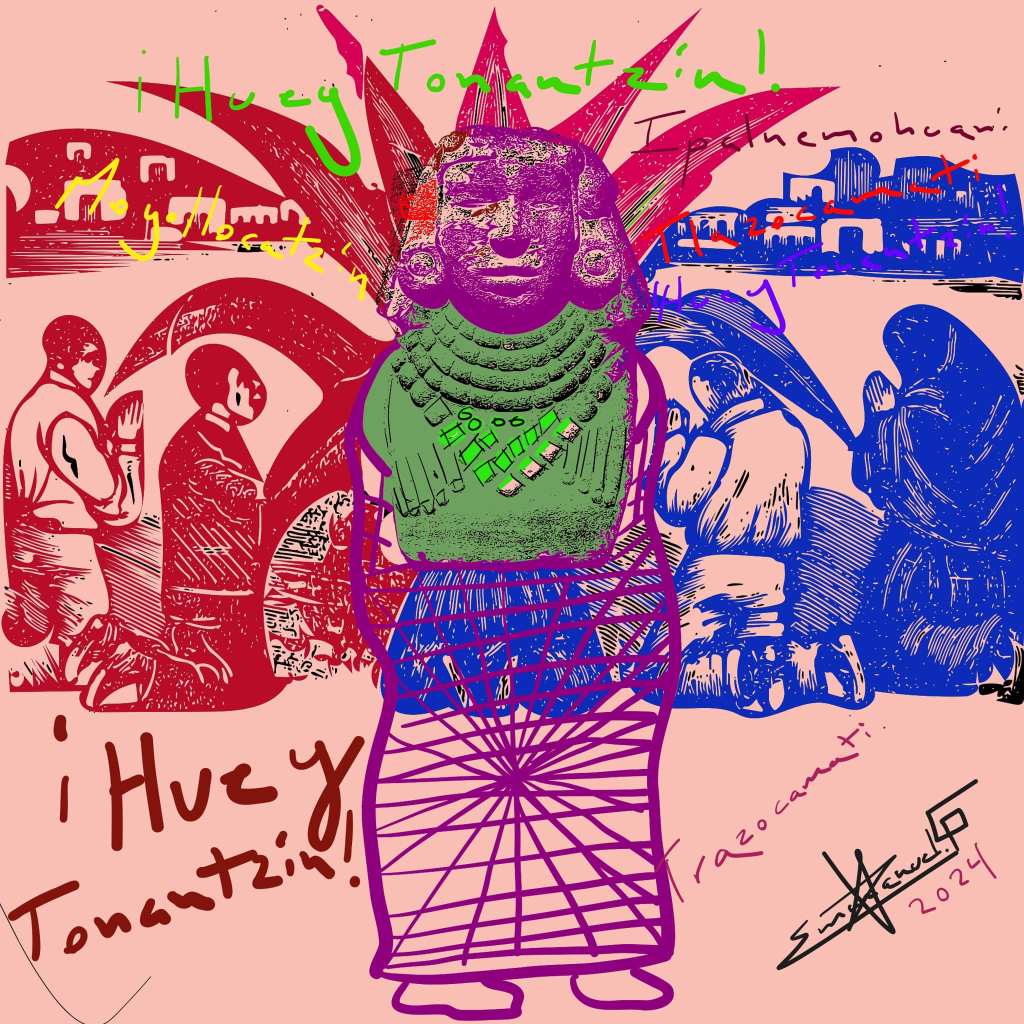
!Huey Tonantzin!
We praise and sing to you on your day! (We praise you and sing on your day)
O great lady of creation, of life,
Your Spirit lives in each of us, (Your spirit lives in each one of us)
In every atom you hide your life, (In each atom you hide your life)
The Spirit arises from your essence,
The Wind The Water The Fire
Out of thy belly, (From your belly)
We thank you for giving us life!
Ipalnemohuani
Great lady, keep spirituality in your land, (Great Lady, preserve spirituality in your land)
Let us enjoy your flowers, your perfume, to adore you here in this world,
Until we have to get back home. (Until we have to return home)
!Huey Tonantzin!
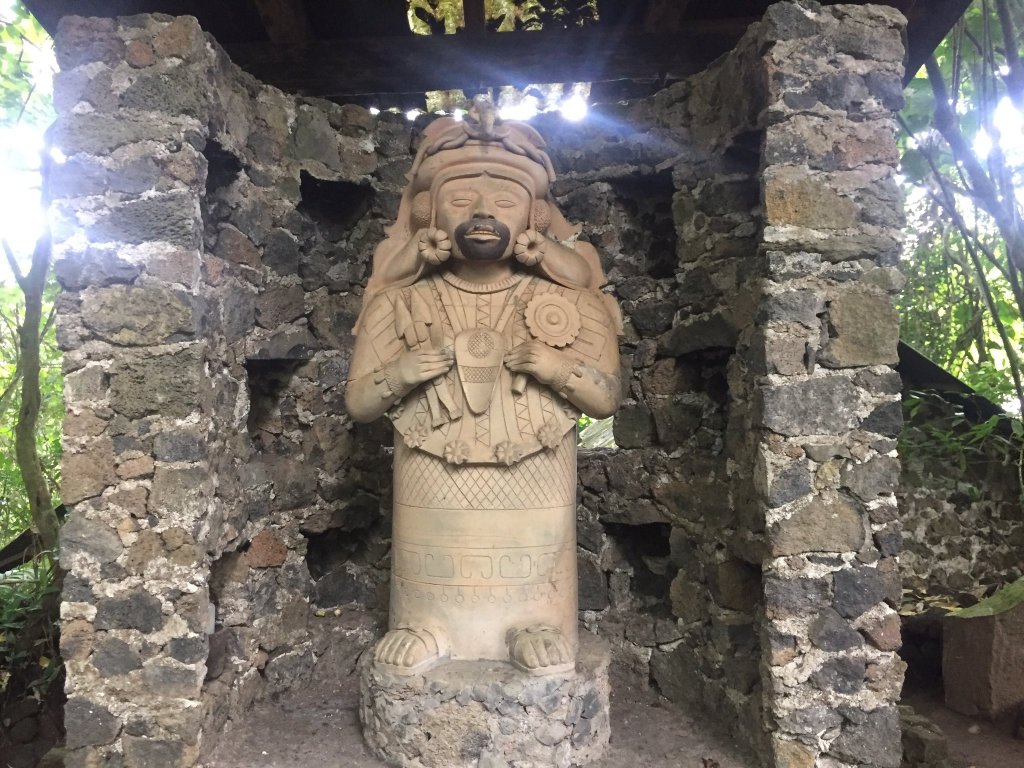
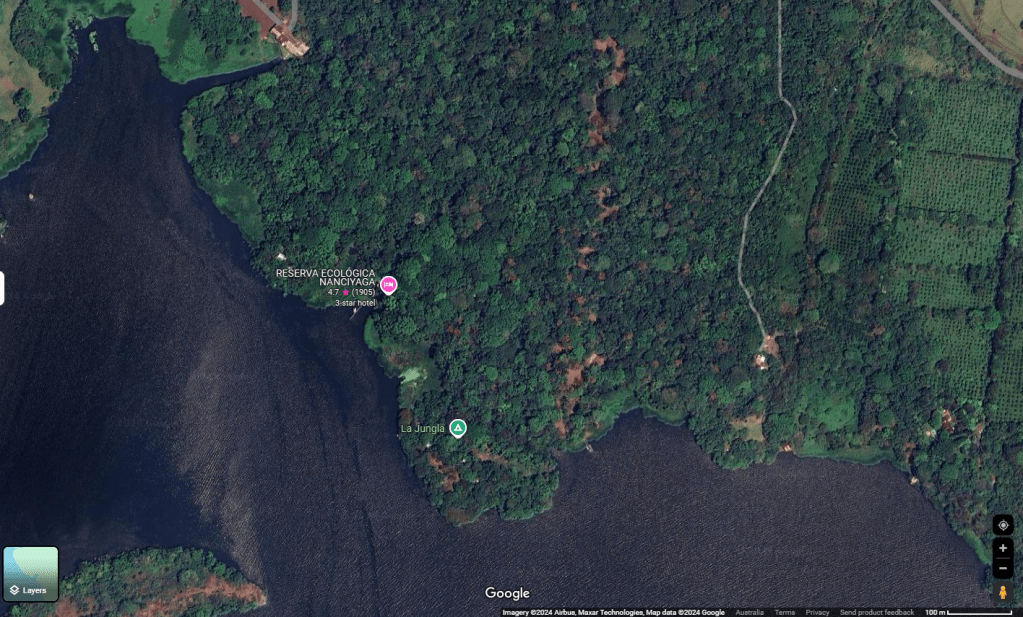
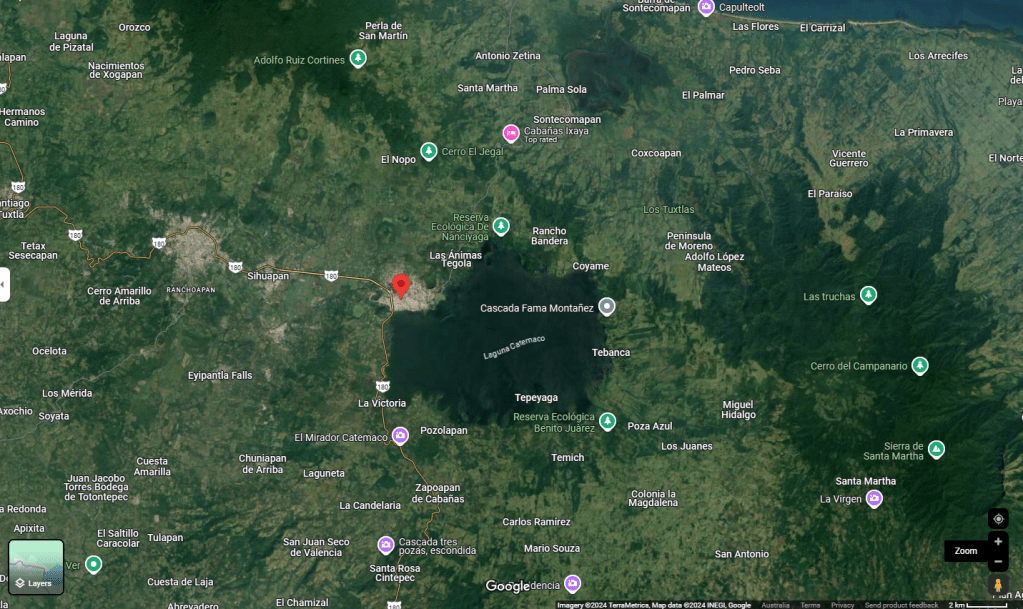
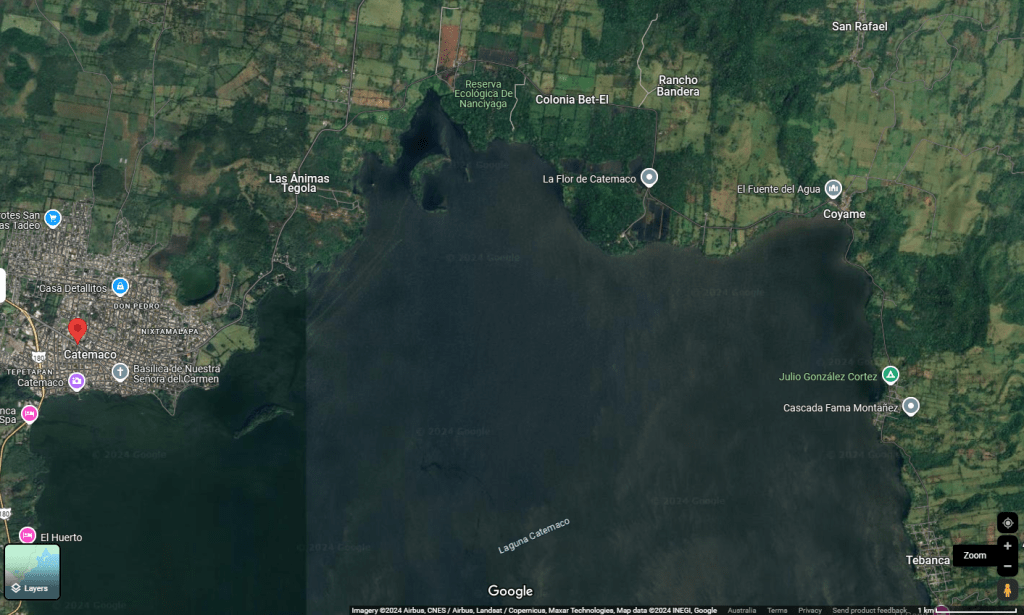
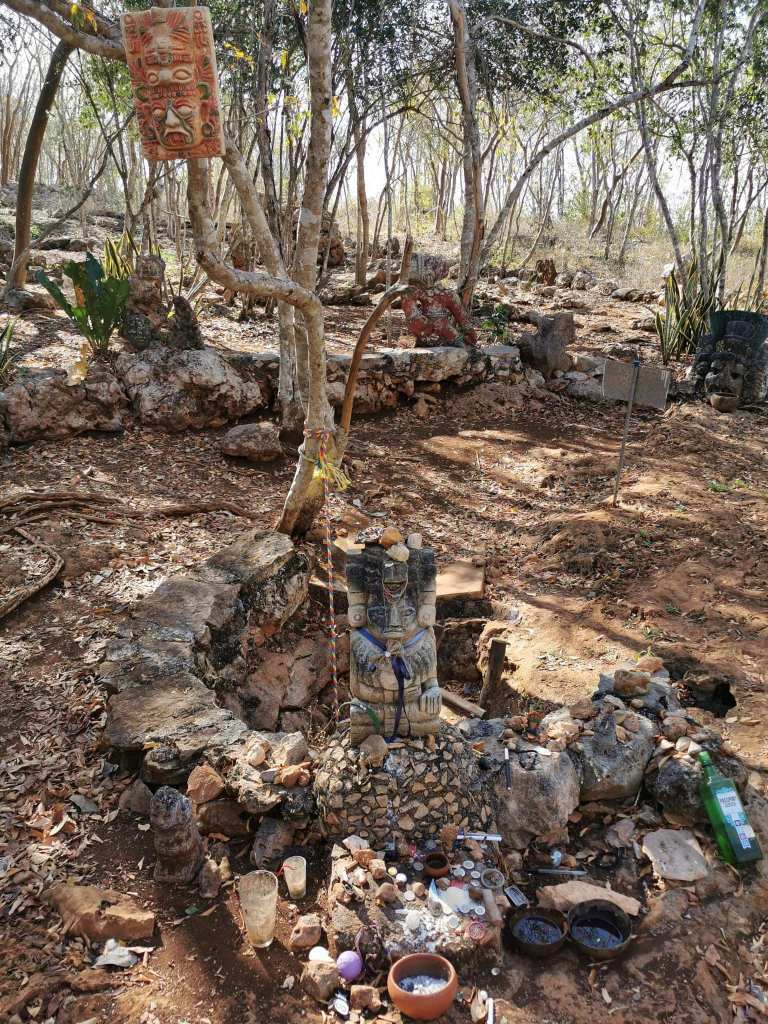
This shrine is located in Nanciyaga Catemaco Veracruz.
Catemaco is also known as the tierra de brujos or “land of the sorcerers” due to its prehispanic history of magic use and users in the area.
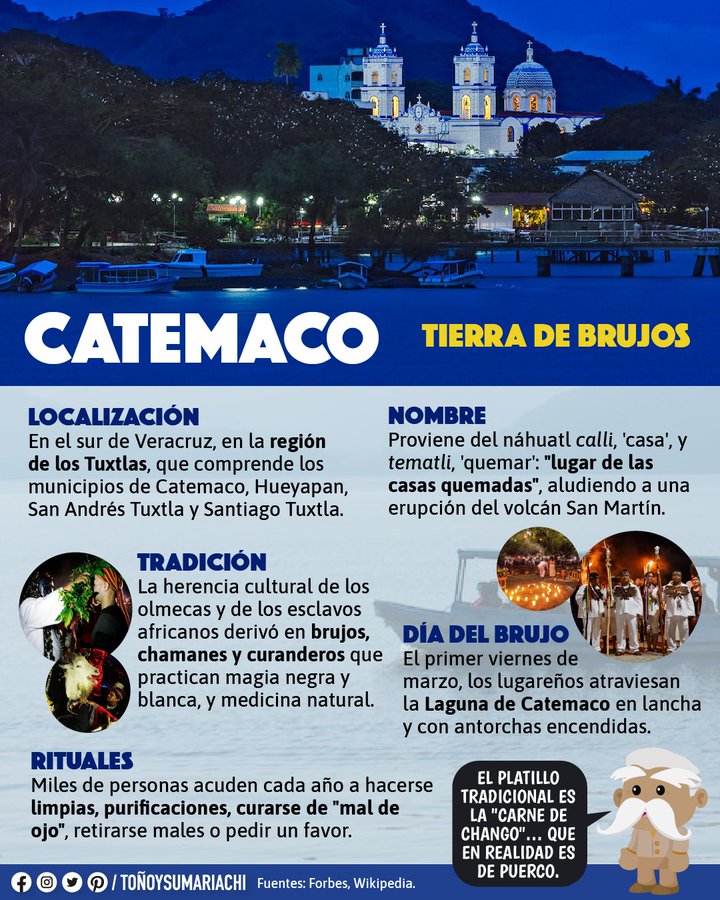
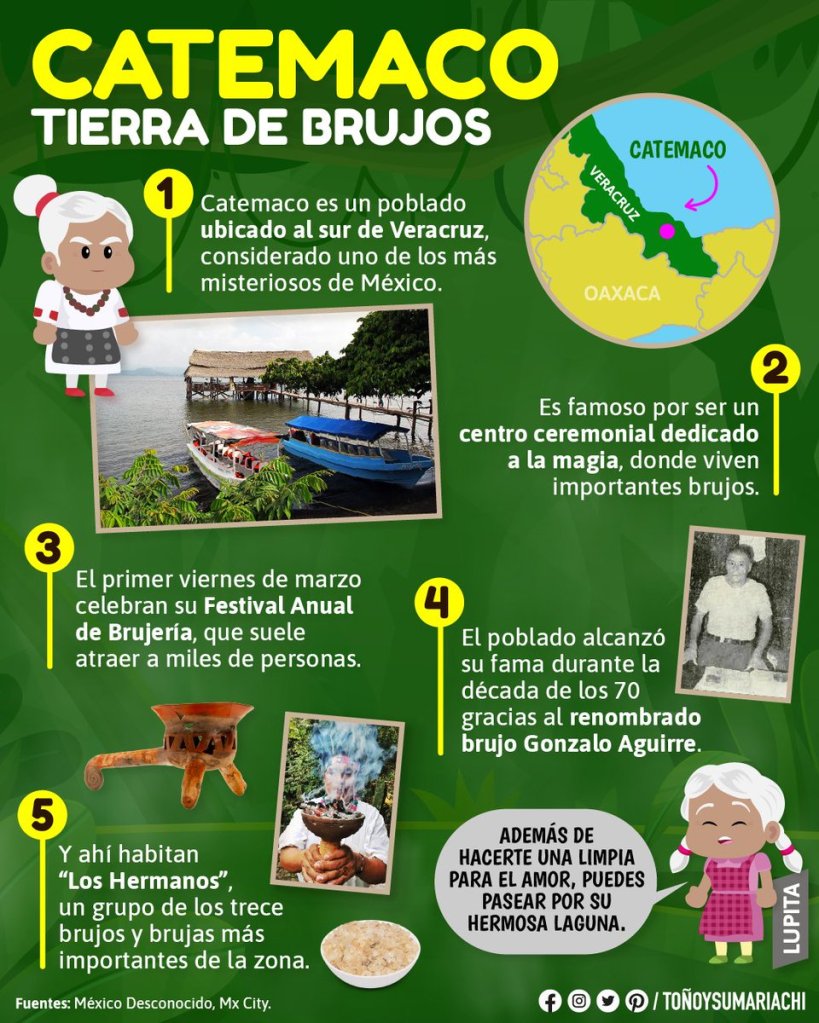
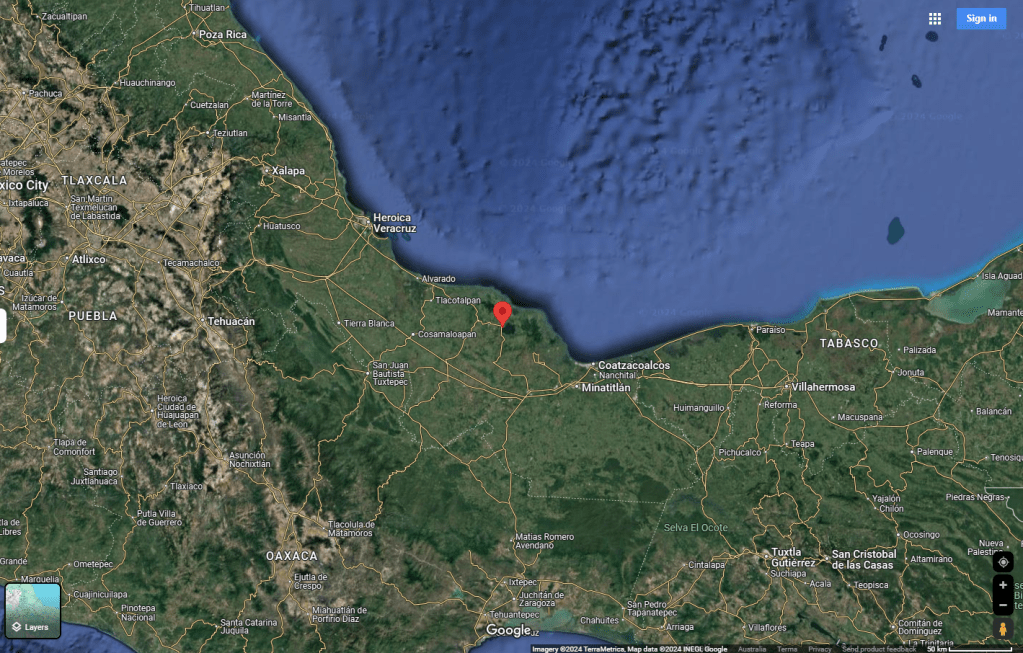
Nanciyanga (1) is an Ecological Reserve on the shores of Lake Catemaco. Catemaco is also the name of a City (and municipal seat)(2) located on the shores of the same lake in the south of Veracruz.
- In 2006 Mel Gibson filmed parts of the movie Apocalypto here and earlier, in 1992, the pelicula Medicine Man with Sean Connery was shot in this same Ecological Reserve
- the administrative centre and seat of government of a municipality or civil parish
Various captions of this image read as Diosa Mujer come pecados (literally Goddess Woman eats sins) or perhaps more relevantly Sin-eating Female Goddess and Diosa de los temazcal, diosa abuela, corazón de la tierra y madre de los dioses which refers to “Goddess of the temazcal, grandmother goddess, heart of the earth and mother of the gods”.
This Goddess can be identified by various incarnations as Temazcalteci, Toci and Tlazolteotl.
Temazcalteci (Nahuatl temāzcalli ‘sweat bath’ + tecitl ‘grandmother’) was the goddess of the “steam baths” known as temezcal. According to Sahagún (1), this goddess was the goddess of medicine, Toci, venerated by doctors. She was also worshiped by those who had temazcals (baths) in their houses.
- Referring to the Florentine Codex compiled by Bernardino de Sahagún in the 16th century
Toci (1) is a prominent deity in the religion and mythology of the pre-Columbian Aztec civilization of Mesoamerica. She is also called Tlalli Iyollo, meaning “heart of the earth”. Toci was also associated with healing and venerated by curers of ailments and midwives. Toci is identified with temazcalli or sweatbaths in which aspect she is sometimes termed Temazcalteci or “Grandmother of sweatbaths”.
- Nahuatl “our grandmother”, from to-, first person plural possessive, and cihtli, “grandmother” (the absolutive suffix -tli is dropped)(Campbell 1997)
Tlazolteotl also has an association with temazcalli as the “eater of filth” (1) and such bathhouses are likely to have been dedicated to either Tlazolteotl or Toci/Temazcalteci.(Miller & Taube 1993)
- Or “sin eater”
Xochipilli and the veneration of nature.
Xochipilli (the Prince of Flowers) often referred to as Macuilxochitl (Five Flower) (1) is a major focus of my studies. I have pondered upon Xochipilli in many previous Posts (2)
- Five often implies excess in the sense of intoxication particularly in reference to the alcoholic drink called pulque. See Mayahuel and the Cenzton Totochtin. and Xochipilli and the Macuiltonaleque (soon to be released) for more detail on this. I have also seen Xochipilli called the “Prince of flowers that intoxicate” amongst those who posit that Xochipillis statue (the Tlamanalco carving) is bedecked with images of (and only of) hallucinogenic plants. Modern studies however are indicating that this might in fact not be the case though…see Xochipilli : Is it a Dahlia?, Xochipilli : New Floral Identifications and Xochipilli. The Symbolism of Enrique Vela for more on this.
- Xochipilli : A Force of Nature
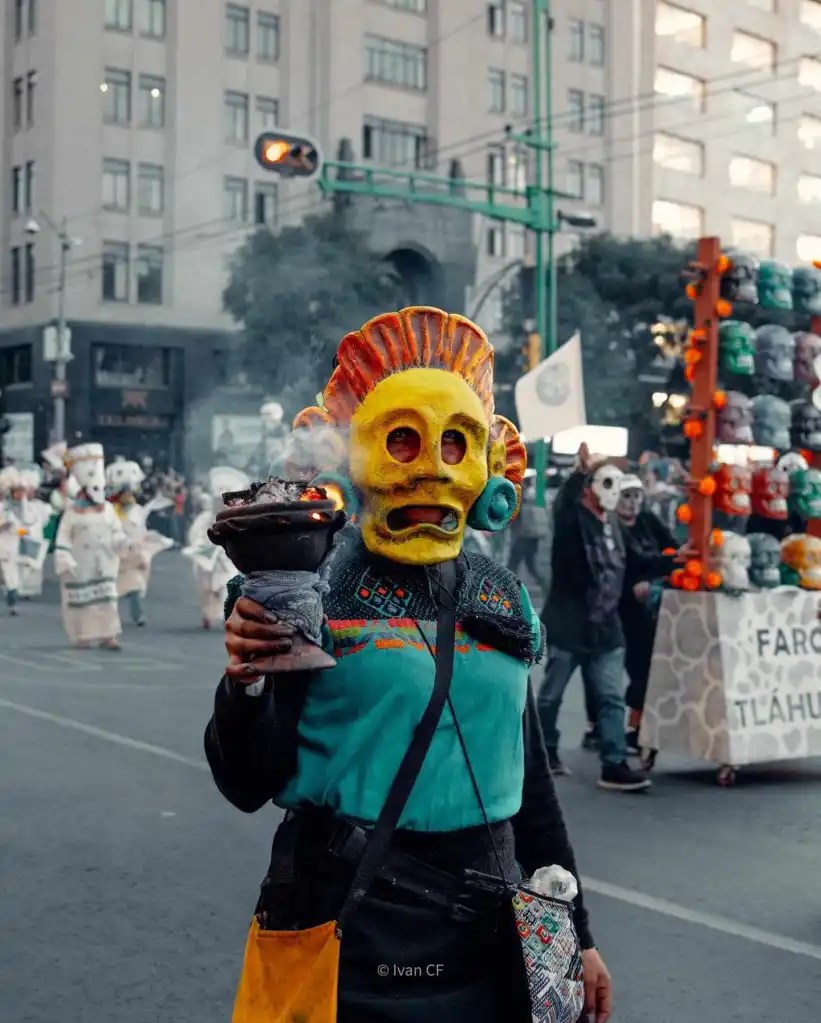
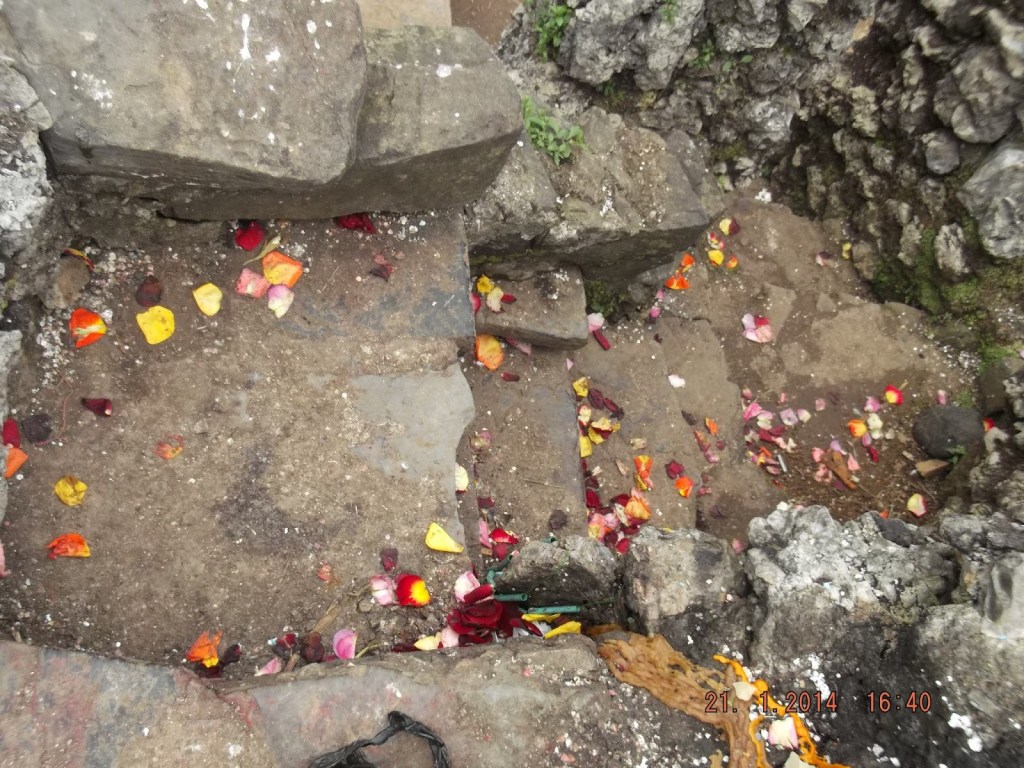
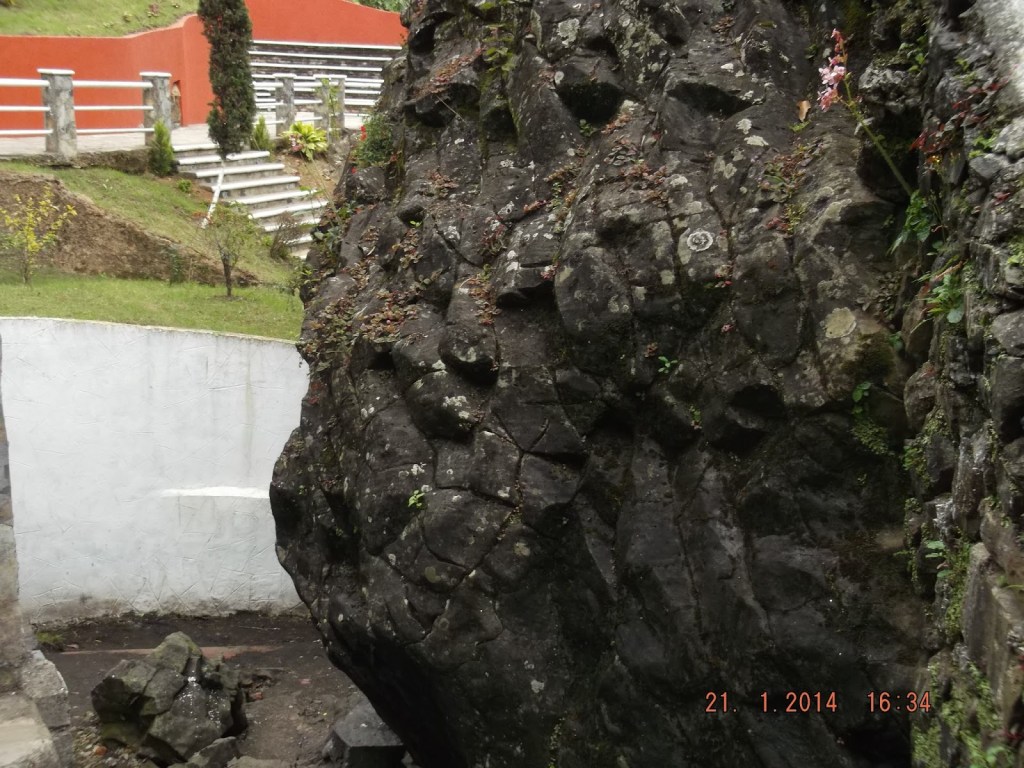
In my Post Xochipilli : A Force of Nature you can investigate the modern veneration of Xochipilli at the Xochipilia in Xicotepec de Juárez.
Tlaloc
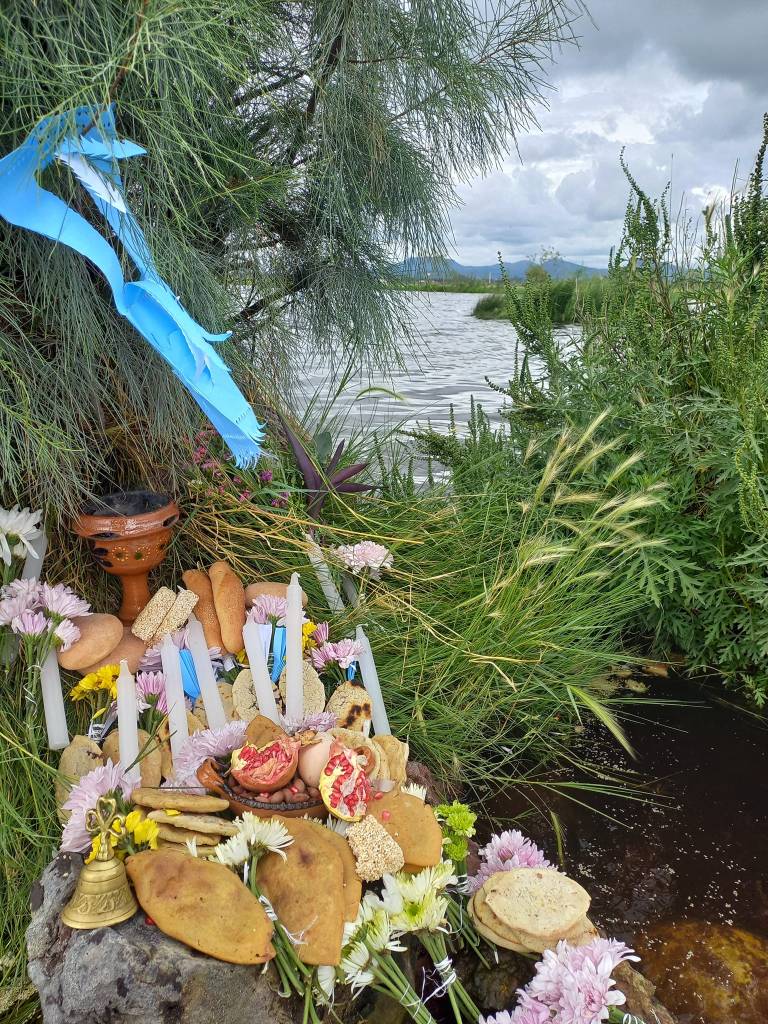
Migue Tonaltekpatl Uitsitsili

It has been said that Tlaloc is the only pre-Hispanic god who survived the conquest with a very low degree of syncretism, since there is still a cult of this god (mainly among the hail makers) and therefore a belief in his supernatural powers, being that this is a benevolent god who gives rain, and a wrathful one when he sends hail.
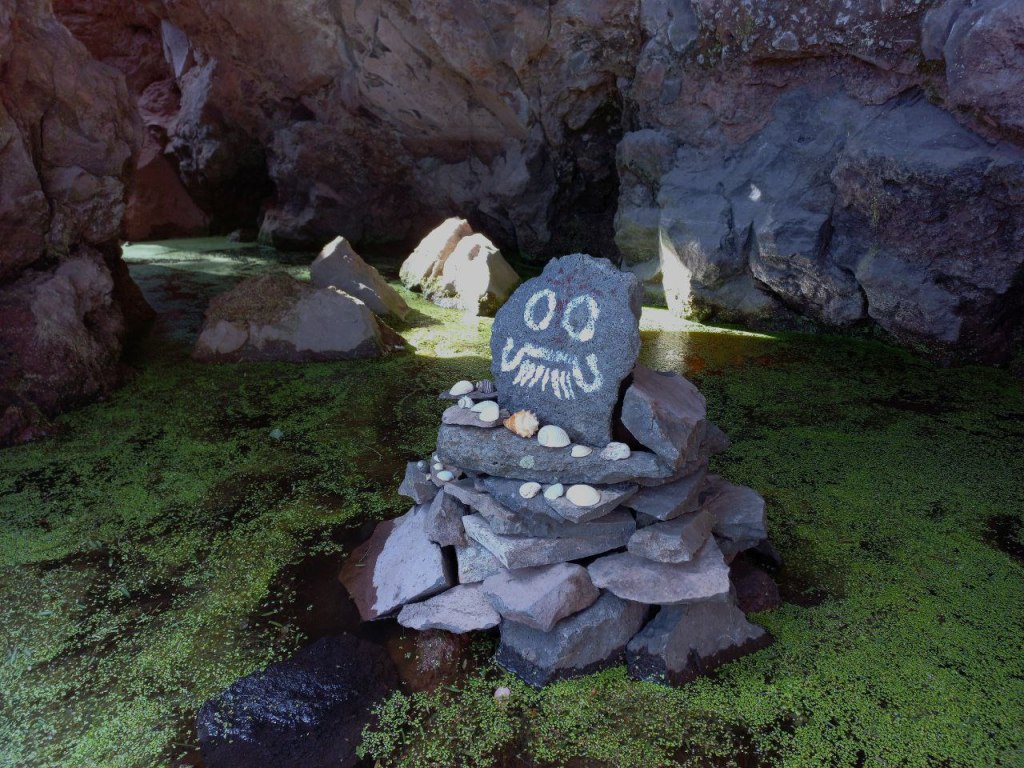
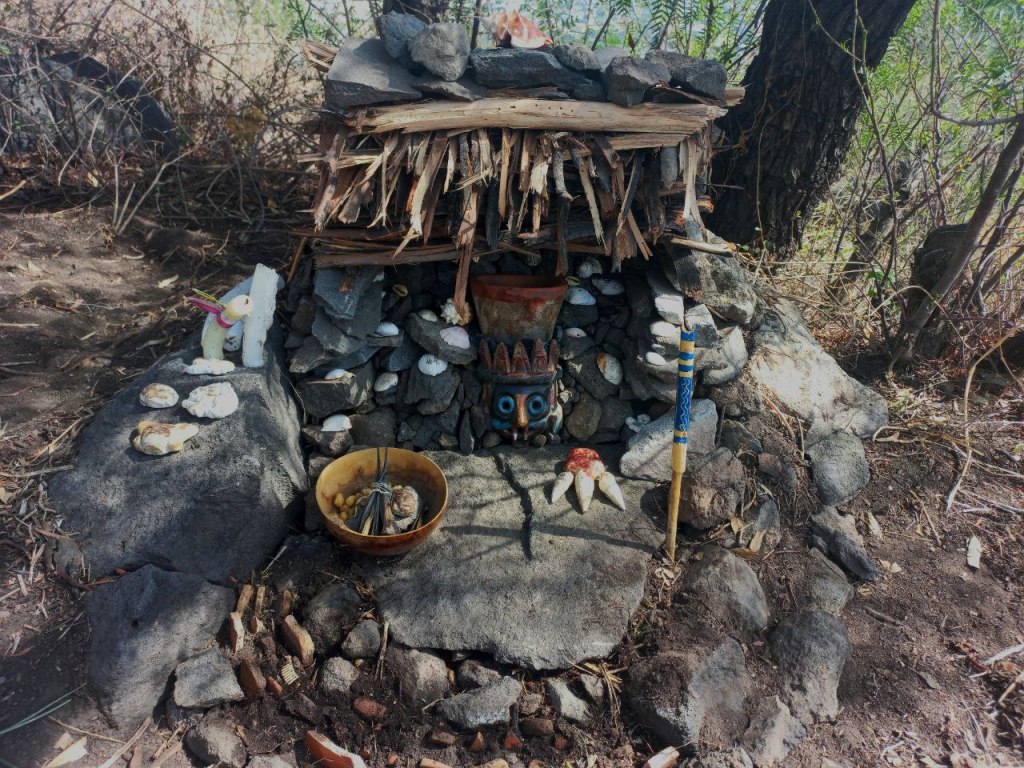
One practice of the veneration of Tlaloc that exists to this day (although the connection to Tlaloc no longer openly (?) exists) and that is the hanging of crosses made from the herb pericón on houses and in crops.
In the States of Morelos and some parts of Puebla, on the eve of St Michaels Day (September 28th), crosses made from a herb the Aztecs called Yauhtli are hung on the doors and windows of houses and placed in the corners of fields to provide protection from the devil (Chamuco) and protect crops from lightning. As Yauhtli (1) this herb (2) is closely related to the rain god Tlaloc because it sprouts during the first rains of the season and is used to treat illnesses related to water and/or cold. It was also used in Prehispanic times to offer protection when crossing rivers and to keep one safe from being struck by lightning (all aspects of Tlalocs domain). Todays celebrations might be Christian but the herb keeps the practice firmly linked to Prehispanic ways and the veneration of St Michael is simply a mask that covers/conceals/obfuscates the face of the old ways
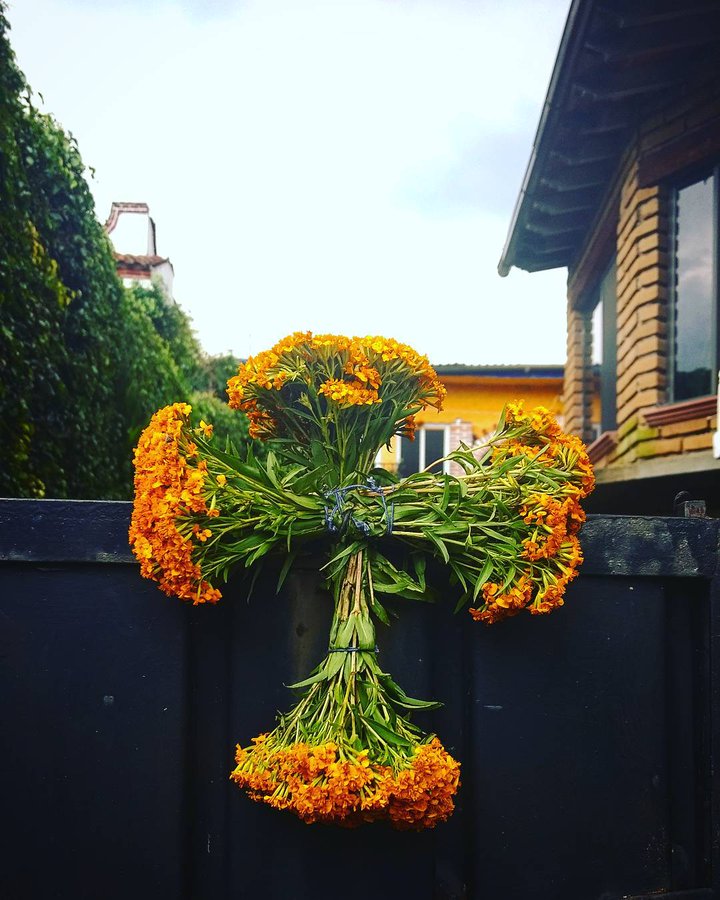
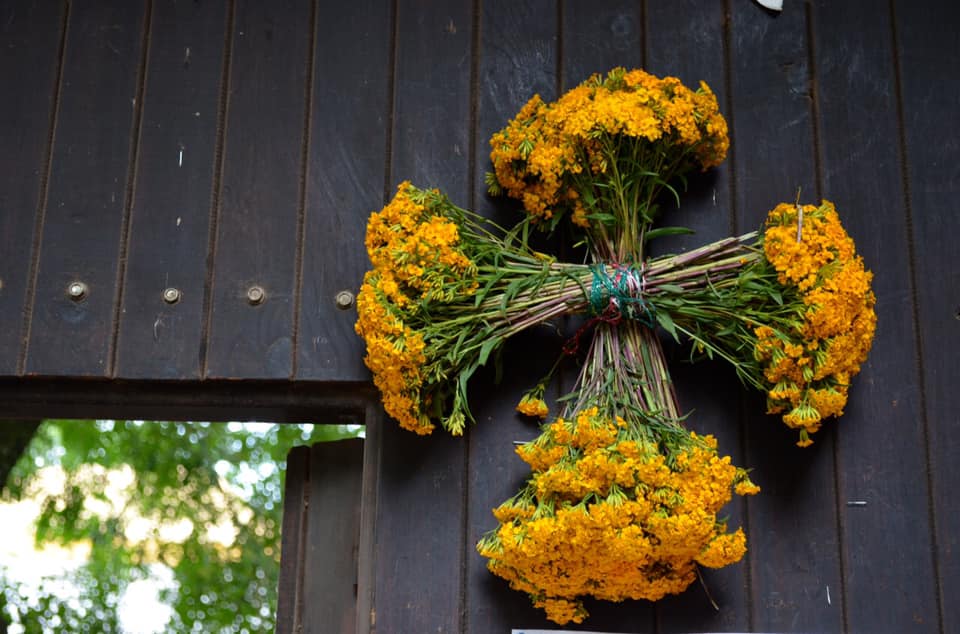
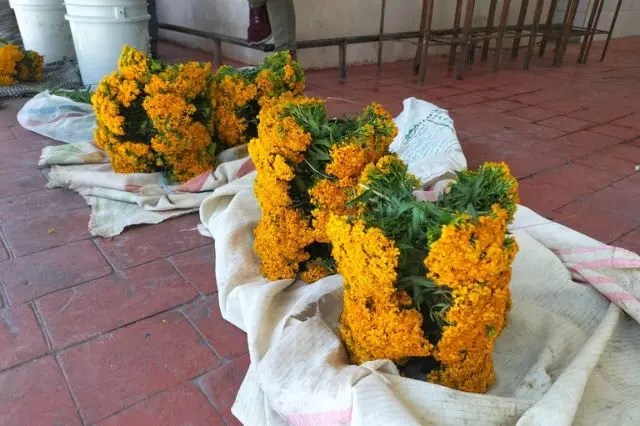
Francisco Hernández (1959) glosses yauhtli as “hierba de nubes.” (cloud herb) Bernard Ortiz de Montellano (1980 & 1990) notes that yauhtli incense was strongly identified with Tlaloc and other Aztec gods of water and fertility. The Historia Natural de Nueva España (1571 a 1576) calls Tagetes lucida hierba de nubes “since it resolves clouds in the eyes” (que resuelve nubes en los ojos).
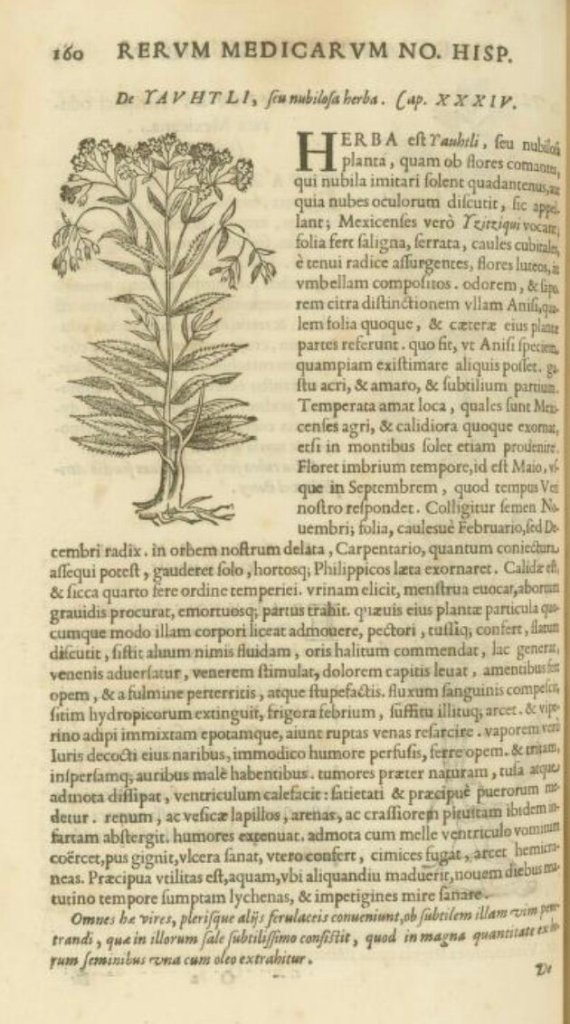

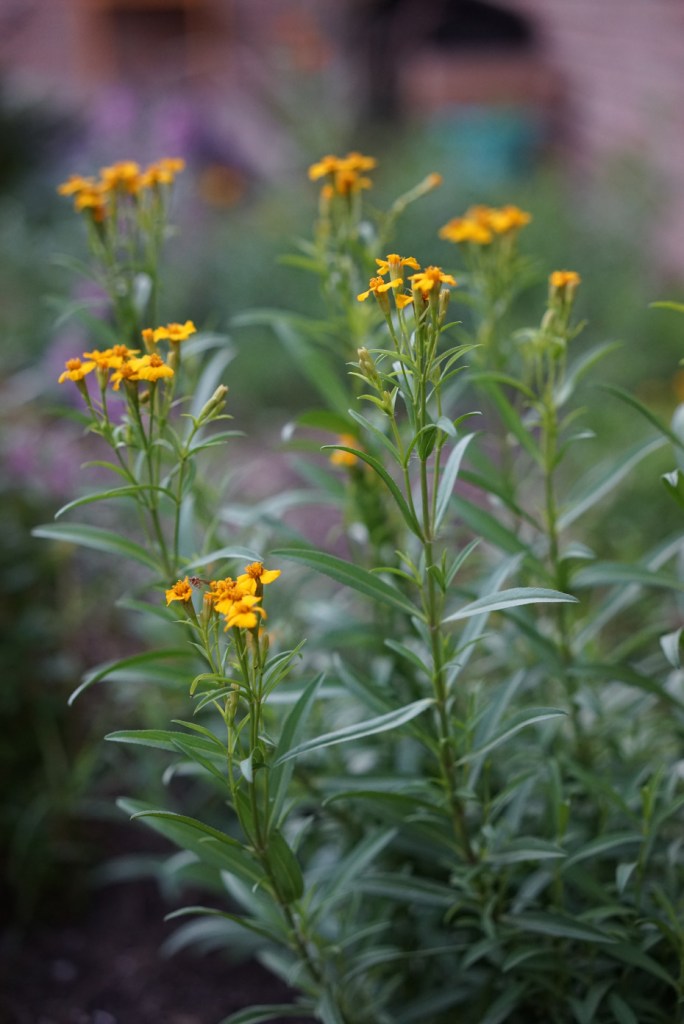
On a cloud related note, Redfield (1928)(1930) writes of tzitziquilitl (1) being used for treating ixtlaxcolcocoliztli or “clouds in the eyes sickness”
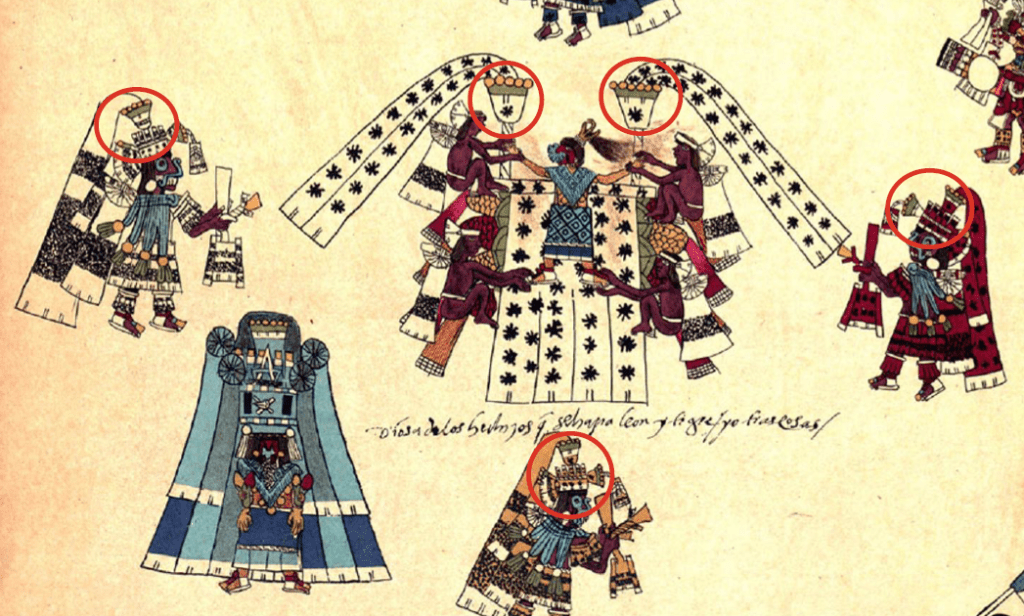
The appearance of the anise scented quelite in the Codex Borbonicus, which shows scenes of the celebration of the Ochpaniztli festival, is entirely appropriate regarding the agricultural role of yauhtli. The Ochpaniztli festival concerns first harvest, and is filled with references to rain and maize (and is where the current practices regarding hanging crosses of Yauhtli on St Michaels Day descend from?)
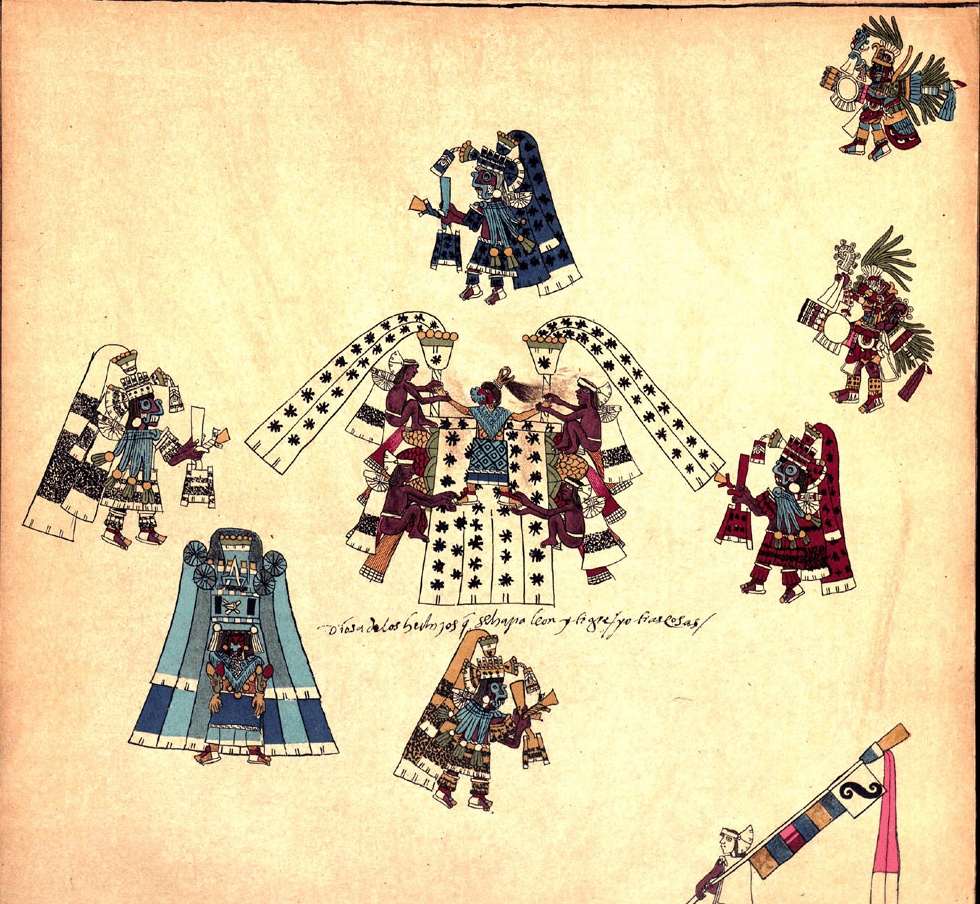
Aztec Mexican year-sign yauhtli bundle, detail of headdress worn by Chicomecoatl impersonator, Codex Borbonicus
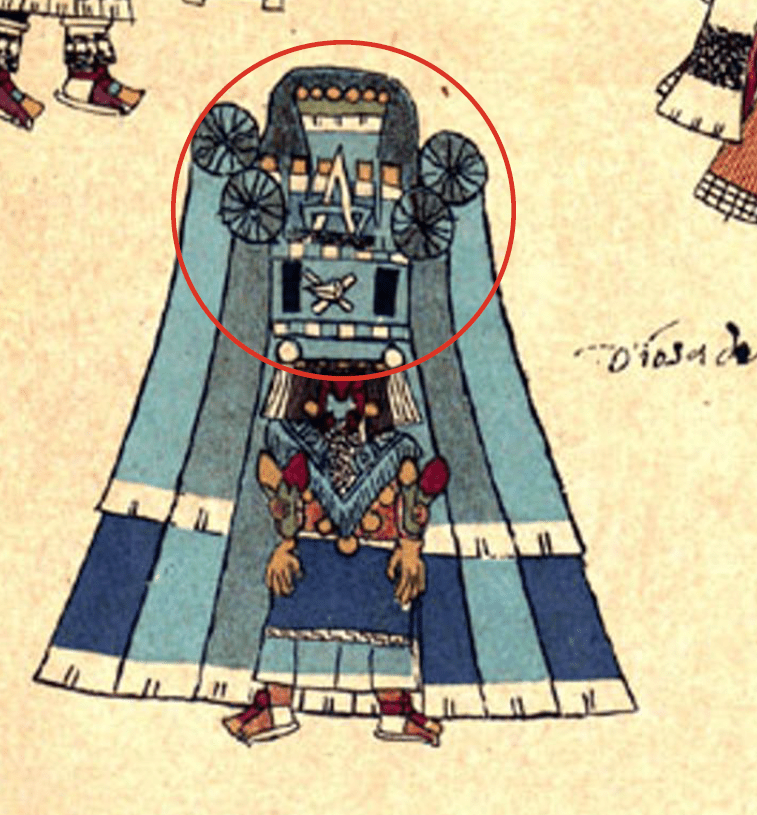
Although attention is drawn to the headdress of the Chicomecoatl (1) impersonator we can see several more depictions of yauhtli in the image. Its importance (and the point I’m trying to make) is in the fact that although Tlaloc’s garb may have been updated he has not been forgotten.
- Chicomecoatl, or Seven Serpent, the Aztec goddess of corn and sustenance was associated with both fertility and agricultural abundance.
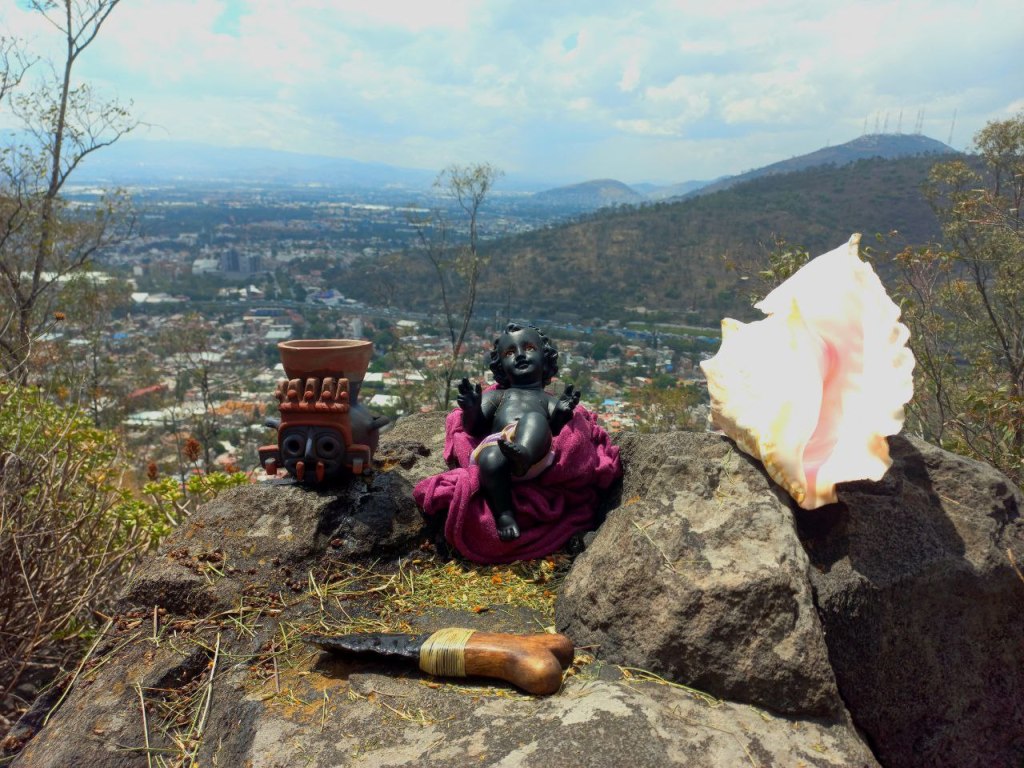
One of the places mentioned by Saguhún where the Mexicas are supposed to have made offerings to Tlaloc, both of their best corncobs from the previous harvest and of children. The sacrifices were carried out during the twenties of Atlcahualo, Tozoztontli, Huey Tozoztli, Etzalcualiztli, Tepeilhuitl and Atemoztli.
This humble offering is in Yohualtécatl (Vicente Guerrero Hill in the Tepeyac National Park), an ancient ayauhcalli (1), in addition to having preclassical petroglyphs that refer to a fertility cult.
- ayauhcalli, “house of mist,” the home of the rain god (ayauhtli (fog) and calli (house or building). Note the linguistic link of (a)yauhtli (fog) and yauhtli “cloud” herb.
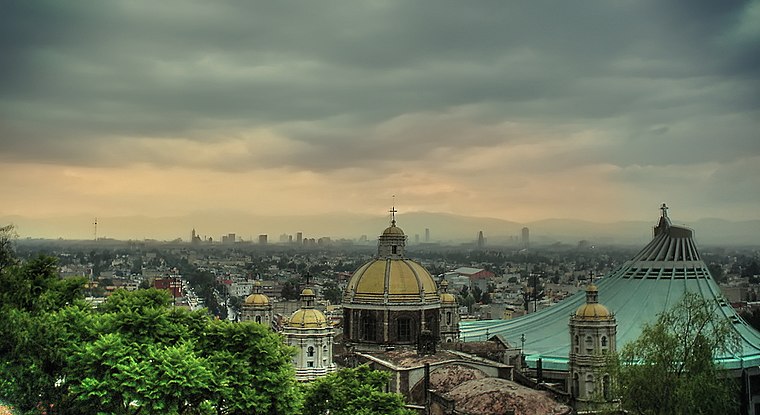
Yohualtécatl is a peak in Delegación Gustavo A. Madero, Ciudad de México
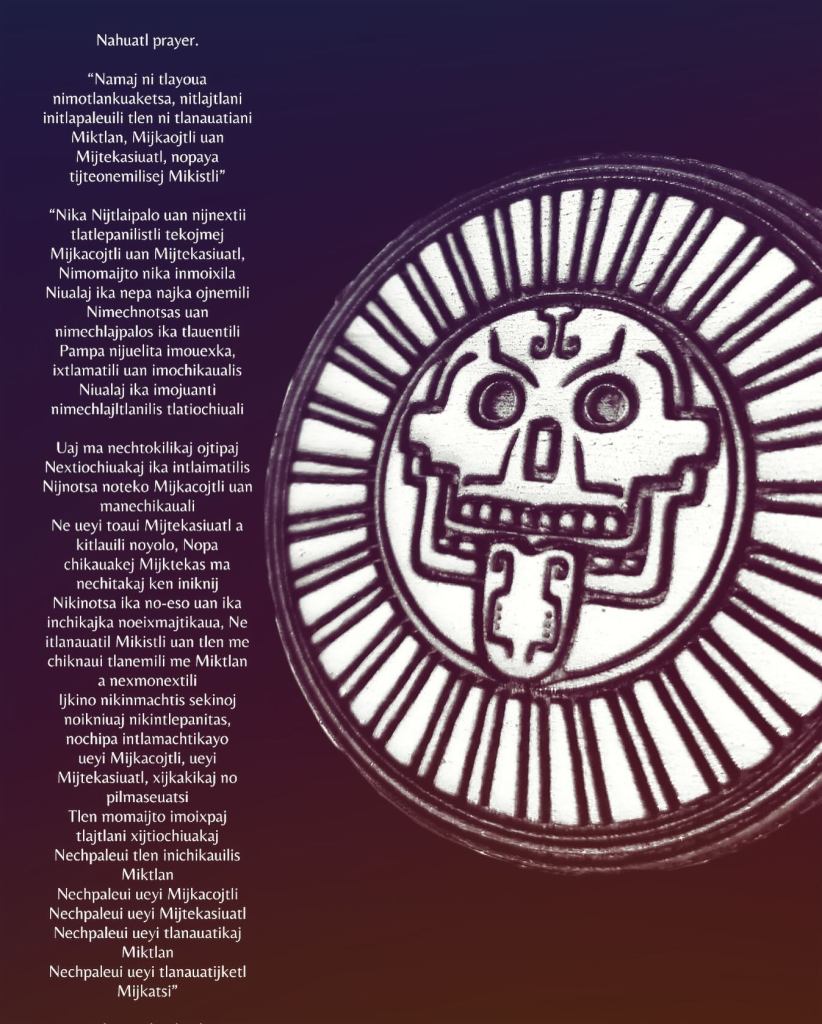
Mictlan. The land of the dead.
Mictlan is the underworld, the land of the dead, and is overseen by its ruler Mictlantecuhtli. Not all souls however were destined to make the journey to this land.

Image by: Nedy Torres.
The journey to Mictlan is an interesting one (which I go into more detail here……)(1) and is one of growth and revelation. It encompasses the healing and release (into freedom) of the soul.
- Stay tuned for future Post. Calm down, I’ll add the link soon (as at Jan 2025 – to keep my on my toes)
The veneration of other beings.
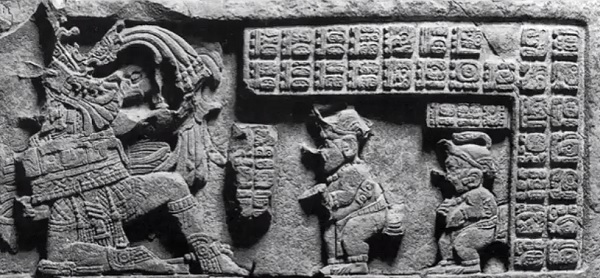
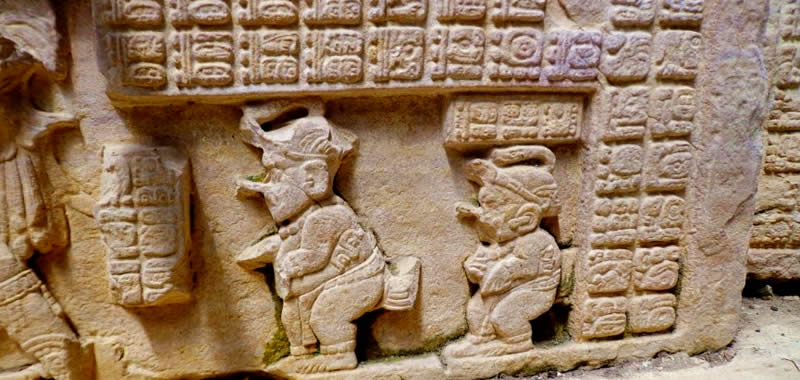
An alux is a type of sprite or spirit in the mythological tradition of certain Maya peoples from the Yucatán Peninsula and Guatemala, also called Chanekeh or Chaneque by the Nahuatl people. Aluxo’ob are conceived of as being small, only about knee-high, and in appearance resembling miniature traditionally dressed Maya people. Tradition holds that aluxob are generally invisible but are able to assume physical form for purposes of communicating with and frightening humans as well as to congregate. They are generally associated with natural features such as forests, caves, stones, and fields but can also be enticed to move somewhere through offerings. Some Maya believe that the Aluxo’ob are called into being when a farmer builds a little house on his property, most often in a maize field (milpa). For seven years, the alux will help the corn grow, summon rain and patrol the fields at night, whistling to scare off predators or crop thieves. At the end of seven years, the farmer must close the windows and doors of the little house, sealing the alux inside. If this is not done, the alux will run wild and start playing tricks on people.
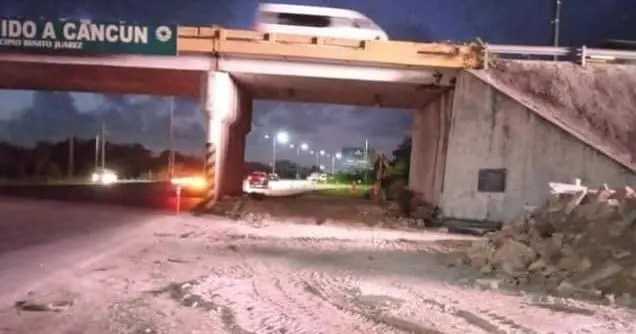
In the 1990’s a bridge was built in Cancun (Mexico) to create a shortcut from the airport to the city. The construction of the bridge to cross the lagoon took much longer than expected because no matter how much progress was made, something always happened that delayed the construction works.
According to reports, when the workers arrived the morning after the start of construction, they saw that the progress made on the first day of the bridge structure had collapsed. Thinking it was the work of vandals, they notified the authorities demanding to find the person responsible for this criminal act, however, they never found those responsible.
The workers could not explain why, when they arrived at the workplace, they found bent rods in the columns, damp cement, missing tools and constant disturbances that prevented the progress of the work
After the bridge came down the fourth time the contractors decided that it wouldn’t hurt to bring a shaman to exorcise the place.
According to local workers, who were part of the crew during the construction phase, it was not until “Los Aluxes”, the authentic owners of the place, were asked for authorization that the work could be successfully completed.
On the advice of the Maya priest (shaman or H-men), a small pyramid was built under the bridge structure, in order to have a pact with the Aluxes and allow the completion of the bridges construction
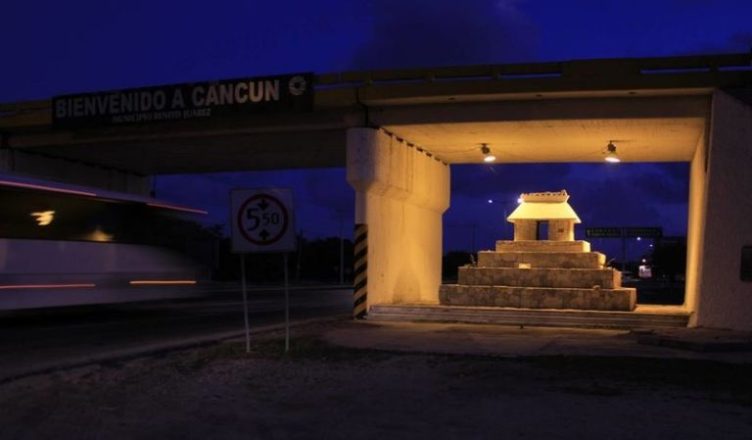

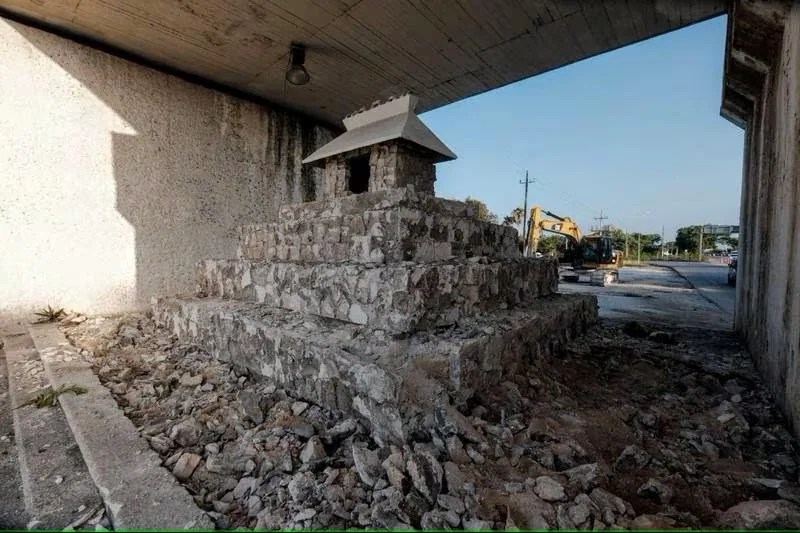
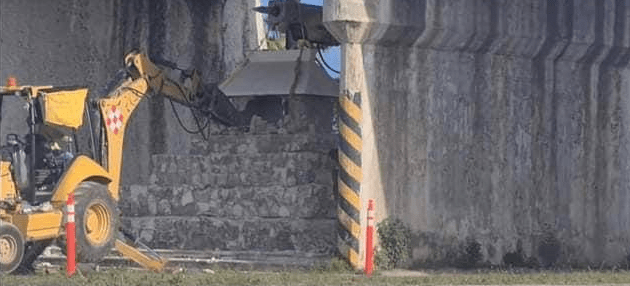
This pyramid, known as “Casa de Los Aluxes” remained under the bridge until July 3, 2022, when the local authorities decided to remodel that road, and the house was demolished.
Mexican Calendar Art
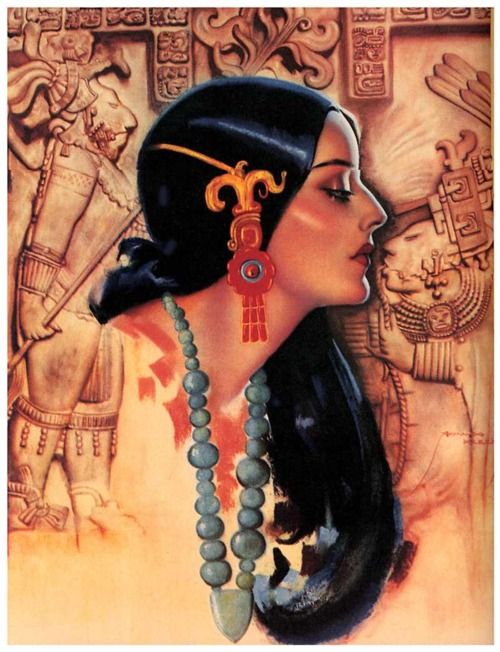
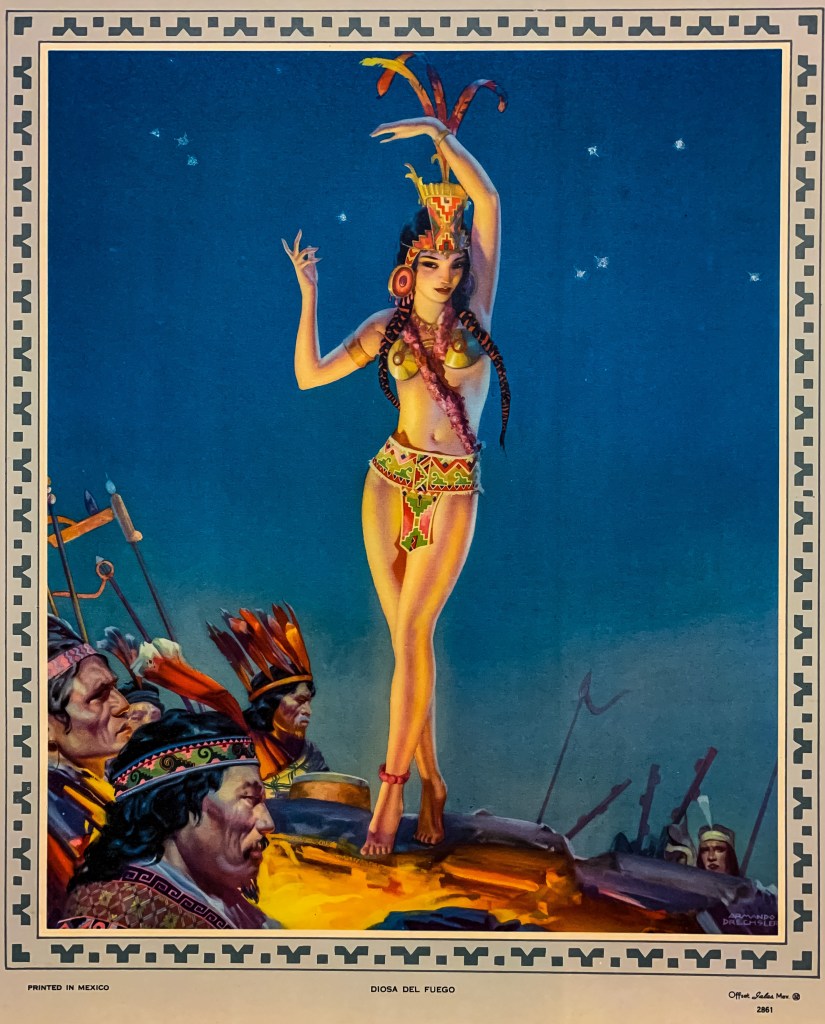
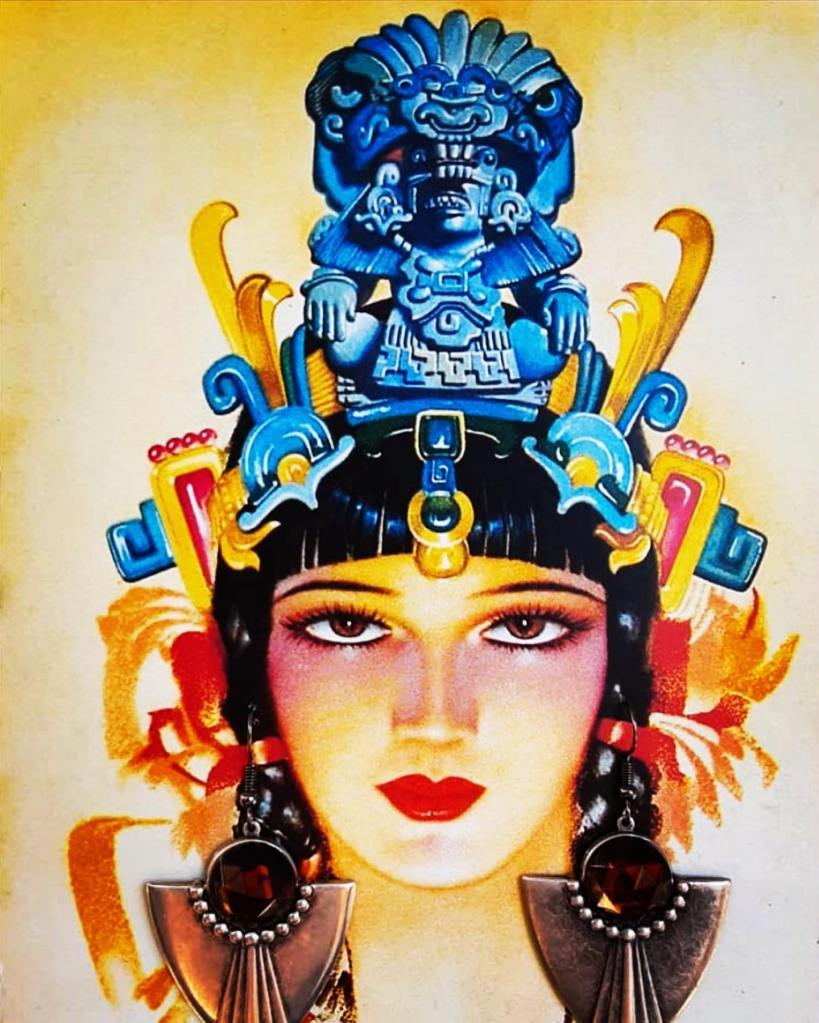
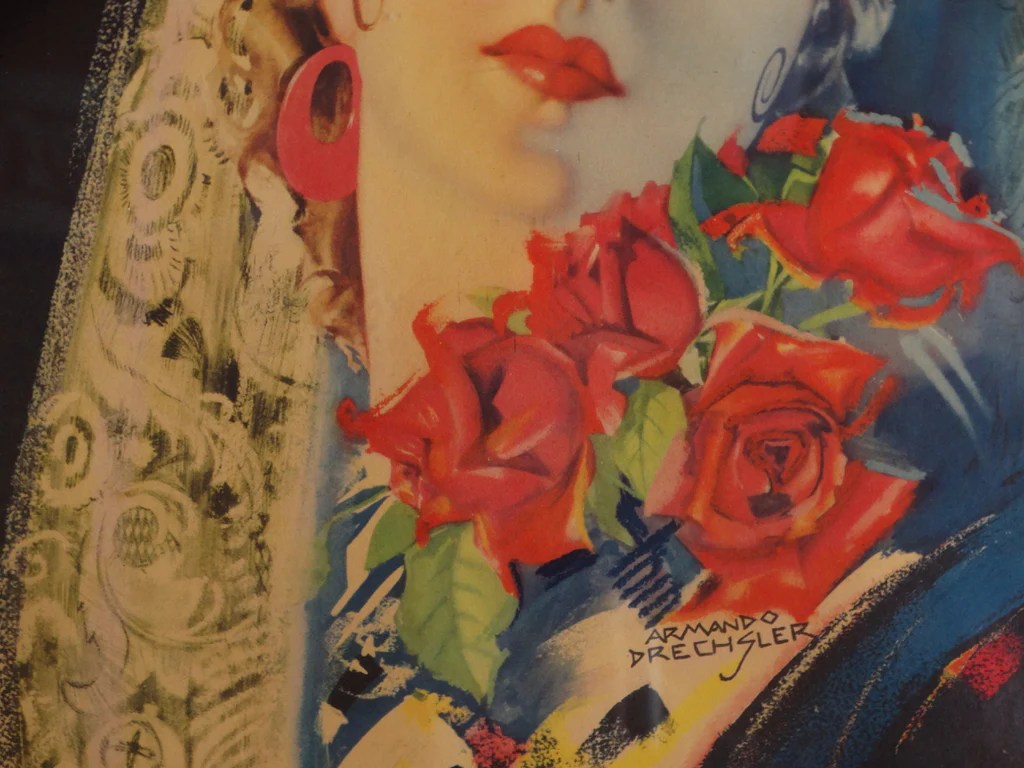
Armando Drechsler

Armando Drechsler (1901 – 1961) emigrated to Mexico from Germany (or Austria) after serving in World War I (nobody will tell which side though). He became interested in fine art and is said to have had an innate talent for it and soon became quite popular for his work on the calendars of Galas de México depicting colonial as well as indigenous cultures and peoples in his particular European style. Among his subjects, he painted stylized illustrations of women as Aztec and Mayan princesses, cowgirls, peasants, goddesses, and dancers. These calendars were extremely popular at the time and their iconic art is still sought after today. I have previously Posted on two artists from this era, Jesús Helguera (only a little) and Luis Amendolla (in a bit more detail) although, like Luis, I have not been able to find a great amount of detail (online anyway) on Armando.
In the 1940s and 1950s, Drechsler began to focus on commissioned portraits, which became fashionable following his success as a calendar artist. He painted prominent Mexican politicians such as President Plutarco Elias Calles (1877–1945), President Lázaro Cárdenas (1895–1970), and President Miguel Alemán Valdes (1900–1983),
(ca. 1950)
(ca 1940)
For some extra info on Jesus and Luis check out……
References
- Aldridge D (2000) Spirituality, Healing and Medicine. Jessica Kingsley, London Benson H, Stark M (1996) Timeless Healing: The Power and Biology of Belief. Simon and Schuster, London
- Andrade C, Radhakrishnan R. Prayer and healing: A medical and scientific perspective on randomized controlled trials. Indian J Psychiatry. 2009 Oct-Dec;51(4):247-53. doi: 10.4103/0019-5545.58288. PMID: 20048448; PMCID: PMC2802370.
- Broda, Joana, “La fiesta de Atlcahualo y el paisaje ritual de la Cuenca de México”, TRACE. Procesos mexicanos y centroamericanos, Centro de Estudios Mexicanos y Centroamericanos, Ciudad de México, n. 75, 2019, p. 9-45. DOI: http://dx.doi.org/10.22134/trace.75.2019.143.
- Broda, Johanna, “Tenochtitlan: Mexica processions and pilgrimages in the Basin of Mexico”, Arqueología Mexicana No. 131, pp. 72 – 79.
- Campbell, R. Joe (1997). “Florentine Codex Vocabulary”. Retrieved 05.11.2024
- Cha KY, Wirth DP. Does prayer influence the success of in vitro fertilization-embryo transfer? Report of a masked, randomized trial. J Reprod Med. 2001 Sep;46(9):781-7. Erratum in: J Reprod Med. 2004 Oct;49(10):100A. Lobo, RA [removed]. PMID: 11584476
- Gerson, Mary Joan, et al. Fiesta Femenina: Celebrando a Las Mujeres a través De Historias Tradicionales Mexicanas. Eds. Destino, 2003.
- Gutiérrez, I. T., Menendez, D., Jiang, M. J., Hernandez, I. G., Miller, P., & Rosengren, K. S. (2020). Embracing death: Mexican parent and child perspectives on death. Child development, 91(2), e491-e511.
- Gutiérrez, I. T., Rosengren, K. S., & Miller, P. J. (2015). Día de los Muertos: Learning about death through observing and pitching in. In Advances in child development and behavior(Vol. 49, pp. 229-249). JAI.
- Hernández, Franciso (1959). Historia natural de la Nueva España. 2 vols. Mexico: Editorial Pedro Robledo
- Hidalgo I, Brooten D, Youngblut JM, Roche R, Li J, Hinds AM. Practices following the death of a loved one reported by adults from 14 countries or cultural/ethnic group. Nurs Open. 2020 Oct 2;8(1):453-462. doi: 10.1002/nop2.646. PMID: 33318853; PMCID: PMC7729787.
- Hughes CE. Prayer and healing. A case study. J Holist Nurs. 1997 Sep;15(3):318-24; discussion 325-6. doi: 10.1177/089801019701500310. PMID: 9287623.
- Kaptchuk TJ (June 1998). “Powerful placebo: the dark side of the randomised controlled trial”. The Lancet. 351 (9117): 1722–5. doi:10.1016/S0140-6736(97)10111-8
- Miller, Mary; Karl Taube (1993). The Gods and Symbols of Ancient Mexico and the Maya. London: Thames and Hudson. p. 159. ISBN 0-500-05068-6.
- Mitima-Verloop, H. B., Mooren, T. T., & Boelen, P. A. (2019). Facilitating grief: An exploration of the function of funerals and rituals in relation to grief reactions. Death Studies, 1-11.
- Narayanasamy A. Reflexive account of unintended outcomes from spiritual care qualitative research. Journal of Research in Nursing. 2015;20(3):234-248. doi:10.1177/1744987115578185
- Ortiz de Montellano, Bernardo
- (1980). “Las hierbas de Tlaloc.” Estudios de Cultura Náhuatl 14: 287–314.
- (1990) . Aztec Medicine, Health, and Nutrition. New Brunswick, NJ: Rutgers University Press.
- Redfield, Robert (1930) Tepoztlan, a Mexican village; a study of folk life : The University of Chicago Press, 1930
- Redfield, Robert. (1928) “Remedial Plants of Tepoztlan: A Mexican Folk Herbal.” Journal of the Washington Academy of Sciences 18, no. 8 (1928): 216–26. http://www.jstor.org/stable/24522654.
- Shapiro AK (1968). “Semantics of the placebo”. Psychiatric Quarterly. 42 (4): 653–95. doi:10.1007/BF01564309
- Vasan S, Padhy RK. Tardive Dyskinesia. [Updated 2023 Apr 24]. In: StatPearls [Internet]. Treasure Island (FL): StatPearls Publishing; 2024 Jan-. Available from: https://www.ncbi.nlm.nih.gov/books/NBK448207
Websites and Images
- “Amarillo público”, el colectivo que resignifica espacios de la CDMX – https://www.nmas.com.mx/nmas-media/programas/nmas-las-19-elizabeth-cano-alejandro-godina/videos/amarillo-publico-colectivo-que-resignifica-espacios-la-cdmx/
- Apanohualóyan : https://datanoticias.com/2021/11/01/los-9-niveles-del-mictlan-el-inframundo-prehispanico/
- Arte público al servicio del espacio urbano (Public art at the service of urban space) – https://elpais.com/elpais/2016/12/05/seres_urbanos/1480937925_494646.html
- Crean templos para Tonantzin Cihuacóatl y los otros dioses mexicas ( Temples for Tonantzin Cihuacóatl and the other Aztec gods are created) – https://www.mexicodesconocido.com.mx/templos-para-tonantzin-cihuacoatl-y-los-otros-dioses-mexicas.html
- Cruces de pericón (1) https://x.com/webcamsdemexico/status/1177759831597473792 (2) https://www.facebook.com/photo/?fbid=663322800825008&set=pcb.663322874158334 (3) https://www.e-consulta.com/nota/2022-09-28/municipios/corre-por-tu-cruz-de-pericon-y-protegete-del-diablo
- Demiurgo Khronos – https://www.facebook.com/photo/?fbid=354089910898969&set=ecnf.100088938884928
- Demiurgo Khronos 2 – https://www.facebook.com/photo.php?fbid=432244506416842&set=pb.100088938884928.-2207520000&type=3
- Demiurgo Khronos 3 – https://www.facebook.com/photo?fbid=466359156338710&set=pb.100088938884928.-2207520000
- Demiurgo Khronos 4 – https://www.facebook.com/photo/?fbid=456187050689254&set=p.456187050689254
- Este artista mexicano está pintando de amarillo las calles de su ciudad (This Mexican artist is painting the streets of his city yellow) – https://www.univision.com/noticias/citylab-vida-urbana/este-artista-mexicano-esta-pintando-de-amarillo-las-calles-de-su-ciudad
- !Huey Tonantzin! : Giovanni U. Emmanuel..via…Arqueología de México via..Facebook.. https://www.facebook.com/photo?fbid=10169710523325018&set=gm.2396085114077524&idorvanity=883626811990036
- Las Deidades Mexicas Retornan a las Calles de la Ciudad (Mexican Deities Return to the City Streets) – https://amarillopublico.com/blog/archives/01-2022
- Mercado Sonora – Dried herbs – https://www.maspormas.com/ciudad/encuentra-disfraces-amuletos-animales-mercado-sonora/
- Mercado Sonora – Esoteric ingredients – https://www.elsoldemexico.com.mx/metropoli/cdmx/video-amor-dinero-salud-magia-santeria-mercado-de-sonora-deseos-propositos-de-ano-nuevo-2020-4638394.html
- Mercado Sonora – Fresh herbs – https://www.identidadpuebla.com/2023/01/29/pasillo-de-las-hierbas-curar-hasta-corazones-rotos/
- Migue Tonaltekpatl Uitsitsili – Tlaloc Texcoco – https://www.facebook.com/photo?fbid=25909853368659952&set=a.839388679466434
- Temiminalóyan : #ViajeMictlánGayosso : https://www.facebook.com/photo?fbid=3132503053491564&set=a.353993674675863
- The ‘House of Aluxes’ in Cancun is demolished – https://compendioquintanarroense.com/2022/07/04/derriban-la-casa-de-los-aluxes-en-cancun/
 Masa Americana