

There’s also some medicinal info at the bottom so check that out too.
Brief recap.
What is tepache?
Tepache (from nahuatl “tépiatl” or “tepiatzin” (1), related to maize variety “téplit” (2) is a Mexican prehispanic fermented beverage originally prepared with maize (Pérez-Armendáriz and Cardoso-Ugarte, 2020).
- The suffix “-tzin” in Nahuatl is used to show respect, fondness, or reverence. It can also be used to make nouns smaller. (Both are likely relevant when it comes to maize)
- All of the references I find to this etymology refer back to the work by B. Pérez-Armendáriz, G.A. Cardoso-Ugarte (2020). I have as yet been unable to find anything in the “teplit” variety of maize (corn)
Ulloa and Herrera (1982) do (kind of) back this up though (the corn/water drink that is) by noting “Although this drink has been well known in Mexico since pre-Hispanic times, there seems to be no reliable data about its origin, and it is only attributed a similarity, in terms of its origin, to chicha from Peru.


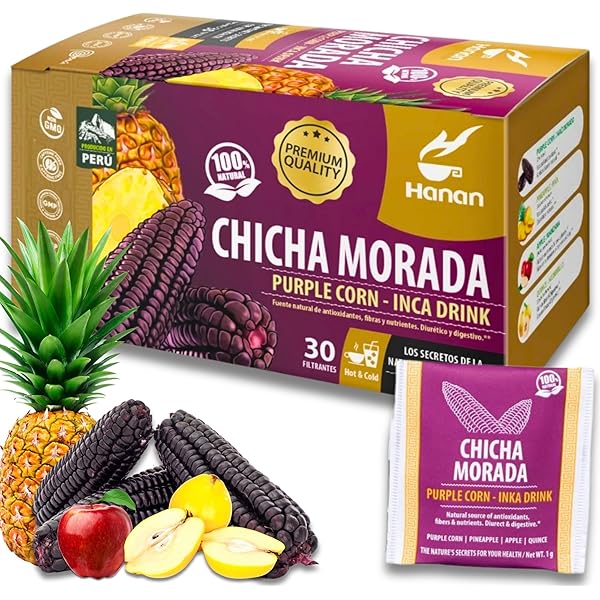
Is “teplit” a spelling error that has originated from one article/paper and that has been propagated from one article/paper to another and never been addressed or questioned? (1)
- I have seen a similar thing with azarcon occur. Azarcon is a lead based powder previously used as a medicine for empacho (a range of digestive issues). A typo in one paper has lead to many others using the same incorrect nomenclature (even government health care websites). You can check this out here….Empacho
Molina (1571) says of tepitl that it is “fast-growing corn that is harvested after fifty days”. This spelling makes more sense to me (Nahuatally speaking); “itl” is more relevant/prevalent than “ilt” (in this context anyway).
The Nahuatl dictionary puts it this way…….
tepiatl. Alonso de Molina : beuida de mayz crudo, que se da alos se desmayan.
tepiatl. Raw corn drink, which is given to those who faint.
Merriam -Webster puts it quite differently and somewhat paradoxically…..
Tepache : noun : any of several Mexican drinks specifically : an intoxicating beverage made from pulque and coarse sugar with timbe (1) used to retard fermentation
- the bark or root of any of several Mexican trees and shrubs (especially Acacia angustissima and Calliandra anomala) used in the manufacture of tepache (I have never heard of this. I have heard of it being done with pulque though)
I’ll need some expert expert opinion here as I believe Merriam-Webster has missed something. Pulque and tepache are not the same thing. Pulque is produced from the fresh, raw agave sap (called aguamiel) collected from the plant after its flowering stalk (called a quiote) has been removed from the plant. This “castration” causes the agave to produce a sweet watery sap which is fermented using natural yeasts to produce a drink called pulque (octli in Nahuatl) (1).
- for more information on the whole process check out …Pulque Production
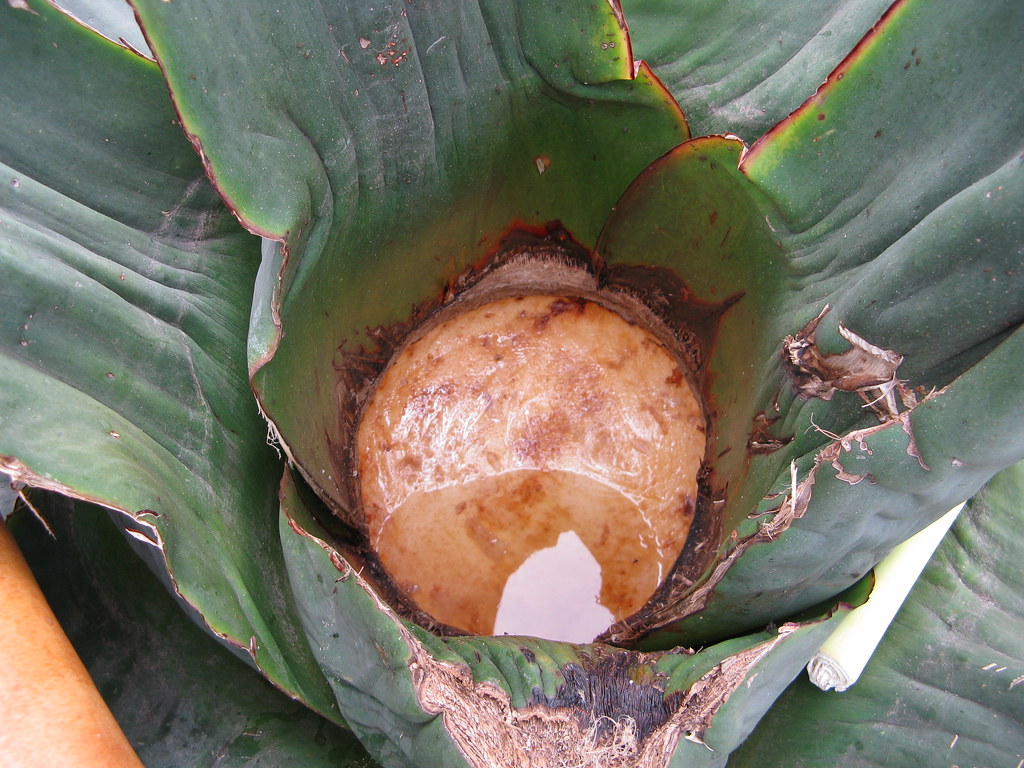
Agave sap ferments into pulque
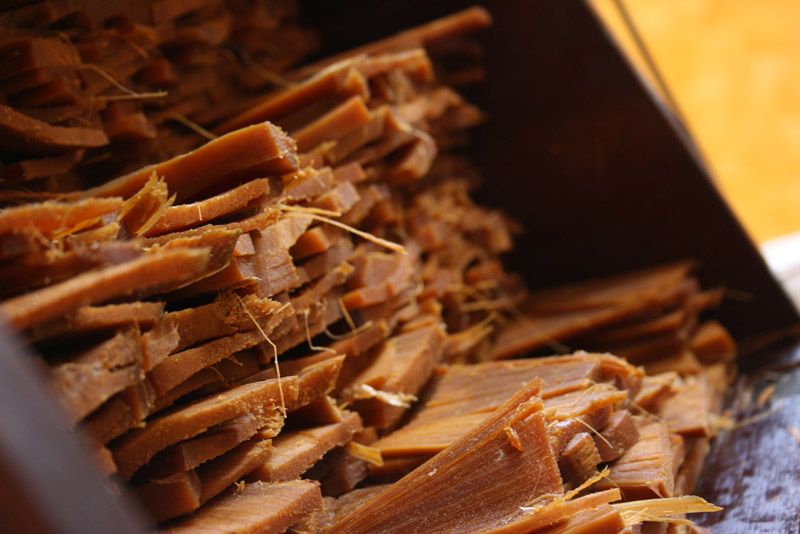

This is not tepache. As an interesting aside, when the “heart” of the agave plant (metl or maguey) is baked (or steamed) and then crushed it also produces a sweet liquid which can be fermented (and at this stage some call it tepache) and then distilled into licor de agave (also known as tequila or mezcal, or any other number of names). Again. Not tepache.
Linguistic crossover


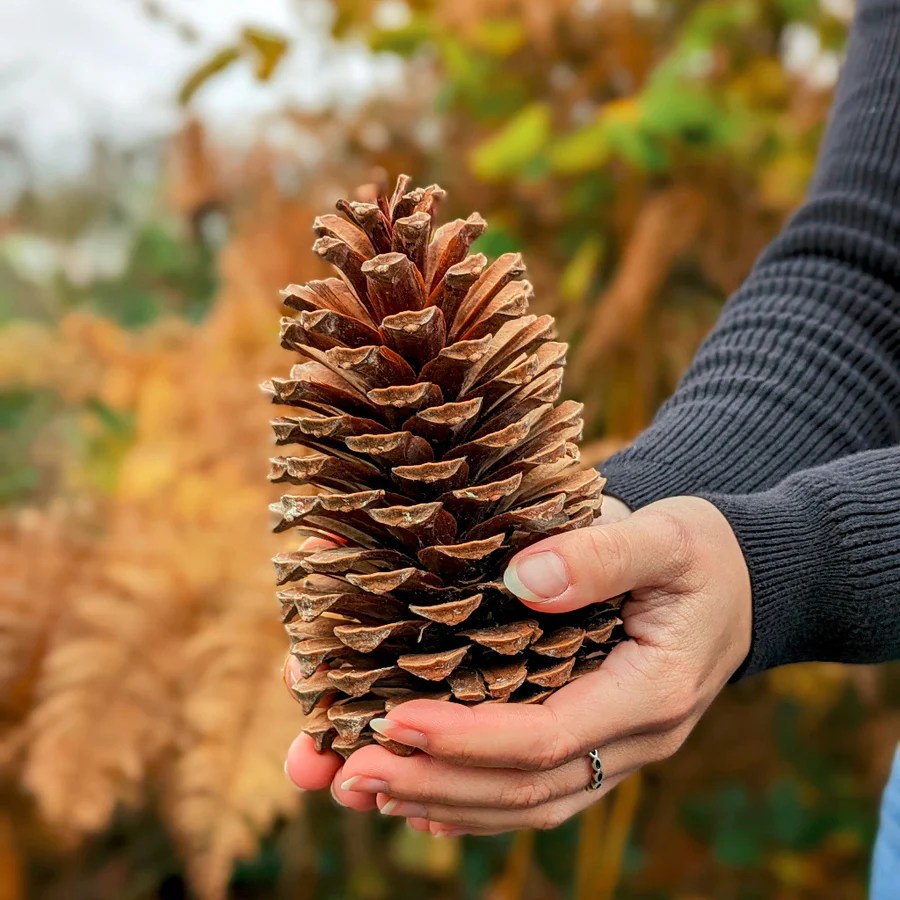
The trimmed agave heart is called a piña or pineapple
I have also seen the root word of the drink being noted as “tepachoa” which they state as meaning “pressed or ground with a stone” but when I research the etymology of tepachoa My Nahuatl dictionary informs me that this is a violent term involving the hurling of stones (at an opponent) and the resultant “stoning” of a person (it also had undertones of seizing something (in battle or an opportunity in battle as well as the undertaking of such tasks).
Let’s move on
I have briefly looked at tepache in one of my earlier Posts Tepache. I did publish a recipe in the Post (an adaptation of a recipe chronicled by Diana Kennedy.

I thought I’d go through my library (it’s a biggun – more than 300 books on the cuisines of Mexico alone) and see what other recipes I could find. They were few and far between and varied quite a bit. Base ingredient as are all more or less the same but brewing time differed quite a bit. Dianas recipe only ferments for around 5 days but she adds a can of beer to the mix for the last process (which is kind of a cheats way to boost the ferment but is not at all uncommon to do)
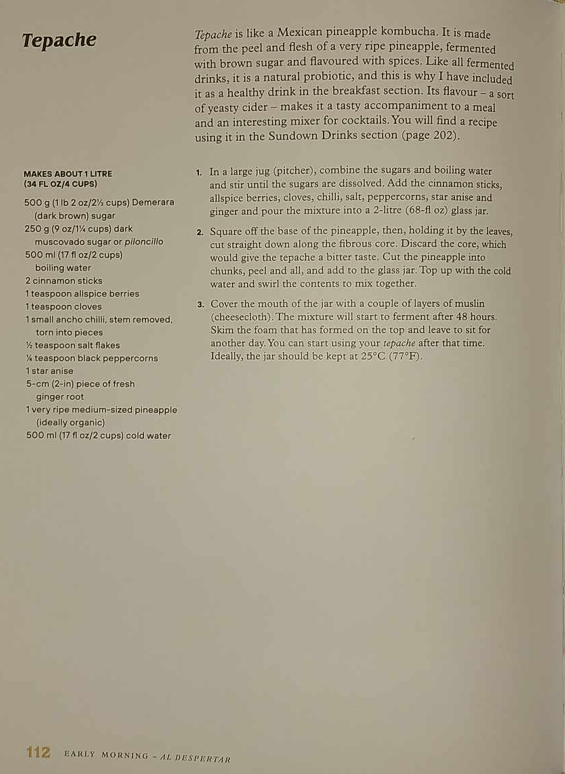
This one is ready in only 3 days
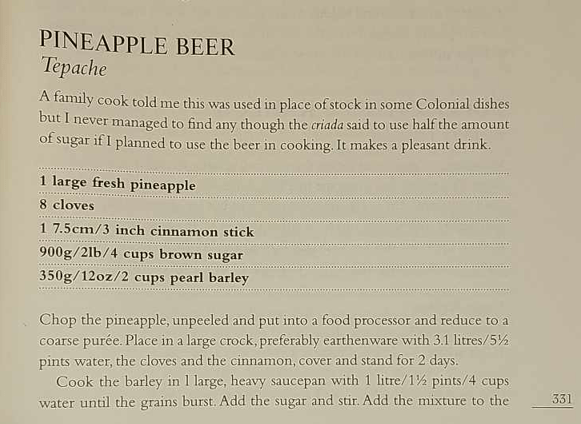
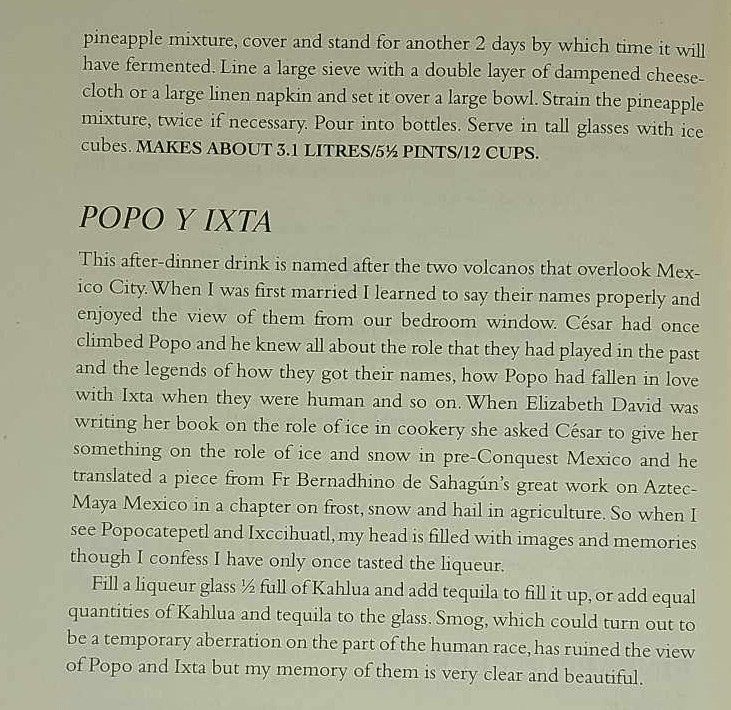
This one only takes a day or so longer but they add pearl barley to aid with fermentation and in doing so make a drink slightly different to a plain pineapple tepache.
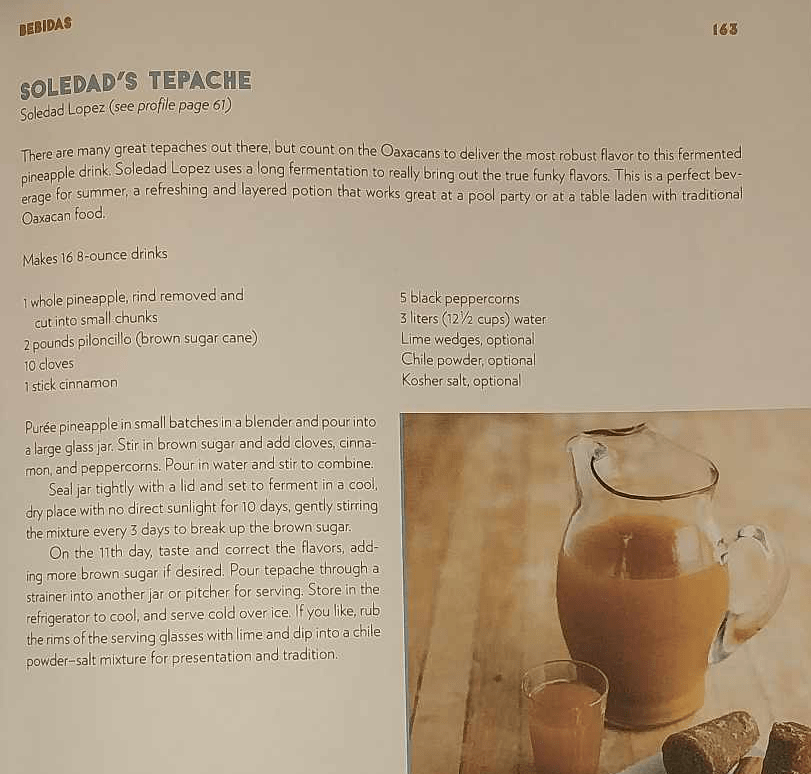
Soledads recipe is the longest (fermentationally speaking) as it brews for 11 days. Not a massive amount of time I guess but I was hoping for something a little faster.
So lets make some tepache.
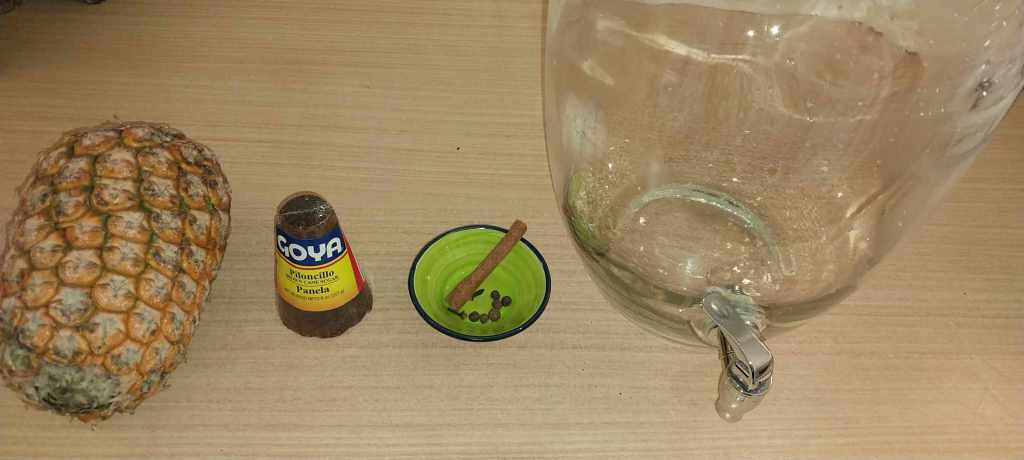
Ingredients
- 6 litres water
- 1 large very fresh pineapple
- 1 cone piloncillo (230g dark brown sugar)
- 3 cloves
- 5 (small) allspice berries
- 1 x 5cm stick cassia (use cinnamon if you have it)
Looking back on it (1) I perhaps should have used more spices (?) Most of the recipes above had more in them but I am aiming for a more pineappley aesthetic. The spices used are themselves all antimicrobial (even the ones I didn’t use – black pepper, star anise, ginger – one even has ancho chile in it) and have other medicinal benefits as well. I’m hoping my spices (or perhaps lack of) don’t negatively affect the drink.
- I’m writing this bit on Day 3 of the fermentation process. It will take a week or so to finish it up so this Post may be edited slightly out of order. Stay with me though.
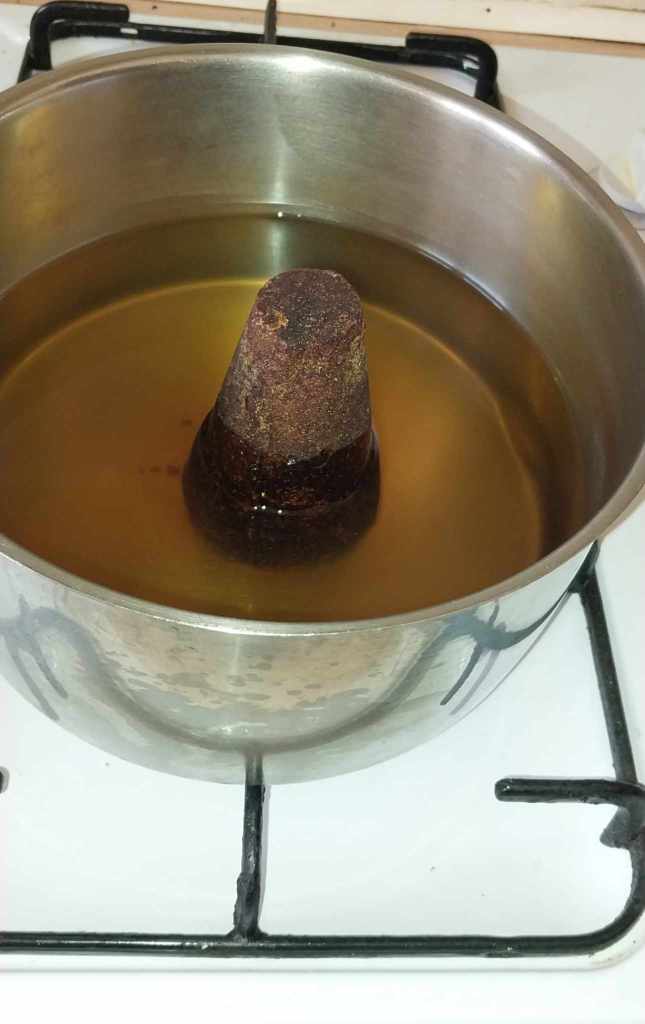
Place your piloncillo in a pot with 1 litre of water and dissolve the sugar over a medium heat.
While we’re waiting for this lets clean and trim the pineapple. First wash your pineapple well under fresh cool flowing water. Give it a light scrub with a brush to remove any contaminants.
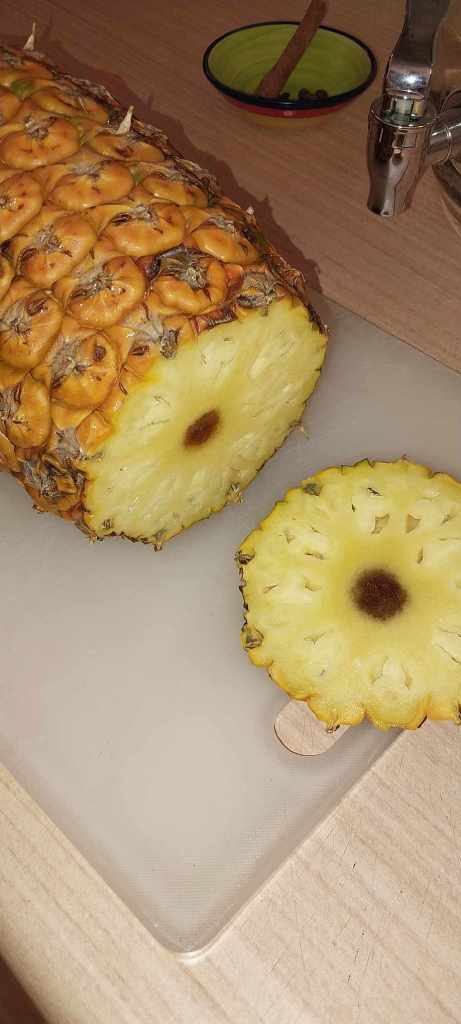

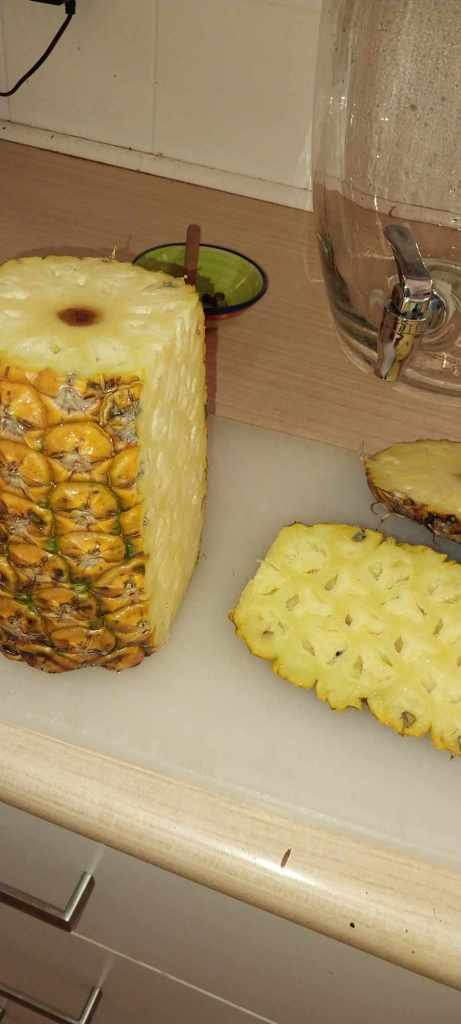
This sucker was VERY ripe. Luckily it had not begun to rot. It was really only the base of the pineapple affected.
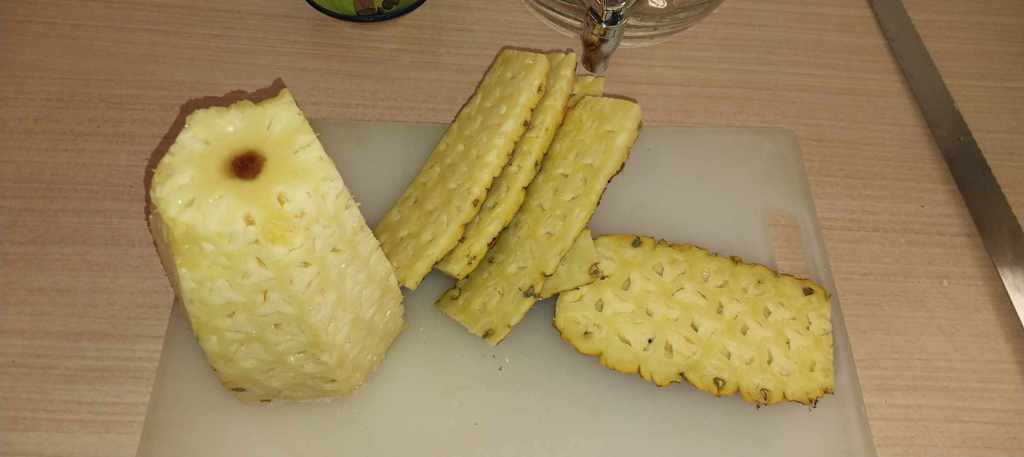
Peel the skin off and set aside. DO NOT THROW IT OUT. The skin is an important ingredient.
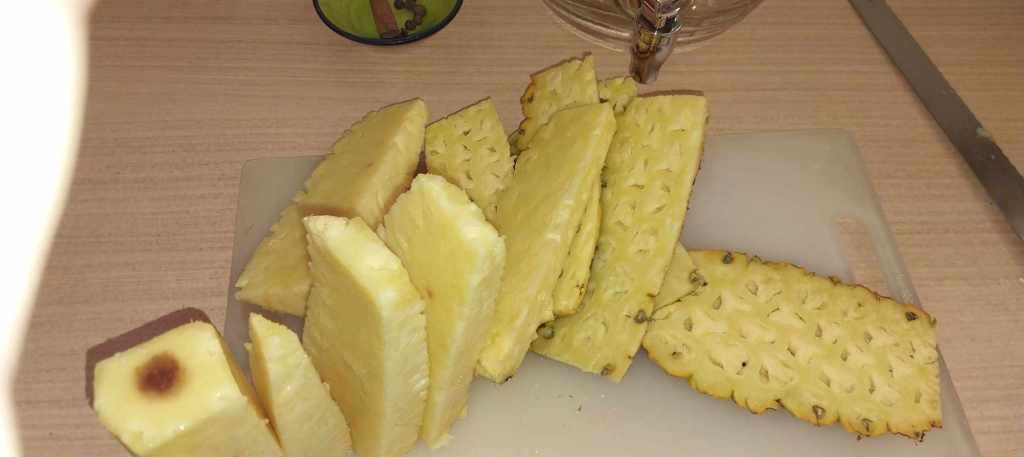
Remove the remaining flesh. I’m throwing out the core as its slightly munted but I have seen recipes tell you to do this anyway as the core can impart bitter flavours.
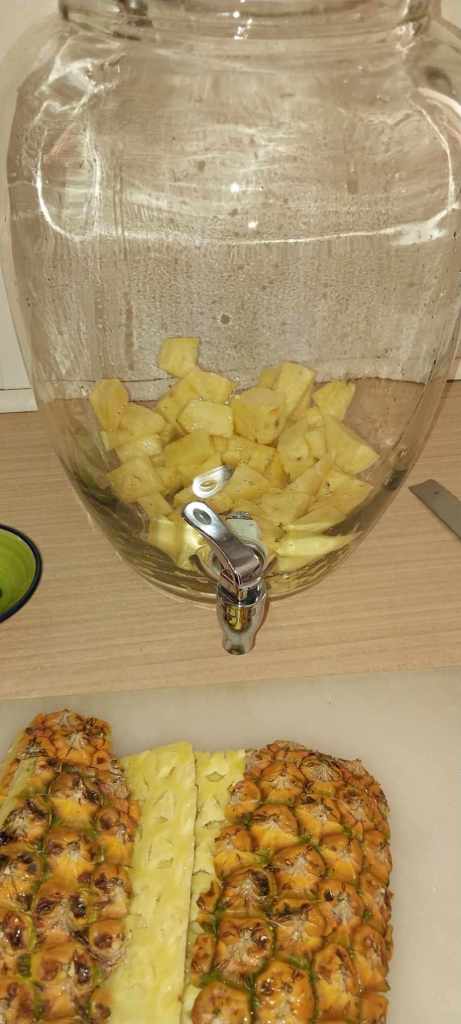
Roughly chop the flesh and add it to a large glass jug/container (or use an earthenware one – which adds its own flavour)
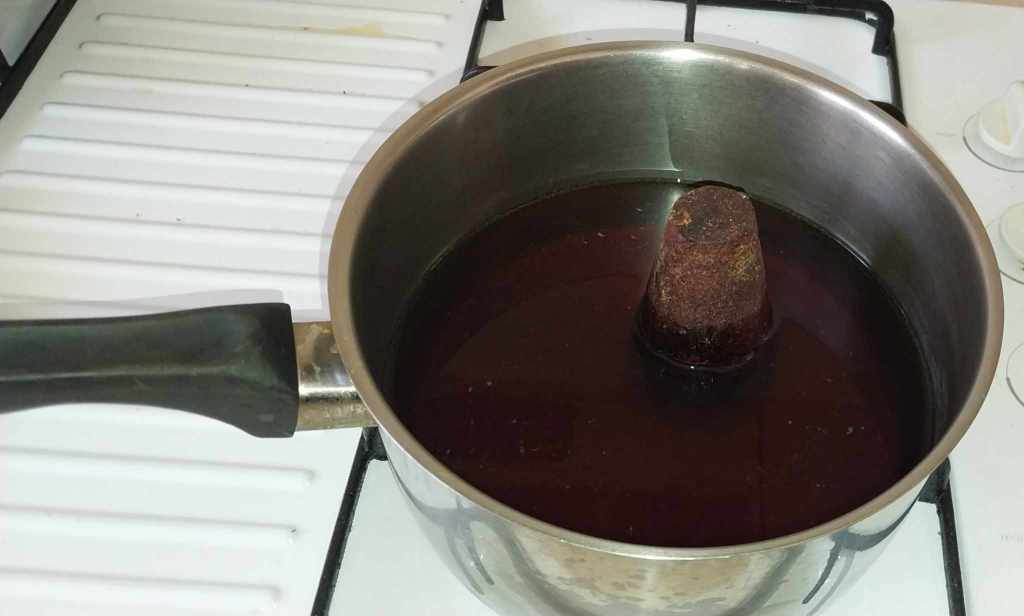
Lets just quickly check the sugar. Yep, coming along nicely.
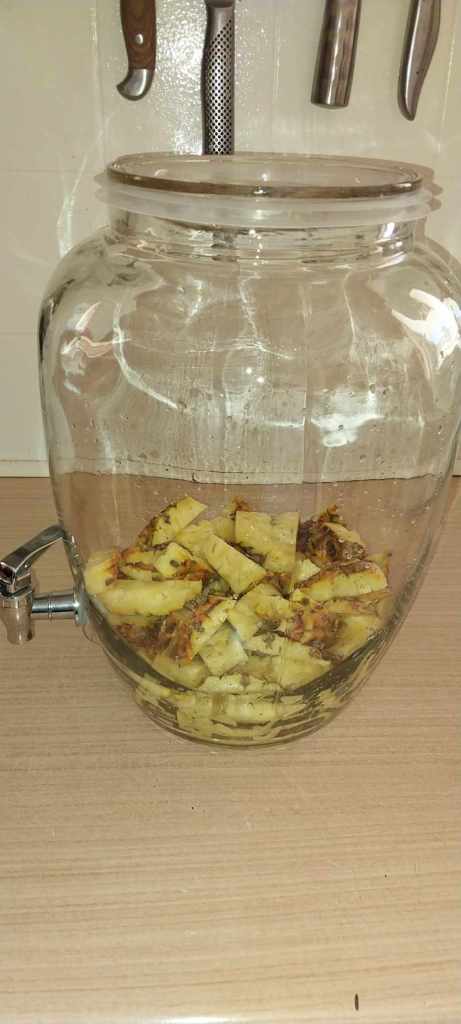
Now the skin gets chopped and added to the jar
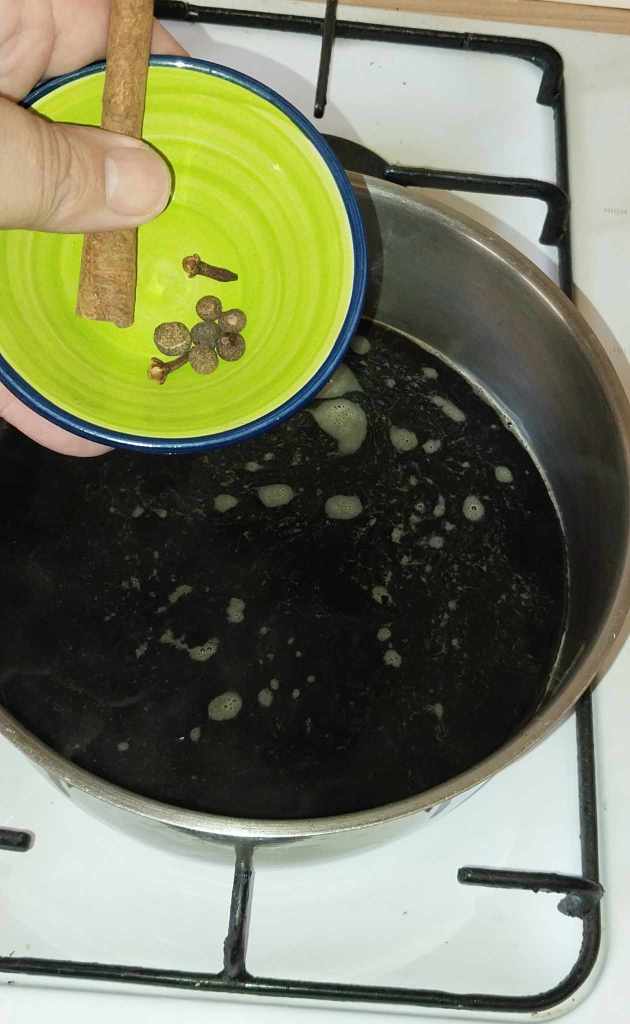
Add your spices to the sugar and allow to boil for a few minutes
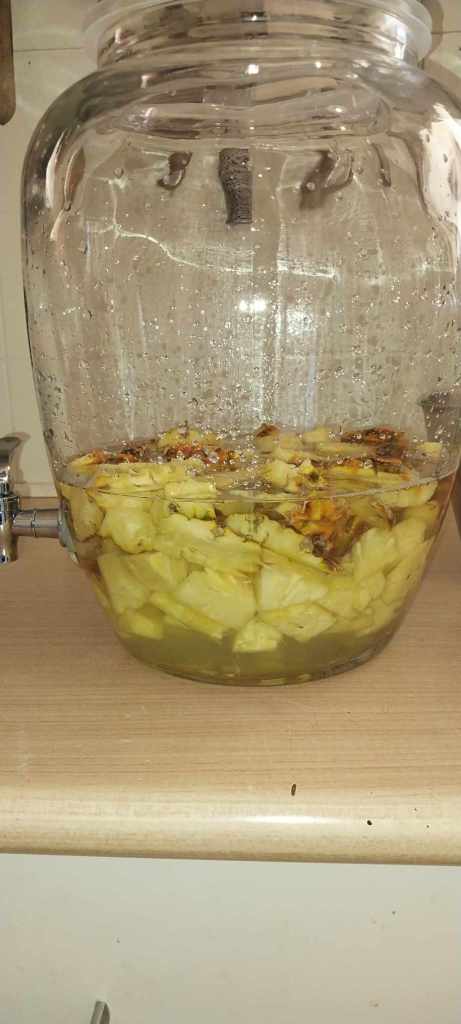


Add 1 litre of fresh water to the jar first
Then add the 1 litre with the sugar and spices (we are trying to avoid cracking the glass container by adding too much heat at once)
Top up with 2 litres fresh water
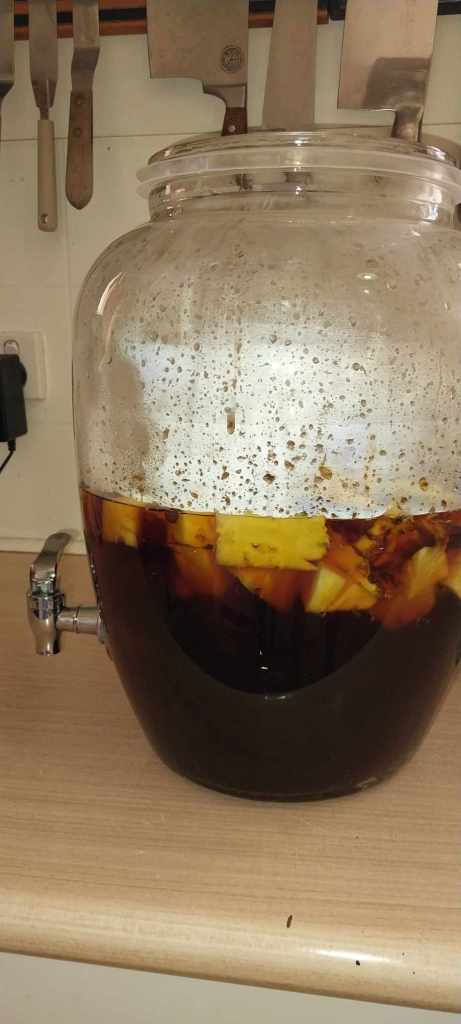
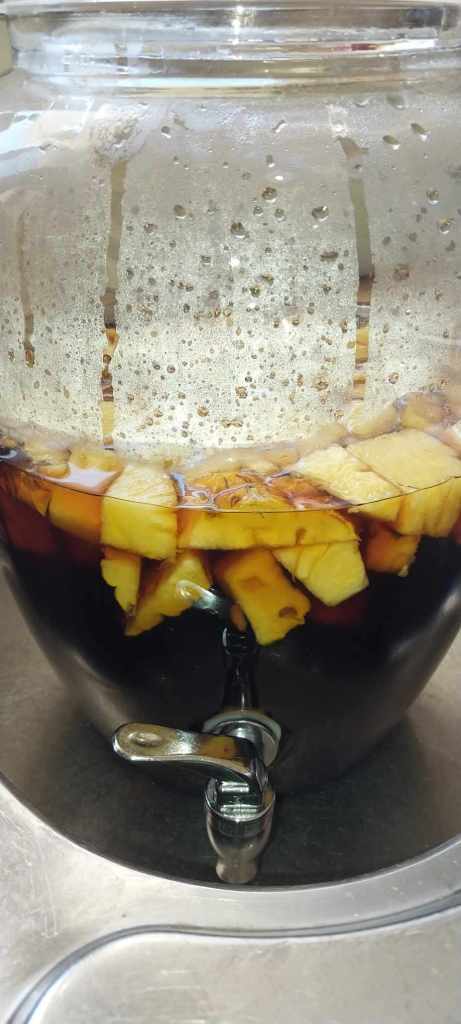

add 2 more litres of freshly boiled water
Now we’re ready to ferment

Cover with a cotton cloth. I didn’t have any cheesecloth so I used a clean cotton tea towel. We want air to get in and we want to keep bugs out.
Day 1
Fermentation begins


Day 2 (morning)
Fermentation rate seems to have accelerated overnight. It is quite warm at the moment.
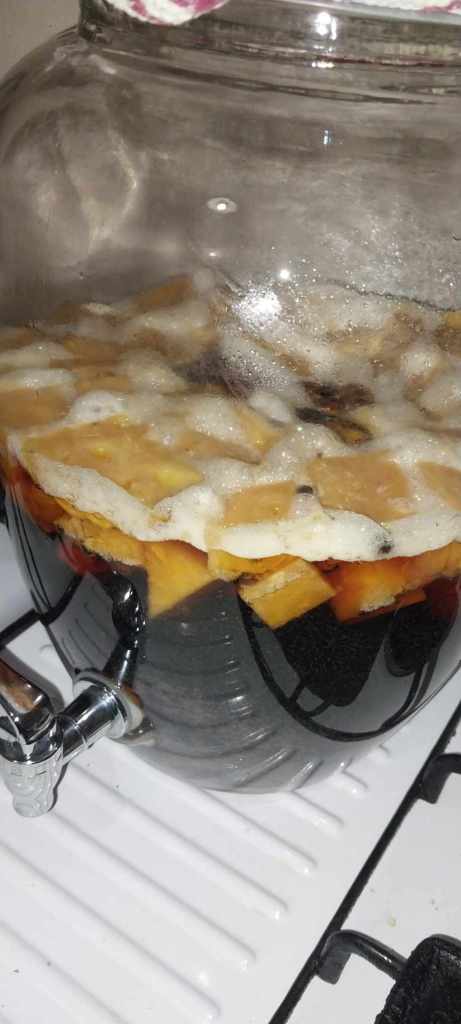
Day 2. (afternoon)
By Tuesday afternoon things had stepped up once again. Foamy fermentation bubbles (I hope it’s meant to do this)
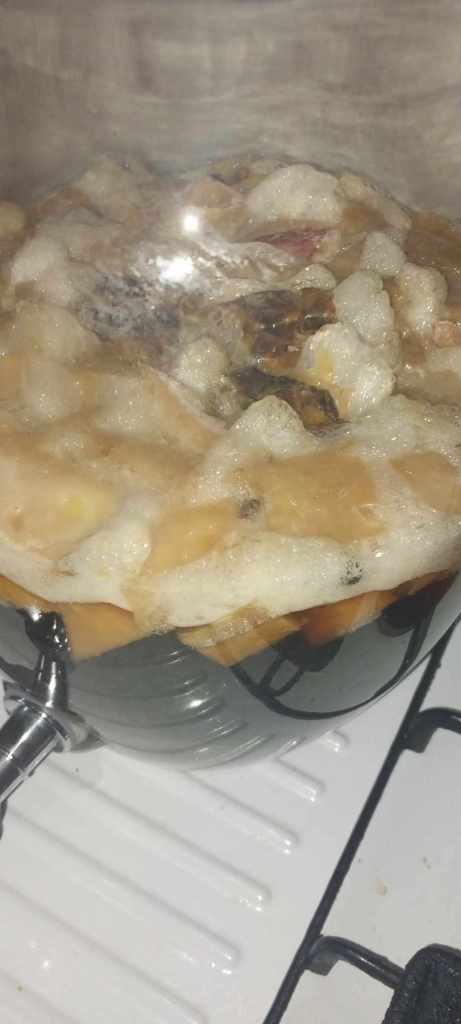
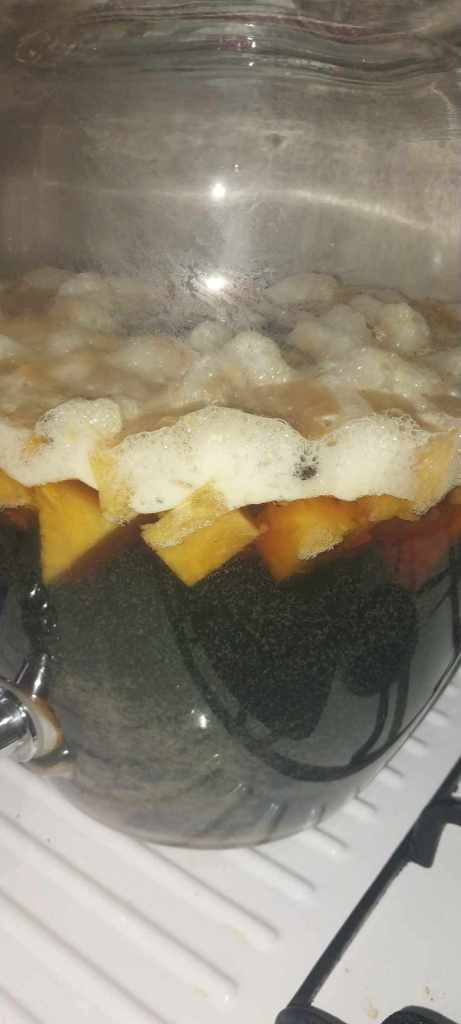
Day 3. (morning)
Wednesday morning. Things look to have slowed down. I’m not sure if this means fermentation is subsiding due to a lack of sugar in the liquid for the bacteria to feed on of if it’s a result of the temperature. It was considerably cooler today than in the previous days (and those forecast to come). I’ll note the temperatures further down in the Post.
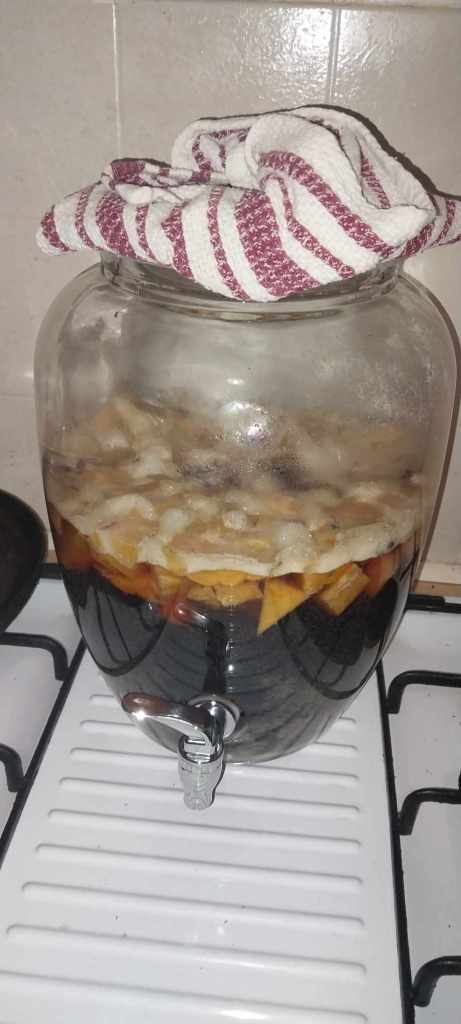

There is also a sediment appearing in the previously perfectly clear (although very dark) liquid.
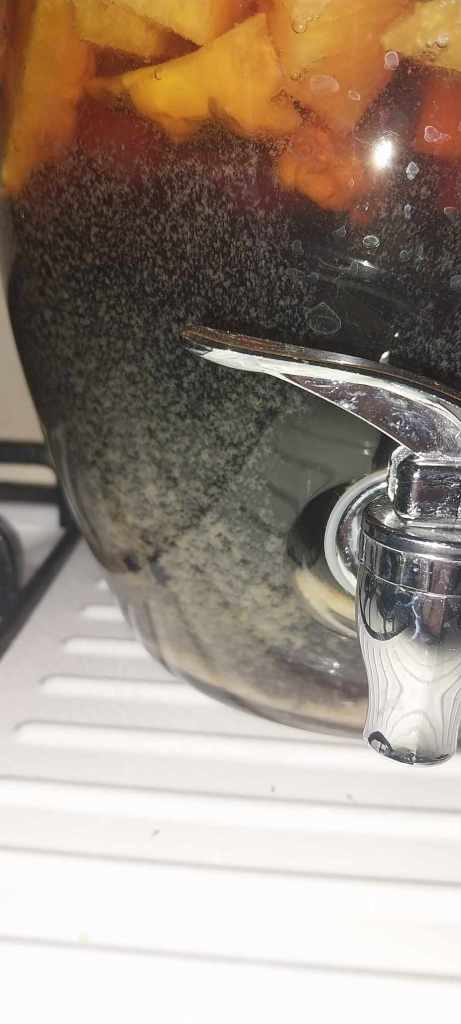
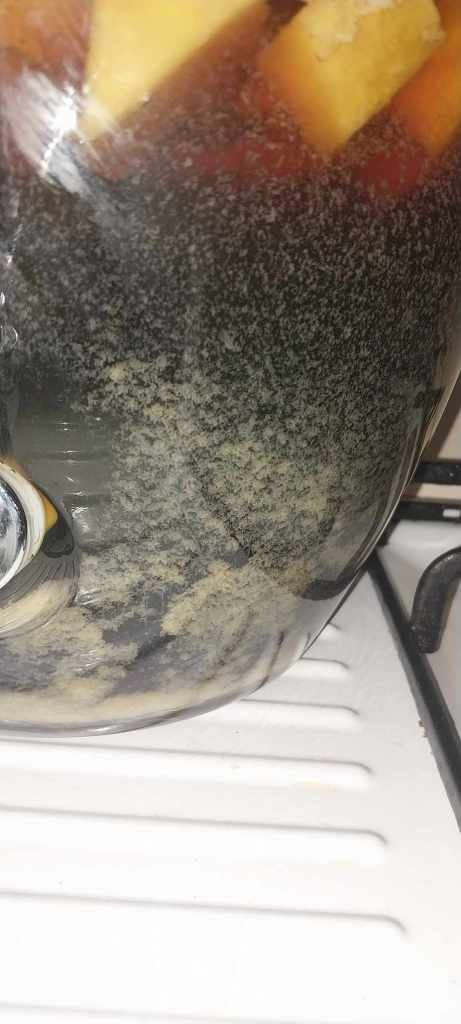
I’ll test the flavour tonight after work. I may need to decant and bottle earlier than I expected. I thought it would take all week. I was actually worried that it might not be ready for the party I plan to take it to on Saturday. This would have given me a six day ferment time and, as is noted in the recipes above, it could possibly have taken 11 days. This was in Soledads recipe though and hers is the only one that recommends it be fermented in the dark (mine is on the kitchen bench – not in direct sunlight but also certainly not in the dark). Diana Kennedys recipe (the first recipe image shown) says to set it in the sun so perhaps there not “proper” way to do it. Diana also has only a 5 day ferment time and adds a can of beer to the mix on day 3. I also not that one of the recipes says to “skim off the foam” that bubbles up (this recipe also has the quickest ferment time noted – 3 days).
If I knew what I was doing it would certainly be less stressful.
The way things are going I might have to bottle up this evening. It has also been noted that once bottled you may need to “burp” the bottles by opening them and allowing gas to escape as the liquid may still be fermenting and may explode the bottles. If you have homemade your own ginger beer then you’ll know what I mean. This is a fresh, living drink though so it is intended to be drunk whilst still “alive” (this is certainly true if you are seeking any medical benefits). So, like kombucha, sourdough, yoghurt or any of those fermented type foods you kind of need to care for the fermenting substrate and turn it over constantly.
On the morning of Day 3 a Facebook friend commented on my Facebook fermentation Post…..(1)
- Tepache ferment. Day 3 (morning). Fermentation seems to have slowed down. There’s also some kind of sediment(?) forming. ¡Oye! Mexicanos. ¿Alguien sabe cómo hacer tepache? ¿Esto es normal?
Eugenia Schettino
I think it is too hot to make Tepache. I tried it once here in Australia but it did not work. It was very hot and the pineapple skins got rotten (spoiled) because of the hot weather. If you do it again maybe keep it in the fridge or make it during winter.
Dang it. Eugenia is a mexicana (specifically Veracruzana) and a well educated gourmand (1) so I’m a little worried now.
- a person who takes great pleasure and interest in consuming particularly good food and drink
I better decant, filter and bottle it tonight.
I hope it doesn’t start to get mouldy before I get home tonight.
Day 3 (afternoon)
I quickly head home because Gigis comments about the heat have me slightly worried. Bueno. No mould. The bubbles have subsided so fermentation has subsided. A nice funky odour emanated from the jar, a funk that anyone who has home-brewed ginger beer knows.
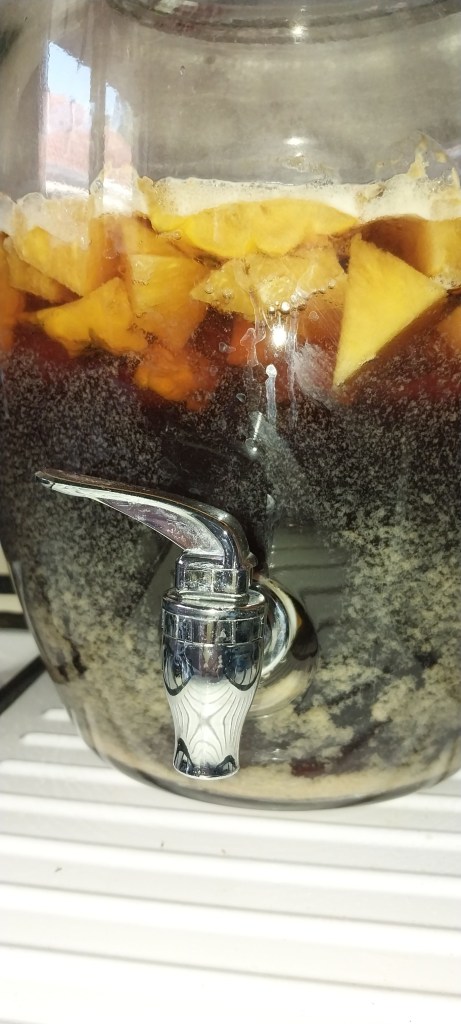

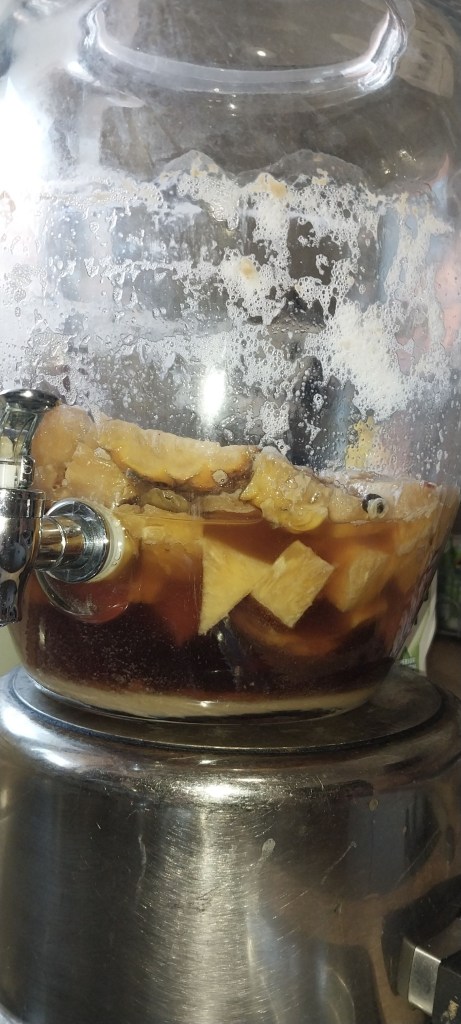
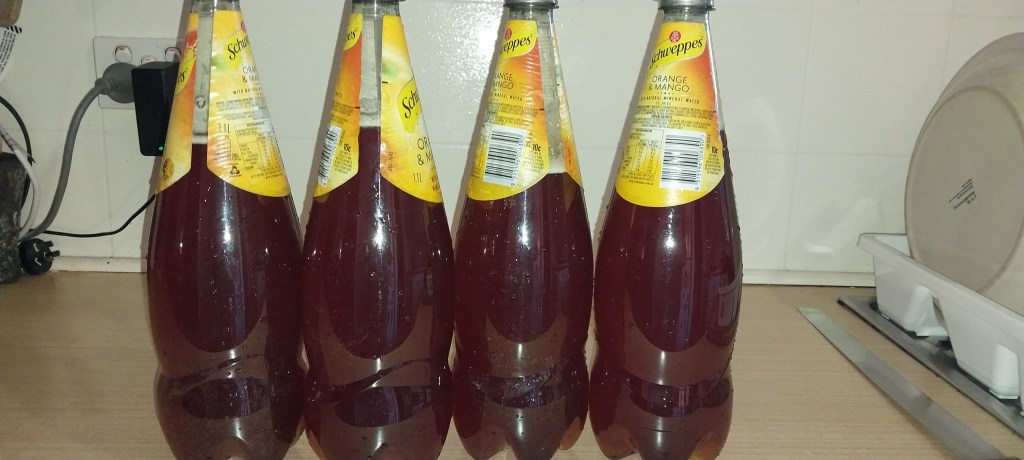
4 x 1.25 litre bottles filled (leaving a space for further fermentation – I’ll “burp” them tomorrow to let out excess pressure/gas
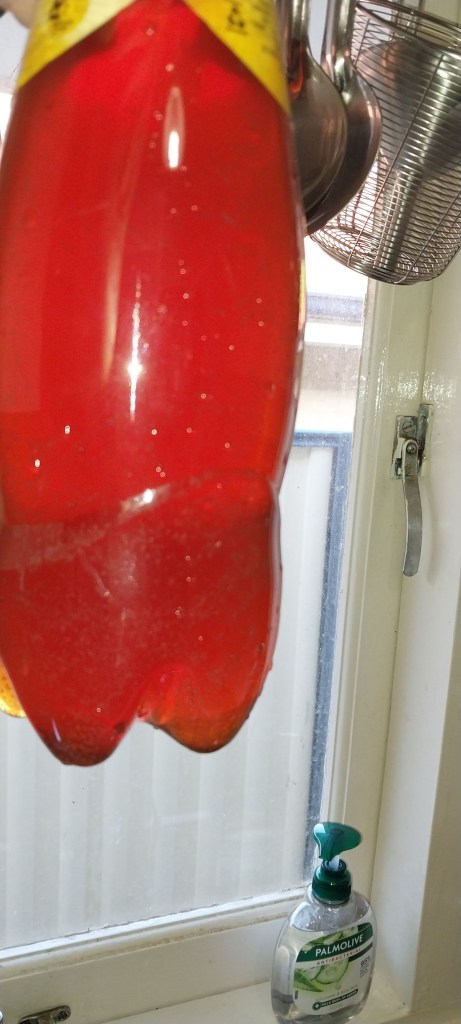
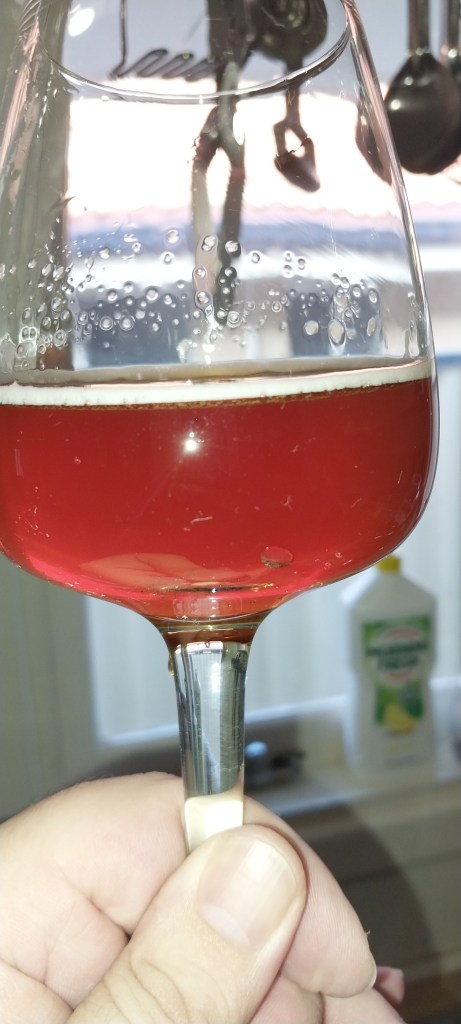
Very nice. Slightly fizzy pineapple tang. A very subtle flavour from the spices.
All in all a success (I think). I’ve never drunk natural tepache before so I’ve no real comparison I can make. (I’ve had a couple of canned varieties but they were kinda nasty). My favourite taste testers are in Korea right now so I’m flying blind.
Ambient temperature during fermentation period
- Sunday 16/02/25 – 37°C (98.6F) – liquid put down to ferment
- Monday 17/02/25 – 36°C (96.8F)
- Tuesday 18/02/25 – 27°C (80.6F)
- Wednesday 19/02/25 – 33°C (91.4F)
It has been very warm. We are coming toward the end of Summer in Australia. The 10°C temperature drop on Tuesday was unusual (it is cyclone season up North and we sometimes see the tail of these weather systems where we are).
Alcohol content of tepache.
Being a yeast fermented drink tepache does contain some alcohol. Not a lot but some. How much exactly? Well that differs depending upon whom you ask. Most will put it in the 0.5 to 3% alcohol content range.
- while making the tepache lightly alcoholic, about 0.5-2% ABV : https://www.seriouseats.com/tepache-mexican-fermented-pineapple-drink-recipe-6824136#:~:text=The%20yeast%20eat%20the%20sugars,sugars%20the%20yeast%20can%20convert
- tepache does have a small amount of alcohol (about 1%, twice that of kombucha) : https://madelocalmagazine.com/2023/06/confessions-of-a-germophile/#:~:text=Sometimes%20called%20%E2%80%9Cpineapple%20beer%2C%E2%80%9D,can’t%20get%20you%20drunk.
- The longer you keep it out and ferment, the more acidic the end product will be as well as it gaining alcohol content about 1-2% ABV. : https://www.whiskeyandbooch.com/blog/tepache-fermented-drink
- a beverage with 2–3% alcohol-by-volume (abv). : https://www.wineenthusiast.com/culture/spirits/tepache-fermentation-drink-recipe/
Studies show things a little differently (but no less across a range of values). Now remember tepache is fermented so the longer it ferments and the higher the sugar content of the liquid (up to a point) will increase the alcohol content of the drink (I’ve seen figures as high as 14% ABV but I’m omitting this as it is most definitely an outlier).
Tepache is characterized as a low ethanol fermented beverage, with a concentration of 7.0 g/L ethanol after 72 h of fermentation (Corona-González et al., 2013). Initial ethanol content was found in 0.83 ± 0.02 g/L, but then increased significantly after 20 h, reaching up to 3.39 ± 0.18 g/L at the end of experimentation.
This ABV content is about the same as a mid-strength beer but later on in the same paper they note the alcohol content to be less than 1%. Contradictory.
Similar to other non-distilled Mexican fermented beverages, tepache is low in ethanol, compared to pulque 3.5 – 5.0% (Álvarez-Ríos et al., 2020, Chacón-Vargas et al., 2020), tuba 4.5 – 5.0% (Astudillo-Melgar et al., 2019) and taberna 4.58 – 10.3% (Alcántara‐Hernández et al., 2010). In contrast, tepache is a significantly much lower alcoholic beverage (< 1%) compared to commercial fermented beverages, such as beer (3.5 – 8.0%) or wine (7 – 15%) and Mexican distilled beverages such as tequila (35 – 45%) and mezcal (36 – 55%) (Ramírez-Guzmán et al., 2019).
I think it safe to say that between 1-3% would be about the alcohol content of your average homebrewed tepache. You could no doubt make it higher if you wanted. You’ll also serve your tepache in a ice filled glass which will dilute it a little or you could just dilute it yourself with icy cold agua.
Medical benefits?
In Mexico, there are about 200 fermented foods and beverages, but only a few have been studied (Herrera 2003). Fermented foods and beverages have been used for both nutritional and medicinal reasons (and a host of cultural and religious reasons too). I look at a few (1) (2) (3) (4).
- Pulque & Pulque Curado : Tecolio & Pulque Curado : Sangre de Conejo (Rabbits Blood) & Pulque Curado : Tolonche
- Frutos de Cactus : Colonche
- Sende : Sendecho
- Cebadina
Medical benefits, such as improving the intestinal balance and reducing the risk of gastrointestinal diseases, have traditionally been associated with the consumption of tepache. (Romero-Luna et al., 2017). The drink has also been lauded as an alternative to both beer and carbonated soft drinks. Even though tepache is mildly alcoholic there is not a high enough alcohol content to induce drunkenness and the sugar content is much lower than in a standard soft drink and tepache can assuage the desire for both (anecdotally speaking).
It has been posited that the medicinal effect of tepache may be due to fermented microorganisms present in the drink. The presence of beneficial microorganisms known as probiotics (1) provides beneficial effects to consumer health, improving the balance of intestinal host, and reducing the risk of gastrointestinal diseases
- Probiotic : denoting a substance which stimulates the growth of microorganisms, especially those with beneficial properties (such as those of the intestinal flora). The term ‘probiotic’ is derived from the Greek/Latin word “pro” and the Greek word “bios,” meaning “of life” (and for comparison…Antibiotic : literally “opposing life”, from the Greek roots ἀντι anti, “against” and βίος bios, “life”— which is broadly used to refer to any substance used against microbes. The term ‘antibiosis’, meaning “against life”, was introduced by the French bacteriologist Jean Paul Vuillemin as a descriptive name of the phenomenon exhibited by early antibacterial drugs. (Foster & Raoult 1974)
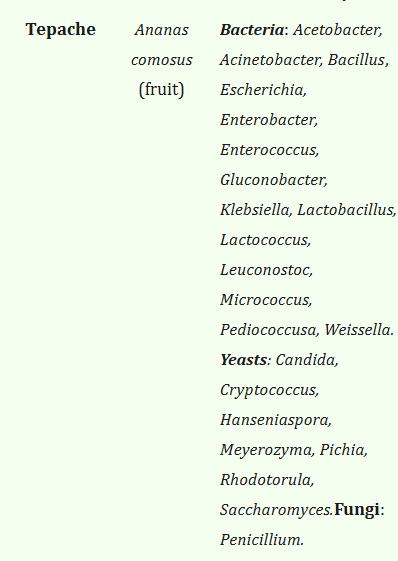
Probiotic content of tepache (now we must remember that tepache is fermented using wild yeasts present in the air and on the skin of the pineapple so other organisms may be present that are not noted on this list – and some of the organisms on this list may not be present in your homebrewed tepache. The list is a good indication though)

Nava-Garduño (1953); Herrera and Ulloa (1982); Moreno-Terrazas (2005); Alvarado et al. (2006); de la Fuente-Salcido et al. (2015)
Ojeda-Linares (et al., 2021) expands upon this list…
Probiotics can also relieve lactose intolerance, improve bioavailability of nutrients, and prevent or reduce the prevalence of allergies. Antimutagenic, hypocholesterolemic, antihypertensive, and immunomodulatory effects have also been reported in probiotics (Chiang and Pan 2012). They relieve symptoms of inflammatory bowel disease, irritable bowel syndrome, colitis, and reduce the risk of colon, liver, and breast cancers (Prado et al. 2008).
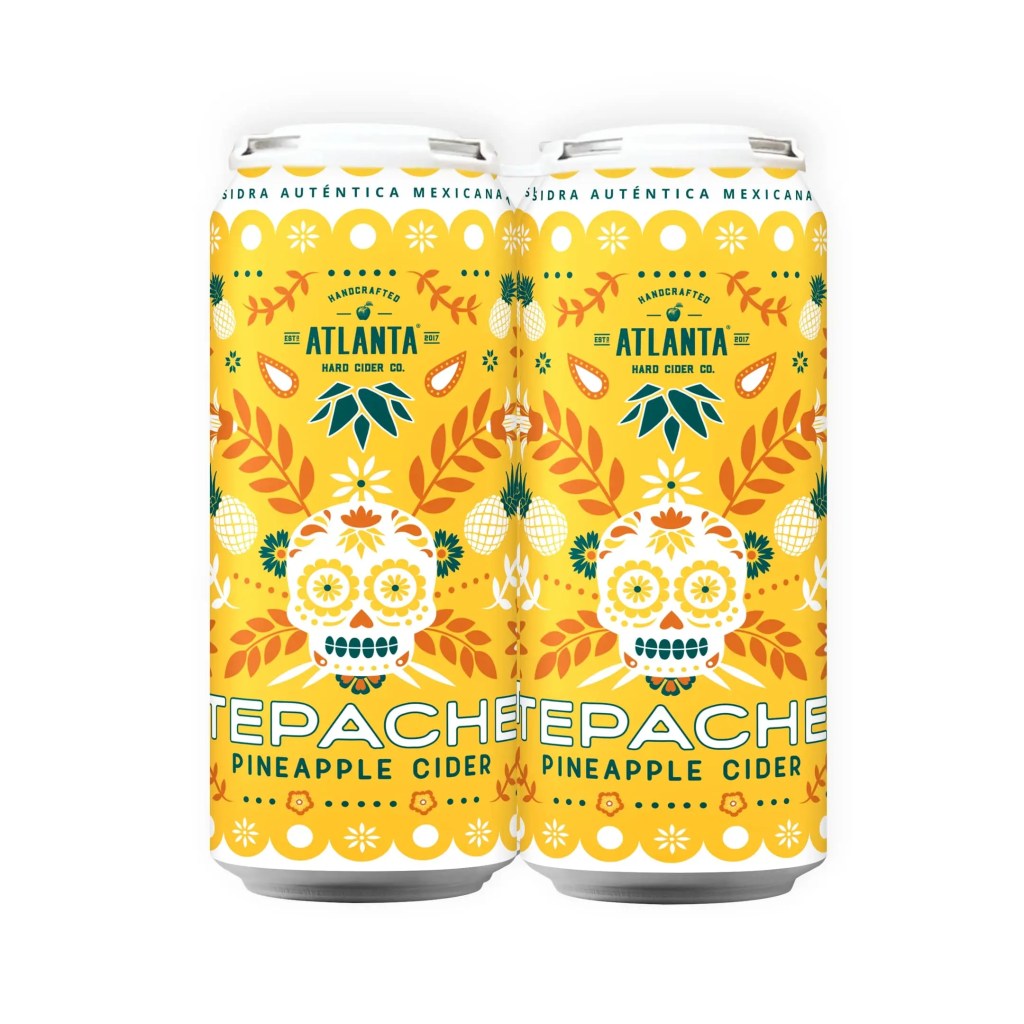
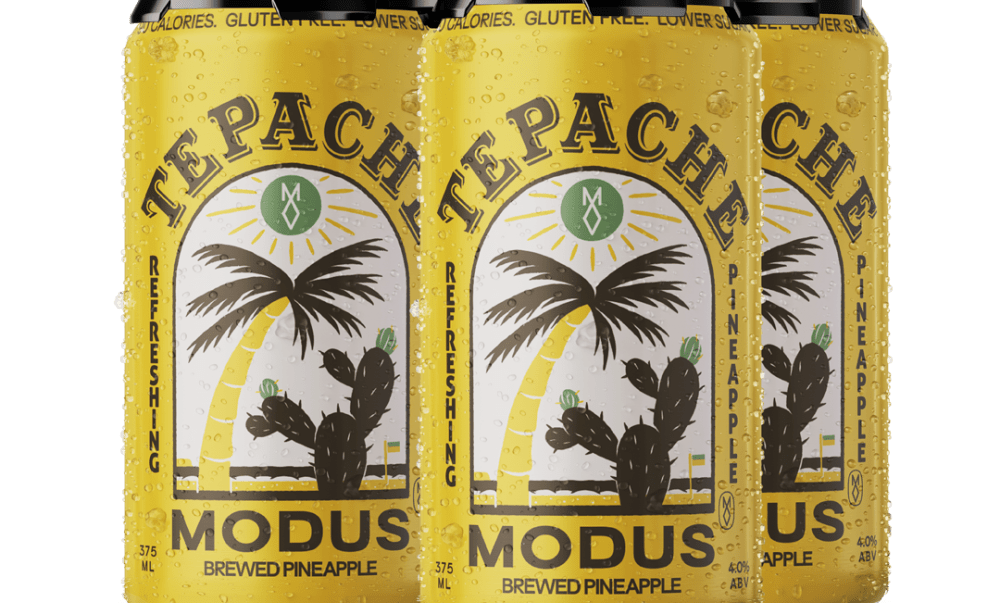
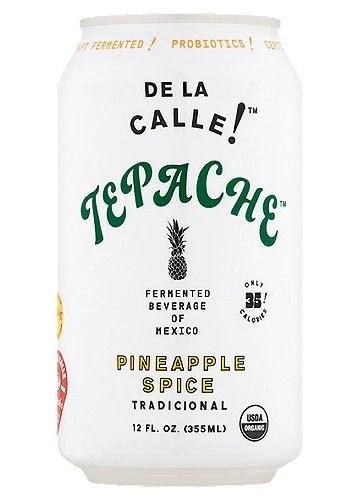
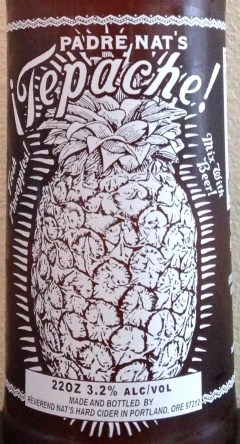
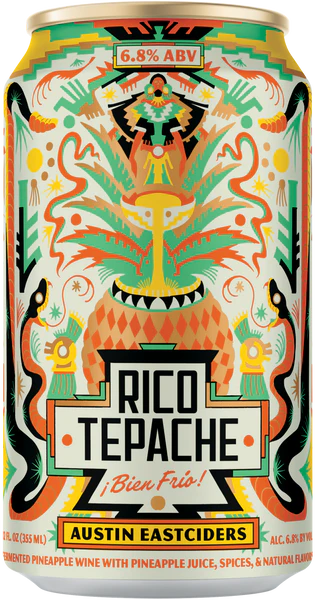
Various commercial varieties

References
- R.J. Alcántara‐Hernández, J.A. Rodríguez‐Álvarez, C. Valenzuela‐Encinas, F.A. Gutiérrez‐Miceli, H. Castañón‐González, R. Marsch, T. Ayora-Talavera, L. Dendooven (2010) The bacterial community in ‘taberna’ a traditional beverage of Southern Mexico Lett. Appl. Microbiol,
- Alvarado C, García AB, Martin SE, Regalado C (2006) Food-associated lactic acid bacteria with antimicrobial potential from traditional Mexican foods. Rev Latinoam Microbiol 48:260–268
- G. Álvarez-Ríos, C.J. Figueredo-Urbina, A. Casas (2020) Physical, chemical, and microbiological characteristics of pulque: management of a fermented beverage in Michoacán, Mexico Foods, 9 (3) (2020), p. 361, 10.3390/foods9030361
- F. Astudillo-Melgar, A. Ochoa-Leyva, J. Utrilla, G. Huerta-Beristain (2019) Bacterial diversity and population dynamics during the fermentation of palm wine from Guerrero Mexico Front. Microbiol., 10 (2019), p. 531, 10.3389/fmicb.2019.00531
- K. Chacón-Vargas, J. Torres, M. Giles-Gómez, A. Escalante, J.G. Gibbons (2020) Genomic profiling of bacterial and fungal communities and their predictive functionality during pulque fermentation by whole-genome shotgun sequencing Sci. Rep., 10 (1) (2020), pp. 1-13, 10.1038/s41598-020-71864-4
- Chiang SS, Pan TM (2012) Beneficial effects of Lactobacillus paracasei subsp. paracasei NTU 101 and its fermented products. Appl Microbiol Biotechnol 93:903–916. doi:10.1007/s00253-011-3753-x
- R.I. Corona-González, J.R. Ramos-Ibarra, P. Gutiérrez-González, C. Pelayo-Ortiz, G.M. Guatemala-Morales, E. Arriola-Guevara : (2013) The use of response surface methodology to evaluate the fermentation conditions in the production of tepache Rev. Mex. Ing. Quím., 12 (1)
- de la Fuente-Salcido NM, Castañeda-Ramírez JC, García-Almendárez BE, Bideshi DK, Salcedo-Hernández R, Barboza-Corona JE (2015) Isolation and characterization of bacteriocinogenic lactic bacteria from M-tuba and Tepache, two traditional fermented beverages in México. Food Sci Nutr 3:434–442. doi:10.1002/fsn3.236
- Foster W, Raoult A (December 1974). “Early descriptions of antibiosis”. The Journal of the Royal College of General Practitioners. 24 (149): 889–894. PMC 2157443. PMID 4618289.
- Gutiérrez-Sarmiento, Wilbert.; Betsy Anaid Peña-Ocaña, Anayancy Lam-Gutiérrez, Jorge Martín Guzmán-Albores, Ricardo Jasso-Chávez, Víctor Manuel Ruíz-Valdiviezo. (2022)
Microbial community structure, physicochemical characteristics and predictive functionalities of the Mexican tepache fermented beverage, Microbiological Research, Volume 260, 2022, 127045, ISSN 0944-5013 - Herrera T, Ulloa M (1982) Pichia membranaefaciens and Saccharomyces cerevisiae, yeasts involved in the fermentation of the beverage called tepache in Mexico. Bol Soc Mex Micol 17:15–24
- Herrera P (2003) “Poco estudiados, los fermentados indígenas”, en Gaceta UNAM, México, 3655:12–13. http://www.acervo.gaceta.unam.mx/index.php/gum00/article/view/50887
- Moreno-Terrazas RD (2005) Determinación de las características microbiológicas, bioquímicas, fisicoquímicas y sensoriales para la estandarización del proceso de la elaboración del tepache. Dissertation, Universidad Autónoma Metropolitana, Iztapalapa, México
- Nava-Garduño D (1953) Contribución al estudio de levaduras del tepache. Dissertation, Facultad de Ciencias, Universidad Nacional Autónoma de México, México
- Ojeda-Linares C, Álvarez-Ríos GD, Figueredo-Urbina CJ, Islas LA, Lappe-Oliveras P, Nabhan GP, Torres-García I, Vallejo M, Casas A. Traditional Fermented Beverages of Mexico: A Biocultural Unseen Foodscape. Foods. 2021 Oct 9;10(10):2390. doi: 10.3390/foods10102390. PMID: 34681439; PMCID: PMC8535898.
- B. Pérez-Armendáriz, G.A. Cardoso-Ugarte (2020) Traditional fermented beverages in Mexico: biotechnological, nutritional, and functional approaches Food Res. Int. (2020), Article 109307, 10.1016/j.foodres.2020.109307
- Prado FC, Parada JL, Pandey A, Soccol CR (2008) Trends in non-dairy probiotic beverages. Food Res Int 41(2):111–123. doi:10.1016/j.foodres.2007.10.010
- K.N. Ramírez-Guzmán, C. Torres-León, G.A. Martinez-Medina, O. de la Rosa, A. Hernández-Almanza, O.B. Alvarez-Perez, R. Araujo, L. Rodríguez-González, L. Londoño, J. Ventura, R. Rodríguez, J.L. Martinez, C.N. Aguilar (2019) Traditional fermented beverages in Mexico: Fermented Beverages, Woodhead Publishing (2019), pp. 605-635, 10.1016/B978-0-12-815271-3.00015-4
- Romero-Luna, Haydee & Peredo-Lovillo, Audry & Dávila Ortiz, Gloria. (2022). Tepache: A Pre-Hispanic Fermented Beverage as a Potential Source of Probiotic Yeasts. ACS Symposium SeriesVol. 1406 10.1021/bk-2022-1406.ch009. ISBN13: 9780841297746
- Romero-Luna, H.E., Hernández-Sánchez, H. & Dávila-Ortiz, G. Traditional fermented beverages from Mexico as a potential probiotic source. Ann Microbiol 67, 577–586 (2017). https://doi.org/10.1007/s13213-017-1290-2
Websites/Images
- Agave piñas (image) – Mezcalistas – https://www.mezcalistas.com/pinas/
- Pinecone (image) – https://thedanes.co.uk/products/extra-large-natural-pine-cone
- Tepiatl (definition) – https://nahuatl.wired-humanities.org/content/tepiatl
- Tepache (definition) – https://www.merriam-webster.com/dictionary/tepache
- Tepachoa (definition) – https://nahuatl.wired-humanities.org/content/tepachoa
- Tepitl (definition) – https://gdn.iib.unam.mx/termino/search?queryCreiterio=tepitl&queryPartePalabra=inicio&queryBuscarEn=nahuatlGrafiaNormalizada&queryLimiteRegistros=50
- Timbe (definition) – https://www.merriam-webster.com/dictionary/timbe
 Masa Americana