

Papalo has a primo chino or Chinese cousin who unfortunately has been poorly done by when it comes to its name.
The Japanese named “Sanshichi-so” (Porophyllum japonicum) (1) belongs to the Asteraceae family as do the others originating in the Americas but it is a perennial herb that is native of the southern part of China.
- Modern Latin, fem. of japonicus “Japanese, of Japan,” from Japon, a variant of Japan with a vowel closer to the Japanese name. Japan (1570s), via Portuguese Japao, Dutch Japan, acquired in Malacca from Malay (Austronesian) Japang, from Chinese jih pun, literally “sunrise” (equivalent of Japanese Nippon), from jih “sun” + pun “origin.” Japan lies to the east of China.
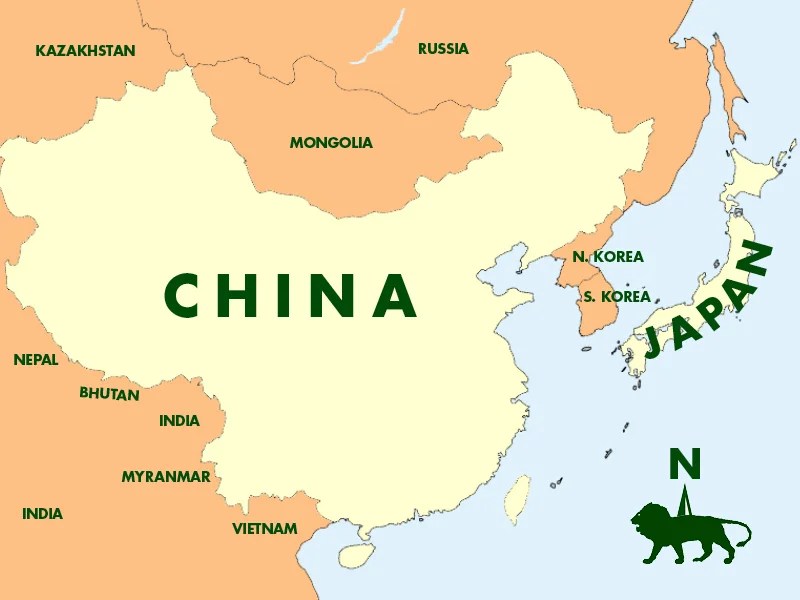
It was introduced into Japan as a herbal medicine at the beginning of the Edo period (1603-1868) so I’m a little disappointed that its not called Porophyllum chinense. Anyhoo onwards we continue.
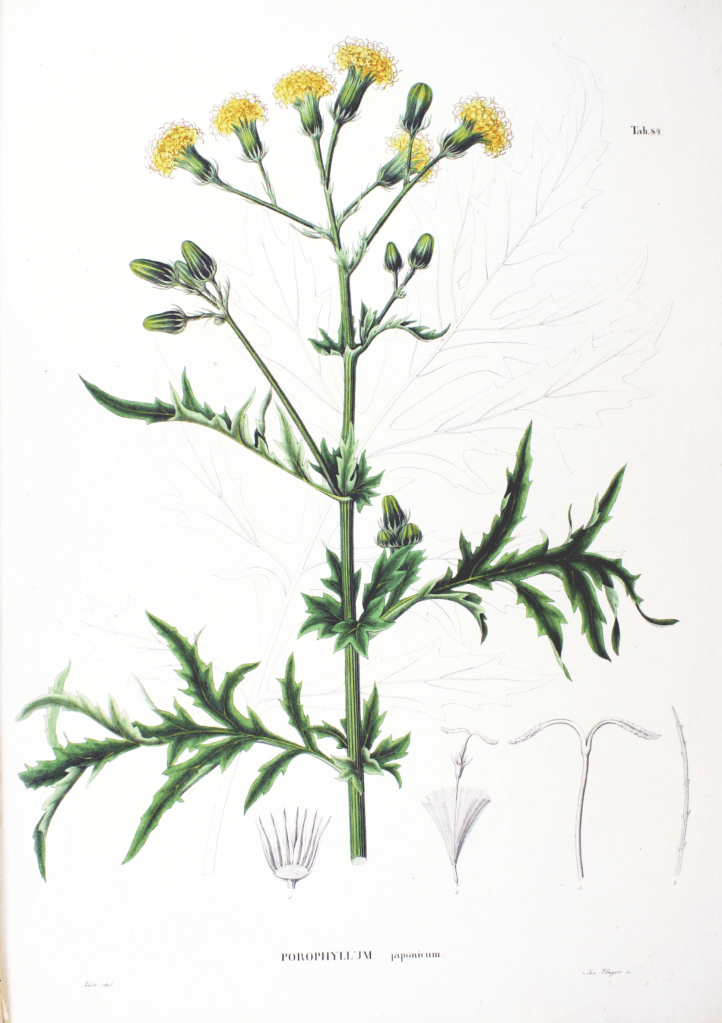
In Chinese, it is called “連香樹” (lian xiang shu)
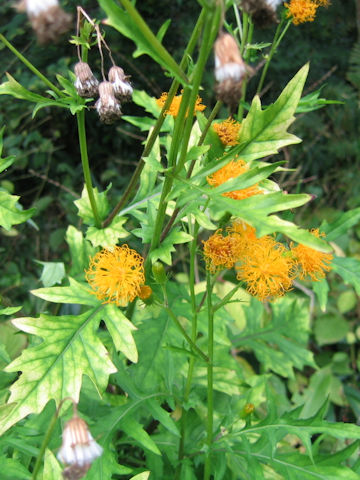
Porophyllum however is not its primary moniker. This honour is held by the name Gynura japonica (1) (again with the japan)
- The etymology of Gynura comes from the New Latin and is derived from Greek roots: “gyn-” meaning female and “-ura” meaning tail, referring to the plant’s elongated stigma (2).
- In botany, a stigma is the pollen-receptive tip of a flower’s female reproductive part, the carpel, where pollen grains land and germinate to start the process of fertilization and seed production
Synonyms
- Arnica japonica L.f.
- Cacalia pinnatifida Lour.
- Cacalia segetum Lour.
- Doronicum japonicum Lam.
- Gynura aurita C.Winkl.
- Gynura flava Hayata
- Gynura japonica (Thunb.) Makino
- Gynura japonica var. flava (Hayata) Kitam.
- Gynura japonica var. japonica
- Gynura pinnatifida DC.
- Gynura pinnatifida Vaniot
- Gynura segetum Merr.
- Gynura truncata Kerr WFO distributions
- Gynura vaniotii H.Lév.
- Kleinia japonica Less.
- Porophyllum japonicum DC.
- Senecio japonicus Thunb.
- Senecio luridus Salisb.
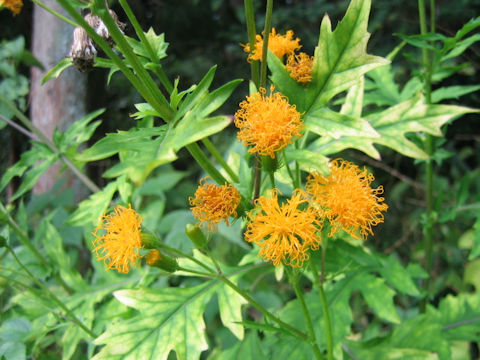
The stem stands upright and the plant grows up to 70-120 cm in height. The leaves are lanceolate or long ovate and divided 6-8 deep pinnately. They have irregular serrated edges. The yellow flowers will bloom around September to October. It is characterized by thin tubular ray florets.
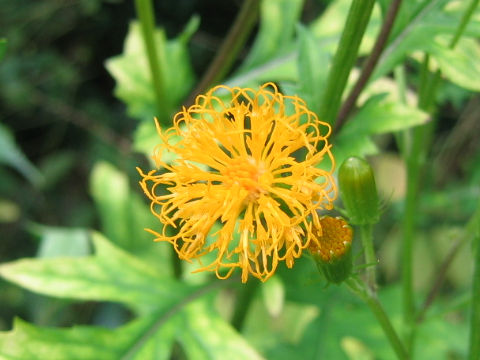
This plant grows in fertile and moist grassy areas, small shrub thickets by ditches and streams, valleys, grassy slopes, forests, and forest margins at elevations of 1,200 – 3,000 metres. It is harvested from the wild for local medicinal use. In this case it is much like the quelites, of which many are only available locally and seasonally.
See Quelites : Quilitl for more information on this category of herb

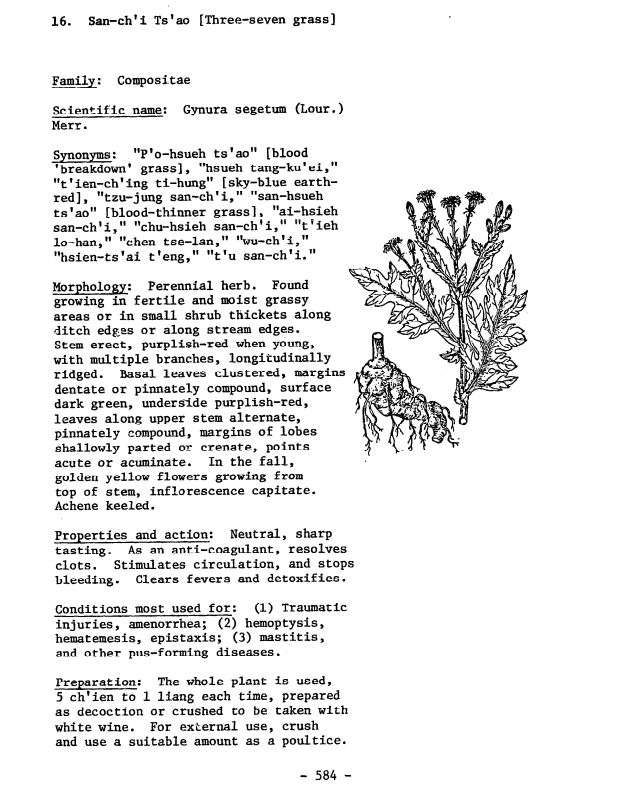
I could find no mention of its use a a culinary herb but it is listed in the Barefoot Doctors Manual as having medicinal utility where it is noted as being anticoagulant (1), depurative (2), febrifuge (3) and styptic (4) and as a circulatory stimulant. The leaves were used for insect bites and haemostasis (5), and the roots were used for hematemesis (6) and as a tonic. The whole plant can also be crushed and used as a poultice for healing wounds.
- a medication that slows the body’s natural ability to clot blood, preventing the formation and growth of blood clots
- purifying, cleansing, or removing impurities from the body, blood, or other substances
- also “anti-pyretic” – a medicine used to reduce fever.
- a substance or agent that stops bleeding by contracting blood vessels or causing blood to clot quickly
- the natural physiologic process by which the body stops bleeding after injury by forming a blood clot at the site of the damaged blood vessel.
- the medical term for vomiting blood, which can appear bright red or like dark brown “coffee grounds”. This is a sign of bleeding in the upper gastrointestinal (GI) tract, such as the oesophagus, stomach, or first part of the small intestine. WARNING : The symptom of internal bleeding is a serious issue and requires immediate medical attention as it can be a medical emergency indicating a potentially deadly problem and is a possible precursor to shock.
- Amenorrhea is the absence of menstrual periods in females of reproductive age and is not a disease itself but a symptom of an underlying condition
- Hemoptysis is the medical term for coughing up blood or blood-tinged sputum from the lungs or airways. It can range from mild, blood-streaked mucus to life-threatening, massive bleeding.
- Epistaxis is the medical term for a nosebleed, a common condition where a small blood vessel in the nose’s delicate lining bursts, causing bleeding
- Mastitis is an inflammation of the breast tissue that commonly affects breastfeeding mothers, causing symptoms like pain, redness, swelling, and a warm, firm area on the breast.
WARNING : This Post is for informational purposes only DO NOT USE THIS HERB FOR INTERNAL BLEEDING without the consultation of a trained expert. There will be no harm if it is used externally as a poultice for wounds with minor bleeding.
References
- A barefoot doctor’s manual : the American translation of the official Chinese paramedical manual Author: Hu-nan Chung i yao yen chiu so. Ko wei hui : Uniform Title: Ch
ih chiao i sheng shou tse. English Philadelphia : Running Press, c1977 ISBN: 0914294911 (lib. bdg) 091429492X Translation of Chih chiao i sheng shou tse. Reprint of the 1974 ed. published by U.S. Dept. of Health, Education, and Welfare, Public Health Service, National Institutes of Health, Bethesda, Md., in series: DHEW publication no. (NIH) 75-695.
- A barefoot doctor’s manual : https://we.riseup.net/assets/92494/A-Barefoot-Doctors-Manual-1974.pdf
- Gynura japonica Plate from book (image) – By Philipp Franz von Siebold and Joseph Gerhard Zuccarini – Flora Japonica, Sectio Prima (Tafelband)., Public Domain, https://commons.wikimedia.org/w/index.php?curid=795353
- https://www.botanic.jp/plants-sa/sansit.htm#google_vignette
- https://swbiodiversity.org/seinet/collections/individual/index.php?occid=31236348
- https://tropical.theferns.info/viewtropical.php?id=Gynura+japonica
- https://www.compositae.org/gcd/aphia.php?p=taxdetails&id=1105416
- https://www.worldfloraonline.org/taxon/wfo-0000011089
 Masa Americana