

Let me introduce you to an uncommon Porophyllum, Porophyllum zimapanum (B. L. Turner). This porophyllum, named after its collector Billie Lee Turner (1) and the image below represents the only sample of this particular species.
- The scientific name Porophyllum zimapanum was first published by botanist Billie Lee Turner in 1983.
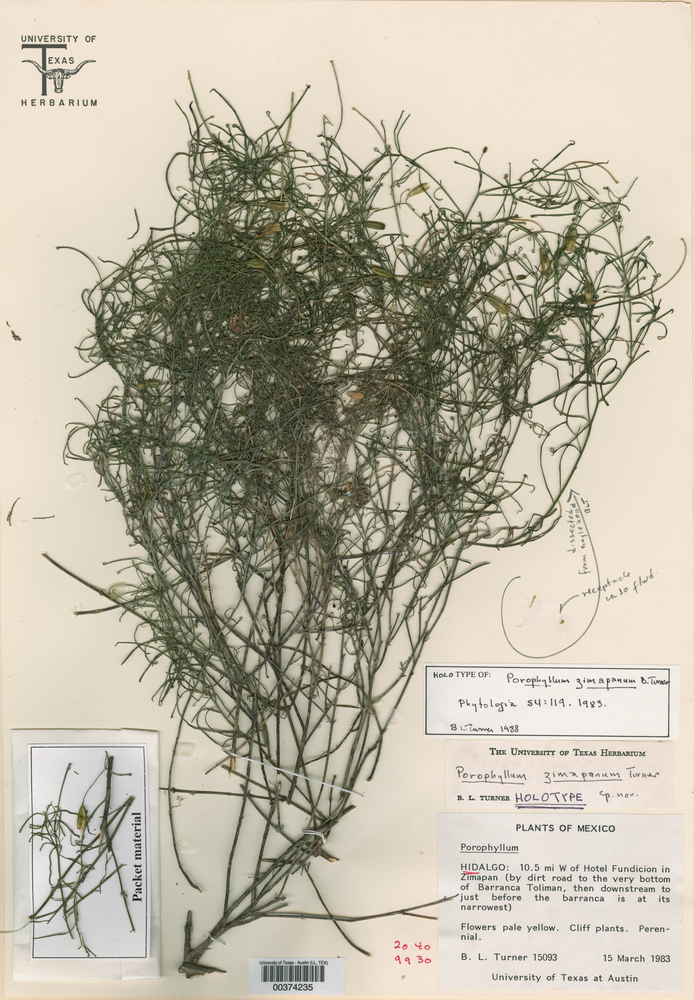
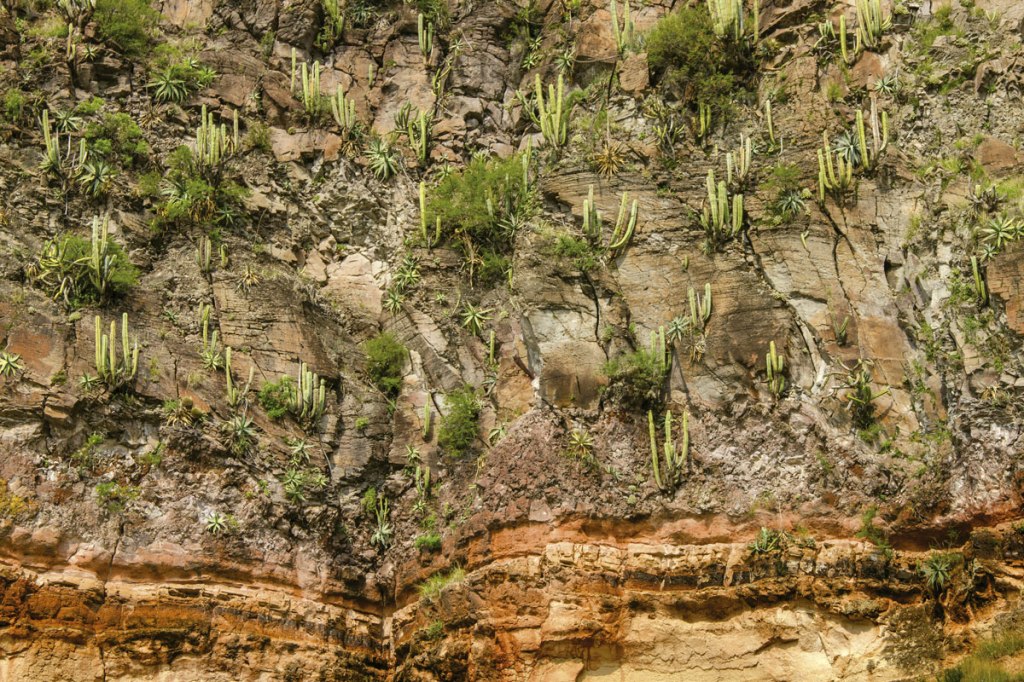
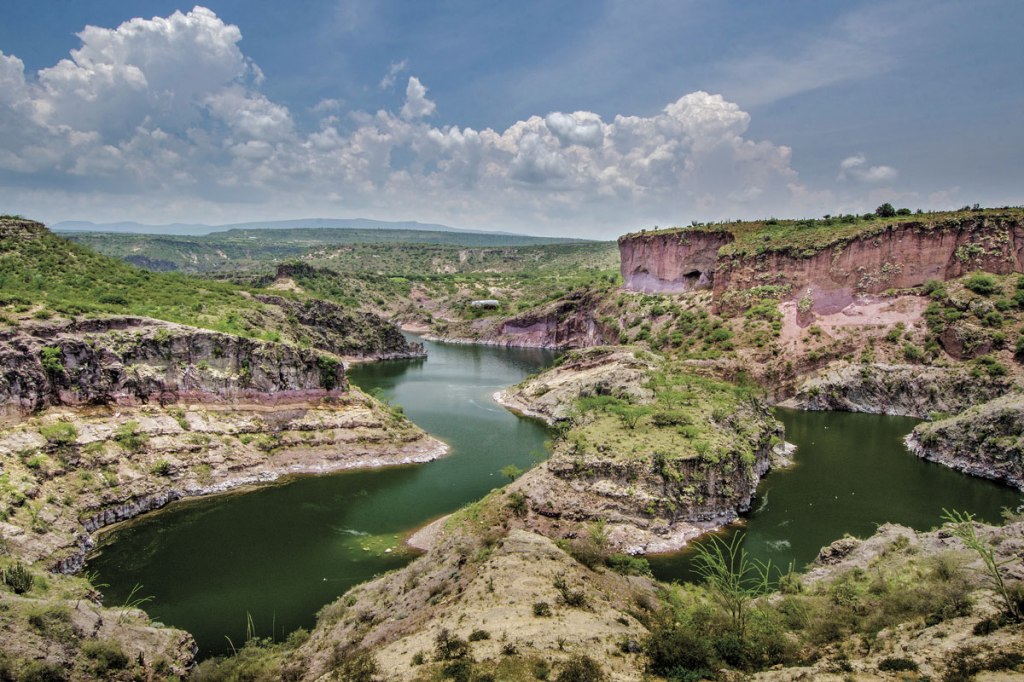
The plant was found growing in the cliffs of the Barranca de Toliman in the State of Hidalgo.


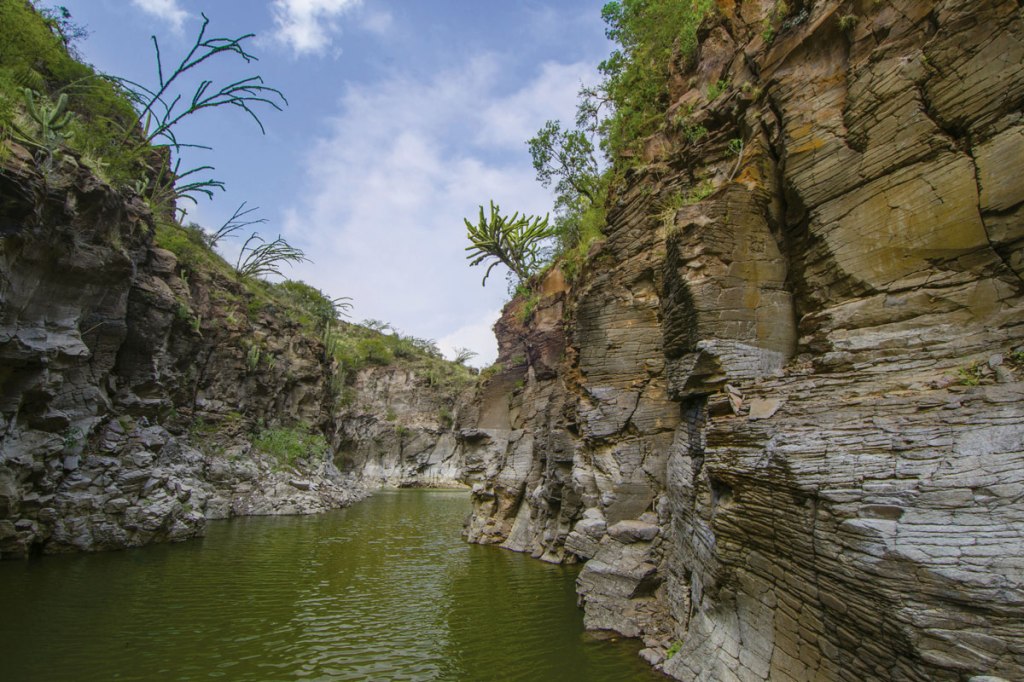
Turner found this plant 10.5 miles West of Hotel Fundicion in Zimapan (where I assume he was staying at the time) after wandering down a dirt road to the very bottom on Barranca Toliman (then downstream to just before the barranca (1) is at its narrowest).
- a narrow, winding river gorge.
The municipality of Zimapán derives its name from the Nahuatl roots, cimatl (1), “in or on the top,” and pan, “in or on,” which means “on the top or between the top.” (Cimate is a root used to induce the fermentation of pulque.) This region of Zimapán was inhabited by the Otomi and Quinamí peoples, who were later influenced by the Olmec and Nahuatl, who encouraged them to abandon their nomadic life and congregate in villages
- explored a little here : Flor de cimal (?)


According to the Florentine Codex, the term cimatl refers to the root specifically. if not properly cooked, the root can cause vomiting and diarrhea. The plant above ground is the cuauheco and/or the cimapatli (cimapahtl)
The coat of arms of the Municipality of Zimapán, Hidalgo, is described as follows: from an ochre-colored pot with three supports that simulate a root, lie two green branches that symbolize the Cimatl, a gold-colored staff of command; at the top of the cup stand out two gold-coloured banners, sectioned at the end by three bars each; blue, gold and red; in the upper right part stands out a flag sectioned with six bars of red, gold and blue that symbolize the six ethnic groups: Jonaces, Pames, Totonacas, Otomíes, Ximpeces and Otonagues; the same ones that gave rise to the Municipality of Zimapán.
The Hotel Fundacion
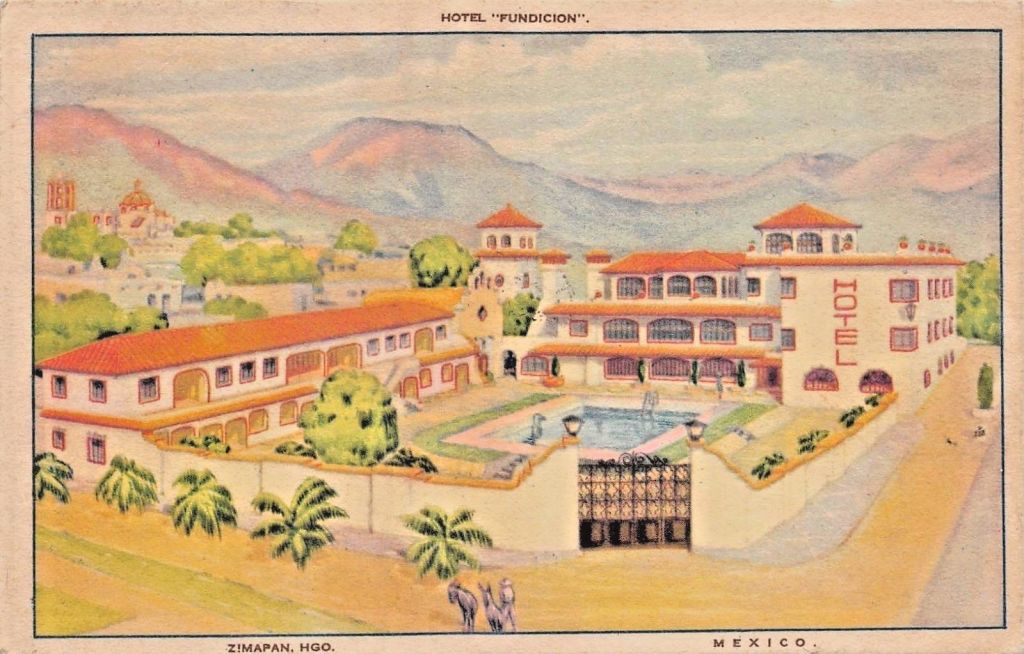
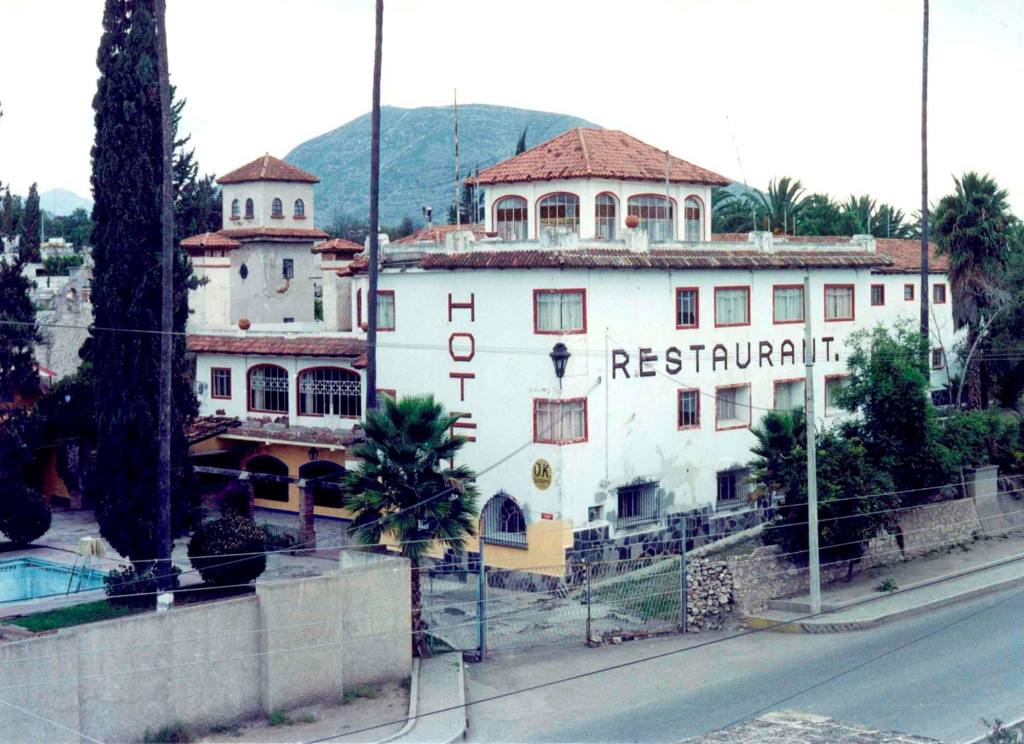

Porophyllum zimapanum occurs sporadically along the spectacular Barranca Toliman where it is said to be found only on the vertical cliffs of the barranca
Porophyllum Family Tree

Porophyllum zimapanum is related to P.warnockii. The latter is known only from the type collections (Mexico State, District Temascaltepec, Nanchititla, along cliffs) and it too has filiform leaves and is a local bluff-dwelling species. They differ in a number of characteristics including both floral and involucral features
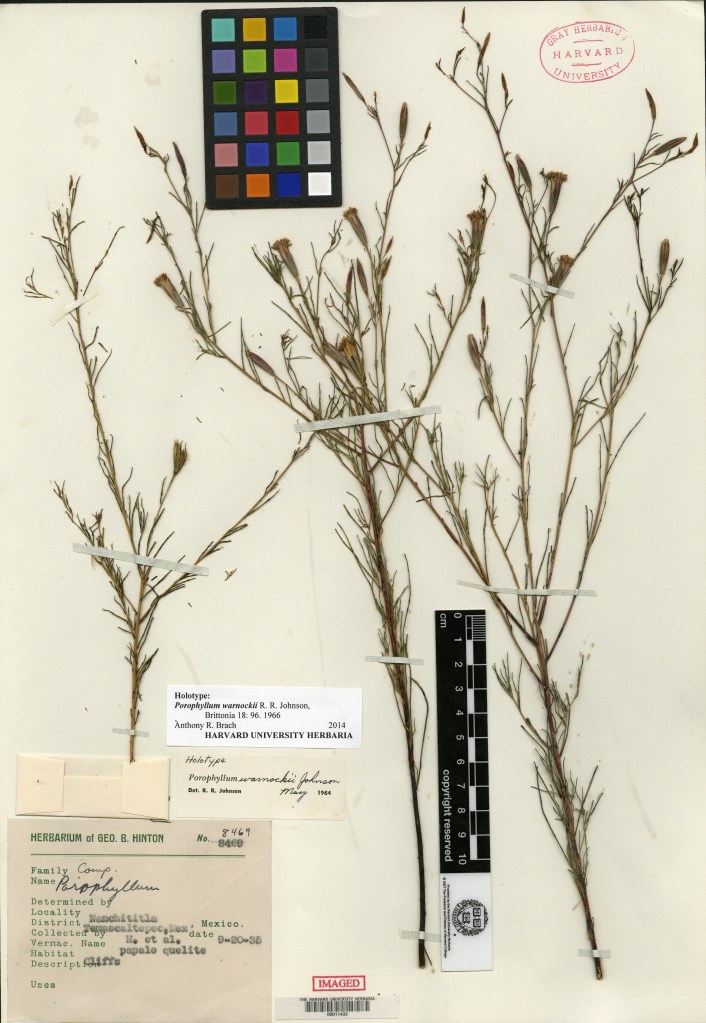
Among the floral features the most remarkable is the tufted (pubescent) involucral bracts. The filiform leaves (1) are also unique and differ from those of P. warnockii in possessing a large, linear, pustulate gland 2-4 mm below the apex, which upon drying causes the tip to recurve in the manner of a shepherd’s cane.
- more on this below. See also Porophyllum filiforme and Papalo – A Lexicon of Local Names

In botanical terms, “involucral” is an adjective describing structures related to an involucre, which is a whorl of leaf-like bracts (modified leaves) (1) found at the base of a flower or flower cluster, such as a composite head or umbel. These involucral bracts,also called phyllaries in composite flowers, provide protective support and function like an outer layer for the delicate reproductive parts.
- which bear a tuft of soft puberulent (2) hairs
- In botany, puberulent describes a plant surface covered with a dense layer of very short, soft, downy hairs. This covering, known as pubescence, protects plants by reducing water loss from transpiration, deterring herbivores, and reflecting intense sunlight. While related to the broader term “pubescent,” puberulent specifically refers to very short, fine, soft hairs.
Its leaves are filiform (1) 3-5 cm long, glabrous (2), with 1-3 pustulate glands (3) which no doubt carry the oils which give this species of plants its strong and characteristic aroma.
- thread-like or slender, with a uniform cross-section. The term comes from the Latin word “filum” meaning “thread”.
- completely smooth and lacks any hairs, scales, or other surface projections. The term comes from the Latin word glaber, meaning “smooth” or “bald”.
- In botany, “pustulate” refers to having a blister-like appearance, or being covered in raised, swollen spots, and this term is often used in conjunction with glands (glandular hairs or secretory structures) on a plant’s surface. Plants with pustulate glands may appear to have swollen dots or streaks, sometimes due to sunken glands or coloured dots that become visible when the leaf is held to the light. These glands can secrete substances like nectar, toxic compounds, or salts (or as in this case, essential oils)
References
- Contreras-Toledo, AR, Cortés-Cruz, MA, Costich, D, Rico-Acre, MDL, Magos Brehm, J & Maxted, N 2018, ‘A crop wild relative inventory for Mexico’, Crop Science, vol. 58, no. 3, pp. 1292-1305. https://doi.org/10.2135/cropsci2017.07.0452
- Estrada Márquez, Ana & Ortiz, Enrique & Villaseñor, Jose & Espinosa-García, Francisco. (2016). The distribution of cultivated species of Porophyllum (Asteraceae) and their wild relatives under climate change. Systematics and Biodiversity. 14. 1-11. 10.1080/14772000.2016.1205678.
- Hansen, Debra & Jansen, Robert & Jansen, & Rowan, F & Sage, José & Luis, Beryl & Simpson, Beryl & Villaseñor, Jose. (2018). Molecular Phylogeny of Pectis (Tageteae, Asteraceae), a C 4 Genus of the Neotropics, and its Sister Genus Porophyllum. Lundellia. 19. 10.25224/1097-993X-19.1.6.
- Johnson, R.R. A new species of porophyllum (Compositae : helenieae) from Mexico. Brittonia 18, 96 (1966). https://doi.org/10.2307/2805113
Websites
- Barranca de Toliman (image) – https://programadestinosmexico.com/barranca-de-toliman-hidalgo/
- Barranca de Toliman Cliffs (image) – via Ernesto Hernández Miranda. Cultura y Progreso. On Facebook – https://www.facebook.com/photo?fbid=104337424815086&set=pcb.104339241481571
- cimatl (Nahuatl dictionary) – https://nahuatl.wired-humanities.org/content/cimatl
- cimatl glyph – https://aztecglyphs.wired-humanities.org/content/cimatl-mh575r
- Hotel Fundicion (1948) – https://www.hippostcard.com/listing/zimapan-hildago-mexicohotel-fundicionartist-drawn-postcard-1948/53683888
- Hotel Fundicion (1985) via Juan Lucas Angeles on Facebook – https://www.facebook.com/photo/?fbid=741665709265232&set=a.104390742992735https://swbiodiversity.org/seinet/collections/individual/index.php?occid=31236348
- https://plantamor.com/species/profile/porophyllum/zimapanum#google_vignette
- http://www.conabio.gob.mx/remib/doctos/checklist/140-3.html
- https://archive.org/stream/phytologia54glea/phytologia54glea_djvu.txt
- Involucral bracts of Erigeron peregrinus – By Walter Siegmund (talk) – Own work, CC BY-SA 3.0, https://commons.wikimedia.org/w/index.php?curid=8794995
- Porophyllum warnockii R.R.Johnson (image) – https://intermountainbiota.org/portal/taxa/index.php?tid=176230&taxauthid=1&clid=2745
- Porophyllum warnockii R.R.Johnson – https://herbanwmex.net/portal/taxa/index.php?tid=176230&taxauthid=1&clid=2745
- Zimapán – https://magicaltowns.mx/hidalgo/zimapan/
 Masa Americana