

We add another one to the list : A Note on Deer Weed : The Danger of Common Names

Scientific name: Peperomia lenticularis
A plant with smooth, slightly heart-shaped green leaves.
Common names : Sopa-causasa, cumazani, Tequelite chiquito (1)
- other sources note Tequelite chiquito as being Peperomia peltilimba
Known in other languages as: cuc’sazan also Laktsu kuksasan (Totonac, northern mountains of Puebla) tancharapo (Nahuatl, northern mountain range of Puebla)
Below are some descriptions of Peperomia lenticularis.
What I do find odd however are quite a few references to a Peperomia denticularis (1) (as opposed to lenticularis)(2). One such reference to that of denticularis is that of Basurto (etal 2017) who note the plant as being….
Peperomia denticularis Dahlst. : Common names : tequelite (3), oreja de ratón, cuc’sazan (Totonac), cumazani (Otomi)
- Denticulate is an adjective referring to something having teeth-like structures.
- Lenticular refers to something resembling the seed of a lentil in form; lentil-shaped.
- I have looked at tequelite in a previous Post : Quelite : Tequelite
And again, oddly enough, the Kew Plant List (http://www.theplantlist.org/tpl1.1/record/kew-2555774) notes that Peperomia lenticularis is an “illegitimate” name as a synonym of Peperomia cyclophylla Miq.; though eFloraMex notes of Peperomia lenticularis D. Parodi (under “Misapplied names”) https://efloramex.ib.unam.mx/cdm_dataportal/taxon/fb4a88d7-ba53-4587-89d6-091efe98dda6/synonymy)
Peperomia lenticularis D. Parodi in Anales Soc. Ci. Argent. 6: 93. 1878 sec. Ulloa Ulloa & al. 2018 = Peperomia denticularis Dahlst.syn. sec. ??? (the question marks are theirs, not mine)
Familia : Piperaceae
Nombre científico : Peperomia lenticularis D. Parodi
Nombre común : Sopa-causasa, cumazani
Uso : AL
Parte útil : R
Milpa/ cafetal : CAF (coffee plantation)
Forma de vida : HI
Cultivada/ silvestre : SIL
Categoría de uso: CE: ceremonial, OR: ornamental, AL: alimenticio, FO: forrajero, ME: medicinal, CN: construcción, CO: combustible, AG: agrónomo, UT: utilitario.
Parte útil: S: semilla, H: hoja, FR: fruto, FL: flor, T: tallo. Forma de vida: HI: hierba, AR: árbol, AB: arbusto, PA: palma. CUL: cultivada, SIL: silvestre
(Ordóñez Díaz etal 2018)
ESPECIE : Peperomia lenticularis
NOMBRE COMÚN : Tequelite chiquito
NOMBRE TOTONACO : Laktsu kuksasan
FV : 3
O : 1
PU : 3
DISTRIBUCIÓN : 2,3
MANEJO : FOM
FV: Forma de vida= (1) árbol; (2) arbusto; (3) herbácea; (4) bejuco, enredadera;
O: Origen= (1) nativa, (2) introducida; PU: Parte utilizada= (1) Raíces, tubérculo, rizoma; (2) Tallos, (3) Hojas; (4) Flores o inflorescencia; (5) Frutos; (6) Semillas; (7) Savia;
Manejo= (CUL) cultivada; (FOM) fomentada; (fostered, encouraged); (SIL) silvestre.
(Reyes Retes etal 2019)
Peperomia dentucularis Dahl. Is noted by one writer as being Tequelite chico (with Peperomia peltilimba being Tequelite grande).
To P.denticularis are ascribed the common names of tequelite oreja de ratón (in Zapotitlán, Puebla) and the indigenous names of llonaca tziquitzi (Nahuatl) and le’ct’zuu cuc’sazan (le’cctzuu = chiquito/chico = small) in Totonac.
The plant is noted to grow in sand in the shallows of rivers particularly in Zapotitlán and Zoquiapan in Puebla.
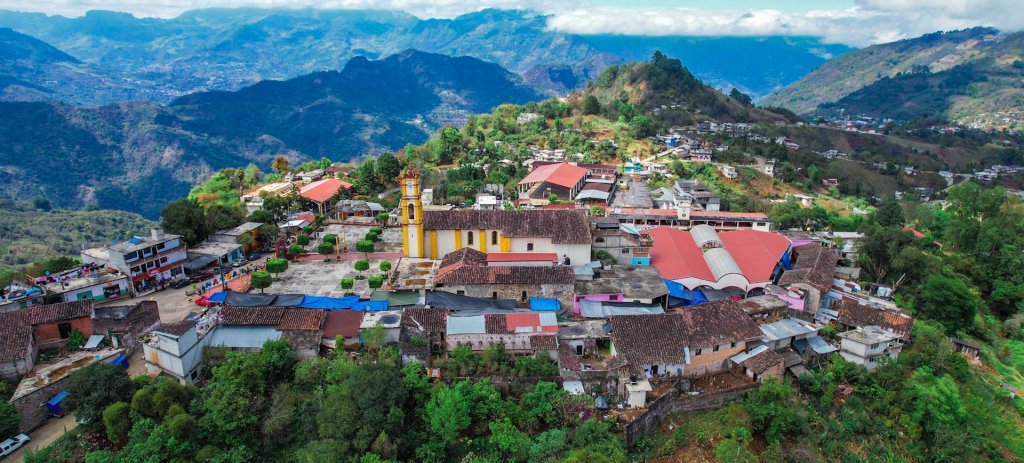
In Naupan, Puebla, it is customary to eat it fresh and raw, wrapped in corn tortillas with salt, serrano chili or some spicy sauce.
It is noted as having a flavour similar to cilantro and is sometimes used instead of cilantro, The leaves are added to guisado de carne de res (beef stew) and chopped finely and added to bean tamales with ajonjoli (sesame seeds). The leaves are eaten raw with tortilla.
It is also noted that “this plant is very rare, so it is no longer consumed frequently”.


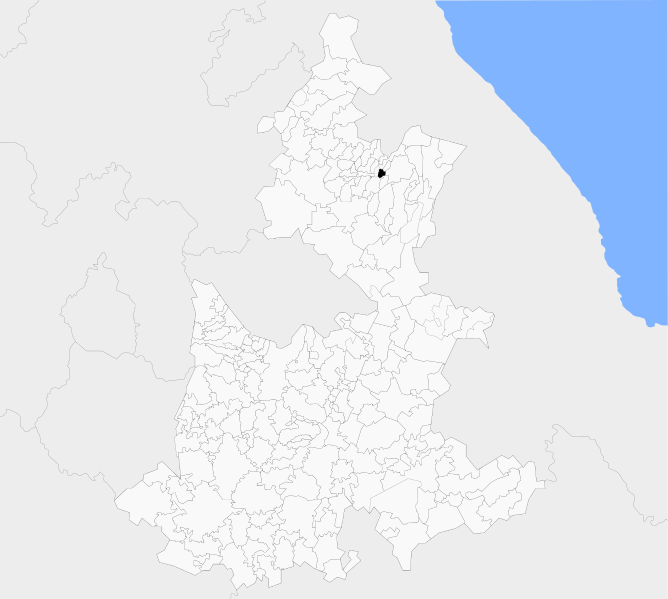
Coat of arms of the Municipality of Naupan (Puebla, Mexico), according to the Encyclopedia of the Municipalities of Mexico. It is a coat of arms that presents pre-Hispanic symbols of Nahuatl origin, such as the four points that represent the number four (nàwi) and the flag (pantli) over the water glyph (àtl), which together mean “over the four waters” , and in Mexican or Nahuatl language it is called Nàupan or Nàyôpan .
Naupan
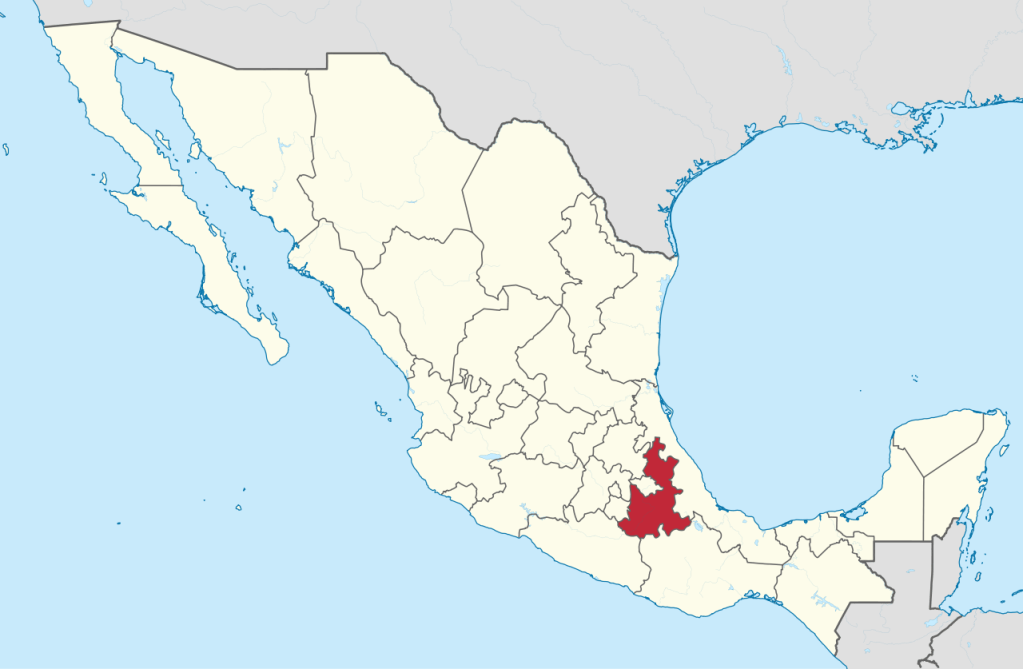
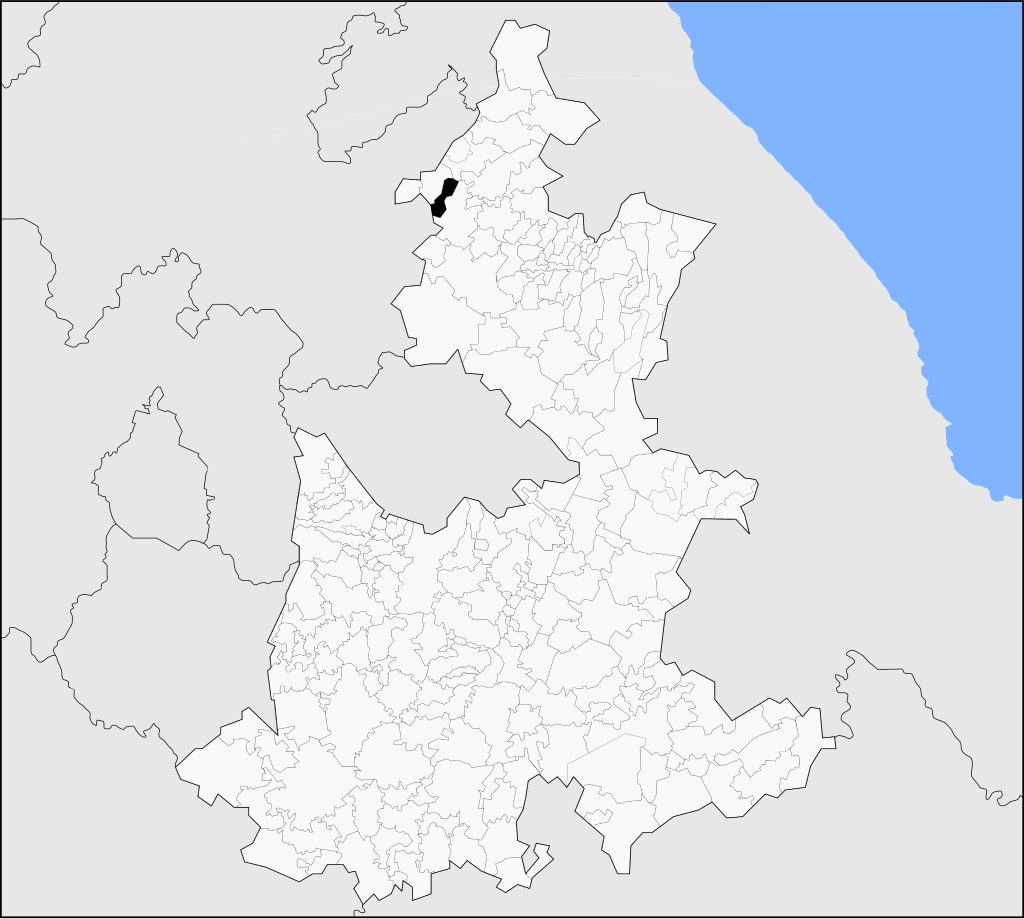
Zapotitlan
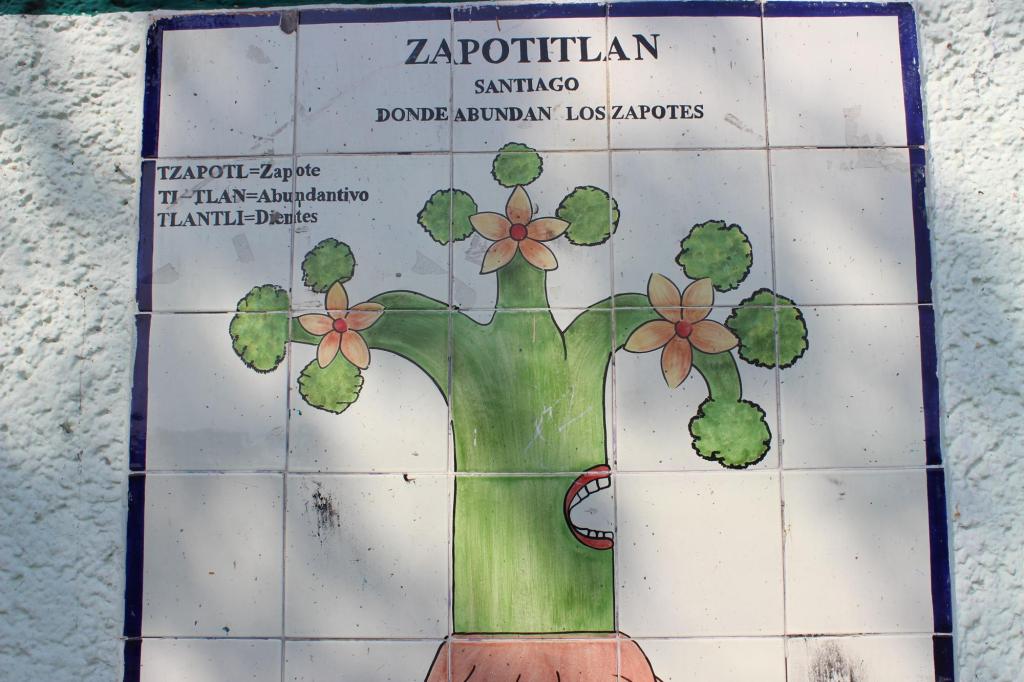
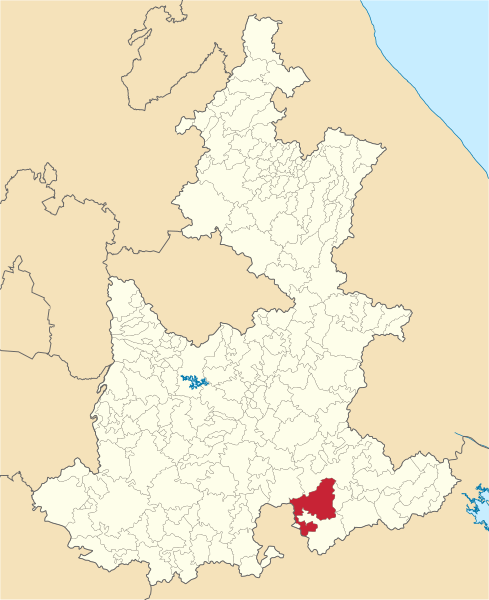
The word Zapotitlán is of Nahuatl origin; it is formed by the words tzápotl , zapote, atl, which is a euphonic particle (1), and tlán , next or near, which means “next to the zapotes”. The ending tla of the name is expressed by the drawing of teeth on the trunk of the tree.
- Euphonic (synonym melodious/melodic) : a harmonious succession of words having a pleasing sound. A particle is a word that has a grammatical function but does not fit into the main parts of speech (i.e. noun, verb, adverb). Particles do not change. The infinitive ‘to’ in ‘to fly’ is an example of a particle

The Nahuatl glyph Zoquiapan (Over the muddy water) (Puebla, Mexico)
References
- Basurto-Peña, F., Evangelista-Oliva, V., Molina-Martínez, N. y Alvarado-Flores, R. (2011). Frecuencia de consumo de quelites en la Sierra Norte de Puebla. Especies vegetales poco valoradas: una alternativa para la seguridad alimentaria. México D.F.: UNAM-SNICS-SINAREFI.
- Basurto, Francisco & Martínez-Alfaro, Miguel & Villalobos-Contreras, Genoveva. (2017). Los Quelites de la Sierra Norte de Puebla, México: Inventario y formas de preparación. Botanical Sciences. 49. 10.17129/botsci.1550.
- Lascurain, Maite & Avendano, Sergio & Tan, Richard & Caballero, Javier & Cortes, Laura & Linares-Mazari, Edelmira & López, Citlalli & Ávila, Alejandro. (2022). Plantas americanas utilizadas como condimento en la cocina mexicana. (American plants used as a condiment in Mexican cuisine) : Revista Mexicana de Biodiversidad. 93. e933949. 10.22201/ib.20078706e.2022.93.3949.
- Martínez, Miguel & Cruz, Myrna & Evangelista Oliva, Virginia & Basurto, Francisco & Cruz-Rivas, Antonio. (2007). Flora útil de los cafetales en la Sierra Norte de Puebla, México. Revista Mexicana de Biodiversidad, Vol. 78, Nº. 1, 2007, pags. 15-40. 78. 10.22201/ib.20078706e.2007.001.457.
- Ordóñez Díaz, María de Jesús, editor. (2018) Atlas biocultural de huertos familiares en México : Chiapas, Hidalgo, Oaxaca, Veracruz y península de Yucatán : LIBRUNAM 2006386 | ISBN 978-607-30-0740-5 (libro electrónico)
- Pagaza-Calderón, E. (2008). Efecto de la urbanización y el cambio cultural en la estructura florística de los huertos familiares y su papel en la conservación de especies silvestres. Un estudio de caso en Tlacuilotepec, Puebla (Tesis de maestría). Universidad Nacional Autónoma de México. México D.F
- Reyes Reyes, César; Pérez García, Oscar; Espinoza Pérez, José; Almorín Albino, Renato; Díaz Bautista, Maximo; Ramiro Calderón, Eduardo; García García, Ana María T.; Bautista Ramírez, Macario L.; Luna Lobato, Víctor H. & Cruz Hernández, Luis A. (2019) MÉXICO MEGADIVERSO VISTO A TRAVÉS DE SUS JARDINES Y SUS PROTAGONISTAS
 Masa Americana