
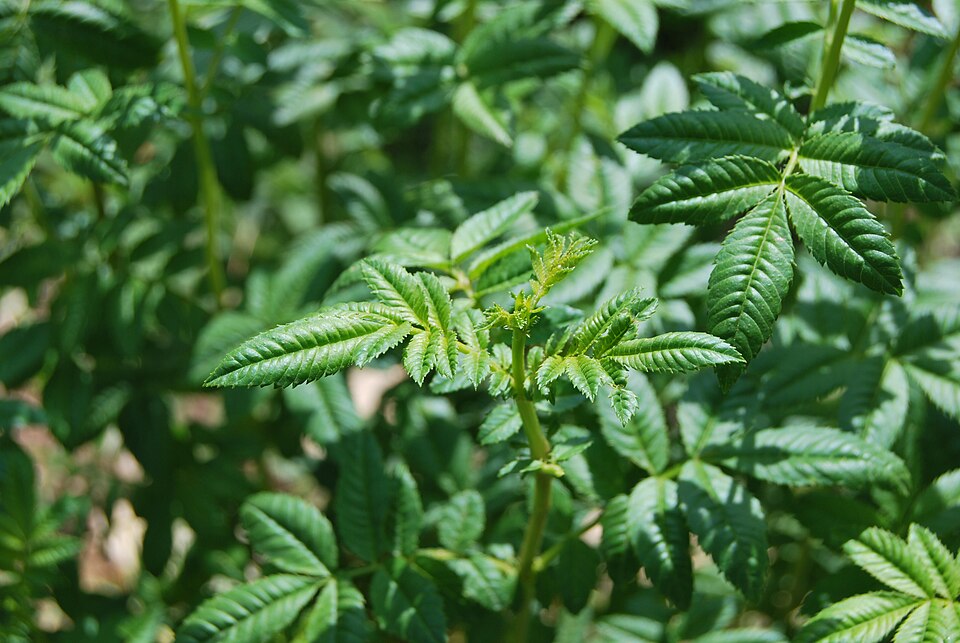
After the Porophyllum species my next favourite group of wild herbs is the Tagetes family. My favourite child would be Pericón (Tagetes lucida which is a very Mexican herb (1) but snapping close on its heels would be its southern, more Bolivian primo Huacatay (Tagetes minuta) (2).
For more information on some of the perhaps more obscure members of the family also read….
Quelite : Anís de campo : Tagetes filifolia
Quelite : Anis de Chucho : Tagetes micrantha
Cempasúchil (this ones not really obscure. It is without a doubt the most popular flower in Mexico)
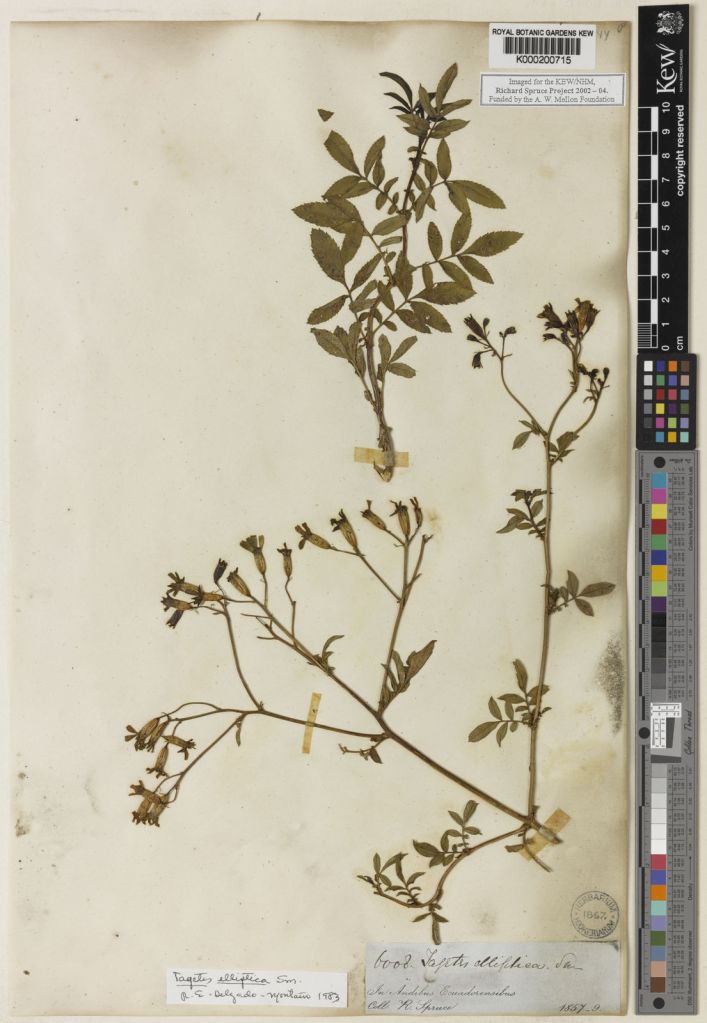
Tagetes elliptica, commonly known in its home locale as “chincho,” is an aromatic herbaceous plant in the Asteraceae family, native to the Peruvian Andes. It is an “intensely flavoured” culinary herb valued in Andean cuisine for stews and dressings.
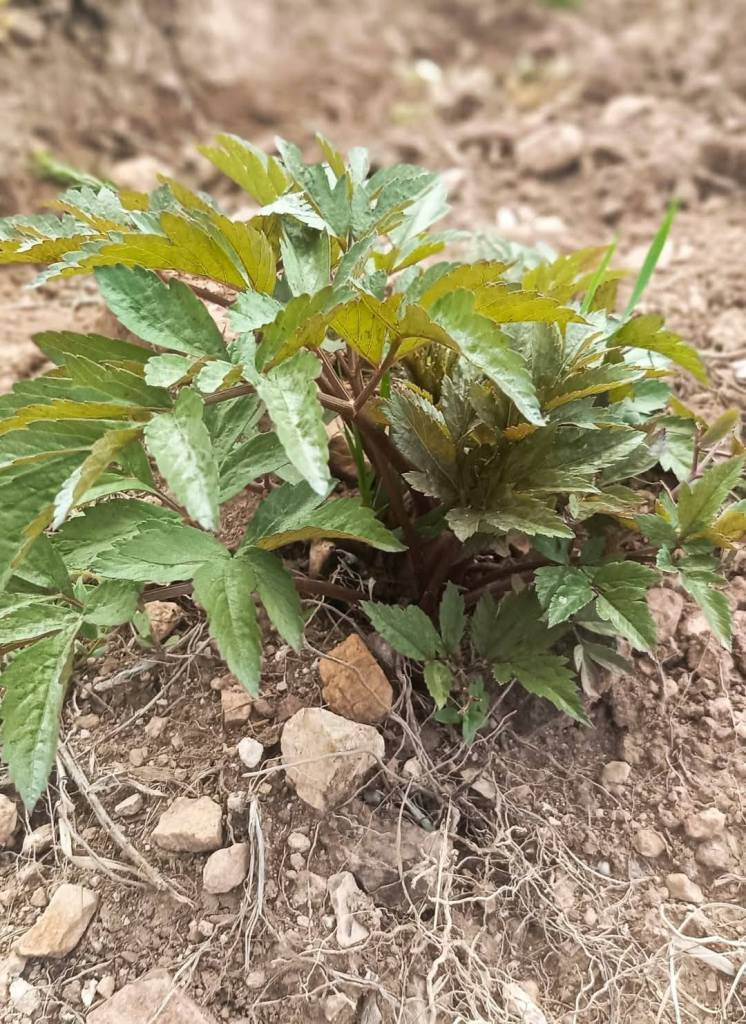
Also known as
chincho, chinchu, chinchilpo, chikchimpa, culantrillo, culantrillo serrano, huacatay Andino (Andean huacatay), maría sacha, sacha huacatay (Wild huacatay) (1), suyku, Yaku tsintsu (Quechua Ancashino)
- In Quechua, sacha primarily means wild, forest, or jungle. It is frequently used in compound words to denote that a plant or fruit is wild rather than cultivated
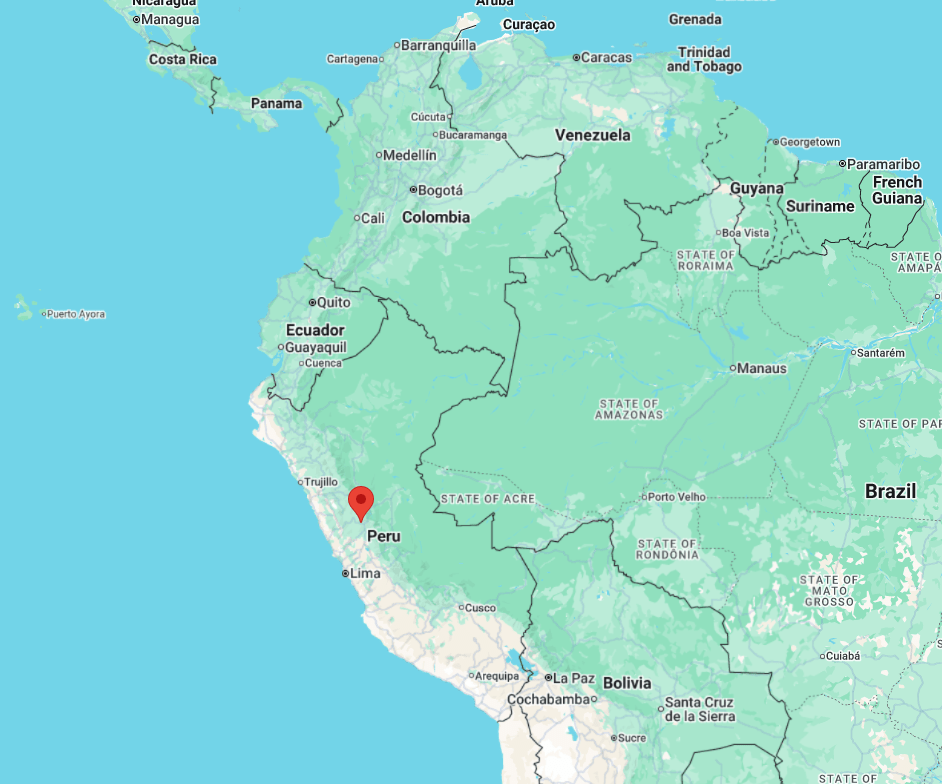
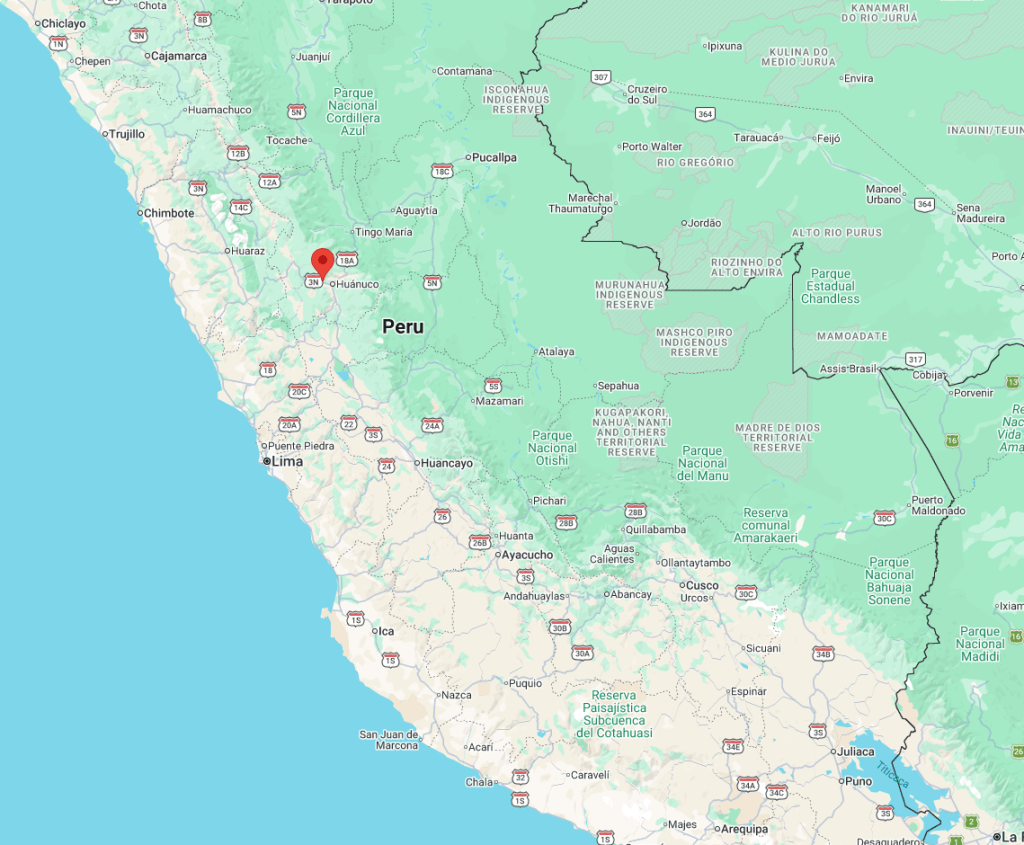
This plant is endemic (1) to the Sierra central of Peru and is considered an unknown “cousin” of the more popular huacatay; but unlike huacatay, chincho grows wild on the edges of cultivated fields or in vegetable gardens (2). The distribution of this plant is haphazard: it can be found in some areas of the central coast and also in the Andes at medium altitudes.
- endemic (a plant or animal that is native and restricted to a certain place)
- this might be true of huacatay in its home territory where it is a plant of the mountains but outside of its native range it can be problematic. In Australia a Common Name for huacatay (Tagetes minuta) is “Stinking Roger”*which refers to the strong odour of the fresh plant) and is a declared weed in several States. It is a common agricultural weed that invades disturbed soils, pastures and cultivated areas. When ingested by cattle, the plant can taint milk, giving it a strong, bitter, or medicinal flavour.
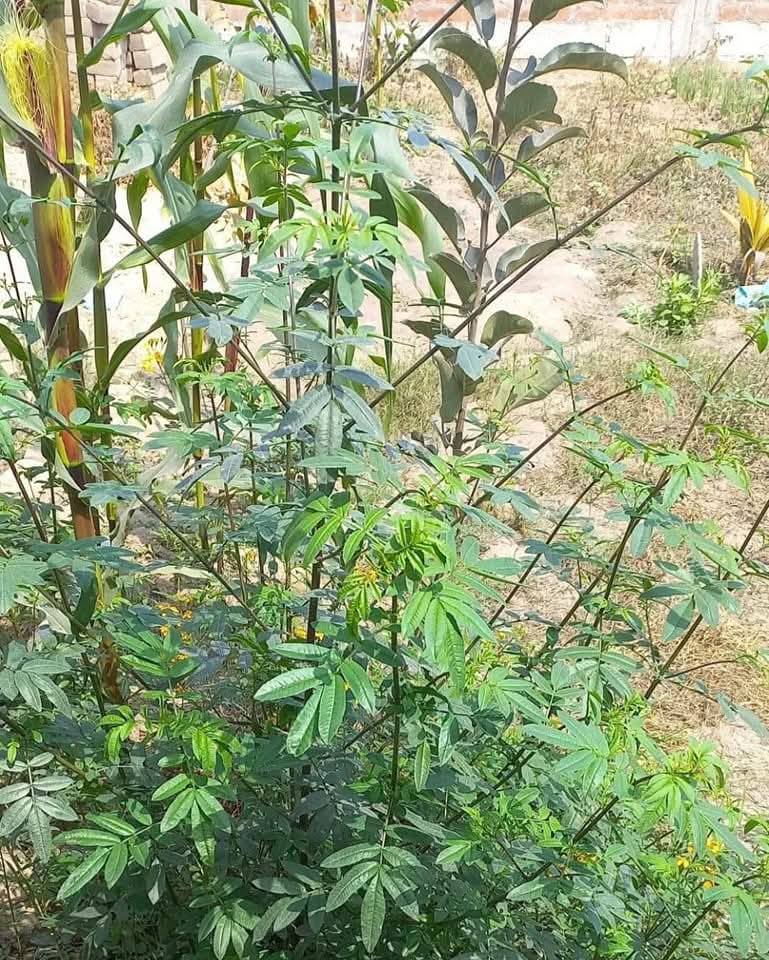
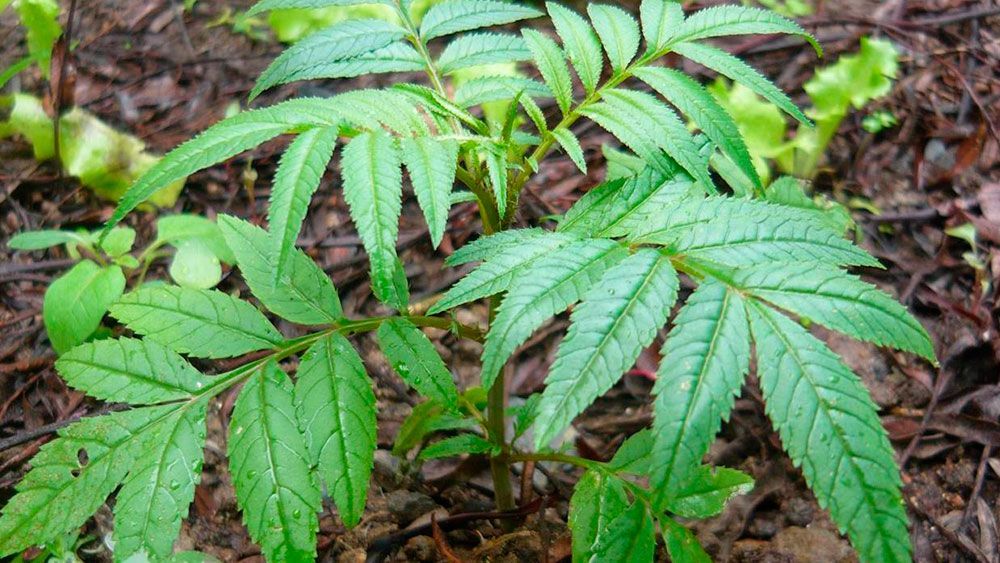
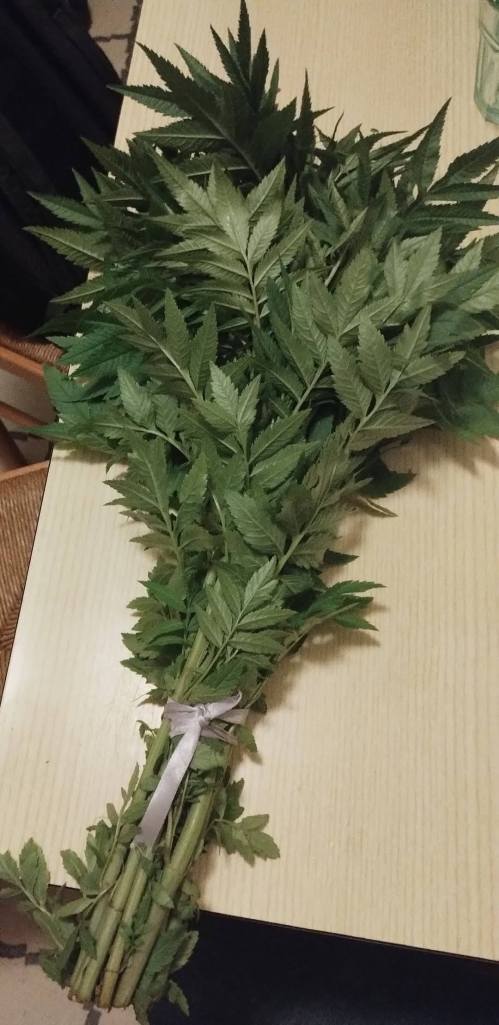
Chinco is sometimes confused with Tagetes minuta (huacatay) but is distinct in its leaf shape. The plants are also said the be used interchangeable (culinarily speaking).
Tagetes elliptica leaf (below)
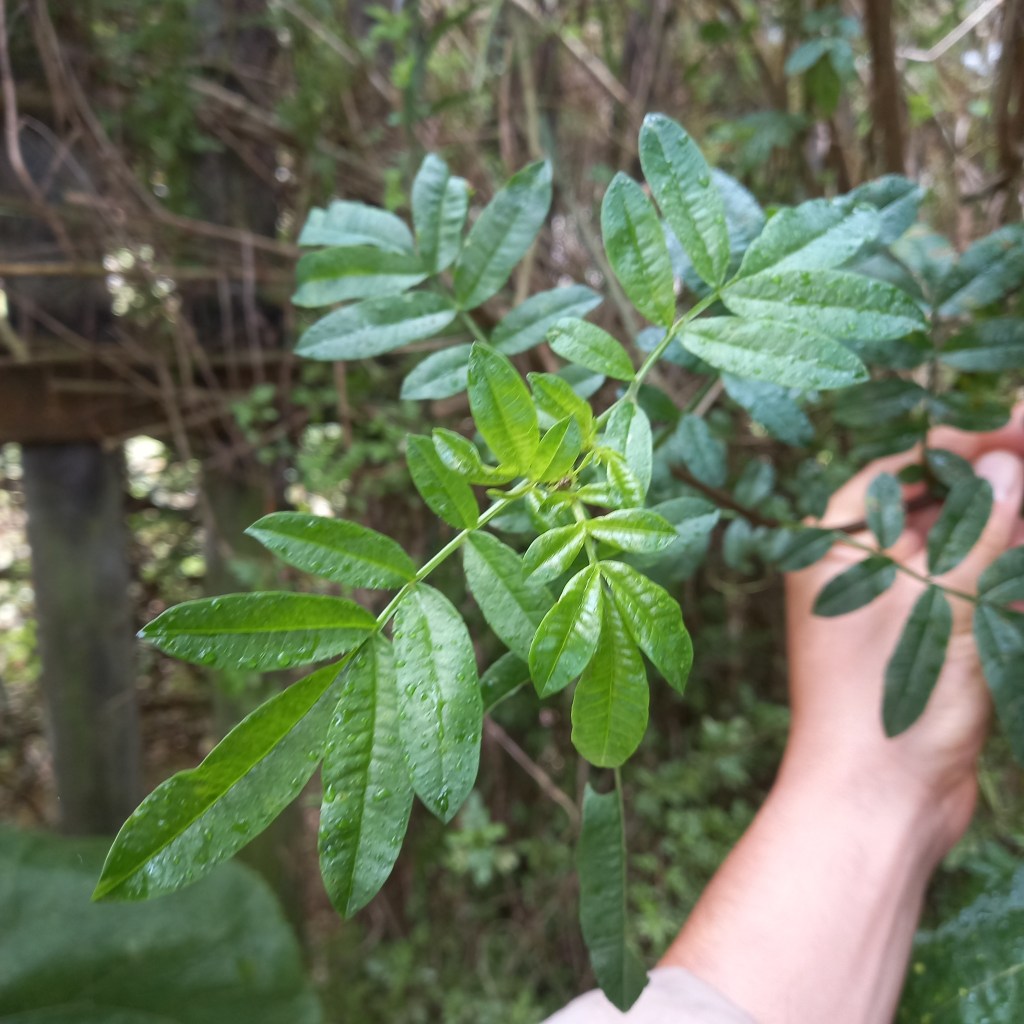
Tagetes minuta leaf (below)
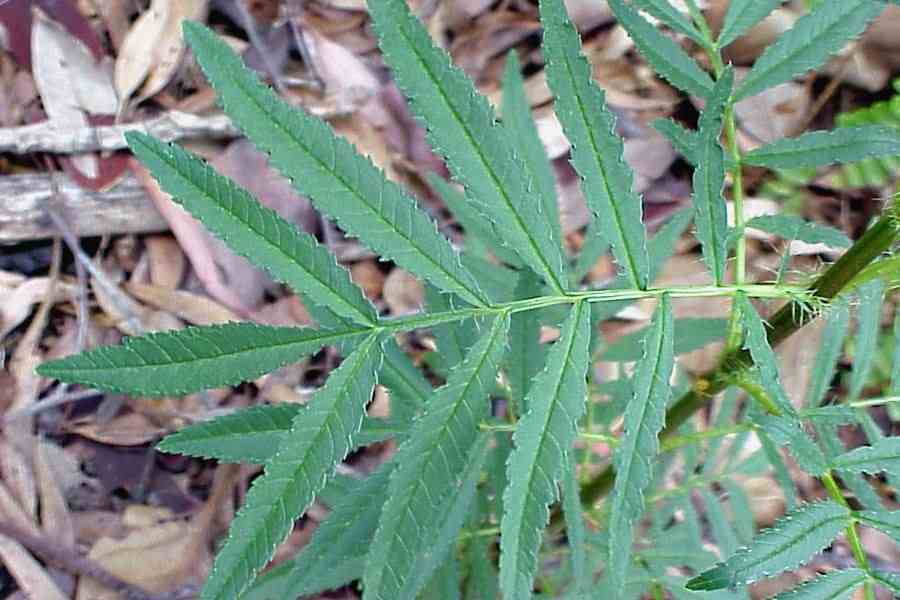
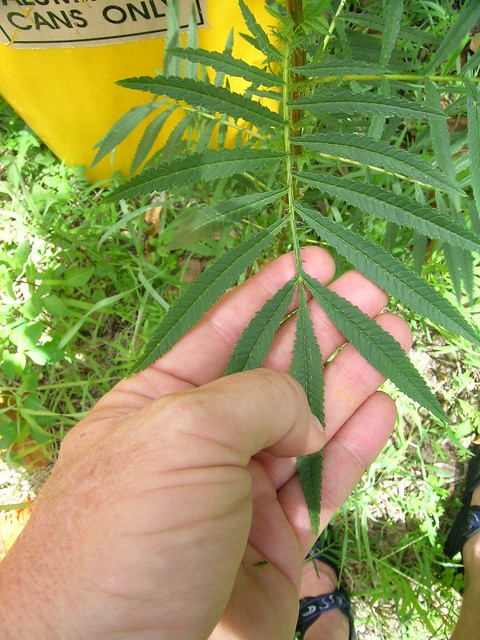
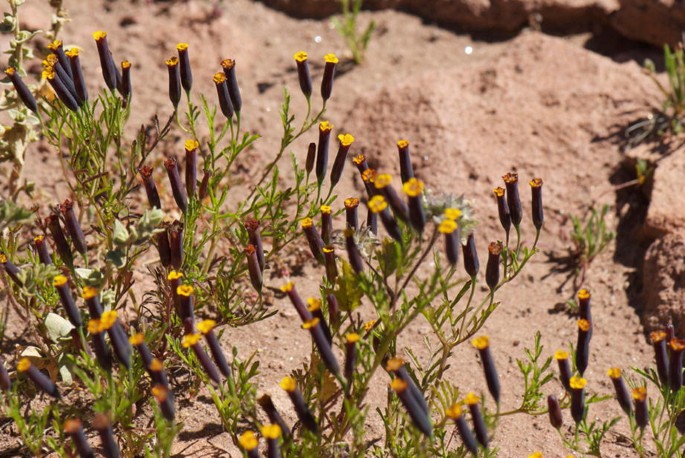
Chincho is listed as being Tagetes multiflora Kunth (Hurtado Huarcayan et al 2020) but as you can note by examining the flowers, these are two quite different plants
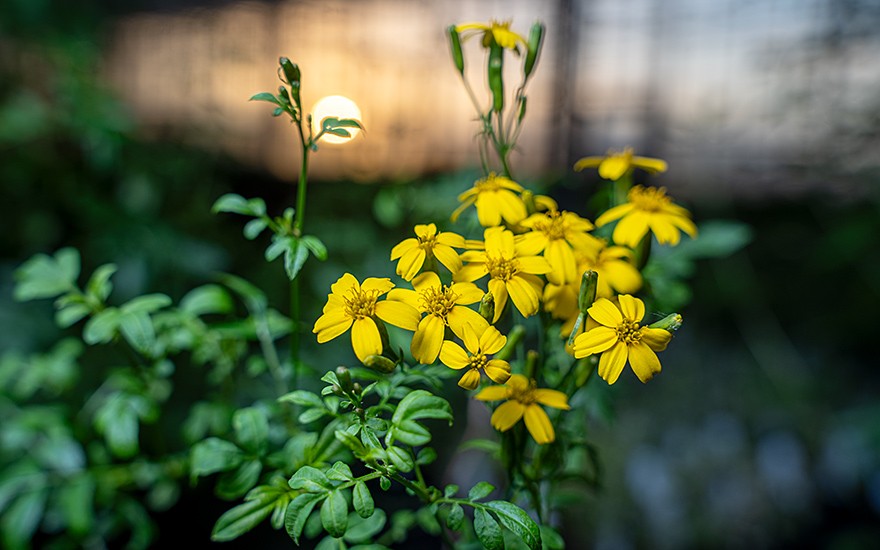
.Variations in Tagetes multiflora flower colouration. I look at T.multiflora a little more in Identify Me : Am I a Poreleaf?
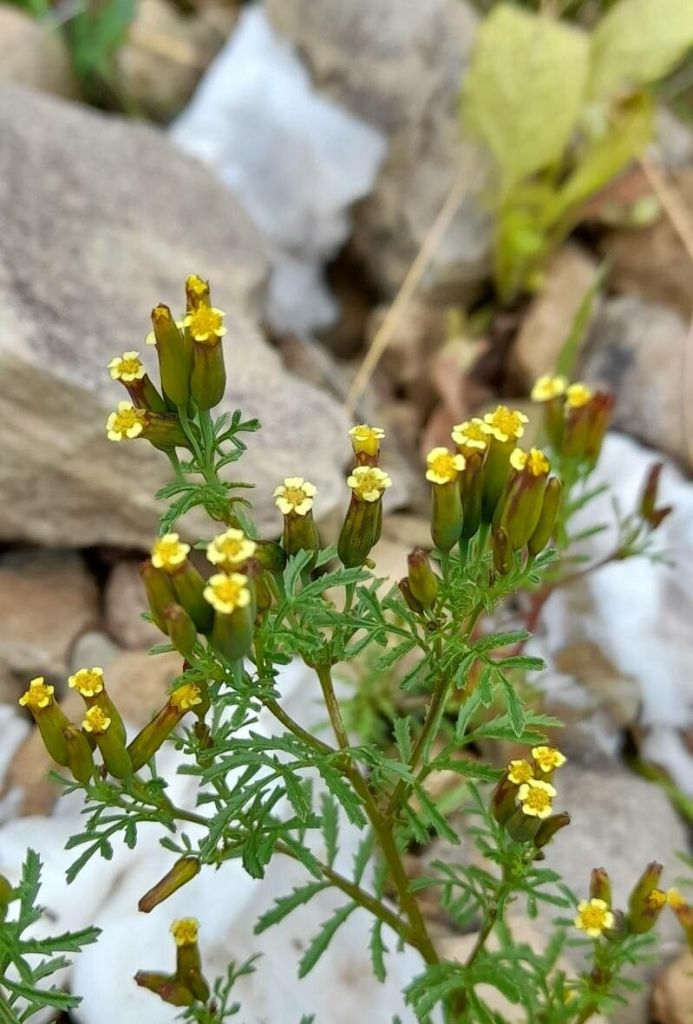
(Paniagua-Zambrana et al 2020)
Culantrillo
Another common name for chincho is culantrillo (or culantrillo serrano) (1). Here we delve again in into the danger of Common Names (2).
- wild or mountain culantrillo
- A Note on Deer Weed : The Danger of Common Names
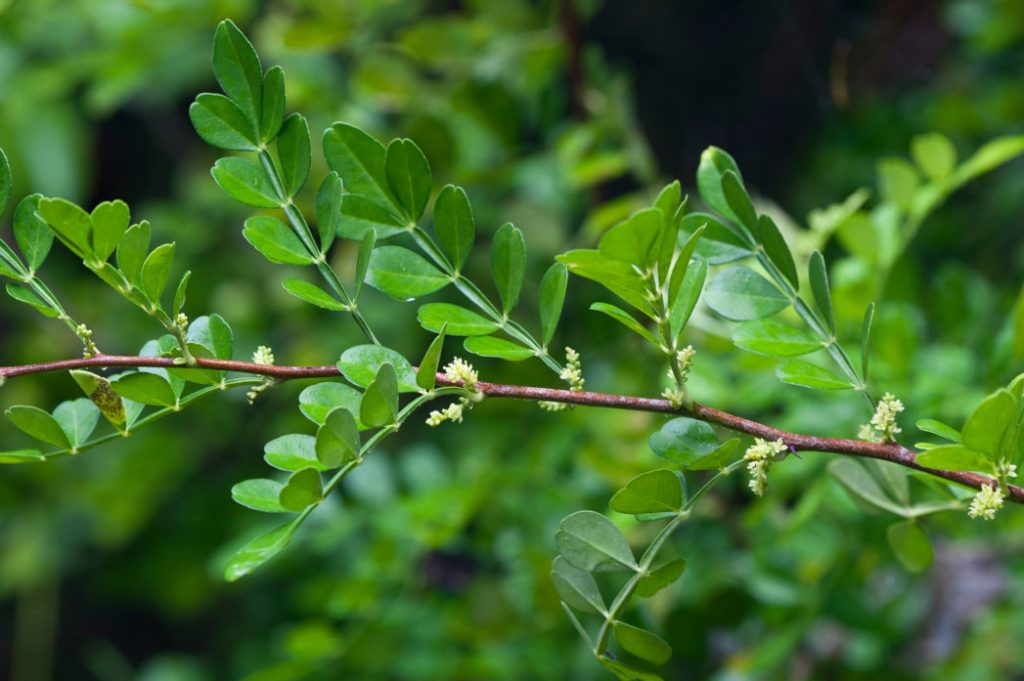
Other herbs also called culantrillo
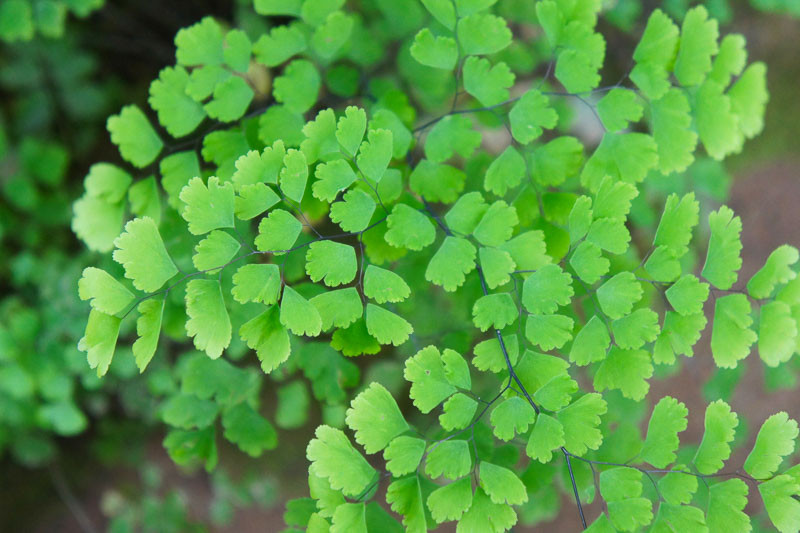
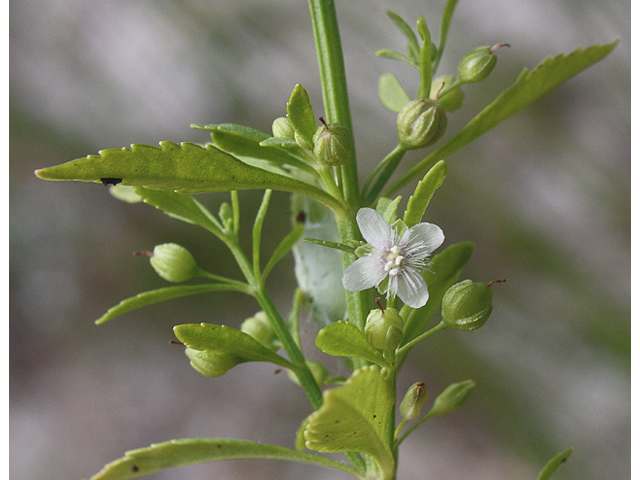
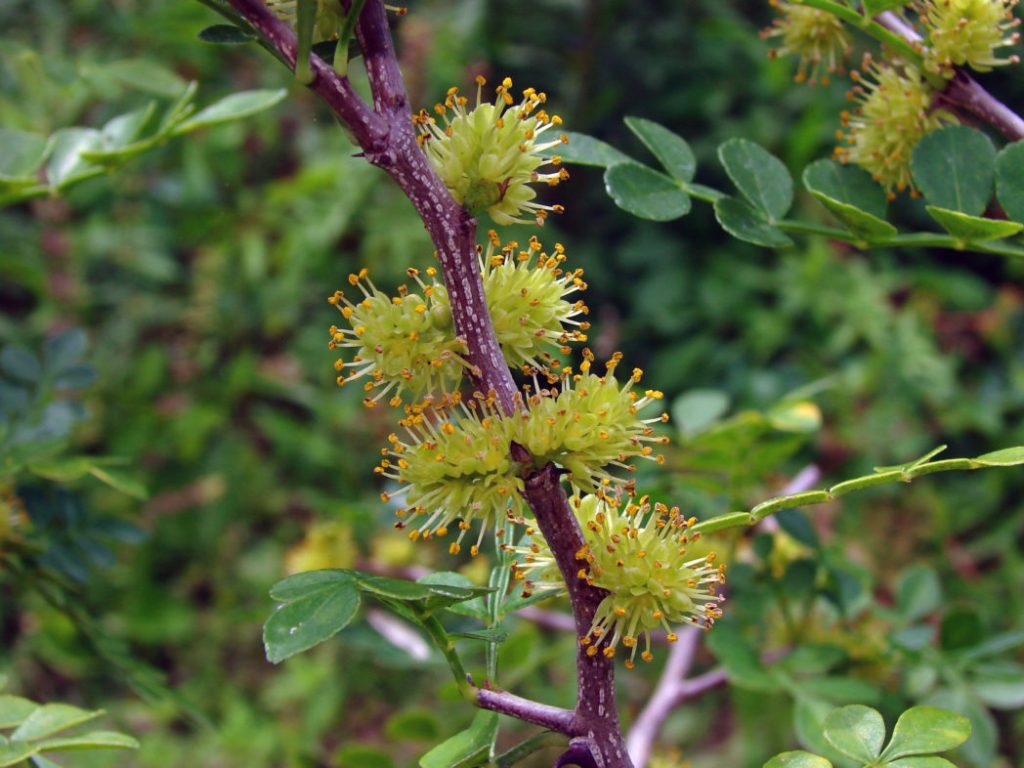
In Honduras chincho is identified as Zanthoxylum fagara
Culinary Use
Chincho as an aromatic culinary herb has a long history in Peru and it was cultivated by the Incas.
Chincho is considered to have a similar but milder, less pungent, and more “nuanced taste” in comparison to huacatay and chincho is sometimes described as having a subtle oregano or anise scent (which others in the Tagetes species are known for (i.e. Pericón).
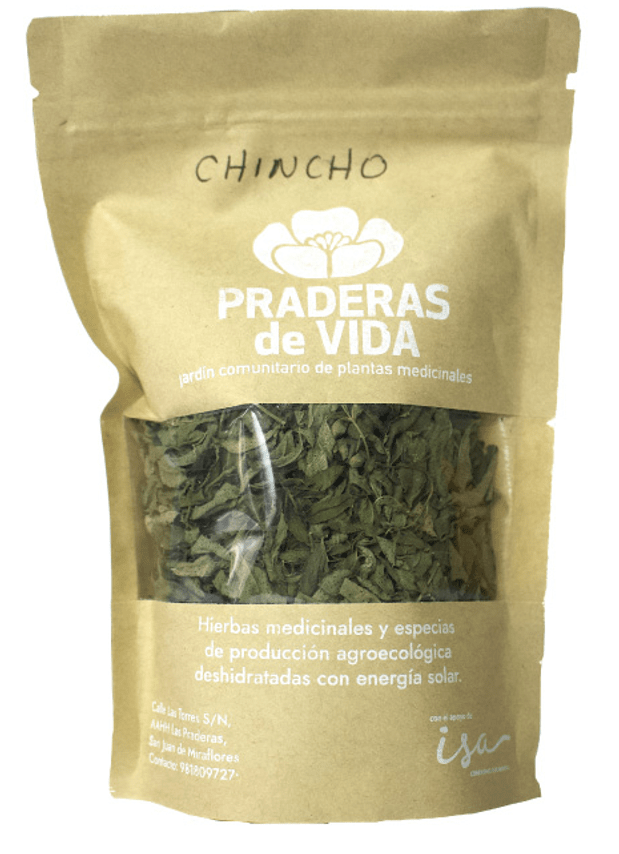
The extreme delicateness of this plant and its poor adaptability mean that it is only grown in a few areas of Peru. For this reason it is lesser known that other Andean herbs and not distributed much outside its traditional production area. This is true of many quelites which might only be available for short periods, in specific seasons, and only in certain regions. As a result, chincho is rarely sold fresh abroad, but its dried form is stable and, although not common, is available in Latin American grocers. The dried herb is considered more potent than fresh. One tablespoon of dried chincho equals nearly ¼ cup of fresh. Store it in an airtight container away from light as the delicate monoterpenes responsible for the herbs flavour degrade rapidly when exposed to UV.
How to Use Dried Chincho
Toast 1 tsp dried chincho in a dry skillet over medium-low heat for 45 seconds until fragrant.
Grind coarsely in a mortar or spice grinder.
Add to the final 2 minutes of cooking any stew, braise, or sauté.
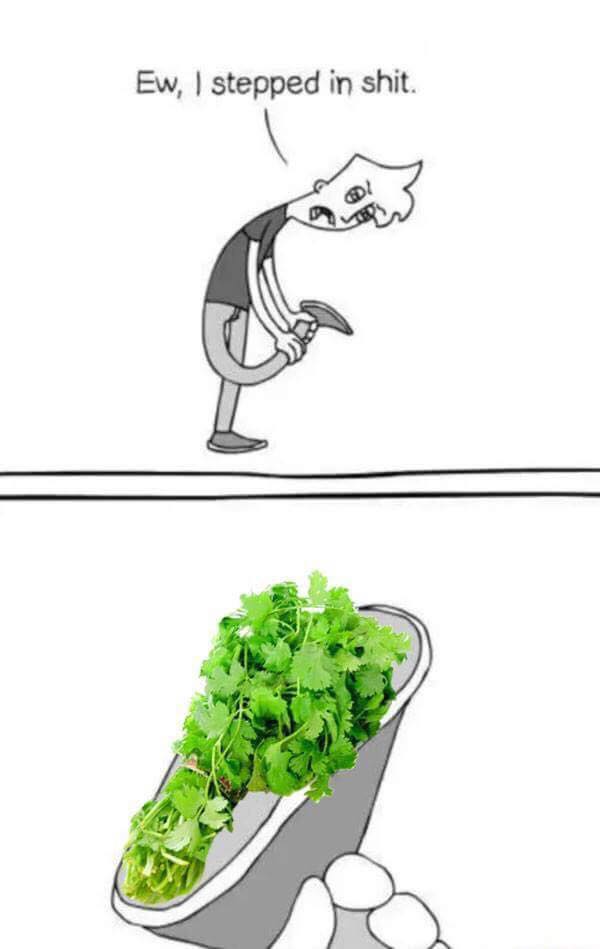
When using chincho as a fresh herb it had benefits that another delicate herb, cilantro, does not. Unlike cilantro, chincho doesn’t wilt when being cooked as it holds up to heat and retains brightness even after 20 minutes of simmering. Also, unlike cilantro, it doesn’t have the same chemistry that causes cilantro haters to taste “soap” when eating it.
There is plenty of hate for cilantro
If you cannot find fresh huacatay you still have options
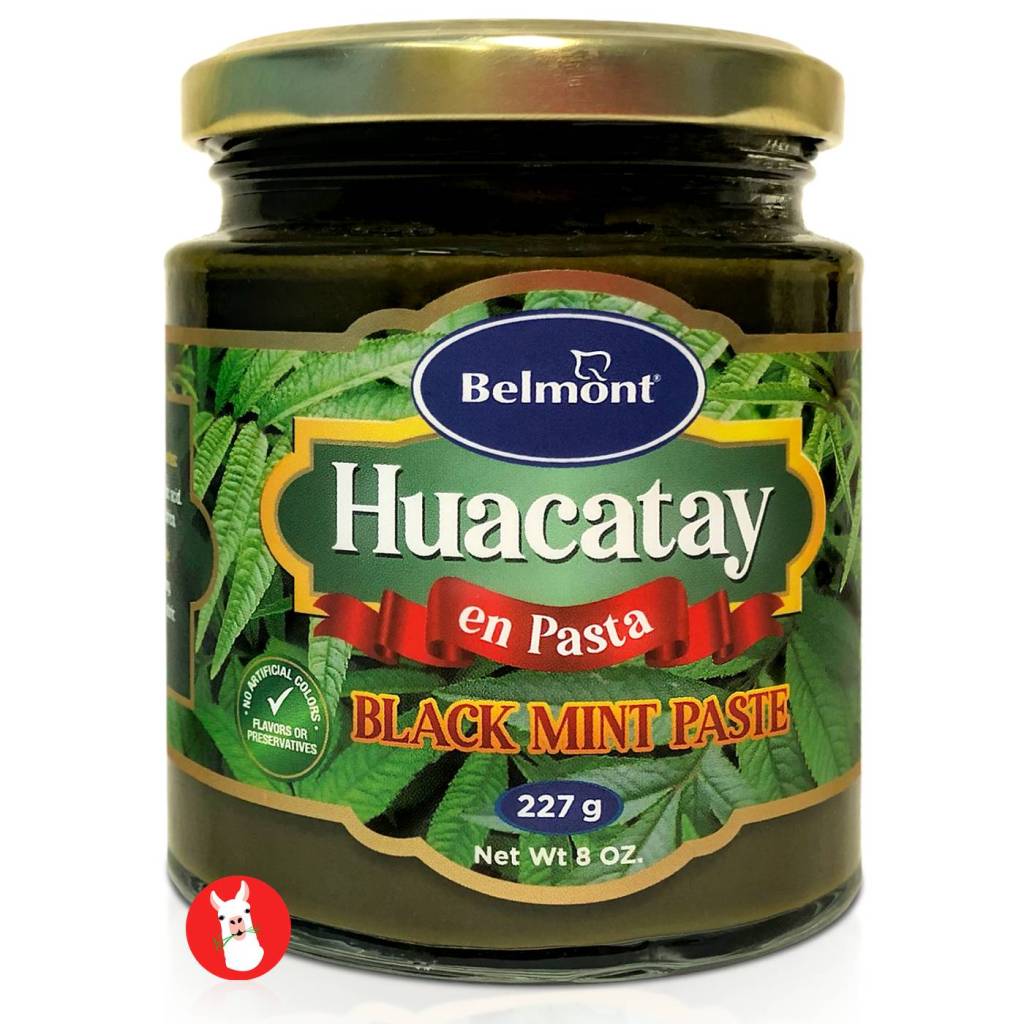
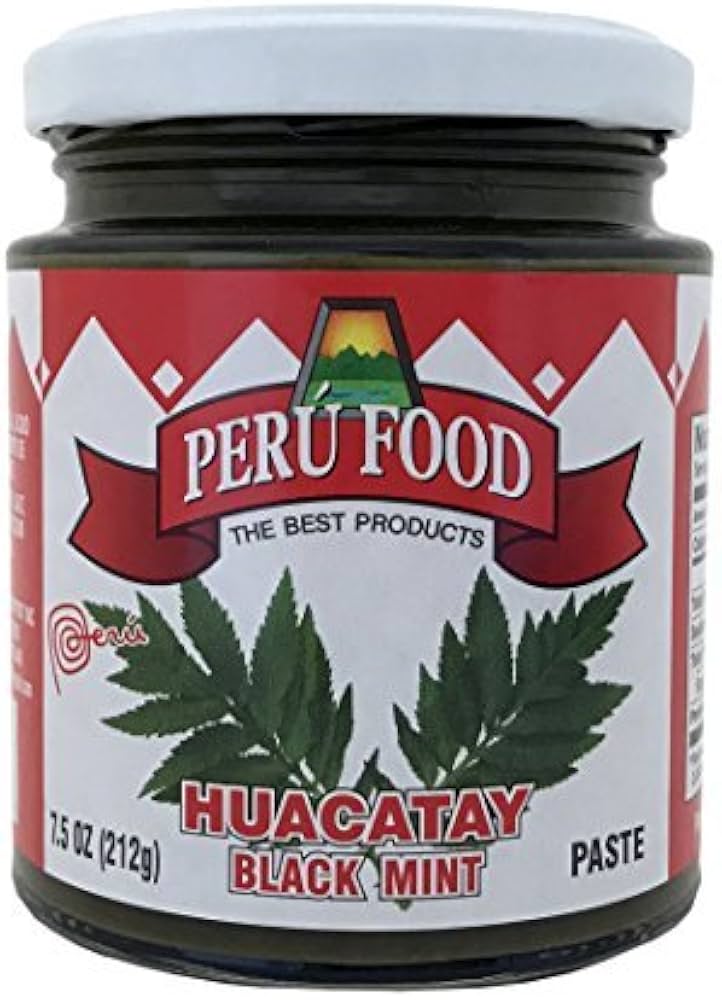
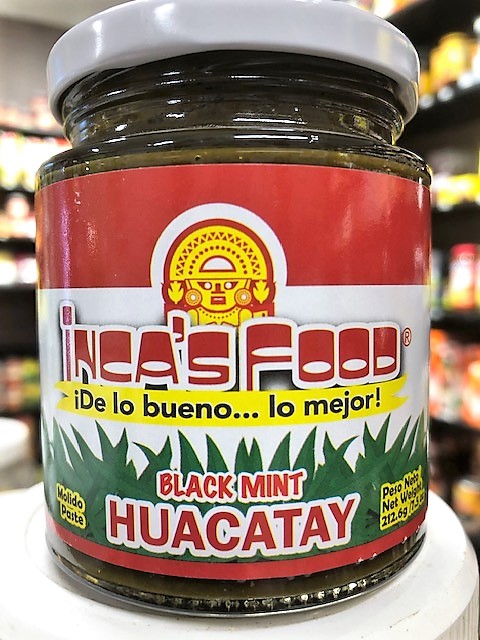
Both can be found in jars (huacatay and chincho that is) but it is much easier to find huacatay than it is chincho
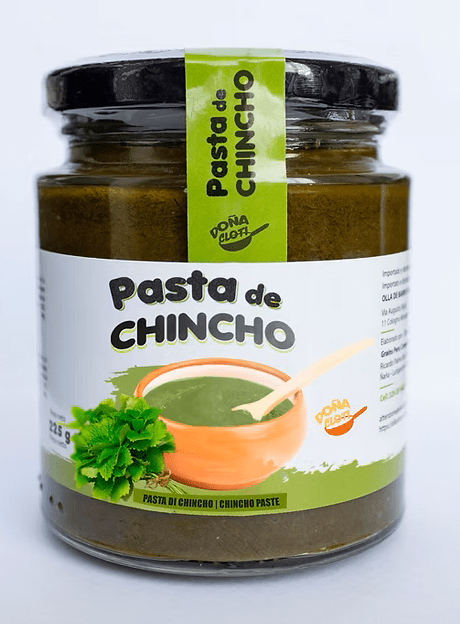
In the Huànuco region chincho is used to make a marinade for various cuts of meat used for pachamanca (1)
- Pachamanca is a traditional Andean Peruvian feast, meaning “earth pot,” where marinated meats and vegetables (potatoes, corn, beans) are cooked in an earthen oven known as a huatia, using super-heated stones, creating a smoky, tender, and flavourful meal, often for celebrations honouring Mother Earth (Pachamama). It is generally made of lamb, mutton, alpaca, llama, guanaco, vicuna, pork, beef, chicken, or guinea pig, marinated in herbs and spices. The food is layered with hot stones, covered with leaves and soil, and slow-baked in an underground oven, resulting in a unique, communal dining experience with cultural significance.
The term “pachamanca” comes from the Quechua words “pacha” , which means “earth” and “manka” , which means “pot”; roughly translating to “earth pot”. In the Aymara language the term “manca” or “mankha” means “food”, so an alternative meaning is “food of the land”.
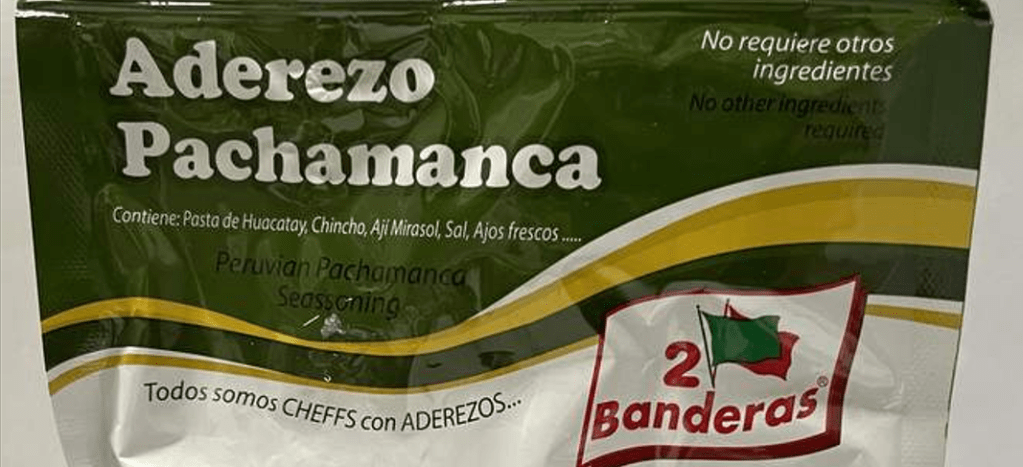
You can purchase your pachamanca herbs already prepared.
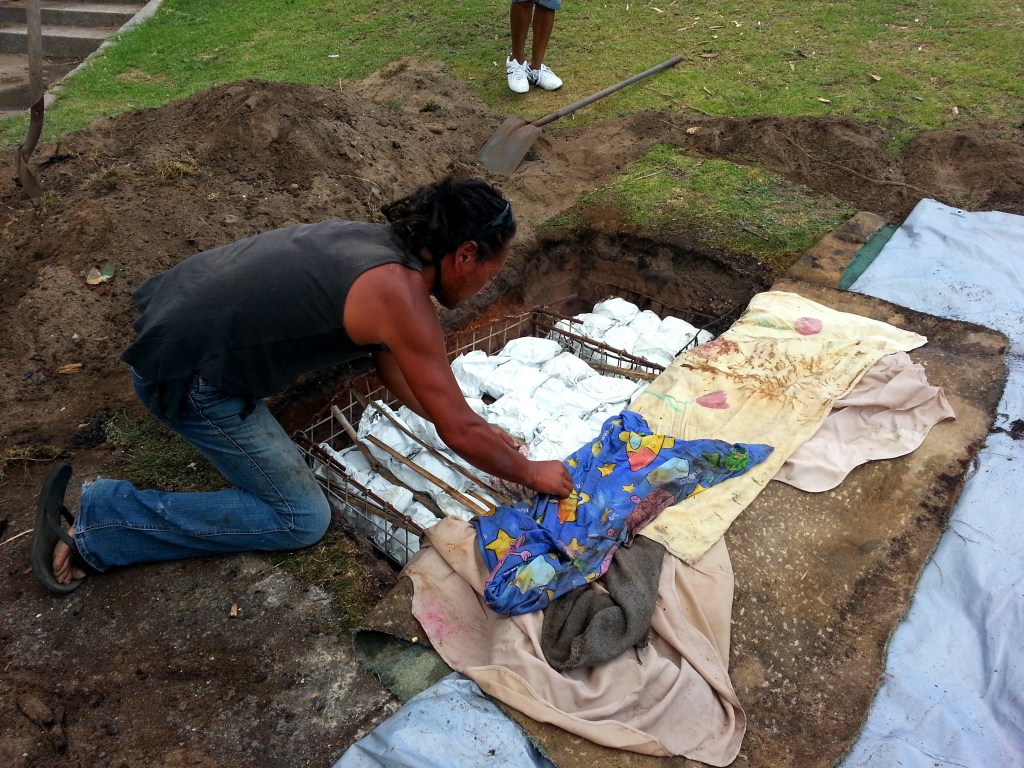
Pachamanca is cooked in an underground earth oven much in the same manner as the Mayan pib or the Māori hangi.
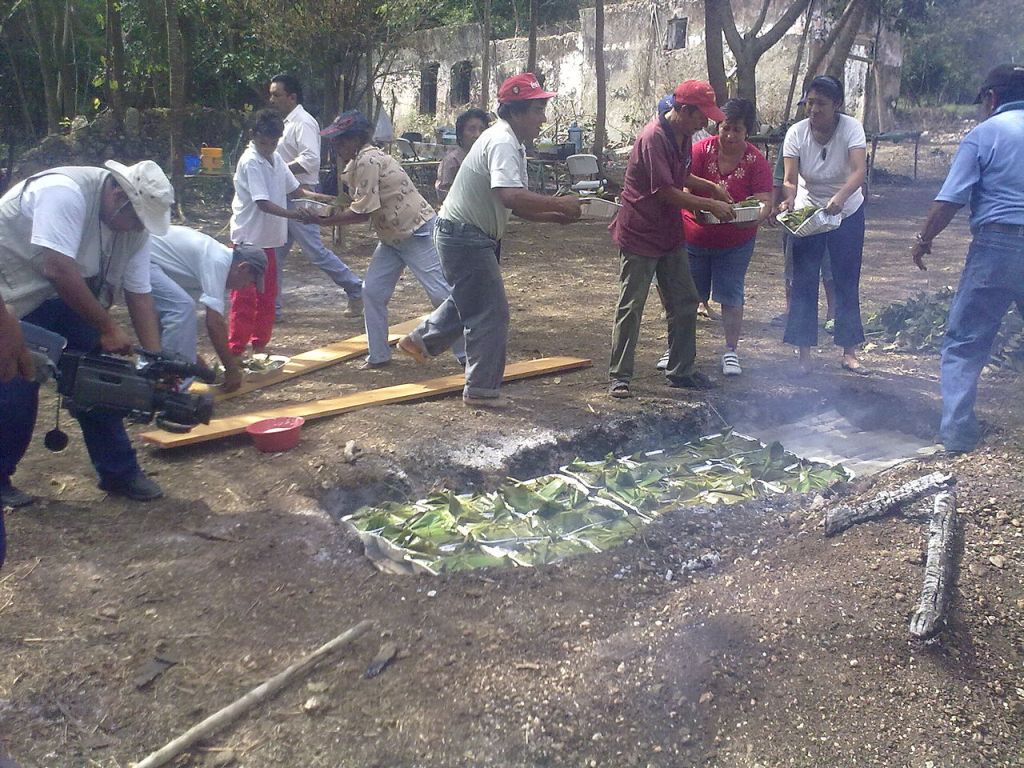
Part of this culinary custom is that of community
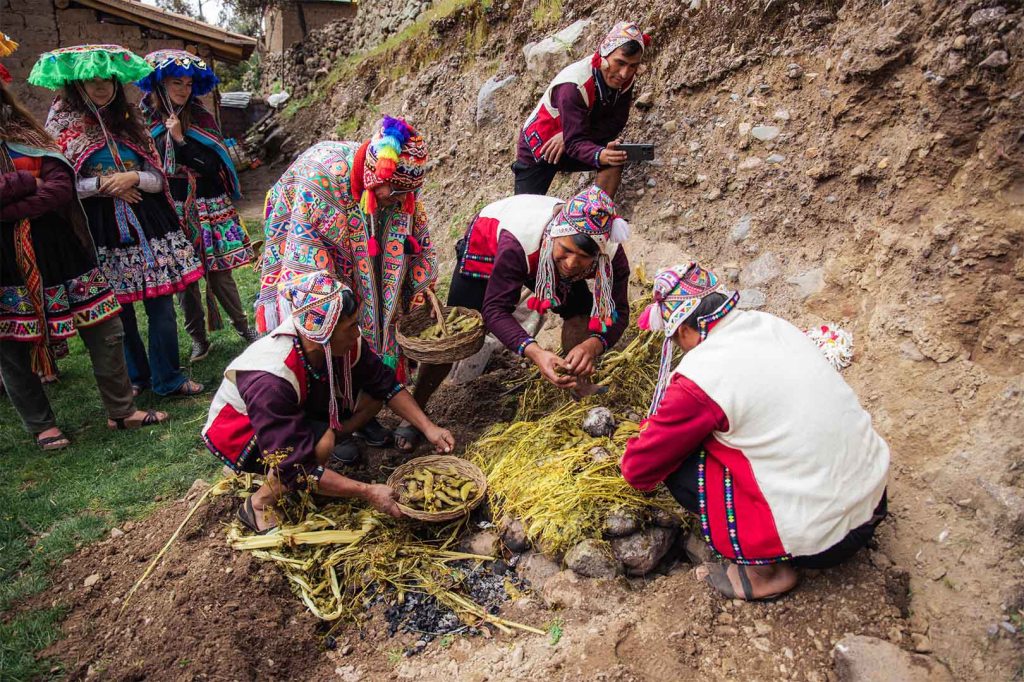
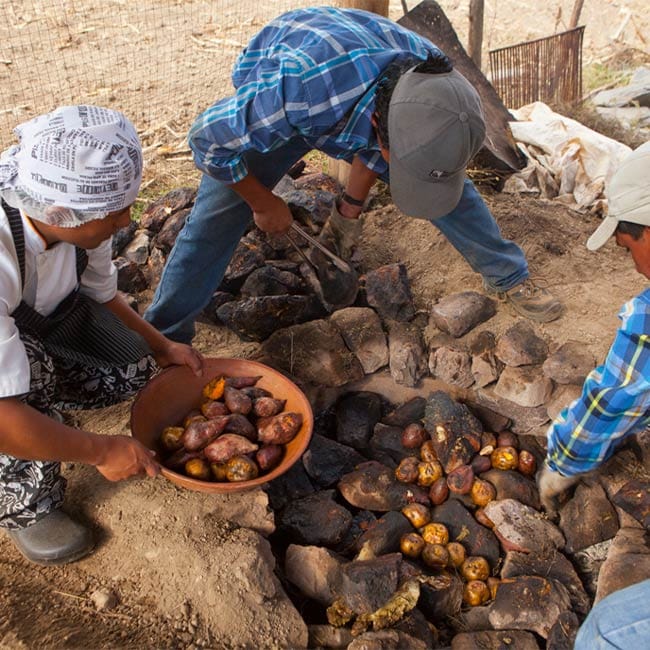
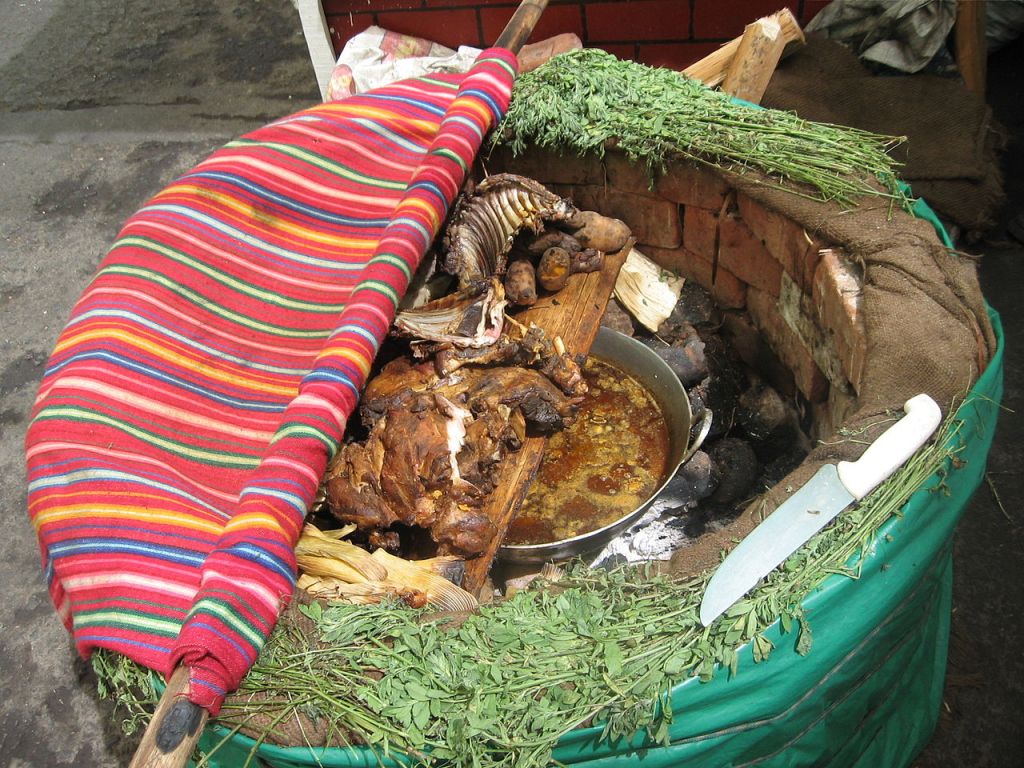
Preparation for pachamanca begins by digging a hole and then heating stones over a fire (only volcanic stones will do as they can withstand the intense heat without breaking).
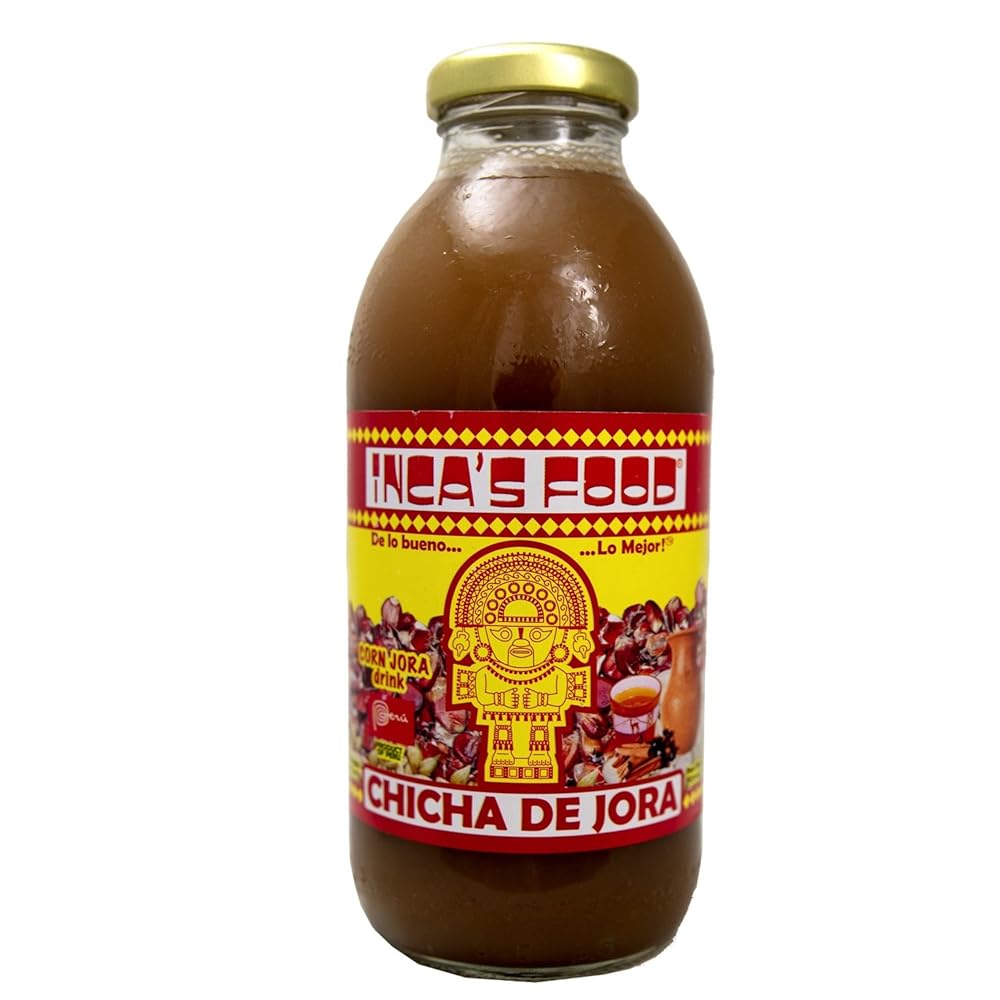
Marinate your choice of meat (chicken, pork, beef, lamb, goat) well with spices and herbs like huacatay and chincho, hot peppers (ají), cumin, chicha (1), garlic and salt.
- chicha de jora (fermented corn beer)
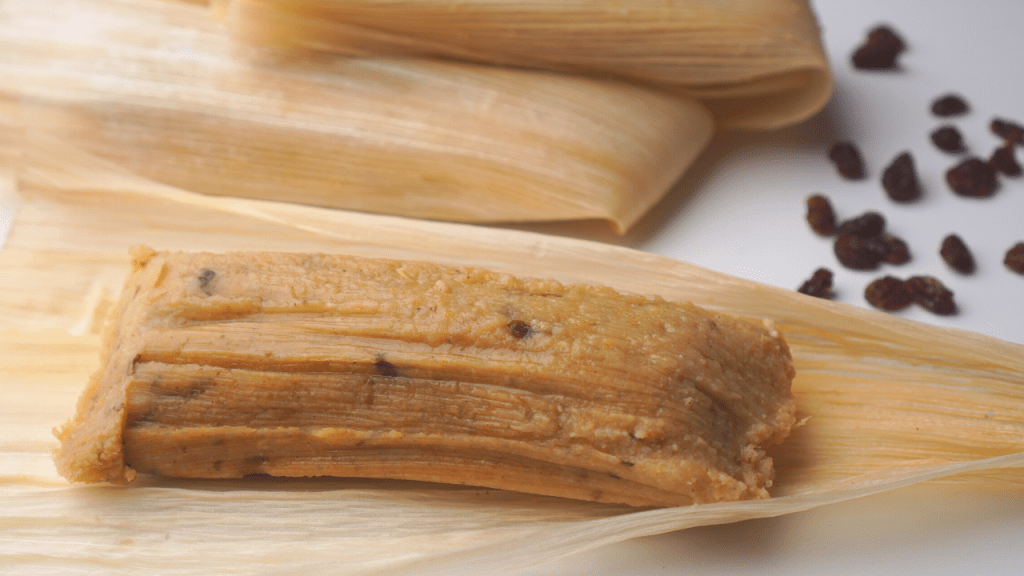
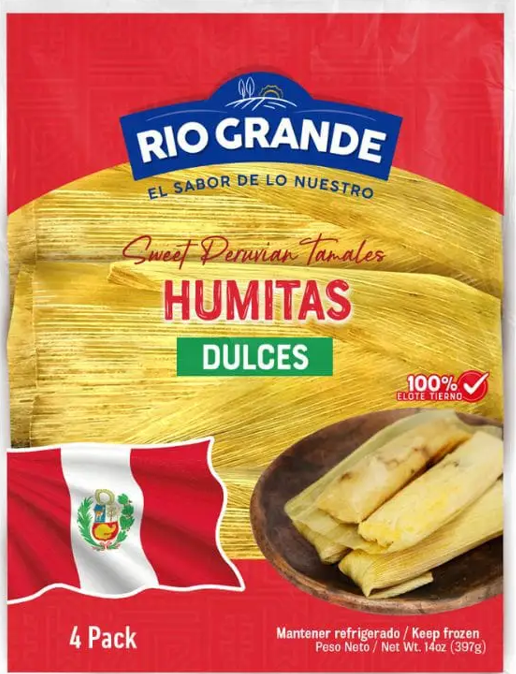
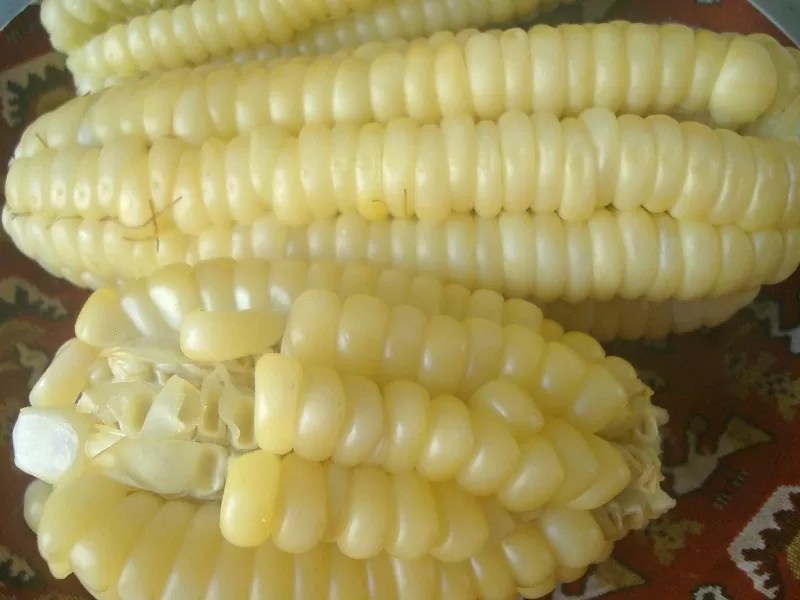
You’ll then need to soak fava beans, corn and what will be your dessert (if you’re having it) (1) in some in water. This soaking will keep them from scorching whilst cooking.
- i.e. sweet humitas. Humitas are made by grounding choclo corn with milk, butter and sugar until it becomes a thick, coarse paste. Humitas are packed with sweet raisins and flavoured with vanilla and cinnamon and then wrapped tightly in corn husks and steamed until tender.
When the stones are hot enough, they are placed inside the hole, lining it to create an underground oven.
Now it’s time to load the oven in a specific order: the toughest and longest cooking ingredients such as potatoes and cassava are placed at the bottom, followed by more hot stones; next up layer on the meat, and a layer of damp banana leaves are then added to trap heat and to aid steaming. On top of these are placed the remaining ingredients: the fava beans, corn (choclo) and humitas.
The food is then covered with a few more herbs for good measure, more damp banana leaves, some burlap cloth, and finally carefully concealed with a couple of inches of soil. The oven then remains closed for 2 – 4 hours allowing the contents to cook slowly.
Here is a somewhat simpler recipe (requires no earth oven) and it retains key Peruvian flavours such as chincho, aji amarillo and chicha de jora.
Chancho al Chincho (Peruvian Pork with Chincho)
This dish involves searing pork, cooking it with a blend of herbs (including chincho), and serving it with potatoes.
Ingredients:
- Pork: 1-2 kg of pork (tenderloin or ribs), cut into medium pieces.
The Chincho Paste:
- 1 cup fresh Chincho leaves (if unavailable, huacatay can be substituted, though the flavor will differ).
- 1/2 cup coriander (cilantro) leaves.
- 3-4 garlic cloves.
- 1 tbsp aji amarillo paste (Peruvian yellow pepper paste).
- 1 onion, chopped.
- Small amount of water or chicha de jora (corn beer) to blend.
- Seasoning: Salt, pepper, and cumin to taste.
Method
- Thoroughly wash and clean the chincho and cilantro leaves, removing tough stems.
- Blend the chincho, coriander, garlic, onions, and aji amarillo paste with a little water (or chicha) until it forms a thick green paste.
- In a large pot or frying pan, sear the pork pieces on all sides until golden brown. You may not need extra oil if the pork is fatty.
- Add the blended green paste to the pork. Season with salt, pepper, and cumin.
- Cover the pot and simmer over low heat until the pork is tender and cooked through (approximately 45-60 minutes).
Serve: Serve with potatoes and a side of fresh salsa criolla if desired.
Medicinal Uses
Other than its use in cooking, chincho, like may of its relatives, is used in other fields. The plant is used as a traditional method for repelling insects (including in agriculture) and to obtain essential oils used for medicinal purposes. Tagetes elliptica is valued in traditional medicine for its wide range of therapeutic applications, from internal use to treat digestive disorders and infections, to topical applications for improving skin conditions .
Antioxidant properties: Thanks to the presence of vitamin C and flavonoids , chincho acts as a strong natural antioxidant, helping to neutralize free radicals and strengthen the immune system. The essential oil could also be considered a safe and eco-friendly alternative to synthetic antioxidants and antimicrobial agents in the food industry.(Cerrón-Mercado et al 2023)
Antibacterial properties: Tagetes elliptica essential oil has been shown to be effective against bacteria such as Staphylococcus aureus , Staphylococcus epidermidis , Bacillus subtilis , Escherichia coli , and Pseudomonas aeruginosa. (Cerrón-Mercado et al 2023) This makes it a valuable resource for the treatment and prevention of infections.The mechanism of action of essential oils obtained from plants of the genus Tagetes is still largely unknown. It was noted in one study on the essential oil of Tagetes elliptica (Cerrón-Mercado et al 2023) that “T. elliptica essential oil was more effective against Gram-positive bacteria when compared to Gram-negative.” This is interesting. Several studies on the antibacterial properties of essential oils obtained from plants of the genus Tagetes, as well as other plant species, have commonly reported that the Gram-positive bacteria were more susceptible to the effects of essential oils in comparison to Gram-negative bacteria due to the fact that the Gram-negative bacteria have an outer membrane that restricts the diffusion of hydrophobic substances (Shirazi et al 2014) (Abdoul-Latif et al 2022) (Gourich et al 2022)
Tagetes elliptica is recognized for its high content of volatile essential oil (approx. 0.23% w/w yield on a fresh weight basis).
Main Compounds: The essential oil is rich in acyclic monoterpene ketones, with the primary constituents being:
- cis-Tagetenone (37.27%)
- trans-Tagetenone (18.84%)
- Dihydrotagetone (14.38%)
- trans-Tagetone (5.15%)
Other Compounds: The oil also contains β-myrcene, β-trans-ocimene, and β-caryophyllene.
Flavonoids: Identified flavonoids in the aerial parts include patuletin, quercetin, quercetagetin, and various isorhamnetin glycoside
See Essential Oil Properties for more information on the medicinal actions of these phytochemicals
Insecticidal and antiparasitic properties: It has shown effectiveness as a biological control agent against trypanosomiasis and nematodes, giving it a relevant role in both medicine and organic agriculture.
Digestive effects: Traditionally, chincho is used to treat digestive disorders, relieve colic, improve digestion, and stimulate appetite.
Antifungal effects: It has activity against fungi such as Candida albicans and Aspergillus spp., so it is used as an aid in the relief of fungal infections of the skin and mucous membranes.
Relief from skin conditions: Applying diluted (1) chincho oil helps improve skin problems such as acne, pimples, and blackheads .
- Diluted is the key. WARNING : Similar to other Tagetes species, the essential oil of this plant can be a potential dermal irritant and should be used with caution, ideally in low concentrations. Essential oils are highly concentrated substances. They are MUCH stronger that the herb itself and can be irritating or even potentially outright poisonous. See Essential Oil Properties for more on the dangers (and benefits) of these oils
Bussman & Glenn (2010) give instructions on how the herb is used (either alone or in combination) to treat colds and bronchitis in Peru. They identify the herb Tagetes elliptica, where locally it was called Culantrillo serrano.
The whole plant is used, either fresh or dried.
50 g (1) of the plant and 1 cup of water and boil for 5 minutes. Drink cold, 1/4 cup a day for 8 days.
- in another book Bussman (2015) gives the formula as “5g of the plant in 1 cup of water boiled for 5 minutes”. This is a considerable difference. I think 5g to be correct as 50g is a HUGE amount of herb for a standard 250ml infusion.
Alternatively you could combine it with……
Boil 1 L water, then add 10 g Apio Cimarron (Apium graveolens) . Combine with Manzanilla, Mejorana, and Culantrillo. Drink 4 cups per day for 1 week.
References
- Abdoul-Latif F.M., Elmi A., Merito A., Nour M., Risler A., Ainane A., Bignon J., Ainane T. Essential oils of Tagetes minuta and Lavandula coronopifolia from Djibouti: Chemical composition, antibacterial activity and cytotoxic activity against various human cancer cell lines. Int. J. Plant Biol. 2022;13:315–329. doi: 10.3390/ijpb13030026.
- Alonso-Castro AJ, Domínguez F, Ruiz-Padilla AJ, Campos-Xolalpa N, Zapata-Morales JR, Carranza-Alvarez C, Maldonado-Miranda JJ. Medicinal Plants from North and Central America and the Caribbean Considered Toxic for Humans: The Other Side of the Coin. Evid Based Complement Alternat Med. 2017;2017:9439868. doi: 10.1155/2017/9439868. Epub 2017 Nov 2. PMID: 29234446; PMCID: PMC5688365.
- Bussmann, Rainer W.; Glenn, Ashley (2010) Medicinal plants used in Peru for the treatment of respiratory disorders Revista Peruana de Biología, vol. 17, núm. 3, diciembre, 2010, pp. 331-346 Universidad Nacional Mayor de San Marcos Lima, Perú. Revista Peruana de Biología ISSN: 1561-0837
- Bussmann, Rainer & Sharon, Douglas. (2015). PLANTAS MEDICINALES DE LOS ANDES Y LA AMAZONIA – La Flora mágica y medicinal del Norte del Perú. 10.13140/RG.2.1.3485.0962.
- Cerrón-Mercado F, Salva-Ruíz BK, Nolazco-Cama D, Espinoza-Silva C, Fernández-López J, Pérez-Alvarez JA, Viuda-Martos M. Development of Chincho (Tagetes elliptica Sm.) Essential Oil Organogel Nanoparticles through Ionic Gelation and Process Optimization with Box-Behnken Design. Gels. 2022 Dec 11;8(12):815. doi: 10.3390/gels8120815. PMID: 36547339; PMCID: PMC9777601.
- Cerrón-Mercado, Francis & Pérez-Álvarez, Jose & Nolazco, Diana & Salvá, B. & Tellez Monzón, Lena & Fernández-López, Juana & Viuda-Martos, Manuel. (2023). Chemical Composition, Antioxidant and Antibacterial Activities of Essential Oil Obtained fromChincho (Tagetes elliptica Sm) Leaves Grown in the Peruvian Andes. Foods. 12. 894. 10.3390/foods12040894.
- Delgado-Paredes, Guillermo & Delgado-Rojas, Paulo & Rojas, Consuelo. (2021). Peruvian Medicinal Plants and Cosmopolitan Plants with Potential use in the Treatment of Respiratory Diseases and COVID-19. International Journal of Plant, Animal and Environmental Sciences. 11. 10.26502/ijpaes.202107.
- García, Juan José; Miranda, Gloria , “Andean Gastronomy, on tastes and flavors” , in “Journal of Folkloric Research No. 17” , IFA – Folkloric Research in Argentina, Buenos Aires, Argentina, 2002
- Gourich A.A., Bencheikh N., Bouhrim M., Regragui M., Rhafouri R., Drioiche A., Asbabou A., Remok F., Mouradi A., Addi M., et al. Comparative analysis of the chemical composition and antimicrobial activity of four moroccan north middle atlas medicinal plants’ essential oils: Rosmarinus officinalis L., Mentha pulegium L., Salvia officinalis L., and Thymus zygis subsp. gracilis (Boiss.) R. Morales. Chemistry. 2022;4:1775–1788. doi: 10.3390/chemistry4040115.
- Hurtado Huarcaya, Jose & Castañeda, Roxana & Albàn Castillo, Joaquina. (2021). Asteráceas medicinales en dos comunidades andinas del sur del Perú: Quinua (Ayacucho) y Lircay (Huancavelica). Boletin Latinoamericano y del Caribe de Plantas Medicinales y Aromaticas. 20. 351 – 366. 10.37360/blacpma.21.20.4.26.
- Paniagua-Zambrana, N.Y., Bussmann, R.W., Echeverría, J., Romero, C. (2020). Tagetes elliptica Sm. Tagetes erecta L. Tagetes filifolia Lag. Tagetes minuta L. Tagetes multiflora Kunth Asteraceae. In: Paniagua-Zambrana, N., Bussmann, R. (eds) Ethnobotany of the Andes. Ethnobotany of Mountain Regions. Springer, Cham. https://doi.org/10.1007/978-3-030-28933-1_276
- Shirazi M.T., Gholami H., Kavoosi G., Rowshan V., Tafsiry A. Chemical composition, antioxidant, antimicrobial and cytotoxic activities of Tagetes minuta and Ocimum basilicum essential oils. Food Sci. Nutr. 2014;2:146–155. doi: 10.1002/fsn3.85.
Websites
- Chincho – https://www.fondazioneslowfood.com/en/ark-of-taste-slow-food/chincho/
- Morgan, Lily (2026) 5 Unexpected Spices That Will Take Your Peruvian Dishes From Boring To Brilliant – https://www.alibaba.com/product-insights/5-unexpected-spices-that-will-take-your-peruvian-dishes-from-boring-to-brilliant.html
- Tagetes elliptica (Chincho): Propiedades medicinales, usos tradicionales y su cultivo en los Andes – https://www.jardineriaon.com/tagetes-elliptica.html#google_vignette
Images
- Adiantum capillus-veneris – https://www.gardenia.net/plant/adiantum-capillus-veneris
- Chincho deshidratado – https://www.misharastrera.com/producto/chincho/
- Chinco leaf (image) : Investigadores crearán nanocápsulas a partir de chincho para conservar carne de alpaca – https://www.agroperu.pe/investigadores-crearan-nanocapsulas-a-partir-de-chincho-para-conservar-carne-de-alpaca/
- Chincho plant via PatazSostenible.Com on Facebook – https://www.facebook.com/photo/?fbid=1262615605226436&set=pcb.1262615631893100
- Humita (fresh) – https://en.ceciliatupac.com/post/peruvian-humitas-dulces-recipe
- Manojo de chincho via PatazSostenible.Com on Facebook – https://www.facebook.com/photo?fbid=1262615391893124&set=pcb.1262615631893100
- Maori hangi – https://3rdspaceproject.wordpress.com/2015/10/15/a-taste-of-maori-hangi/
- Mayan pib – By Elsabordecampeche – Own work, CC BY-SA 3.0, https://commons.wikimedia.org/w/index.php?curid=29202809 – https://en.wikipedia.org/wiki/P%C3%ADib#/media/File:Enterrando_los_pibipollos.jpg
- Pachamanca 1 – https://trexperienceperu.com/blog/pachamanca
- Pachamanca 2 – https://curios.place/things-to-do/peru/pachamanca-mother-earth-cooking-in-ollantaytambo/
- Pachamanca 3 – By Javi270270 – Own work, CC BY-SA 3.0, https://commons.wikimedia.org/w/index.php?curid=3877456 – https://en.wikipedia.org/wiki/Pachamanca#/media/File:Pachamanca_Peru.JPG
- Scoparia dulcis – https://www.wildflower.org/gallery/result.php?id_image=46833
- Tagetes elliptica (Botanical specimen) – https://powo.science.kew.org/taxon/urn:lsid:ipni.org:names:252090-1
- Tagetes elliptica flower – https://www.kraeuter-und-duftpflanzen.de/pflanzen-saatgut/tagetes-tuberose/tagetes/chincho-wuerztagetes-pflanze
- Tagetes elliptica leaf close up – La Esperanza, Oxapampa https://www.inaturalist.org/observations/109412947
- Tagetes minuta leaf : Image by Harry Rose via flickr – https://www.flickr.com/photos/macleaygrassman/16189161970/
- Tagetes multiflora – https://identify.plantnet.org/k-world-flora/species/Tagetes%20multiflora%20Kunth/data
- Zanthoxylum fagara -https://www.flawildflowers.org/flower-friday-zanthoxylum-fagara/
 Masa Americana

