
Bajacalia
Bajacalia is a genus of three species of perennial flowering plants in the family Asteraceae (1), native primarily to the Baja California peninsula in northwestern Mexico. The genus name derives from “Baja California,” reflecting the restricted range of its species in that region.(Loockerman et al 2003)
- the “daisy” Family. Papalo (Porophyllum) is in the same Family
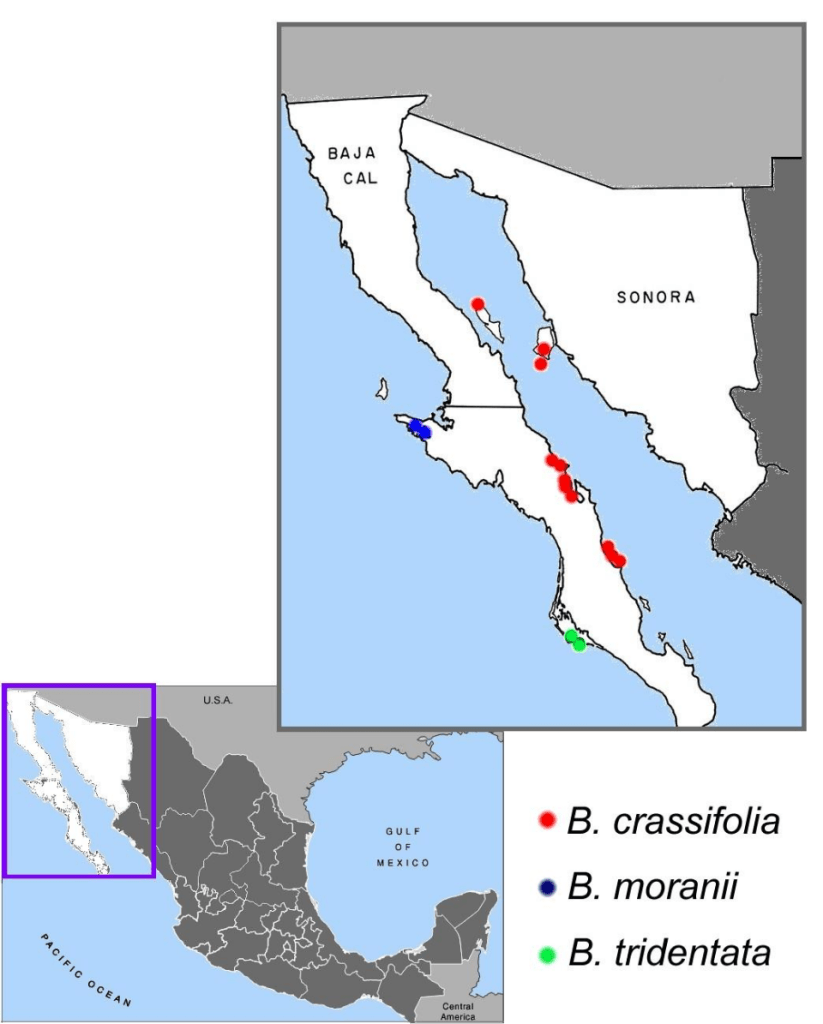
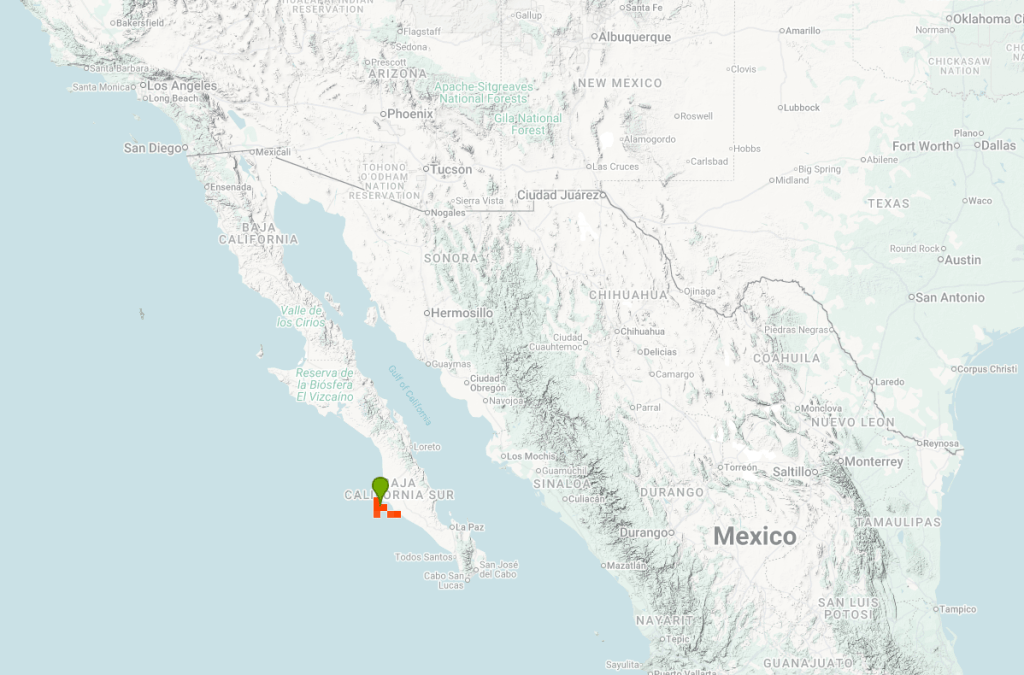
Geographic distribution of Bajacalia : Gulf coast of Baja California Sur, Isla Ángel de la Guarda, and three Sonoran islands; not on the Sonora mainland. (Wilder et al 2009)
The genus Bajacalia was erected in 2003 (1) by D. J. Loockerman, B. L. Turner, and R. K. Jansen in the journal Systematic Botany to distinguish succulent taxa (2) previously included in Porophyllum based on phylogenetic evidence (3).
- “To erect a genus” in taxonomy means to formally establish or define a new, distinct grouping for closely related species based on unique, shared characteristics. This process requires publishing a description, choosing a type species, and providing evidence that the new genus is unique in time or location.
- succulent taxa formerly or closely associated with Porophyllum (tribe Tageteae, Asteraceae) are increasingly being re-evaluated to distinguish distinct evolutionary lineages from non-succulent, typically herbaceous Porophyllum species. Phylogenetic evidence, often derived from ITS and cpDNA sequence data, indicates that the succulent life form in this group represents a distinct, often specialized, evolutionary trajectory.
- Phylogenetics is the study of evolutionary relationships among biological entities (species, individuals, or genes) based on shared ancestry. It uses molecular data (DNA/protein sequences) and morphological characteristics to reconstruct evolutionary history, often depicted in a branching diagram called a phylogenetic tree. A phylogenetic tree is a branching diagram representing the evolutionary relationships and history among various biological species, organisms, or genes based on shared ancestry. These trees act as hypotheses showing how lineages diverged over time from common ancestors.
Phylogenetic Tree of the Porophyllums
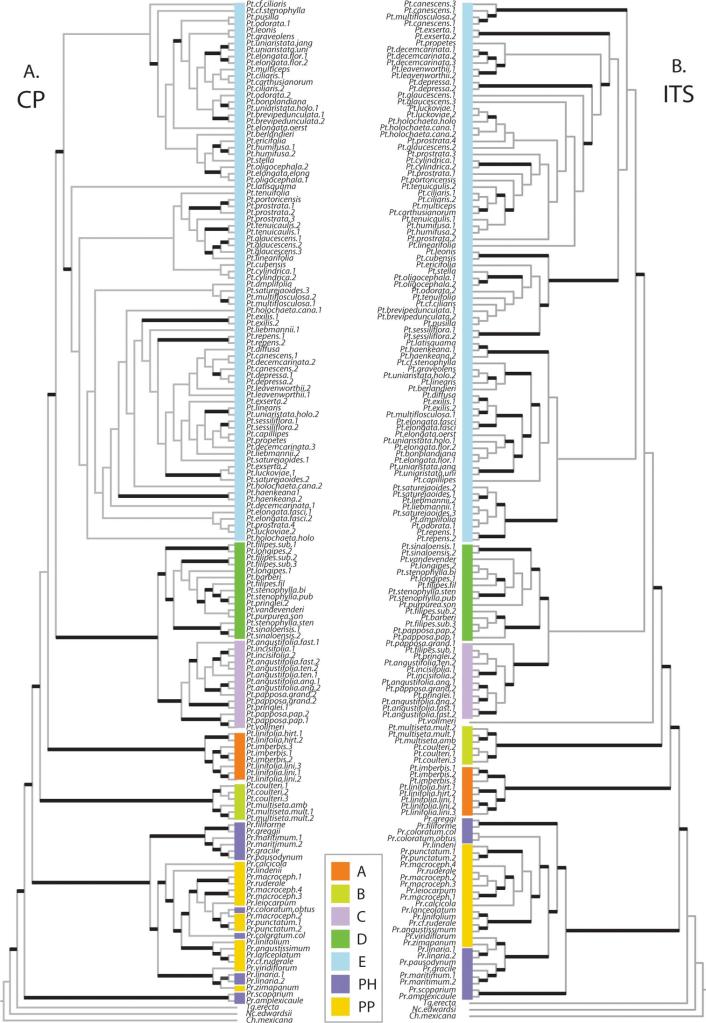
Molecular Phylogeny of Pectis (Tageteae, Asteraceae), a C4 Genus of the Neotropics, and its Sister Genus Porophyllum (Hansen et al 2016)
In this revision of the Porophyllums, two species—Bajacalia crassifolia (formerly Porophyllum crassifolium) and Bajacalia tridentata (formerly Porophyllum tridentatum)—were erected to the new genus, while Bajacalia moranii was newly described.
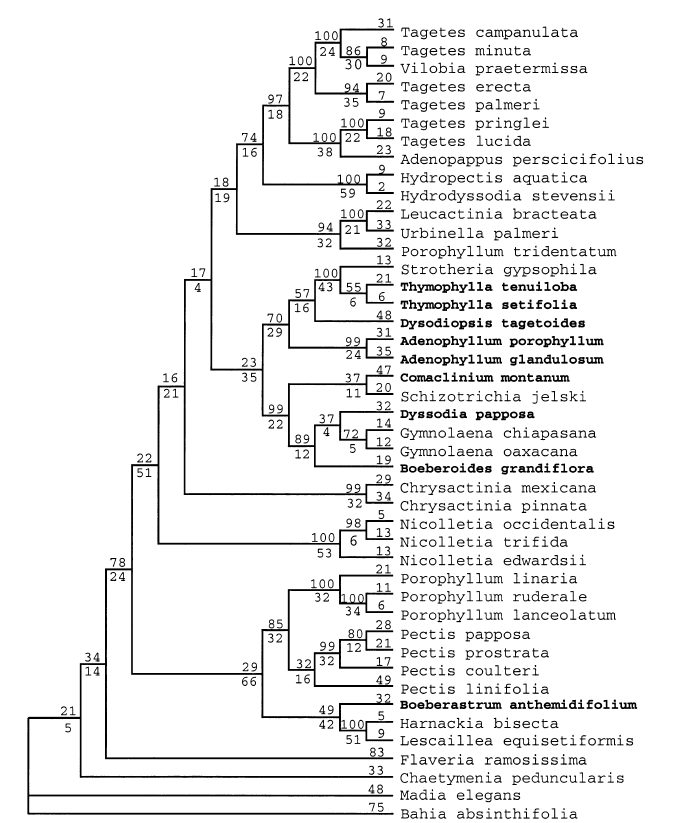
Bajacalia was segregated from the larger genus Porophyllum to better reflect evolutionary relationships within the tribe Tageteae. (Loockerman et al 2003)
Bajacalia crassifolia
Synonyms
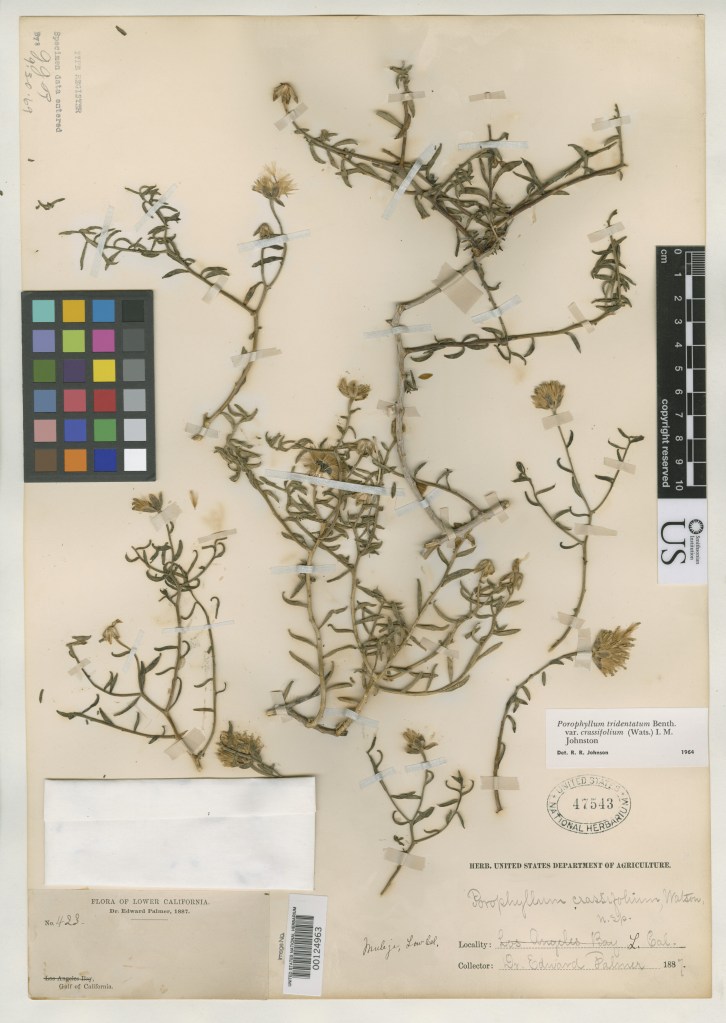
Basionym (1): Porophyllum crassifolium S.Watson, Proc. Amer. Acad. Arts 24: 57 (1889).
Homotypic (2): Porophyllum tridentatum var. crassifolium (S.Watson) I.M.Johnst., Proc. Calif. Acad. Sci., ser. 4, 12: 1211 (1924).
Heterotypic (3): Porophyllum leptophyllum I.M.Johnst., Proc. Calif. Acad. Sci., ser. 4, 12: 1210 (1924).
- Basionym – A basionym (or base name) is the earliest, validly published scientific name of a plant, fungus, or animal species that serves as the basis for a new name, usually following a transfer to a different genus or rank. It retains the original, priority-holding epithet, which is then combined with the new genus name (e.g., Pinus abies to Picea abies).
- Homotypic – homotypic (or nomenclatural) synonyms are different scientific names for the same plant taxon that share the exact same type specimen. Often created when a species is moved to a new genus or reclassified, these objective synonyms reflect nomenclatural updates rather than taxonomic opinions, such as transferring Achnanthes minutissima to Achnanthidium minutissimum. They are also known as nomenclatural synonyms or objective synonyms, signifying they are based on the same type.
- Heterotypic – heterotypic (or taxonomic) synonyms are different names applied to the same taxon based on different type specimens. These represent scientific opinions that separate taxa are actually the same, with one name accepted and the others synonymized, often marked with a “=” sign. Unlike homotypic synonyms, heterotypic synonyms are based on distinct types (e.g., different specimens or holotypes (4).
- Holotype – a holotype is the single, physical plant specimen (or, rarely, an illustration) explicitly designated by the original author to serve as the definitive, name-bearing representative when a new taxon (species or lower) is published. It acts as the permanent, primary reference for that species name, usually housed in a recognized herbarium, with duplicates known as isotypes (5).
- Isotype – In botany, an isotype is a duplicate specimen of the holotype, representing the same plant or organism collected by the same person, from the same locality, on the same date. It serves as crucial backup material for taxonomists if the original holotype is lost, destroyed, or damaged. Isotypes are often deposited in different herbaria (as duplicates) to allow for broader access and research.
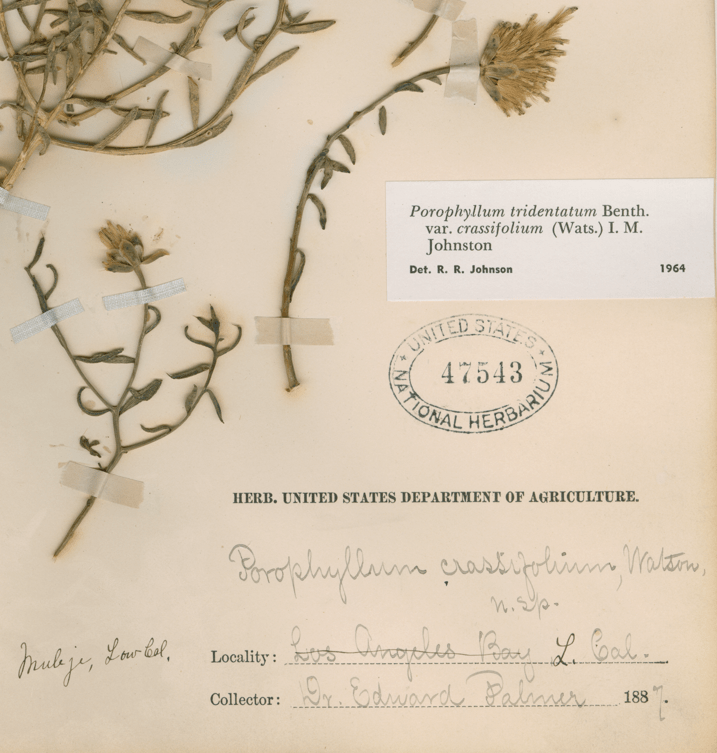
Bajacalia crassifolia, formerly known as Porophyllum crassifolium S. Watson (1889), was transferred to the genus Bajacalia in 2003 based on molecular and morphological evidence distinguishing it from other Porophyllum species. This perennial subshrub is characterized by its thick, succulent leaves, which measure up to 10 cm long and are the broadest among species in the genus. These leaves aid in water storage, vital for survival in the arid environment of Baja California.(Wilder et al 2009)
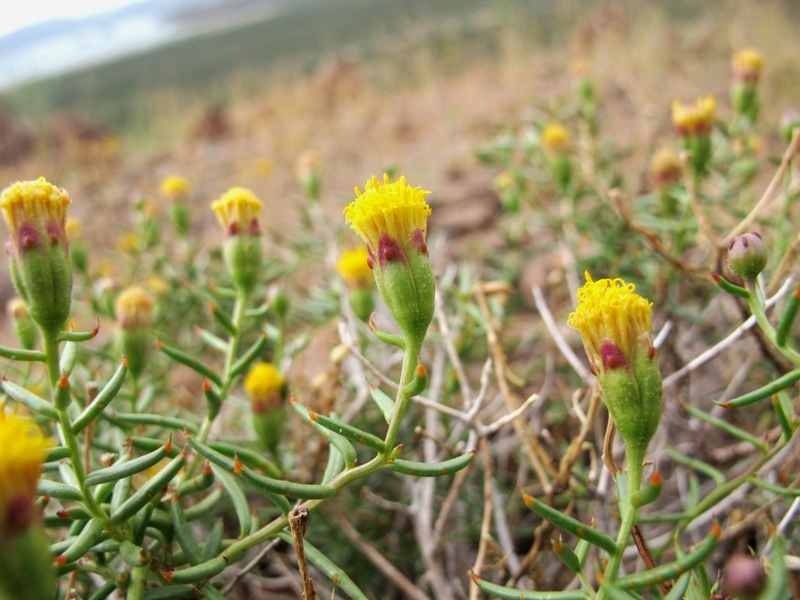
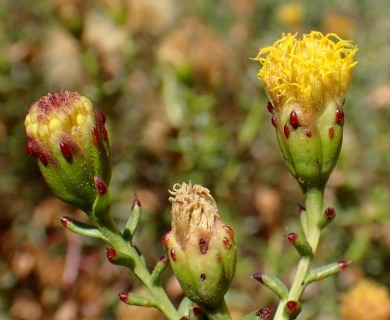
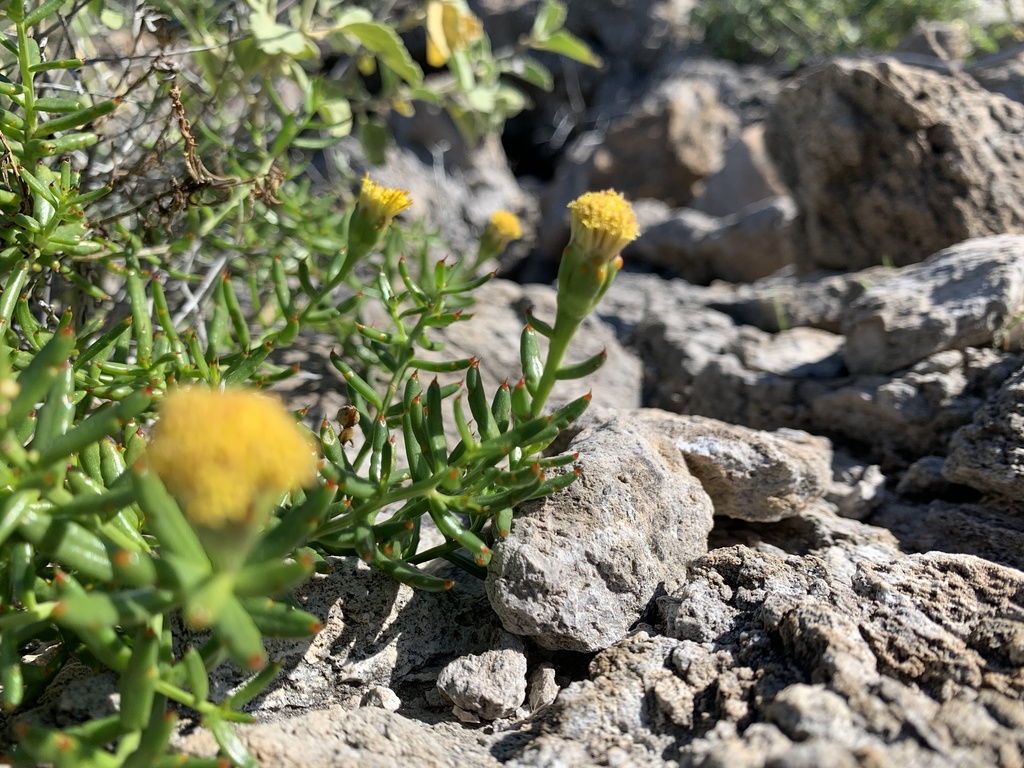
Bajacalia crassifolia. Note the red glands on the phyllaries and leaf tips. The leaves are succulent & glandular, with a pungent odour.
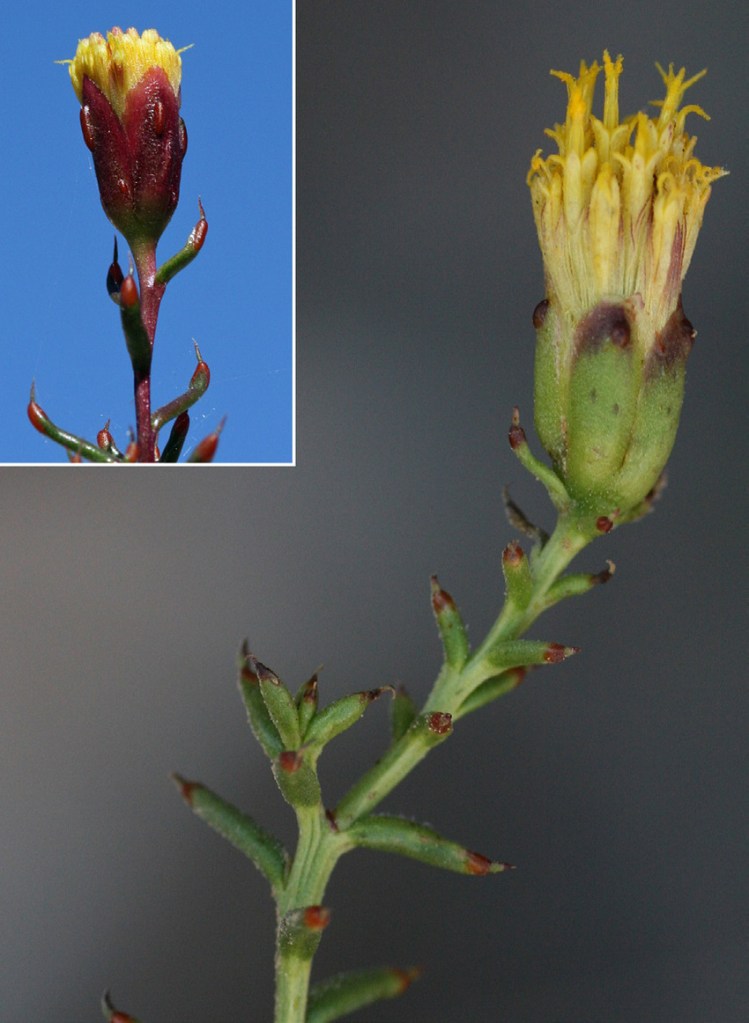
The flowers are very similar in form and construction to those of the Porophyllums. One can see how they’d be related.
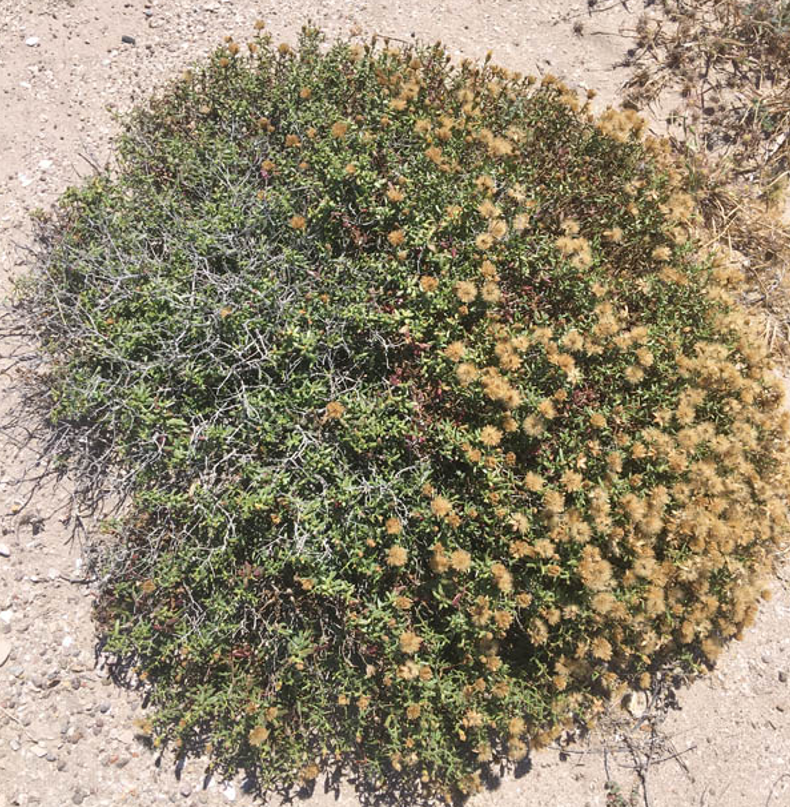
Bajacalia crassifolia with blown heads on right, the leeward side. Very few flowers on the windward side. (Las Ecomujeres)
Bajacalia tridentata
Synonyms
Basionym : Porophyllum tridentatum Benth., Bot. Voy. Sulphur: 30 (1844).
Bajacalia tridentata (Benth.) Loockerman, B.L. Turner & R.K. Jansen is the type species of the genus Bajacalia, originally described as Porophyllum tridentatum Benth. in 1844 based on collections from Baja California (1). The transfer to Bajacalia occurred in 2003 following phylogenetic analyses that demonstrated the polyphyly of Porophyllum and supported the segregation of this species into a distinct genus within the tribe Tageteae of Asteraceae. (Rebman et al 2016)
- P. crassifolium and P. tridentatum are still considered separate species by some authorities (Shreve and Wiggins, 1964) even though Johnston, as early as 1924, stated that when the two are compared “relations are so obvious that a mere unit leaf-difference does not seem sufficient reason for keeping them distinct.” I also found this to be the only consistent difference between the taxa and must agree with Johnston. On the other hand, Johnston (1924) named a new species (P. leptophyllum) to the north of P. tridentatum var. crassifolium which supposedly had smaller leaves, smaller heads, and fewer flowers than P. tridentatum var. crassifolium. However, some specimens that I examined (from Tiburon Island), called P. leptophyllum by Johnston, had the small leaves that he ascribed to P. leptophyllum with the large heads typical of P. tridentatum var. crassifolium (sensu Johnston) and 30 to 40 flowers, rather than 25 to 30 flowers, as Johnston had reported. Thus, criteria that he used for the differentiation between P.tridentatum var. crassifolium and P. leptophyllum are not valid. Evidence based on morphology, ecology and flowering time indicate that all of the specimens from eastern Baja California and adjacent islands should he included under P. tridentatum var. crassijolium. (Johnson 1969)
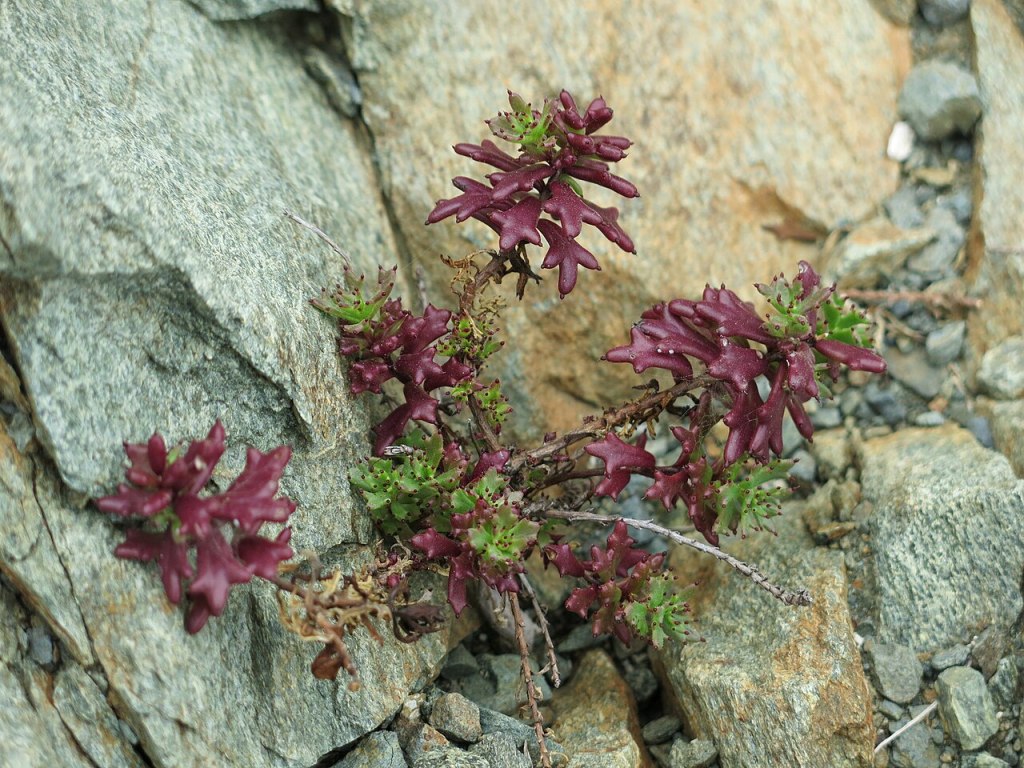
Traditional uses of B. tridentata are minimally documented, with no specific medicinal, resinous, or cultural applications reported in botanical literature, unlike some congeners. (Rebman 2015)
Given that Bajacalia are native succulents in a region with high ethnobotanical (1) usage, caution is advised regarding its edibility without further botanical identification, as many plants in the region are used for medicinal rather than culinary purposes, or are restricted to wildlife consumption.
- Ethnobotany is the interdisciplinary study of the dynamic relationships between people and plants, focusing on how different cultures use, manage, and perceive local flora for food, medicine, shelter, and ritual. It combines botany, anthropology, and pharmacology to document indigenous knowledge, highlighting the cultural significance and practical applications of native plant species.
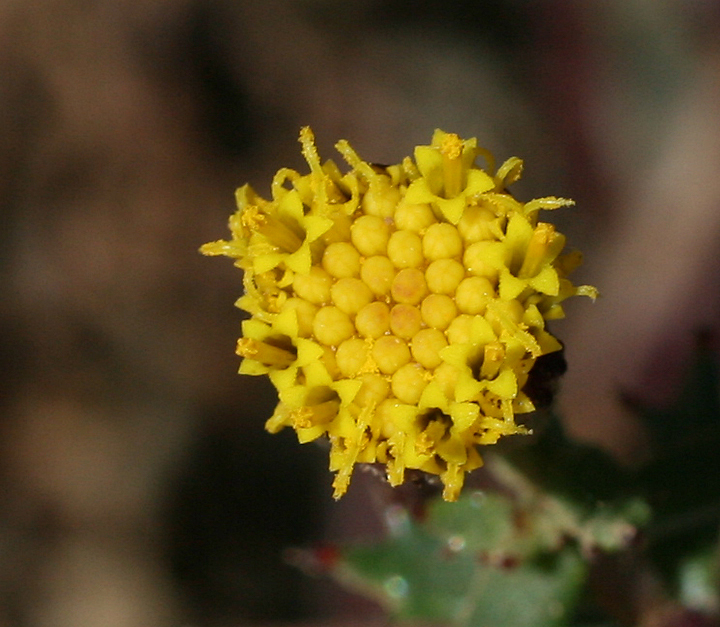
Again, the flowers are very Porophyllum in nature
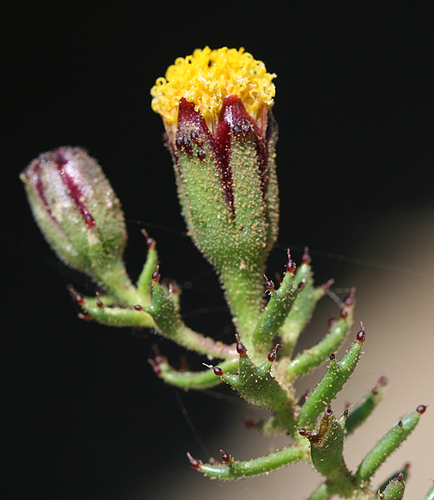
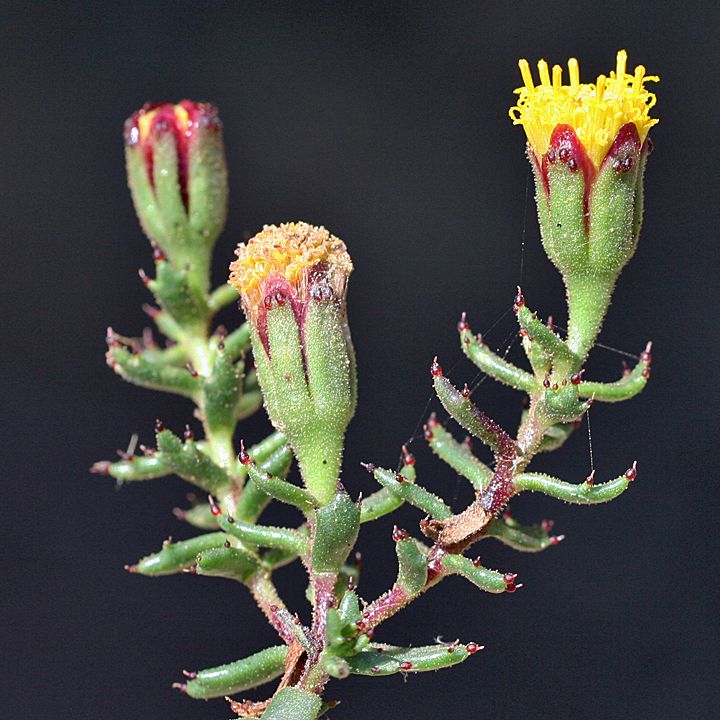
The flowers are also reminiscent of other Papalo adjacent herbs in the Adenophyllum (1) and Dyssodia (2) families
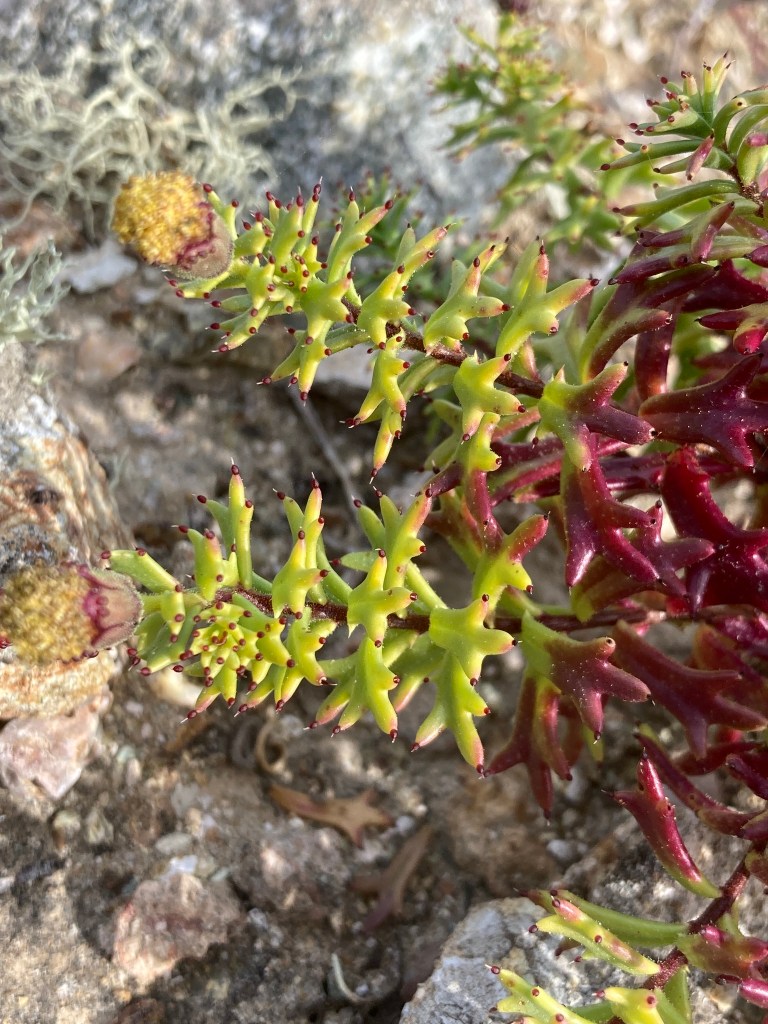
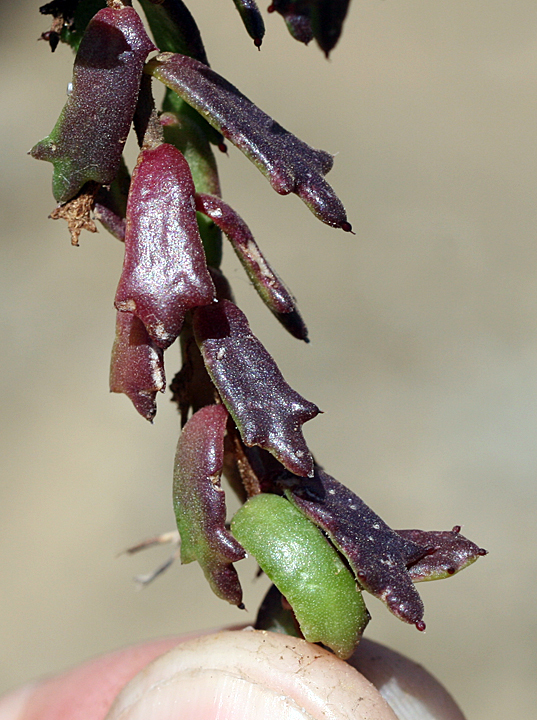
The leaves themselves vary markedly in colour. They are very apparently succulent. No other Papalos are succulent in nature like the Bajacalias.
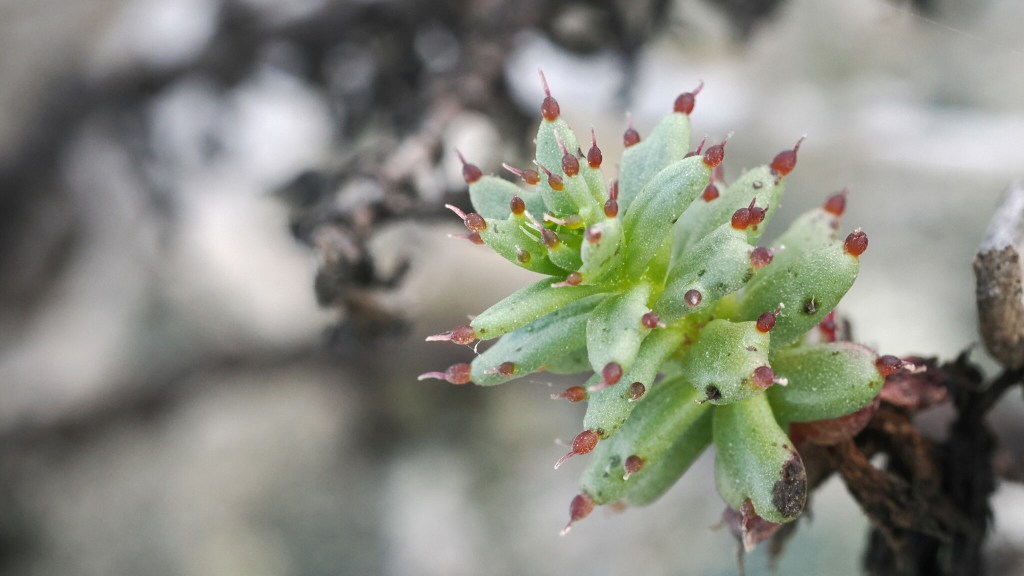
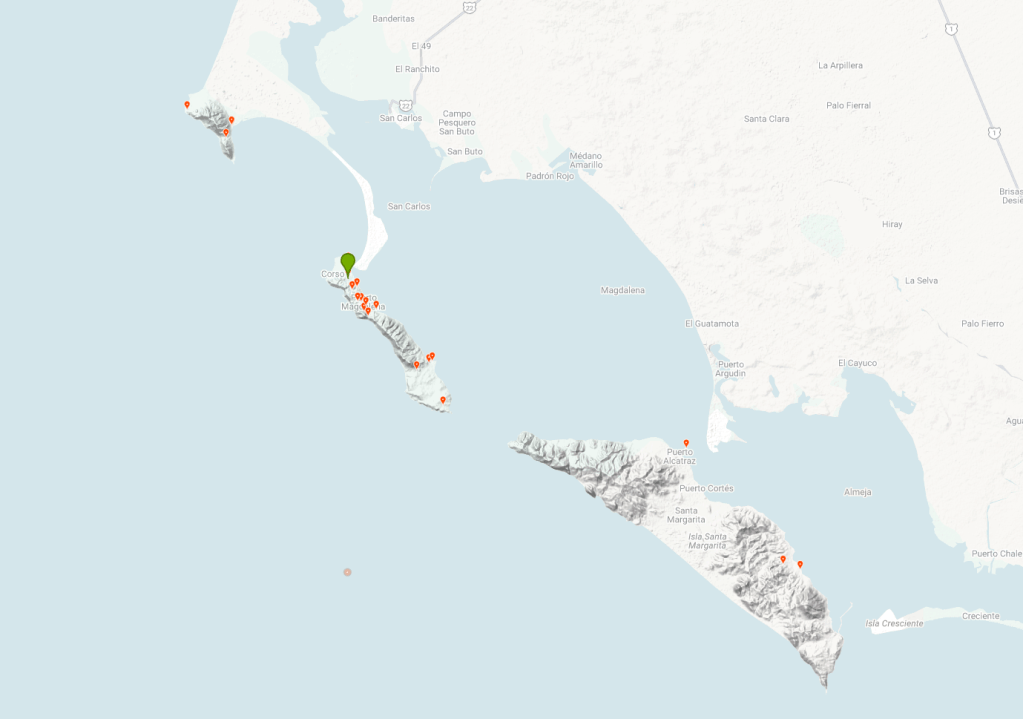
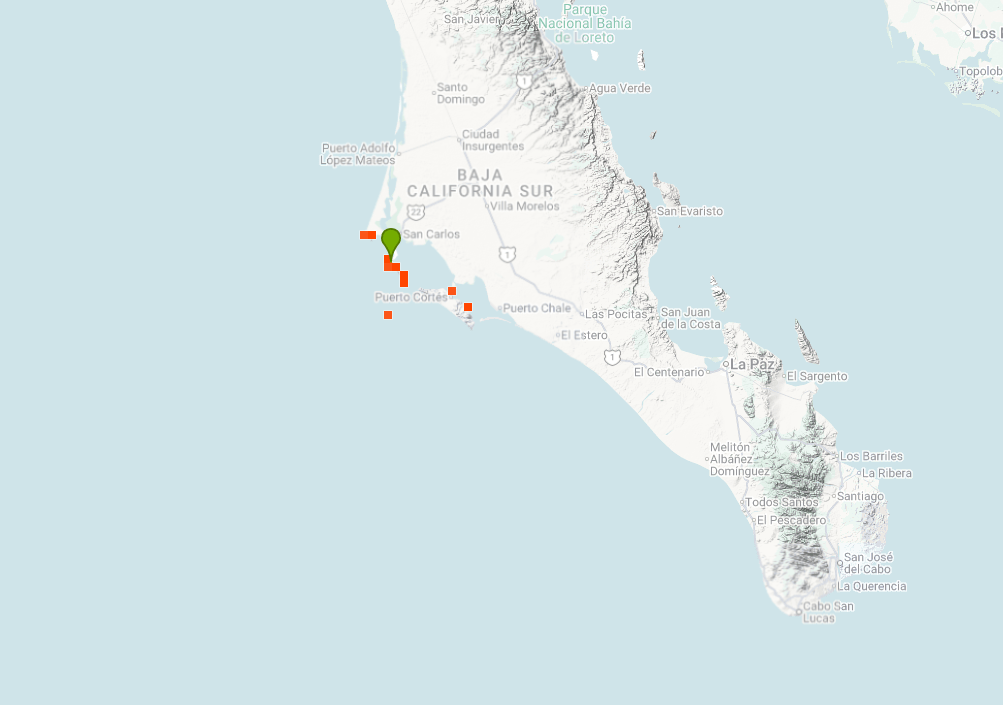
Baja California Sur. The location of altaflava’s encounter with B.tridentata
.
References
- Debra R. Hansen, Robert K. Jansen, Rowan F. Sage, José Luis Villaseñor, Beryl B. Simpson “Molecular Phylogeny of Pectis (Tageteae, Asteraceae), a C4 Genus of the Neotropics, and its Sister Genus Porophyllum,” Lundellia, 19(1), 6-38, (1 December 2016)
- Johnson, R. R. 1969. Univ. Kansas Sci. Bull. 48 : 259. Isolectotype; Original publication and alleged type specimen examined
- Johnson, R. R. (1969). Monograph of the plant genus Porophyllum (Compositae: Helenieae). Univ. Kansas Sci. Bull., 48, 225–267.
- Johnston, I. M. (1924) . Expedition o! the California Academy of Sciences in the Gulf of California in L921. The botany (the vascular plants). Proc. Calif. Acad. Sci Ser -I. 12:951 1218.
- Loockerman, Dennis & Turner, Billie & Jansen, Robert. (2003). Phylogenetic Relationships within the Tageteae (Asteraceae) Based on Nuclear Ribosomal ITS and Chloroplast ndhF Gene Sequences. Systematic Botany. 28. 191-207. 10.1043/0363-6445-28.1.191.
- Palmer, Dr. E. (1887) Collection of plants by Palmer about Guaymas, Mexico at Muleje and Los Angeles Bay in Lower California…” Protologue, “Muleje, on rocky hills and on sandy beaches near salt water; also collected by Dr. Palmer in 1870 on Carmen Island
- Rebman, Jon. (2015). Wenig bekannte sukkulenten von Baja California (Little known succulents of Baja California). Avonia. 33. 28-33.
- Rebman, Jon.P; Gibson, Judy & Rich, Karen (2016) ANNOTATED CHECKLIST OF THE VASCULAR PLANTS OF BAJA CALIFORNIA, MEXICO : PROCEEDINGS of the San Diego Society of Natural History Founded 1874. Number 45 : 15 November 2016
- Shreve, F., and I. L. Wiggins. 1964. Vegetation and flora of the Sonoran Desert. Stanford Univ. Press, Stanford, Calif. 2 vol., 1740 pp.
- Watson, S. 1889. Proc. Amer. Acad. Arts. 24 : 57. Syntype; Original publication and alleged type specimen examined
- Wilder, Benjamin & Felger, Richard & Morales, Humberto. (2009). Succulent Plant Diversity Of the Sonoran Islands, Gulf Of California, Mexico. Haseltonia. 14. 127-160. 10.2985/1070-0048-14.1.127.
Websites
- Bajacalia : Plants of the World Online : Royal Botanical Gardens Kew – https://powo.science.kew.org/taxon/urn:lsid:ipni.org:names:20011741-1
- Notes from South of the Border – Punta Prieta, Mulegé (part 1) — April 3, 2020 – Las Ecomujeres – https://www.lasecomujeres.org/plants/ucbee_2020/may2020.html
Images
- Bajacalia crassifolia (image) – https://wildflowersearch.org/search?name=Bajacalia+crassifolia
- Bajacalia tridentata (image) By taniacota – https://www.inaturalist.org/photos/4414595, CC BY 4.0, https://commons.wikimedia.org/w/index.php?curid=122550228
- Bajacalia tridentata (flower close up) – Isla Magdalena, Comondú Municipality, Baja California : Photo 6474254, (c) jrebman, some rights reserved (CC BY-NC), uploaded by jrebman – https://www.inaturalist.org/photos/6474254
- Bajacalia tridentata (foliage) Image by altaflava – https://www.inaturalist.org/observations/146894756
- P.crassifolium (image) https://www.si.edu/object/porophyllum-crassifolium-s-watson:nmnhbotany_10078241
 Masa Americana