Tequesquite

or tequexquite (from Nahuatl tequixquitl) tetl: stone, and quix-quitl: sprout, sprouting stone. Quixquitl has also been said to translate as “foaming/efflorescent” (1) (Parsons 2001) or “something that comes out by itself, that floats” (algo que sale por sí mismo, que flota). Also called : sal de tierra (land/earth salt), sal de laguna (lagoon salt) Tequesquite is a natural mineral salt containing compounds of sodium chlorate, … Continue reading Tequesquite

Porophyllum amplexicaule

The classification of some porophyllums can be somewhat problematic. Even if we completely discount the confusion over the common names of plants in this family there are still stumbling blocks present even in the Latin binomial nomenclature (1) of the species. Binomial nomenclature (“two-term naming system”), a formal system of naming species of living things by giving each a name composed of two parts, both … Continue reading Porophyllum amplexicaule

Damianita : Chrysactinia mexicana

Syn Pectis taxifolia Also called : false damiana (1), damianita daisy, Garañona, Calanca (Vera Cruz) ; Yeyepaxtle (Puebla) ; San Nicolas; hierba de San Nicolas (Coahuila, Durango, San Luis Potosi) ; damiana, damianita (Chihuahua, Durango, Texas), mariola (Valley of Mexico), false damiana, romerillo (Coahuila, Hidalgo); also said to be known as guayule (Lappas & Gustafson 1950) Bigelowia veneta and Haplopappus laricifolius are also called false … Continue reading Damianita : Chrysactinia mexicana

Porophyllum leiocarpum

Syn. : Anthemis valentina, Porophyllum macrocephalum DC. var. leiocarpum Urb. Also called : yerba de peo Porophyllum macrocephalum and Bifora testiculata have also been called yerba de peo. P.leiocarpum is native to the region of Puerto Rico and can also be found in the Dominican Republic, Venezuela, and Brazil. This plant is considered an “invasive” in Venezuela. (Rodrigo etal 2007) In the Monograph of the … Continue reading Porophyllum leiocarpum

Tenochtitlan in Australia?

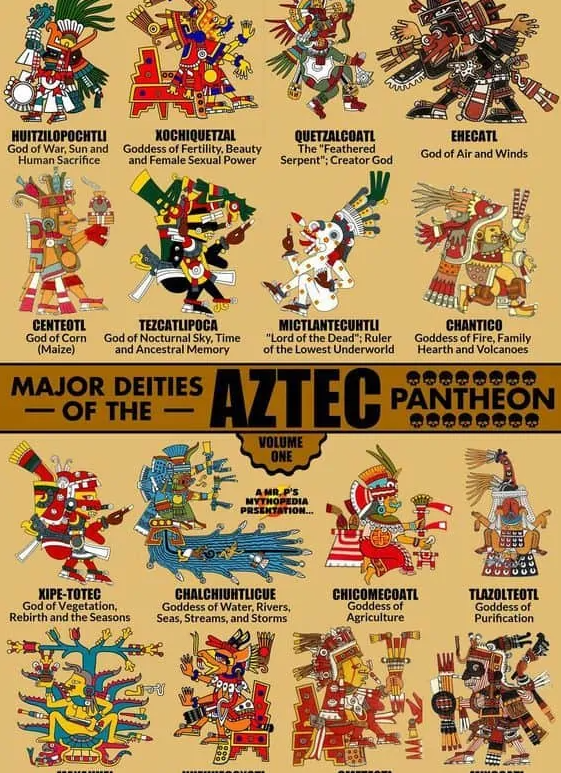
The Mesoamerican deity Huitzilopochtli was the patron god of the Mexican people during the height of Aztec rule. Where he stands now is a little less clear though. Huitzilopochtli’s legend goes (1) that after he was betrayed by a nephew he killed him and removed his heart. This heart was disposed of on an island in the middle of Lake Texcoco and, like many creation … Continue reading Tenochtitlan in Australia?

Porophyllum nummularium

SynonymsEupatorium punctatum Mill., Gardn. Diet. ed. 8, no. 1 1. 1768.Kleinia jorullensis HBK, Nov. Gen. & Sp. 4:156. 1820.Porophyllum nummularium DC, Prodr. 5:649. 1836.Porophyllum jorullcnse Cass., Diet. Sci. Nat. 43:57. 1826.Porophyllum ervendbergii Gray, Proc. Amer. Acad. 19:35. 1883.Porophyllum palmeri Rose, Contr. U.S. Nat. Herb. 1 :338. 1895.Porophyllum nelsonii Robins. & Greenm., Proc. Amer. Acad. 32:32. 1896.Porophyllum millspaughii Robins, in Millsp., Field Columb. Mus. Publ. Bot. … Continue reading Porophyllum nummularium

Guaje.

Guaje pods grow from a tree known as Leucaena leucocephala. leucocephala (“leu” meaning white from the Greek “leukos” and “cephala” – head refers to the flowers) also known as cuaje, huajes, hauxya, huaxin, guash, guashe (Chiapas), guaje beans, cacalas, cascalhuite, Leadtree, White Popinac, Wild Tamarind or River Tamarind; Uaxim (Maya), ipil ipil (Philippines), Narendhar (India), Safed babul (Hindi), White Babool, Yin He Huan (Chinese) When … Continue reading Guaje.