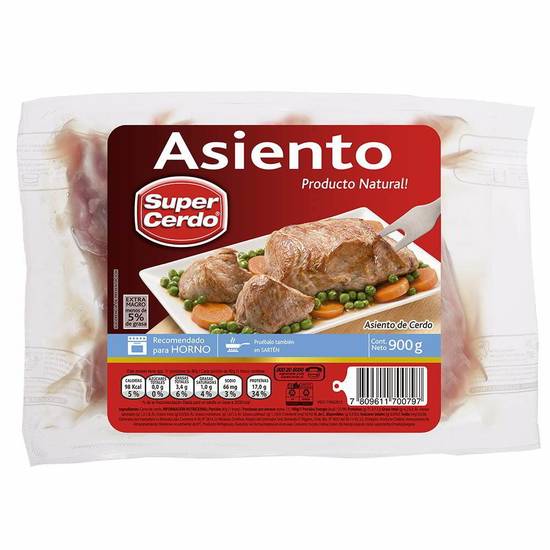
Ingredient : Asiento and a Brief History of Tlayudas, Doraditos and Huaraches.

When I was a child a snack that my father would sometimes eat was bread and dripping. Dripping was the fat left in the pan after roasting (usually) either beef or mutton (1). After the roast was removed from the pan the “juices” were allowed to settle and any excess oil rose to the surface. This fat is clear at first but as the contents … Continue reading Ingredient : Asiento and a Brief History of Tlayudas, Doraditos and Huaraches.

Ciudad de México: Bajo Las Calles

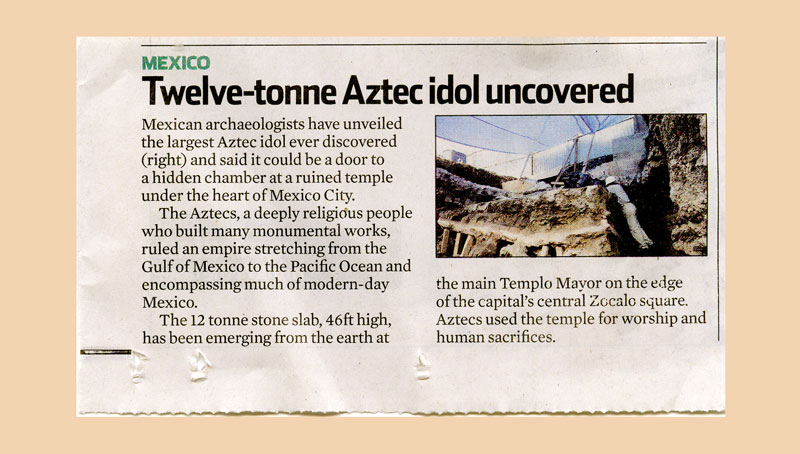
Cover Image : Article from The Observer, Sunday 15th. October 2006 referencing the discovery of the Tlaltecuhtli monolith (more on this later) Under the streets of México City Tenochtitlan lies sleeping. México City was constructed upon the ruins of Tenochtitlan and from the very bones of Tenochtitlan itself. The temples were pulled apart and used to construct the palaces and churches and, in some cases, … Continue reading Ciudad de México: Bajo Las Calles

Michimole : Mole Salvaje (Wild Mole)

In my Post Esquites, Tequesquite and a Witches Curse. I bring up the figure Tlazocihualpilli. Tlazocihualpilli was a Xochimilca who was the Tlatoani of the altepetl (1) of Xochimilco between the Years 12 Reed and 11 Reed (1335 – 1347). She is a semi-mythical being who, apart from being the ONLY female tlatoani to have ruled Xochimilco, and one of very few women to have … Continue reading Michimole : Mole Salvaje (Wild Mole)

Xochipilli. The Symbolism of Enrique Vela

6 July 1840  – 26 August 1912 : José María Tranquilino Francisco de Jesús Velasco Gómez Obregón, generally known as José María Velasco, was born in Temascalcingo (just outside Mexico City). He was a 19th-century Mexican polymath (1), most famous as a painter who made Mexican geography a symbol of national identity through his paintings (2), particularly those depicting the Valley of Mexico. Xochipilli has … Continue reading Xochipilli. The Symbolism of Enrique Vela

Esquites, Tequesquite and a Witches Curse.

Esquites are a “ Mexican snack ” composed mainly of seasoned, boiled corn kernels served in a cup. They are a well known and loved snack throughout all of México. Vendors can be found on street corners, bus stations, train stations and in mercados pumping out the most fundamental (and probably the most original) street food of all Mesoamerica. Now do you want it on … Continue reading Esquites, Tequesquite and a Witches Curse.

Is This Luis Amendolla?

Luis Ricardo Amendolla Gasparo, (1928-2000) or (1939-2000, see Mexican Artist : Amendolla for a little more on this) As a newbie art researcher I have been excited by my latest mystery. A few weeks ago I came across some Mexican (?) artefacts on Facebook Marketplace. The mother of the woman selling them had recently passed away and she possessed a house full of art pieces … Continue reading Is This Luis Amendolla?

Mexican Artist : Amendolla

In one of my most recent Posts, Arte Mexicano : Mi Colección, I mentioned a beautiful watercolour that had fortuitously (and somewhat synchronistically) entered my possession. The image in the painting was that of San Bernardino, a church in Xochimilco, and was by the artist Amendolla. Now my knowledge of Mexican art is really limited to the prehispanic era, although I am aware of modern … Continue reading Mexican Artist : Amendolla

Arte Mexicano : Mi Colección

I have begun to collect Mexican art. I stumbled upon this beautifully textured oil painting in a second hand store and was immediately drawn to the bugambilia flowers (1). The aesthetics of the painting strongly suggested Mexico to me and upon further investigation I found that it was painted in Cuetzalan Puablo (sic) (1) The next piece to enter mi coleccion was a lovely watercolour. … Continue reading Arte Mexicano : Mi Colección

Ketumbar Bolivia : The Poreleaf in Southeast Asia

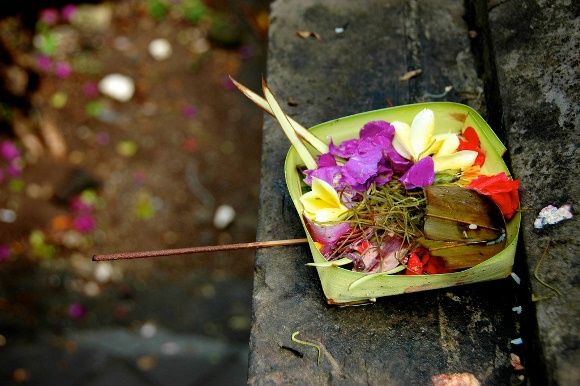
Cover image : roadside offering to the Gods on a street in Bali. Ketumbar Bolivia = Bolivian Coriander : generally identified as Porophyllum ruderale (syn P.ellipticum) Also called : Seungit (fragrant, smells good – Indonesia.) In southeast Asia Ketumbar Bolivia is a type of papalo usually identified as being the variety known as Porophyllum ruderale. Ketumbar (katumbar) is a Brunei Malay (1) word signifying the … Continue reading Ketumbar Bolivia : The Poreleaf in Southeast Asia