





The Pore Leaf in Brazil
Porophyllum ruderale can be found as an urban weed in Brazil with it growing in both urban areas and in high altitude fields. Confirmed sightings of the species have been made at…… North (Acre, Amazonas, Amapá, Pará, Rondônia, Roraima, Tocantins) Northeast (Alagoas, Bahia, Ceará, Maranhão, Paraíba, Pernambuco, Rio Grande do Norte, Sergipe) Central-west (Distrito Federal, Goiás, Mato Grosso do Sul, Mato Grosso) Southeast (Espírito Santo, … Continue reading The Pore Leaf in Brazil

Puches : Part 2 : Puches or Puchas?
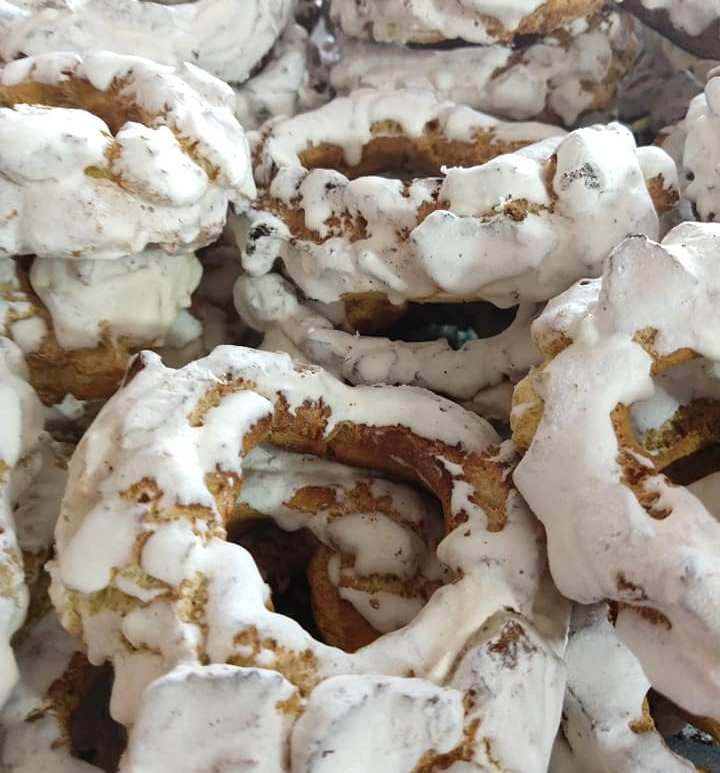
Cover Image : Puchas from the Panadería La Purisima De Silao in Guanajuato, Mexico My last Post (1) was borne from a readers comment regarding tequesquite. Tequesquite is a natural mineral salt that has been used in Mexico since pre-Hispanic times (mainly as a culinary ingredient/food seasoning). It was mentioned in an historical document from 1844 that was a list of ingredients, and their costs, … Continue reading Puches : Part 2 : Puches or Puchas?

Puches
Cover Image via Commonwealth of Social Services (Sierra Norte de Madrid) I received some interesting feedback on the Post Tequesquite from an independent historian in New Mexico (1) who noted that tequesquite was listed in a document from 1844 (2) that listed it as an ingredient in a dish called “puches”. The document was part of a folio regarding a 16th of September (3) celebration … Continue reading Puches

Xochipilli : Intoxicating Scent.
Cover image : cacaloxochitl (Nahuatl raven – flower)(Plumeria rubra) or the Frangipani tree. This tree was highly prized in Aztec society. It was planted in the gardens of the elite classes of society and, amongst the Maya, plumeria was associated with deities representing life force and fertility. The flowers became strongly connected with a wide range of expressions of female sexuality (Zumbroich 2013). Intoxication need … Continue reading Xochipilli : Intoxicating Scent.

Skunkweed and the Skunk
Cover Image via Sensi Seeds (this Post does not cover cannabis at all. In English, ‘skunk’ has become slang for any potent, high-THC strain of cannabis. The media often uses ‘skunk’ to define ‘street weed’, usually in a derogatory fashion. In fact, Skunk #1 is the official name of one of the oldest and most popular strains of cannabis, and there is a ‘Skunk family’ … Continue reading Skunkweed and the Skunk
Chautl. A porophyllum?
I have previously investigated the identity of this particular quelite in an earlier Post : Tepepapaloquilitl. In the mountains outside Toluca there is a root called “chautl” which comes from a plant identified by locals as papalo. This may be the same plant as tepepapaloquilitl (1). The Aztecs used the root of tepepapaloquilitl as a vegetable. The root of the chautl (2) is also used as a … Continue reading Chautl. A porophyllum?

Rajas. Poblanos (por supuesto)
Poblano chiles are not commonly found in my part of Australia and I was lucky enough to find some in a large chain supermarket. Previously the only way I could access them is through the canned product. The San Miguel brand (see cover picture) was the only I had seen and it wasn’t until I visited México that I actually ate a fresh chile (chiles … Continue reading Rajas. Poblanos (por supuesto)

Kitchen Cheat : Chorizo & New Ingredient : Spaghetti Squash
This is the first of my Cheat Posts. As a chef I am always interested in new ingredients and it is always exciting when these ingredients are from Mesoamerica. As a single mother I am always looking for food that is both healthy and exciting (if not exciting then at least interesting) for my child and, as a time poor single mother, I am always … Continue reading Kitchen Cheat : Chorizo & New Ingredient : Spaghetti Squash

Quelites in Old Texts
In this case the text in question is Nuevo Cocinero Mejicano (1) En Forma De Diccionario (1888) Mejico or Mexico? and why? See the link to David Bowles etymological journey in the website references. See also my earlier Post : Origins of the words Aztec and Mexico I stumbled across this text purely by luck. In response to a readers comments regarding tequesquite (1) being … Continue reading Quelites in Old Texts

Mascara Mexicana? Mexican Mask?
I think I have answered my own question but bear with me. It’s a process. I like to collect Mexican folk art and amongst my collection I have several wooden masks. I have come upon a bit of a mystery (possibly of mistaken identity) regarding a mask in my collection. I purchased this mask (above) second hand from a woman who reckons she (probably) purchased … Continue reading Mascara Mexicana? Mexican Mask?
 Masa Americana