





Pulque : A Potential Cancer Treatment?
Scientists from the National Polytechnic Institute (IPN) and the National Research Institute for Agriculture, Nutrition and Environment (INRAE) in France have obtained an international patent (1) for the discovery of lactic acid bacteria (2) from pulque (3). joint international patent and INRAE WO 2019/234076 A1 Lactic acid bacteria (LAB) are a group of bacteria which play a significant role in a variety of fermentation processes. … Continue reading Pulque : A Potential Cancer Treatment?


Tequila. We’ve come a long way. (Book Review)
I am an avid book collector and every time I stumble across one in a second hand store I snaffle it up. I particularly like older books as I am able to compare them with the new publications in my collection and see how far knowledge has grown or changed in the intervening years. My recent acquisition was this book the “Illustrated Encyclopedia : The … Continue reading Tequila. We’ve come a long way. (Book Review)

Chiles en Nogada
Chiles en Nogada (1) Chiles en Nogada is a dish comprised of my favourite fresh chile, the poblano, which has been stuffed. The stuffed chile is then bathed in a walnut sauce and garnished with pomegranate seeds, and fresh parsley. The garnishes represent each colour on the Mexican flag (2), as the dish commemorates Mexican Independence. The dish was first introduced (3) in August 1821, … Continue reading Chiles en Nogada

31 Alimentos que México dio al mundo : 31 foods that Mexico gave to the World
Mexico (and the Americas in general) has given much to the worlds food larder. We are familiar with many of these foods even though we might not know where exactly the came from (1). We can thank the Americas for staple foods such as corn, potatoes, tomatoes, beans (2), squashes, chiles, avocados, the turkey, vanilla and cacao (3) as well as the highly nutritious seeds … Continue reading 31 Alimentos que México dio al mundo : 31 foods that Mexico gave to the World

Aztec Gods or States of Consciousness? Another Observation.
Cover Image : ‘Vocho Teotihuacano’ : Héctor Garnelo Navarro etal The tendency of Christianity (regardless of which form you wish to discuss it in) is to destroy that which does not fit within the confines of its dogma. If it cannot destroy then, much like the Romans (1) it will appropriate and absorb. This appropriation is problematic as although they are appearing to take something … Continue reading Aztec Gods or States of Consciousness? Another Observation.

Tianquiztli
Cover Image : Bas relief of Itzcoatl at the Jardin de la Triple Alianza (Garden of the Triple Alliance) in México city. Find the garden at Calle de Filomeno Mata, corner of Tacuba, Centro Histórico, Cuauhtémoc, 06000 CDMX. I have been drawn to the quelites of México ever since I was exposed to the word “papaloquelite” in a book by Josefina Howard. This curiosity was … Continue reading Tianquiztli

Porophyllums : Medicinal Utility : A Recap
The infusions of some species of Porophyllum are used in traditional medicine because of activity against cramps and venereal diseases, as well as for their antispasmodic, antibacterial, anti-inflammatory, antifungal, and insecticide properties. The terpenoid compounds of the Porophyllum genus have been of great interest due to the large number of biological activities they present. In vitro and in vivo studies performed with the purified extracts … Continue reading Porophyllums : Medicinal Utility : A Recap

Porophyllum leucospermum
P.leucospermum is considered to be a synonym for Porophyllum gracile (1) which is also known as “slender poreleaf”. See Post Porophyllum gracile : Deer Weed for further information on P.gracile. Other synonyms for P.gracile include Porophyllum caesium Greene Porophyllum cedrense Rose & Standl. ex Rydb. Porophyllum confertum Greene Porophyllum confertum var. ochroleucum (Rydb.) I.M. Johnst. Porophyllum junciforme Greene Porophyllum leucospermum Greene Porophyllum nodosum M. E. … Continue reading Porophyllum leucospermum
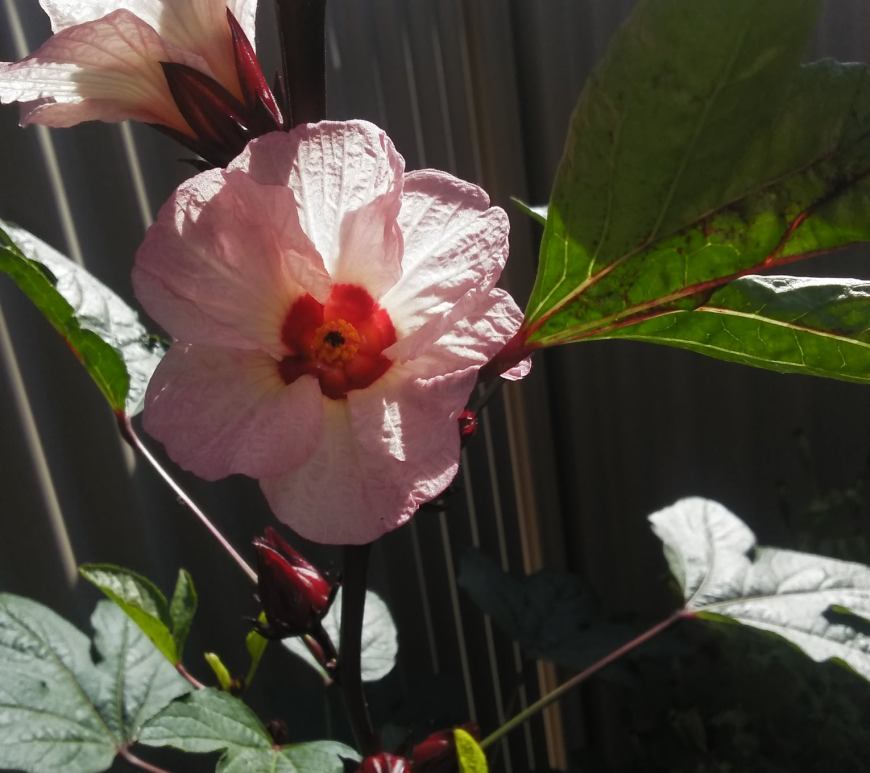
Flor de Jamaica : The C-Bomb
I came across this recipe for a flor de jamaica jam (1) which made me giggle a little. You see, where I come from, C bomb is a most heinous swear word. This however was not the original authors purpose (I hope). The C Bomb being referred to is a large dose of vitamin C as provided by the calyxes of the hibiscus flower known … Continue reading Flor de Jamaica : The C-Bomb
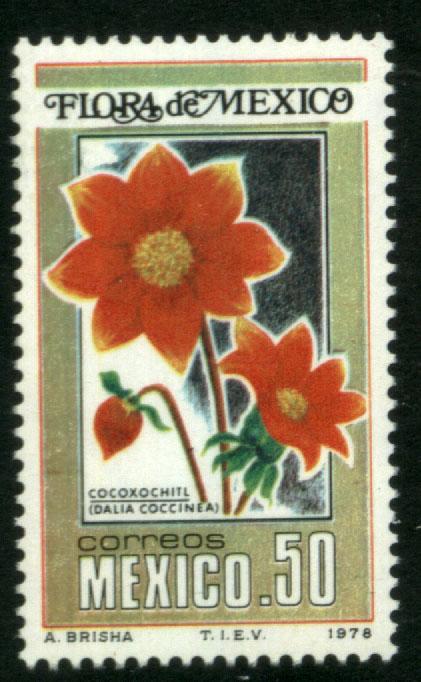
Xochipilli : Is it a Dahlia?
I think we may be overlooking the obvious. In my continuing quest to understand Xochipilli, both in spirit and in form, I am drawn to the floral imagery portrayed on the idol. I am unconvinced of the current paradigm which would have me believe that all of these plants are intoxicants designated for shamanic usage. Wasson, to fit a theory, has perhaps projected his own … Continue reading Xochipilli : Is it a Dahlia?
 Masa Americana