




La culpa es de los Tlaxcaltecas (The Tlaxcaltecas are to blame)
Title taken from a short story by Elena Garro, published in 1964 as part of the collection La Semana de Colores (The Week of Colours) This map demonstrates the area of influence of the Triple Alliance at the peak of its power just prior to its subjugation by the Spanish. Note the area close to the centre of the map showing the area controlled by the … Continue reading La culpa es de los Tlaxcaltecas (The Tlaxcaltecas are to blame)

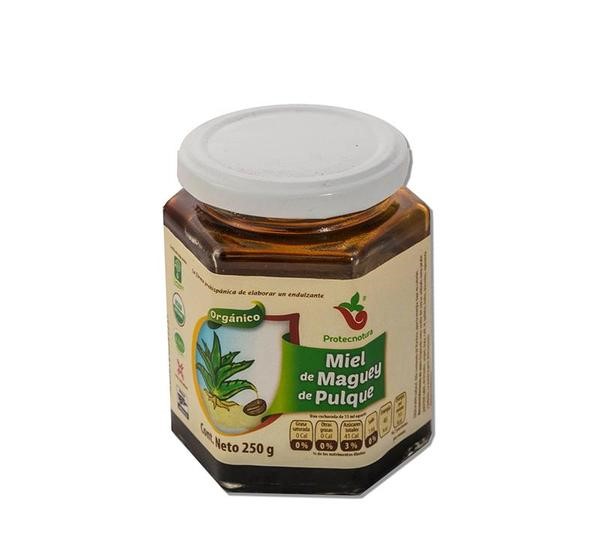
Medicinal use of Miel de Agave (agave honey)
A type of “honey” can be made from aguamiel. Aguamiel is heated in a pot until most of the moisture has evaporated and the liquid has thickened to the texture of honey and becomes dark amber in colour. For every 9 litres of aguamiel you will produce around only 1 litre of agave honey. According to CINVESTAV (The Center for Research and Advanced Studies of the … Continue reading Medicinal use of Miel de Agave (agave honey)

Sotol.
Sotol is a distilled spirit similar in vein to mezcals and tequila that has been sourced from the dasylirion plant. Although previously classed as an agavaceae the dasylirion is a small genus of 18 semi-succulent species in the Nolinoideae (a subfamily of the Asparagaceae) family. The dasylirion is also known commonly as the Desert Spoon. This plant is common to northern Mexico, New Mexico and … Continue reading Sotol.

Tequila and Mezcal : A Primer : How to read a tequila or mezcal label.
All tequila is mezcal but not all mezcal is tequila. Tequila and mezcal are both spirits created by the distillation of the juice that has been sourced from the heart of an agave. This heart (or piña) is roasted (in the case of mezcal) or steamed (in the case of tequila) (1) then crushed to obtain the juice. This juice is then fermented and distilled … Continue reading Tequila and Mezcal : A Primer : How to read a tequila or mezcal label.

Ecologically friendly alternative to leather from the Nopal cactus
This October two inventors from Guadalajara in Mexico will travel to Milan in Italy to showcase a new product made from the nopal cactus at Lineapelle. Lineapelle is a prestigious international trade exhibition of leather goods which is held twice a year and exhibits “New trends in leather, textiles and synthetics for shoes, handbags, leather goods and leatherwear”. In the upcoming October fair Adrián López … Continue reading Ecologically friendly alternative to leather from the Nopal cactus
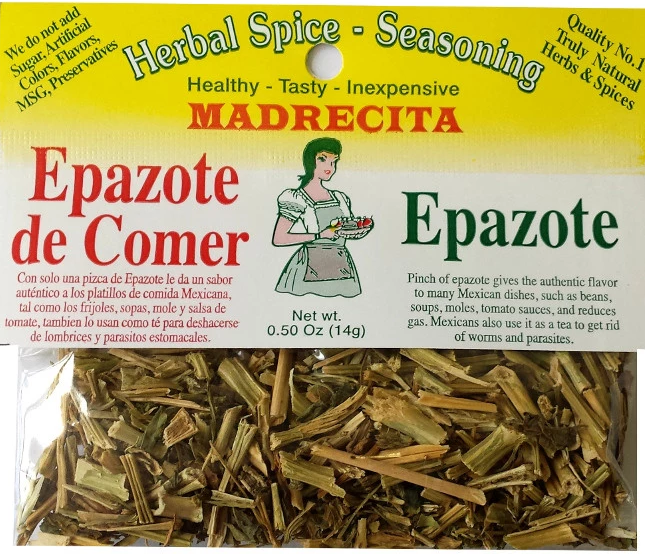
Quelite : Epazote
Chenopodium ambrosiodes (Synonyms: Teloxys ambrosioides, Dysphania ambrosioides) Epazōtl : from Nahuatl, epatl – skunk and tzotl – sweat (1). I have seen this translation noted as being “epatli = skunk; zotli = grass”. There’s no confusion re skunk but I think there may have been over “zotli = grass”. The Nahuatl word for grass is zacatl (zacate en Español). There is a Nahuatl word “tzontli” … Continue reading Quelite : Epazote

Flor de Maguey : The Agave Flower
We primarily know the maguey as being edible for its “juice” which can be used to make the fermented drink pulque or the distilled drinks mezcal, tequila, bacanora and raicilla (as well as all the un-named vino de agaves). But…..did you know the agave can be eaten? The baked pencas (1) and quiote (2) are quite edible (3). The outer petals of the maguey flowers … Continue reading Flor de Maguey : The Agave Flower

Quelite : Tlapanche
also called, quelite de venado, lapandzi, lapantsi, átlapántsin, aclapanchis, papalo de cerro, papalo criollo Jesús Hoyos Hernández on his blog (1) speaks of this herb. It is not very well known and can be confused with papalo as it is similar in appearance although, according to Jesús, its aroma and taste is very different. This plant has previously been identified as P.punctatum but P.pringlei, P.ruderale, P.nutans (2) and P.calcicola have … Continue reading Quelite : Tlapanche

Quelite : Porophyllum obscurum
(Syn: P.eremophilum, P.oblanceolatum, Kleinia linifolia) also called Catinga-de-urubu, curupaimi, kilkina, quirquina, matapulgas (literal translation “killing insects”), yerba de la gama, ruda blanca, cominillo, yerba del venado, yerba del ciervo. Another of the less well known species of porophyllum. Found south of Brazil into Paraguay and the north east of Argentina there is very little information to be found on this particular variety of pore leaf. … Continue reading Quelite : Porophyllum obscurum
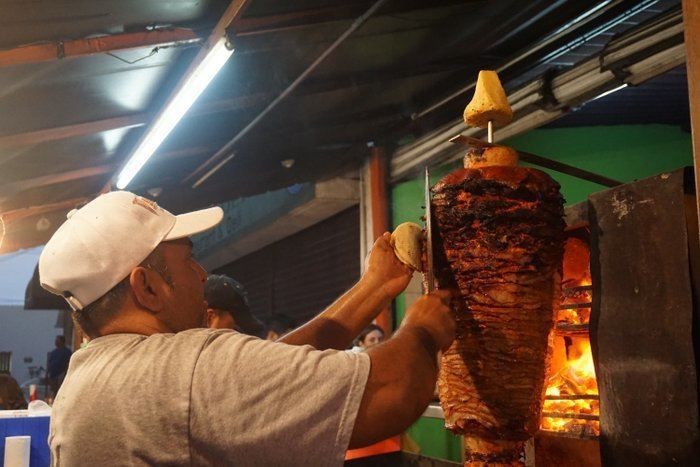
Tacos al pastor
Moorish culture had an impact on more than just the medicinal practices of the Mexicans. The method of cooking tacos al pastor (in the style of the shepherd), is a dish developed in Central Mexico that is based on shawarma spit-grilled meat brought to Mexico by Iraqi immigrants in the early 1900s and Christian Lebanese following the Israel-Lebanon war in 1948 and the 6 day … Continue reading Tacos al pastor
 Masa Americana