Empacho and Tripa Ida

The practice of curanderismo is the living cultural tradition of holistic healing practices of the peoples of “Latin” America. Although variations of this tradition exist within most of the Americas my focus is on the traditions of Mexico and the south-western United States of America. Curanderismo is a holistic healing system that treats the whole person—body, mind, and spirit—using a blend of herbs, rituals, and … Continue reading Empacho and Tripa Ida

Porophyllum iruyense

Porophyllum is a genus of phanerogamous (1) plants belonging to the family Asteraceae (2) . The pore-leaf family includes 101 described species and of these, only 27 are accepted. They are native subshrubs of the Americas. As their name suggests (4), their leaves often have large glands that produce aromatic oils that give off a strong odour. The large majority of these plants are used … Continue reading Porophyllum iruyense

Poreleaf Adjacent : San Felipe Dogweed : Adenophyllum porophylloides

I have briefly looked at this herb in my Post Papalo and Pipicha. Skunk Weed? and as it is tantalisingly close to my love papalo I would like to investigate it a little more deeply (and grow it if I can source the seed). Also called : Yerba del Venado, Coronilla, Cempasuchil sencillo, Corona de Rey, arnica, San Felipe dyssodia, San Felipe dogweed, San Felipe … Continue reading Poreleaf Adjacent : San Felipe Dogweed : Adenophyllum porophylloides

Quelite : Anis de Chucho : Tagetes micrantha

This plant is often called Tagetes filifolia. They are similarly flavoured and can be used interchangeably both culinarily and medicinally. Anís de chucho, anisillo (Central Mexico, San Luis Potosi, Durango, Chihuahua, Michoacan – more specifically Patzcuaro), anis de campo (Michoacan), anis de suelo (Guerrero), Tanix’ ch’ian (Motozintla, Chiapas), yuku anís (Mixtec), licorice marigold, Anise marigold (Southern Baja), putsut, putzuti (Lascurain-Rangel et al 2022) Tagetes micrantha … Continue reading Quelite : Anis de Chucho : Tagetes micrantha

Quelite : Anís de campo : Tagetes filifolia

Tagetes filifolia The Latin Tagētes is derived from the name of the Etruscan Tages, born from the plowing of the earth.The species epithet, filifolia, is derived from the Latin, filum “thread” and folium “leaf” and describes the plant as having thread-like leaves According to a legend, Tages was a wise child who sprung up from the freshly ploughed earth. Later he taught Etruscans divination.Cicero reports … Continue reading Quelite : Anís de campo : Tagetes filifolia

Aceitilla : Bidens pilosa

Genus epithet ‘Bidens’ (BY-dens) means ‘twice’ (bi) and ‘toothed’ (dens), a reference to the two bristles on the tip of the achene-seed (1) of some members of this genus. Species epithet ‘pilosa’ means ‘hairy’, describing the velvety foliage. Synonyms: Bidens abadiae DC; Bidens abadiae var. Sherff pilosoides ; Bidens arenaria Gand.; Bidens gully ME Jones; Bidens bimucronatus Turcz.; Bidens californica DC.; Bidens caracasana DC.; Bidens … Continue reading Aceitilla : Bidens pilosa

Bifora. Another Cilantro Substitute?

Bifora testiculata syn Coriandrum radians (M.Bieb.) Also called : cilantro, cilantro real, carrot weed, bird’s eye, European bishop, Wild Bishop, Dubbelkoriander, Dobbeltkoriander, Getreideverpester (cereal polluter), Bumnieher, Kosbor Salvagg, חריריים מצויים, كزبرة In 1905 Joseph Rose whilst working for the US Herbarium (1) noted in the describing of Porophyllum macrocephalum (2) that it had the “odor of bifora”. This piqued my interest as it was my … Continue reading Bifora. Another Cilantro Substitute?

Quelite : Mexixquilitl

Mexixquilitl (as L.virginicum) also called lentejilla The picture above depicts a plant from the tropaeolum genus. These are commonly known as nasturtiums. The leaves of the nasturtium are edible and have a “peppery” bite to them. The Tropaeolum genus is native to Central and South America and were introduced into Europe from Peru by the Spanish. Nasturtiums received their common name because the produce an … Continue reading Quelite : Mexixquilitl

Quelite : Pericón : Tagetes lucida

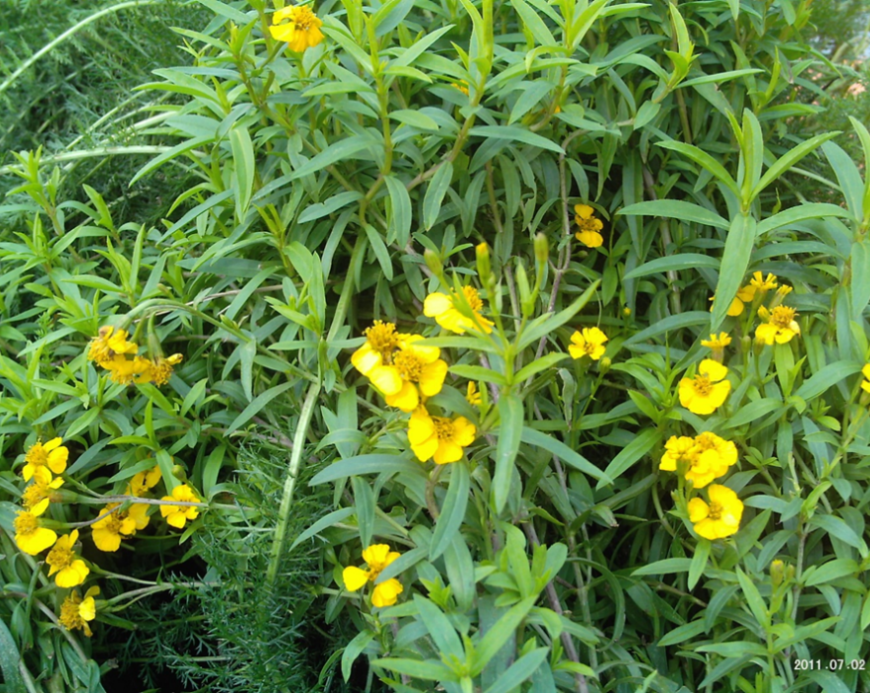
Tagetes lucida. also called : Mexican tarragon, sweet mace, periquillo, anicillo, basigó, basigoko (Tarahumara), ohoom (Huastec), tumutsali (Huichol) Pericó, Anisillo, atagote, cedrón, flor de xuchitl, hierbanís, hierba anís, hierba de nubes, hierba de San Juan, hierba santa, periquillo, rincón, Santa María, Santa María de jardín, tatalencho, yerbanís. Chiapas: k’anal nich wamal, k’ixin vomol, perikon vomol, tzitz ak, tzitz pox, tzitz vomol, tzitzilal ul (tzotzil), tzitzak … Continue reading Quelite : Pericón : Tagetes lucida

What is Curanderismo?

I am asked this question every time I mention the word. Curanderismo is often described (somewhat disparagingly I feel) as “Mexican folk medicine”. I feel that the term folk medicine is used for the lack of a better term and totally undervalues this system of healing, for this is what it is. The word curandero (curandera if the practitioner is female) is derived from “curar” … Continue reading What is Curanderismo?