A Short Discourse on the Aztec Soul.

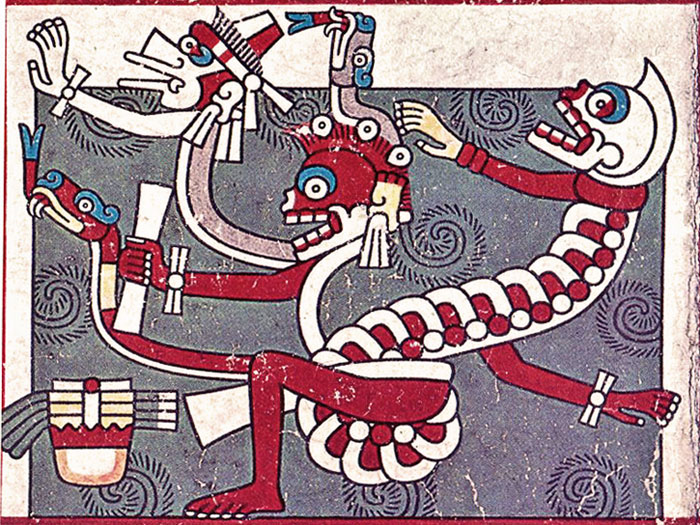
in another Post (1) several references note that the “seat of the soul” for the Aztecs was the intestines and as such gastrointestinal illnesses and conditions, specifically trip ida, are synonymous with another condition called susto (2). My research does not indicate this though. For the Mexica, the human body mirrored the cosmos, both being composed of heavy and light substances. The light substance within … Continue reading A Short Discourse on the Aztec Soul.

Xochipilli : Different Iconographies

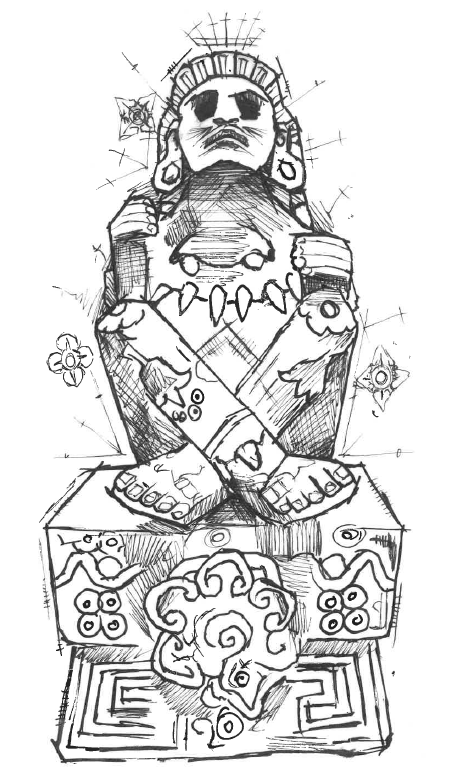
Xochipilli is one of the more benign figures (sacrificially speaking) in the pantheon of mesoamerican forces. Xochipilli has been linked to (and worshipped as) in various guises as the young god of the dawn (1) (and also the setting sun) (2), a god of vegetation (most notably of flowers but also intoxicating plants and the sprouting seed) a god of games, song, dance, poetry and … Continue reading Xochipilli : Different Iconographies

Modern Adoration : The Power of Religion in Healing : Return of the Old Gods.

As a naturopathic practitioner one thing I find that is never taken into consideration when addressing a persons health is that of religion/spirituality and the part God plays in a persons well-being. It is not particularly relevant through which method of practice in which you access these realms, whether it be a particular religion attached to a deity or through a practice such as meditation … Continue reading Modern Adoration : The Power of Religion in Healing : Return of the Old Gods.

Mascara de Xochipilli?

Purchased online (through eBay) as a gift for my birthday in 2024 The seller advertised the piece as being An extremely beautiful work of ancient mesoamerican religious art, carved in a very nice deep green “Chalchihuitl” (1) Jade Stone and notes that this item……DEPICTS A VERY CLASSIC TEOTIHUACAN CULTURE JADE FACE WITH ITS RITUAL NOSEPLUG. It was 100% handcarved from a deep green Jade Stone … Continue reading Mascara de Xochipilli?

Xochipilli and the Zapote

I would like to look at some interesting information regarding a little known (to me) statue of Xochipilli that has recently been mentioned by two history related sites (1)(2) The Posts I speak of. via Tetzcoco Prehispánico on Facebook SCULPTURE OF XOCHIPILLI, HUEXOTLA. Image: Wilhelm Bauer 1901 – 1910 This beautiful tezontle (1) stone sculpture, from Huexotla (2), State of Mexico, measures 15.5 x 11 … Continue reading Xochipilli and the Zapote

Xochipilli. The Symbolism of Enrique Vela

6 July 1840  – 26 August 1912 : José María Tranquilino Francisco de Jesús Velasco Gómez Obregón, generally known as José María Velasco, was born in Temascalcingo (just outside Mexico City). He was a 19th-century Mexican polymath (1), most famous as a painter who made Mexican geography a symbol of national identity through his paintings (2), particularly those depicting the Valley of Mexico. Xochipilli has … Continue reading Xochipilli. The Symbolism of Enrique Vela

Ayauhtona. Another Poreleaf?

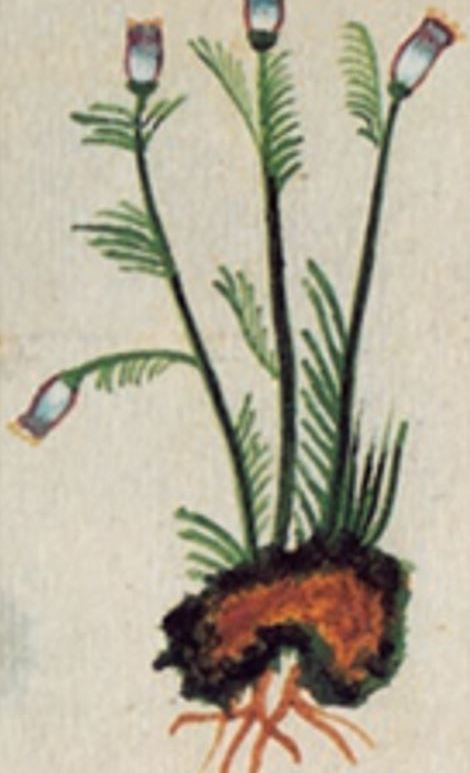
Welcome to my 200th Post. My initial reason for starting this Blog began with a single herb; Papaloquelite. I first came across this herb when I was searching for cilantro substitutions and it was a book by a German chef (Christian Teubner) that introduced me to the first in this family, Quillquina (Porophyllum ruderale) (1). Richters Herbs in Canada has been growing and selling herbs … Continue reading Ayauhtona. Another Poreleaf?

El Avatar de Xochipilli

The Avatar (1) of Xochipilli an embodiment (as of a concept or philosophy) often in a person (in this case a statue) The most common reference for the discovery of this statue that you will find will likely be “In the mid-19th century, a 16th-century Aztec statue of Xochipilli was unearthed on the side of the volcano Popocatépetl near Tlalmanalco” (1) although others state “His … Continue reading El Avatar de Xochipilli

Xochipilli : A Force of Nature

Yaoehecatl, dancer (1), historian, writer, instructor, lecturer, and Primera Palabra o Jefe del Calpulli Metzcualo-Tonalyeztli (First Word or Chief) of the Calpulli (2) Metzcualo-Tonalyeztli (3) has recently published some material which places Xochipilli into the “force of nature” category from the indigenous point of view of the Mexica. The work “Xochipilli y San Juan Bautista. El sincretismo del Solsticio de Verano” (4) equates the current … Continue reading Xochipilli : A Force of Nature

Xochipilli : Intoxicating Scent.

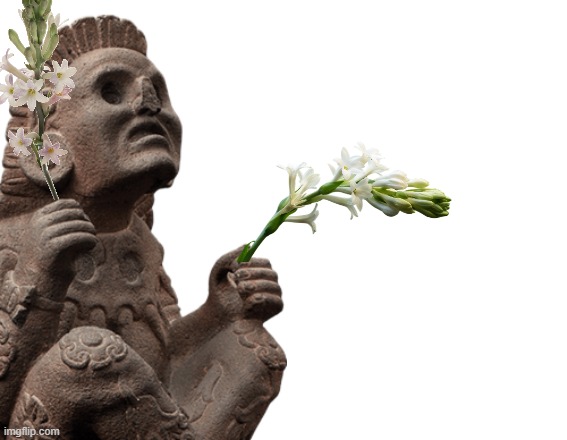
Cover image : cacaloxochitl (Nahuatl raven – flower)(Plumeria rubra) or the Frangipani tree. This tree was highly prized in Aztec society. It was planted in the gardens of the elite classes of society and, amongst the Maya, plumeria was associated with deities representing life force and fertility. The flowers became strongly connected with a wide range of expressions of female sexuality (Zumbroich 2013). Intoxication need … Continue reading Xochipilli : Intoxicating Scent.