
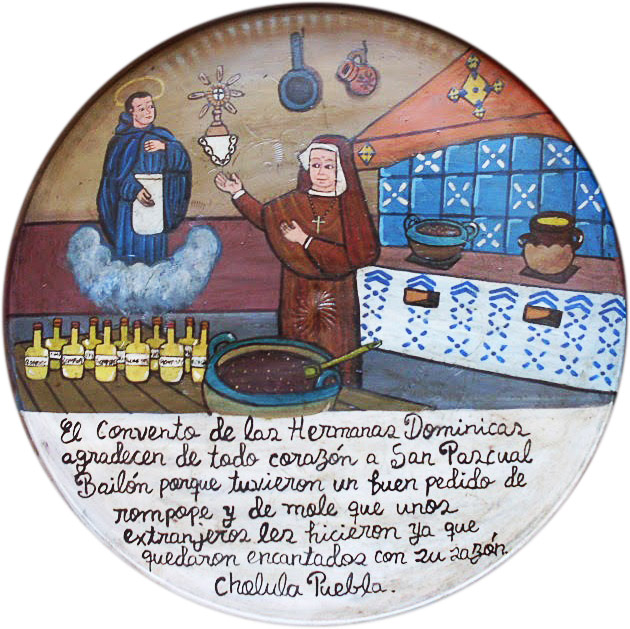
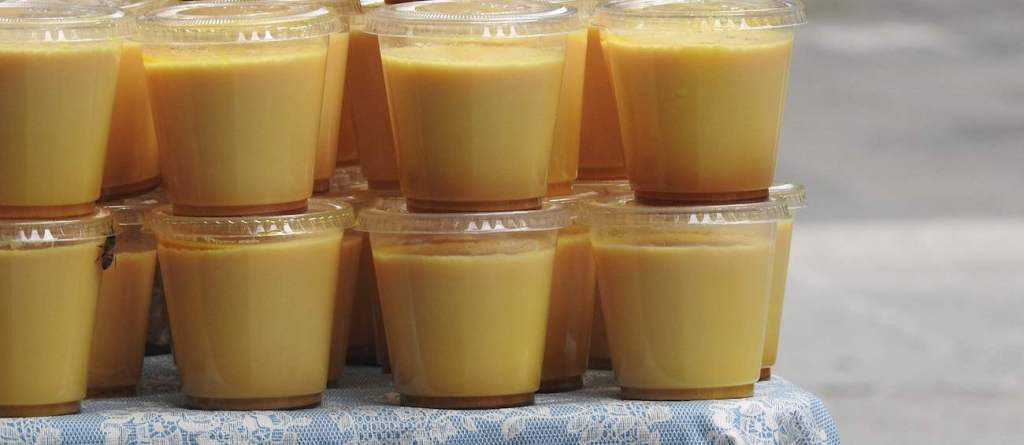
Mexican rompope is typical of recipes that came out of the convents during Mexicos Colonial period (1), particularly from Puebla de Los Angeles (2). According to tradition, the original Mexican rompope beverage was created in Puebla’s Convento de Santa Clara in the 17th century by sisters of the Orden de las Hermanas Pobre de Santa Clara, better known in English as the Poor Clares. This historic Franciscan order dates to the year 1212, when it was founded in Italy by St. Clare and St. Francis of Assisi.
- Mexico’s Colonial Period, known as New Spain, spanned 300 years from the Spanish conquest of the Aztec capital Tenochtitlán in 1521 until Mexican Independence in 1821
- formally Heroica Puebla de Zaragoza, then Puebla de Zaragoza, now simply called “Puebla”


Ex Convento de Santa Clara
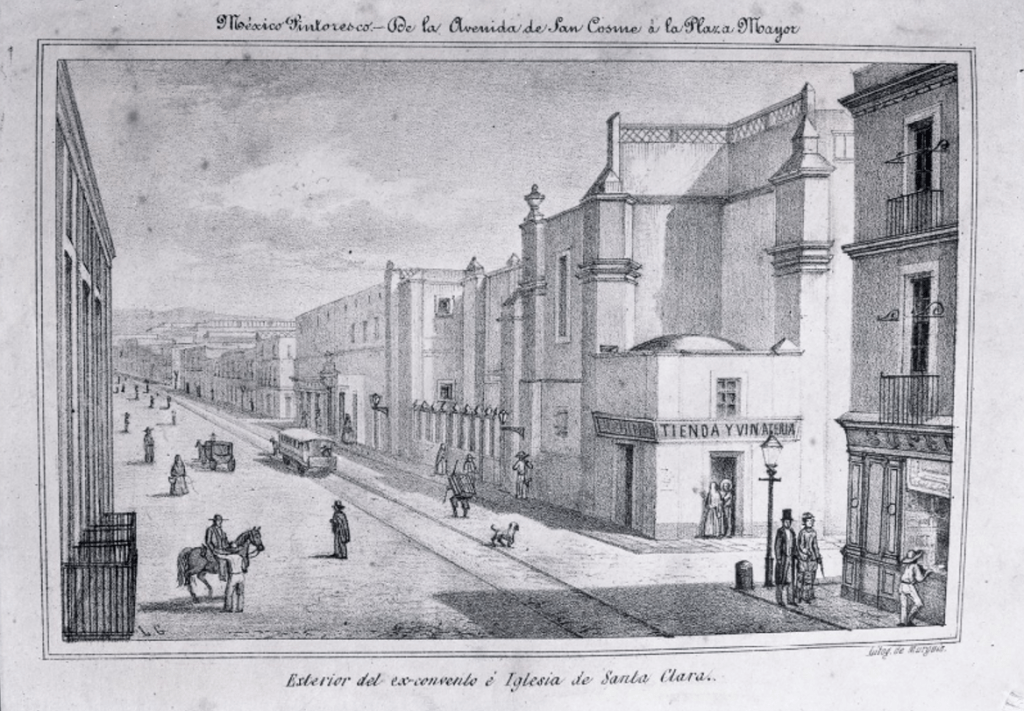
The Franciscans arrived in Mexico in 1524 and helped foster a culture of preparing food and drink, since they often hosted dinners for important personages.
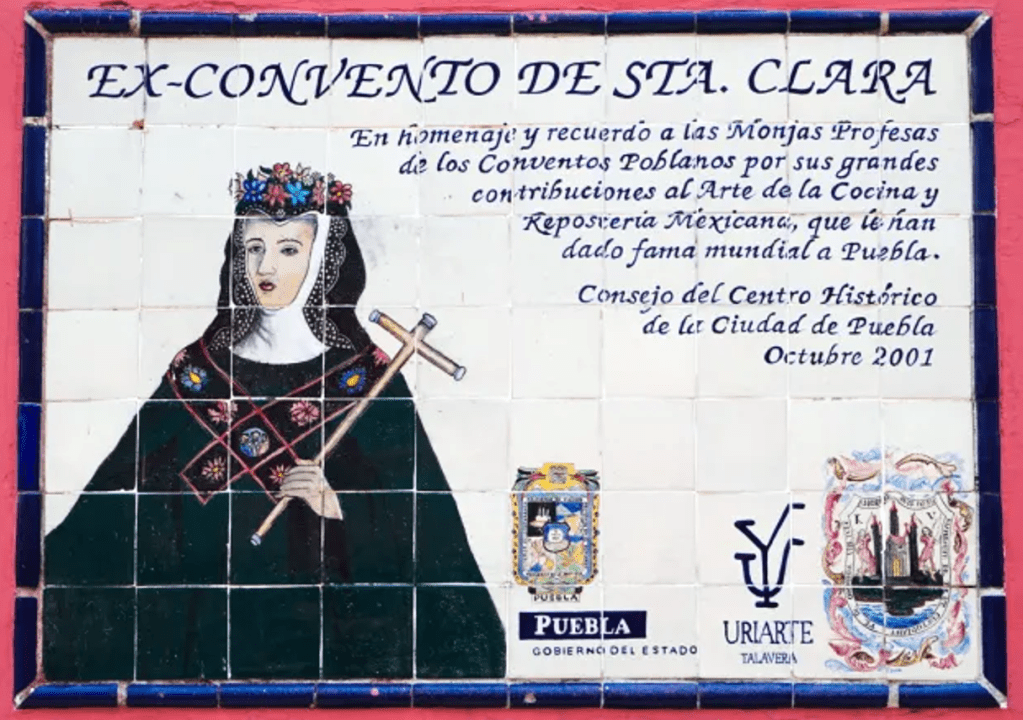
The convent had been founded in 1607 by the nuns of the order of Santa Clara, called the claristas. The prominent role of the Church in New Spain, the culinary skills of the nuns, and the fact that many were the daughters of wealthy Spanish families and had been exposed to fine food and service, all dictated that the nuns be appointed as the hostesses for political and religious dignitaries visiting Puebla.
The Santa Clara convent was particularly famous for its sweets.
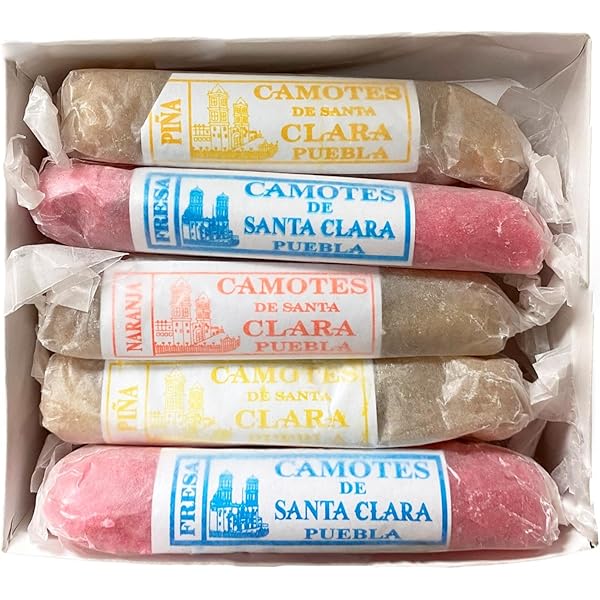
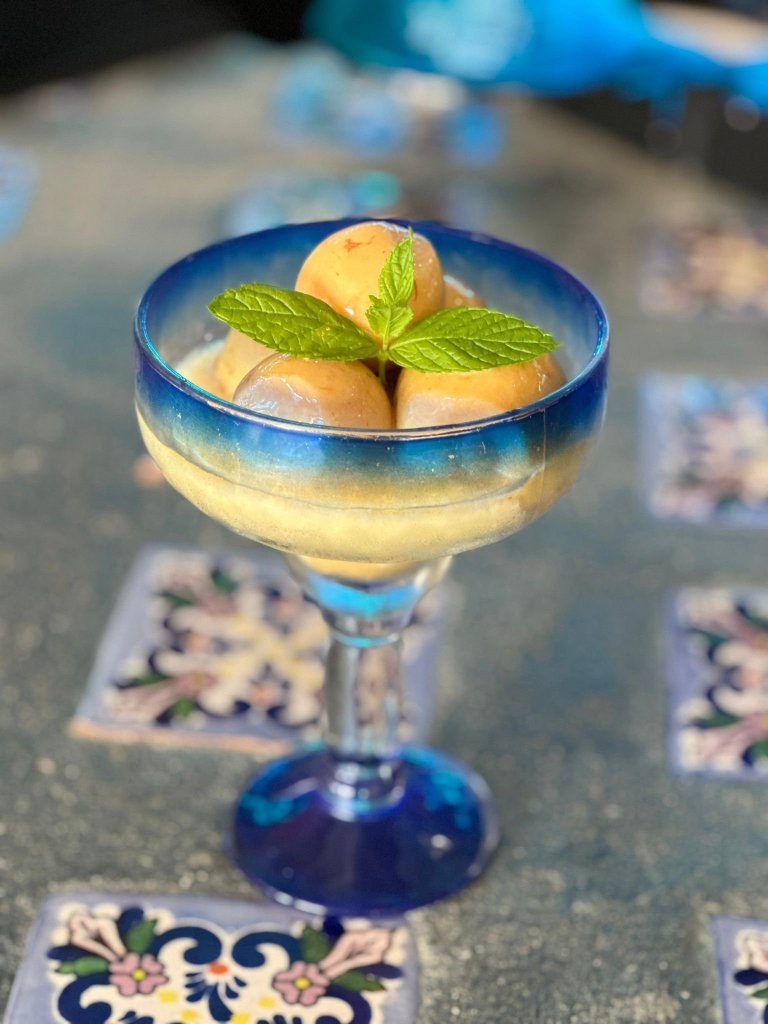
Camotes
The popular camote is a candy made out of sweet potatoes. They are wrapped in paper and can be found in a variety of colours.
Ingredients
- 1 kilo of sweet potato.
- 1 kilo of sugar.
- 1/2 liter of water.
- 5 drops of orange or lemon essence.
- 1 pinch of vegetable colouring, green or orange.
Method
- Boil the sweet potatoes in water; once cooked, peel them and mash them with a fork until a dough is formed.
- Dissolve the sugar in 1/2 cup of water and put it over low heat until a syrup is obtained, once it is ready, mix it with the sweet potato puree; the mixture is put on the fire stirring constantly with a wooden spoon, until the dough is slightly sticky.
- Let it cool a little and add the essence and the coloring, mixing it very well.
- Spread the dough on a flat surface and let it cool.
- With your hands, form the camotes and then sugar them; let them dry, then wrap them in waxed paper and store them in a cool place.
Each nun had her specific job in the kitchen, and the clarista in charge of making rompope was a Sister Eduviges, who was largely responsible for the spread of its popularity.
Select nuns were assigned by their bishops to taste the alcoholic beverages that were prepared. At the convent of Santa Clara, this task was allowed only to Sister Eduviges.
Local legend embellishes, saying that Sister Eduviges invented the recipe and convinced the bishop to share it with her sisters. “One cup a day doesn’t hurt anyone.” she told the bishop. The nuns have been making rompope ever since…
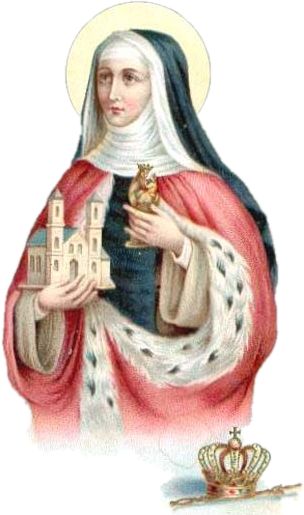


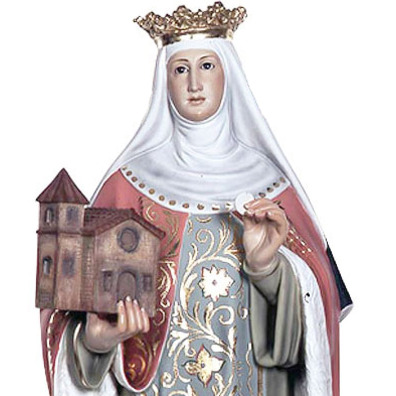
Santa Eduviges (whats with the house?)


In the late 19th century, around 1890, a group of nuns from Puebla traveled to Tehuixtla to teach the women of this town how to optimize the use of their dairy products. As a result, rompope began to be made in Morelos, although its consistency and flavour are somewhat different from the Puebla version due to the use of eggs and milk from local livestock (1), and because it is flavoured and spiced with cinnamon instead of vanilla.
- Tehuixtla has been a cattle-raising town since the 16th century.
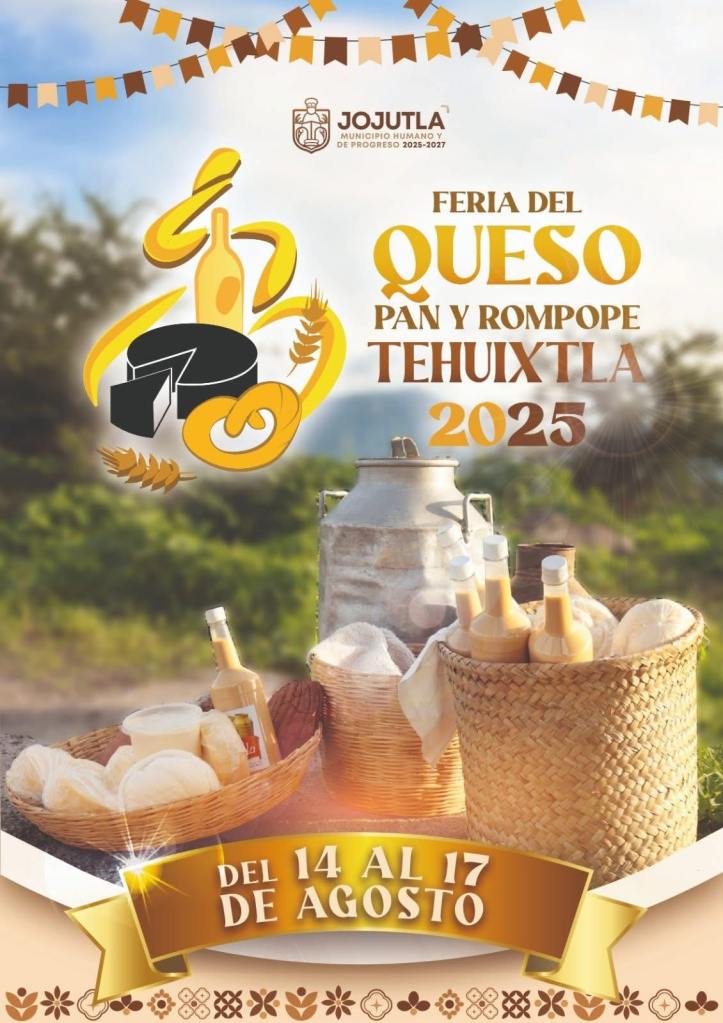
El Rompope de Tehuixtla. Domingo, 31 de Agosto de 2014
The rompope tradition was carried on by Sirenia Millán, Francisca Aranda Ocampo, and Abigail García Velasco’s grandmother, who sold their rompope along the banks of the Amacuzac River back in the 1940s.
The restaurant and hotel “La Bugambillia” was owned by Francisca Aranda. There, Sofía Ruíz Aranda (Francisca’s daughter) and Carmen Vidal (her granddaughter) learned to make rompope in the traditional way which they have continued to do ever since (1).
- as of 2025 the inheritors of the traditional Tehuixtla-style rompope recipe are the following women: Ignacia Domínguez, Sirenia Millán, Francisca Aranda Ocampo, María Luisa Velazco Ocampo, Tecla Castrejón, and Filiberta Millán
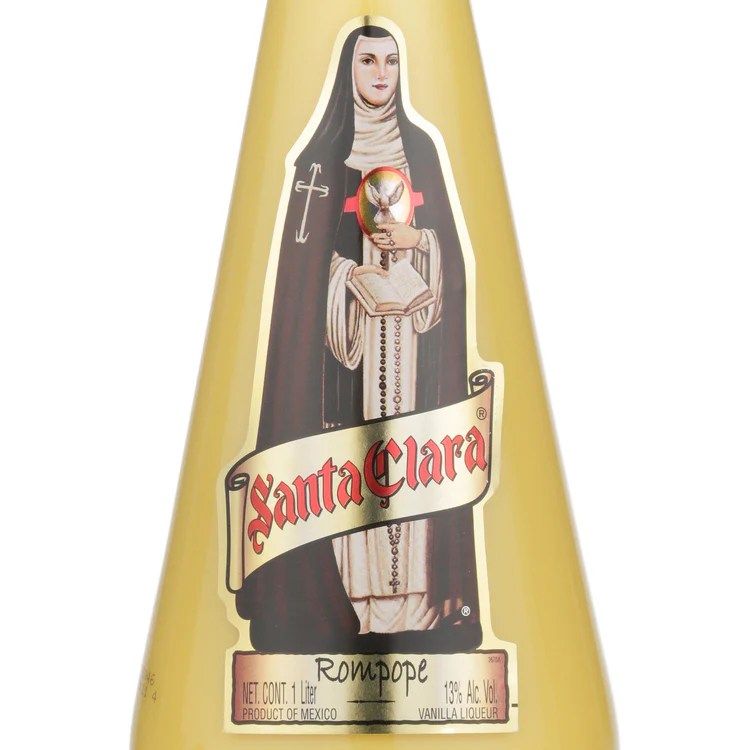
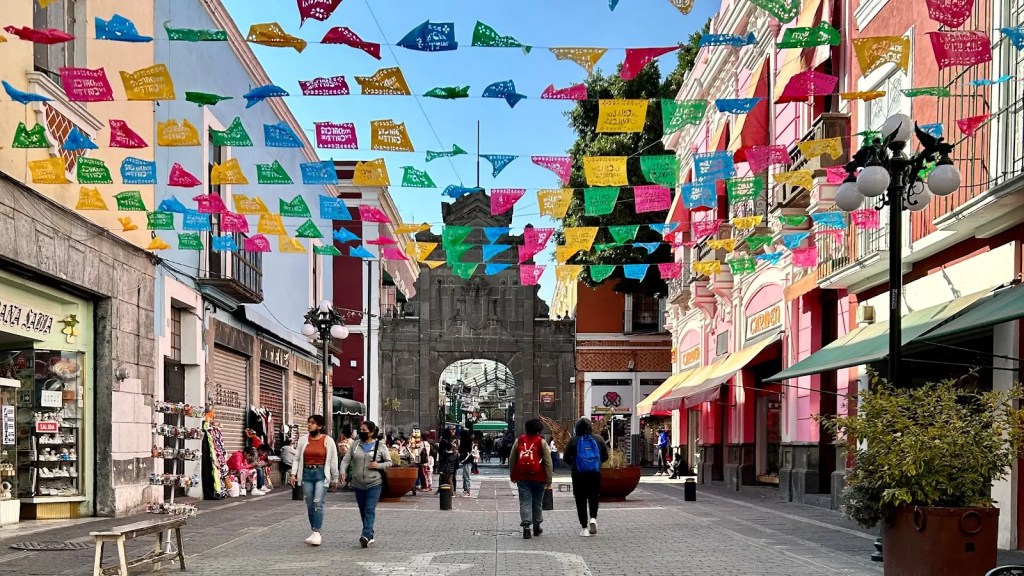
The most famous brand of Rompope in Mexico is named Santa Clara (1), after the convent from which the recipe emerged. And, in the city of Puebla, on the street where the Clarisa convent was, La Calle de los Dulces, shops offer several other nun-themed bottles next to typical sweets.
- At least it would appear so based on the liquor stores in Mexico.
La Calle de los Dulces
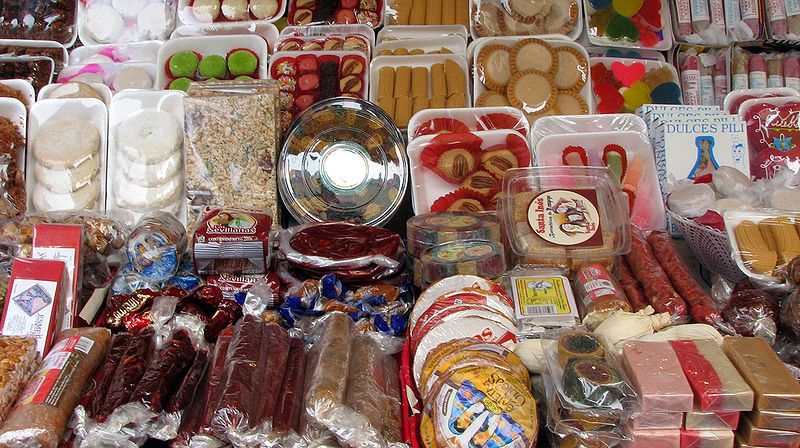
……..and some of its offerings.
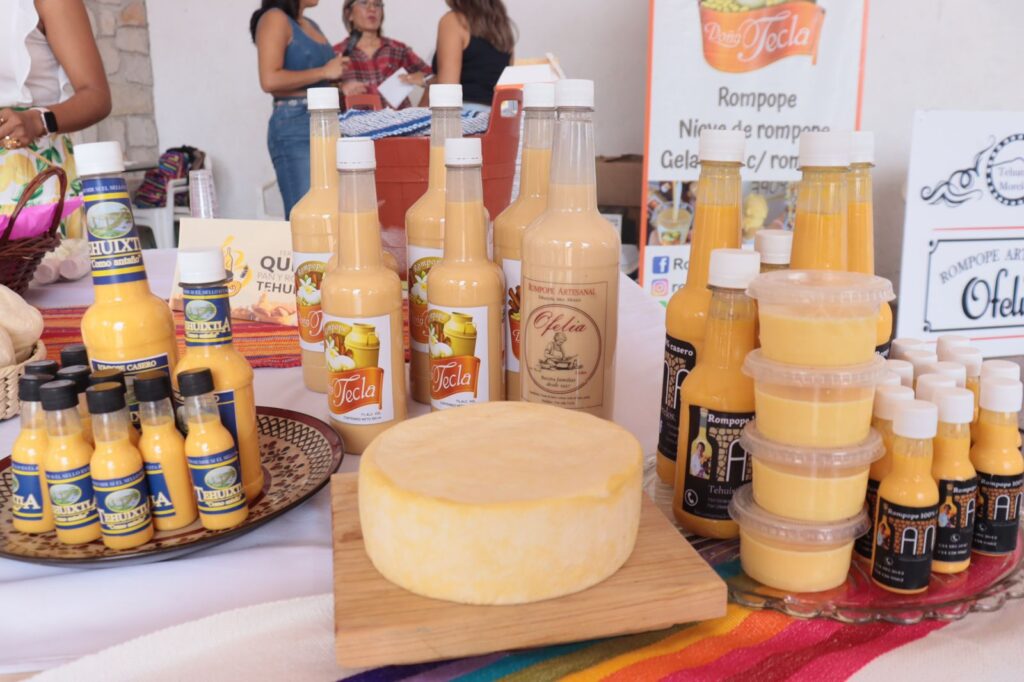
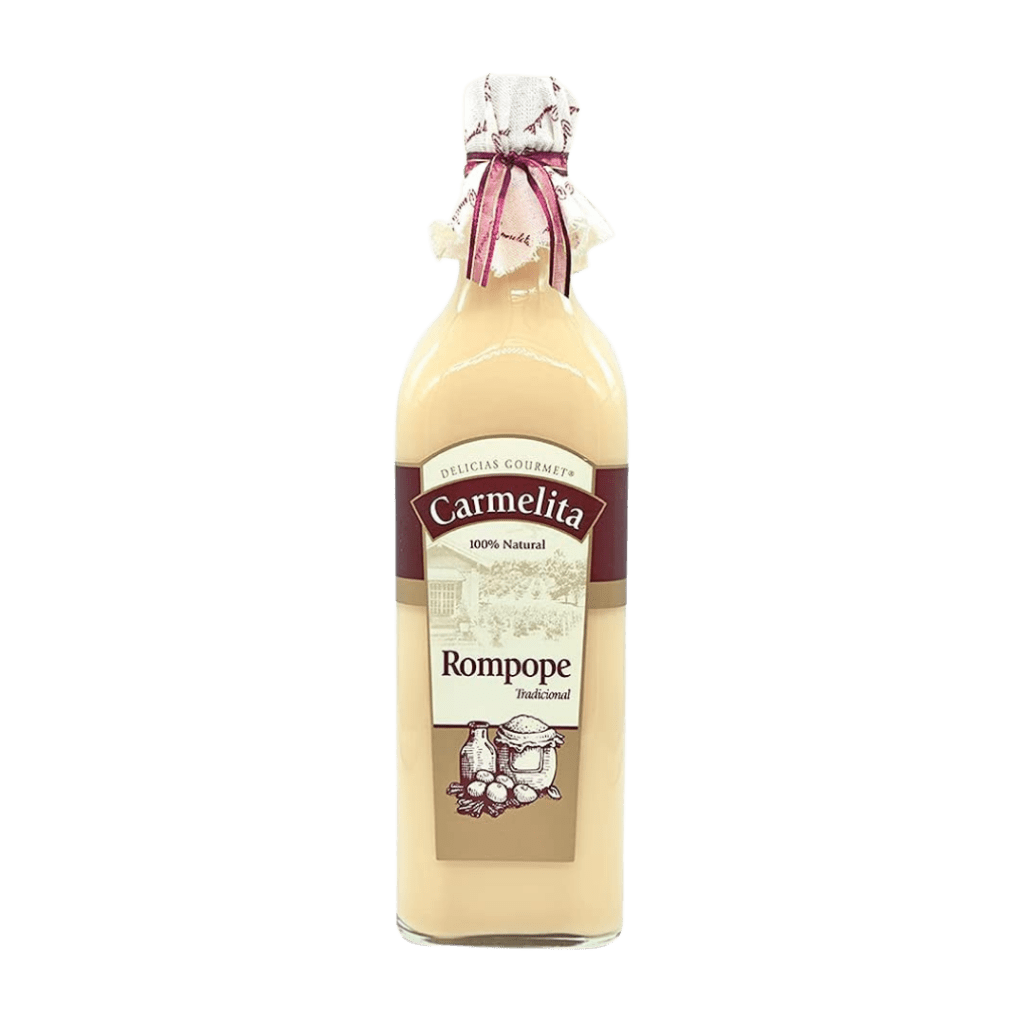
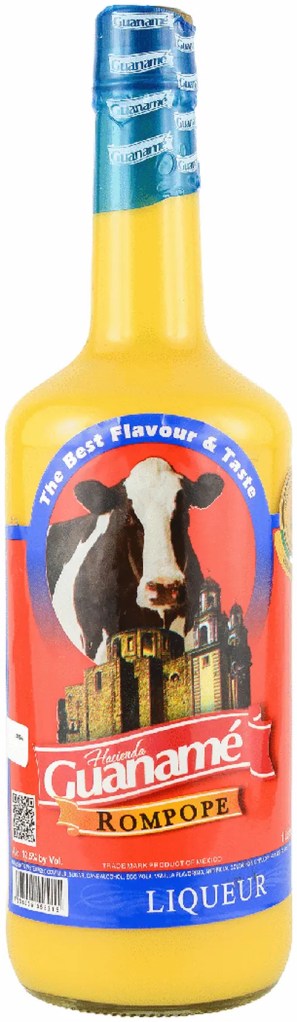
Otros variedades de Rompope
Everyone seems to be in on it now
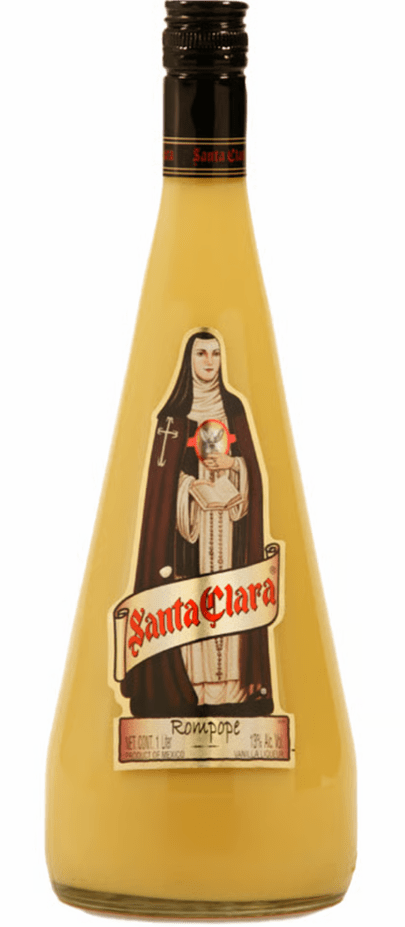
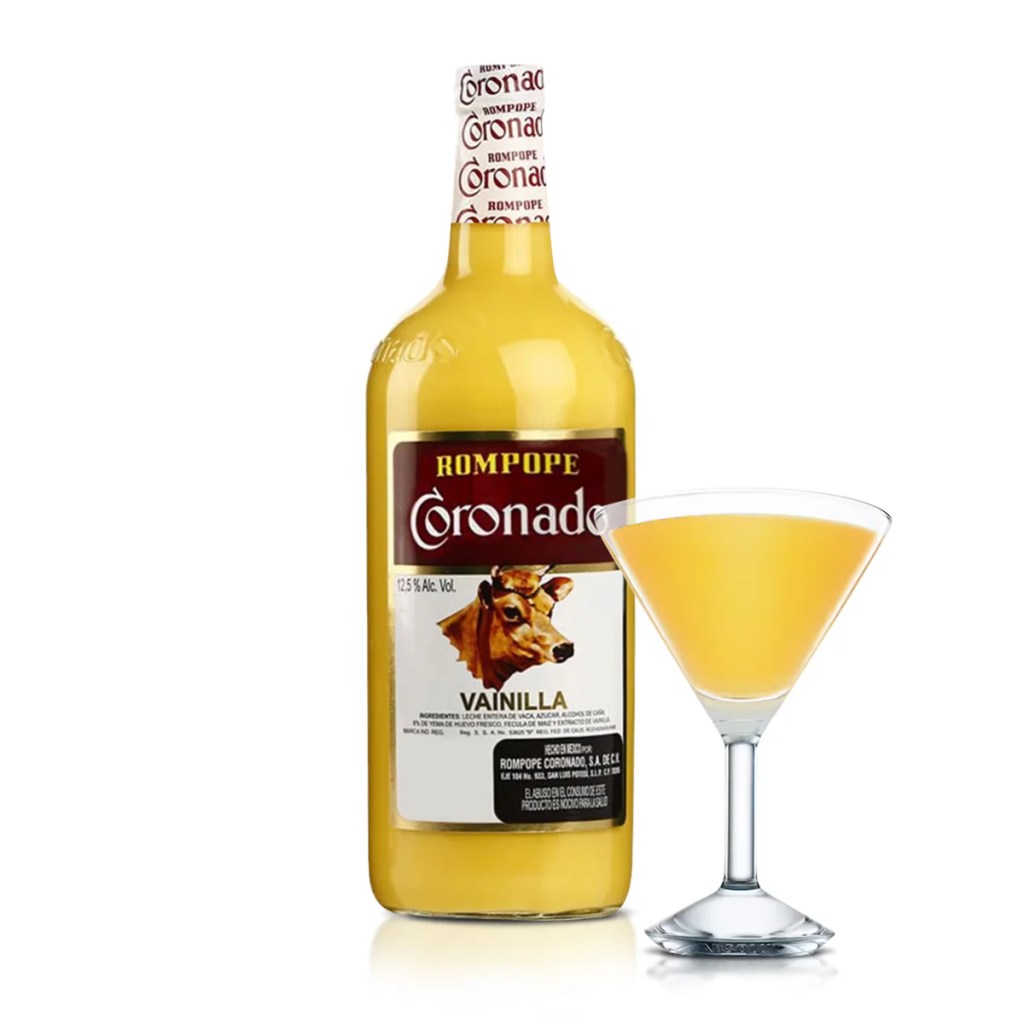
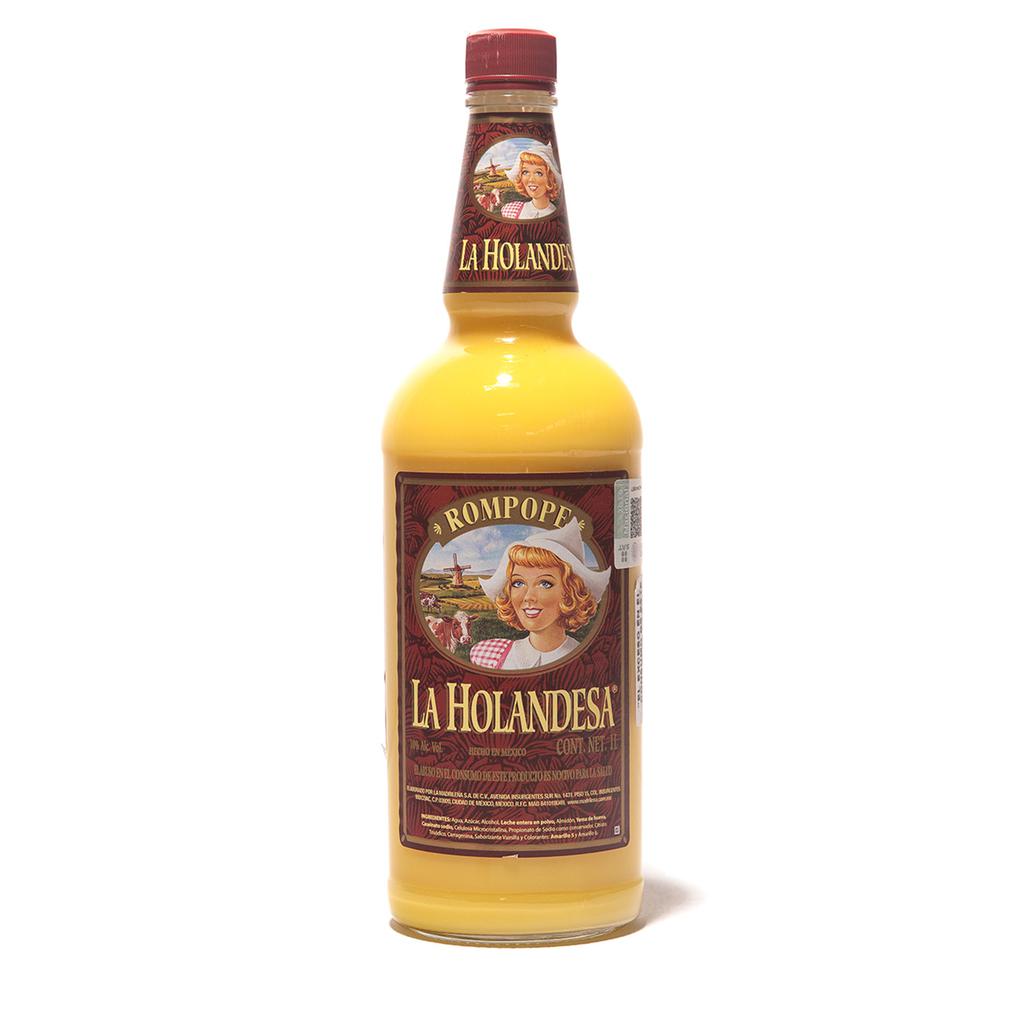
Vanilla is the most traditional, classic flavour of this drink (with Cinnamon (Canela) probably being the next, but this beverage comes in a multitude of flavours including Almond (Almendra), Pecan (Nuez), Walnut (Nogal), Pine Nut (Piñón), Strawberry (Fresa), Chocolate, Coffee Coconut, Cajeta and Pistachio (none of which I have shown)
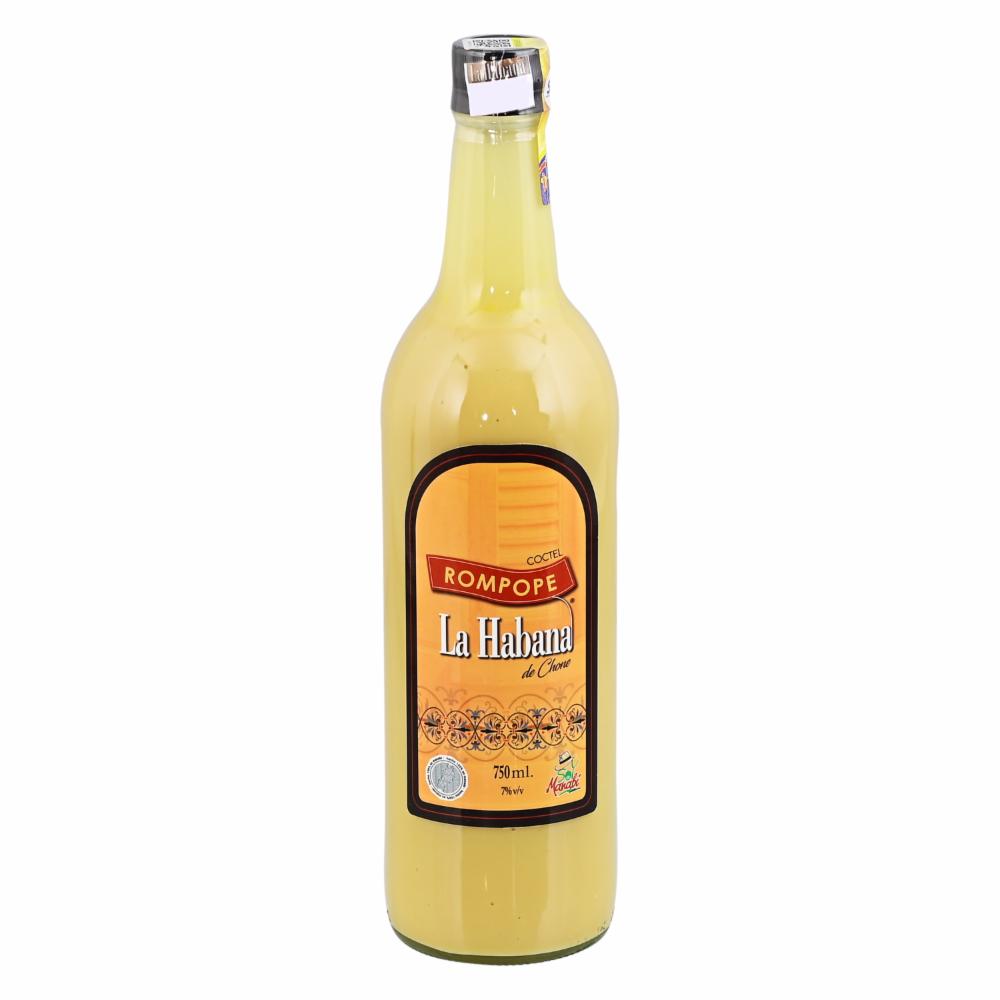
Rompope
Ingredients for Milk Base
- 4 cups whole milk
- ½ cup sweetened condensed milk
- 1 x 5cm sticks cinnamon
- 1 – 2 whole cloves
- 1/4 teaspoon freshly ground nutmeg
- 2 teaspoons piloncillo grated (substitute dark brown sugar)
- ½ a large orange zest (peel cut into wide strips)
- 1 teaspoon vanilla extract or 1 vanilla pod
Version
- soak 1/3 cup slivered almond (or other nut; pine nut (may turn drink pinkish in colour), pecan, macadamia, pistachio, peanur) in 2 cups of the hot sweetened milk mixture for 30 minutes
- blend until smooth
- strain and add to back to the milk mix before final cooking step
Ingredients for Egg Component (6 cups of milk recipe called for 8 egg yolks)
- 6 egg yolks (save egg whites for future use)
- ½ teaspoon baking soda
- Pinch of salt
Ice Bath
- A large bowl with ice and cold water
About the Rum
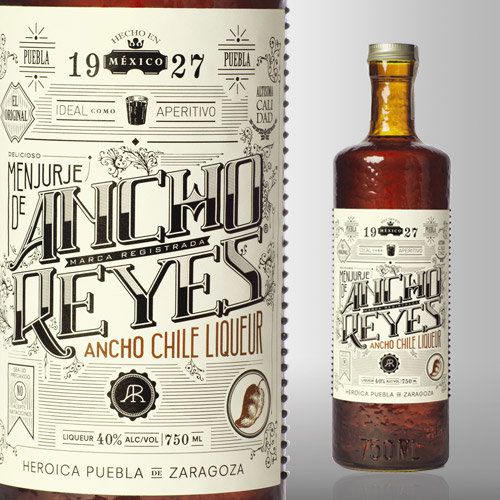
- ½ cup to 1 cup rum. The traditional recipe is 1 cup, but I only use ½ cup, and some like it with dark rum. (1/2 cup clear alcohol – cane spirit, tequila blanco, white rum) and 1/2 cup Ancho Reyes Liqueur
Preparations
The Milk Base
- Add all the milk base ingredients into a saucepan over medium heat until the milk starts to simmer vigorously (don’t boil) for 15 minutes so that all the spices infuse and flavour the milk base. This is where all the flavour comes from, so be patient with this process.
- Stir the milk mixture constantly to avoid any milk sticking to the bottom of the pan. For best results, use a rubber spatula.
*Note: If you did this process correctly there won’t be any milk sticking to the pot (you get an A+). If there is, clean it out, otherwise this will become a magnet for the rompope mixture when it’s cooking in the same pot.
Straining The Milk
- Strain the milk into a pitcher or a bowl with a pour spout to cool, using a mesh sieve to capture all the spices, this will give you a smooth milk base. Set aside while preparing the yolks.
- To avoid getting a film on the milk, put a piece of plastic wrap over the top of the milk.
The Egg Yolk Mixture
- Whisk the egg yolks until they become pale and frothy, this can be done with an electric mixer, but not necessary.
Temper the Yolks
- Slowly add the warm milk, just a little bit at a time, to the yolks.
- Continue mixing by hand to keep the temperature dropping. You don’t want to cook the eggs or have them curdle.
- Once all the milk is added to the eggs, sprinkle in the baking soda and a pinch of salt while continuing to stir.
- Return to the pot to cook and thicken the mixture on medium heat.
*Note: The higher the heat, the faster the process will go, but you risk burning the rompope.
***FINAL COOKING STEP***
Heating the Mixture
- Continue heating and stirring until the mixture is thick enough to cover the back of a spoon, about 15 minutes.
- Remove from the heat immediately.
- Cool the mixture by placing the pot in the ice bath, or by pouring it into a pitcher or bowl which is set over ice water. It will thicken a little more as it cools to room temperature.
*Note: You could also keep stirring until the mixture cools to room temperature. That would take an extra 10 to 15 minutes.
- Once it’s cooled, add the rum and/or brandy/bourbon and stir to incorporate.
*Note: the booze is optional, and can be added when served.
- Refrigerate the entire mixture in a container which you can pour from.
Serving
- Serve chilled. Pour over a glass of ice, with a sprinkling of fresh grated nutmeg.
*Note: The rompope will last 5 to 7 days refrigerated, longer with booze added.
Rompope as a flavour profile
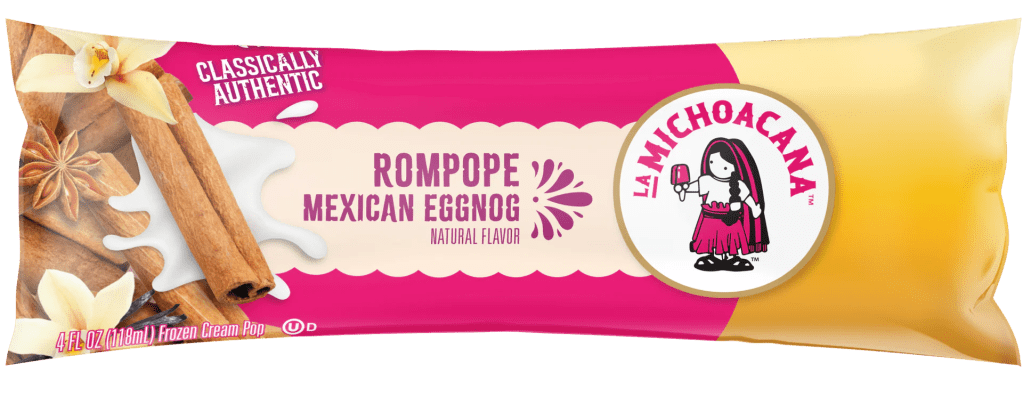
Perfectly suited to ice cream and paletas

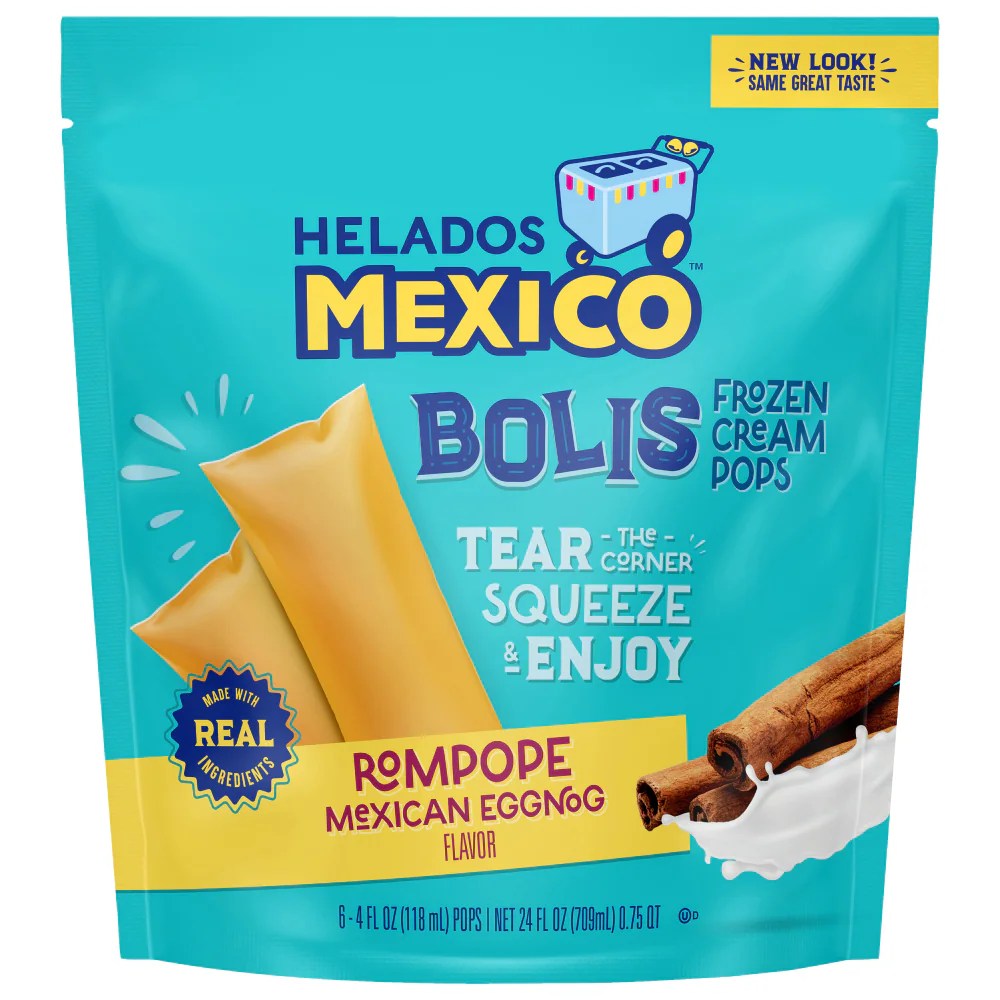
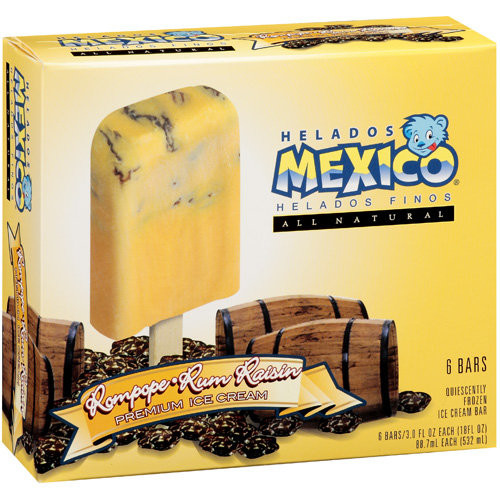
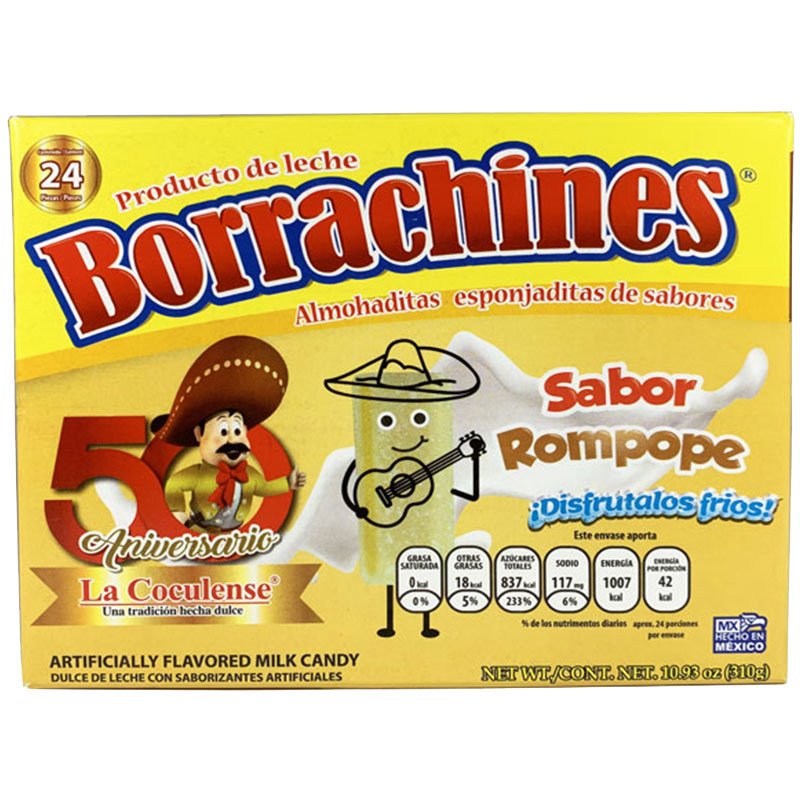
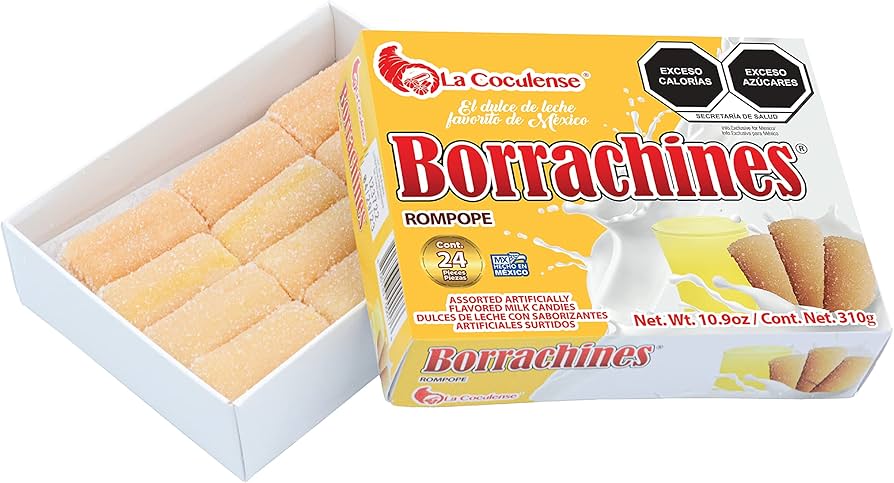
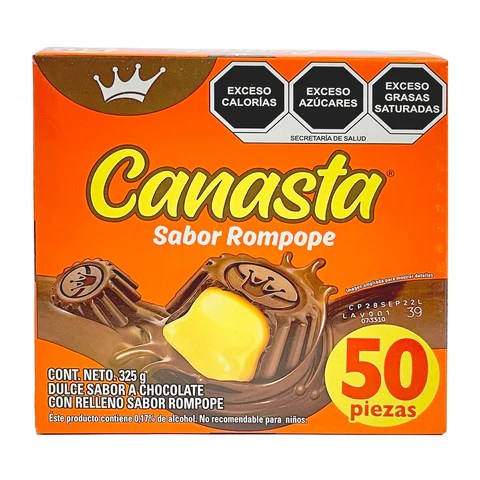
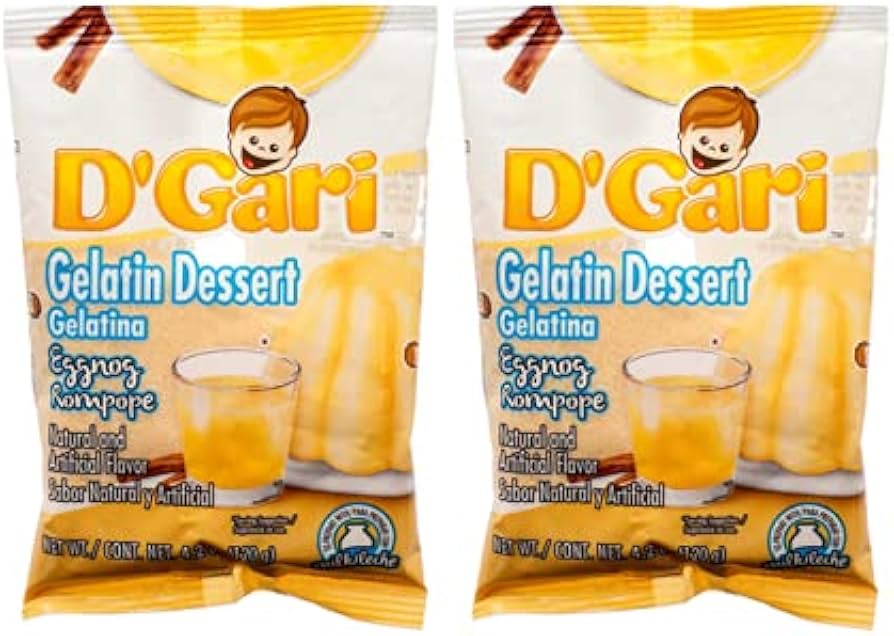
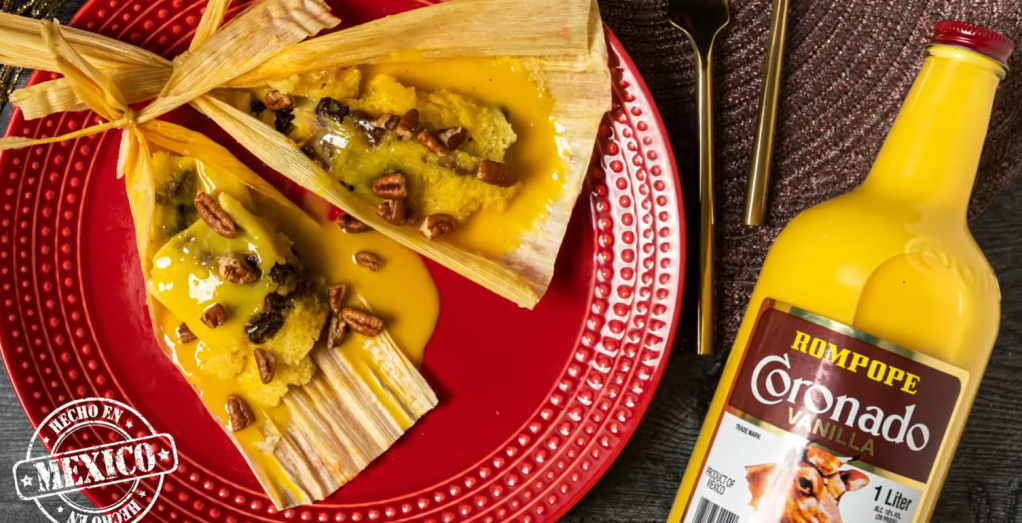
Tamales de Rompope, a dessert dish made with a corn masa dough flavoured with the traditional Mexican eggnog-like liqueur.
Ingredients
For the Masa:
- 1 cup (226g) salted or unsalted butter, softened
- ½ cup (113g) vegetable shortening
- 1 tbsp vanilla extract
- 1 can (14oz/396g) sweetened condensed milk
- 2 tbsp baking powder
- 1 tsp baking soda
- Pinch of salt (if using unsalted butter)
- 2 cups Rompope liqueur
- 5 cups masa harina for tamales (Maseca brand is common)
Optional
- 1 cup raisins
- 1 cup chopped pecans
For Assembly & Steaming:
- Corn husks, soaked in hot water until soft
- A large steamer pot or a pot with a steamer insert
Instructions
1. Prepare the Masa Dough
- Soak Corn Husks: Submerge corn husks in hot water with a weight to keep them down while you prepare the masa.
- Whip Fats: In a large bowl, use a hand mixer to whip the softened butter and vegetable shortening for about 5 minutes until the mixture is smooth and fluffy.
- Combine Ingredients: Add the vanilla extract and condensed milk, mixing well. Next, incorporate the baking powder, baking soda, and salt (if needed).
- Add Rompope & Flour: Pour in the 2 cups of Rompope and a few drops of yellow food coloring. Gradually add the corn flour, mixing continuously for at least 20 minutes until the masa is light and fluffy.
- Test the Masa: Drop a small amount of the masa into a glass of water; if it floats, it is ready.
- Fold in Add-ins: Gently fold in the raisins and chopped pecans with a spatula.
2. Assemble the Tamales
- Remove the corn husks from the water and pat them dry.
- Spread a spoonful of the masa mixture onto the smooth side of a corn husk.
- Fold the sides of the husk towards the center, then fold the narrow tip up towards the filling to close the bottom.
3. Steam the Tamales
- Set up your steamer pot, ensuring you have a layer of corn husks lining the bottom to protect the tamales.
- Arrange the wrapped tamales in the steamer in a stand-up position, starting from the outer edges and working inward. You can use a ball of aluminum foil in the center to keep them upright if necessary.
- Cover the tamales with any remaining corn husks, place the lid on the pot, and steam over medium heat for approximately one hour.
4. Serve
- Once steamed, remove the tamales from the pot and let them cool for at least 10-15 minutes before unwrapping.
- Serve them warm, optionally drizzled with an extra creamy Rompope sauce and sprinkled with chopped pecans.
and heres another variety
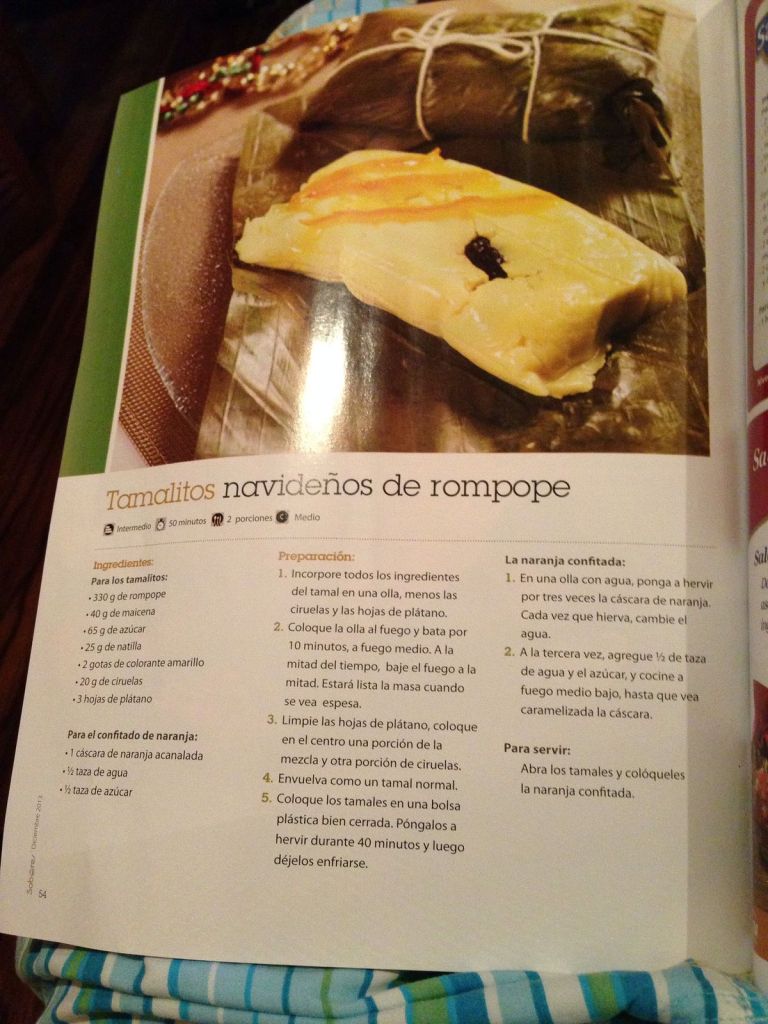
This one differs in quite a few ways but to me the most interesting is the use of hojas de platano (banana leaves) instead of the usual corn husk (hojas de maize) tamal wrapping.
Here’s another popular sweet treat from las Hermanas Pobre de Santa Clara
Tortitas de Santa Clara
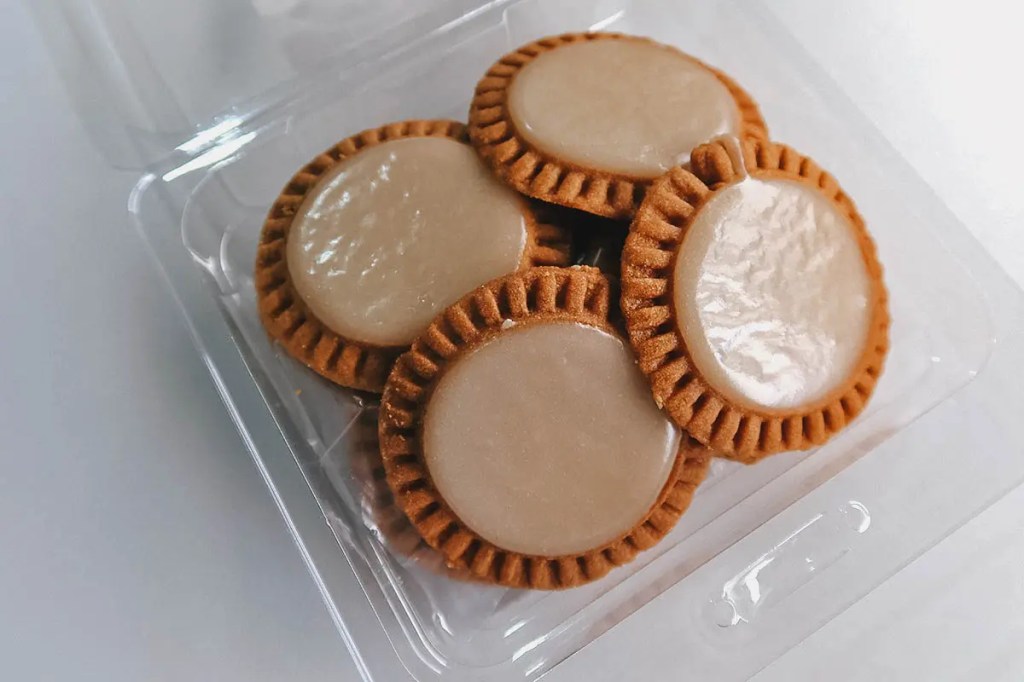
Tortitas de Santa Clara
The tortitas are small, cookie shaped confections that have a sweet and colourful filling. Created in the Santa Clara convent, they are a traditional dessert sold in most Puebla locales.
Ingredients:
- ½ cup of water.
- 125 grams of powdered sugar.
- 1/8 teaspoon of baking soda.
- 3 egg yolks.
- 380 grams of lard.
- 750 grams of flour.
- 5 sheets of brown paper.
- Flour for flouring.
- 500 grams of pumpkin seeds.
- 1 tablespoon of sifted ash or tequesquite.
- 500 grams of sugar.
- ½ cup of water.
- ¼ liter of milk.
Preparation:
- Dissolve the powdered sugar and baking soda with half a cup of water in a bowl; add the butter and mix with a wooden spoon until it is well creamed. Stir in the flour and mix well with your hands until a dough forms.
- Flour a sheet of brown paper and place a little dough on it; cover with another sheet of floured paper and beat very carefully until the dough is half a centimeter thick.
- Remove the paper on top, cut the dough with a 6 cm. diameter round cutter and carefully remove it to place it in baking tins lined with brown paper.
- On the edge of each tortita (pancake) formed, put a strip of the same dough to form a border; mark all around with a fork to make a spiky design.
- Let the tortitas rest for 24 hours and then place them in a preheated oven at 200º C for 12 to 15 minutes or until they are well cooked.
- Let them cool and then fill them. To make the stuffing, soak the pumpkin seeds a day before in half a litre of water mixed with the ash or tequesquite.
- The next day, wash them very well and grind them on a metate or stone to remove the green skin; wash them again, dry them with a cloth and grind them. Cook the sugar in half a cup of water until it reaches the hard ball point, which is recognized when putting a little honey in a glass of cold water and this forms a ball of hard consistency.
- Add the ground kernel, let it boil a little, remove from the heat and whisk. When it has cooled a little, add the milk, continue whisking until it is cold and then fill the tortitas.
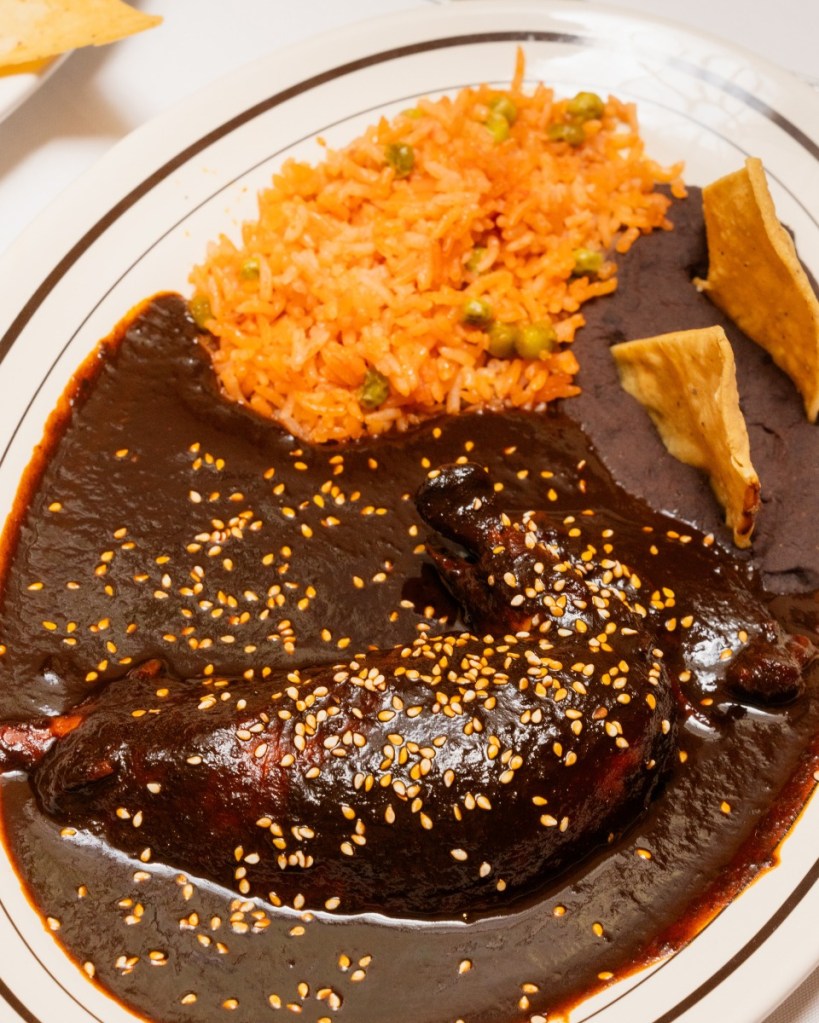
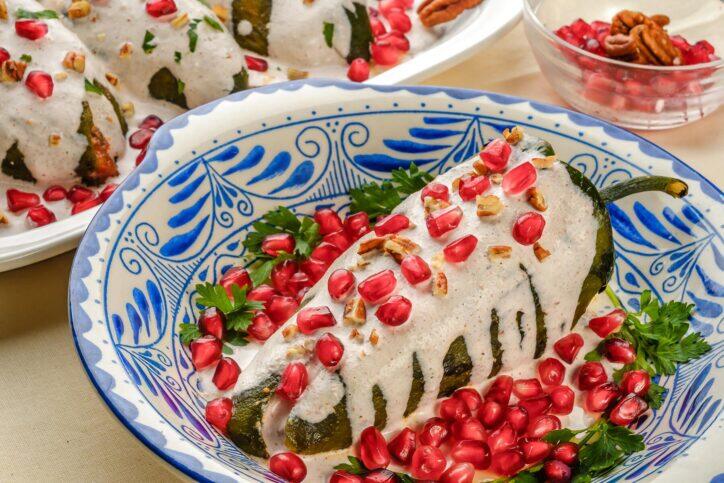
Another two dished made famous by Mexican nuns include Mole Poblano and Chiles en Nogada
Another famous nun from Nueva España
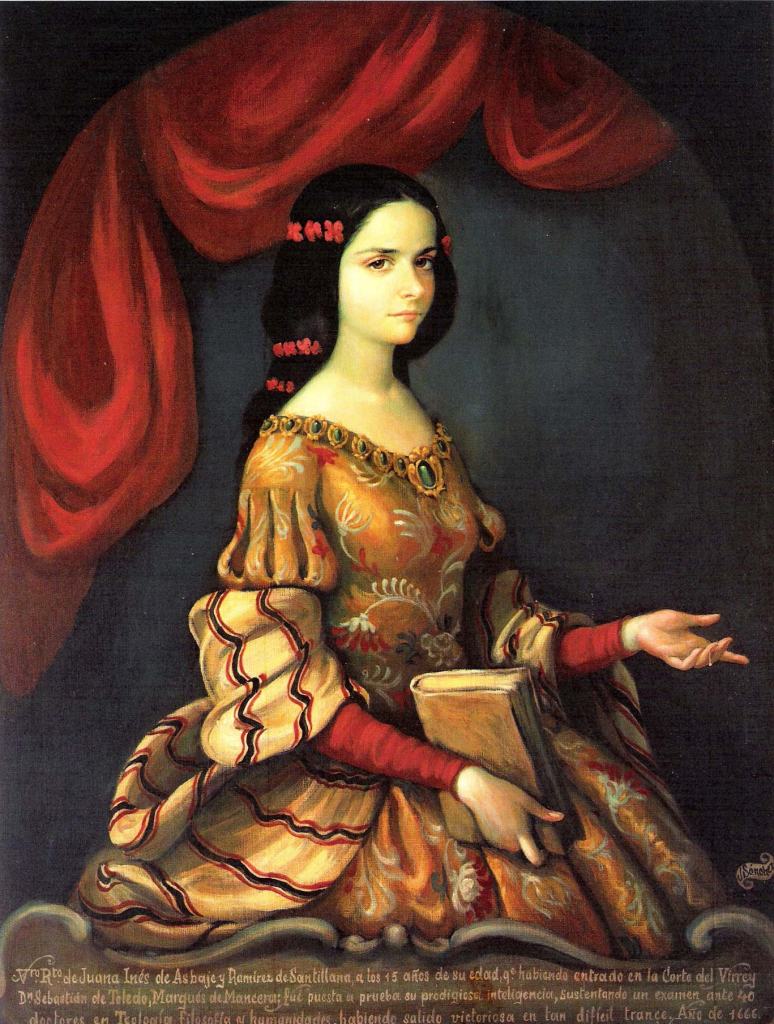
Juana Inés de Asbaje y Ramírez de Santillana (12 November 1648 – 17 April 1695)
Juana was one of three children (1) born out of wedlock (2) near Mexico City, being the illegitimate daughter of Don Pedro Manuel de Asuaje y Vargas-Machuca (1602-1680), a Spanish navy captain, and Doña Isabel Ramírez de Santillana y Rendón (1626-1690), a distinguished criolla (3), whose father leased the Hacienda de Panoayan, near Mexico City.
- Sor Juana was the youngest of three daughters—María, Josefa, and Juana Inés
- Sor Juana was born on November 12, 1651, in San Miguel de Nepantla. Although little is known about her parents, it is known that they were never legally married.
- refers to a person of Spanish descent born in New Spain. These (criollo/criollas) were held somewhat in contempt by the “peninsulares” or Spanish people born in Spain and who then travelled to New Spain in the Americas.
In 1667, Inés entered the Monastery of St. Joseph, a community of the Discalced (1) Carmelite nuns, as a postulant (2), where she remained but a few months. Later, in 1669, she entered the monastery of the Hieronymite nuns, which had more relaxed rules, where she changed her name to Sor Juana Inés de la Cruz.
- Discalced (from Latin discalceatus, meaning “without shoes”) describes religious orders whose members go barefoot or wear sandals as a sign of austerity, devotion, and separation from the world, famously including the Discalced Carmelites reformed by St. Teresa of Ávila and St. John of the Cross, continuing traditions started by St. Francis and St. Clare.
- A postulant is a candidate, typically in Christianity, who is in the initial, probationary stage of joining a religious order (like monks, nuns, or sisters) or preparing for ordination as a deacon or priest, essentially a “sister/brother-in-training” learning about the community and its way of life before becoming a formal novice. The term comes from Latin for “to ask,” signifying their request to join, and involves discernment, prayer, community living, and study, lasting from months to years, depending on the order.
Juana Inés de la Cruz, linked cooking to deep thought, famously saying, “One can perfectly well philosophize while cooking supper,” viewing the kitchen as a place for learning and empirical experience, a perspective reflected in her own recipes for traditional Mexican dishes which showcased culinary mestizaje and women’s intellectual capacity.
Sor Juana saw cooking as a practical, intellectual pursuit, a way to understand the world, much like science or philosophy.
She famously quoted “If Aristotle had cooked, he would have written much more,” (1)
- The extended quote “What could I tell you, my lady, of the secrets of nature that I have discovered while cooking? I observed that an egg unifies and fries in butter or oil, but to the contrary dissolves in syrup; that in order to keep sugar liquid, it suffices to throw on it a very little bit of water flavored with quince or another bitter fruit; that the yolk and white of the same egg when separated and combined with sugar have an opposite effect, and one different from when they are both used together. I do not mean to tire you with such foolishness, which I only recount to give you a complete picture of my nature and because I think it will amuse you. But, my lady, what can women know except philosophy of the kitchen? Lupercio Leonardo has said it well: it is possible to philosophize while preparing dinner. As I often say on observing these little things, if Aristotle had cooked, he would have written much more.”
The above quote is from “Response to Sor Filotea.” referring to her 1691 epistolary defence (1) of women’s right to education, written as a response to Bishop Manuel Fernández de Santa Cruz (who used the pseudonym “Sor Filotea”) for criticizing her intellectual pursuits, showcasing her vast learning with scriptural and classical references to argue that God gave women intellect to use it for understanding faith, not to be silenced by patriarchal church
- An epistolary defense refers to using the epistolary form (writing in letters, diaries, or documents) to justify, explain, or advocate for a position, character, or narrative by presenting it through intimate, first-person perspectives, allowing authors to build authenticity, reveal hidden truths, and create complex viewpoints
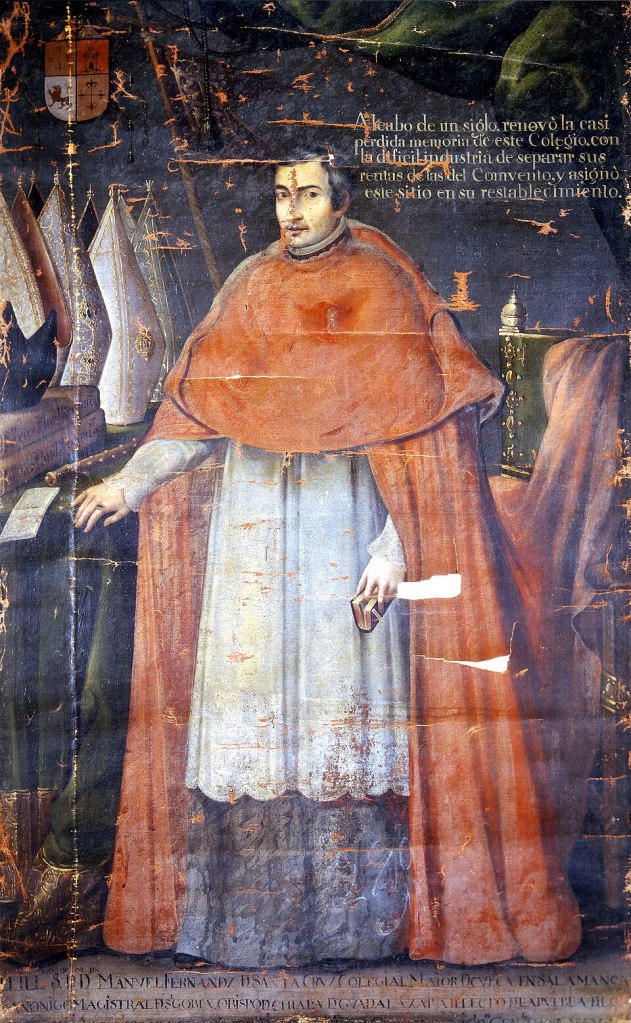
Bishop Manuel Fernández de Santa Cruz played a pivotal, controversial role in the life of Sor Juana Inés de la Cruz by publishing her critique of a sermon, without permission in 1690, then admonishing her under the pseudonym “Sor Filotea de la Cruz,” prompting Sor Juana’s famous “Respuesta a Sor Filotea,” a powerful feminist defence of women’s right to education, which led to increased pressure from church authorities and ultimately curtailed her intellectual pursuits.
Her writings and culinary insights highlight the rich intellectual life of women in convents, who were often epicenters of creativity and learning despite societal restrictions and she used cooking and domestic duties as a metaphor to defend women’s right to be intellectuals, a radical stance for her time. Her activities, during a medieval epoch when science, wisdom and even talent were considered the exclusive domain of men, have made Sor Juana an exceptional figure in the modem history not only of Mexico but of the entire world, as a pioneer of women’s rights.
Sor Juana left behind a collection of recipes, documented in special editions, offering a snapshot of 17th-century Mexican convent cuisine.
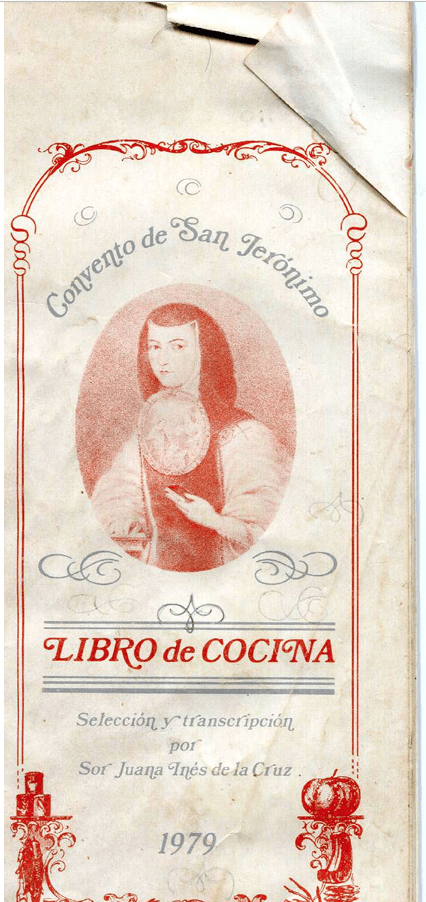
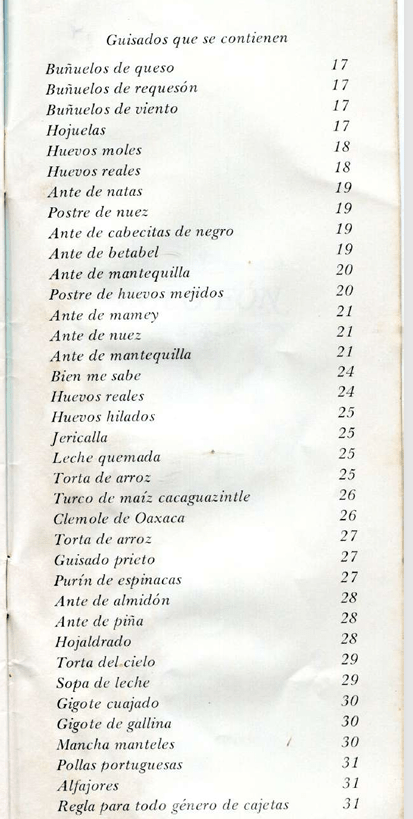
Sor Juana died at the age of 46 on April 17, 1695, the victim of an epidemic that struck the convent of San Jerónimo.
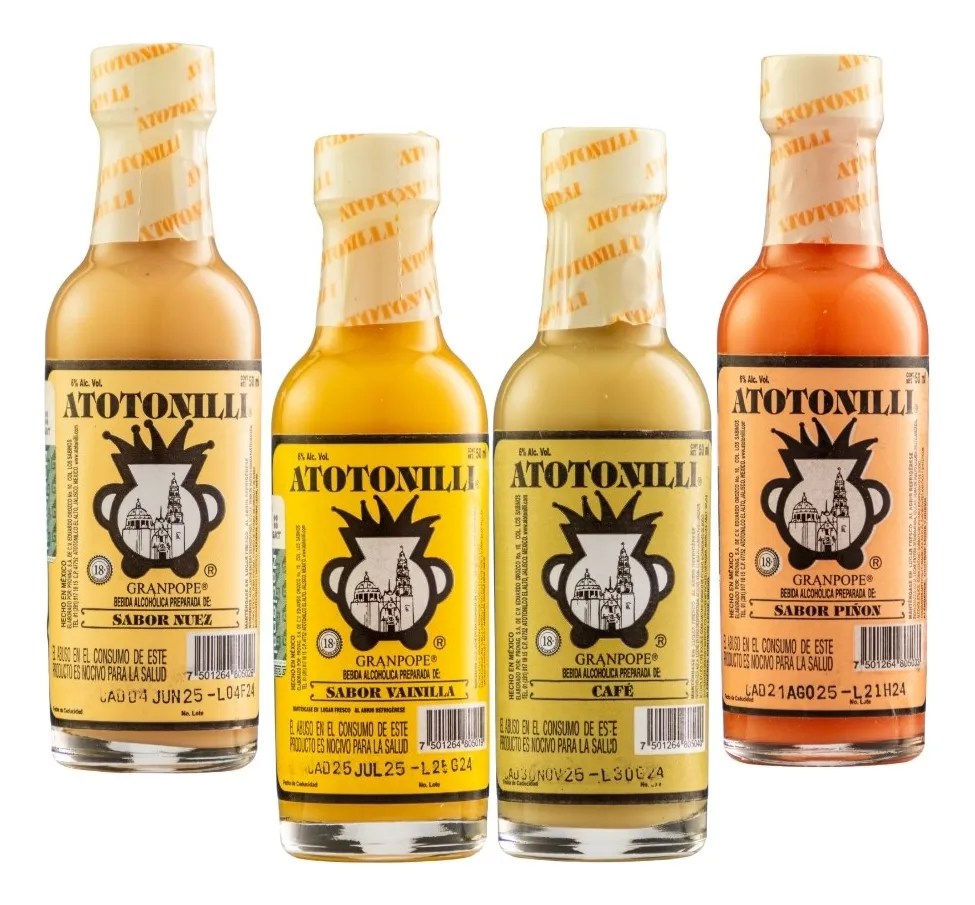
From the calles to the restaurantes rompope navigates them all with ease

Reference Material
- El Rompope de Tehuixtla – https://tehuixtlense.blogspot.com/2014/08/el-rompope-de-tehuixtla.html
- Ex Convento de Santa Clara : Instituto Nacional de Antropología e Historia – https://repositorio.inah.gob.mx/o-861340
- How nuns in Puebla invented rompope and other iconic culinary favorites -https://mexiconewsdaily.com/food/how-nuns-of-puebla-invented-history-of-rompope-plus-other-favorites/
- La historia del rompope y las bebidas que se le parecen – https://laroussecocina.mx/blog/la-historia-del-rompope-y-las-bebidas-que-se-le-parecen/
- Mexico’s Nuns Invented Its Spiked Eggnog, Rompope, but Where Are They Today? – https://drinkingfolk.com/rompope/
- Rompope – https://www.atlasobscura.com/foods/rompope-mexican-eggnog
- Rompope – https://grokipedia.com/page/Rompope
- ROMPOPE “Rompope, the Nuns’ Drink” a.k.a.Rompón – https://www.mexico.mx/en/articles/rompope-drink-nuns?
- Rompope de Monjas, the Mexican Eggnog – https://casamexicana.shop/blogs/blog/rompope-de-monjas-the-mexican-eggnog?srsltid=AfmBOopZYS0db6-m76UvXz1QR3rxg-IBsTsdx1J4kP2IEh2XXaVZ_OWU
- Rompope de Tehuixtla – https://es.wikipedia.org/wiki/Rompope_de_Tehuixtla
- Rompope Navideño {Mexican Christmas Eggnog} – https://mexicoinmypocket.com/blogs/blog/rompompe?srsltid=AfmBOopcA1THxlbef8BKkERSQRZK8lJTBMvJjcxy6WEDHE_Mk87f3ezp
- Rompope (Mexican Milk, Egg, Spice, and Liquor Punch) – https://www.epicurious.com/recipes/food/views/rompope-51213210
- Rompope: Mexico’s Holiday Season Beverage – https://www.mexconnect.com/articles/2329-rompope-mexico-s-holiday-season-beverage/
- Tamales canarios de Rompope via Rompopecoronadousa on Facebook – https://www.facebook.com/rompopecoronadousa/videos/707902689859685/
- Tehuixtla se prepara para su tradicional Feria del Queso, Pan y Rompope 2025 – https://puntoporpuntotv.com/tehuixtla-se-prepara-para-su-tradicional-feria-del-queso-pan-y-rompope-2025/
- The case for cremas, or Why crema de mezcal merits your consideration – https://www.mezcalistas.com/crema-de-mezcal/
- The delicious story behind Rompope – https://www.eluniversal.com.mx/english/delicious-story-behind-rompope/
- Torres Escalona, Luis Roberto (1995) The death of Sor Juana. Voices of Mexico April/ June, 1995 http://www.revistascisan.unam.mx/Voices/pdfs/3108.pdf
 Masa Americana