Quelite : Huauzontle

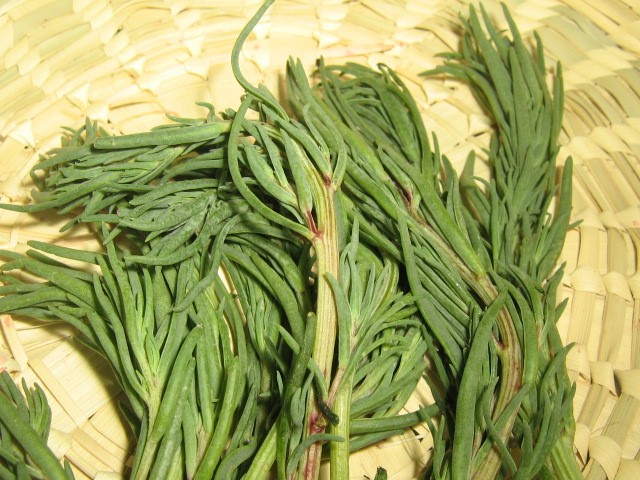
Chenopodium nuttalliae (syn : C.berlandieri) “hairy amaranth” – from the Nahuatl huauhtli ‘amaranth’ and tzontli ‘hair’ According to a Mexican government website (1) the cultivation of huauzontle was prohibited by the Spanish, along with amaranth (2), due to its use in religious rites linked to human sacrifice. Huauzontles are a highly nutritious plant from the Chenopodium or “Goosefoot” family. Other plants in this family include … Continue reading Quelite : Huauzontle

Damiana : Turnera diffusa

syn T.aphrodisiaca (although there are claims that these are two different plants) Also called : Hierba del pastor, shepherds herb, Hierba del venado, damiana de California (or Guerrero), mizib-coc (misibcoc, misib-cooc, xmisibcoc, miixcoc)(Maya) This herb is native to Mexico, southern Texas, Central and South America, and the Caribbean. In Mexico it is used to flavour liqueurs for an aphrodisiac effect. In 1699 Father Juan Maria … Continue reading Damiana : Turnera diffusa

Xochimilco and the Axolotl

The word “Xochimilco” is Nahuatl for “where the flowers grow”. It is an area of lakes and canals that was a major agricultural centre in Mesoamerica and remains as the only reminder of traditional Pre-Hispanic land-use in the waterways of the Mexico City basin. This compound glyph for the place name Xochimilco features two colourful, detailed flowers [xochi(tl)], and a rectangular, segmented, textured parcel of land [mil(li)]. … Continue reading Xochimilco and the Axolotl

Sende : Sendecho

Octli (or pulque) from the maguey and tepache from pineapple are well known; but the knowledge of one drink, Sende (or sendechó/sende choo) is in danger of being lost. Only a few still know the traditional production methods of this drink. It is a labour intensive product and in this day and age of speed and convenience fewer still are prepared to learn the ancient methods of production. When made … Continue reading Sende : Sendecho

Quelite : Plantain

Plantago major also called : lanté (Chiapas), lanten, llantén, rorogochi (Raramuri)Common names : white man’s foot (because everywhere the white man walks it springs up in their footsteps), common plantain, waybread Family : PlantaginaceaeParts used : leaves – aerial parts, seeds Constituents : Leaves – mucilage, glycosides (aucubin), tannins, chlorogenic acid, ursolic acid, silicic acid, mineralsSeeds – mucilage, oils, protein, starch Plantain has been cited … Continue reading Quelite : Plantain

Tepache

Tepache is a traditional drink of prehispanic origin and although it was once produced from the juice extracted from the cooked agave piñas it was soon made from the fruit we now call pineapples. It is believed that pineapples (Ananas comosus) originated in South America in the area around Brazil and Paraguay. The fruit was traded throught the Americas and it was cultivated by both Maya and Aztec … Continue reading Tepache

Mayahuel and the Cenzton Totochtin.

The agave, aguamiel and pulque. Plants played a huge role in Aztec culture. Gardens were kept not only for food and medicinal purposes but for pleasure as well. The conquistadors were amazed by the pleasure gardens of Moctezuma (and Tenochtitlan in general) to the point of wondering whether or not they were walking through a dream. The loss of this beauty was lamented by the very same … Continue reading Mayahuel and the Cenzton Totochtin.

Ecologically friendly alternative to leather from the Nopal cactus. La segunda parte.

I have previously posted about a vegan plant based alternative to leather being produced from the nopal cactus. Two forward thinking inventors and entrepreneurs from Guadalajara and Aguascalientes, Adrián López Velarde and Marte Cázarez were planning to debut their ecologically friendly leather alternative at the International Leather Fair Lineapelle in Milan. Well Adrián and Marte exhibited their product, called Desserto, and it was received with … Continue reading Ecologically friendly alternative to leather from the Nopal cactus. La segunda parte.

Chenopodiums

Chenopod – from Ancient Greek χήν (khḗn, “goose”) + πούς (poús, “foot”) One of the most tenacious, hardy and useful species of wild herb is the Chenopodium. The use of this family of plants has a long history. Archaeological finds suggest that some chenopods, such as fat hen, were not only collected from the wild but may in fact have been cultivated as far back … Continue reading Chenopodiums