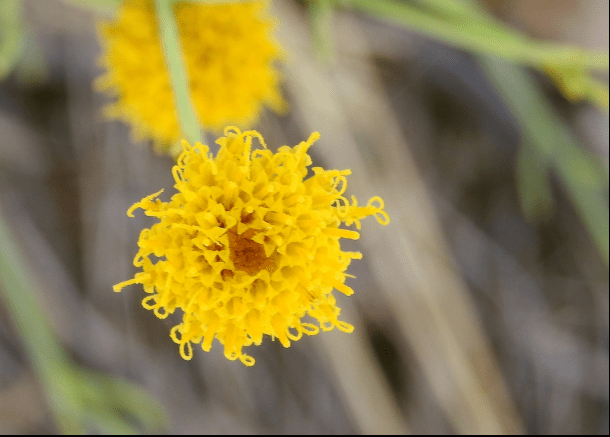
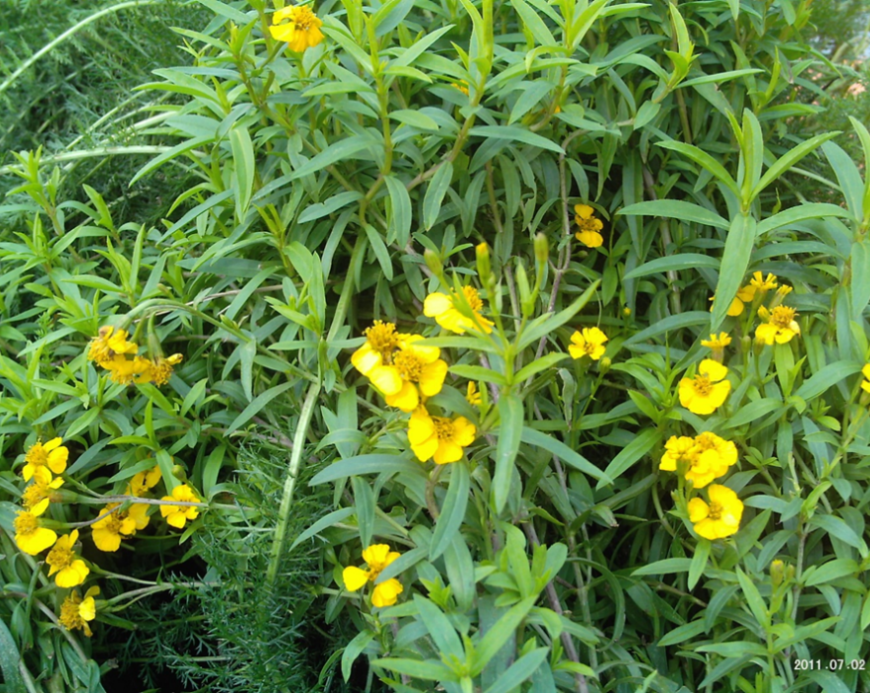
Quelite : Pericón : Tagetes lucida

Tagetes lucida. also called : Mexican tarragon, sweet mace, periquillo, anicillo, basigó, basigoko (Tarahumara), ohoom (Huastec), tumutsali (Huichol) Pericó, Anisillo, atagote, cedrón, flor de xuchitl, hierbanís, hierba anís, hierba de nubes, hierba de San Juan, hierba santa, periquillo, rincón, Santa María, Santa María de jardín, tatalencho, yerbanís. Chiapas: k’anal nich wamal, k’ixin vomol, perikon vomol, tzitz ak, tzitz pox, tzitz vomol, tzitzilal ul (tzotzil), tzitzak … Continue reading Quelite : Pericón : Tagetes lucida

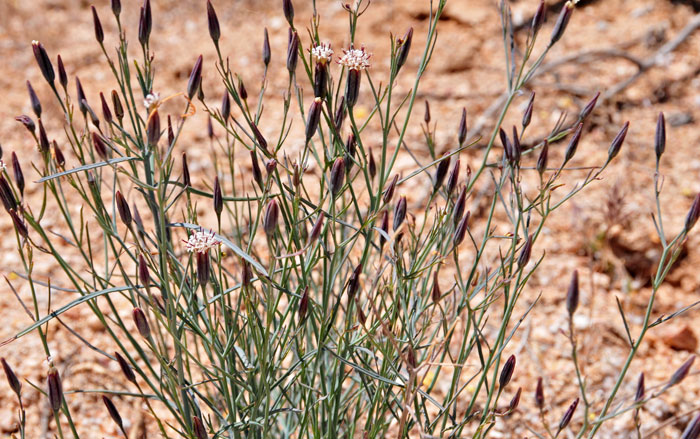
Quelite : Chepiche/Pipicha : Porophyllum tagetoides

Porophyllum tagetoides (syn P.linaria, Kleinia tagetoides ): chepiche, chepito, pipicha, pipitza, pipitzcaquilitl (Nahuatl), tepicha, quelite oaxaqueño, escobeta, papalo delgado (thin papalo), Cole de coyote (coyote tail), yerba de la venado (so called because the plant exhales a stench similar to that which gives off the meat of the deer)(sic) (Hieronymus. G), nlí-dún (Zapotec) named after a stinging ant (ndún), one assumes because of its smell … Continue reading Quelite : Chepiche/Pipicha : Porophyllum tagetoides

Papaloquelite : What’s in a name?

Porophyllums were first described by Linnaeus in 1753. The University of Arizona has specimens in their Herbarium collected from the Sonora and Chihuahua regions in the 1800’s. The Latin translations of some of the names in the poreleaf family are as follows;  The common name “Papaloquelite” is from the Nahuatl words papalotl (butterfly), and quilitl (edible weed, vegetable; adj green). Quilitl (quelite) is from the Goddess Quilaztli, the goddess of “those … Continue reading Papaloquelite : What’s in a name?

Quelite : Quillquina : Porophyllum ruderale

Updated 07/07/22 Also called, chapáhuate (Totonac), chucha, cilantro boliviano, Bolivian coriander, Killkiña, (Bolivia) Quilquiña / Quillquiña / Quirquiña (del quechua killkiña), killi, hierba del shingo (Peru), namu, anamu (strongly scented herb), chucha, shuca ruda (Peru), guacamaya, Picão-branco, cravo de urubu (black vulture marigold)(Brazil), yerba de cabra (goat plant), yerba de venado (deer grass), yerba del ciervo (deer grass), yerba galinazo (buzzards breath), yerba porosa, rudade gallina, … Continue reading Quelite : Quillquina : Porophyllum ruderale

Quelites : Quilitl

Even though anthropological studies are often undertaken there are no truly accurate records of the native use of wild plants. The daily foods of indigenous peoples are usually considered a food of low social status and are often overlooked by peoples of a “developing” society, in particular those people of the society doing the developing. This was the case in Mexico where some plants were … Continue reading Quelites : Quilitl

Amaranth and the Tzoalli Heresy

The amaranth species is used for its seed and its leaves are eaten as a green vegetable. The popped grain is popularly used (both in the past and in modern times) to make a sweet treat called “alegria” (happiness/joy). The amaranth species of quelite is a valuable plant and was held in high esteem by the Azteca. It was one of four grains (the others being maize … Continue reading Amaranth and the Tzoalli Heresy

Quelite : Pápaloquelite : Porophyllum macrocephalum

Porophyllum macrocephalum Also called : Papaloquelite, Papaloqulitl (Nahuatl),Papalokilitl, Papalo, pápalo rollizo, (“plump” papalo), Quelite de mariposa, Mariposa Azteca , pucsnan’caca (Totonac), quelites oloroso, ahoyacaquilitl (sweet scented edible plant), chipaca, chaoacocopin, xpechukil, Pech´uk (Yucatán Maya), xac’ani (Otomi), wacamacho, ukche, tepegua (Queretaro), tepelcacho (Chilapa, Guerrero), tepelcasho, Pápalo macho, pápalo hembra (Mixteca), Chapahua (Totonaco, Veracruz Coast) Chapahuate (Totonaco), chivatillo (Michoacán), Mesis, Tepehua (Hidalgo), liendrilla, yerba de peo, yerba de chulo … Continue reading Quelite : Pápaloquelite : Porophyllum macrocephalum