A Short Discourse on the Aztec Soul.

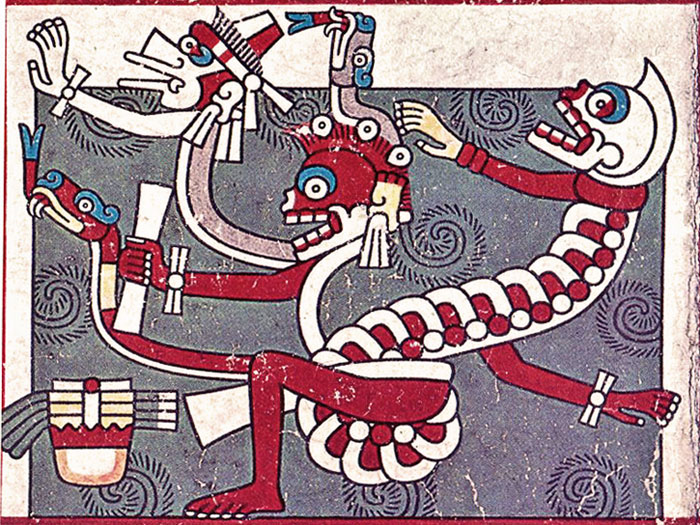
in another Post (1) several references note that the “seat of the soul” for the Aztecs was the intestines and as such gastrointestinal illnesses and conditions, specifically trip ida, are synonymous with another condition called susto (2). My research does not indicate this though. For the Mexica, the human body mirrored the cosmos, both being composed of heavy and light substances. The light substance within … Continue reading A Short Discourse on the Aztec Soul.

Atlaquetzalli. The Drink of Kings*

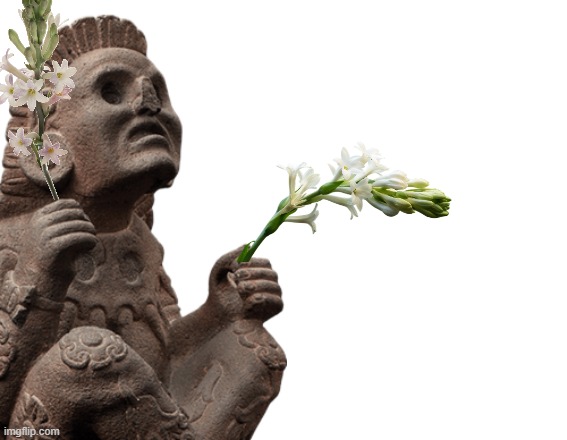
*well “Tlatoanis” actually if you want to be pedantic about it (and I do) I briefly look at the masa based drink called atole in my Post Mexican Cooking Equipment : The Molinillo and go into it in a bit more detail in, A Naturopathic View of the Aztec Diet : Part 2 : Appendix 1 : Atole, and then expand upon it again in another related … Continue reading Atlaquetzalli. The Drink of Kings*

Pozole : Part 2 (Well, Part 1 really)

In a previous Post (Rábano. The Radish.) I mentioned briefly the dish known as pozole (go check the Post out for a bit of a breakdown on the origin and meaning of the word pozole, it’s interesting – well I reckon it is anyway – and it links with a little more etymology in this Post) Anyway. Back to the Pozole. At its most basic … Continue reading Pozole : Part 2 (Well, Part 1 really)

Máscaras Peruanas : Peruvian Masks

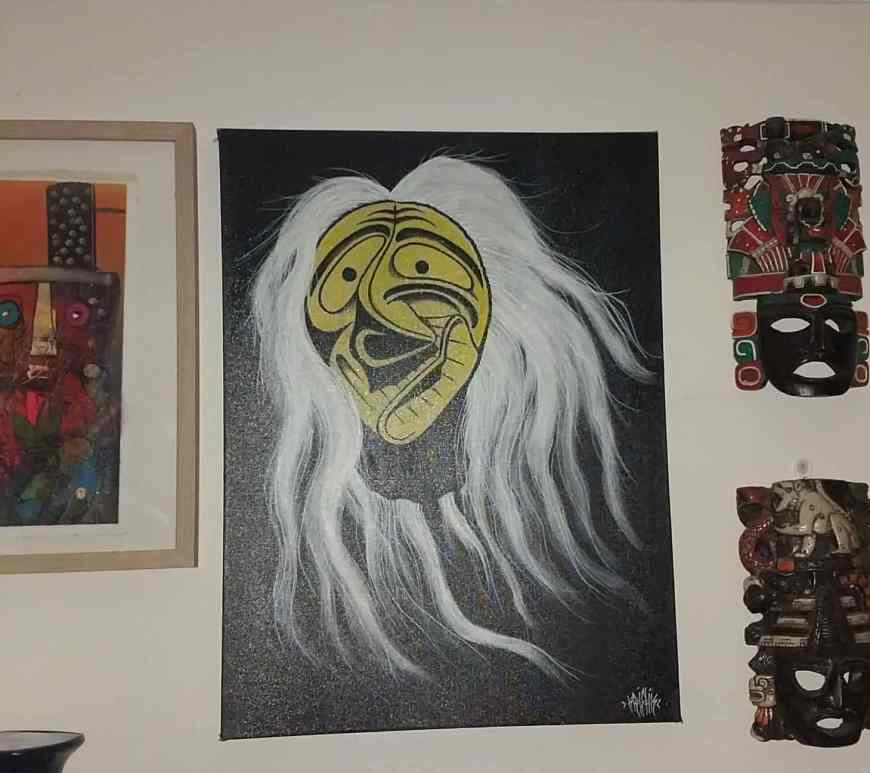
Joyous Yuletide. Well it’s not Christmas but today certainly feels like it. I was scanning Facebook Market place (as I do) to find anything remotely Mesoamerican and mask related when I stumbled across the painting below. I was also quite surprised that it was listed as being FREE. This I could not believe so I contacted the seller and after a little back and forth … Continue reading Máscaras Peruanas : Peruvian Masks

Rábano. The Radish.

So. What is Mike complaining about? The radish (rábano en español) The radish (Raphanus sativus) is a flowering plant in the mustard family, Brassicaceae, which also includes Brassica rapa – the turnip, Brassica oleracea – the cabbage and its relatives (1); and Armoracia rusticana – horseradish. Other herbs in this family include arugula (rocket), mustard, and watercress (horseradish should be here I guess. I consider … Continue reading Rábano. The Radish.

Mexican Cooking Equipment : The Alcahuete

We can thank Mexico (and mesoamerica in general) for chocolate. How chocolate is done outside of Mexico is very different to how it was traditionally used. One aspect of this is the variety of drinks produced from chocolate (1) and another is the equipment used. I have looked at one of these tools previously (2) and today I would like to look at another, the … Continue reading Mexican Cooking Equipment : The Alcahuete

A Naturopathic View of the Aztec Diet : Part 2 : Appendix 2 : Chocolate Drinks

I briefly look at the masa based drink called atole in a couple of earlier Posts (1)(2) and I recommend you check these out for a little more context (culturally speaking). They’ll introduce you to the core ingredient (and arguably the basis of life in Mexico), the nixtamalised corn dough called masa, and it will introduce you to an archetypal piece of Mexican cooking equipment, … Continue reading A Naturopathic View of the Aztec Diet : Part 2 : Appendix 2 : Chocolate Drinks

A Naturopathic View of the Aztec Diet : Part 2 : Diet

“We must repeat it: Mesoamericans do not plant corn, Mesoamericans make cornfields. And they are different things because corn is a plant and the cornfield is a way of life. The cornfield is the matrix (womb) of Mesoamerican civilization. If we really want to preserve and strengthen our deep identity, not only agroecological but also socio-economic, cultural and civilizational, we must move from the corn … Continue reading A Naturopathic View of the Aztec Diet : Part 2 : Diet

Teotl. Gods? Forces of Nature?

I have previously pondered over the next subject (and continue to do so) on a fairly regular basis. My ponderings are of course slanted by my own psyche (and a psyche that was constructed under the banner of Roman Catholicism no less). It has been stated that there were no Aztec Gods and that these “Gods” were in fact philosophical constructs created to bring into … Continue reading Teotl. Gods? Forces of Nature?

Mi Mascaras : The Bakunawa

I have just gained some insight into a mask in my collection that, when I initially purchased it, was told it was African in design. It has however been pointed out by a Filipino friend that it is not African but that it is from the Philippines and represents a mythical serpent spirit known as Bakunawa (1). The Philippines (officially the Republic of the Philippines) … Continue reading Mi Mascaras : The Bakunawa