Prehispanic Drinks – Bate

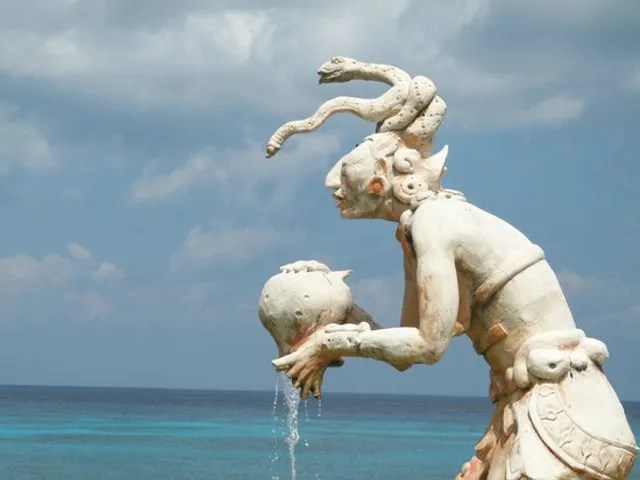
The beverage, bate, is a traditional beverage of the state of Colima made from toasted and ground chan, beaten with water and sweetened with honey or a kind of molasses prepared from piloncillo, or hard brown sugar. The chan seed is an interesting pseudograin that hails originally from the Mexican state of Colima. Suchitlán is a small town around 20 kilometres outside of the state … Continue reading Prehispanic Drinks – Bate

Xochipilli and the Zapote

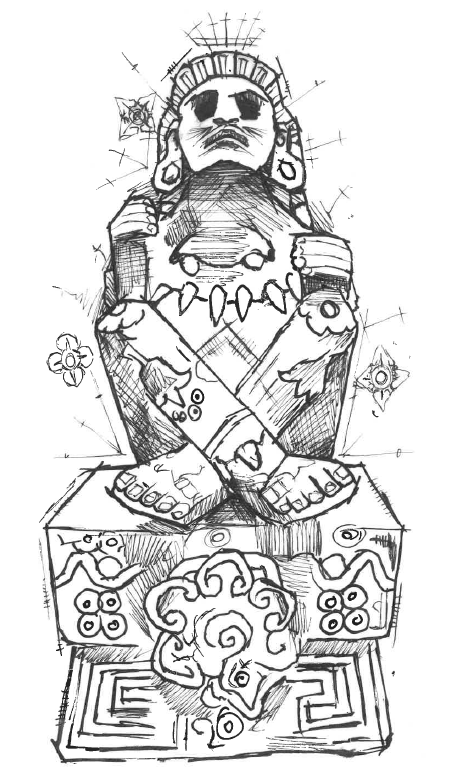
I would like to look at some interesting information regarding a little known (to me) statue of Xochipilli that has recently been mentioned by two history related sites (1)(2) The Posts I speak of. via Tetzcoco Prehispánico on Facebook SCULPTURE OF XOCHIPILLI, HUEXOTLA. Image: Wilhelm Bauer 1901 – 1910 This beautiful tezontle (1) stone sculpture, from Huexotla (2), State of Mexico, measures 15.5 x 11 … Continue reading Xochipilli and the Zapote

Ixchel and the Legend of Chepil

I have posted on the herb chipilin previously and noted both its culinary and medicinal uses. Check this out at Quelite : Chipilin : Crotalaria longirostrata I want to expand upon my original Post with some cultural background on the herb and a legend on the creation of the plant. Many plants have creation myths, usually involving death, violence and/or a tragic love story, and … Continue reading Ixchel and the Legend of Chepil

No tacos para ti : Prehispania Mania

Cover Image : mis disculpas a Vera Cruz (1) A Mesoamerican retrospective delivered in memes (focussing on the Azteca por supuesto). There is some controversy over the term “Aztec”. It has been posited that the word was “invented” by white anthropologists (and sometimes more specifically Friedrich Heinrich Alexander von Humboldt) (1) to describe the people of the Valley of México because, at this stage, Western … Continue reading No tacos para ti : Prehispania Mania

Ingredient : Asiento and a Brief History of Tlayudas, Doraditos and Huaraches.

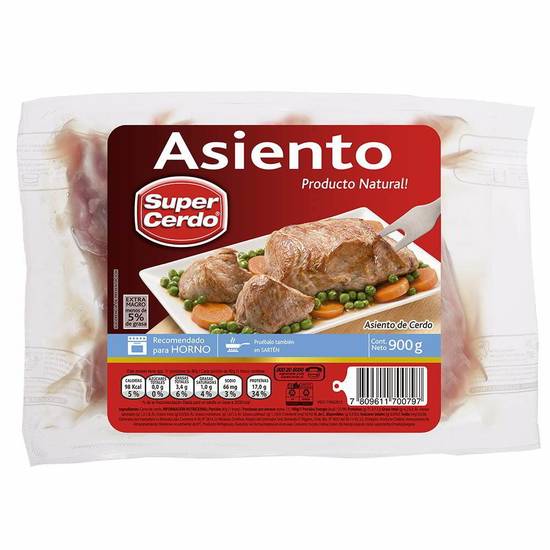
When I was a child a snack that my father would sometimes eat was bread and dripping. Dripping was the fat left in the pan after roasting (usually) either beef or mutton (1). After the roast was removed from the pan the “juices” were allowed to settle and any excess oil rose to the surface. This fat is clear at first but as the contents … Continue reading Ingredient : Asiento and a Brief History of Tlayudas, Doraditos and Huaraches.

Ciudad de México: Bajo Las Calles

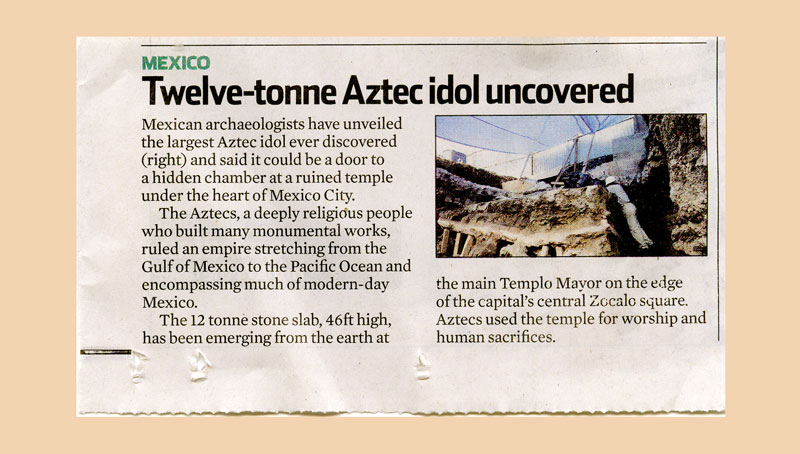
Cover Image : Article from The Observer, Sunday 15th. October 2006 referencing the discovery of the Tlaltecuhtli monolith (more on this later) Under the streets of México City Tenochtitlan lies sleeping. México City was constructed upon the ruins of Tenochtitlan and from the very bones of Tenochtitlan itself. The temples were pulled apart and used to construct the palaces and churches and, in some cases, … Continue reading Ciudad de México: Bajo Las Calles

Michimole : Mole Salvaje (Wild Mole)

In my Post Esquites, Tequesquite and a Witches Curse. I bring up the figure Tlazocihualpilli. Tlazocihualpilli was a Xochimilca who was the Tlatoani of the altepetl (1) of Xochimilco between the Years 12 Reed and 11 Reed (1335 – 1347). She is a semi-mythical being who, apart from being the ONLY female tlatoani to have ruled Xochimilco, and one of very few women to have … Continue reading Michimole : Mole Salvaje (Wild Mole)

Xochipilli. The Symbolism of Enrique Vela

6 July 1840  – 26 August 1912 : José María Tranquilino Francisco de Jesús Velasco Gómez Obregón, generally known as José María Velasco, was born in Temascalcingo (just outside Mexico City). He was a 19th-century Mexican polymath (1), most famous as a painter who made Mexican geography a symbol of national identity through his paintings (2), particularly those depicting the Valley of Mexico. Xochipilli has … Continue reading Xochipilli. The Symbolism of Enrique Vela

Esquites, Tequesquite and a Witches Curse.

Esquites are a “ Mexican snack ” composed mainly of seasoned, boiled corn kernels served in a cup. They are a well known and loved snack throughout all of México. Vendors can be found on street corners, bus stations, train stations and in mercados pumping out the most fundamental (and probably the most original) street food of all Mesoamerica. Now do you want it on … Continue reading Esquites, Tequesquite and a Witches Curse.