Green Rice : Arroz Verde

When you think of rice in Mexican cuisine it is often as rice, beans and tortillas. Rice, beans and tortillas are often the only foods available to the poorest (financially speaking) people in México (1). Rice (Oryza sativa) is considered to have reached the New World via two main means. Initially it was introduced by Spanish colonists through the port of Vera Cruz, probably in … Continue reading Green Rice : Arroz Verde

Prehispanic Veganismo – The Tlaltequeada

A tlaltequeada is a kind of vegetable based rissole (1) typically made with vegetables, fruits, flowers and seeds. It is the perfect example of a quilitl (quelite) based dish and it could be argued that it is representative of a vegetable based cuisine as it would have been practised by prehispanic Mesoamericans. rissoles are what an Australian might call meat patties that include some grated … Continue reading Prehispanic Veganismo – The Tlaltequeada

Chiles en Nogada

Chiles en Nogada (1) Chiles en Nogada is a dish comprised of my favourite fresh chile, the poblano, which has been stuffed. The stuffed chile is then bathed in a walnut sauce and garnished with pomegranate seeds, and fresh parsley. The garnishes represent each colour on the Mexican flag (2), as the dish commemorates Mexican Independence. The dish was first introduced (3) in August 1821, … Continue reading Chiles en Nogada

Aztec Gods or States of Consciousness? Another Observation.

Cover Image : ‘Vocho Teotihuacano’ : Héctor Garnelo Navarro etal The tendency of Christianity (regardless of which form you wish to discuss it in) is to destroy that which does not fit within the confines of its dogma. If it cannot destroy then, much like the Romans (1) it will appropriate and absorb. This appropriation is problematic as although they are appearing to take something … Continue reading Aztec Gods or States of Consciousness? Another Observation.

Xochipilli : Is it a Dahlia?

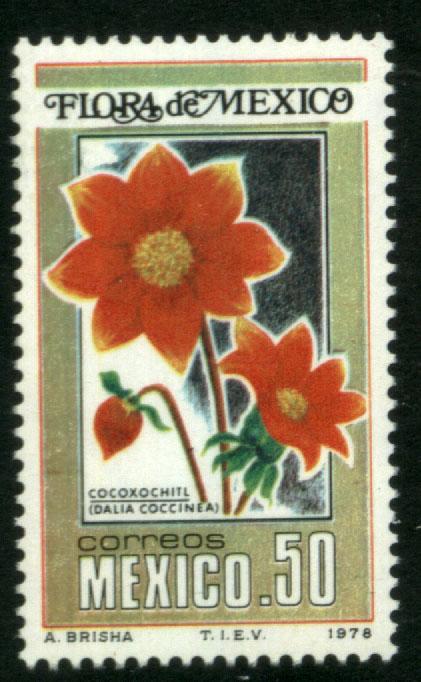
I think we may be overlooking the obvious. In my continuing quest to understand Xochipilli, both in spirit and in form, I am drawn to the floral imagery portrayed on the idol. I am unconvinced of the current paradigm which would have me believe that all of these plants are intoxicants designated for shamanic usage. Wasson, to fit a theory, has perhaps projected his own … Continue reading Xochipilli : Is it a Dahlia?

Poetic Language of the Maguey.

There are many rituals and traditions that surround the imbibing of the life blood of the agave (1) and there is a deep poetry in the language used to describe its consumption. In some rituals of agricultural abundance pulque was poured onto the ground whilst planting the corn to increase the fertility of the earth and encourage the corn to grow. When drinking pulque the … Continue reading Poetic Language of the Maguey.

Xochipilli : Hymn to Xochipilli

Lyric wordplay is a rich cultural tradition in México. In the days of the Aztec poetry and its performance was known as in xochitl in cuicatl (1) (“flower and song” or songs of flowers) and those adept in it were known as xochitlahtoanime (flowerspeakers) or cuicapicque (songmakers). Flowers contained deep symbolic meaning in Aztec philosophy and the very structure of the Universe itself was modelled … Continue reading Xochipilli : Hymn to Xochipilli