




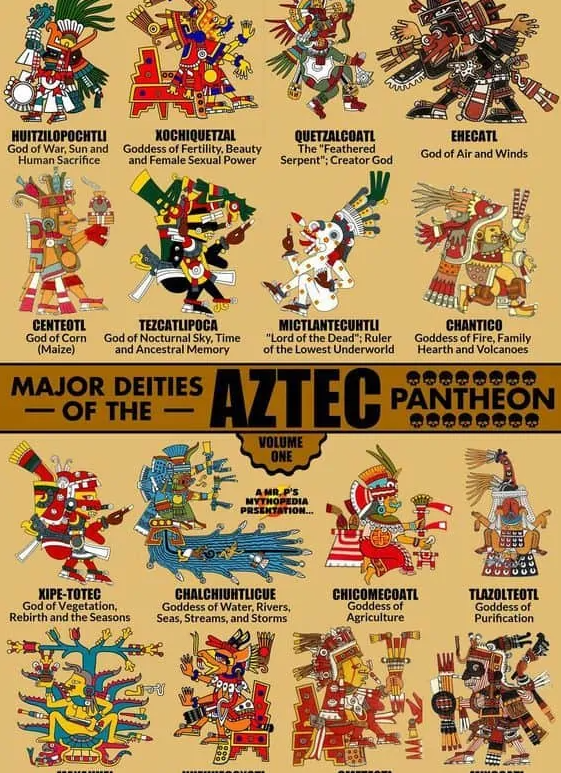
Aztec Gods or States of Consciousness?
I have previously written of the mythology (1) of various Aztec deities (2) and even the origin of the word Aztec or if there was even a people known as the Aztecs (3). I recently came across a video regarding Dia de muertos (4) that has convoluted the issue even more. It seems that even amongst those knowledgeable of such things there is even more … Continue reading Aztec Gods or States of Consciousness?


Porophyllum fruticulosum
syn Porophyllum scoparium also called Hierba del venado, jarilla, romerillo (1) (Coahuila) Romerillo is also the common name for Bidens pilosa (which is also called black-jack, beggarticks, hairy beggarticks, cobbler’s pegs, devil’s needles, Spanish needle, shepherds needles, farmers friend, Devils Pitchfork, sticky beaks, toothache plant) Porophyllum X fruticulosum Rydb. was first proposed in 1916 as a species, typified by a specimen collected by Palmer near … Continue reading Porophyllum fruticulosum

Lactucarium. Parte the Thirde.
Aaaaargh. My daughter (bless her soul) was cleaning the house today (again with the blessings) and she “cleaned up” all the dried sap/latex/resin I had collected. Aaaaargh. To the beginning I go. The main plant I have been collecting from has grown considerably taller. By about a third perhaps. (7 bricks taller maybe). The plant has also sprouted a few more growing tips. I found … Continue reading Lactucarium. Parte the Thirde.
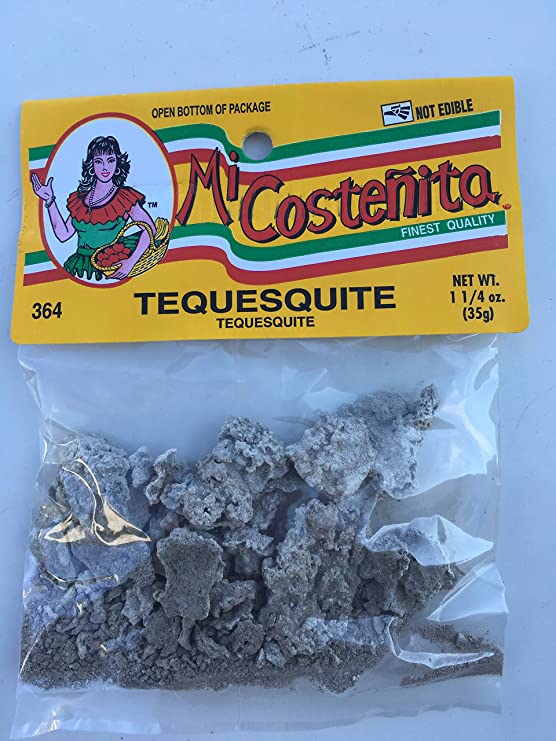
Tequesquite
or tequexquite (from Nahuatl tequixquitl) tetl: stone, and quix-quitl: sprout, sprouting stone. Quixquitl has also been said to translate as “foaming/efflorescent” (1) (Parsons 2001) or “something that comes out by itself, that floats” (algo que sale por sí mismo, que flota). In chemistry, efflorescence (which means “to flower out” in French) is the migration of a salt to the surface of a porous material, where … Continue reading Tequesquite
Porophyllum amplexicaule
The classification of some porophyllums can be somewhat problematic. Even if we completely discount the confusion over the common names of plants in this family there are still stumbling blocks present even in the Latin binomial nomenclature (1) of the species. Binomial nomenclature (“two-term naming system”), a formal system of naming species of living things by giving each a name composed of two parts, both … Continue reading Porophyllum amplexicaule

Damianita : Chrysactinia mexicana
Syn Pectis taxifolia Also called : false damiana (1), damianita daisy, Garañona, Calanca (Vera Cruz) ; Yeyepaxtle (Puebla) ; San Nicolas; hierba de San Nicolas (Coahuila, Durango, San Luis Potosi) ; damiana, damianita (Chihuahua, Durango, Texas), mariola (Valley of Mexico), false damiana, romerillo (Coahuila, Hidalgo); also said to be known as guayule (Lappas & Gustafson 1950) Bigelowia veneta and Haplopappus laricifolius are also called false … Continue reading Damianita : Chrysactinia mexicana
Porophyllum leiocarpum
Syn. : Anthemis valentina, Porophyllum macrocephalum DC. var. leiocarpum Urb. Also called : yerba de peo Porophyllum macrocephalum and Bifora testiculata have also been called yerba de peo. P.leiocarpum is native to the region of Puerto Rico and can also be found in the Dominican Republic, Venezuela, and Brazil. This plant is considered an “invasive” in Venezuela. (Rodrigo etal 2007) In the Monograph of the … Continue reading Porophyllum leiocarpum
Lactucarium : La Segunda Parte
I have come back to my wild lettuce plants to see how my lactucarium is coming along. The sap has dried into brown scabs on the stalk of the plant. There seems to be fewer areas of dried sap than the cuts I initially made. It is these brown crusty bits that I will harvest and later process into a tincture. I missed the fist … Continue reading Lactucarium : La Segunda Parte
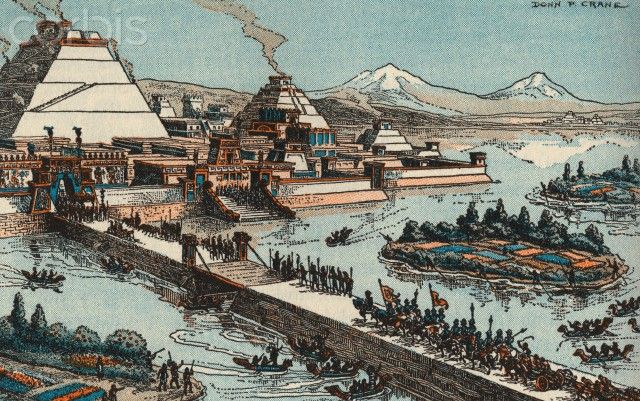
Tenochtitlan in Australia?
The Mesoamerican deity Huitzilopochtli was the patron god of the Mexican people during the height of Aztec rule. Where he stands now is a little less clear though. Huitzilopochtli’s legend goes (1) that after he was betrayed by a nephew he killed him and removed his heart. This heart was disposed of on an island in the middle of Lake Texcoco and, like many creation … Continue reading Tenochtitlan in Australia?

Lactucarium
I have previously written of the herbal extract known as lactucarium (1) produced from the wild herb Lactuca virosa. This plant, also known as wild lettuce is an edible plant whilst still young and tender. As it ages it becomes too prickly and bitter to eat. Much like other plants of its ilk (dandelion, cats ear, sowthistle) it produces a sticky white sap (or latex). … Continue reading Lactucarium

