Porophyllum japonicum

Papalo has a primo chino or Chinese cousin who unfortunately has been poorly done by when it comes to its name. The Japanese named “Sanshichi-so” (Porophyllum japonicum) (1) belongs to the Asteraceae family as do the others originating in the Americas but it is a perennial herb that is native of the southern part of China. It was introduced into Japan as a herbal medicine … Continue reading Porophyllum japonicum

Allelopathy and Companion Planting.

The language of botany and medicine can be quite poetic. The words are derived from historical languages and may (usually) contain Latin or Greek terms (1) and each word if etymologically (2) broken down is a story in itself. As a somewhat appropriate example I present an example as given by Babbel Magazine (3). “The word avocado comes from Spanish aguacate (sometimes ahuacate), which in … Continue reading Allelopathy and Companion Planting.

Xochimilco and the Axolotl

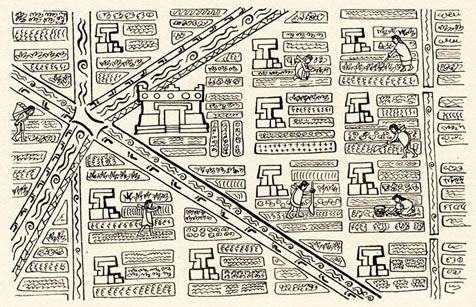
The word “Xochimilco” is Nahuatl for “where the flowers grow”. It is an area of lakes and canals that was a major agricultural centre in Mesoamerica and remains as the only reminder of traditional Pre-Hispanic land-use in the waterways of the Mexico City basin. This compound glyph for the place name Xochimilco features two colourful, detailed flowers [xochi(tl)], and a rectangular, segmented, textured parcel of land [mil(li)]. … Continue reading Xochimilco and the Axolotl

Papaloquelite : What’s in a name?

Porophyllums were first described by Linnaeus in 1753. The University of Arizona has specimens in their Herbarium collected from the Sonora and Chihuahua regions in the 1800’s. The Latin translations of some of the names in the poreleaf family are as follows;  The common name “Papaloquelite” is from the Nahuatl words papalotl (butterfly), and quilitl (edible weed, vegetable; adj green). Quilitl (quelite) is from the Goddess Quilaztli, the goddess of “those … Continue reading Papaloquelite : What’s in a name?

Quelites : Quilitl

Even though anthropological studies are often undertaken there are no truly accurate records of the native use of wild plants. The daily foods of indigenous peoples are usually considered a food of low social status and are often overlooked by peoples of a “developing” society, in particular those people of the society doing the developing. This was the case in Mexico where some plants were … Continue reading Quelites : Quilitl