Esquites, Tequesquite and a Witches Curse.

Esquites are a “ Mexican snack ” composed mainly of seasoned, boiled corn kernels served in a cup. They are a well known and loved snack throughout all of México. Vendors can be found on street corners, bus stations, train stations and in mercados pumping out the most fundamental (and probably the most original) street food of all Mesoamerica. Now do you want it on … Continue reading Esquites, Tequesquite and a Witches Curse.

Poreleaf Adjacent : San Felipe Dogweed : Adenophyllum porophylloides

I have briefly looked at this herb in my Post Papalo and Pipicha. Skunk Weed? and as it is tantalisingly close to my love papalo I would like to investigate it a little more deeply (and grow it if I can source the seed). Also called : Yerba del Venado, Coronilla, Cempasuchil sencillo, Corona de Rey, arnica, San Felipe dyssodia, San Felipe dogweed, San Felipe … Continue reading Poreleaf Adjacent : San Felipe Dogweed : Adenophyllum porophylloides

Ketumbar Bolivia : The Poreleaf in Southeast Asia

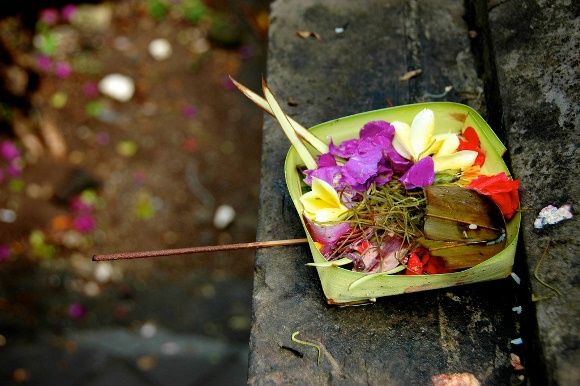
Cover image : roadside offering to the Gods on a street in Bali. Ketumbar Bolivia = Bolivian Coriander : generally identified as Porophyllum ruderale (syn P.ellipticum) Also called : Seungit (fragrant, smells good – Indonesia.) In southeast Asia Ketumbar Bolivia is a type of papalo usually identified as being the variety known as Porophyllum ruderale. Ketumbar (katumbar) is a Brunei Malay (1) word signifying the … Continue reading Ketumbar Bolivia : The Poreleaf in Southeast Asia

A Naturopathic View of the Aztec Diet : Part 1

Wow. This started as something else. We’ll get to the Aztec diet part in a minute. Before I wanted to start I thought I’d define a couple of terms (one being “Naturopath”) so I thought I’d do a quick Google to get some ideas of the definitions out there and how they measured against what I know and all I can say is Holy Fuck! … Continue reading A Naturopathic View of the Aztec Diet : Part 1

Medicinal use of Papalo in 1651 as noted by Hernández

One of the first written references to papaloquilitl is to be found in the work Historia natural de Nueva España (7 Volumes) penned by Francisco Hernández de Toledo circa 1570 AD Now, to the author…. Francisco Hernández de Toledo (c. 1515 – 28 January 1587) was a naturalist and court physician to King Philip II of Spain. He was among the first wave of Spanish … Continue reading Medicinal use of Papalo in 1651 as noted by Hernández

Papalo – A Lexicon of Local Names

I have previously Posted on the use of Latin binomial nomenclature or the “two name” system of classifying plants as being vitally important in regards to the positive identification of a specific plant. This is particularly relevant if you are taking the plant internally either as a medicine or a food. One plant may have a plethora of common names (as is demonstrated below) or … Continue reading Papalo – A Lexicon of Local Names

Papaloquelite : It’s History in Text

The first written references to papaloquelite (papaloquilitl) appear in the Libellus de Medicinalibus Indorum Herbis (“Little Book of the Medicinal Herbs of the Indians”) or more commonly the Codex de la Cruz-Badiano (Badianus Manuscript) . This text was written by Martín de la Cruz in the Colegio de Santa Cruz de Tlatelolco (1) in 1552 and then translated into Latin by Juan Badiano. The book … Continue reading Papaloquelite : It’s History in Text

Papalo, Guerrero, and the Cemita Poblana.

Papalo is a herb that falls under the designation of “quelite” (1). Quelites are (usually) wild herbs that are allowed to grow if they spontaneously sprout within the milpa or are collected from the wild. The term quelite is not limited to leafy herbs but also encompasses the flowers (2), roots (3), vines, stems (4) and seeds (5) of various plants (including trees)(6). Some quelites … Continue reading Papalo, Guerrero, and the Cemita Poblana.