Flor de Maguey : The Agave Flower

We primarily know the maguey as being edible for its “juice” which can be used to make the fermented drink pulque or the distilled drinks mezcal, tequila, bacanora and raicilla (as well as all the un-named vino de agaves). But…..did you know the agave can be eaten? The baked pencas (1) and quiote (2) are quite edible (3). The outer petals of the maguey flowers … Continue reading Flor de Maguey : The Agave Flower

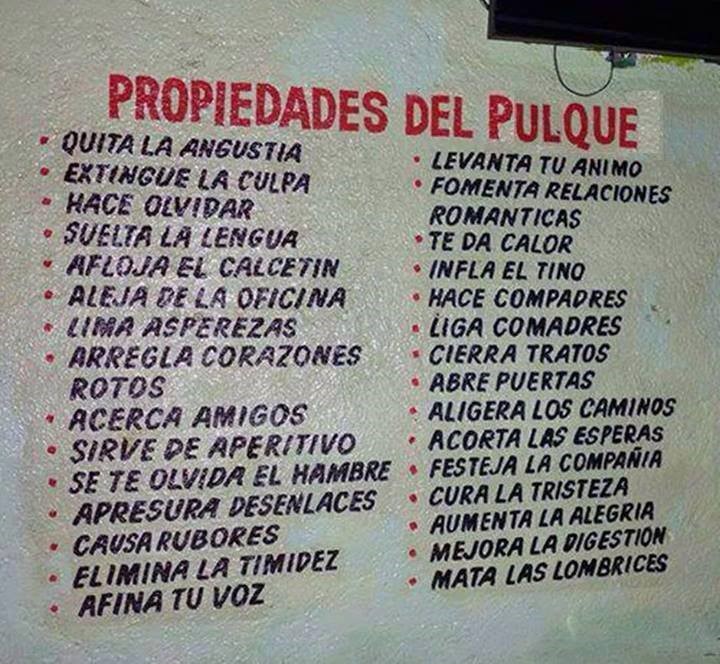
Medicinal Qualities of Pulque

Aguamiel and pulque are both highly nutritive liquids. Aguamiel in its raw state (prior to fermentation) contains essential amino acids, proteins, vitamins, gums and minerals and is a valuable water substitute in areas where water may be scarce or potentially contaminated and unsafe to drink. When aguamiel is dehydrated it is composed of around 90% sugars (mainly sucrose, glucose and fructose) and around 10% fructooligosaccharides (fructans – primarily … Continue reading Medicinal Qualities of Pulque

Nutritional Value of Aguamiel

Nutritional value of aguamiel from Agave atrovirens Minerals mg/100 g Potassium (K) 120.44 Calcium (Ca) 11.70 Zinc (Zn) 0.18 Iron (Fe) 0.81 Sodium (Na) 0.83 Copper (Cu) 0.07 Magnesium (Mg) 0.55 Selenium (Se) 0.047 Water-soluble vitamins mg/100 g Thiamine (B1) 0.10 Riboflavin (B2) 0.38 Niacin (B3) 4.77 Pyridoxine (B6) 0.57 Ascorbic acid (C) 17.99 Amino acids mg/100 g Aspartic acid 7.91 Glutamic acid 20.08                                                Serine 4.48 … Continue reading Nutritional Value of Aguamiel

The Agave, Barbacoa and Mixiotes

The leaves of the maguey, called “pencas” are utilised for numerous purposes. One variety is used to create the fibre known as sisal while the thicker varieties can be cooked and eaten. Even the thorns were used as needles and for the practice of auto sacrifice. Some religious devotees and priests would pierce their earlobes, tongues or genitals with the thorns and collect the blood … Continue reading The Agave, Barbacoa and Mixiotes

Frutos de Cactus : Colonche

Updated 08 June 2022 Colonche (1) is another Mesoamerican fermented drink similar in design to tepache and pulque. It is produced from the tuna fruits of several species of the nopal cactus (most notably O.strepthacantha) and is fermented using wild yeasts. Its shelf life, like that of tepache is somewhat longer than that of pulque and it can be expected to last for as long as 14-15 days. It is a … Continue reading Frutos de Cactus : Colonche

Medicinal uses of Xoconostle

The habitual consumption of the skin and fruit of the xoconostle can be useful in the control of serum glucose in individuals with Type 2 diabetes. In healthy people xoconostle can help prevent hyperglycaemic states and potentially reduce the concentration of cholesterol and triglycerides which may be related to metabolic syndrome.(Pimienta-Barros etal) Xoconostle pears (Opuntia matudae) have attracted the attention of researchers around the world due to this … Continue reading Medicinal uses of Xoconostle

Frutos de Cactus : Xoconostle

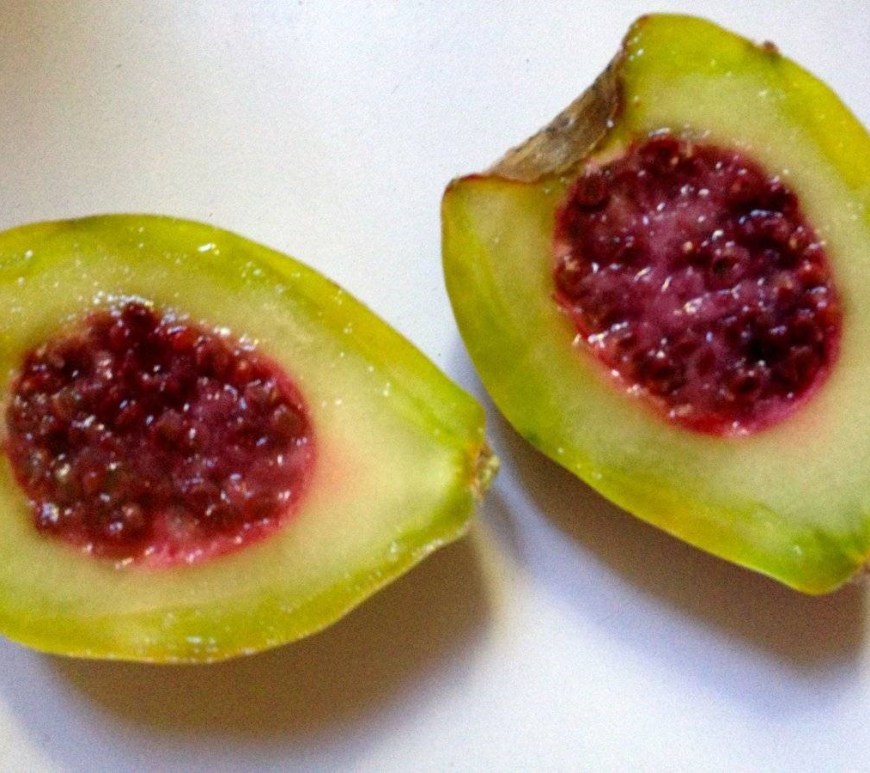
The xoconostle (from Nahuatl xoconōchtli – ‘Xococ’ = ‘sour’ and ‘nochtli’ = tuna or prickly pear fruit) is native to central México and the arid semi-desert areas such as: Coahuila, Zacatecas, Jalisco, San Luis Potosi, Guanajuato, Queretaro, State of Mexico and Hidalgo. It is the fruit of a type of Opuntia cactus. There are more than 15 varieties of this fruit. Opuntia joconostle, O.chávena, O.lasiacantha Pfeiffer, O.matudae and O.delafuentiana are noted … Continue reading Frutos de Cactus : Xoconostle

Pulque Production

The processing of pulque happens in four stages. Castration Pit scraping and aguamiel extraction Seed/mother preparation Fermentation Castration It can take between 7 and 40 years before an agave is ready to harvest the aguamiel and it can take an expert to know when exactly to castrate the plant, if done too late then the plant will produce no aguamiel, if done too early then aguamiel production will be greatly … Continue reading Pulque Production

A Note on Deer Weed : The Danger of Common Names

Yerba del venado (Hierba de Venado, Yerba del ciervo) The first text I have come across that refers to papaloquelite under the moniker “deer weed” is that of Hernandez who writes of the herb MAZATLIPAPALOQUILITL or deer papaloquilitl. mazatl. Principal English Translation: deer. – Frances Karttunen: MAZĀ-TL pl: MĀMAZAH – MAZĀ-MEH deer / venado (M), ciervo quilitl. Principal English Translation: edible herbs and vegetables – … Continue reading A Note on Deer Weed : The Danger of Common Names

Pulque as a Cooking Ingredient

As the flavour and texture of pulque can be somewhat confronting it is often mixed with other ingredients to produce a drink known as a pulque curado. Curados can be flavoured with fruits (pineapple, mango, strawberry, watermelon), vegetables (celery, tomatillo, maize), nuts (almonds, walnuts, peanuts) or other flavours (oats, tamarind, coconut, cajeta). Much like the Mexican artistry in producing unusual flavour combinations for paletas the options … Continue reading Pulque as a Cooking Ingredient