
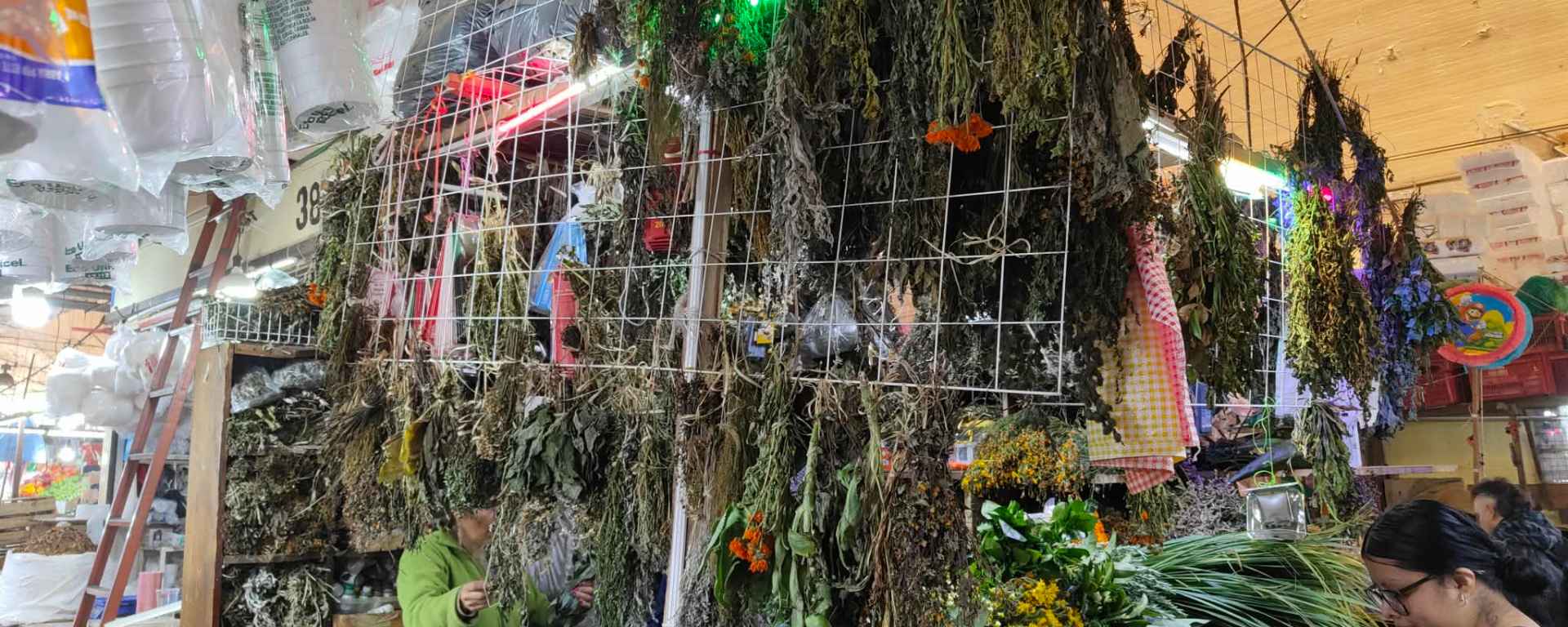
*that’s “mom” for all you Canucks and ‘Muricans
My first introduction to Itzcoatl, the 4th Huey Tlatoani of the Mexica people came via my studies delving into the category of herbs called quelites.
Various depictions of the man, a man who, for all intents and purposes, was the bastard son of a peasant and, who was able, through the opportunities afforded him by being a capable warrior (and so much more) in a society dominated by war, to rise to the position of king (1).
- so to speak. The tlatoani was neither king nor emperor but they did rule. They “spoke” (and fought) for the people of their altepetl (the equivalent of an autonomous city-state. See Tenochtitlan. The City on the Lake)
The Mexica – Aztec people were a society dominated by war and conflict. The Mexica were the last of several groups to enter the valley of Mexico, the first generally accepted to be the Xochimilca (which makes sense as they ended up with the best arable land and water supply and which is also interesting as it is one group that Iztcoatl first conquered – for exactly the same reason the Xochimilca had settled there). The Mexica were a couple of hundred years late to the party and were problematic from the start. They fought with nearly all they met and were shunted around the valley because nobody wanted them as neighbours. They ended up in Chapultepec and, long story short, within 100 years or so they gained a foothold, their first Huey Tlatoani Acamapichtli (which gave them a legitimate political presence in the Valley) and then dominance of most of the valley. This dominance ultimately led to their downfall as it was hatred of the Mexica which initially led other groups in the valley to side with Cortes (thats another story though). My initial point being they were a belligerent and bellicose tribe of warriors who punched anyone who got in their way. They do remind me of someone, a particularly ill tempered warrior race that is

Ahh, sweet, sweet Glory.
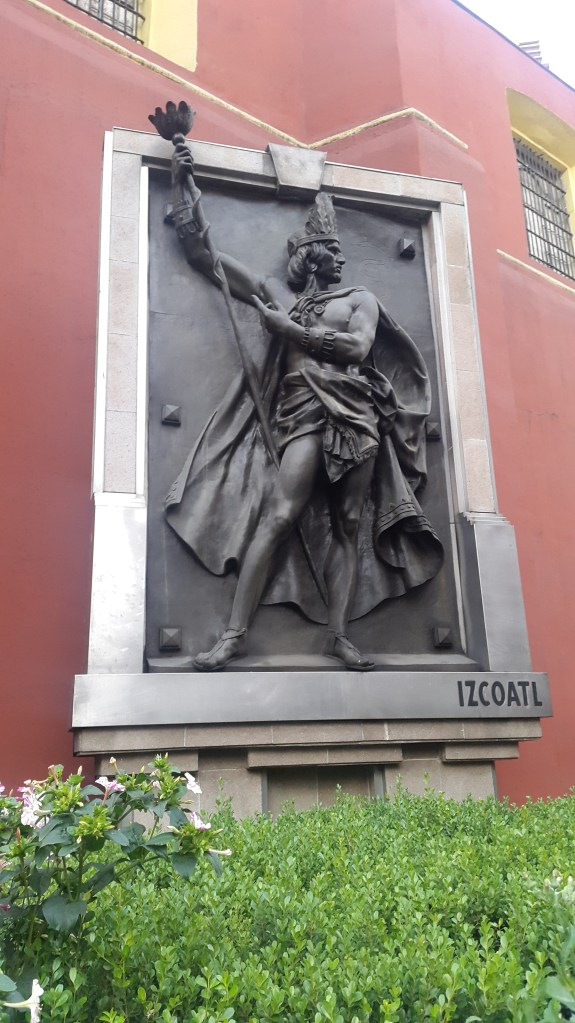
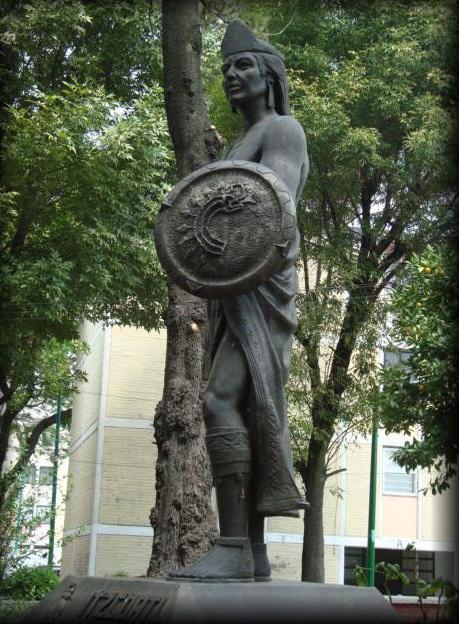
Itzcoatl en el arte.
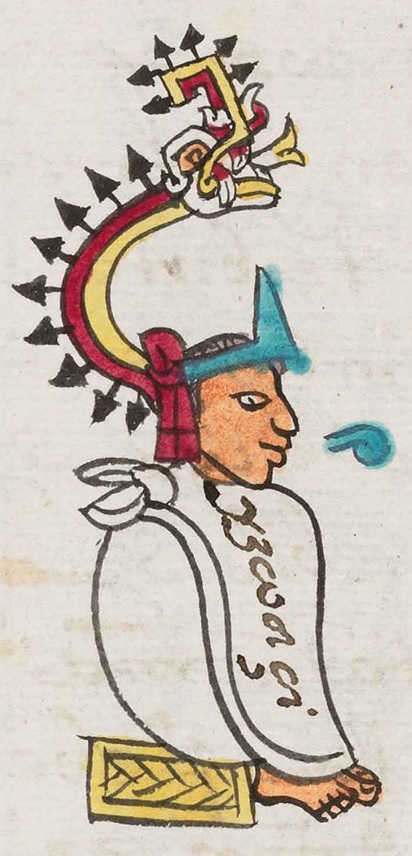
- Itzcoatl in the Codex Mendoza – Public Domain, https://commons.wikimedia.org/w/index.php?curid=1627916
- Relief of Itzcóatl as tlatoani in the Jardín de la Triple Alianza. (Garden of the Triple Alliance) located la calle Filomeno Mata, casi esquina con la calle Tacuba en el Centro Histórico de la Ciudad de México (Filomeno Mata Street, near the corner of Tacuba Street, in the Historic Center of Mexico City – Emna Mizouni, CC BY-SA 4.0 https://creativecommons.org/licenses/by-sa/4.0, via Wikimedia Commons
- Itzcóatl Monument, San Juan Huacalco, Azcapotzalco https://mexicocity.cdmx.gob.mx/venues/estatua-de-itzcoatl/?lang=en
The mexicocity.cdmx.gob.mx website notes of the monument in Huacalco…
Itzcóatl (1380–1440) had been born in the Huacalco calpulli (i.e.; neighborhood) to a Tepaneca slave girl. He’d later order a monument erected to her, more or less in this area. The parish of San Juan Huacalco is thought to be built on top of it
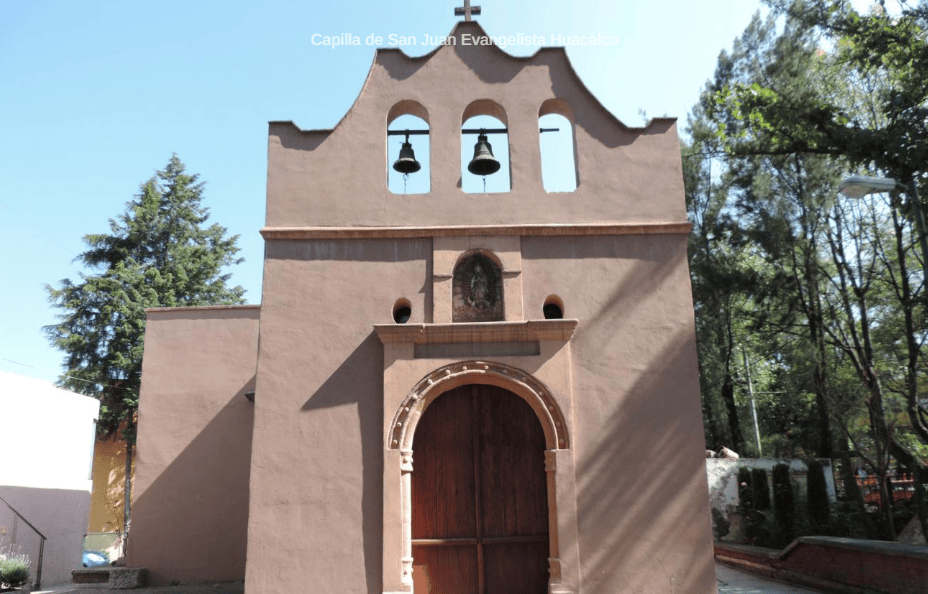
Capilla de San Juan Evangelista Huacalco. A religious building dating back to the 17th century, it was elevated to parish status on December 10, 1966. In 1976, the parish priest obtained approval to build a new church and renovate the old one; this work was completed in 1982.
Rosa María Ponzanelli created the contemporary sculpture of Itzcóatl located in the historic neighbourhood of San Juan Huacalco within Azcapotzalco, Mexico City.
Rosa María Ponzanelli (1943–2022) was a renowned Mexican sculptor known for her monumental public works, including Chetumal’s famous Fuente del Pescador
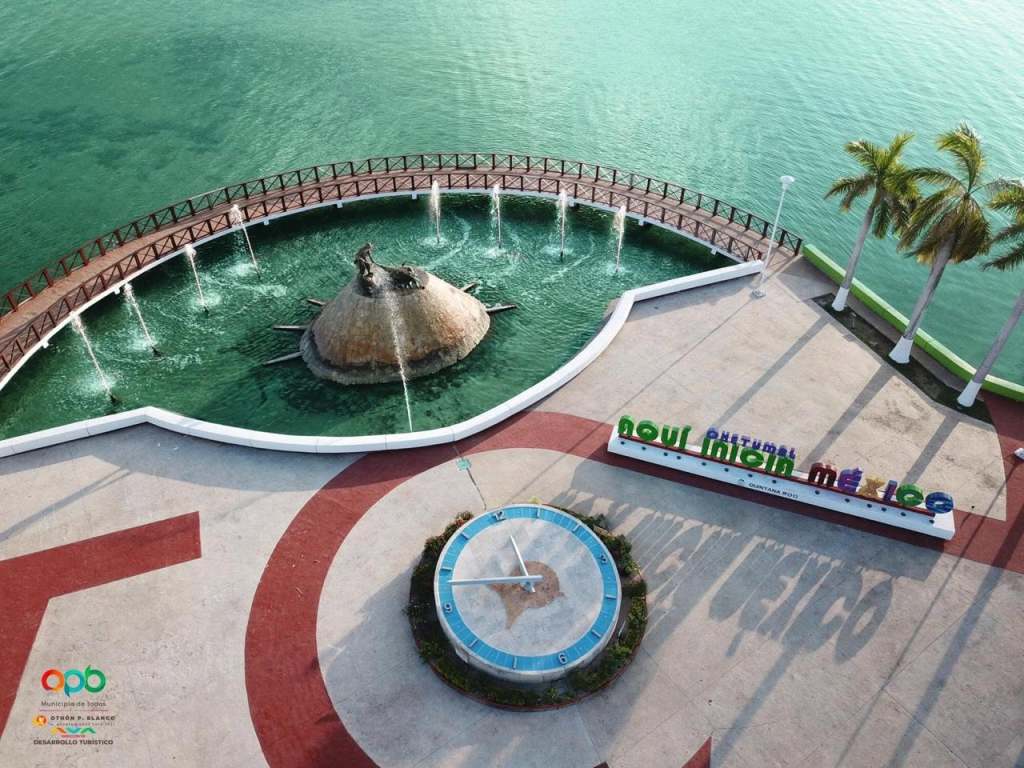
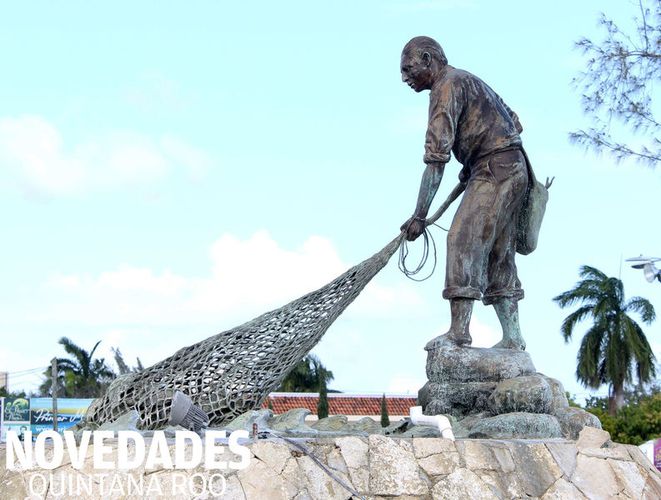
The Fisherman’s Fountain. This monument is one of the most important in Chetumal, Quintana Roo.
Back to the story (interesting side-track though. I do enjoy learning about Mexican artists)
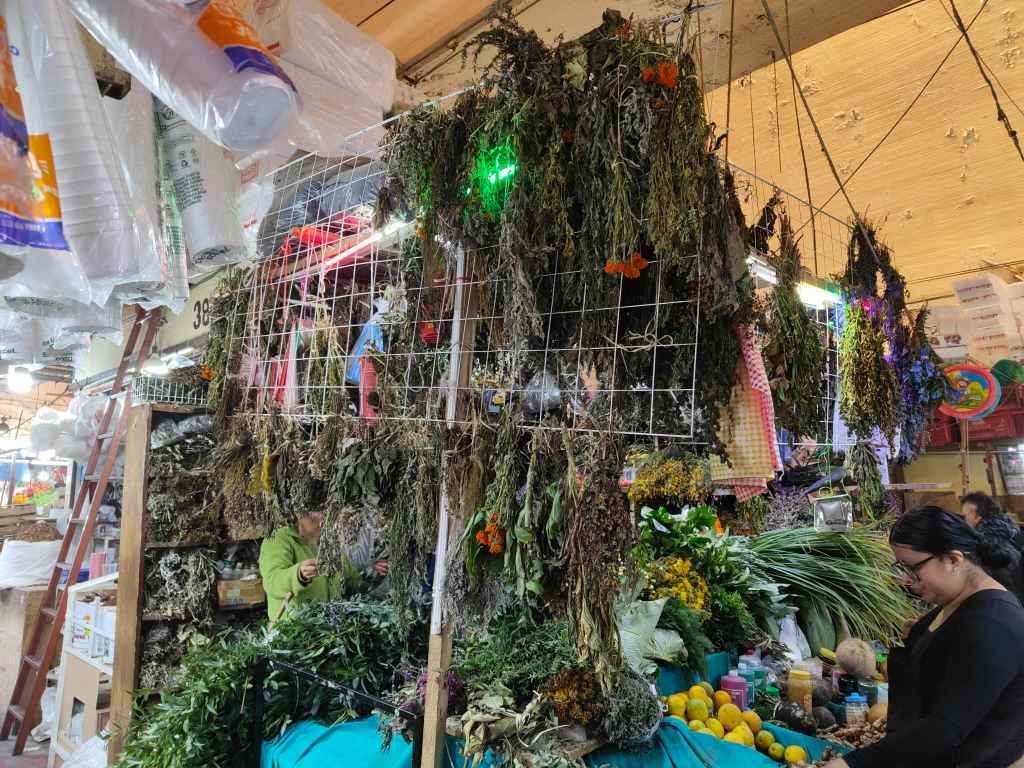
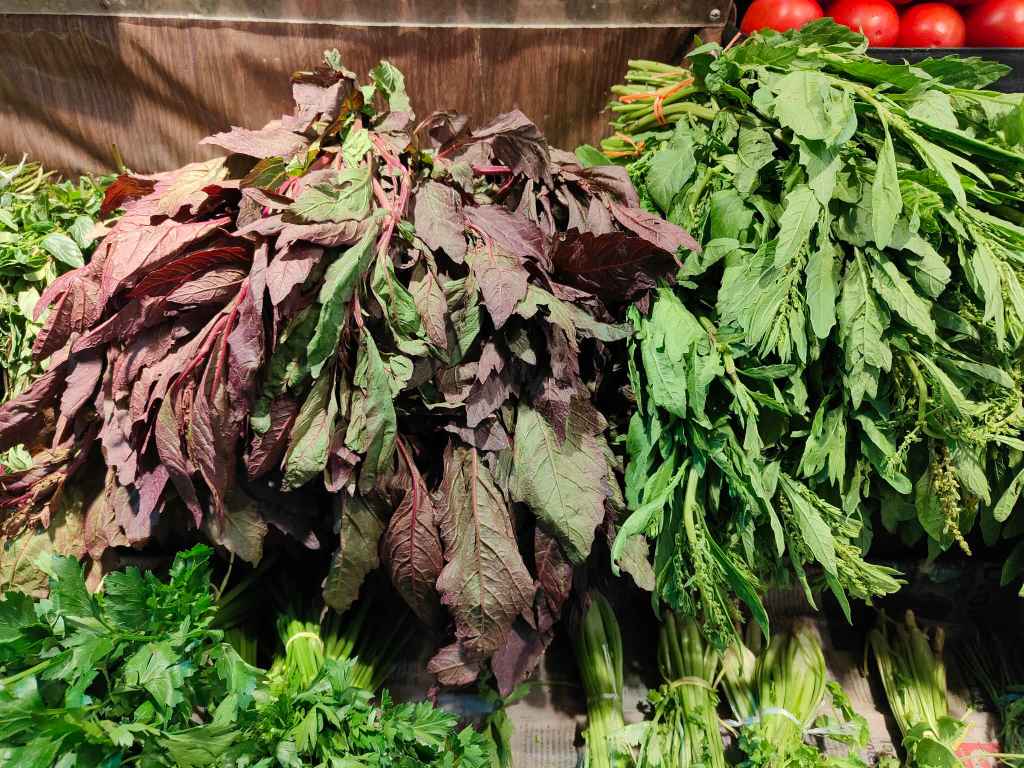
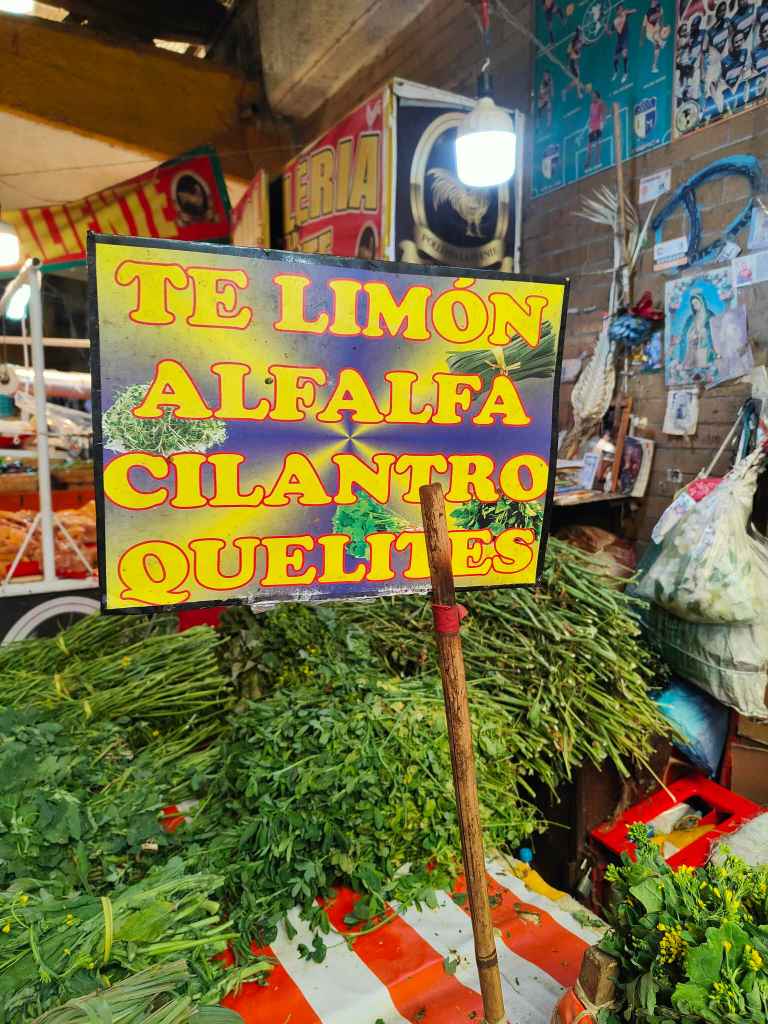
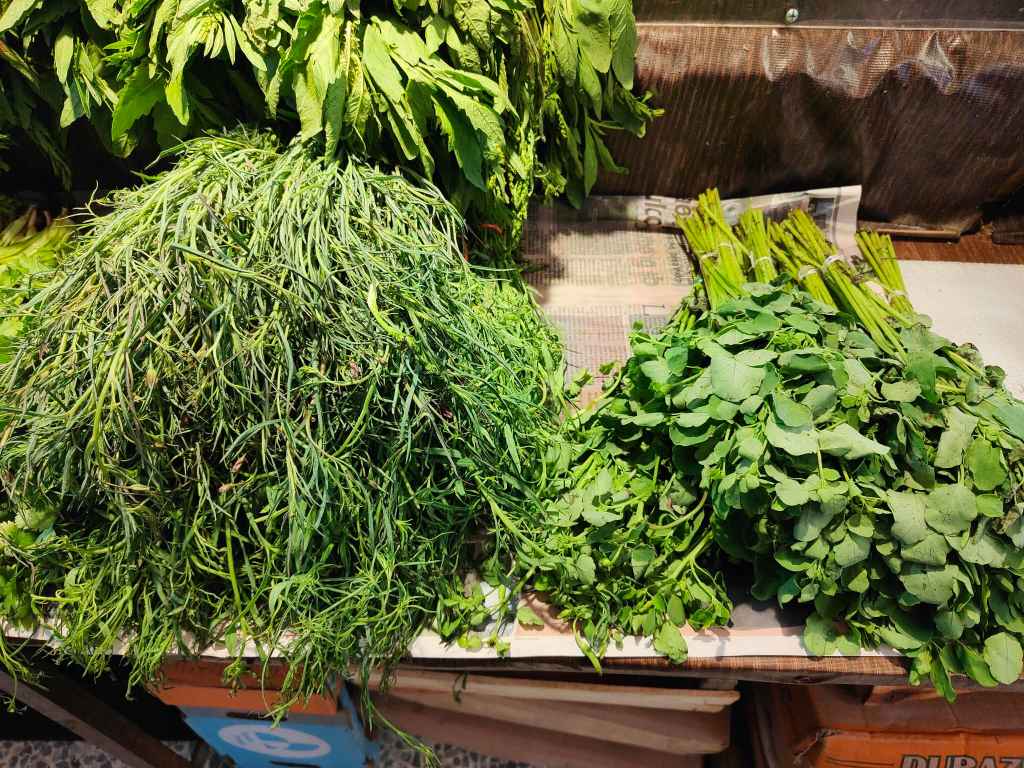
Quelite : Chepiche/Pipicha : Porophyllum tagetoides
Quelite : Pápaloquelite : Porophyllum macrocephalum
It is recorded that the mother of the Emperor Itzcoatl had sold quilitl in the marketplace at Atzcapotzalco. (Evans,2008, p465)
- Evans, Susan Toby : Ancient Mexico and Central America : “Archaeology and Culture History” 2nd Ed : 2008, Thames and Hudson : ISBN 978-0-500-28740-8
Who was this “comely woman selling herbs in the mercado of Azcapotzalco”?
Maxtlatzin (https://www.facebook.com/photo.php?fbid=122266976336328837&set=pb.61559865137569.-2207520000&type=3) refers to Iztcoatls mother as a “concubine” (this will also come up a little later)
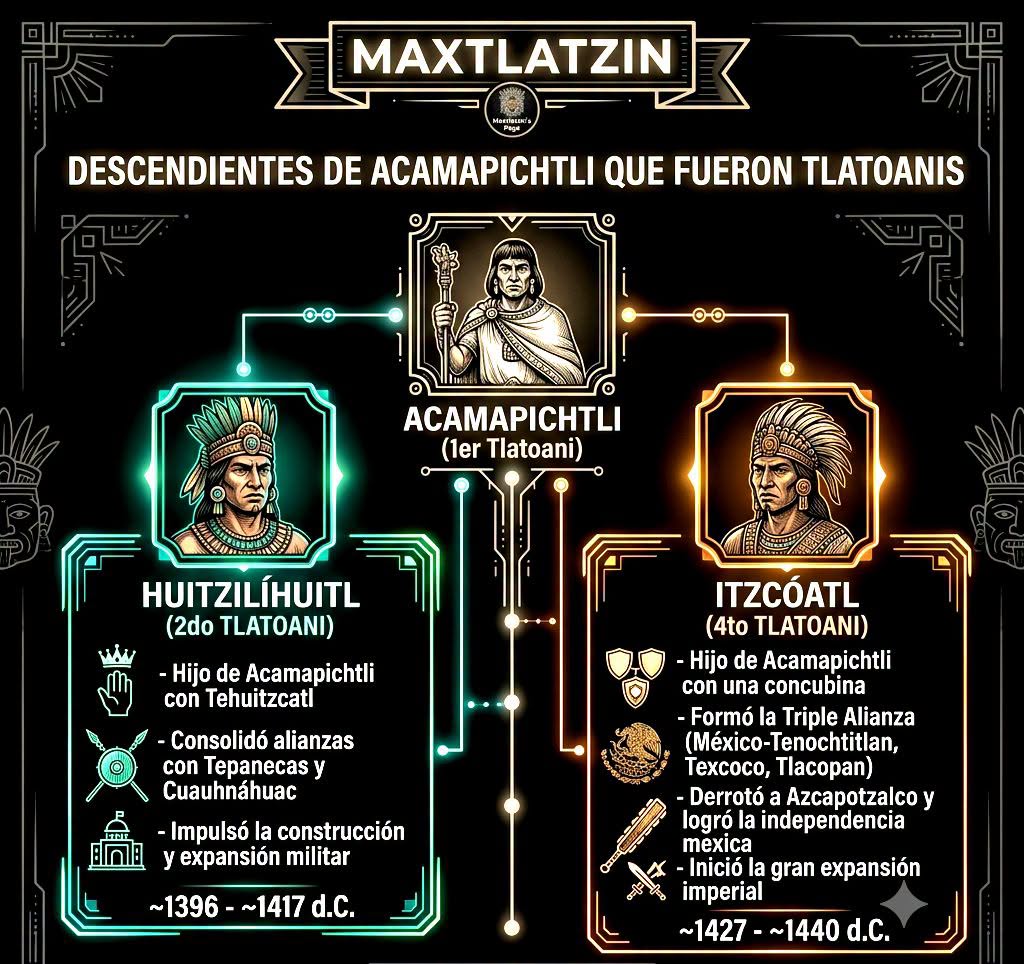
Next we move on to Wiki (why not? It’s just a starting point?)
Itzcoatl (Classical Nahuatl: Itzcōhuātl [it͡sˈkoːwaːt͡ɬ], “Obsidian Serpent”, modern Nahuatl pronunciationⓘ) (c. 1380–1440) was the fourth king of Tenochtitlan, and the founder of the Aztec Empire, ruling from 1427 to 1440. Under Itzcoatl, the Mexica[2] of Tenochtitlan broke free from Tepanec domination and established the Triple Alliance (Aztec Empire) with the city-states of Tetzcoco and Tlacopan.
Meh. So far so good I guess, but we’re here to visit his mum
Itzcoatl was the natural son of tlàtoāni Acamapichtli and an unknown Tepanec woman from Azcapotzalco.[3]
OK. So what is [3] ? And….”natural son”?
[3] Itzcoatl’s mother is given as a Tepanec woman from Azcapotzalco; see for example Aguilar-Moreno (2007, p. 39).
OK. Aguilar-Moreno (2007) it is
- Aguilar-Moreno, Manuel (2007). Handbook to Life in the Aztec World. Oxford and New York: Oxford University Press. ISBN 978-0-19-533083-0. OCLC 81150666.
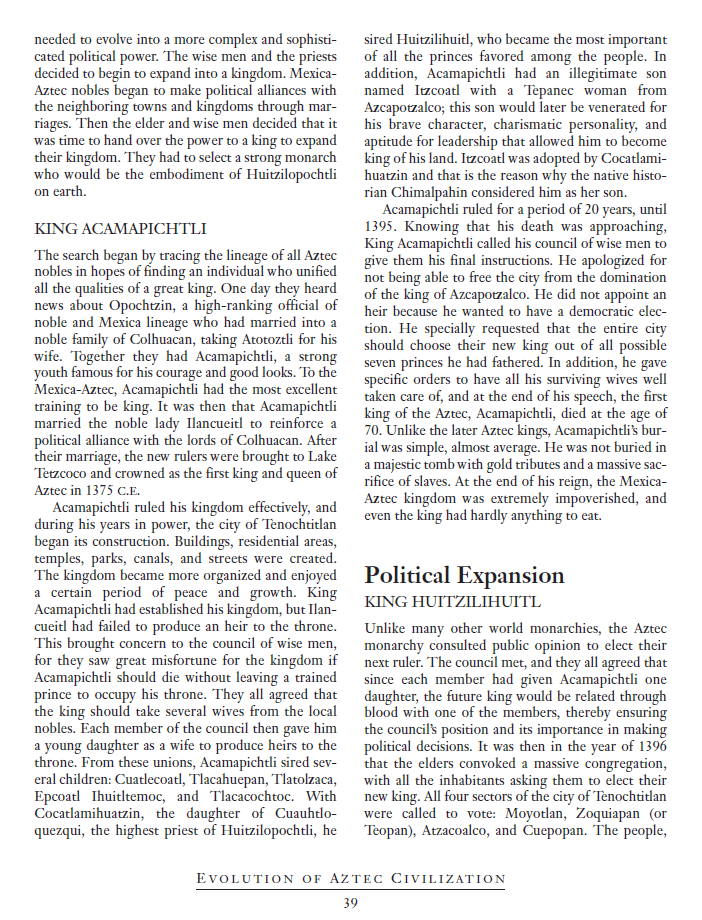
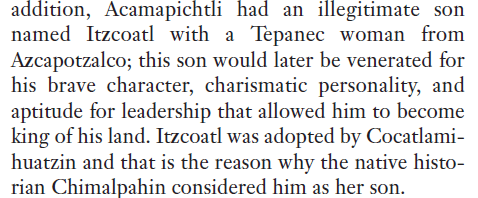
So, the “unknown Tepanec woman from Azcapotzalco” was Itzcoatls “natural” mother and Cocatlamihuatzin was his “adopted” mother?
I have not seen this elsewhere (yet? I have not read all the books though). Cocatlamihuatzin will return to us shortly.
Wiki is a little weird as in the entry on Acamapichtli (Itzcoatls Dad)
Another son of Acamapichtli, Itzcóatl, also became tlatoani in 1427. He was the son of a slave Acamapichtli had bought in the market of Azcapotzalco. She was of noble birth, but had been captured and enslaved.
So which is it? Unknown? Enslaved noblewoman? (one would assume they knew who she was if they knew she was am noble)
Not exactly a primary source. Lets look for more
Itzcoatl was an illegitimate son of Acamapichtli, the first Aztec tlatoani.
https://www.geni.com/people/Iztopac-Izcoatl/6000000007453720795
but they source… Wikipedia http://en.wikipedia.org/wiki/Itzcoatl and Reference: Ancestry Genealogy – SmartCopy: Aug 22 2017, 16:51:06 UTC
Next.
Itzcoatl (b. ca. 1380; d. 1440), Aztec ruler from 1426 to 1440. Itzcoatl (“Obsidian Serpent”), fourth Mexica ruler or tlatoani (“speaker”), was the son of Acamapichtli, the first tlatoani, and a slave woman.
https://www.encyclopedia.com/humanities/encyclopedias-almanacs-transcripts-and-maps/itzcoatl-c-1380-1440
References
- Burr Cartwright Brundage, A Rain of Darts: The Mexica Aztecs (1972).
- Nigel Davies, The Aztecs: A History (1980).
- Diego Durán, The Aztecs: The History of the Indies of New Spain, translated by Doris Heyden and Fernando Horcasitas (1964).
With…….Additional Bibliography
- Borboa, Martín. Itzcóatl, emperador mexica. México, D.F.: Plaza y Valdes, 1997
EBSCO follows through with the herb seller story a little (ish)
Itzcóatl (EETZ-coh-waht-uhl) meaning “obsidian serpent” was the illegitimate son of Acamapichtli, the first king of the Mexica, the Aztec tribe that founded Tenochtitlán and came in time to dominate central Mexico. His mother was a seller of herbs or vegetables and apparently a slave, but Itzcóatl distinguished himself as a military commander and statesman before he himself became king of the Mexica about 1427.
https://www.ebsco.com/research-starters/biography/itzcoatl
Bibliography
- Brundage, Burr Cartwright. A Rain of Darts: The Mexica Aztecs. Austin: University of Texas Press, 1972.
- Carrasco, Pedro. The Tenochca Empire of Ancient Mexico: The Triple Alliance of Tenochtitlán, Tetzcoco, and Tlacopan. Norman: University of Oklahoma Press, 1999.
- Conrad, Geoffrey W., and Arthur A. Demarest. Religion and Empire: The Dynamics of Aztec and Inca Expansionism. New York: Cambridge University Press, 1984.
- Durán, Diego. The Aztecs: The History of the Indies of New Spain. Translated by Doris Heyden and Fernando Horcasitas. New York: Orion, 1964.
- Gillmor, Frances. The King Danced in the Marketplace. 1964. Reprint. Salt Lake City: University of Utah Press, 1977.
- Kimmel, Eric A. Montezuma and the Fall of the Aztecs. New York: Holiday House, 2000.
- Meyer, Michael C., William L. Sherman, and Susan M. Deeds. The Course of Mexican History. 6th ed. New York: Oxford University Press, 1999.
- Padden, R. C. The Hummingbird and the Hawk: Conquest and Sovereignty in the Valley of Mexico, 1503-1541. Columbus: Ohio State University Press, 1967.
- Radin, Paul. “The Sources and Authenticity of the History of the Ancient Mexicans.” University of California Publications in American Archaeology and Ethnology 17 (1920-1926): 1-150.
The Mexico City website for the Indios Verdes monument ……..
https://mexicocity.cdmx.gob.mx/venues/indios-verdes-monument/?lang=en
…..says
Itzcóatl – whose name is sometimes translated as ‘the obsidian snake’ – reigned over Tenochtitlan from 1428-1440. The fourth Tlatoani, he is remembered as a priest, a religious reformer, and as the ruler who overcame the Tepaneca in Azcapotzalco, although his mother was from the Tepaneca people.
The monumento
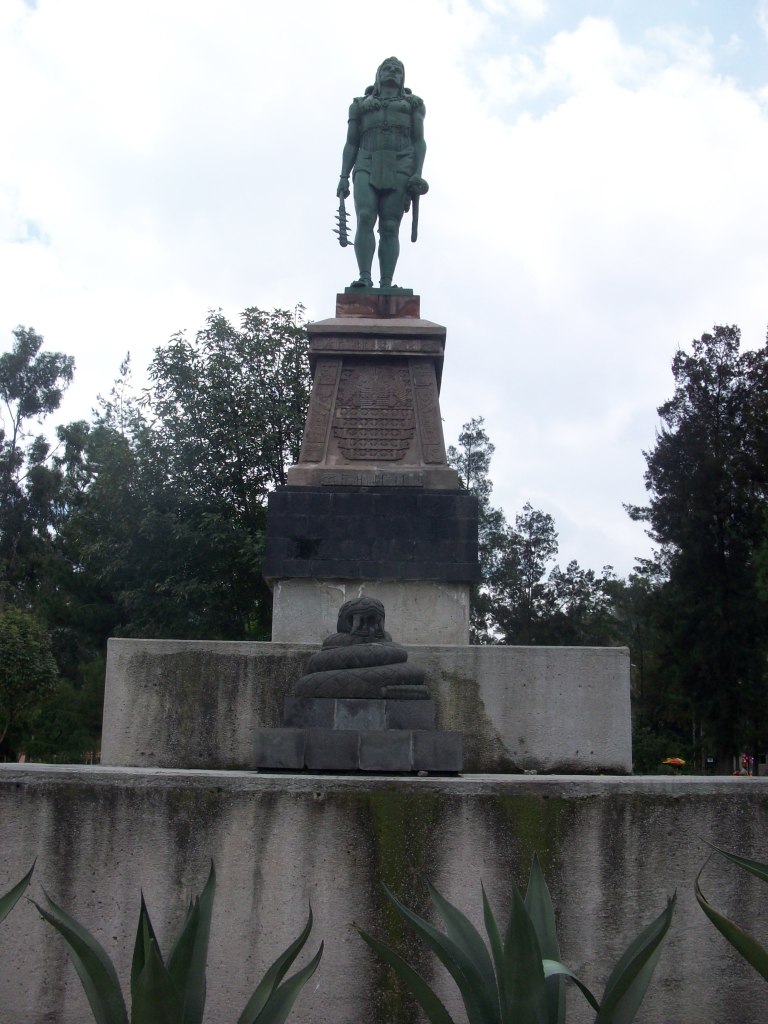
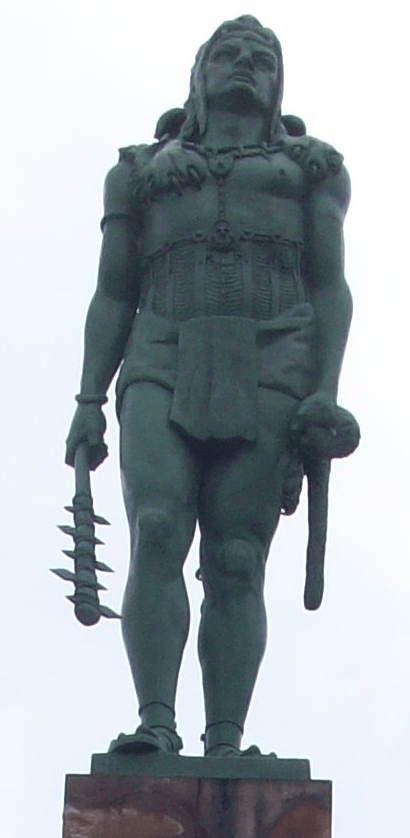
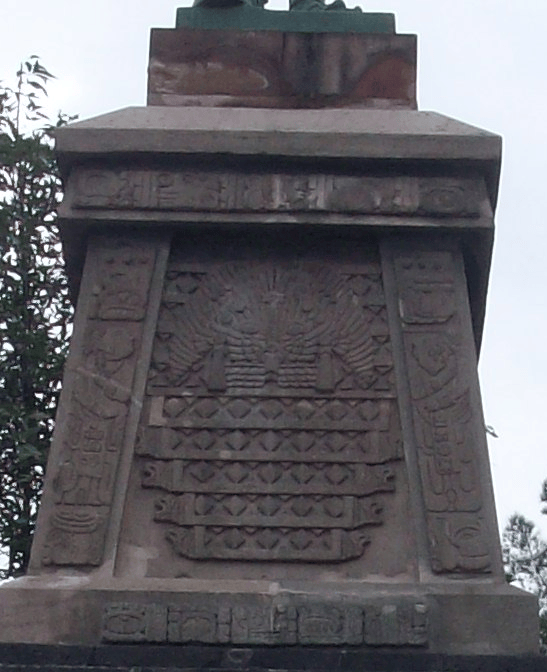
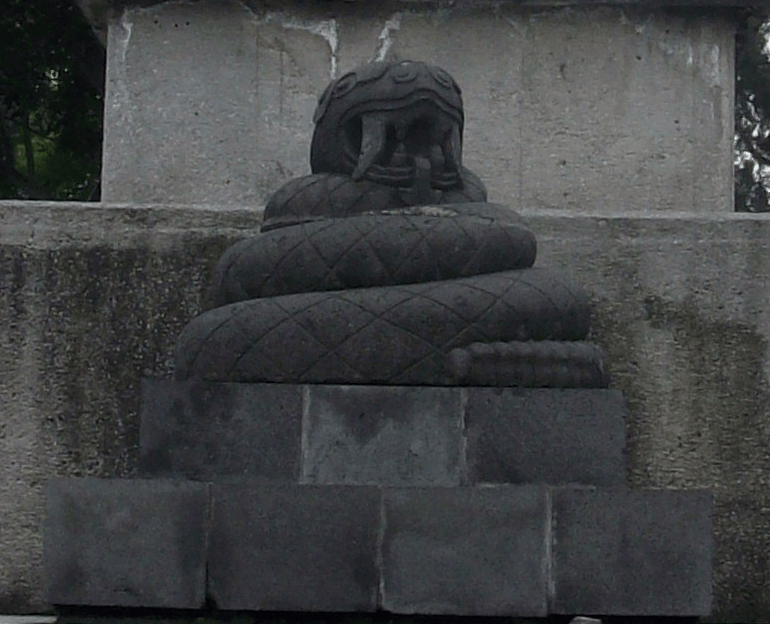
Por GAED – Trabajo propio, CC BY-SA 3.0, https://commons.wikimedia.org/w/index.php?curid=20398355
(IMAGE)
Mexicolore doesn’t quibble though and straight up offers an identity for the woman https://www.mexicolore.co.uk/aztecs/aztec-life/freedom-run-for-it
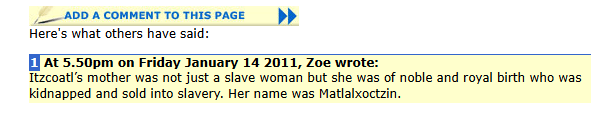
Itzcoatl’s mother was a Tepanec woman named Matlalxochtzin, who was of noble birth but captured and sold into slavery in Azcapotzalco
Although….when I follow the link to the page this information is not on it but rather it is a comment left by a reader……
Lets Google Matlalxochtzin
Wiki informs me
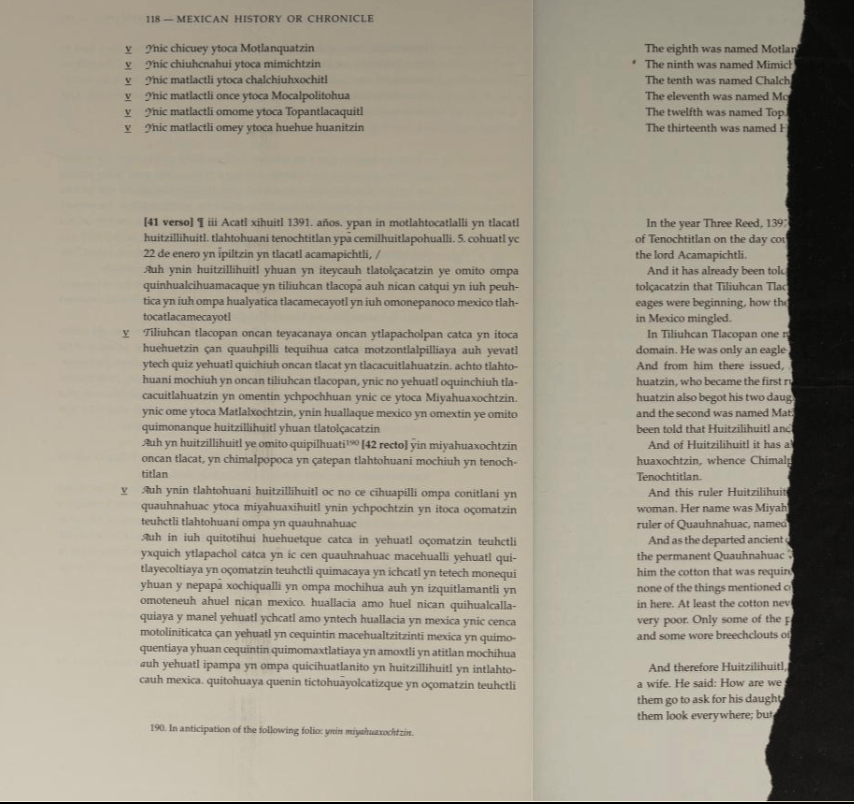
Matlalxochtzin (modern Nahuatl pronunciation) was a daughter of Tlacacuitlahuatzin, the first tlatoani (ruler) of Tiliuhcan, one of the polities (altepetl) of the Tepanec people in the Valley of Mexico during the Late Postclassic period of Mesoamerican chronology.[1] She was born in Tiliuhcan after her father had been elevated as tlatoani—his father Huehuetzin (Matlalxochtzin’s grandfather) had been leader in Tiliuhcan but was only of eagle warrior rank.[2]
Matlalxochtzin and her older sister Miyahuaxochtzin were sent to the Mexica stronghold of Tenochtitlan to marry two sons of Acamapichtli, the founder of the Aztec imperial dynastic line. Miyahuaxochtzin became a wife of Huitzilihuitl while Matlalxochtzin was taken by his younger brother Tlatolqaca.[3]
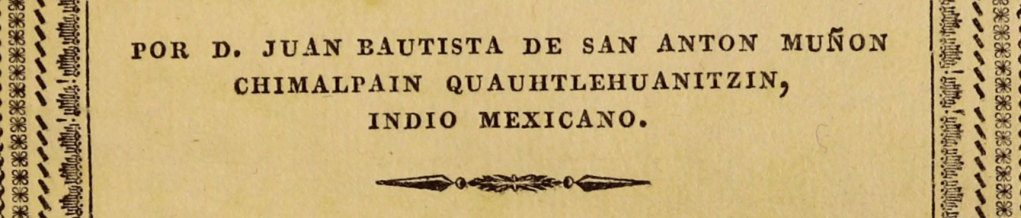
All references here [1] [2] [3]come from Chimalpahin (1)
- Chimalpahin Quauhtlehuanitzin, Domingo de San Antón Muñón (1997) [c.1621]. Codex Chimalpahin, vol. 1: society and politics in Mexico Tenochtitlan, Tlatelolco, Texcoco, Culhuacan, and other Nahua altepetl in central Mexico; the Nahuatl and Spanish annals and accounts collected and recorded by don Domingo de San Antón Muñón Chimalpahin Quauhtlehuanitzin. Civilization of the American Indian series, no. 225. Arthur J.O. Anderson and Susan Schroeder (eds. and trans.), Susan Schroeder (general ed.), Wayne Ruwet (manuscript ed.). Norman: University of Oklahoma Press. ISBN 978-0-8061-2921-1. OCLC 36017075.
- Domingo Francisco de San Antón Muñón Chimalpahin Cuauhtlehuanitzin , or simply Chimalpahin ( Amecameca , May 27, 1579-1645 approx.) was an indigenous Nahua historian from New Spain , belonging to the Chalca nobility
I would also like to just briefly look at the statement made above, specifically “Huehuetzin (Matlalxochtzin’s grandfather) had been leader in Tiliuhcan but was only of eagle warrior rank“
Yikes
ONLY of Eagle Warrior rank. Amongst the Azteca this was likely a slur (perhaps jokingly delivered amongst the warrior classes teasing each other?). Amongst us normal folks an Eagle Warrior would be an extremely fearsome foe. One that the majority of us would not even stand a chance against. What follows below is a brief explanation of the Warrior classes in Mexica society.
Basic Ranks (Based on Captives)
Inexperienced Youth / Porter: Young commoners who had not captured any enemies yet. They carried supplies and learned from veterans.
Tlamani (1 Captive): Warriors who captured one enemy. They received an undecorated obsidian club, a shield, and two special capes.
Cuextecatl (2 Captives): Warriors who captured two enemies. They wore a black-and-red suit called a tlahuiztli and a conical hat.
Papalotl (3 Captives): Warriors who captured three enemies. They wore a butterfly-shaped banner on their back.
Eagle and Jaguar Knights (4+ Captives): Elite soldiers who captured four or more enemies.
- Eagle Warriors : This elite rank was open to commoners (mācēhualli), making it a rare path to social mobility in Aztec society. Commoners who achieved this status were elevated to the nobility (pipiltin). Eagle warriors received land grants, could wear expensive jewelry and fine cotton, drink alcoholic pulque, and dine in the royal palace. Unlike regular draftees who farmed or traded during peacetime, Eagle knights served as professional soldiers, bodyguards, and trade route protectors (pochteca).
- Jaguar Warriors. Like the Eagle Warriors this rank was open to commoners who displayed an aptitude for warfare. They secured the same rights and privileges as eagle warriors. They fought on the front lines to break enemy formations and cause panic and they wore full jaguar pelts into combat to symbolize ferocity and strength.
Otomies: (or Otontin) (5+ captives) – A highly respected and fierce military class named after the Otomi people. They acted as the special forces and front-line shock troops of the Aztec military, chosen to go first into the most dangerous parts of a battle. This elite rank was restricted to the nobility or reserved for the most formidable veteran fighters. A warrior earned entry into this order by capturing five or six enemy combatants in battle. They wore distinctive battle suits and back-banners (such as the xopilli or clawback design) and styled their hair in variations inspired by the fierce Otomi ethnic group, who were renowned mercenaries and allies of the Aztecs.
Shorn Ones (Cuachicqueh): (singular: cuachic) (6+ captives) – The highest and most prestigious elite military society in the Aztec empire. They functioned as imperial shock troops, comparable in fanatical ferocity and dedication to Norse berserkers. To enter this exclusive rank, a warrior had to capture at least six to seven enemy combatants in battle (with specific requirements for high-ranking or fierce foes) and perform extraordinary deeds of valour. Many members chose to forego traditional promotions to officer or captain roles so they could remain frontline combatants. However, high-ranking generals (tlacateccatl) were always members of this elite group. They shaved their heads completely except for a single long braid or crest of hair remaining over the left ear and they painted their bald heads and faces in striking, half-and-half or multi-coloured patterns of blue, red, and yellow. They wore distinct yellow suits (tlahuiztli) and attached colourful feather back-banners (pāmitl) that identified them on the field without hindering their mobility. They swore never to take a step back in battle. Fleeing or retreating meant facing swift execution by their own comrades.
*
So it appears that Matlalxochtzin was indeed of noble birth as it were but she was not sold into slavery. She was married off for political purposes and it is entirely possible that she was not onboard with the whole process, but she was no slave.
*
As for Tlatolqaca….
Tlatolqaca was an Aztec prince, son of Emperor Acamapichtli and Queen Huitzilxotzin, grandson of Princess Atotoztli I, half-brother of Emperors Huitzilihuitl and Itzcoatl, an uncle of Chimalpopoca and Moctezuma I.
He married Princess Matlalxochtzin and couple had three sons:
- Cahualtzin
- Tetlepanquetzatzin
- Tecatlapohuatzin.
*
I think if safe to say that Matlalxochtzin was not Itzcoatls mum.
Others note that Matlalxochtzin was the daughter of Acamapichtli (which would make a relationship between her and Itzcoatl very pornhub). I have no doubt that Matlalxochitzin was not a unique name though
- S. V., J. B. (2022). Los antiguos asentamientos de la región noreste del Lago de Chalco. Del Formativo Temprano al Posclásico Tardío (2500 a.C.-1521 d.C.).
- Schroeder, S. (1992). The noblewomen of Chalco. Estudios de Cultura Nahuatl 22: 45–86.
It is a beautiful name, in Nahuatl the name Matlalxochtzin translates as “Honoured Blue-Green Flower” or “Venerable Dark Flower”.
Matlalli: Meaning dark green, blue, or blue-green.
“Besides indigo, the historical records mention two materials used to paint in blue that seems closely related to one other, as both are said to come from the matlalxochitl or dayflower: the matlalli and the texotli.”
- Dupey García, Élodie. (2017). THE MATERIALITY OF COLOR IN PRE-COLUMBIAN CODICES: INSIGHTS FROM CULTURAL HISTORY. Ancient Mesoamerica, (), 1–20. doi:10.1017/S0956536116000493
Xochitl: Meaning flower.
combining form sometimes xōchi-, sometimes xōch-. : XŌCHI-TL pl: -MEH flower / rosa, o flor (M) As a modifier this has the sense ‘something precious, delicate,’
tzin: A polite or reverential suffix used to denote respect or affection (often translated as “honoured” or “dear”). A reverential suffix for nouns, also sometimes diminutive, or implying pity or tenderness
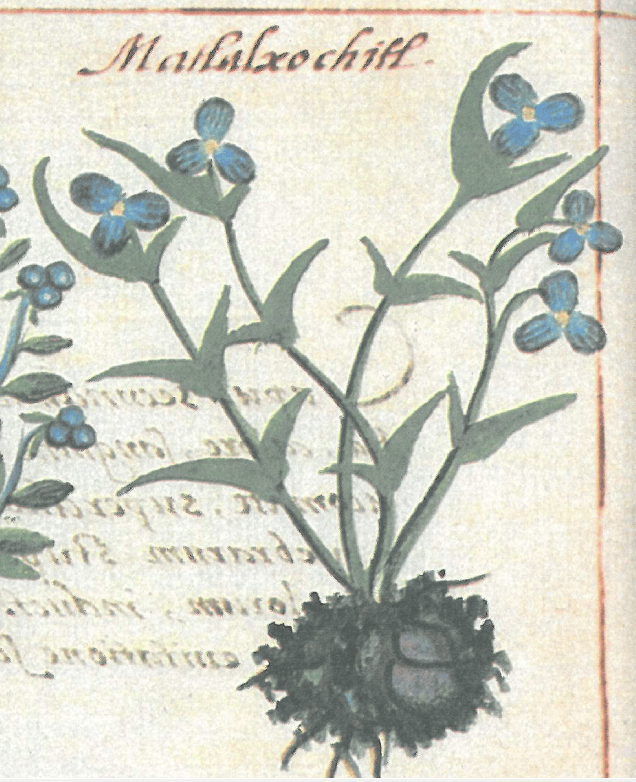
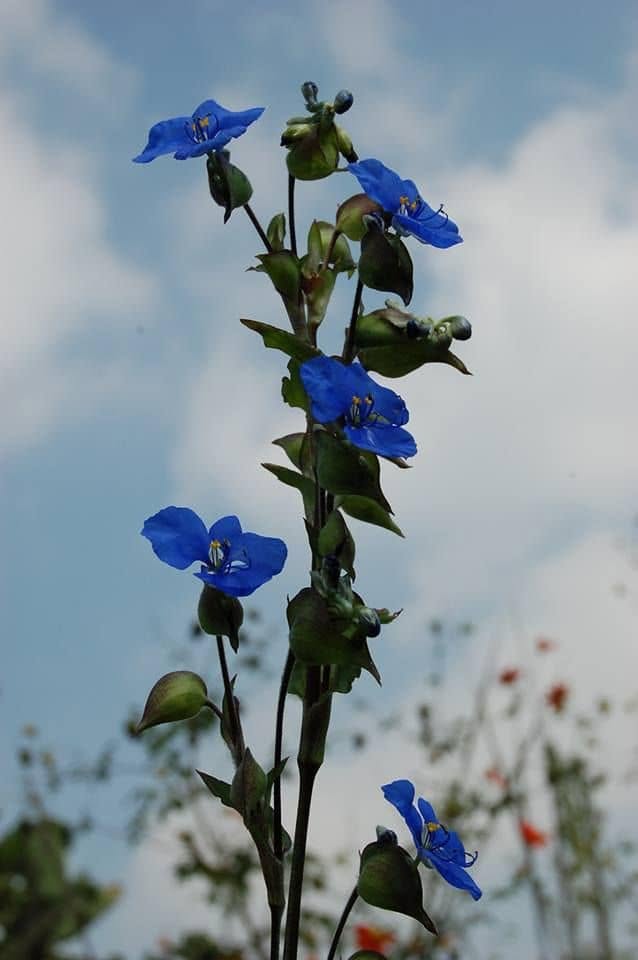
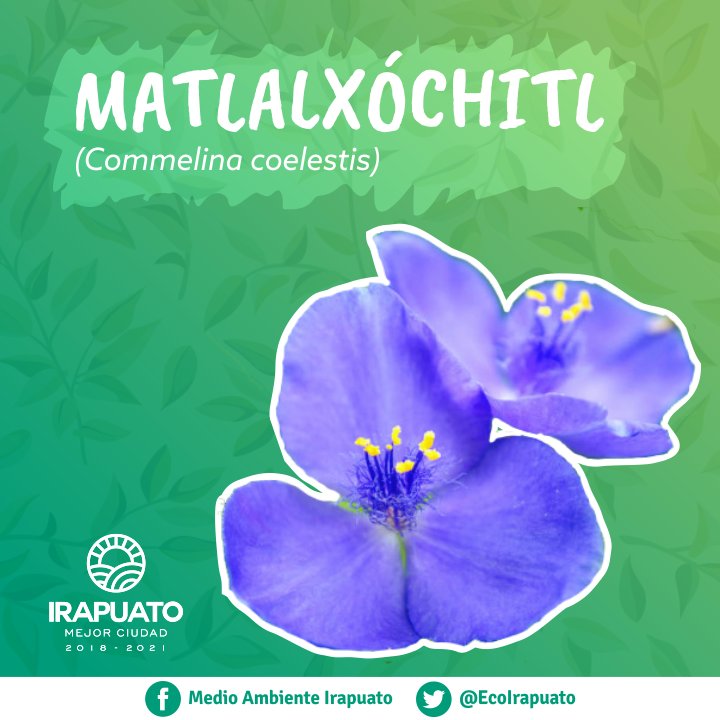
- Chavez Jimenez, Ulises. Libellus De Medicinalibus Indorum Herbis (Digital Facsimile).
- Desde la Tierra del Tezontle : Plantas medicinales que podemos encontrar en Tetzoyocan, cerró de Cuauhtepec. – https://www.facebook.com/100064420760500/posts/plantas-medicinales-que-podemos-encontrar-en-tetzoyocan-cerr%C3%B3-de-cuauhtepecmatla/3629537063739962/
- ¿La conocías? La flor #Matlalxochitl, mejor conocida como “Hierba del pollo”, es una especie muy abundante en la región de Texcoco, era utilizada como tinte para pintar códices. The #Matlalxochitl flower, better known as “Chicken Herb”, is a very abundant species in the Texcoco region, it was used as a dye to paint codices. Sustentabilidad Irapuato – https://x.com/EcoIrapuato/status/1426181462135558150
See Flores Medicinales : Matlalxochitl for more information on this flower.
*
Cocatlamihuatzin Returns
Remember Aguilar-Moreno from a little further up? (1)
- Aguilar-Moreno, Manuel (2007). Handbook to Life in the Aztec World. Oxford and New York: Oxford University Press. ISBN 978-0-19-533083-0. OCLC 81150666.
Well, Aguilar-Moreno (2007) also notes that “Itzcoatl was adopted by Cocatlamihuatzin and that is why the native historian Chimalpahin considered him as her son”
??
To expand on this Aguilar-Moreno (2007) points out that after Acamapichtlis first wife Ilancueitl was unable to sire him an heir he was advised by his council to take wives from the daughters of local nobles to father an heir and to cement political relations.
To recap
Aguilar-Moreno writes
“From these unions, Acamapichtli sired several children: Cuatlecoatl, Tlacahuepan, Tlatolzaca, Epcoatl Ihuitltemoc, and Tlacacochtoc. With Cocatlamihuatzin, the daughter of Cuauhtloquezqui, the highest priest of Huitzilopochtli, he sired Huitzilihuitl, who became the most important of all the princes favored among the people. In addition, Acamapichtli had an illegitimate son named Itzcoatl with a Tepanec woman from Azcapotzalco; this son would later be venerated for his brave character, charismatic personality, and aptitude for leadership that allowed him to become king of his land. Itzcoatl was adopted by Cocatlamihuatzin and that is the reason why the native historian Chimalpahin considered him as her son.”
He continues…
“Cuauhtloquezqui gave his daughter Cocatlamihuatzin to Acamapichtli. From this union came Huitzilihuitl, who became the next tlatoani of Tenochtitlan. Acamapichtli had a son, Itzcoatl, with a Tepanec woman, and he eventually became the fourth tlatoani of Tenochtitlan.”
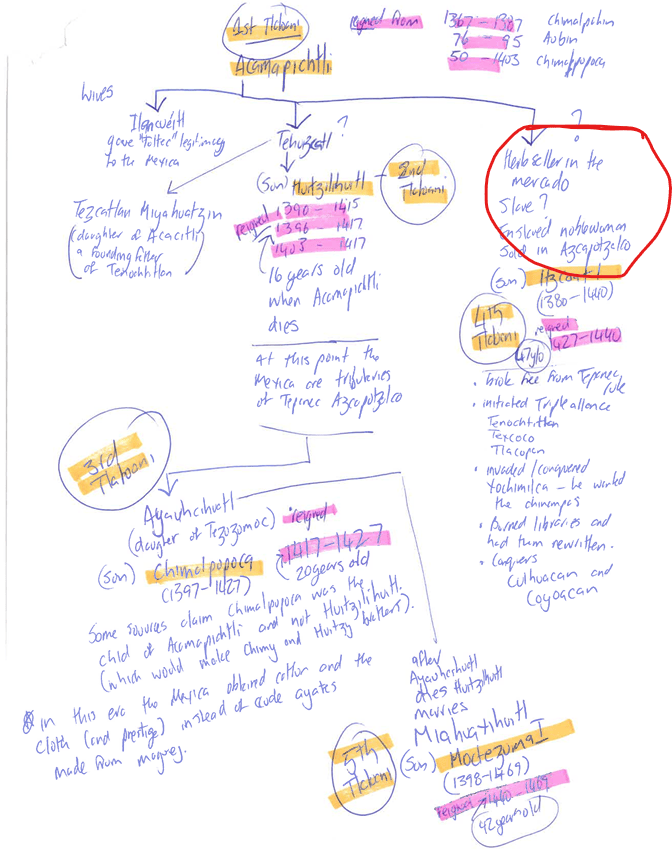
Back to my Family Tree notes I started with
I haven’t noted it in my notes above but Huitzilihuitl was born some time between 1374 and 1379 (this is also reflected in the conflicting dates of his rule). The story goes is that he was 16 when Acamapichtli died and he ascended to the seat of power as the second Huey Tlatoani of Tenochtitlan. It is estimated that he died in 1417 so he would have been between 38 and 43 years old (or so)
Itzcoatl was born in 1380 so was between as few as one and as many as 6 years younger than Huitzilihuitl. This will come up again in a moment. Itzcoatl ascended to rule as the 4th Huey Tlatoani of Tenochtitlan in 1427 at the age of 47 so at the time of Huitzilihuitls death in 1417 he would have been around 37 years old. I am just pondering the life of these two men as they were raised more or less together in this world rife with politics and war. Particularly in light of something else Aguilar-Moreno (2007) mentions.
Aguilar-Moreno (2007) also notes that “Itzcoatl was adopted by Cocatlamihuatzin and that is why the native historian Chimalpahin considered him as her son”
So who is Cocatlamihuatzin?
There’s not a lot of information to be found (well, that I could find anyway)
Cocatlamihuatzin was an Aztec noblewoman who lived during the early development of the Mexica-Aztec civilization. She is most prominently recorded in historical sources as the daughter of Cuauhtloquezqui, who held the highly revered position of the highest priest of Huitzilopochtli (the Aztec god of war and the sun). Her family legacy is tied directly to the political evolution of Tenochtitlan. Following the death of the early leadership council, the elders and priests across all four primary sectors of the city—Moyotlan, Zoquiapan, Atzacoalco, and Cuepopan—gathered to elect a single ruler. Due to her father’s supreme religious authority and prestige, her lineage played a central role in the political climate that ultimately elevated Huitzilihuitl to become the second Huey Tlatoani (emperor) of the Mexica people.
Political intermarriage to cement the barbarous chichimeca Mexica/Azteca in the region with legitimate lineages (preferably Toltec but this was also good)
Back to the birth mother

Another source (although a secondary one that gives no primary reference) calls the mother of Iztcoatl (amongst other things) a concubine
Itzcoatl was the son of the First Tlatoani, but wherein Huitzilihuitl’s mother was perfectly legitimate wife and a woman of noble origins, Itzcoatl’s mother was a simple concubine, a slave from Azcapotzalco’s marketplace, or just a beautiful commoner, a vegetable-seller according to some of the sources. Either way she was not legitimate enough to warrant her son’s possible ambition to occupy Tenochtitlan’s throne.
https://zoesaadia.com/historia-en-el-calmecac/tlacaelel-the-most-brilliant-mind-that-gave-the-aztec-empire-its-history/
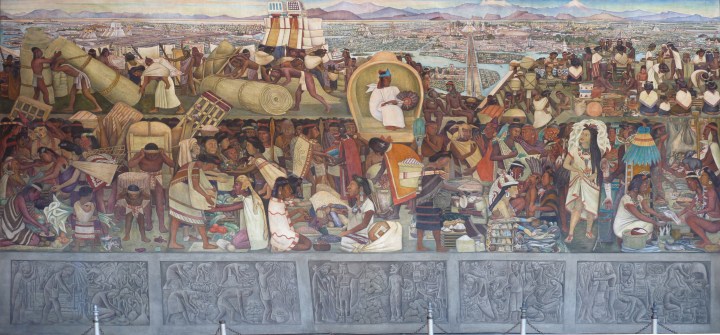
I find it interesting as the initial image I was going to start this Post with was that of Diego Riveras La Gran Tenochtitlan
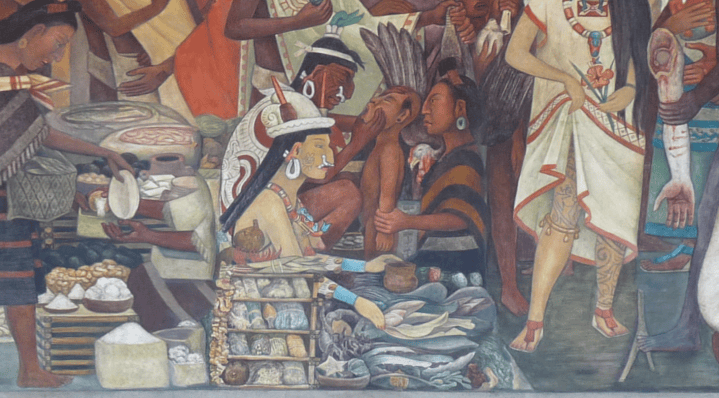
This painting by Rivera shows a huge market scene and shows a herb seller is positioned in the image next to a concubine or ahuianimeh.
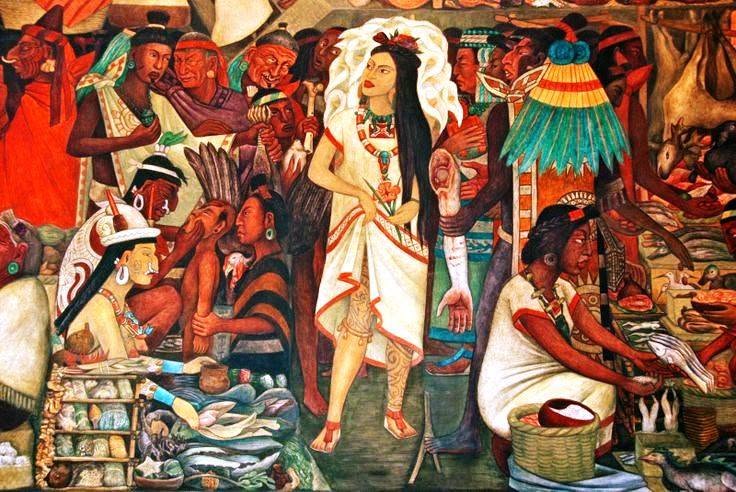
The herb seller, in this case, looks quite medicinal to me. I thought I’d better check what kind of herb sellers might supply the tianguis (1).
- Tianguis, from tianquiztli, an outdoor market. See Tianquiztli for more on these itinerant markets
Types of Herb Seller you might encounter
Quilnamac (or quilnamacac): A seller of edible herbs, greens, or vegetables.
from quilitl (edible greens or herbs) and namacac (seller) : A quilnamacac worked as a field laborer, herb gatherer, and market vendor who sold fresh plants and natural healing items
https://www.malinal.net/lexik/nahuatlQ.html
Panamacac: A traditional medicine seller who offered remedies made from herbs, barks, wood, and roots in the marketplace.
https://nahuatl.wired-humanities.org/node/200133
Siuhquilnamac: (Xiuhquilnamácac ) Specifically a “turquoise herb seller,” historically noted as a merchant who sold specific coloured leaves and clays used for dyeing and painting
The seller of xiuhquilitl, that is, indigo. This woman is considered an apothecary or medicine seller, panamacac; according to Molina’s Vocabulary, the word derives from pa-tli = medicine and nama-ca = to sell
http://www.azulmaya.com/bonampak/cap3.php
So I wonder what type of namacac was Mrs Itzcoatl?
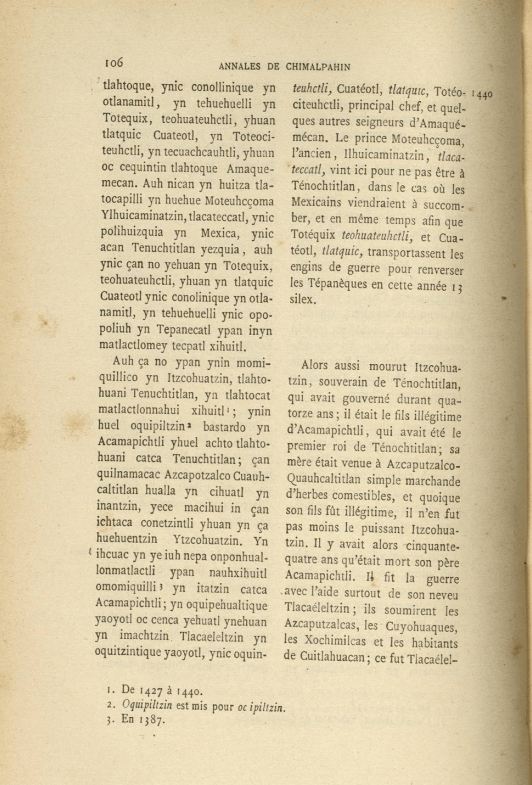
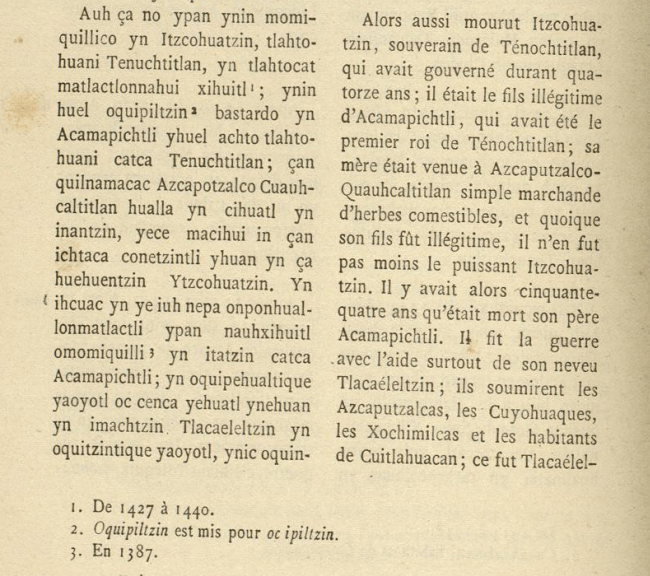
Chimalpahin notes……(on the death of Izcoatl)
Auh ça no ypan ynin momiquillico yn Itzcohuatzin, tlahtohuani Tenuchtitlan, yn tlahtocat matlactlonnahui xihuitl; ynin huel oquipiltzin bastardo yn Acamapichtli yhuel achto tlahtohuani catca Tenuchtitlan; çan quilnamacac Azcapotzalco Cuauhcaltitlan hualla yn cihuatl yn inantzin, yece macihui in çan ichtaca conetzintli yhuan yn ça huehuentzin Ytzcohuatzin,
Alors aussi mourut Itzcohuatzin, souverain de Ténochtitlan, qui avait gouverné durant quatorze ans; il était le fils illégitime d’Acamapichtli, qui avait été le premier roi de Ténochtitlan; sa mère était venue à Azcaputzalco Quauhcaltitlan simple marchande d’herbes comestibles, et quoique son fils fåt illégitime, il n’en fut pas moins le puissant Itzcohuatzin.
Then also died Itzcohuatzin, ruler of Tenochtitlan, who had ruled for fourteen years; he was the illegitimate son of Acamapichtli, who had been the first king of Tenochtitlan; his mother had come to Azcaputzalco Quauhcaltitlan a simple merchant of edible herbs, and although her son was illegitimate, he was nonetheless the powerful Itzcohuatzin.
http://cdigital.dgb.uanl.mx/la/1080029569/1080029569_12.pdf
Itzcohuatzin? Itzcoatl eres tu?
Itzcoatl: Means “Obsidian Serpent” (itztli for obsidian, coatl for serpent/snake). This is the standard base name used for the fourth king (tlatoani) of Tenochtitlan who ruled from 1427 to 1440 and founded the Aztec Empire.
Itzcohuatzin: Adds the honorific suffix -tzin to the end of Itzcoatl (literally “Honored Obsidian Serpent”). In Nahuatl primary sources and colonial texts, names often alternated with the -tzin suffix to show reverence when speaking of or recording respected figures, nobility, or elders.
You have ventured far only to discover that I have no freaking idea who his mum was.
Study continues
References
I have done something slightly different with the references in this Post. Rather than list them at the end as I’d usually do, I have inserted them into the text of the Post. It looks a bit messy so I’ll probably avoid this in the future.

