
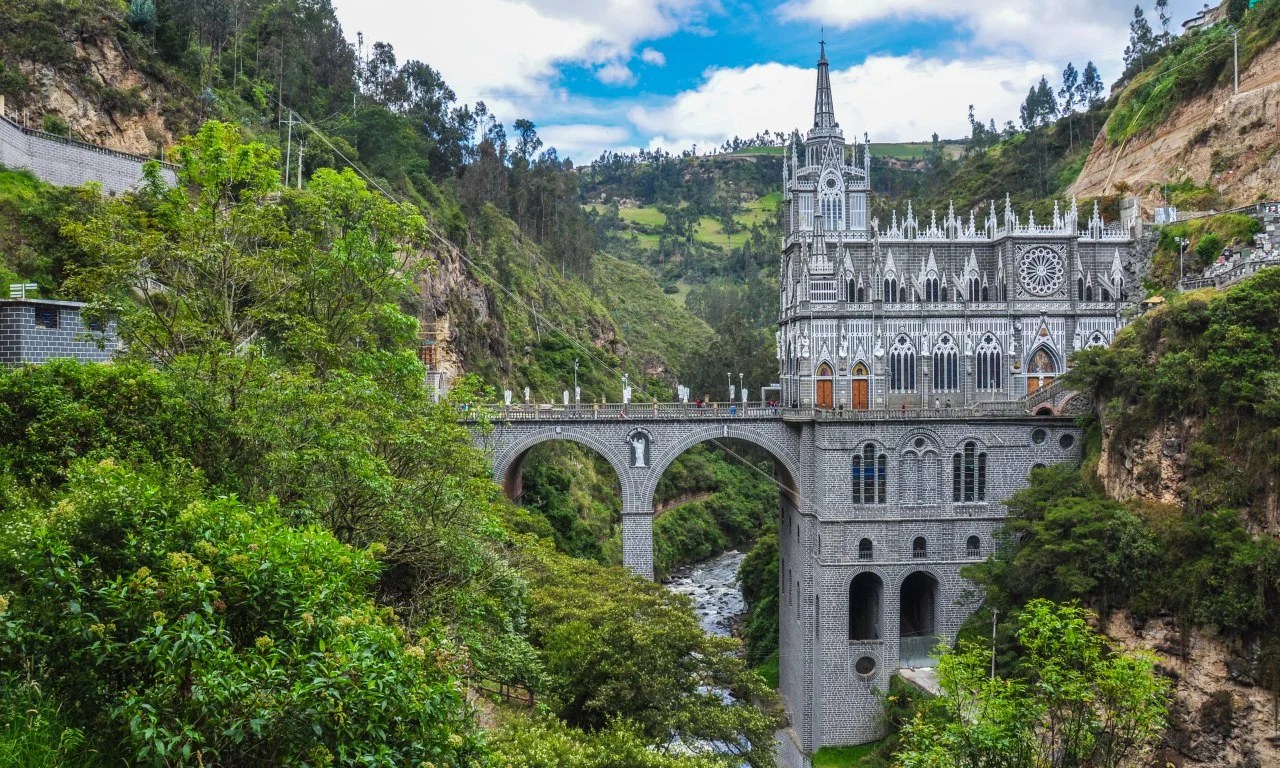
Cover Image : Las Lajas Sanctuary in the Nariño department of southwestern Colombia. This stunning neo-Gothic basilica was built inside the deep canyon of the Guáitara River. The church sits on a massive stone bridge that spans the 100-meter-deep canyon. Known as a miracle over the abyss, it has drawn global pilgrims since the 18th century to honour the Virgin of the Rosary of Las Lajas. If you were ever going to run into Harry Potter this looks like it would be the place. Magnificent.
*
About 15 years ago I ran into a woman who used to run a curio store in Melbourne, Australia in the 1960’s. In her travels though the Americas in the 1940’s and 50’s she collected an array of artifacts that returned to Australia. The three pieces in this Post were sold at a garage sale for the ridiculously low price of $3 each. They did not look Mexican to me but they did appear old and American in design. I purchased 2 seated figures and a pedestal bowl (or drinking vessel?) being held aloft by another humanoid figure.
I researched the pieces via a Google Image search which suggested they were from the Nariño culture and that they were likely produced in prehispanic times. I have tried to contact Museo del Oro del Banco de la República in Bogota (1) to obtain more information on the pieces but I have yet to receive any correspondence from them.
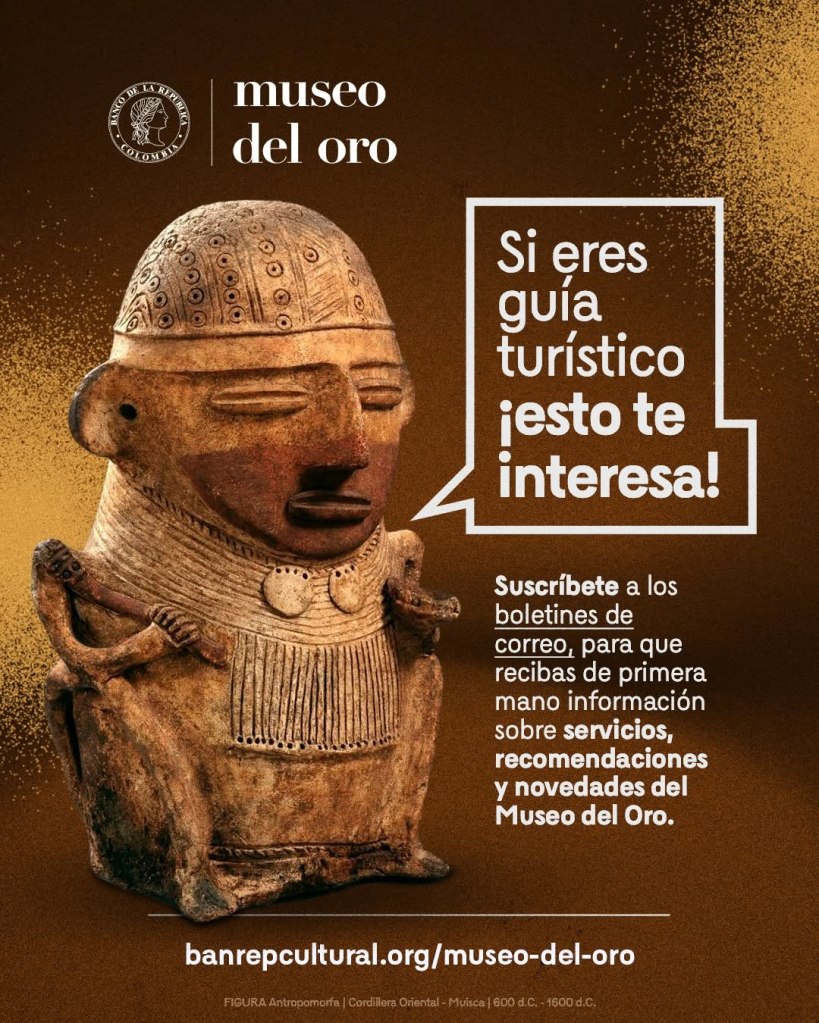
- El Museo del Oro researches and showcases an extensive collection of pre-Hispanic artifacts
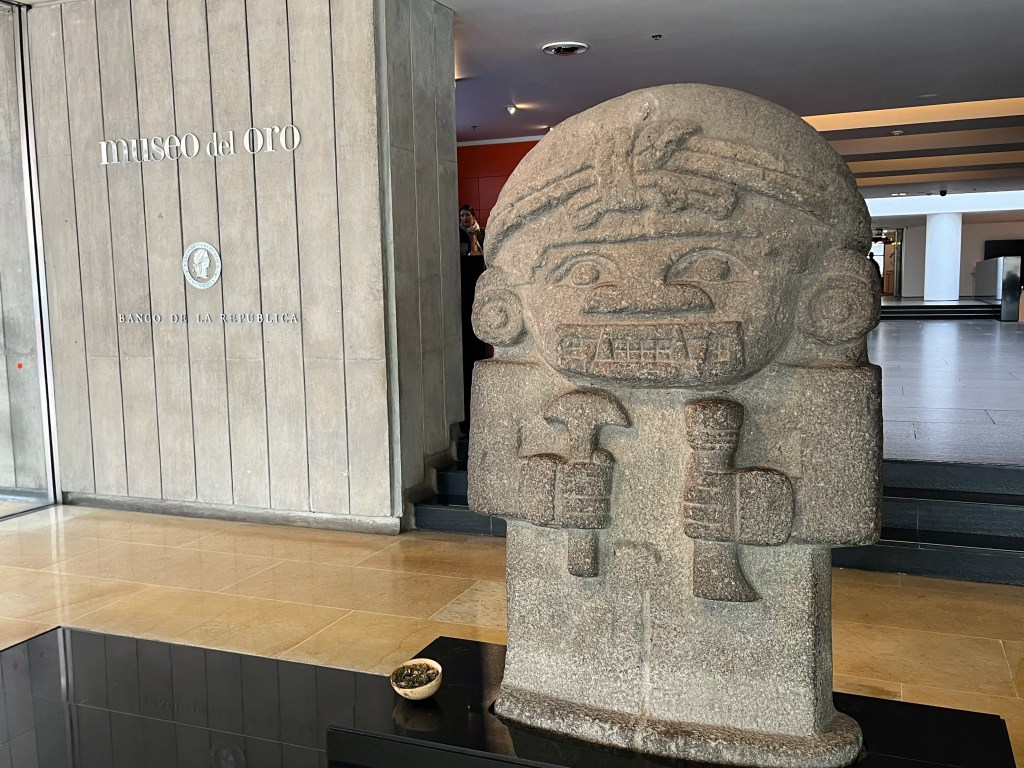
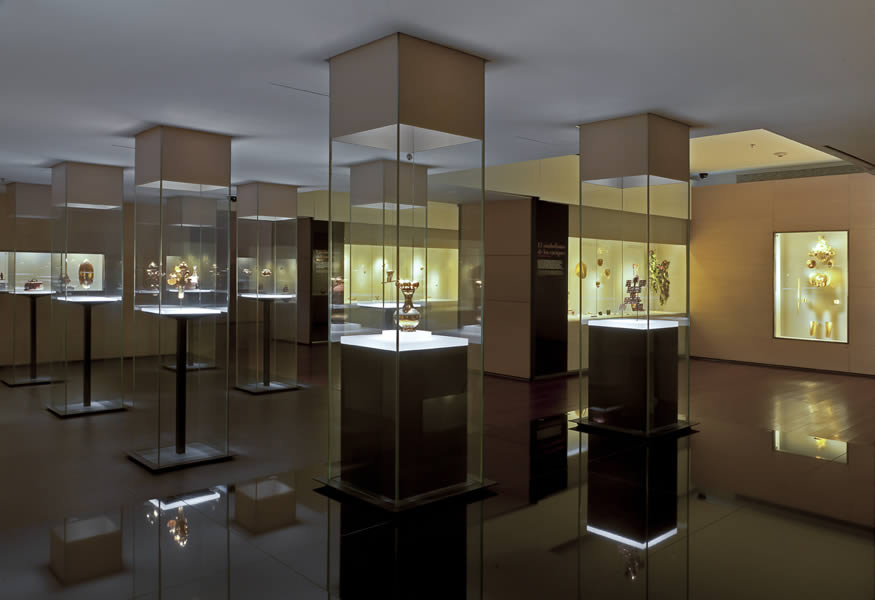
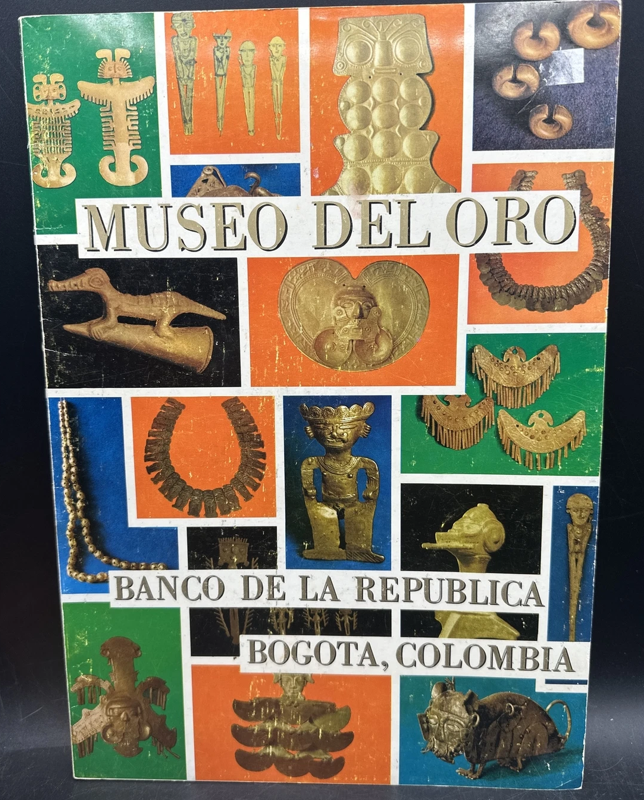
The Museo del Oro, known in English as the Gold Museum, is an archaeology museum located in Bogota, Colombia. The museum was founded on 22 December 1939, five years after the Bank of the Republic decided to help protect Colombia’s archaeological patrimony. The museum was expanded and renovated in 2008, and it now features a collection of 55,000 pieces, 6,000 of which are on display in the building. Artifacts from the Calima, Quimbaya, Muisca, Zenu, Tierradentro, San Agustin, Tolima, Tairona, and Uraba cultures are displayed in their own halls.
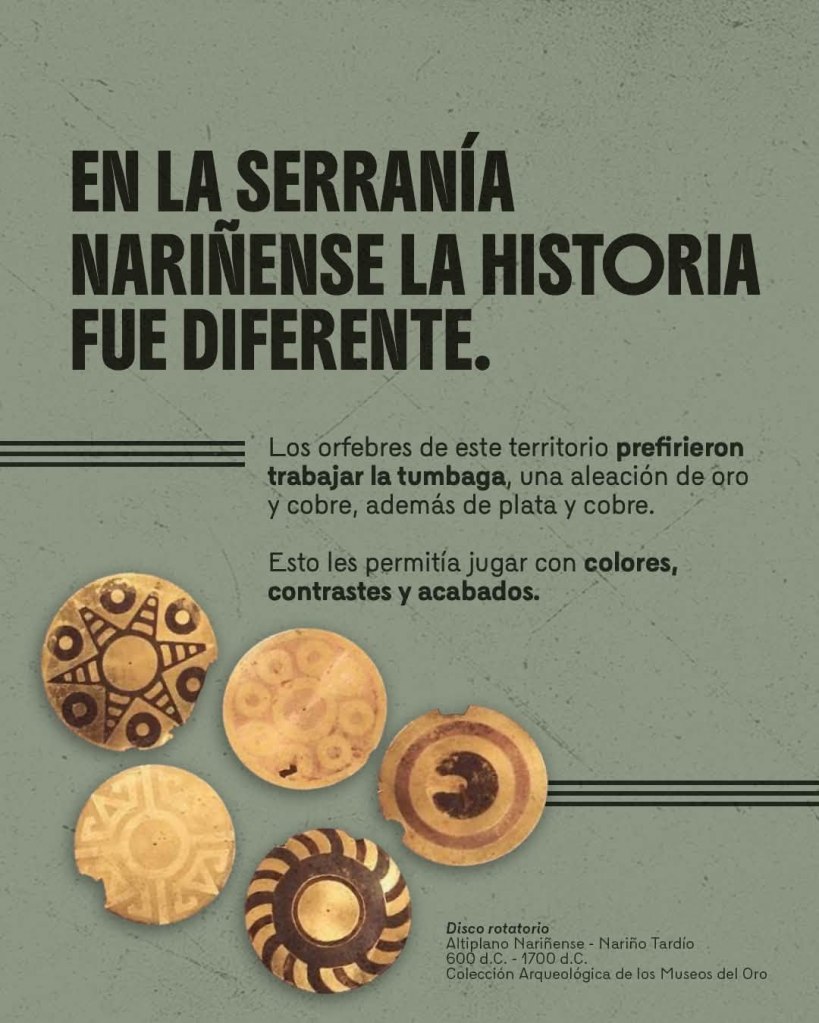
The Nariño culture refers to a prominent pre-Columbian society that flourished from roughly 800 AD to 1500 AD in the high-altitude Andes of southwestern Colombia (Nariño Department) and northern Ecuador
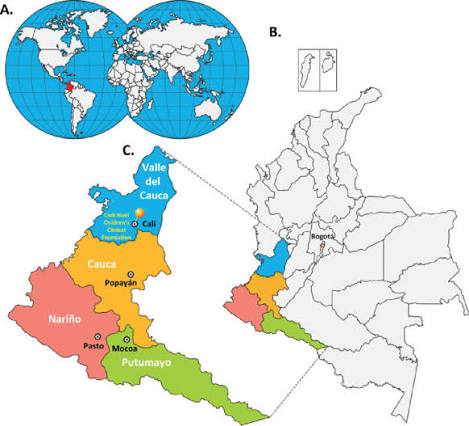
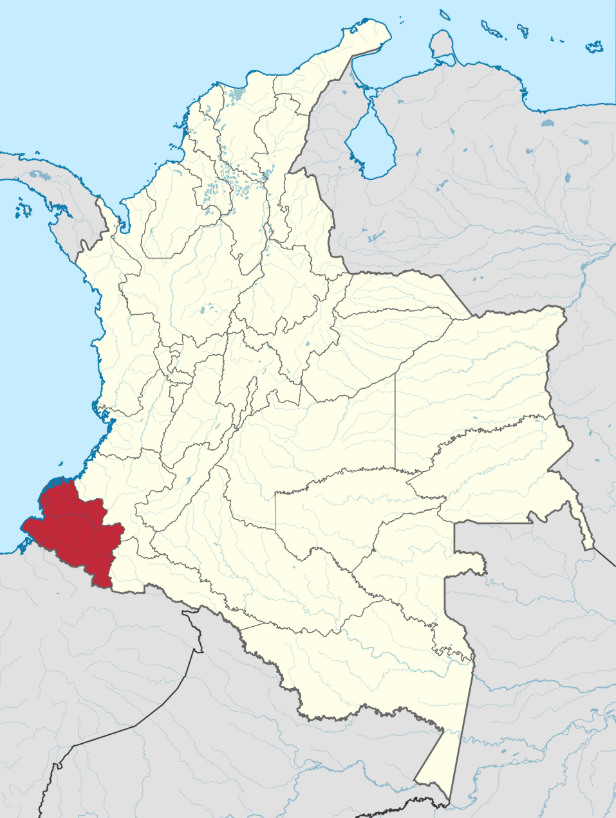
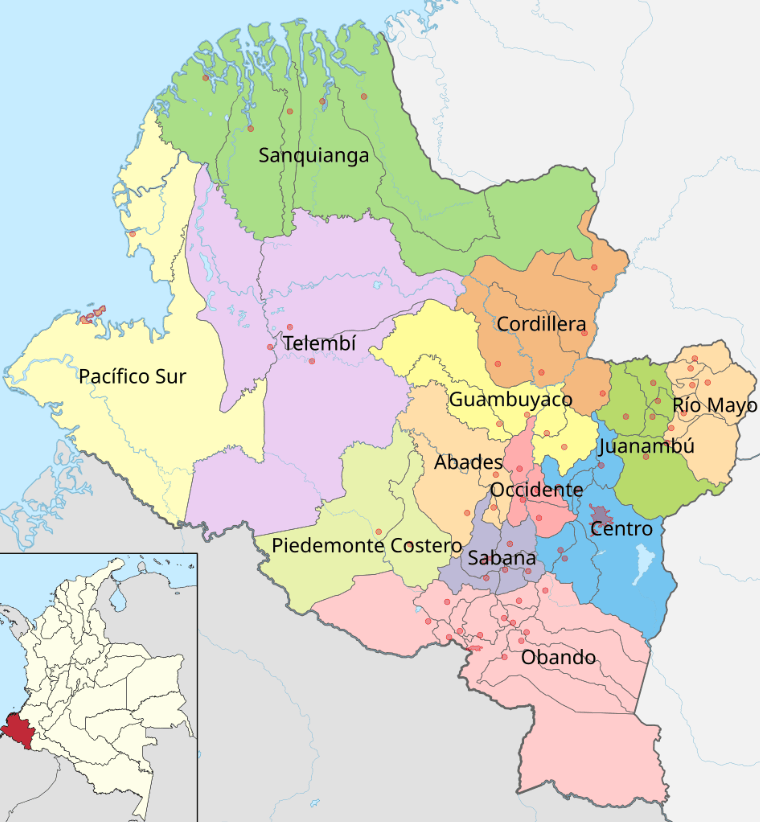
Nariño is named after independence leader Antonio Nariño. It is in the west of the country, bordering Ecuador and the Pacific Ocean.
Antonio Nariño (1765–1823) was a key Colombian independence leader and intellectual precursor who famously translated and distributed the French Declaration of the Rights of Man. His printing of the Declaration of the Rights of Man in 1793, sparked revolutionary thought against Spanish rule and earned him the title “El Precursor”. He founded the pro-independence newspaper La Bagatela in 1811 to share political ideas and rally public support and he served as the President of the Free and Independent State of Cundinamarca (1) from September 1811 to August 1813, advocating for a strong, centralized government. He led troops against Spanish royalists in 1813, was captured in 1814, and spent six years imprisoned in Spain before returning to help build the republic.
- an independent state within present-day Colombia
The Nariño Department is home to several distinct Indigenous peoples, most notably the Pasto and Awá nations
The Pasto People: Live high in the Andes Mountains and volcanic moorlands above 3,000 meters, the Pasto span both Colombia and Ecuador. They organize their communities into collective territories called resguardos (such as Panan, Chiles, and Gran Cumbal) (1) and focus heavily on traditional agriculture and food security. (Zapata 2025)
- Resguardos primarily refers to collective indigenous territories in Colombia, though the word also translates generally from Spanish as receipts, proofs of payment, or protections. A resguardo is a legal, communal territorial unit owned and governed by an indigenous community. They cover roughly 27 million hectares – about a quarter of Colombia – with major concentrations in the Amazon and Andean regions. These lands are inalienable (cannot be sold), imprescriptible (cannot be lost through time or squatting), and unseizable. Communities hold administrative and political self-governance.
The Awá People (also known as the Kwaiker or Awa-Kwaiker): Reside in the rainforests and Andean foothills of Nariño (such as Ricaurte), the Awá maintain their own governance, traditional health systems, and deep ancestral ties to their collective territories. The Awá population of Nariño is one of the most threatened ancestral populations in Latin America today, with health indicators confirming high maternal, neonatal, infant and childhood mortality and morbimortality from malnutrition and diarrheal and respiratory diseases that particularly affect children, pregnant women and older adults (casa Cruz et al 2022)
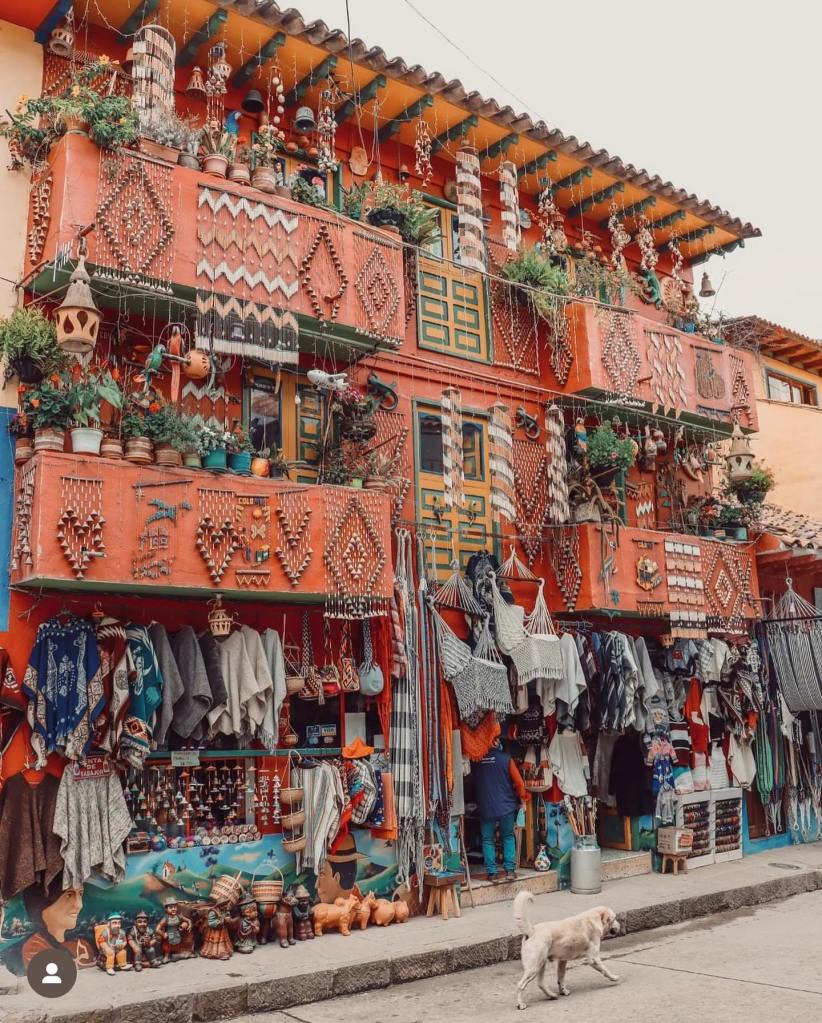
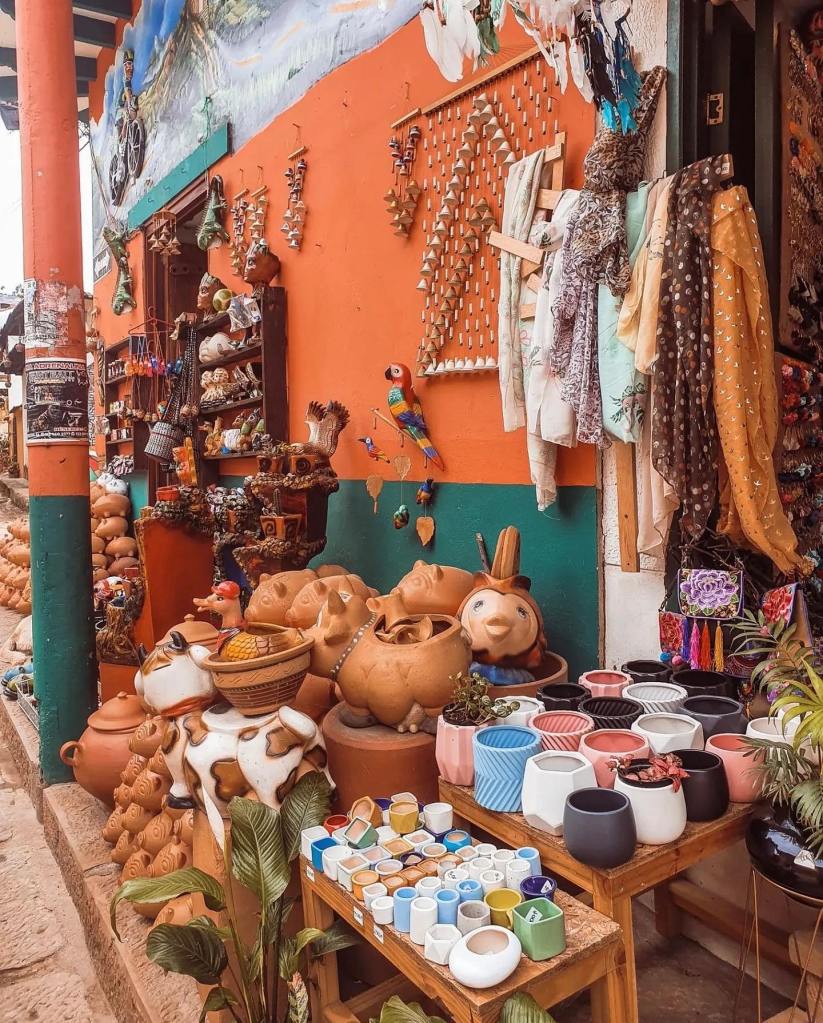
The Nariño culture is internationally recognized for exceptional pottery. They are famous for “negative-resist” painting techniques, intricate geometric patterns, and pedestal bowls (compoteras).
Negative-resist painting is a decorative technique where an artist paints a pattern with a temporary protective substance—such as wax, pitch, or resin—before applying a dark colour or slip (1) over the entire surface, leaving the original lighter base exposed in the shape of the design once the resist is removed (Klesner et al 2025)
- A Basic Slip is made from clay and water mixed together to create a creamy or glue like consistency. Potters use basic slip alongside scoring (scratching the surface) to act as an adhesive or “glue” when attaching handles, spouts, or separate pieces of greenware. Artists will also paint or dip pottery in coloured basic slip for surface design. A Casting Slip is used for Industrial and Mold work. It is not just watered-down clay, but a precise mix of clay, water, and a chemical additive called a deflocculant (like sodium silicate). A deflocculant allows the mixture flow smoothly into plaster molds using much less water. Using less water means the cast pieces shrink less, dry faster, and avoid cracking.
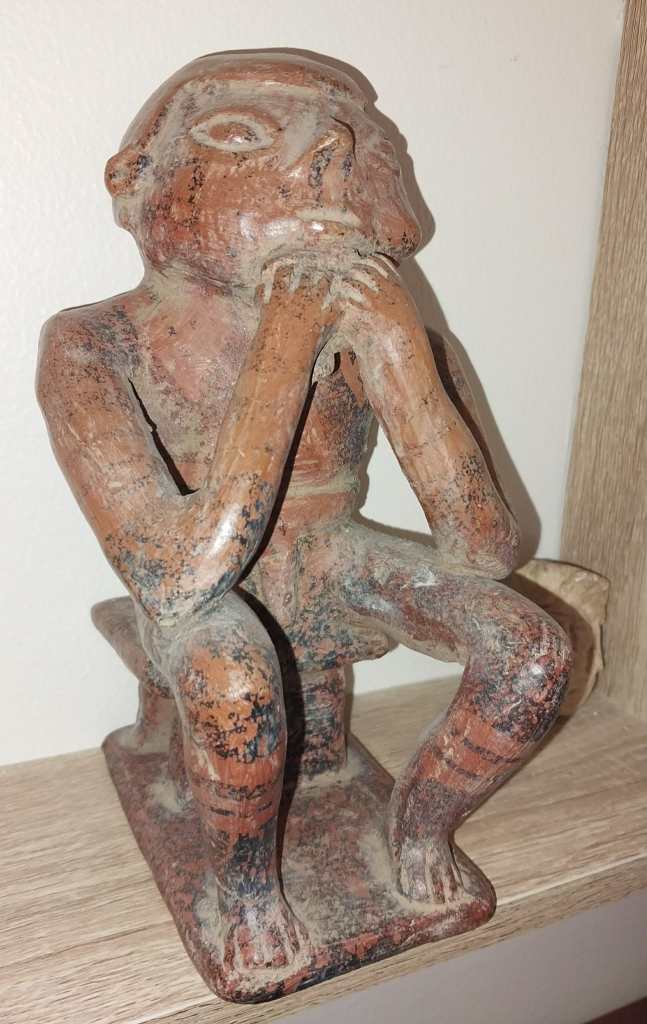
The first of my seated figures
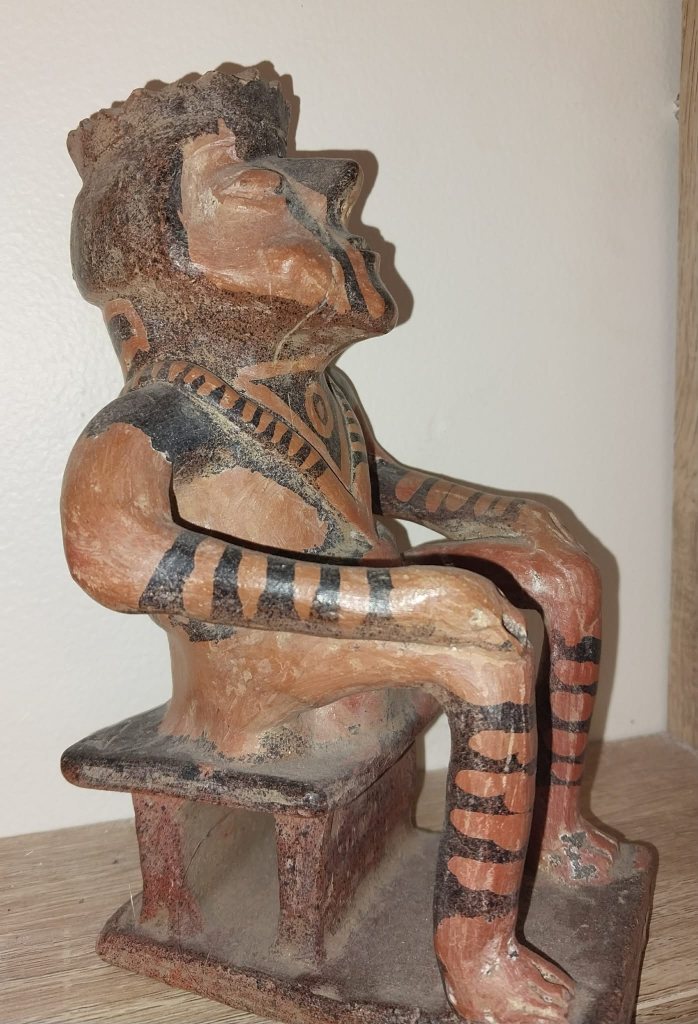
This image shows a Pre-Columbian Nariño pottery figure depicting a coquero, a seated male figure engaged in the ritual chewing of coca leaves.
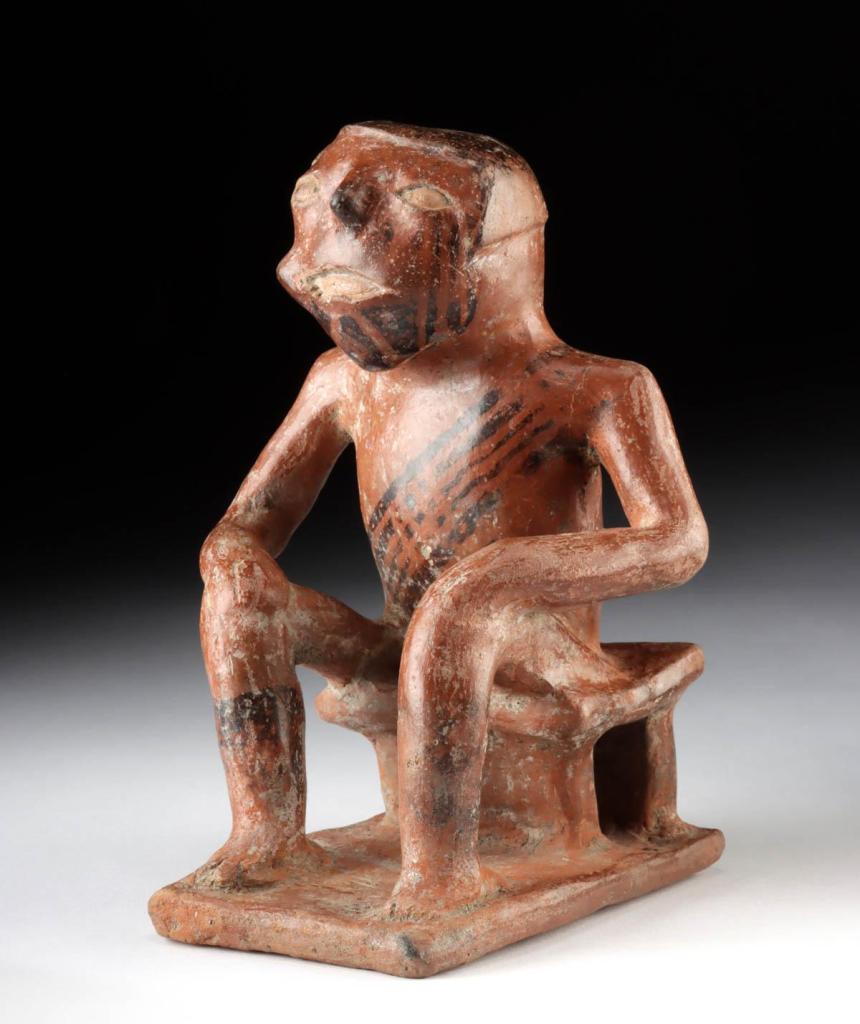
The figure is shown sitting on an integral bench (1) and often features a bulge in the cheek, identifying it as a coca (2) chewer. These figures are typically from the Nariño-Carchi region of Colombia or Ecuador, dating between 400 and 1532 AD
- a built-in or attached seat
- Coca is an evergreen shrub in the Erythroxylem species that native to northwestern South America known for containing the psychoactive alkaloid that is processed into cocaine. Chewing coca leaves dates back at least 8,000 years in South America, as evidenced by coca leaves and calcite found in house floors in Peru’s Nanchoc Valley (Dillehay et al 2010).
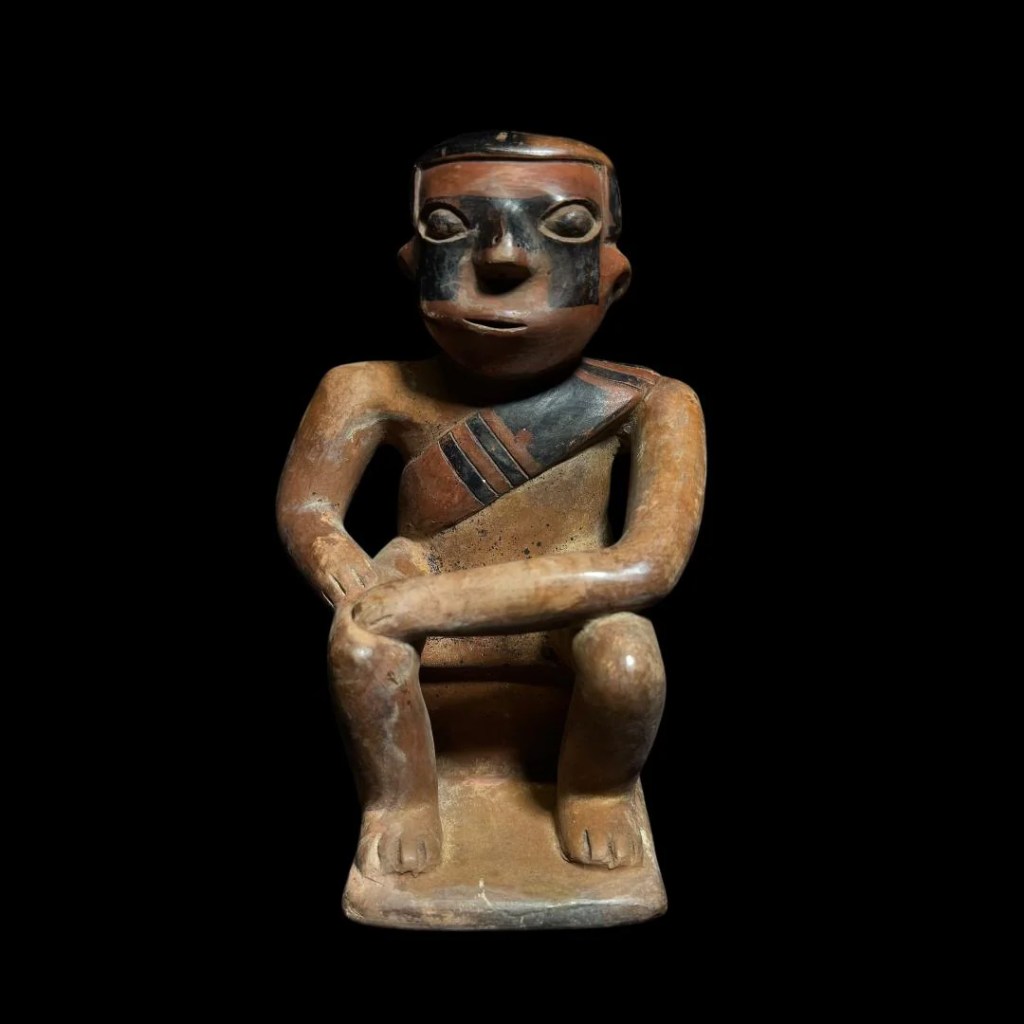
Capulí Cultural Complex, Highlands Nariño Region, Colombia
c. 800–1500 AD
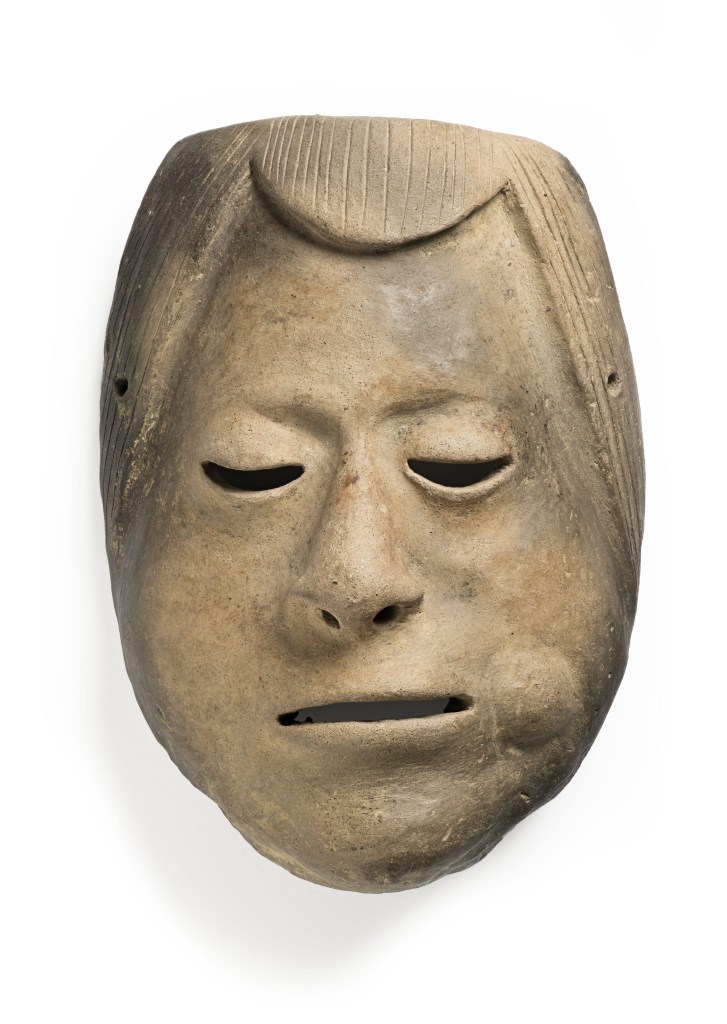
Nariño or Carchi Mask Depicting Coquero 1250–1600 AD (note the bulge in the cheek caused by chewing a wad of coco leaf)
Coca chewing was associated with ritual activity, social status, and spiritual communication.
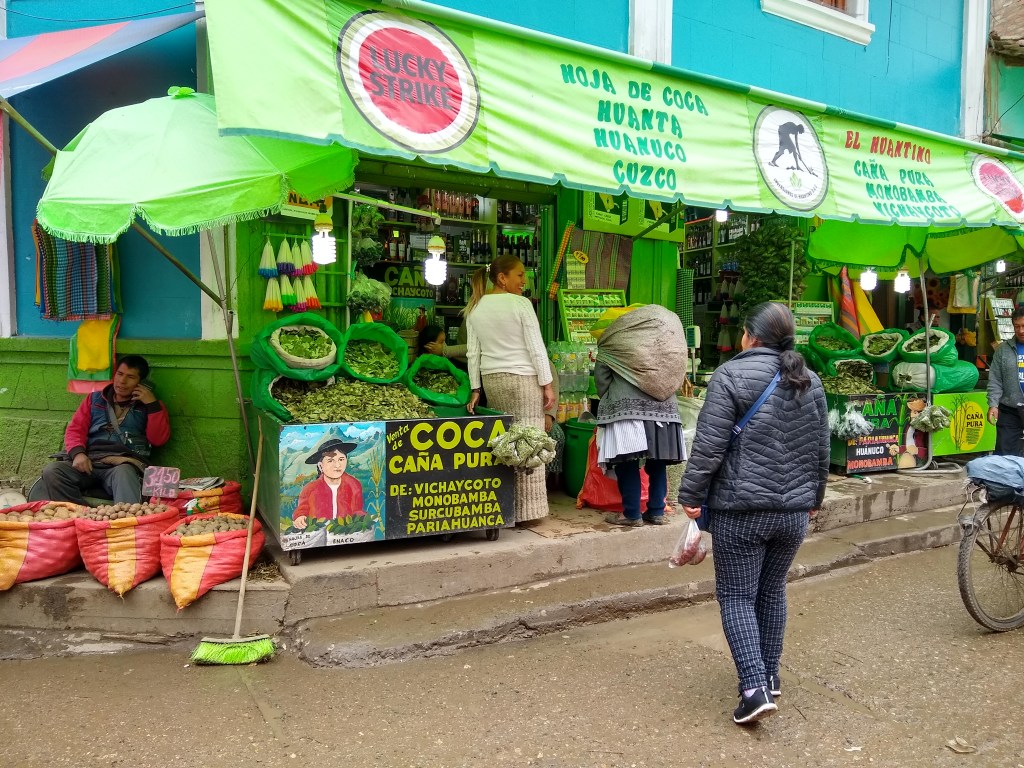
When chewed, coca acts as a mild stimulant and suppresses hunger, thirst, pain, and fatigue (Weil 1981).
Coca chewing was not only for religious rituals and inducing trance like states; traditional medical uses of coca are foremost as a stimulant to overcome hunger, and thirst, fatigue and relieving discomfort while working. It is considered particularly effective against altitude sickness. Its use was widespread amongst marching soldiers and labourers.
Some masks from my own collection. I found these on Facebook Marketplace. They were collected in the 1970’s on a trip to Ecuador. They seem to be pretty standard tourist fare and are fairly smallish (about 10cm x 15cm)
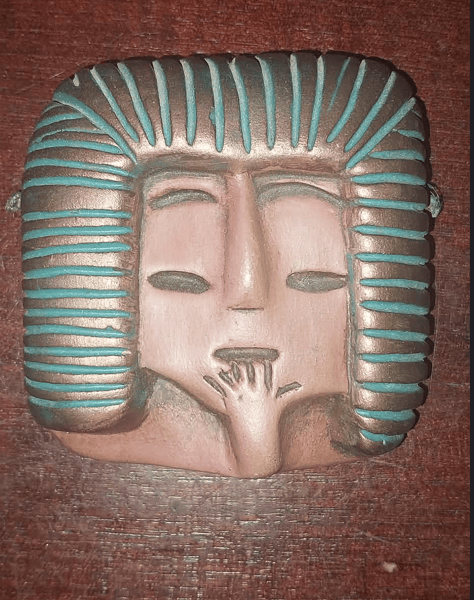
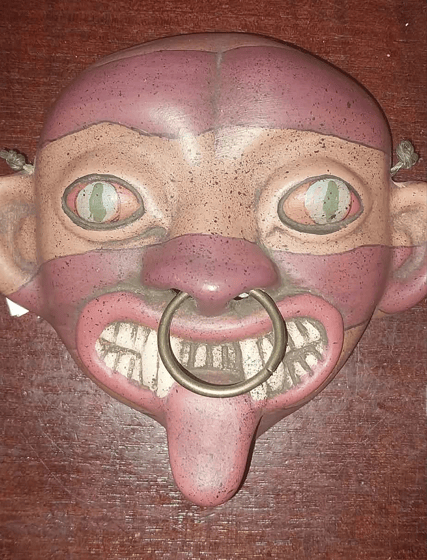
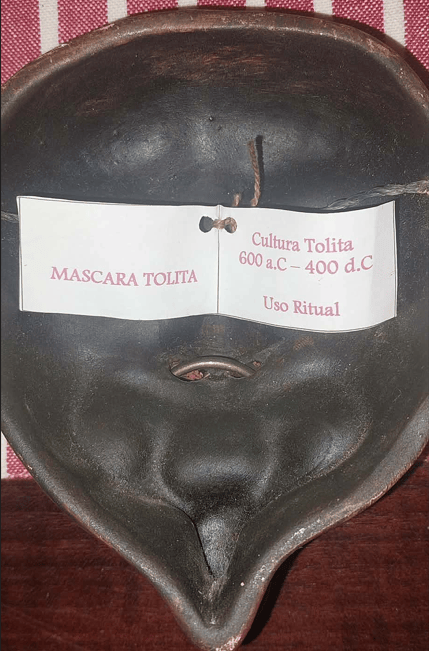
The Tumaco-La Tolita culture or Tulato culture (Patiño 2017) also known as the Tumaco culture in Colombia or as the Tolita culture in Ecuador (Morales Cabezas 2013) was an archaeological culture that inhabited the northern coast of Ecuador and the southern coast of Colombia during the Pre-Columbian era. The Tumaco-La Tolita culture lived on the coasts of the present-day province of Esmeraldas in Ecuador and extended as far north as Buenaventura, in Colombia
Seated Figure #2
The second seated figure in my collection is playing a musical instrument, possibly an ocarina. Ricardo Zapata (2026) notes that it is said that “the elders used the voice of the ocarina to recount regional mythology, using its sound to restore order and harmony between the cosmos and the community”. Follow Ricardos link in References to hear some of these instruments being played.
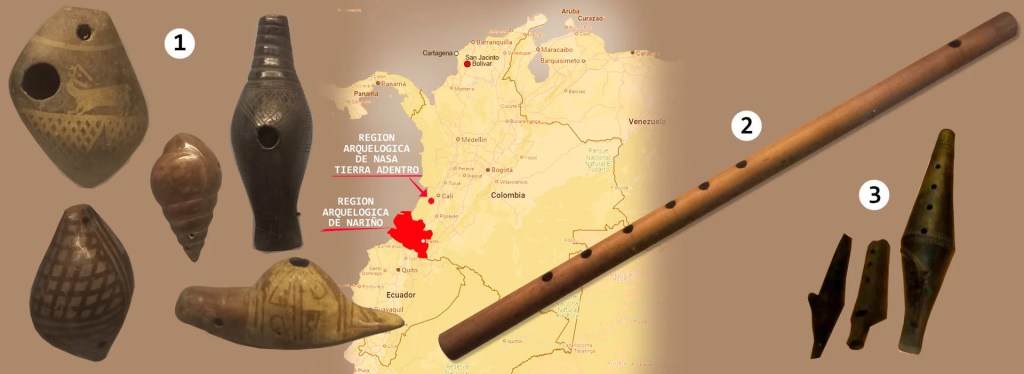
(Zapata 2026)
Prime examples of resist-painted ceramics are found in Nariño (Colombia), where three overlapping styles of highly decorated ceramics were produced in the Serranía nariñense (also known as the altiplano) region during the pre-Hispanic period.
These three styles were
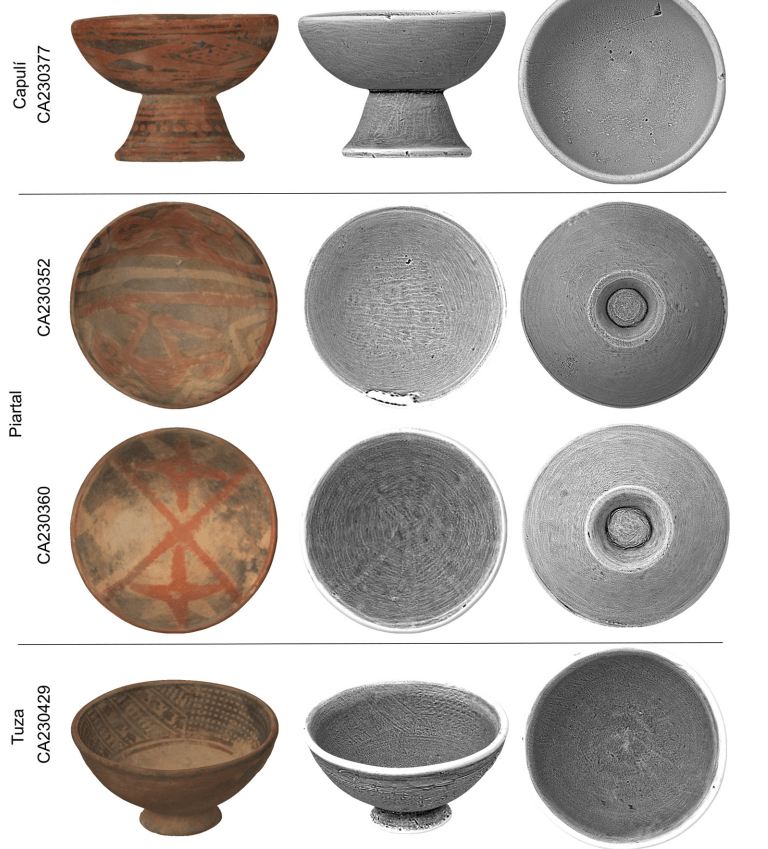
Capulí – (c. 4th–10th century AD): Characterized by fine negative resist-painted geometric decorations (often dark designs on a reddish background). This period is famous for striking anthropomorphic ceramic figurines, including seated female figures and male figures on stools often depicted with wads of coca leaves in their cheeks (“coqueros”) (Peregrine et al 2001). The decorated area of the ceramic is covered in a red slip, and directionally burnished following the contours of the vessel. Vessels can have, but do not need to have, incised decoration. The vessel is then fired, and sometime after firing, a design is painted in a resist material and subsequently covered with an organic black layer to create negative designs. (Klesner et al 2025)
Piartal – (c. 750–1250 AD): Known for complex vessels—such as deep bowls and urns for secondary burials—featuring intricate patterns that often mimic animal or snake skins. Technistically (sic), Piartal ceramics combine both negative and positive painting methods using slips on a reddish or orange base. The decorative area of the ceramic is covered in a cream slip and a simple design is painted in red slip-paint. Vessels can have, but do not need to have, incised decoration. The vessel is then directionally burnished following the contours of the form, and fired. Once fired, most, but not all vessels, have a more elaborate design painted on with a resist material which is then covered with an organic black layer to create negative designs. (Klesner et al 2025)
Tuza – (c. 1250–1500+ AD): Distinguished by exclusive use of positive painting (applying paint directly onto the ceramic surface), commonly featuring distinct geometric motifs, zoomorphic designs, and characteristic shapes like pedestal bowls or dishes with scalloped, wavy edges. The decorative area of the ceramic is covered in a cream slip and the surface is burnished leaving no visible burnishing marks. Designs then are applied to the decorative area in red and/or brown slip-paint and the vessel is fired. No post-firing decoration is employed. (Klesner et al 2025)
Pedestal Bowl
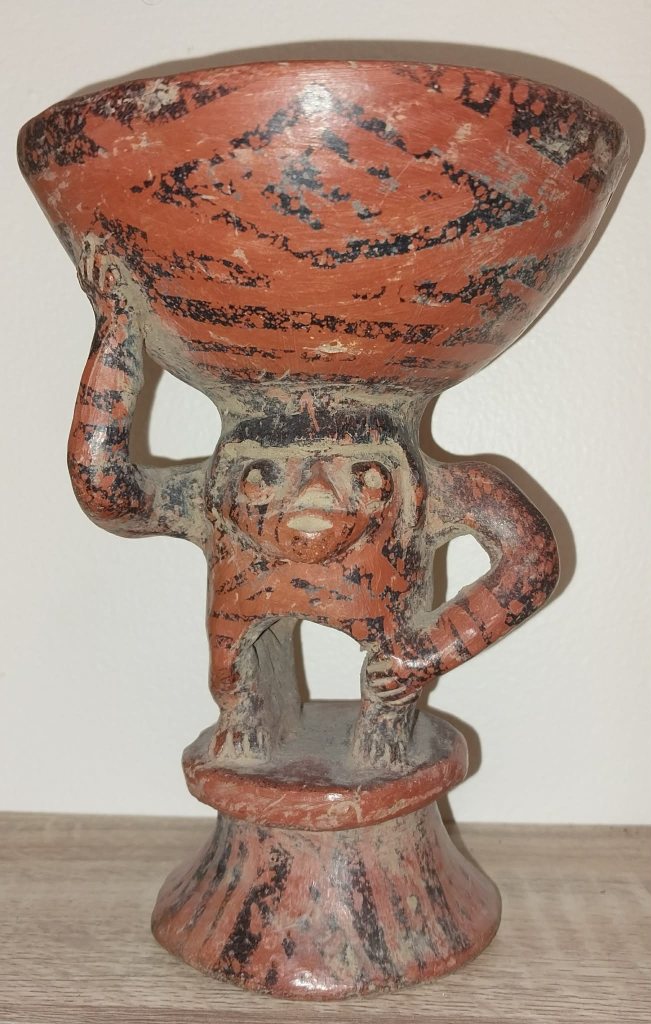
This production process is quite sophisticated for its time. The negative-resist decoration was achieved by applying wax or resin to specific areas of the pottery surface before adding pigments. This process worked similarly to modern painter’s tape, allowing artisans to create precise patterns and designs. The technique produced earthen tones of black, tan, and red through a multi-step process. After the wax resist was applied, different pigments were added to create the characteristic geometric patterns and linear designs. In the piece below you can see the geometric banding is done this way and the seep bowls (1) has three caryatid figures holding up the vessel at centre; all attached to a rounded slab base
I have not found exactly what a “seep” bowl is but these bowls are also called “raised pedestal bowls”. One definition for seep bowls is “Seep bowls generally refer to porous ceramic or clay vessels designed to let liquids slowly pass through their walls, whether for garden irrigation or traditional tea seasoning”. This does make some sense I suppose as some clay water storage containers used in Mexico are designed to “flavour” the water as it rests in the vessel (I’ll need to do more research on this)
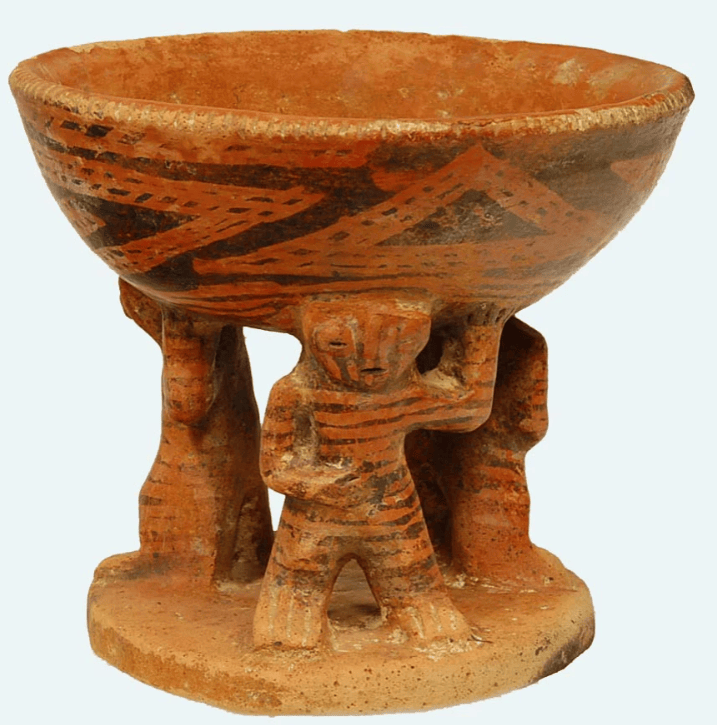
Art for Eternity
A caryatid (also karyatid) is a sculpted female figure that serves as an architectural support, taking the place of a column or pillar to hold up a roof or entablature(the long, horizontal upper structure of a classical building that rests directly on top of columns).
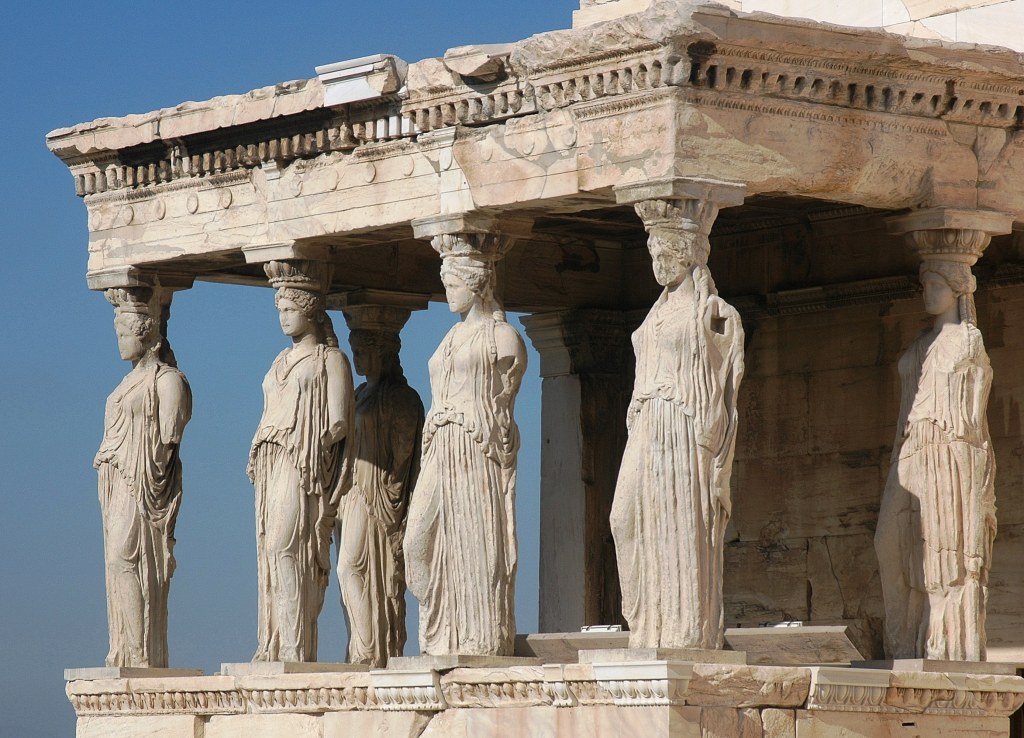
The word caryatid derives from “maidens of Karyai,” an ancient Peloponnesian town between Tripoli and Sparta, on the northwest slopes of Mount Parnon that had a temple dedicated to Artemis.
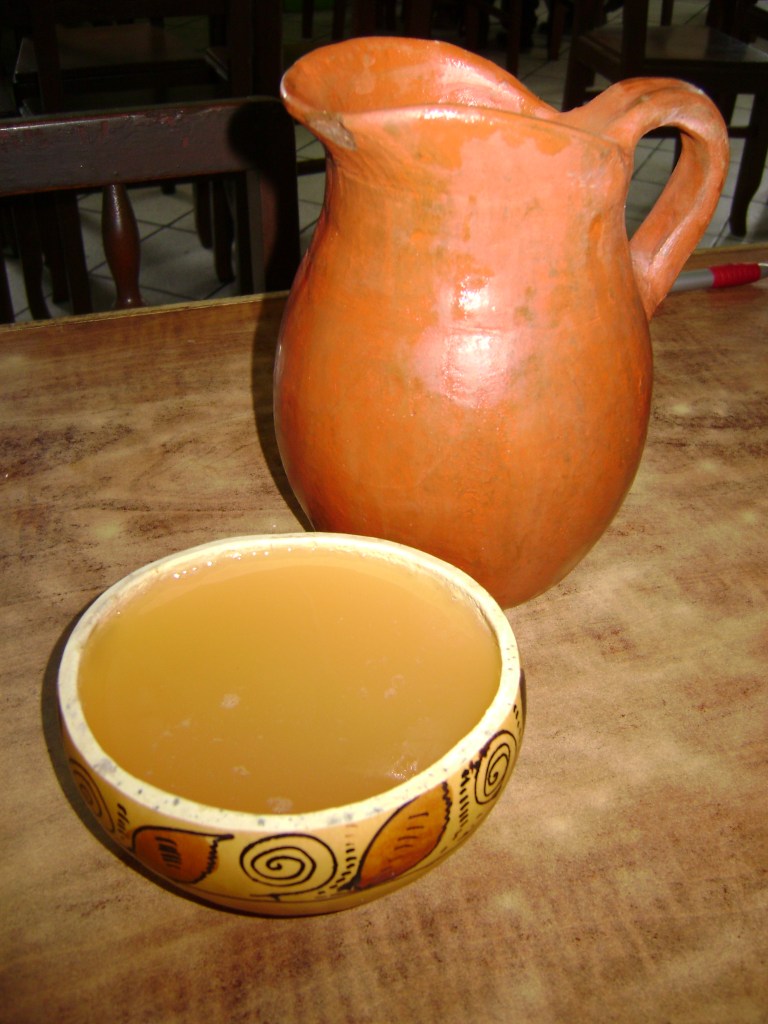
Raised pedestal bowls held both symbolic and practical value. They were used during rituals, festivals, and communal feasts to serve foods or sacred liquids like chicha (a fermented maize drink) (1) or to present offerings.
- for more info on chicha, I might go deeper into it in a future Post on corn beers, but for now check the Website References at the bottom of the Post. I do briefly look at this drink in Tepache. Part Two. The Recipe.
References
- Casas Cruz HM, Pelcastre-Villafuerte BE, Arenas-Monreal L, Ruiz-Rodríguez M. Concerted Model of Healthcare for Awá Indigenous of Nariño, Colombia. Int J Environ Res Public Health. 2022 Sep 27;19(19):12250. doi: 10.3390/ijerph191912250. PMID: 36231547; PMCID: PMC9566783.
- Catherine, Crawford, Rosie, Losada, Lucero Aristizábal, Arévalo, Marcela Bernal, Campos-Quintero, Lina María, Arroyo, Felipe Cárdenas, Cabrera, María Camila Maya, Jaramillo, Paula Andrea Murillo, Fernández, David Alejandro Pérez, Sáenz-Samper, Juanita, Uribe-Villegas, María Alicia and Martinón-Torres, Marcos. “Disentangling Technological Traditions: Comparative Analysis of Chaînes Opératoires of Painted Pre-Hispanic Ceramics From Nariño, Colombia” Open Archaeology, vol. 11, no. 1, 2025, pp. 20250038. https://doi.org/10.1515/opar-2025-0038
- Dillehay TD, Rossen J, Ugent D, Karathanasis A, Vásquez V, Netherly PJ (2010). “Early Holocene coca chewing in northern Peru”. Antiquity. 84 (326): 939–953. doi:10.1017/S0003598X00067004. S2CID 162889680.
- Hammen, Maria Clara van der (2003) The indigenous resguardos of Colombia : their contribution to conservation and sustainable forest use
- Morales Cabezas, Isaías (2013). Frassani, Alessia (ed.). Del Testimonio al Artificio en el Arte Aborigen: La Influencia de la Frontera en el Estudio de Tumaco-La Tolita (PDF). Universidad de los Andes: Facultad de Artes y Humanidades. Retrieved 2 August 2022.
- Patiño, Diógenes (2017). “Tumaco-Tolita: cultura, arte y poder en la costa pacífica”. Antropología: Cuadernos de Investigación (in Spanish). 18 (18): 40–54. doi:10.26807/ant.v0i18.123. Retrieved 5 April 2023.
- Peregrine, Peter Neal; Ember, Melvin, eds. (2001). “Encyclopedia of Prehistory: Volume 5: Middle America”. Encyclopedia of Prehistory. Vol. 5 : Middle America. New York: Springer. pp. 167–170. ISBN 0-306-46259-1. OCLC 84088734.
- Weil, AT (Mar–May 1981). “The therapeutic value of coca in contemporary medicine”. Journal of Ethnopharmacology. 3 (2–3): 367–76. doi:10.1016/0378-8741(81)90064-7. PMID 6113306.
- Zapata, Ricardo (2026) Ancestral Winds : A Journey Through Pre-Hispanic Colombian Music – https://ricardozapata.org/blogs/news/ancestral-winds-a-journey-through-pre-hispanic-colombian-music?srsltid=AfmBOop45M0VakX4bpJfsJDgTYhqpCYbY22uwWi4vTqwofHc6zKC9Q6S
Websites
- Chicha: The banned drink of Colombia – https://www.bbc.com/travel/article/20230327-chicha-the-banned-drink-of-colombia
- Chicha: The Drink That Survived Conquest and Prohibition – https://thecitypaperbogota.com/living/chicha-bitter-brew-of-history-bogota-culture-conquest/
- Colombian Chicha, a Journey Through History and Culture – https://colombiaone.com/2023/08/22/colombian-chicha-journey-through-history-flavor/
- Zapata, Simón : December 17, 2025 : The People of the Eight-Pointed Sun : https://www.earthisland.org/journal/index.php/articles/entry/colombias-indigenous-pasto-people-defend-their-land-from-climate-impacts
Images
- Chicha (corn beer) – By Dtarazona – Own work, Public Domain, https://commons.wikimedia.org/w/index.php?curid=4712860
- Cover Image – Las Lajas Sanctuary : Terra Colombia : https://colombia-travels.com/archaeological-south/narino-putumayo
- El Museo del Oro – https://www.banrepcultural.org/noticias/el-museo-del-oro-uno-de-los-25-mejores-museos-del-mundo
- Nariño Map 1 – By TUBS – This vector image includes elements that have been taken or adapted from this file:, CC BY-SA 3.0, https://commons.wikimedia.org/w/index.php?curid=17366727
- Nariño or Carchi Mask Depicting Coquero 1250–1600 AD : Los Angeles County Museum of Art : The Muñoz Kramer Collection, gift of Stephen and Claudia Muñoz-Kramer and Camilla Chandler Frost : https://collections.lacma.org/object/139407
- Nariño Sub Regions – By Milenioscuro – Own work, CC BY-SA 4.0, https://commons.wikimedia.org/w/index.php?curid=50151166
- Narino Wax Resist Decorated Caryatid Vessel (Image) Art for Eternity https://howardnowes.com/products/narino-wax-resist-decorated-caryatid-vessel
- Oil painting of Antonio Nariño By Ricardo Acevedo Bernal – http://web.presidencia.gov.co/narino/folleto_tour.pdf, Public Domain, https://commons.wikimedia.org/w/index.php?curid=5157362
- Pottery Market in Raquira, Boyacá Colombia : Image via visitcolombia on Instagram – https://www.instagram.com/p/CrA-tc4OaiG/?img_index=2
- Store selling coca leaf in Peru – By Thayne Tuason – Own work, CC BY 4.0, https://commons.wikimedia.org/w/index.php?curid=104581058
- The caryatid porch of the Erechtheion in Athens, – By No machine-readable author provided. Harrieta171 assumed (based on copyright claims). – No machine-readable source provided. Own work assumed (based on copyright claims)., CC BY-SA 3.0, https://commons.wikimedia.org/w/index.php?curid=594464 –
- The entrance to the Museo del Oro – https://historica.fandom.com/wiki/Museo_del_Oro

