
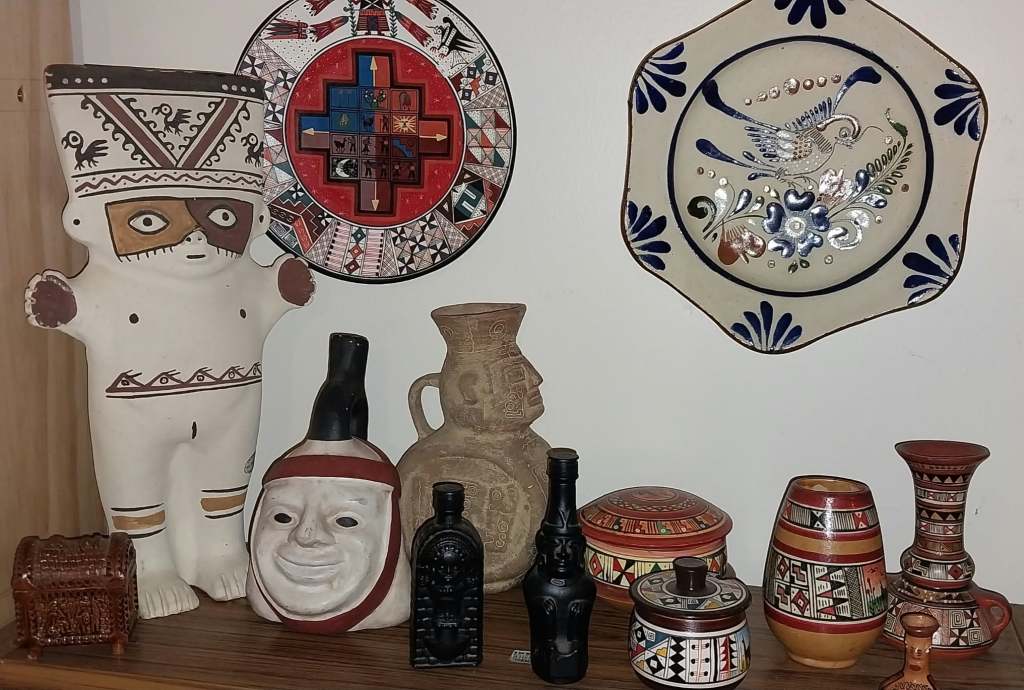
(Ignore the Tonala style plate at the top right of the image)
For more on Tonala style pottery check out Mexican Ceramics. Tonala
Even though the primary focus of my collecting is that of Mexico, along the way I have come across other “Latin American” art and recently I came across a piece from Peru that caught my eye. Now most of the stuff I have found has been in thrift stores and consists of fairly standard tourist fare.
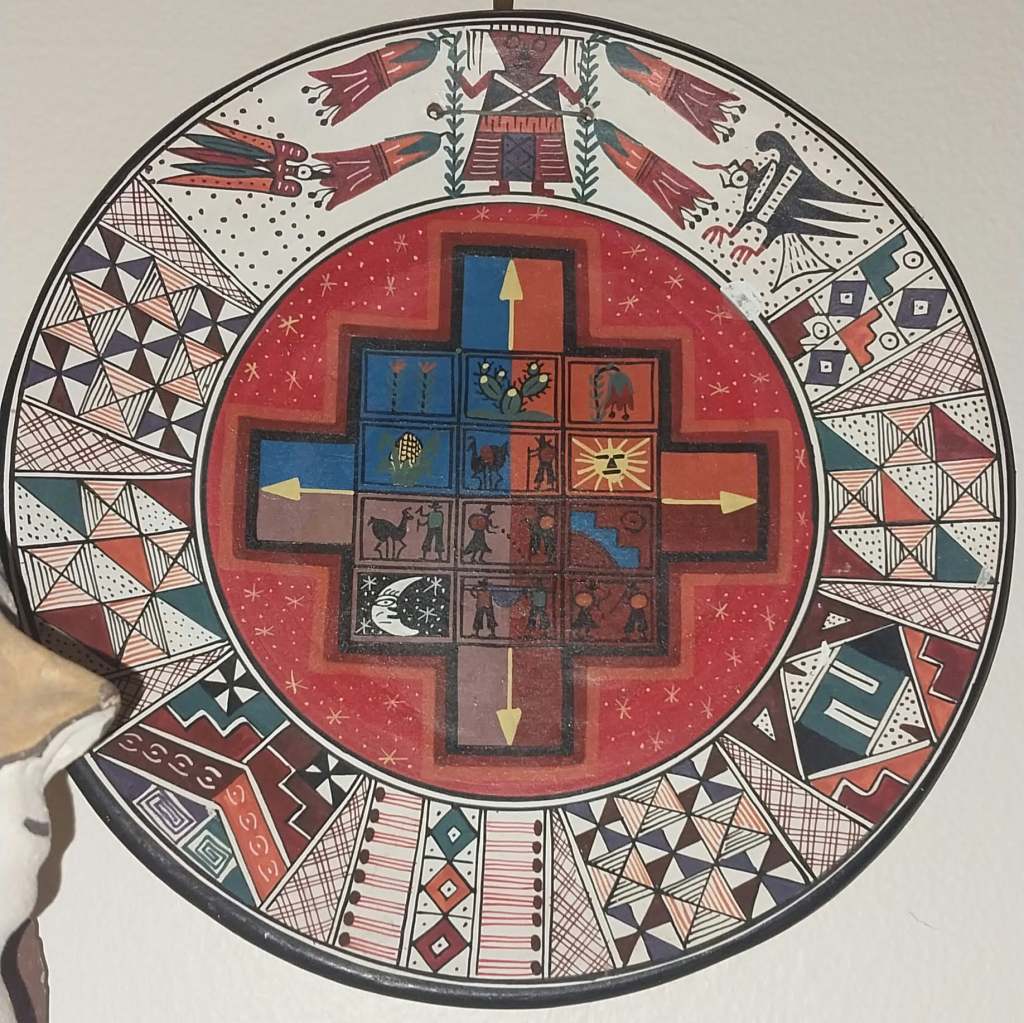
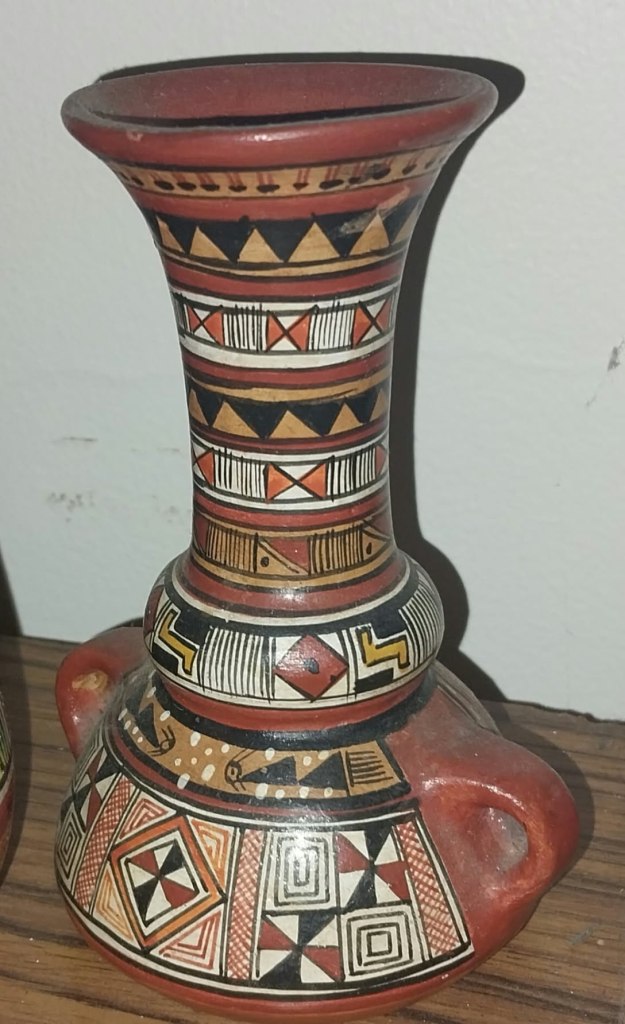
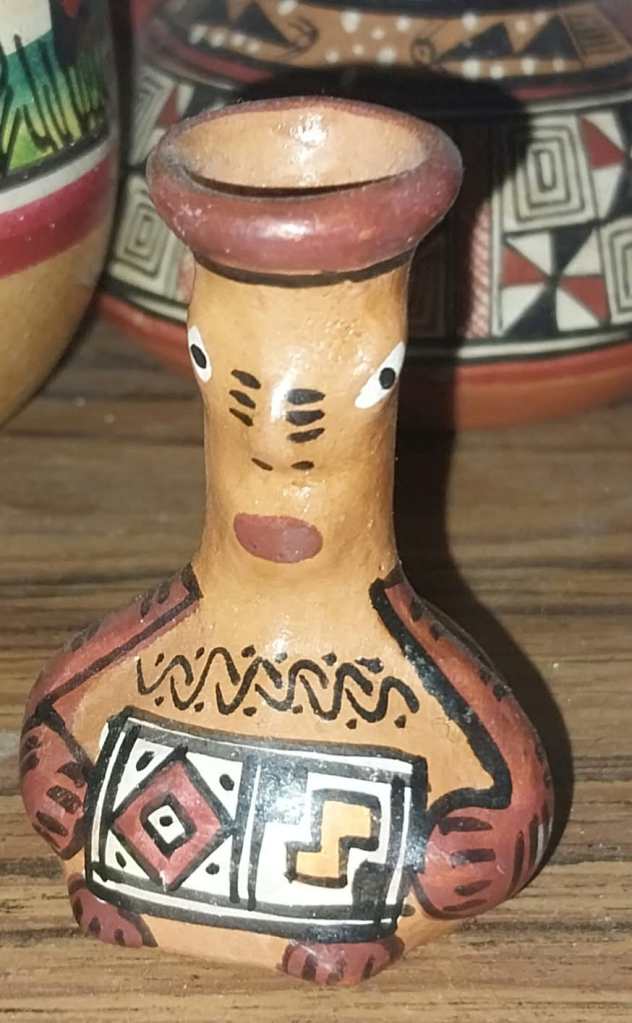
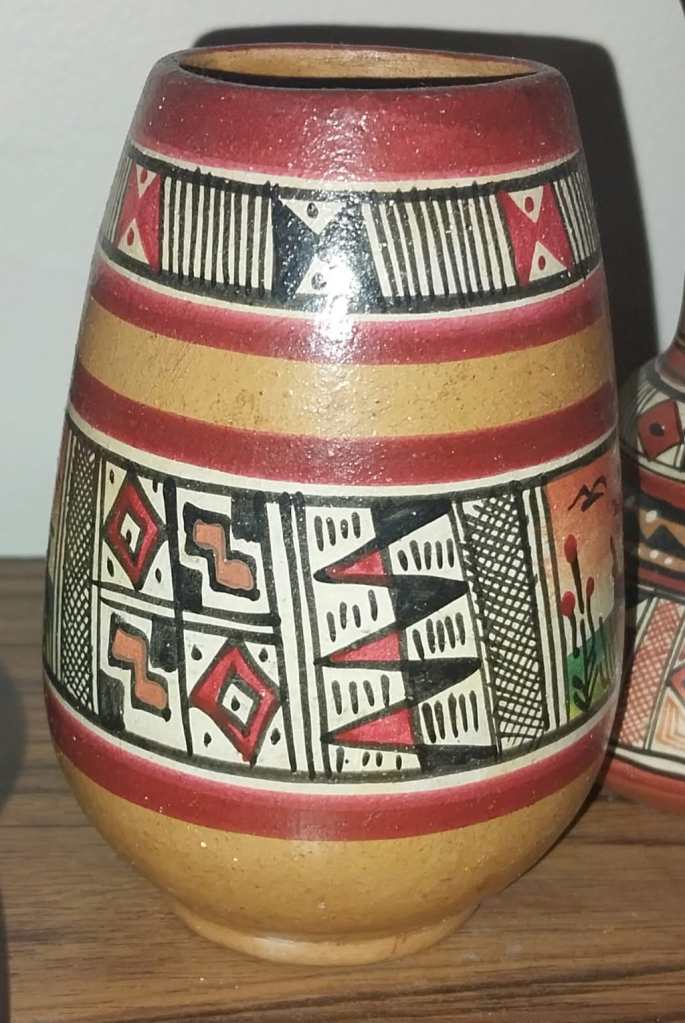
I have also come across some less common objects
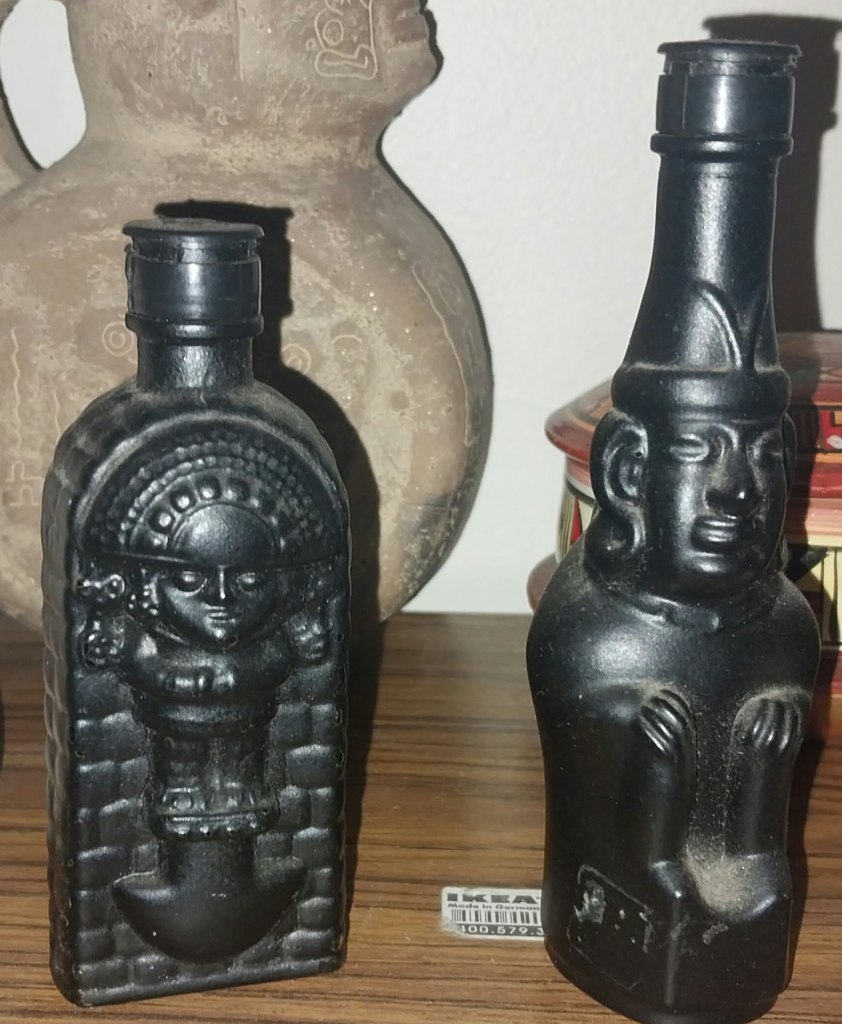
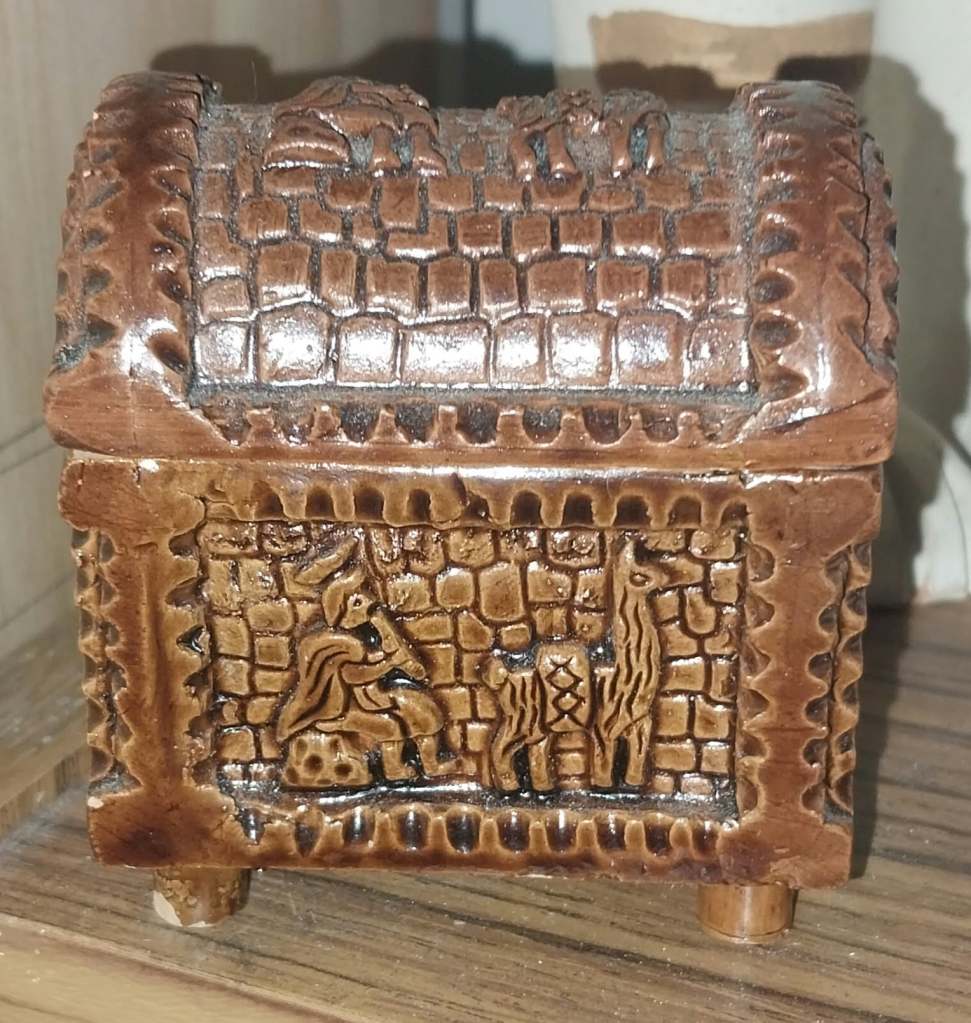
The small chest is an interesting piece and is made from a ceramic of some kind that rings with a high pitch when tapped.
I was also gifted an oil painting that I gladly added to my collection of máscaras.

I have Posted on this painting in Máscaras Peruanas : Peruvian Masks so check that out.
Another friend (thanks Fi) also gave me a bolt of cloth that she thought might have been Mexican. She wasn’t sure exactly but she knew I’d love it (and I do)
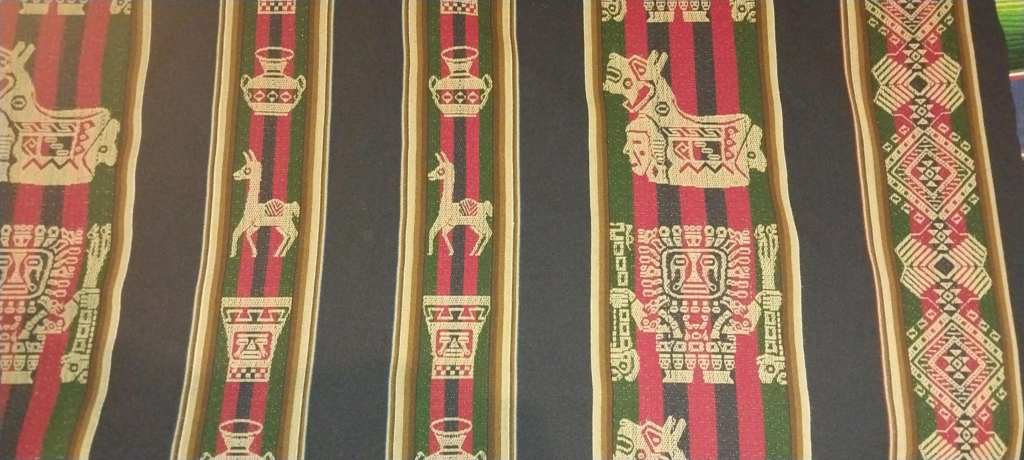

It is beautifully made and is remarkably warm considering it is really quite thin.
The piece however that I want to look at today is again quite different and although I have seen images of pieces like this in various books in my library I had paid no real attention to them as my focus is primarily on Mexico.
Another Facebook Marketplace score that immediately caught my eye. Let the research begin I say.
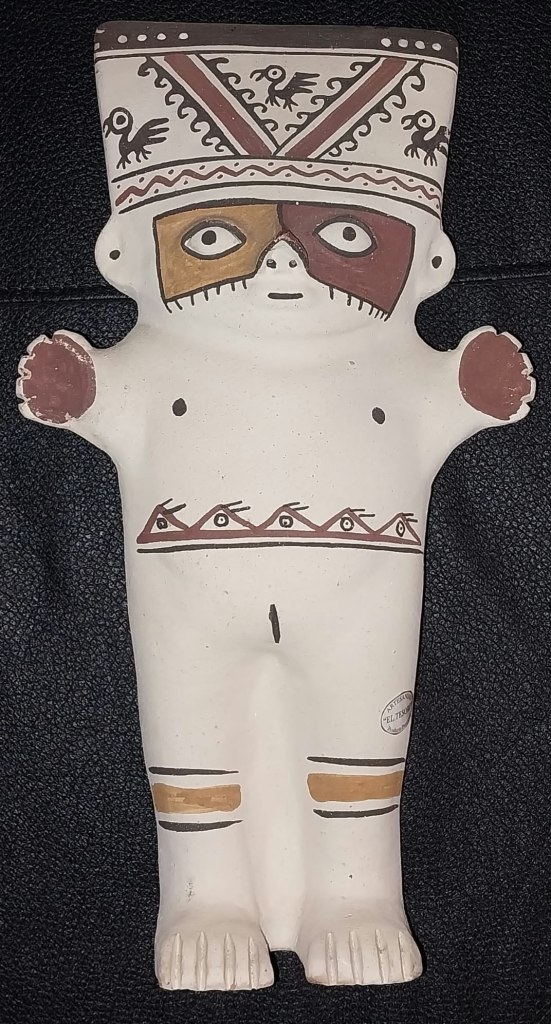
So. What is it?
The Cuchimilco Figures: Guardians of the Chancay World
Among the most recognizable archaeological treasures of ancient Peru are the cuchimilcos, distinctive ceramic figures created by the Chancay culture between approximately 1200 and 1450 AD. With their outstretched arms and expressive faces, these terracotta figurines have captivated archaeologists, historians, collectors, and the public for generations. Despite their popularity, the true meaning and purpose of the cuchimilcos remain unknown, making them one of the most intriguing mysteries of pre-Columbian South America.
The Chancay Culture
The Chancay culture flourished on the central coast of Peru between approximately 1200 and 1470 AD. Its cultural center was located in what is now the province of Huaral in the Lima region, and its influence extended through the valleys of Huaura, Chancay, and Chillón.
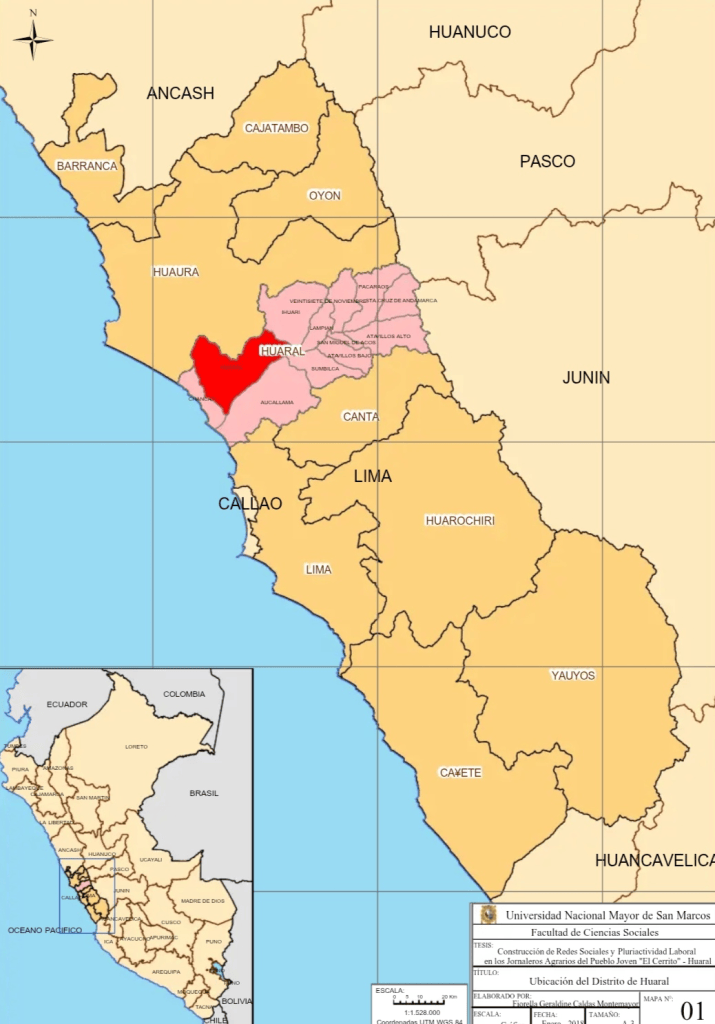
Unlike some other ancient civilizations, the Chancay left no written records. Consequently, our understanding of their society comes primarily from archaeological evidence, including ceramics, textiles, and woodwork. Among these surviving artifacts, their ceramic creations are the most abundant and have provided valuable insights into their beliefs, artistic traditions, and daily life. A lot of mystery still surrounds the cuchimilcos though.
The Chancay culture flourished until it was eventually incorporated into the expanding Inca Empire during the fifteenth century.
So, What Are Cuchimilcos?
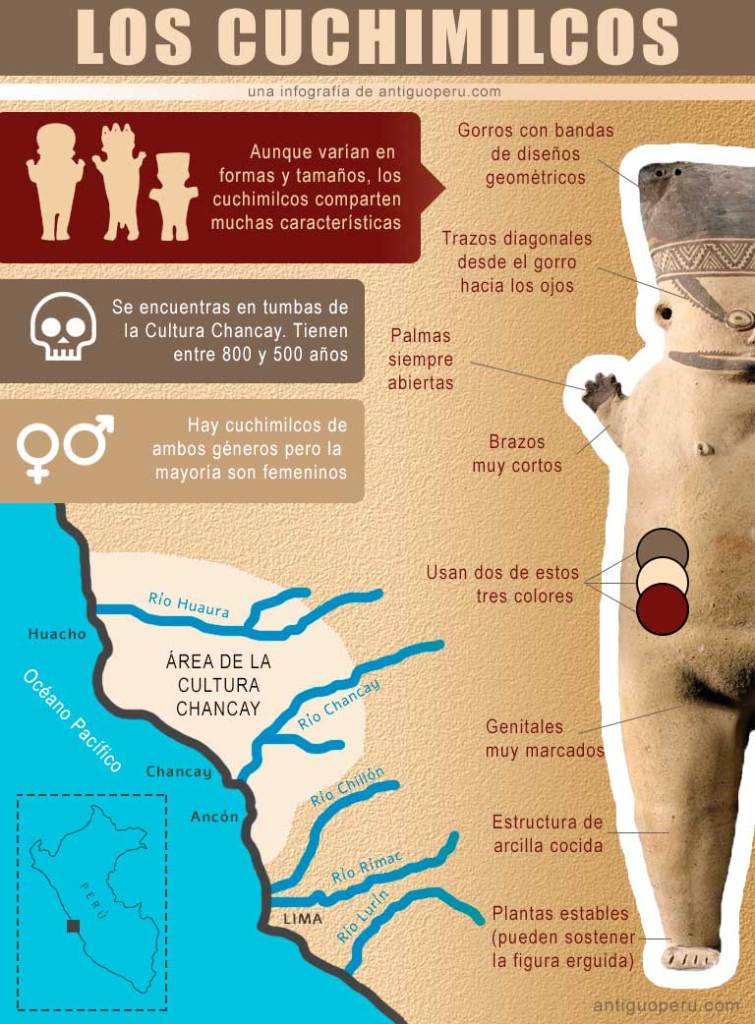
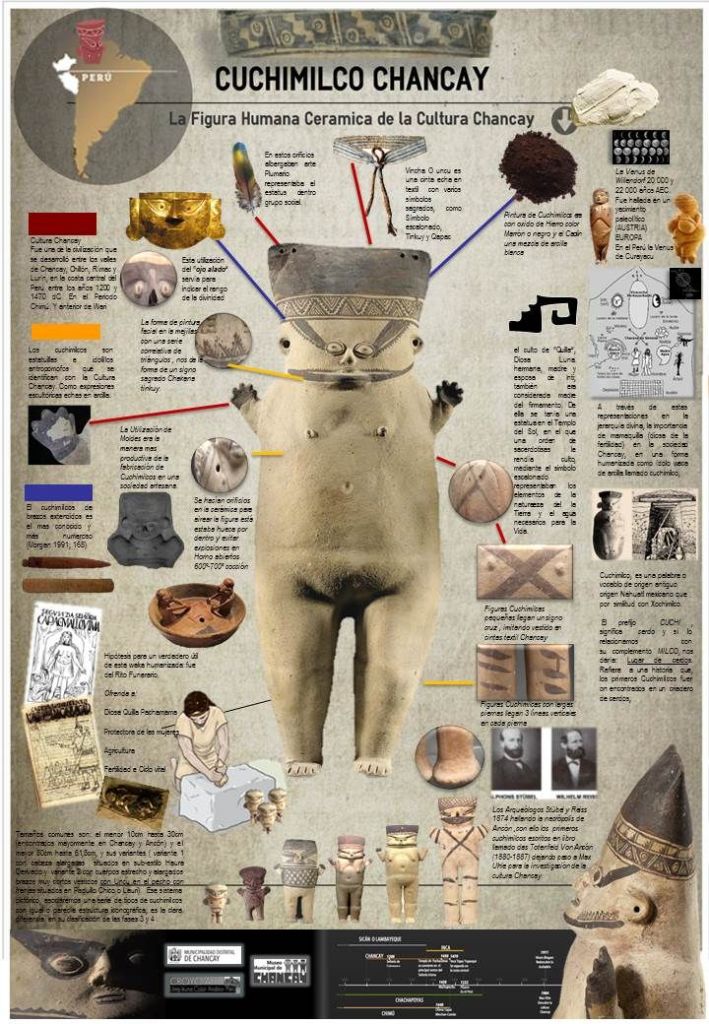
Cuchimilcos are ceramic figurines made from unglazed terracotta and decorated with painted pigments. They represent human figures standing upright with short arms extended outward or upward, creating a posture that appears welcoming or protective (some also say they look surprised or startled). Their palms are open, as if inviting an embrace or preparing for flight.
The figures vary in size, colour, and decoration, but share several distinctive characteristics:
- Frontal-facing and highly symmetrical designs.
- Short outstretched arms and open hands.
- Large heads and relatively small bodies.
- Visible male or female genitalia.
- Painted facial features and decorative motifs.
- Headdresses or caps, often containing small holes near the top.
Most cuchimilcos are decorated with black pigment, although examples displaying ochre and red colouring have also been found. Their painted surfaces frequently feature intricate patterns resembling tattoos or symbolic markings on the face and hands.
Tens of thousands of cuchimilcos have been recovered from archaeological sites associated with the Chancay culture. Unfortunately, many of these sites were heavily looted long before systematic archaeological investigations began. Throughout the nineteenth and twentieth centuries, grave robbers, known locally as huaqueros (1), excavated burial sites and sold the artifacts to private collectors in Peru and abroad.
- Huaqueo (from huaca) or guaqueo (from guaca) refers to the illegal search for treasure in pre-Columbian burial sites (guacas) without any archaeological basis. It is the looting of an archaeological site. The term is used in Argentina, Bolivia, Chile, Colombia, Ecuador, Peru, and other countries with Andean cultural heritage. A guaquero or huaquero is a person who searches for indigenous burial sites. The verb “huaquear” is derived from “huaca” which means to loot the contents of archaeological remains by unscrupulous people dedicated to the illicit trade of cultural goods.
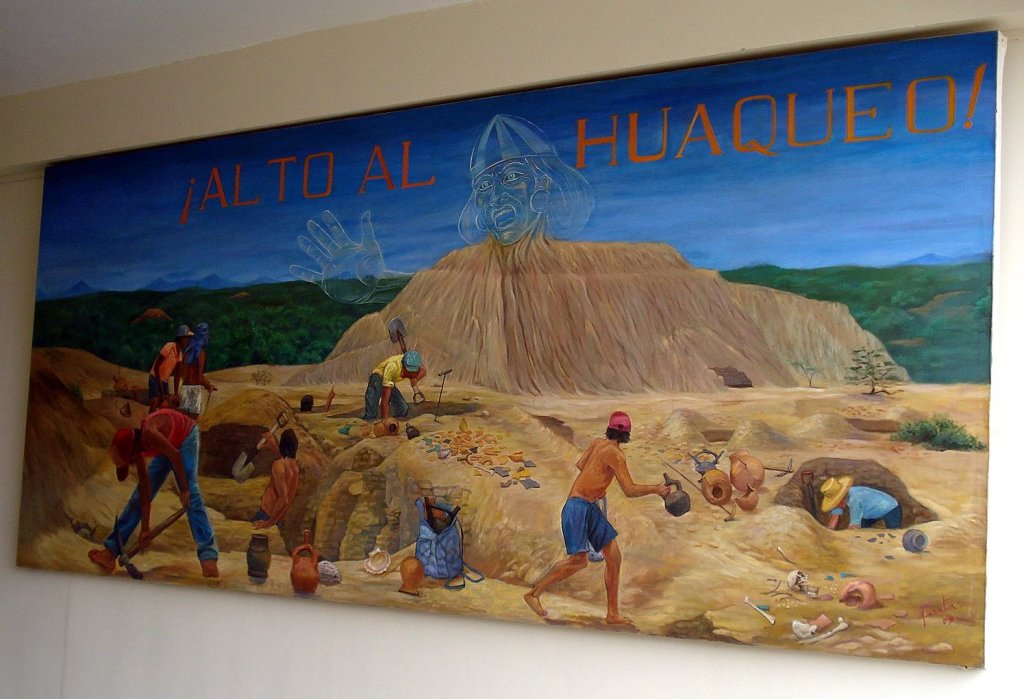
By the mid-nineteenth century, collecting Chancay ceramics had become fashionable among landowners and upper-class residents of Lima and Peru’s Norte Chico region. As a result, countless cuchimilcos were removed from their original archaeological contexts.Today many cuchimilcos can be found in museum collections around the world, though their original archaeological settings have often been lost due to looting and illicit trafficking.
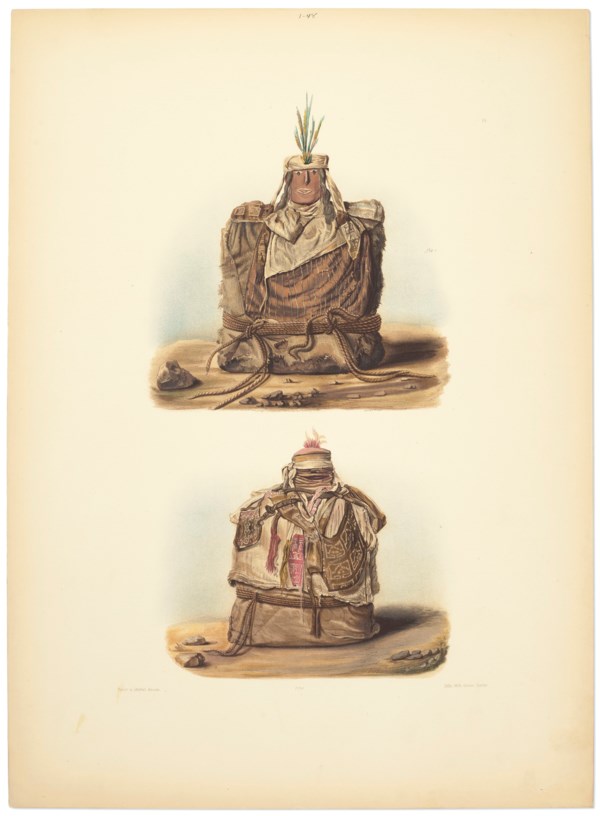
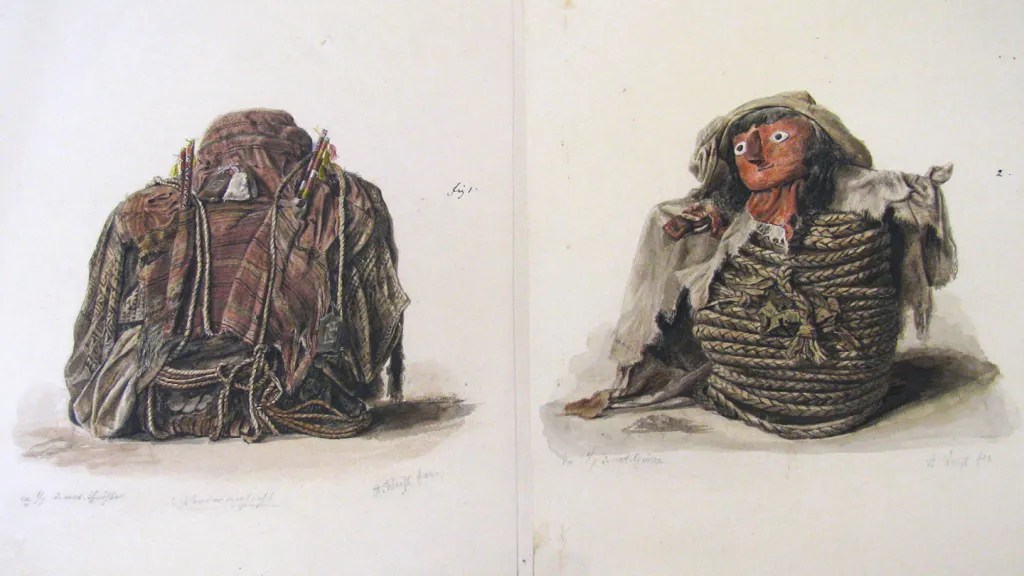
The first modern documentation of these figures comes from drawings produced by the German geologists Alphons Stübel and Wilhelm Reiss during the late nineteenth century.
Drawings by the German geologists Alphons Stübel and Wilhelm Reiss
The Mystery of Their Meaning
Because the Chancay left no written records, scholars cannot determine with certainty what the cuchimilcos represented or how they were used. As a result, most interpretations, as noted below, remain entirely theoretical.
One commonly accepted theory suggests that the figures served as protective guardians for the dead. Archaeologists frequently discover cuchimilcos in burial sites, particularly alongside human remains. Their outstretched arms have been interpreted as a symbolic gesture intended to ward off harmful spirits or negative energies. This interpretation has led to their popular nickname: “guardian figures”.
Another theory proposes that the figurines represented family members or companions who accompanied the deceased into the afterlife and protected them from malevolent forces.
The earliest Chancay tombs often contain cuchimilcos in male-female pairs, reflecting a possible belief in divine duality and balance between complementary forces. In later burials, however, female figures become much more common.
Archaeologist Walter Tosso has suggested that cuchimilcos may represent miniature versions of an important Chancay deity. He also notes that the predominance of female representations displaying their genitalia may indicate a connection with fertility rituals or fertility cults.
Despite these interpretations, the exact religious or ceremonial (or perhaps simply mundane) significance of the figures remains unknown.
Burial Practices and Social Status
Initially, archaeologists believed that cuchimilcos were reserved for members of the elite because many examples were recovered from high-status tombs. More recent excavations, however, have demonstrated that these figurines were also placed in the graves of ordinary individuals.
This broader distribution suggests that cuchimilcos may have played an important role throughout Chancay society rather than serving exclusively as symbols of wealth or nobility.
The Origin of the Name “Cuchimilco”
One of the most curious aspects of these figurines is that the name cuchimilco almost certainly did not originate with the Chancay people themselves.
According to researcher Walter Tosso, the term does not belong to any known pre-Hispanic language of ancient Peru. Instead, it appears to resemble a compound word from Nahuatl, the language of the Aztecs in Mexico. This observation has led Tosso to speculate that the name may have emerged during the mid-twentieth century through interactions between artifact dealers and smugglers involved in the illegal trade of cultural objects between Peru and Mexico.
Another popular explanation links the name to the word cuchi, meaning “pig” in modern Peruvian usage (1). According to this theory, the figurines received their name because many archaeological sites where they were discovered were located near pig farms. However, scholars point out that while cuchi may explain part of the word, the suffix -milco has no known linguistic basis in Quechua, Aymara, or Spanish, making this explanation doubtful.
- In Bolivia, “cuchi” can also refer to the deciduous tree Astronium urundeuva.
The -milco suffix is often explained using the Nahuatl place name Xochimilco, an area of verdant gardens close to Mexico City primarily known for the canals and lakes they are constructed on. See Xochimilco and the Axolotl for more on these gardens.
The word Xochimilco is constructed thusly….
xōchitl: “flower”.
mīlli: “cultivated field” or “plantation”, and the basis of the word “milpa”
-co: A locative suffix meaning “place of” or “in/at”.
Combined, xōchimīlli forms “flower field” (from xōchitl + mīlli), and adding the suffix -co results in “at the place of flower fields”. So perhaps there is some basis in fact with it being an introduced word with Nahuatl roots but this may just be wishful thinking.
As a result, the true origin of the name remains as mysterious as the figures themselves.
Artistic Characteristics
The craftsmanship of the cuchimilcos reveals much about Chancay artistic values. Rather than striving for strict realism, Chancay artisans favored stylized human forms and expressive symbolism.
The figurines typically display:
- Small eyes and mouths.
- Broad, stable feet large enough to support the figure if placed on a flat surface.
- Simplified body proportions.
- Decorative geometric and curvilinear motifs.
- Bold use of painted lines and patterns.
Interestingly, Chancay artists do not appear to have prioritized perfect symmetry in their painted decorations. Repeated motifs such as birds, waves, spirals, and geometric designs often vary from one figure to another, suggesting that symbolic meaning may have been more important than precise visual uniformity.
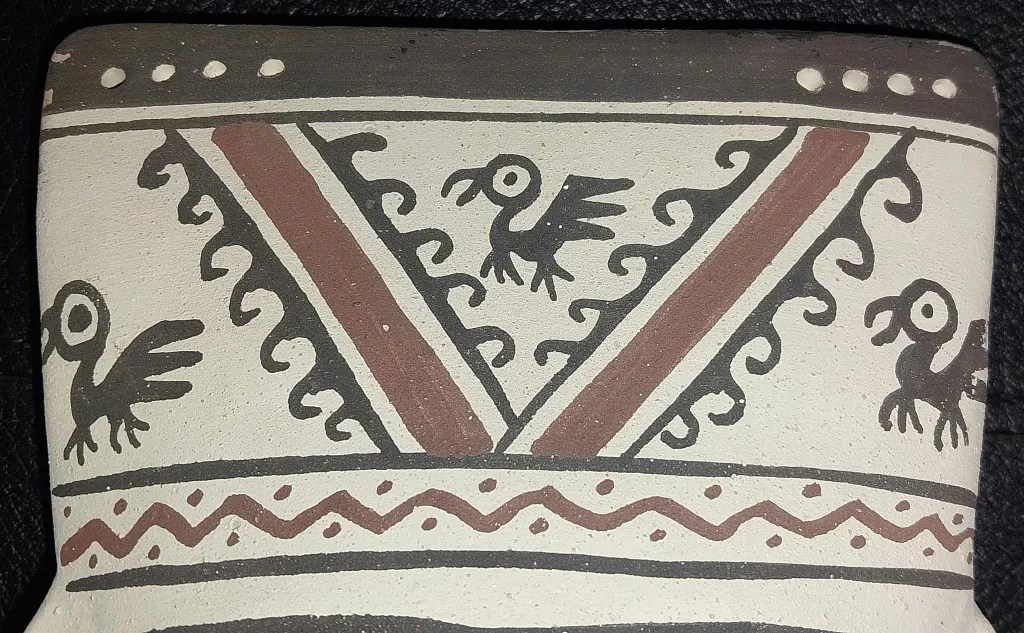
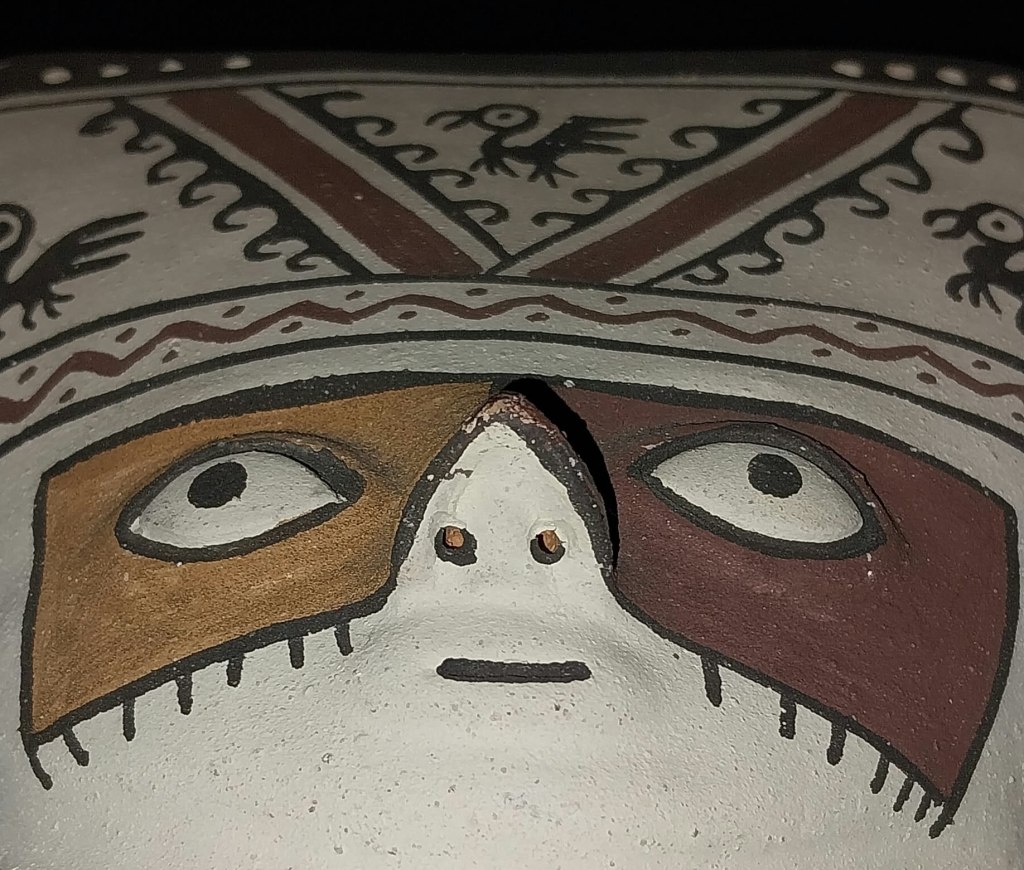
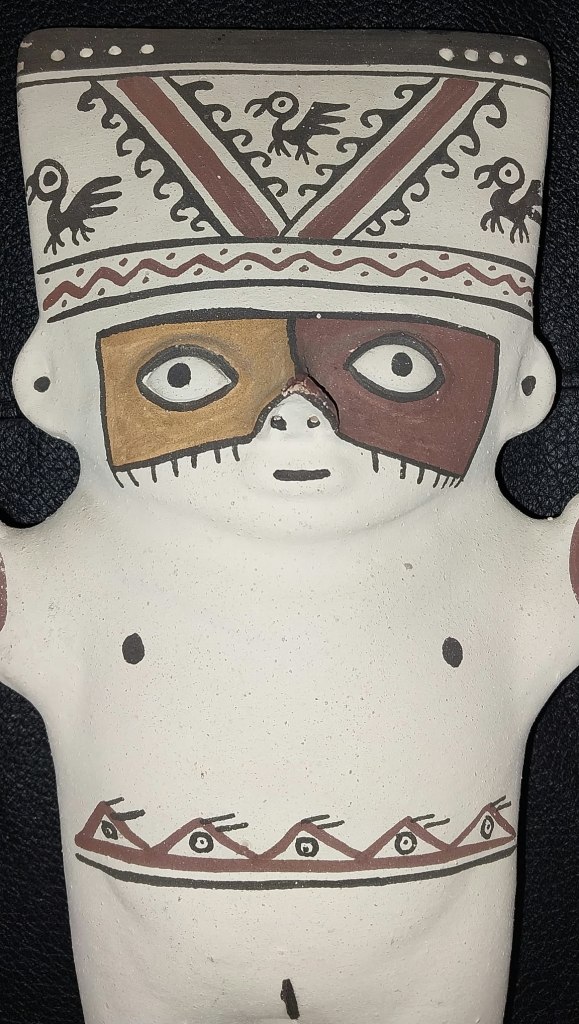
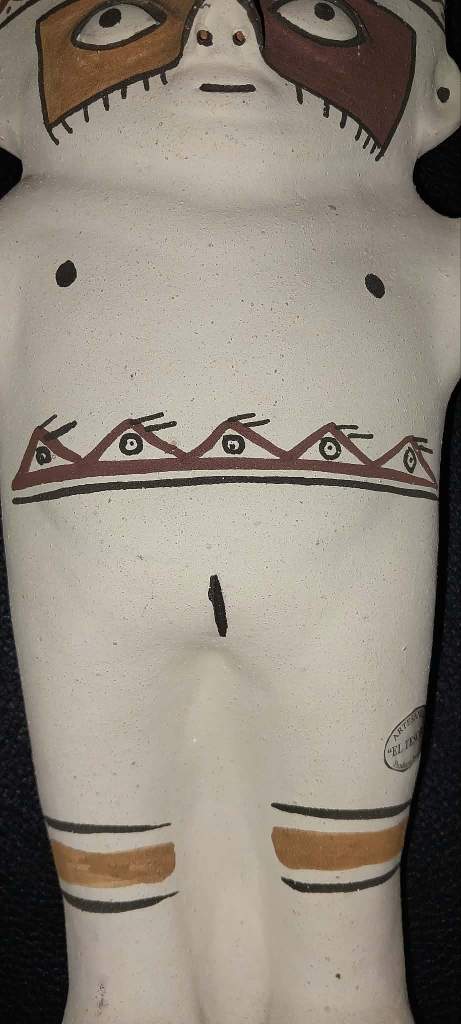
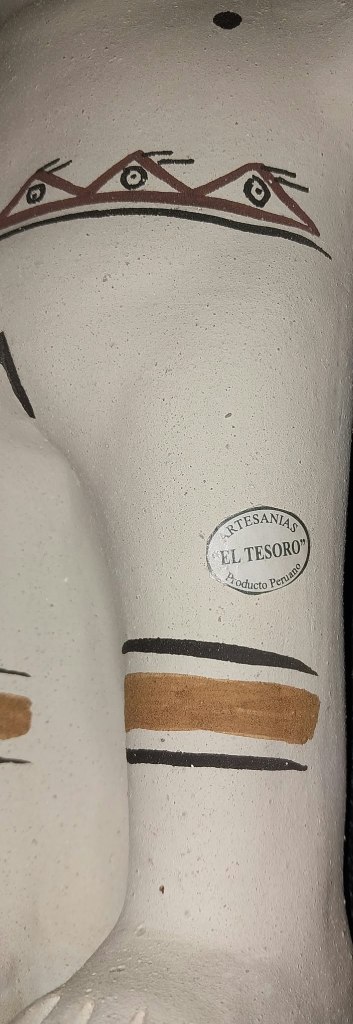
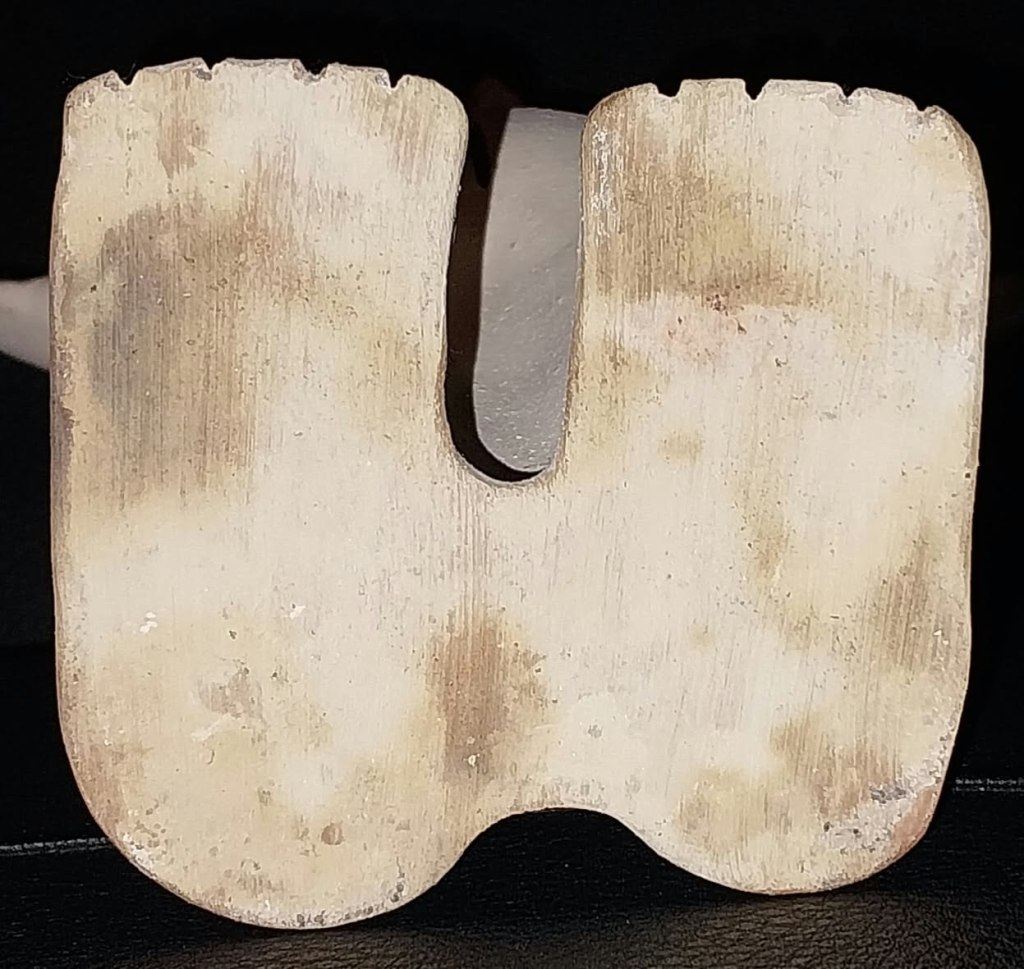
The “broad, stable feet” that allow the figure to stand upright
Cuchimilcos are frequently compared with the culture’s equally fascinating textile burial dolls, yet the two represent distinct traditions that reveal different aspects of Chancay society, beliefs, and craftsmanship.
Cuchimilco figures are typically depicted as male or female, with their gender clearly identified through visible anatomical features. They may appear nude, semi-nude, or clothed, although the majority of excavated examples were buried without clothing. Most figures possess few adornments beyond bracelets, headdresses, hats, and distinctive masks surrounding the eyes, features that are characteristic of the Chancay artistic style.
In areas around Huacho, archaeologists have discovered examples incorporating ochre coloring, and it is in this region that some of the most extensively “clothed” cuchimilcos have been found. When clothing is represented, it often takes the form of a poncho decorated with geometric designs rendered in black lines. These patterns frequently depict animals that held cultural significance for the Chancay people.
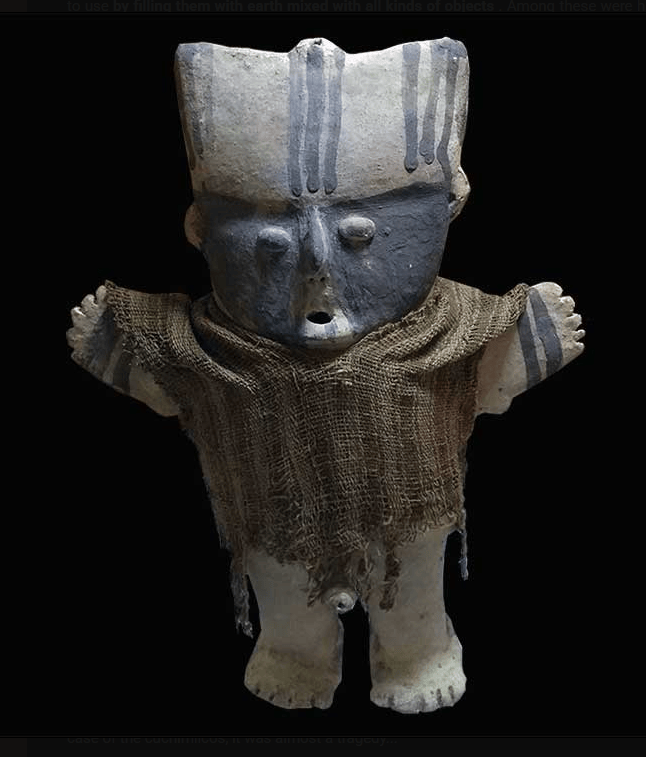
Another notable feature is the wide, flattened triangular hat or stylized headpiece worn by many figures. Differences in hats, facial decorations, and clothing patterns between male and female figurines may indicate distinctions in social roles, status, or ceremonial importance associated with each gender.
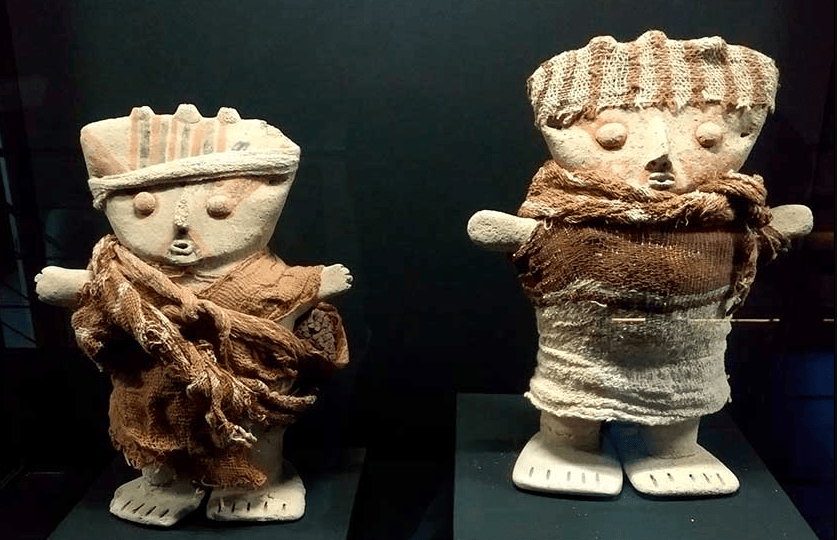
Although modern museum displays often present cuchimilcos as bare ceramic figures, evidence suggests that many were originally dressed in textiles. According to information preserved by the Sulca Textile Museum, these large figurines were commonly placed in tombs in pairs and adorned with cloth garments. This practice reflected the extraordinary textile traditions of the Chancay culture, whose finely woven gauzes and tapestries were renowned throughout the region and were also used to wrap the deceased.
It is therefore important to distinguish between the ceramic figure itself and the textiles that once accompanied it. The cuchimilcos were made of fired clay, but they were likely enhanced through the addition of clothing crafted from the same sophisticated fabrics that formed an essential part of Chancay funerary customs.
Chancay Textile Burial Dolls
Closely related to the cuchimilcos, though fundamentally different in construction, are the Chancay burial dolls. Unlike the ceramic figurines, these dolls were made entirely from woven textiles and were usually stuffed with reeds, plant fibres, or occasionally small grains.
The dolls were dressed in carefully crafted miniature garments that reflected the gender of the individual depicted. Female dolls commonly wore netted head cloths, while male examples frequently carried slings. Their tapestry-woven faces featured dramatic and highly stylized expressions. Some have even been discovered holding objects such as balls of cotton, lengths of yarn, or miniature musical instruments.
The detailed costumes suggest that these figures were intended to represent actual human beings rather than supernatural entities such as gods or spirits. Gender distinctions were further emphasized through facial designs. Female dolls often display several variations of diagonal stepped patterns, whereas male dolls tend to exhibit a more standardized design composed of three triangular facial sections.
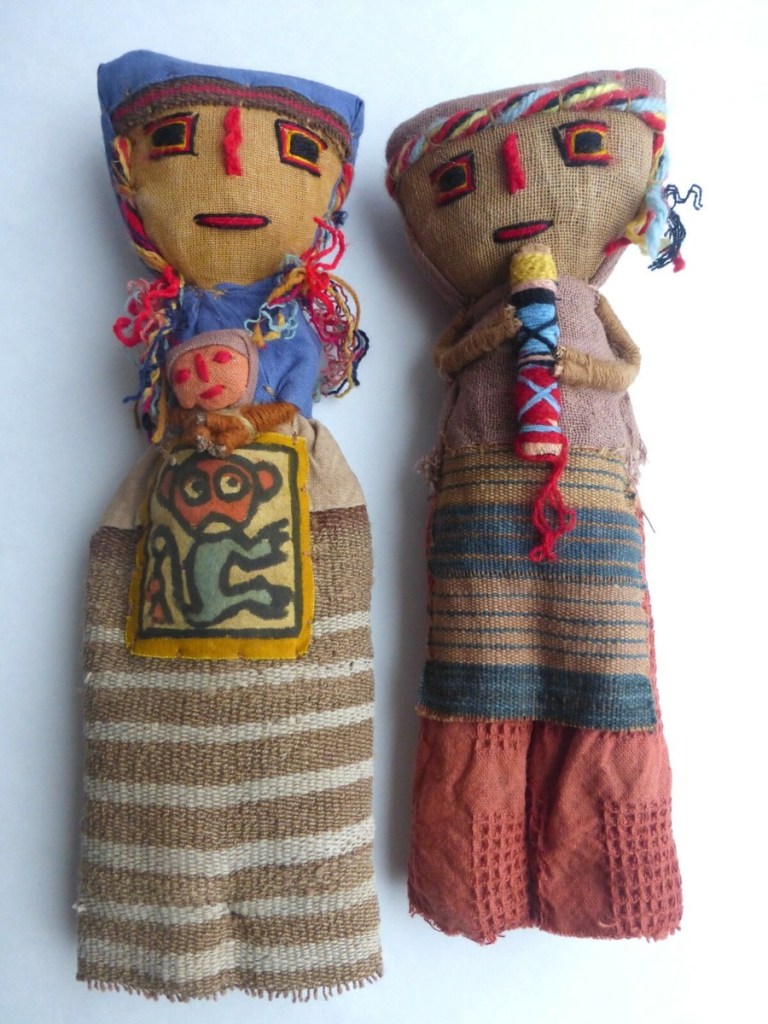
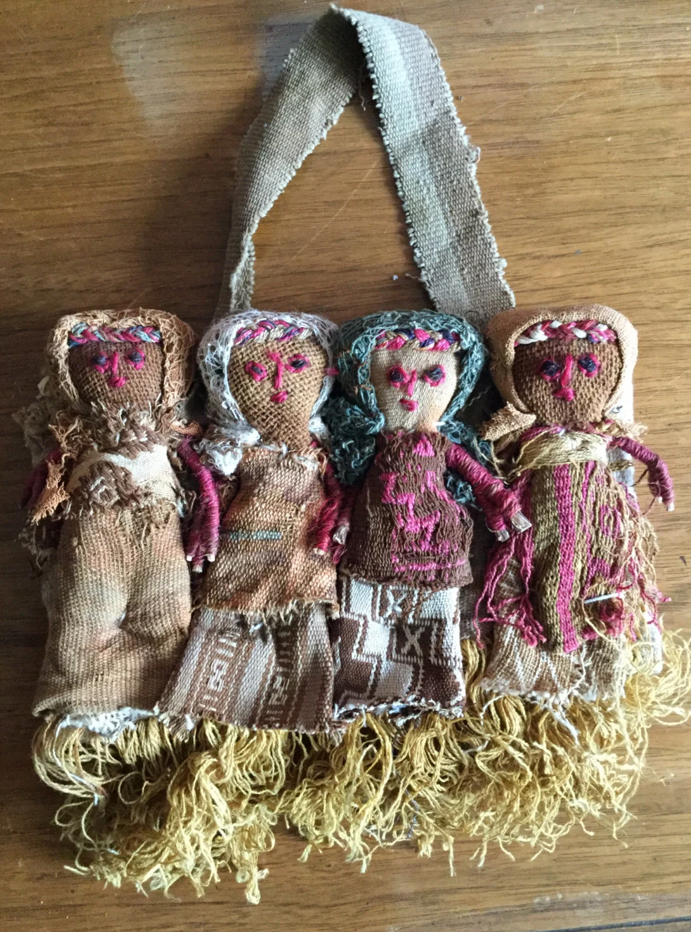
Although both cuchimilcos and textile dolls are commonly found in burial contexts, scholars believe they served different purposes.
The burial dolls may have originated as children’s playthings before being interred with the deceased. In death, they may have functioned as companions for the journey into the afterlife, providing comfort and continuity between the world of the living and the dead.
The cuchimilcos, by contrast, appear to have held a more ceremonial and symbolic role. Their frequent placement in pairs suggests they may have acted as guardians, protectors, ancestors, or intermediaries between the living and spiritual realms. Their distinctive postures and formalized appearance indicate a ritual significance beyond that of simple companion figures.
A Long Tradition of Funerary Figurines in Peru
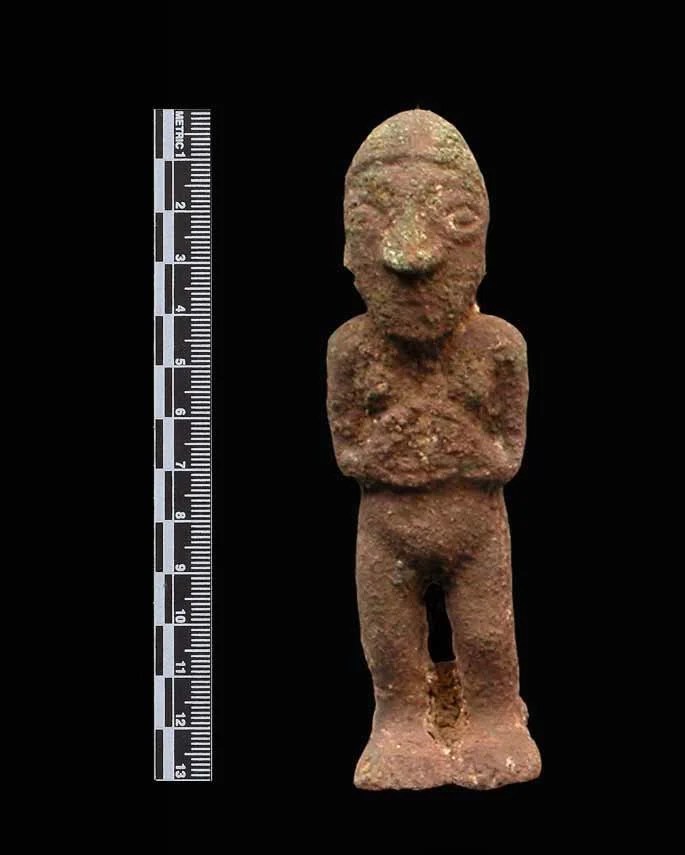
The use of human figurines in ritual and burial practices has an extraordinarily long history in the Andean world. Thousands of years before the Chancay civilization flourished, the inhabitants of ancient settlements such as Miraya, Áspero, and Vichama ceremonially closed buildings by filling them with earth and offerings that included human figures fashioned from raw clay.
Centuries later, the Incas continued this tradition in a different form. They buried metal figurines, often dressed in miniature clothing, as part of offerings to the earth and in sacrificial ceremonies. These practices reveal a remarkable continuity in the symbolic use of human representations across Andean civilizations.
An Uncertain Legacy
Despite decades of archaeological research, the precise function of both the cuchimilcos and the Chancay textile dolls remains uncertain. Their presence in graves clearly indicates a connection to death, remembrance, and beliefs about the afterlife, yet their exact meanings continue to be debated.
Were they guardians of the dead, representations of ancestors, companions for the journey beyond death, or symbols of social identity? The archaeological evidence provides intriguing clues but no definitive answers.
What is certain is that these objects demonstrate the artistic sophistication and spiritual complexity of the Chancay culture. Through ceramics, textiles, and funerary traditions, the Chancay left behind a legacy that offers a rare glimpse into how an ancient people understood identity, community, and the enduring relationship between life and death.
A Modern Revival
The fascination with cuchimilcos continues today. Peruvian ceramic artist Walter José Acosta, from the Amazonas region, has become known for recreating Chancay style ceramics using traditional techniques. Acosta views these works as a means of communicating with ancestors and preserving cultural heritage for future generations.
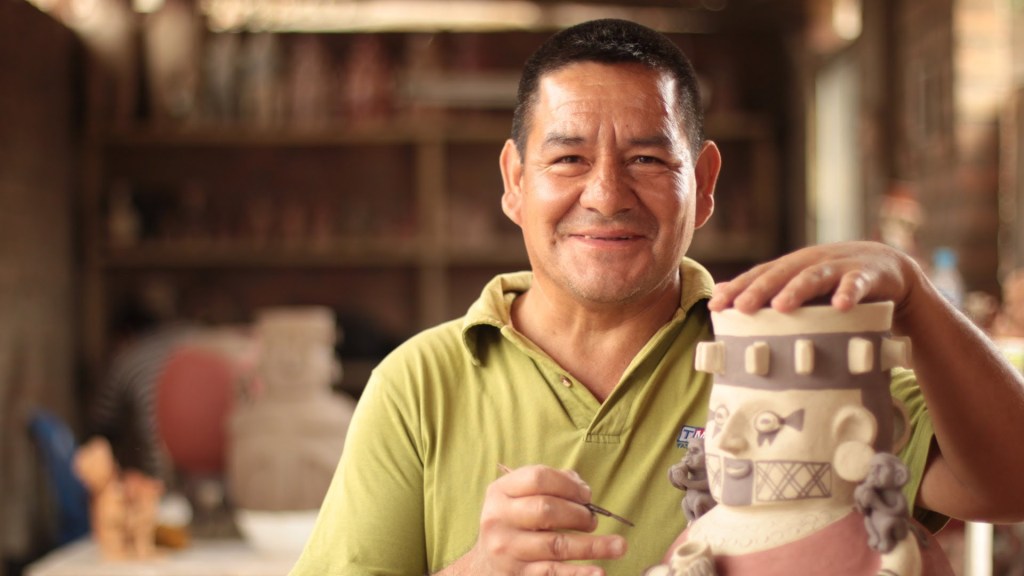
His reproductions are so convincing that, according to the artist, some archaeologists have mistaken his pieces for genuine ancient artifacts due to the aging processes he applies to them.
From Ancient Figurine to International Mascot
In 2019, the cuchimilco found new life as a symbol of modern Peru.
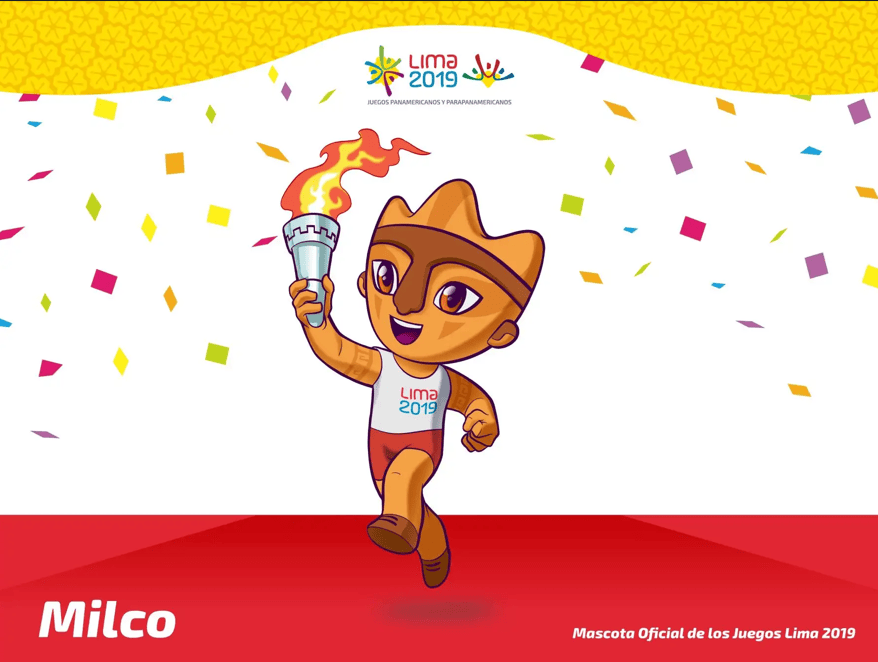
Designer Andrea Medrano drew inspiration from these figurines to create Milco, the official mascot of the 2019 Pan American and Parapan American Games held in Lima. Medrano was particularly inspired by the open-armed posture of the cuchimilcos, which she interpreted as a symbol of hospitality, friendship, and Peru’s welcoming spirit.
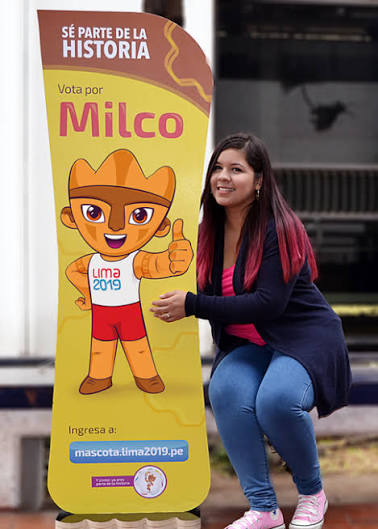
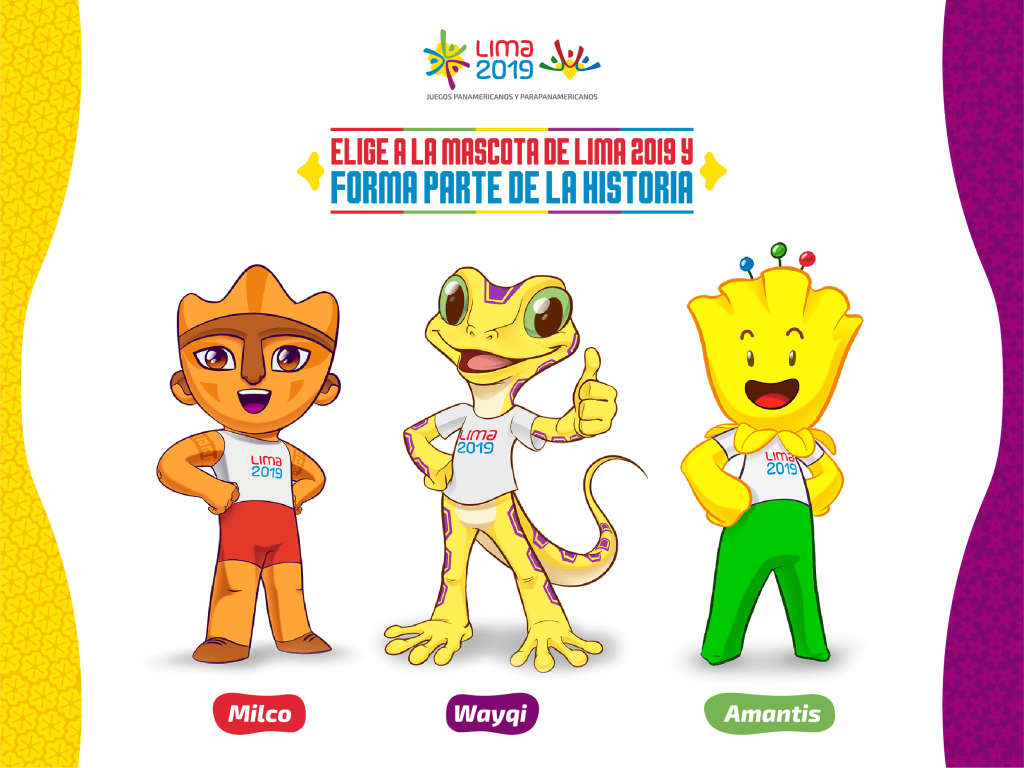
Milco won a public competition with 19,895 votes, defeating two other finalist designs. Through this modern adaptation, the ancient figures have become internationally recognized ambassadors of Peruvian culture.
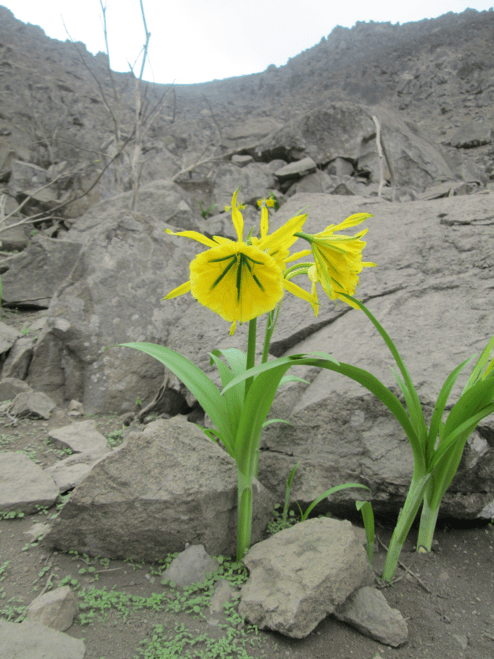
The winning-design —created by Andrea Medrano— collected 19,895 votes, followed by Wayqi, the gecko, (17,274) and Amantis, inspired by the Flower of Amancaes (7,345).
The cuchimilcos remain among the most iconic artifacts of the Chancay civilization. Their distinctive appearance, mysterious symbolism, and enduring cultural significance continue to inspire both scholarly debate and public fascination. Whether they served as guardians of the dead, representations of ancestors, fertility symbols, or miniature deities, their true purpose has been lost to history.
What remains clear is that these remarkable ceramic figures provide a powerful connection to a culture that left no written record. More than six centuries after the decline of the Chancay people, the silent figures with open arms continue to invite interpretation, curiosity, and admiration from the modern world.
References
- ¡Alto al huaqueo! (mural en el Museo Brüning) : Por Miguel Vera – https://www.flickr.com/photos/8150716@N04/2758601215/, CC BY 2.0, https://commons.wikimedia.org/w/index.php?curid=94840665
- Anatomy of the cuchimilco August 17, 2019 – https://www.antiguoperu.com/2019/08/anatomia-del-cuchimilco.html
- cuchimilcoinfografia05 – Infografías de Arte Precolombino del Perú (CIHAPA) Publicado 27th December 2020 por CIHAPA – https://llecturas-cihapa.blogspot.com/2020/12/cuchimilco-i.html
- Cuchimilco 2 – Infografías de Arte Precolombino del Perú (CIHAPA) Publicado 27th December 2020 por CIHAPA – https://llecturas-cihapa.blogspot.com/2020/12/cuchimilco-ii.html
- Cuchimilco Protection – Archaeological Museum Style Ceramic Sculptures – https://cactusaffinity.com/products/cuchimilco-protector-archaeological-museum-style-ceramic-sculpture
- Flor de Amancaes : Christian.ipanaque87, CC BY-SA 4.0 https://creativecommons.org/licenses/by-sa/4.0, via Wikimedia Commons – https://commons.wikimedia.org/wiki/File:Flor_de_Amancaes.jpg
- https://en.wikipedia.org/wiki/Cuchimilco (English)
- https://es.wikipedia.org/wiki/Cuchimilco (Spanish)
- Lima 2019 Unveils ‘Milco’ – Official Mascot of the Pan American Games and Parapan American Games : 12 Jul, 2021 – https://www.infobae.com/aroundtherings/articles/2021/07/12/lima-2019-unveils-milco-official-mascot-of-the-pan-american-games-and-parapan-american-games/#:~:text=The%20winning%20mascot%2C%20Milco%2C%20was,as%20Lima%2C%20Chancay%20and%20Chincha.
- “Milco’ becomes Lima 2019 Pan Am Games mascot – https://andina.pe/ingles/noticia-milco-becomes-lima-2019-pan-am-games-mascot-676211.aspx
- Milco revealed as Lima 2019 mascot : Dan Palmer : 26.07.2017 – https://www.insidethegames.biz/articles/milco-revealed-as-lima-2019-mascot
- Museo Larco : Ceramics Representation Cuchimilcos Grandes – https://www.museolarcoboutique.com/product/ceramics-representation-large-knives/?lang=en
- Oviedo, Arminda & Mcewan, Gordon & Chatfield, Melissa & Andrushko, Valerie. (2014). Informe de las posibles capacochas del asentamiento arqueológico de Choquepujio, Cusco, Perú. Ñawpa Pacha. 34. 147-175. 10.1179/0077629714Z.00000000019.
- Ubicación del distrito de Huaral en Lima : Glowa85, CC0, via Wikimedia Commons – https://commons.wikimedia.org/wiki/File:Ubicaci%C3%B3n_del_distrito_de_Huaral_en_Lima.png
- van Dalen Luna, Pieter. (2014). Arqueología tardía del valle Chancay-Huaral: identificando la nación Chancay. Investigaciones Sociales. 16. 271-283. 10.15381/is.v16i28.7403.
- Vega, María & Tosso, Walter & Peralta, Rodolfo. (2022). Muertes violentas en la sociedad Chancay Tardía del sitio arqueológico Las Shicras (Huaral, Lima). Boletín de Arqueología PUCP. 31-59. 10.18800/boletindearqueologiapucp.202201.002.


